Playable Books
Pyotr Ilyich Tchaikovsky · section 12 of 36
Chapter X. The Dominant Chord
Read and hear this section in the playable edition →


_ § 29. If we superimpose an additional third on each triad of the diatonic scale, we obtain a series of chords of the seventh.
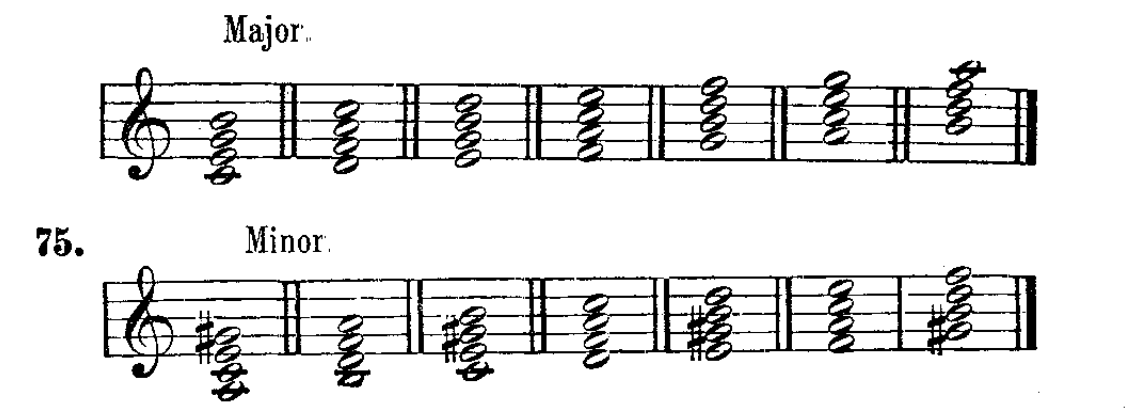
Of all these chords of the seventh, the most important and frequently used is that on the 5-th degree. It is called the chord of the dominant-seventh, or briefly, dominant chord, it resolves into the tonic triad.
The resolution is effected in the following manner: the seventh moves (like all dissonances) one degree downward; that is, into the third of the triad. The fifth progresses one degree upward or descends one degree into the third or the fundamental tone of the triad; more frequently into the latter. The third (here leading tone) progresses one degree upward, into the tonic; and the fundamental tone leaps upward a fourth or downward a fifth into the fundamental tone of the triad.
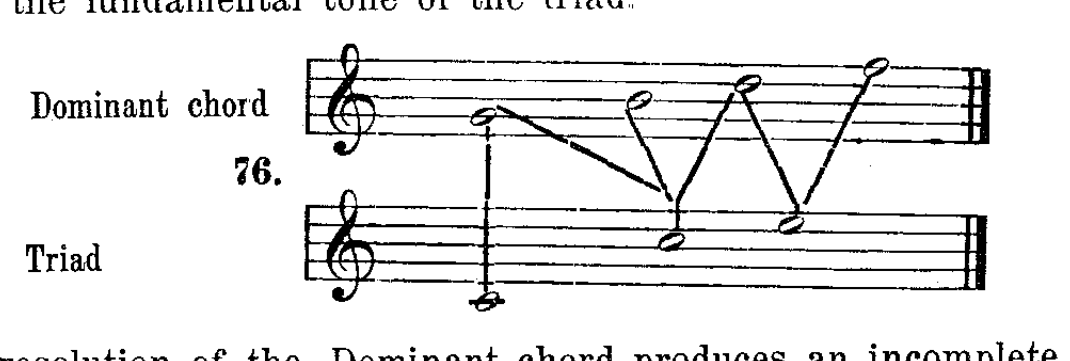
The resolution of the Dominant chord produces an incomplete form of me triad, in which the fifth is wanting. This is seen in the following examples.
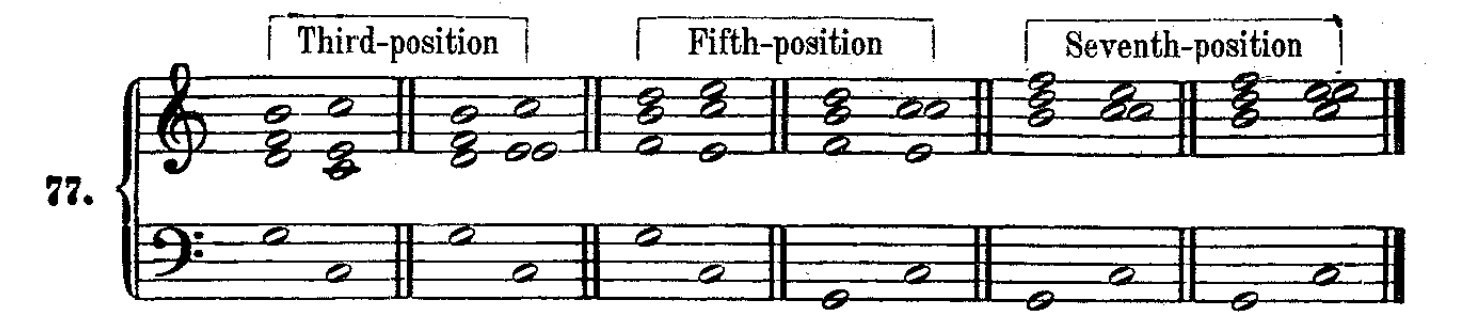
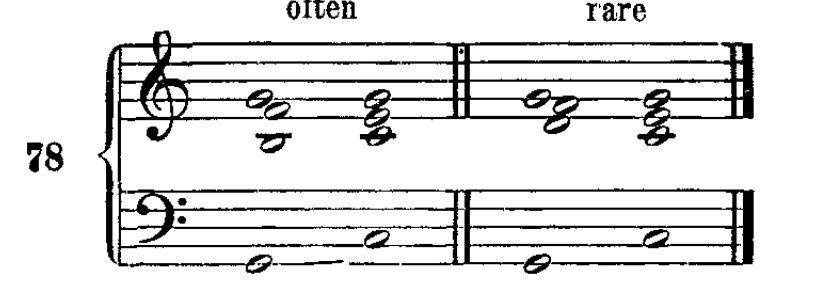
In the Octave-position of the Dominant chord one interval must be omitted, as the doubling of the fundamental leaves but two voices for the remaining three intervals (third, fifth and seventh). In most cases the fifth is dropped, its absence being least felt; on rare occasions the third is omitted.
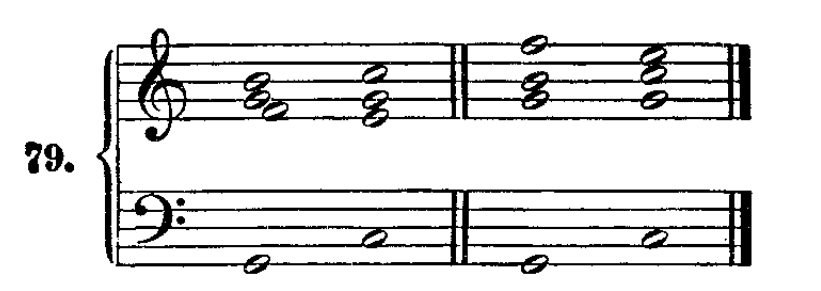
In these examples the fundamental tone in the Bass was correctly resolved. So, the fundamental tone in the upper voice cannot be resolved in the same way, lest parallel octaves are formed. It must therefore remain stationary—that is, resolve into the fifth of the triad. In this way the connection of the Dominant chord with the tonic triad becomes more emphonious and smooth, besides producing a complete triad, in which the fifth is not wanting. With the same purpose in view the fifth of the dominant chord in the positions of the third and fifth is omitted and the fundamental tone doubled.
§ 30. The Dominant chord has three inversions:
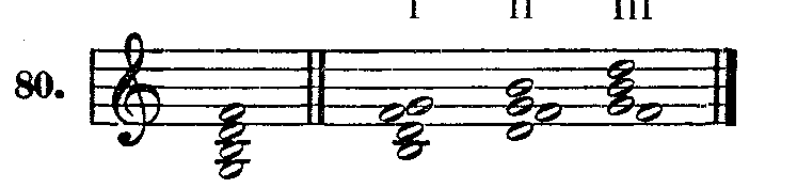
The names of these inversions are derived from the intervals formed between the bass and one of the chief tones (seventh or fundamental of the dominant chord. Thus:
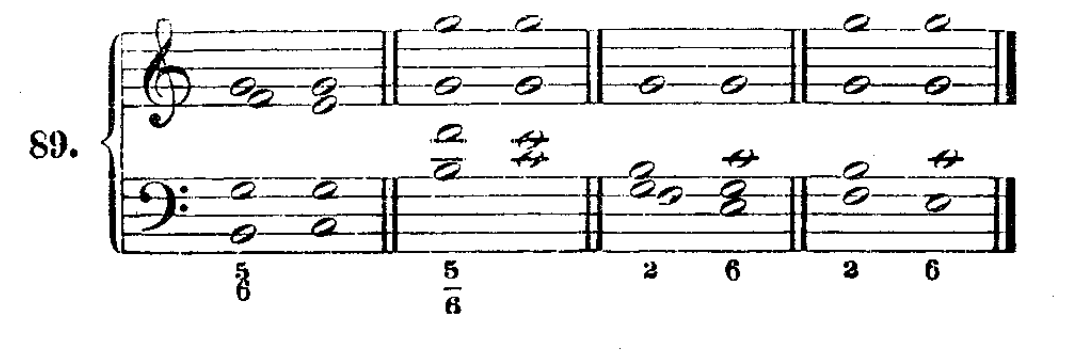
the first inversion is called: chord of the sixth and fifth the second is called: chord of the fourth and third the third,, chord of the second.
These inversions are resolved according to the rules set down in the last paragraph; with the one exception, that the fundamental tone, which lies in the upper or in one of the middle voices, always remains stationary, so that the resolution results in a perfect triad.
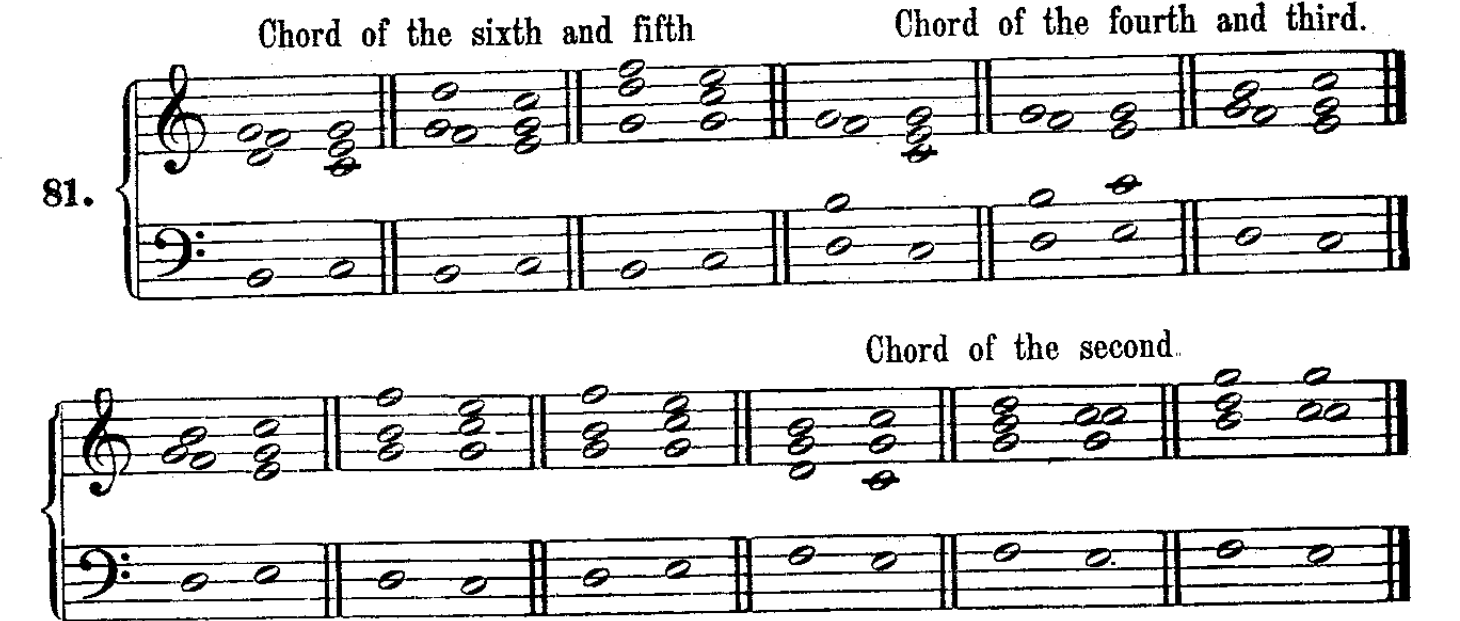
Chord of the sixth and fifth Chord of the fourth and third.
Chord of the second.
In addition be it remarked, that the fifth of the dominant chord, whether in its fundamental form or in its inversions, is usually led downwards; only in cases where it appears necessary, it is led upwards, giving a triad with doubled third.
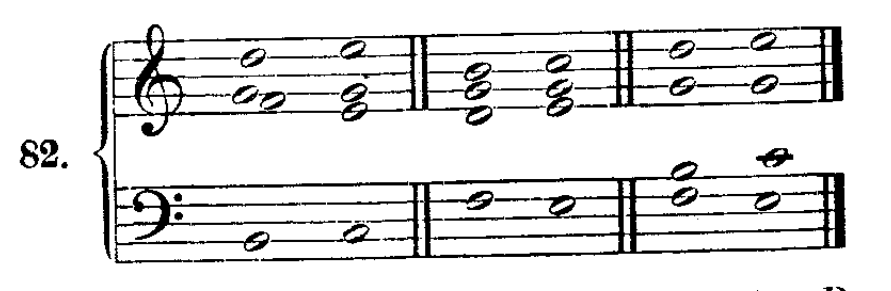
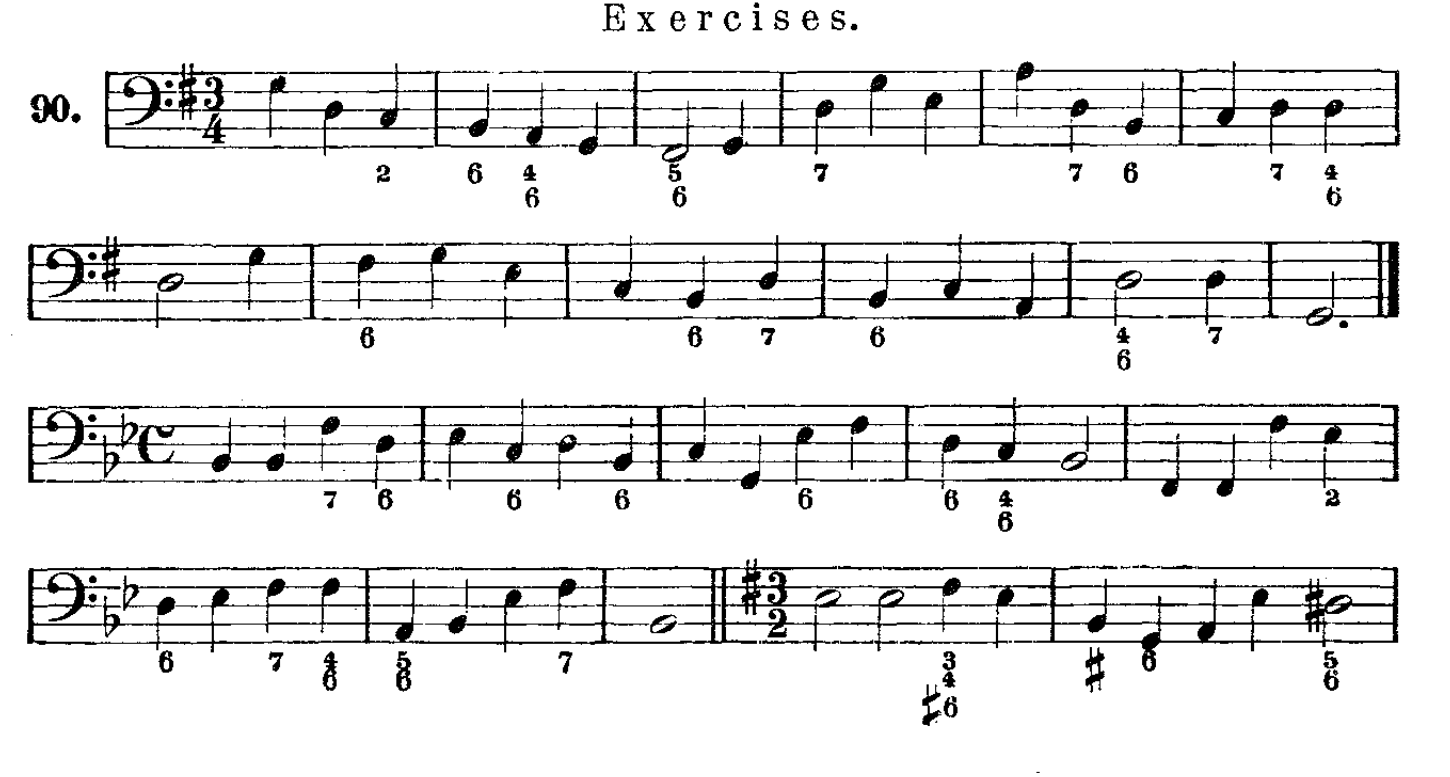
As a preliminary exercise the pupil should write the Dominant chord in all its positions, with all possible resolutions, and in all keys; close and wide positions are to be employed in turn.
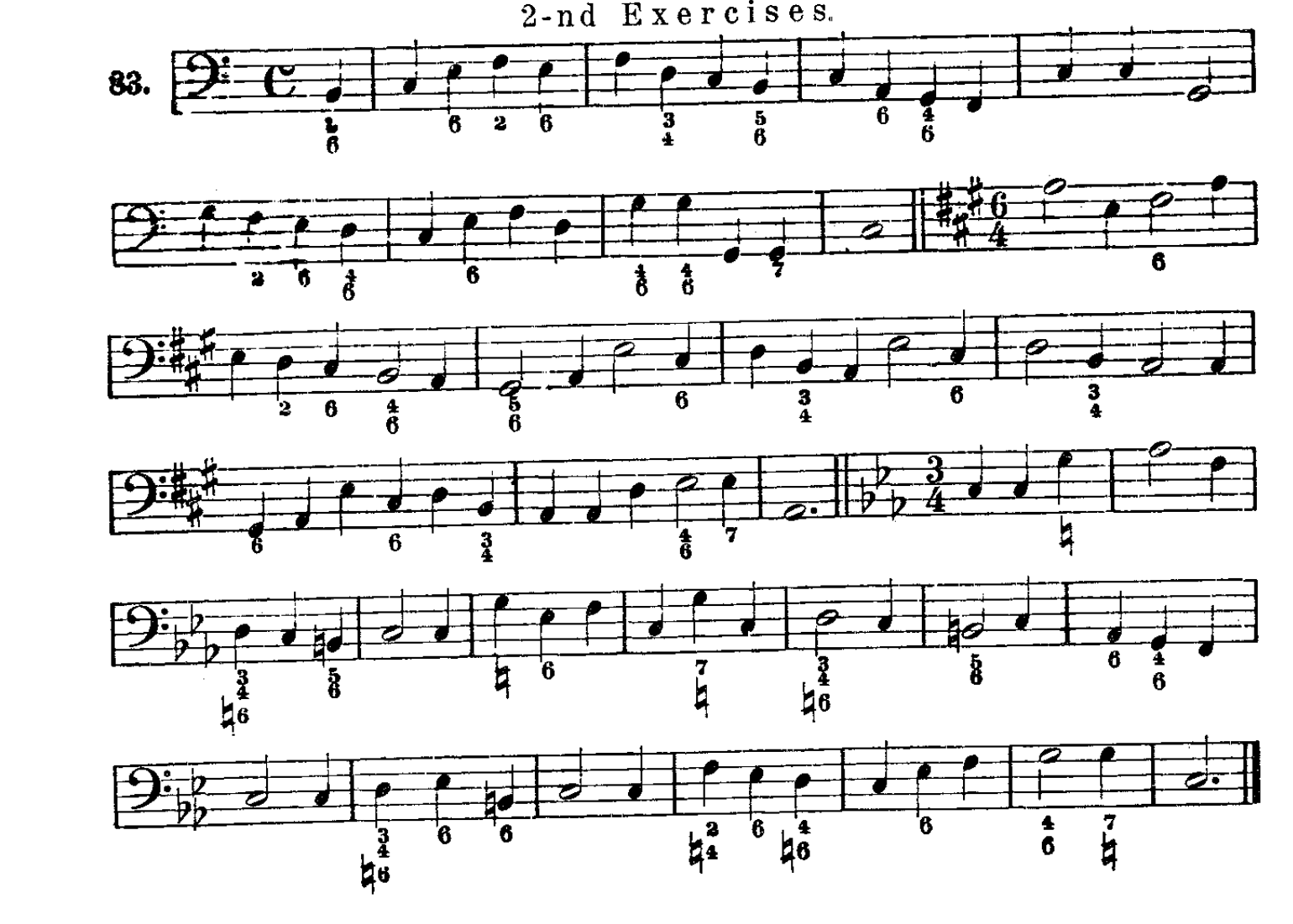
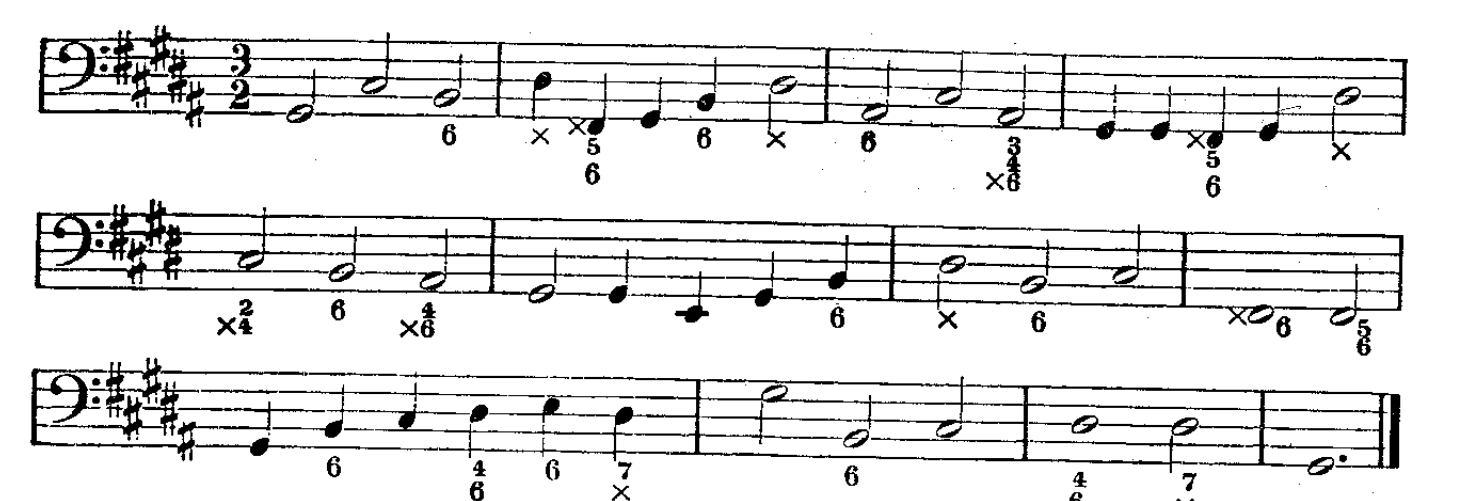
Note. The figuring of the Dominant chord and its inversions is done according to their names. The fundamental form is expressed by the figure 7; the chord of the sixth and fifth by é the chord of the sixth and fourth by—9; the chord of the second by 2.
In minor the necessary accidentals must appear; those relating to the third without an accompanying figure—as before mentioned—and those referring to other intervals of the chord with the appropriate figure.
Appendix to chapter X
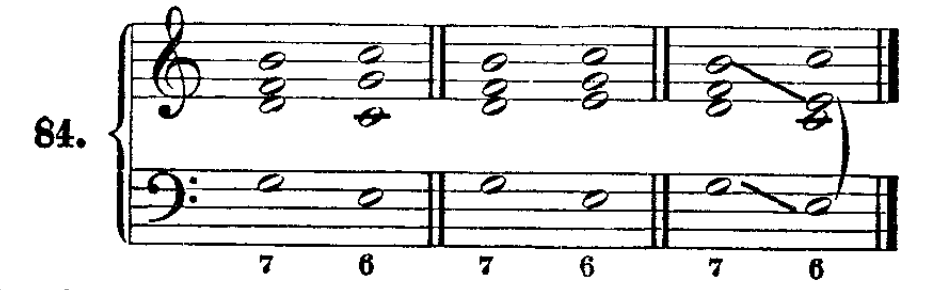
§ 30. Here we wish to point out some exceptions to the rufes governing the resolution of the Dominant chord.
a) The Dominant chord resolves into the chord of the sixth, if the Bass leaps a third downward, In this case an exceptional resolution of the seventh is imperative, it we would avoid some extremely unpleasant con-
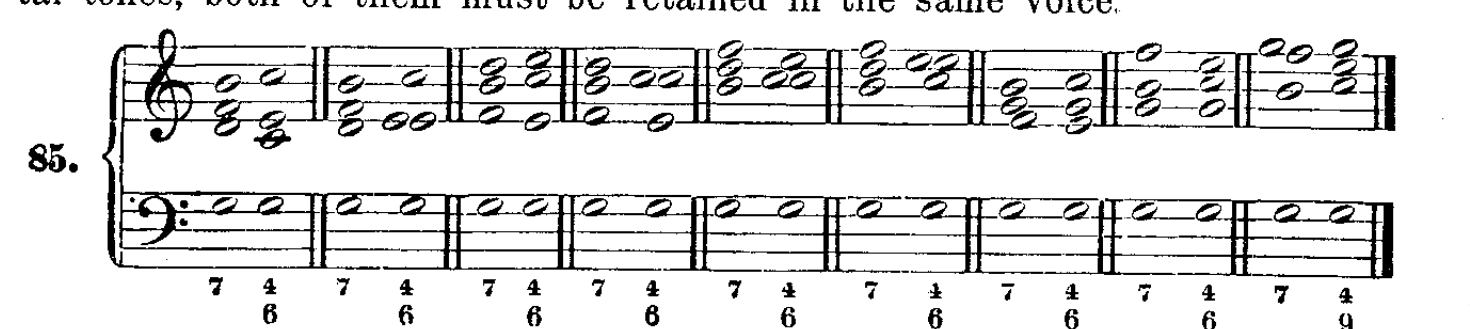
b) The Dominant chord may also resolve into the six-four chord of the triad, if the Bass remains stationary. Where there are two fundamental tones, both of them must be retained in the same voice.
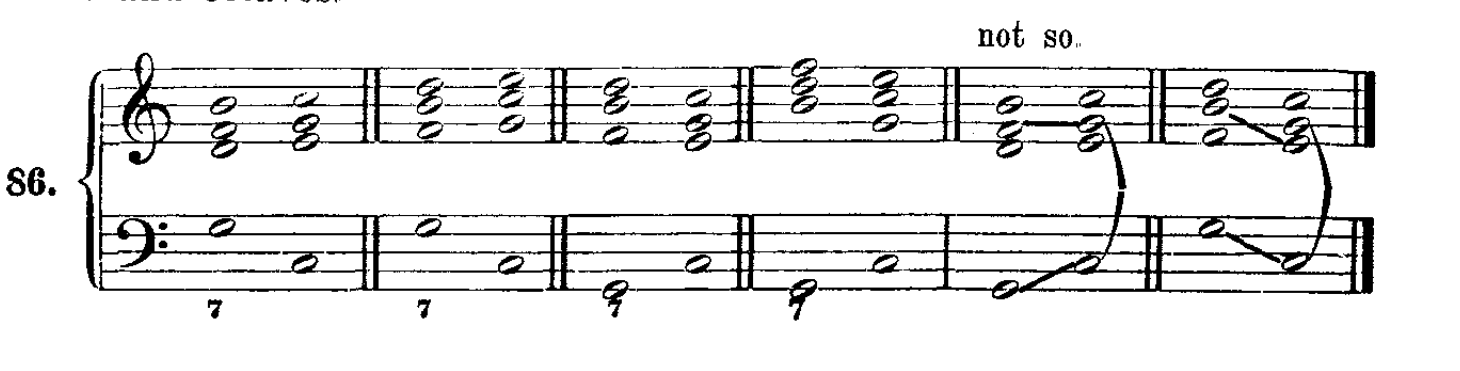
c) In the fundamental form of the Dominant chord the third may some* times progress two steps downward and the seventh one step upward; but only in case these intervals lie in the inner voices. The Alto is best adapted to such progressions. Contrary motion must be used to avoid concealed fifths and octaves. not so.
d) In the third inversion the fifth—when lying in the Soprano or Te nor voice—may leap a fourth upward, or a fifth downward. But faulty progressions, open or concealed, must be carefully avoided.
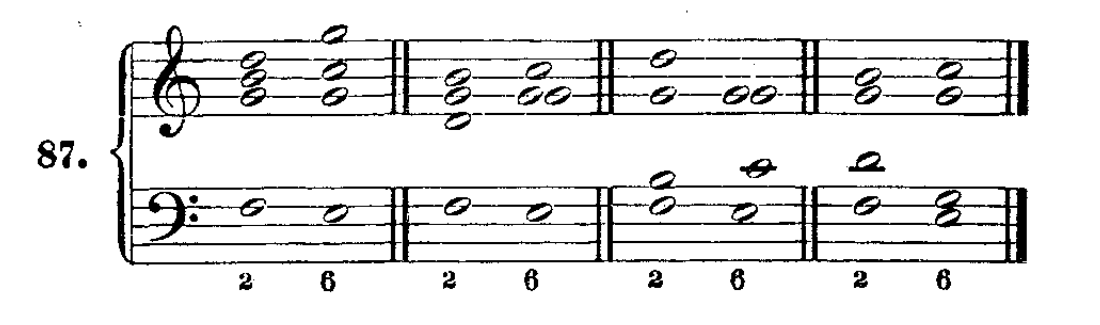
e) There are still several other deviations from the rules, in resolving the first two inversions of the Dominant chord; but they occur more rarely. As these have for their object a free leading of the voices, with which the pupil is not yet familiar, I will make but brief mention of them at this point, without recommending their employment.
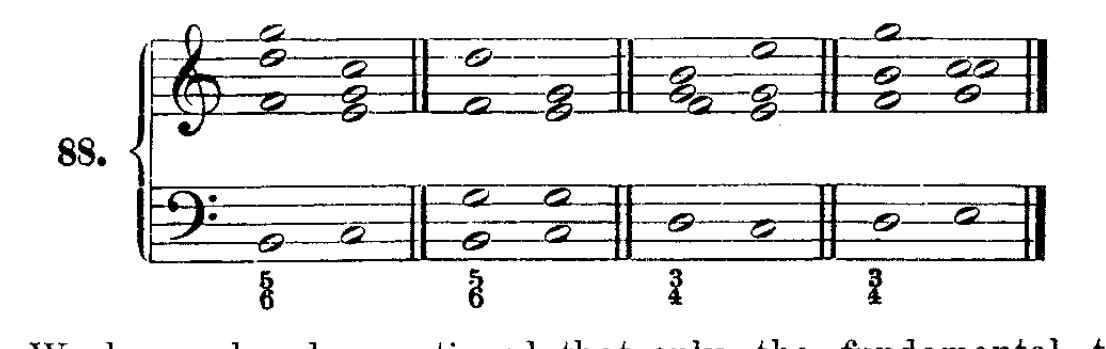
f TT mS | 8 8 i 2 31. We have already mentioned that only the fundamental tone of
§ the Dominant chord may be doubled. It may be added though, that, on rare occasions the fifth is omitted and the fundamental tone doubled, also in the chord of the sixth and fifth and of the second.