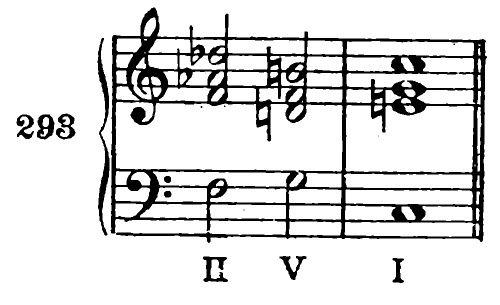
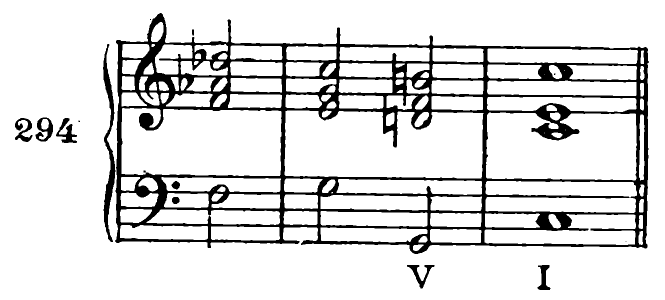
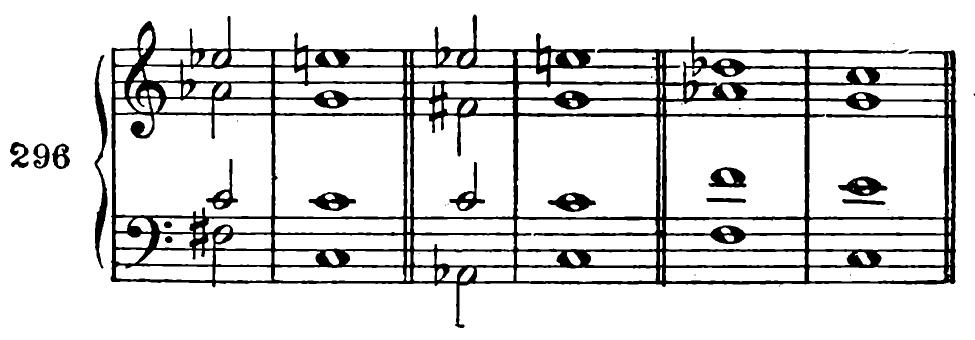
The principle named above is only relatively new to us. Nevertheless, I do not wish to omit stating it here in this form, because it can clarify many things. We have often discussed the effect of the cliché, the formula: frequently occurring turns become fixed formations with a distinctly unambiguous meaning. So unambiguous that, once the beginning is sounded, expectation immediately and automatically adjusts to the specific continuation: the formula inevitably leads to a particular result. Given this, the intermediate links may also be omitted, the beginning and end placed abruptly beside one another, the entire turn “shortened,” so to speak, and set down merely as premise and conclusion. The cadential progression IV–V may already be such a shortening: I mentioned earlier that it is best understood as standing for IV–II–V. Likewise, the treatment of the Neapolitan sixth that leads directly to V is such a shortening.
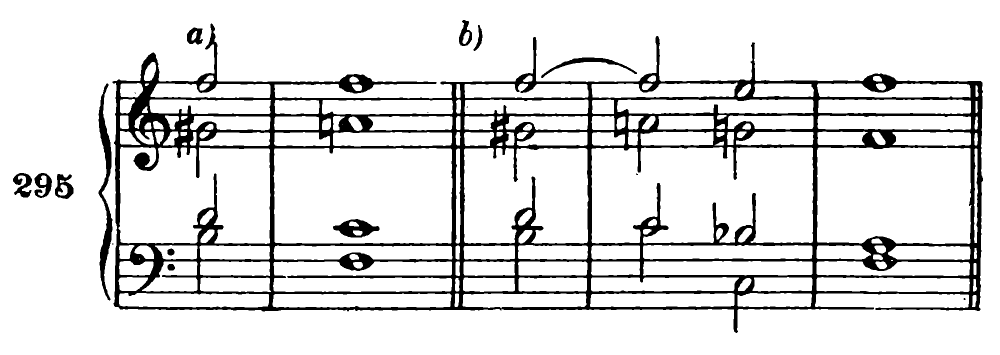
Perhaps plagal closes are something similar. They may sound incomplete precisely because something has been omitted: IV–I and II–I stand in place of IV–V–I and II–V–I. The same principle underlies example 295a, which occurs in cadences or half cadences and arose from 295b.
 Playable Books