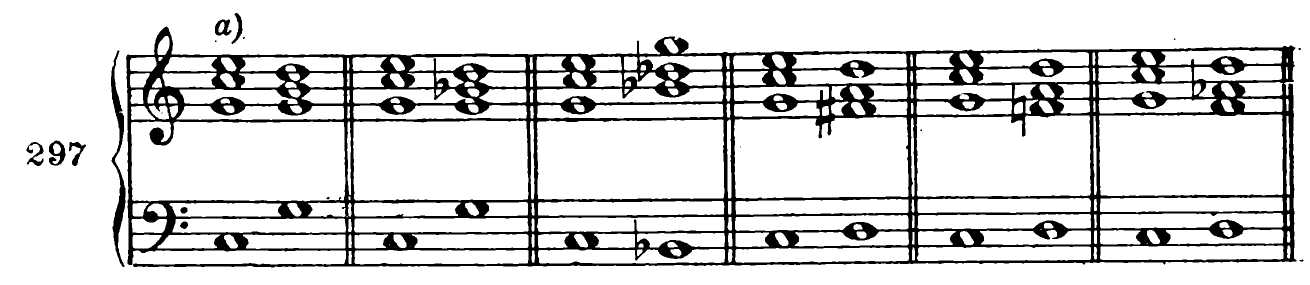
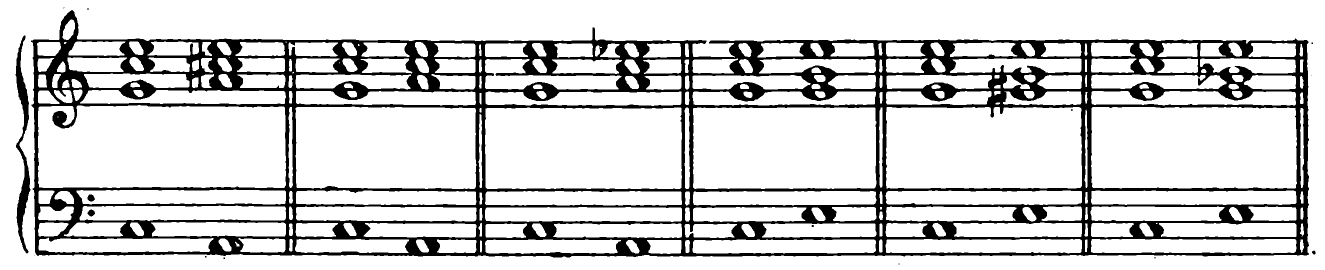
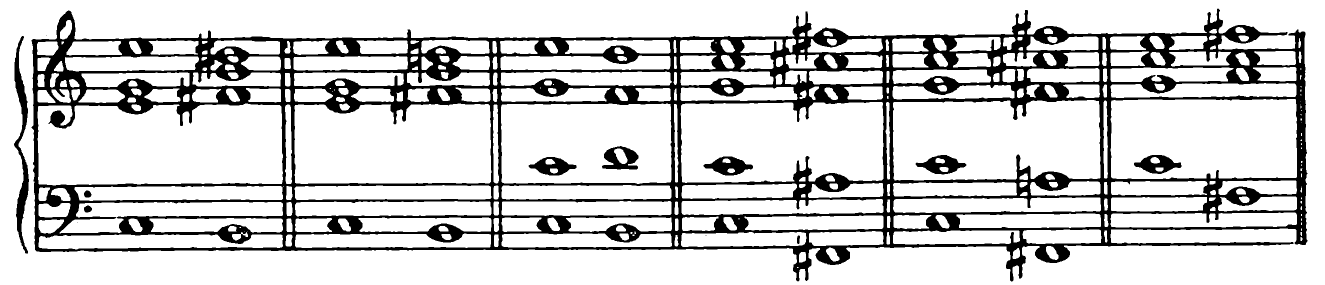
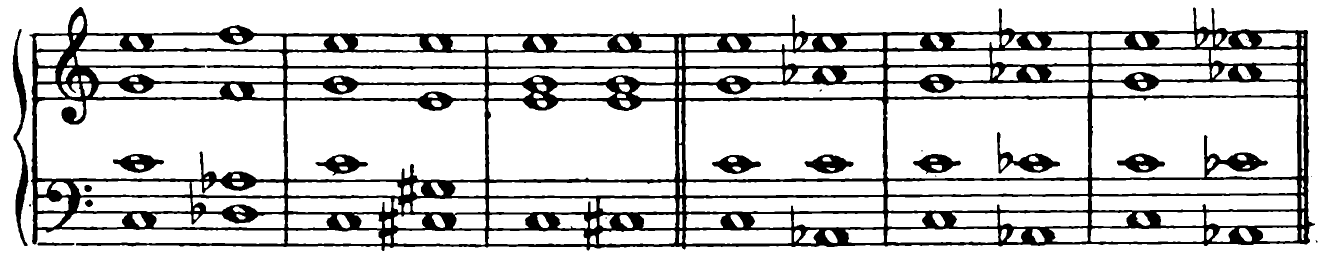
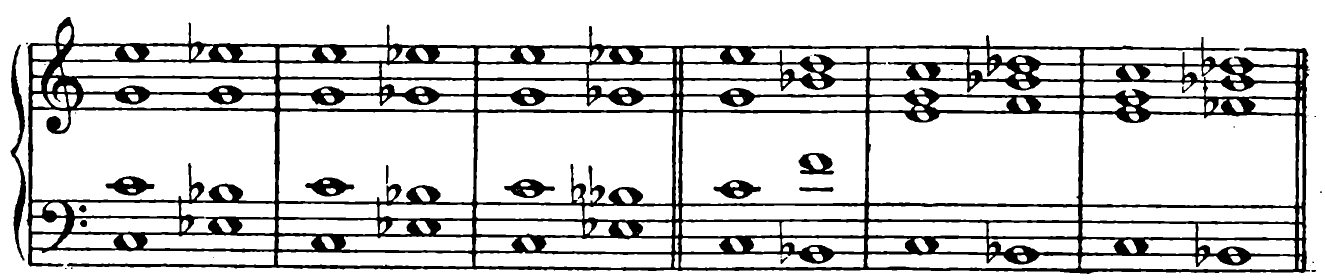
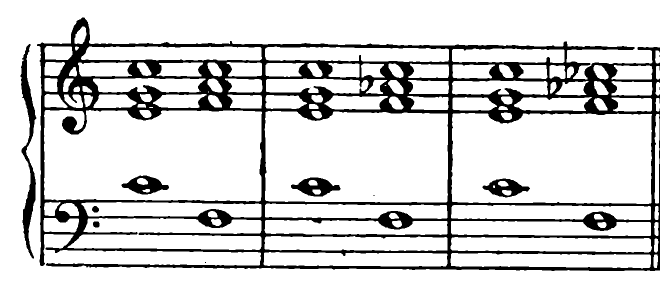
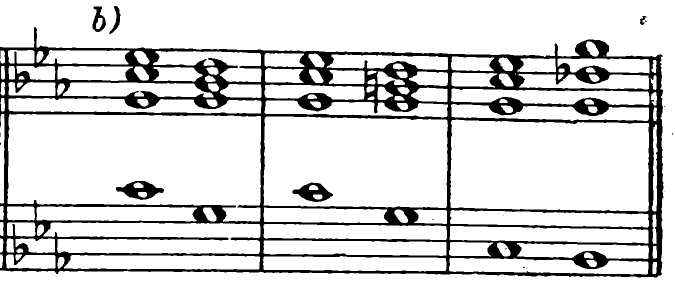
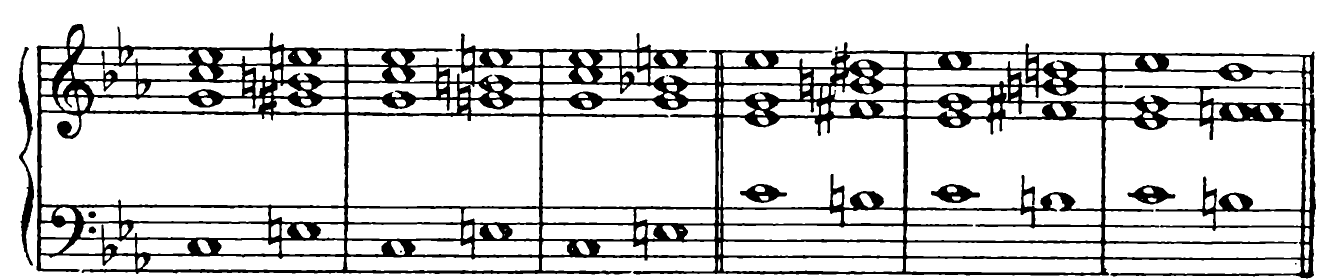
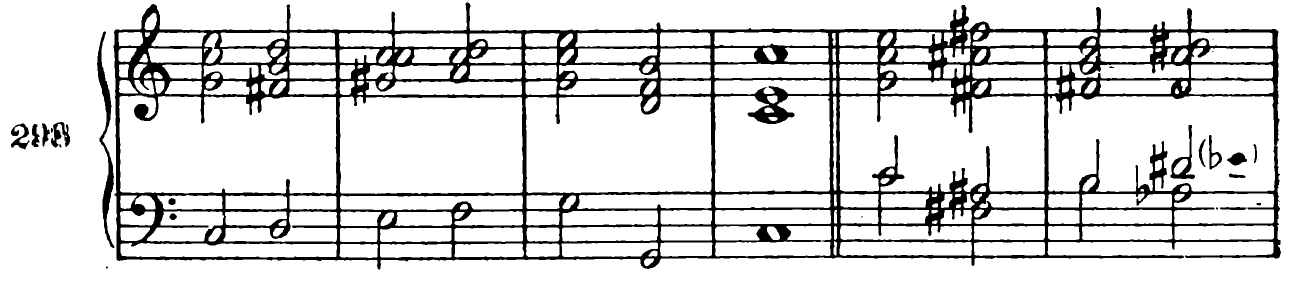
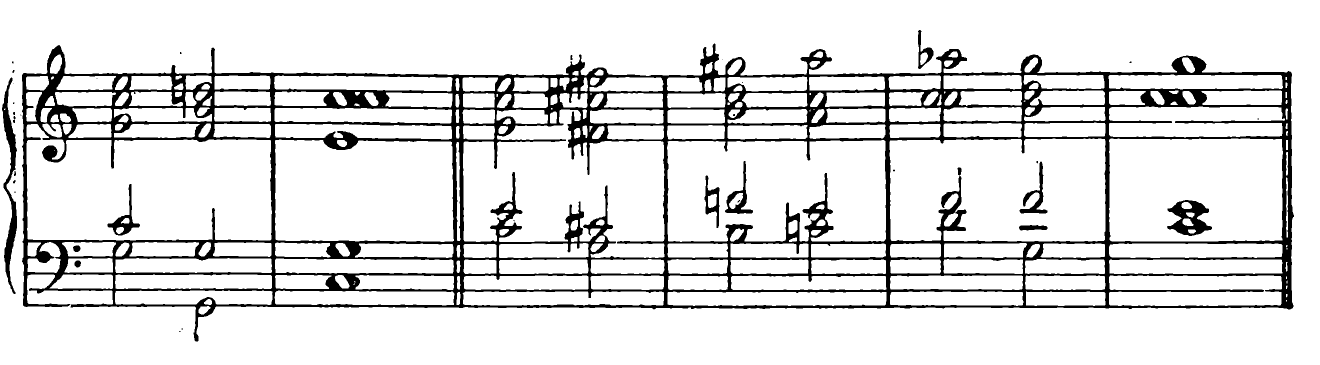
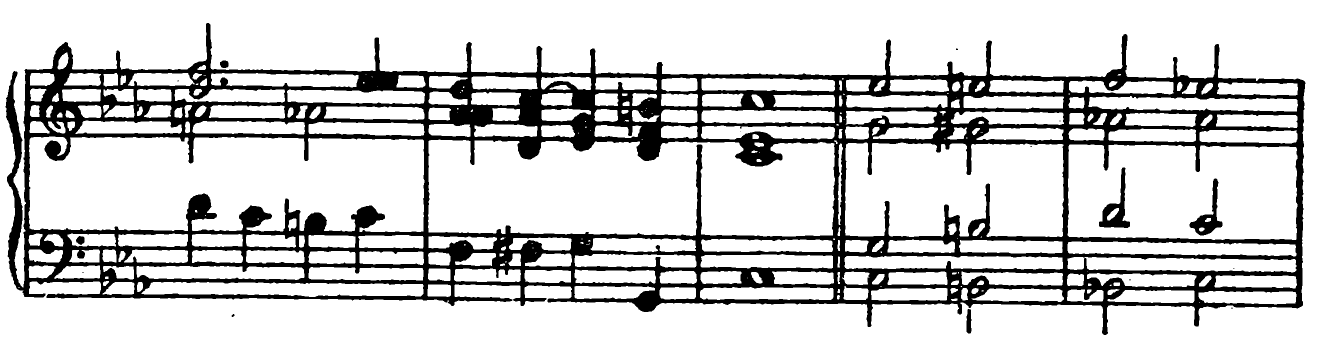
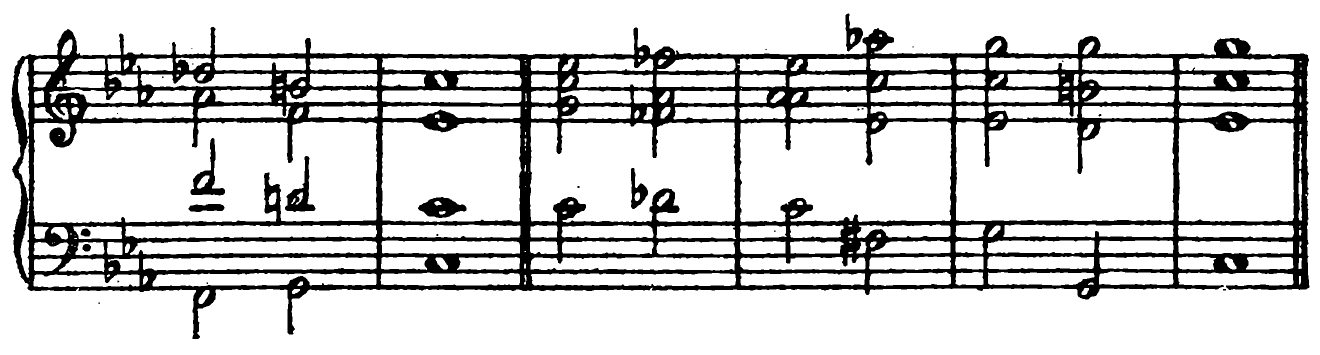
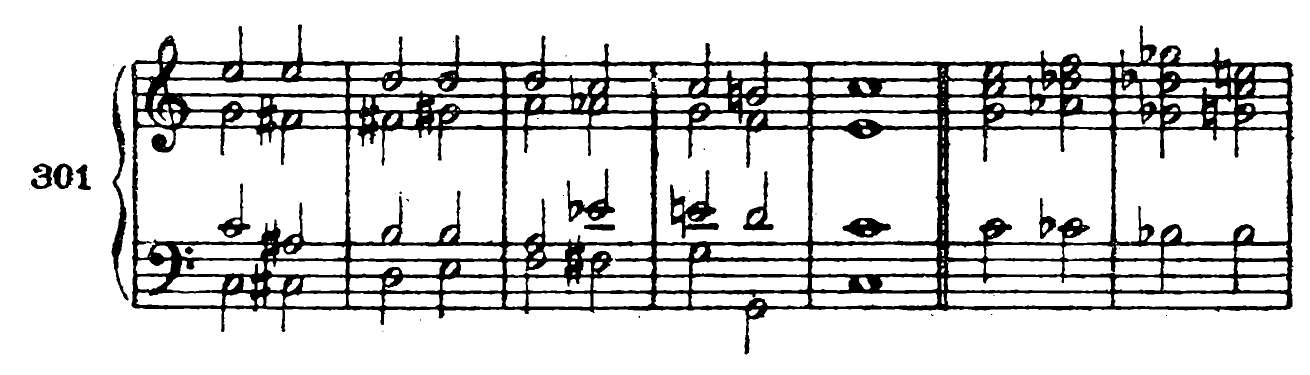
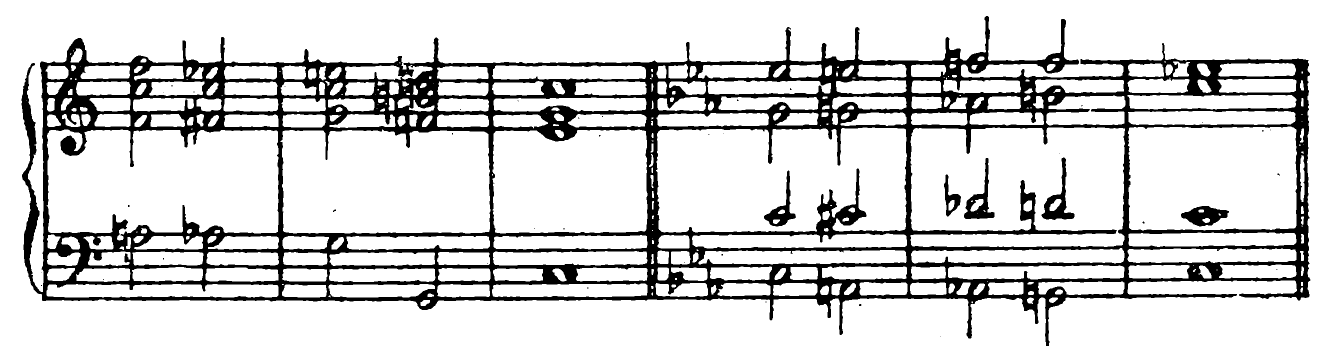
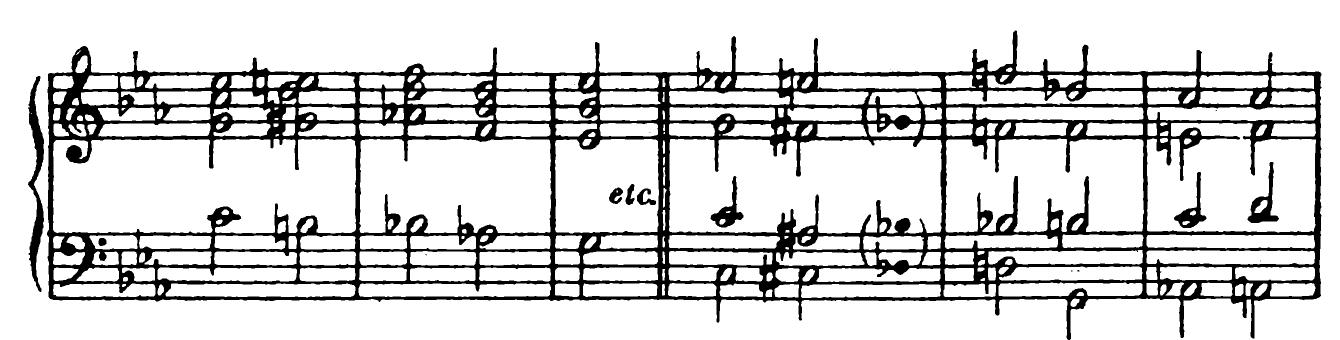
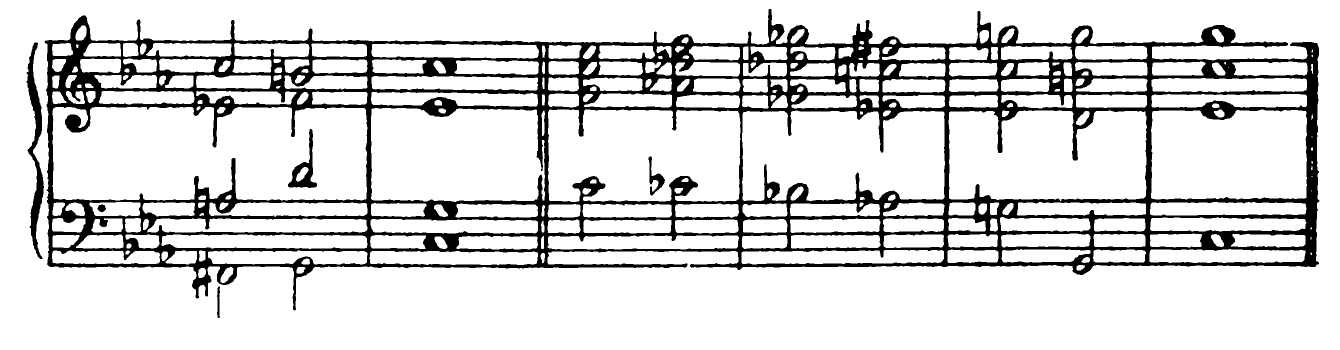
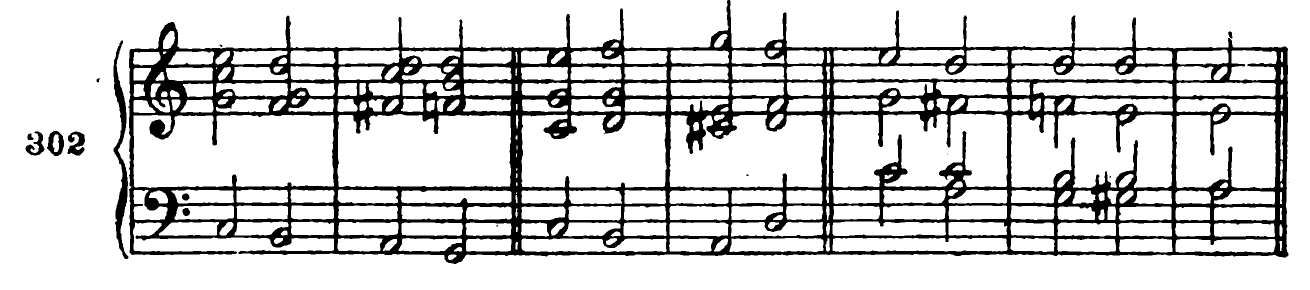
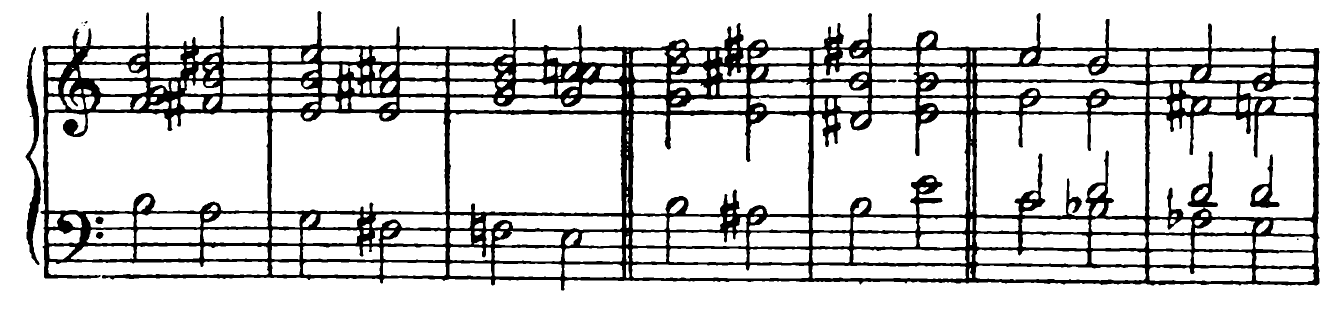
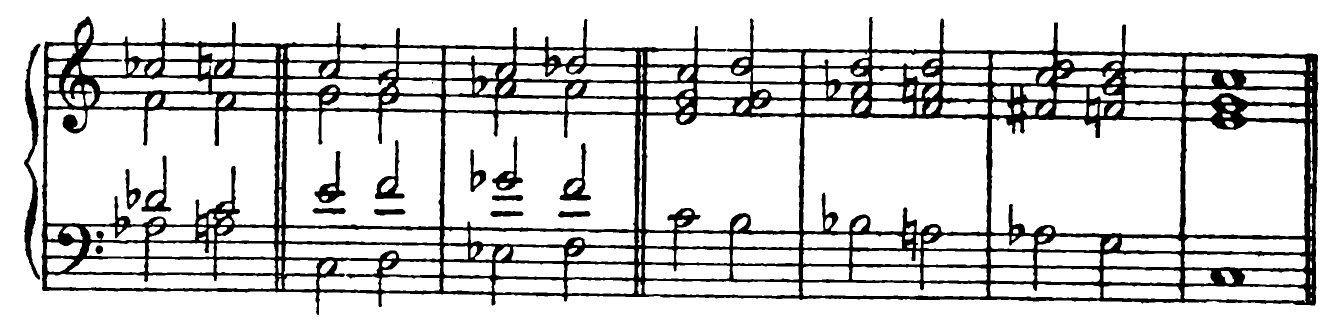
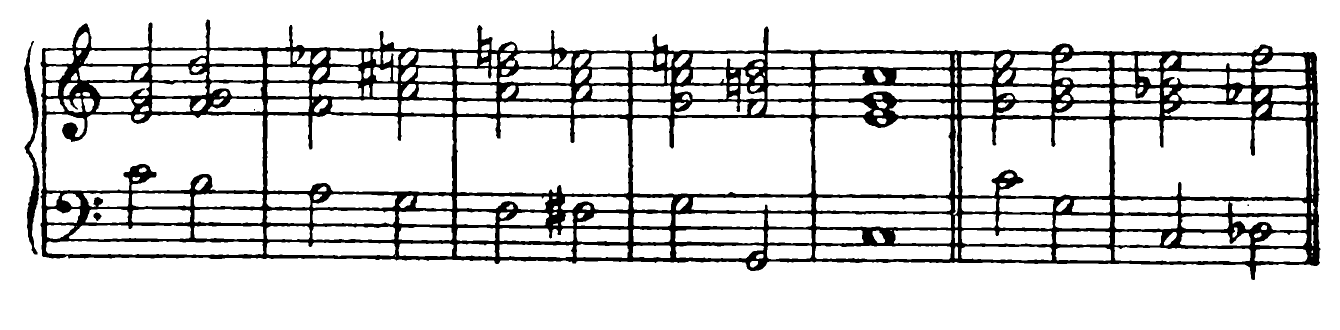
In the following schematic presentation, a major and a minor triad are connected with all other major, minor, and diminished triads. Most cases are already familiar; some more unusual ones are presented in short passages in example 298, with the diminished triad omitted.
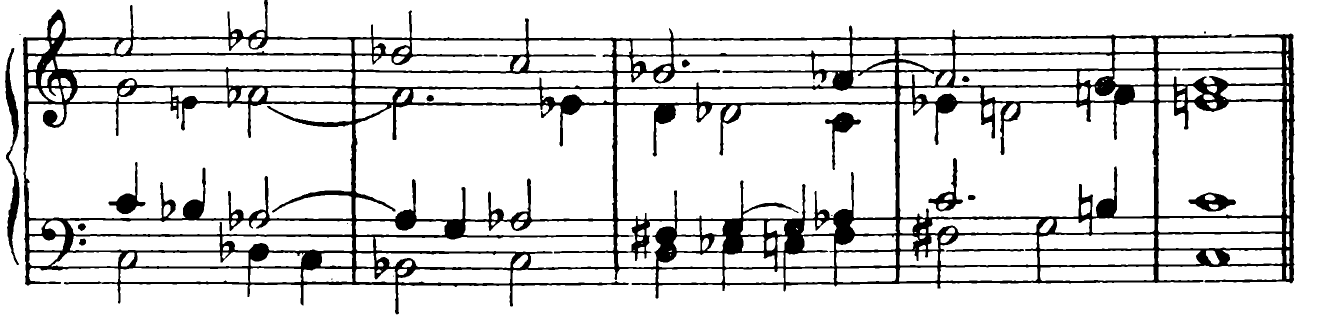
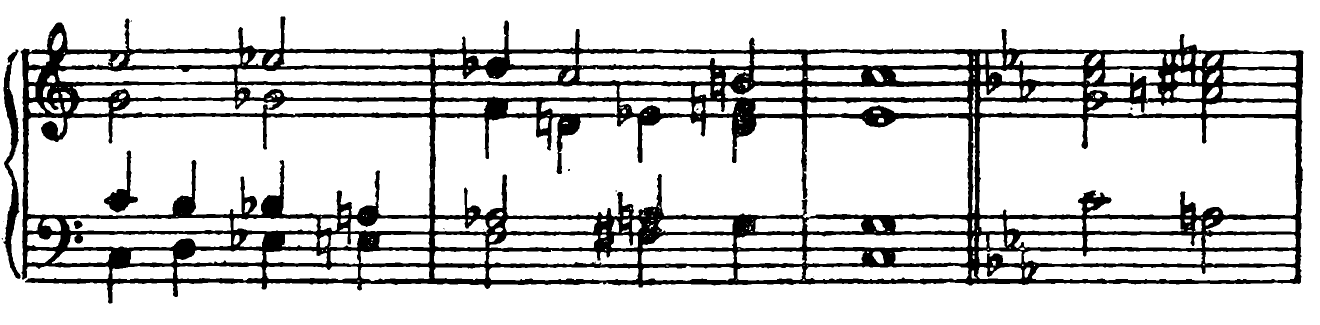
Examples 301 and 302 work out some connections that are not immediately obvious. It turns out that under certain circumstances they can have quite a good effect. Naturally, this could also be shown with ninth chords. I leave it to the pupil who wishes to concern himself with the matter to combine such connections himself. Anything can turn out well in the right place. The melodic handling of the soprano and bass in particular will help improve the effect. Rhythm, however, must not be entirely disregarded either. Sometimes a turn will gain greatly by being connected through passing notes. But the use of passing, neighboring, and suspension notes, since it introduces quarter notes, increases the motion, and this will have some influence on what follows. My recommendation is that once the pupil, having acquired the ability to invent passing, neighboring, and suspension notes together with the harmony, enters quarter-note motion, he does best to continue it to the end, since that will probably best suit his rhythmic ability. It is not impossible to make the quarter notes disappear by avoiding them first on the strong beat and later on the weak, or first in the melody and then in the inner voices. But it is by no means easy.
 Playable Books