 Playable Books
Arnold Schoenberg · section 59 of 66
5. A Few More Modulation Schemes
Read and hear this section in the playable edition →For modulations I have in principle used the old schemes. Nevertheless, the systematic introduction of secondary dominants, diminished seventh chords, and vagrant chords has produced substantial differences from what is otherwise achieved here. But I have always used these stronger means only to enrich modulations, while expressly prohibiting the use of these chords as modulatory devices. The reader will remember my justification: one has time to modulate! And my assertion: in works using simple modulatory means, modulation either occurs gradually or rarely goes very far. Where a sudden distant departure occurs, something else is involved: a particularly prominent contrast, to be judged more as a dynamic than a harmonic event. Naturally, it is also harmonic—an excursion into a future harmony. In this sense it is no exception either, but accords with a law that might read: everything living contains the future within it. To live is to beget and give birth. Everything present strives toward the future.
Now that we have become acquainted with the modulations of the past and enlarged our resources with the means of the present, we reach the point of trying the effects of the new means, which have meanwhile become independent. Naturally, if we set out to do so, new laws would emerge here because new forms are present. Rather, we would have to apply the earlier laws correctly or extend them. This would present no difficulty for us. We recognized that if the tone, or tonic, is the driving center of harmonic events, it is rich enough in prototypes to cover even the most complicated phenomena with its name. It allows one to appeal to it as the ancestor, even if it contains only the possibilities rather than their realizations. For this reason I have preferred to use the more complicated harmonic means in cadences rather than modulations. It was more important to show that their appearance need not break the key, that they need not modulate, than conversely that they can modulate—a capacity not denied even the simplest chords. I showed that tonality does not arise from an irresistible need of the root. But as long as one speaks of modulation, tonality is as much a prerequisite as straightness is for curvature. Neither is conceivable without the other. Consequently, it is more practical to regard tonality as a large territory in whose distant regions more loosely bound forces rebel against the central authority. But if this center exists—which may depend on the author's will—it nevertheless compels the resisting forces to circle around it, and all motion benefits it, the center. All motion leads back to it; everything revolves in a circle. This view is also confirmed by artistic facts. For the only musical art form without such a center, opera, merely demonstrates the other possibility: suspended tonality. All the closed symphonic forms of older art, everything based on tonality, show that departures lead back to the key. Tonality can thus indeed be suspended. But when it exists, modulations are departures from the principal tone scarcely to be judged differently from any chord other than that principal chord. They are only episodes of a great cadence, and my method of introducing vagrant chords chiefly in cadences therefore accords with the facts of art.
Modulations are only episodes. But one can also select such an episode, which a cadence presents only in concentrated form, and treat it separately. Then it can be presented more broadly, less concentrated, more richly developed, with more independent motion and clearer impulses. We did this in the earlier modulations, and precisely for that reason came to shape modulations broadly and gradually. Meanwhile, the more complicated modulatory means have shown us ways of extending our efforts. Once the more difficult task of making these means serve the purposes of a key has been solved, how much easier it must be to use them for modulation. Since I have always been more concerned with developing the pupil's sense of form than stuffing him with undigested knowledge, I should not omit mentioning some things that seem worth attending to now that I am about to recommend modulation by “quick” means. I find that harmonic richness arises not from passing through a great many keys but from writing with the greatest possible richness of degrees. In this sense, a chorale by Bach is harmonically richer than most modern compositions. A pupil thought he was writing “modern” music by modulating in the fourth measure from G major to D-flat major, then two or three measures later to B major, while behaving as temperately in D-flat and B major as in G major, where he used scarcely more than tonic and dominant. I pointed out his error by transposing everything back to G major, thereby revealing the insignificance, monotony, and harmonic poverty of his melody in their true form. He understood when I asked whether he considered it especially daring to behave as philistinely in D-flat and B major as in G major.
Richness of degrees will therefore be the most essential characteristic of harmonic art. What other means one uses is relatively unimportant. But one thing is clear: if one uses vagrant chords, especially for modulation, they must stand in a balanced relationship to the other harmonic events. Otherwise formal smoothness could scarcely be attained. They must fit their surroundings; consequently, the surroundings must offer something similar. The sudden reinterpretation of a triad as, say, a Neapolitan sixth will hardly suit a succession of pure triads. Conversely, such a turn would not be satisfactorily concluded by a simple IV–V–I cadence. Naturally, things are entirely different in a work of art, and I hope it is already clear that I am criticizing harmony exercises, not works of art. I also hope the reader remembers what I think about the relationship between our craft exercises and a work of art: they have scarcely anything in common. That is why my examples always turn out relatively stiff. They lack the creative impulse that gives form even where it sought only expression; they spring merely from an exploited possibility, not an irresistible necessity. Here the application of laws forms the basis of legitimate criticism. Here, unlike in a work of art, a procedure such as the one in question may be censured as inappropriate, and exploiting an isolated, accidental “quick” modulatory device may be called immoral. One must say: one does not exploit a thing like that when a sonority introduced as a dominant seventh chord is continued as an augmented four-three chord. It is repellent, for it is like continuing to strike an enemy who has fallen and broken a leg, or shooting someone already dead still deader. And the satisfaction that closes such a turn with a simple cadence surely springs from the same dishonesty as the excuse that, after stumbling, pretends one intended to jump. Once one has made a sudden turn to a distant region by a quick means, it should be used only as an allusion, an indication, an approach to the goal. A long cadence afterward should, so to speak, seek the middle ground between departure and destination, restoring balance. Whereas I previously demanded clarity concerning the goal, the passage here should express, by being “on the move,” that it seeks an indicated goal.
If the pupil does what I recommend here, his work may not become better than if he omits it. He therefore need not follow me here if smoothness of his products is his chief concern. If he nevertheless attempts it, he will certainly spoil some things, but will have passed through what matters. He will have made things difficult for himself. Yet failing on this path is more moral than succeeding on an easy one. For success says nothing at all, or at most that one has made things too easy.
Under these conditions, I shall now place a few more modulation schemes at the pupil's disposal.
A major key can be changed into the parallel minor by simple means, and minor into the parallel major.
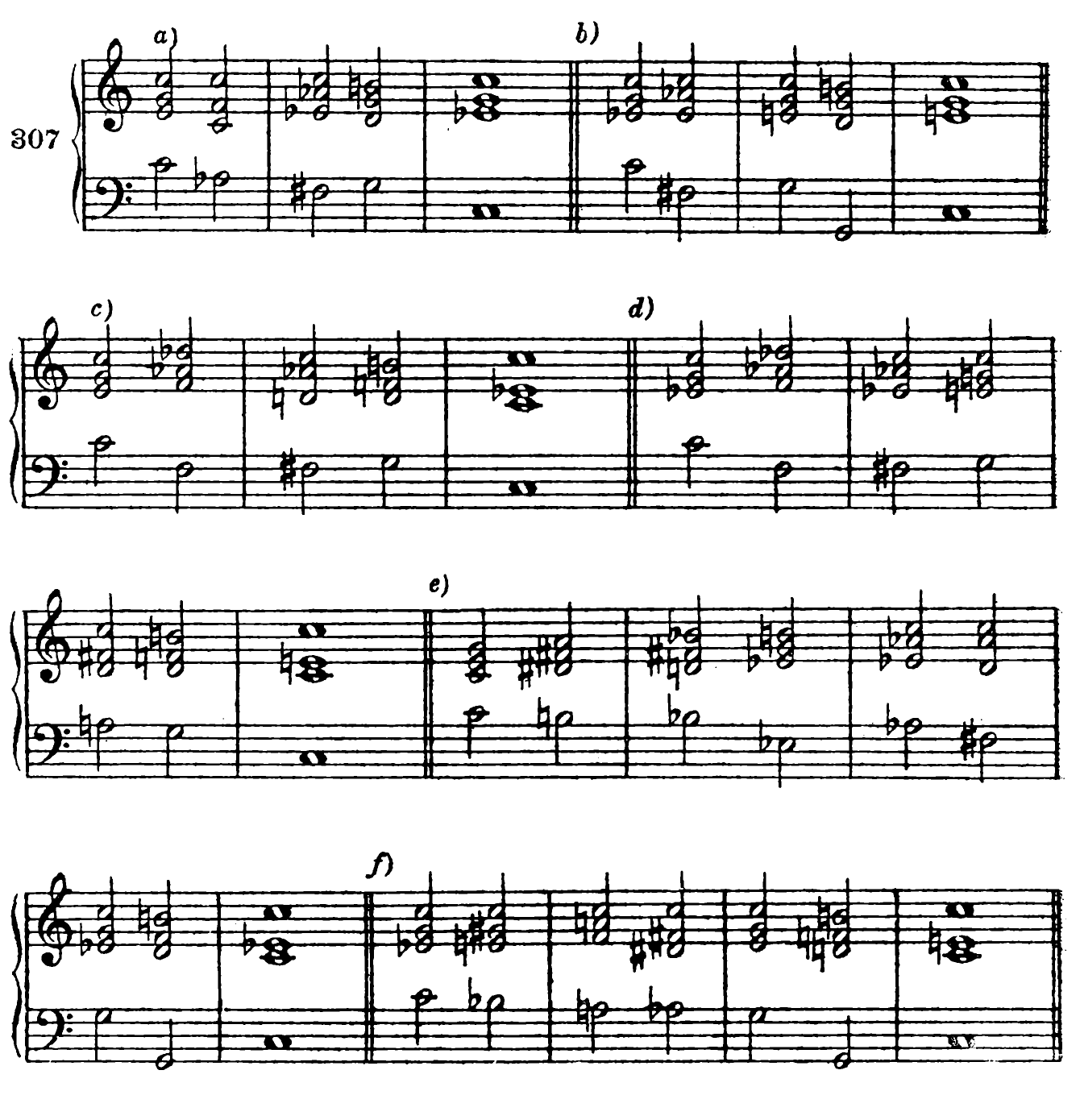
Naturally, there are many means of doing this. Here the Neapolitan sixth and augmented six-five, four-three, and second chords were chiefly used.
This can be used to direct a modulation intended for a major key first toward its parallel minor, then change the minor into major. Conversely, when the intended destination is minor, one first moves into the parallel major, then changes it into minor.
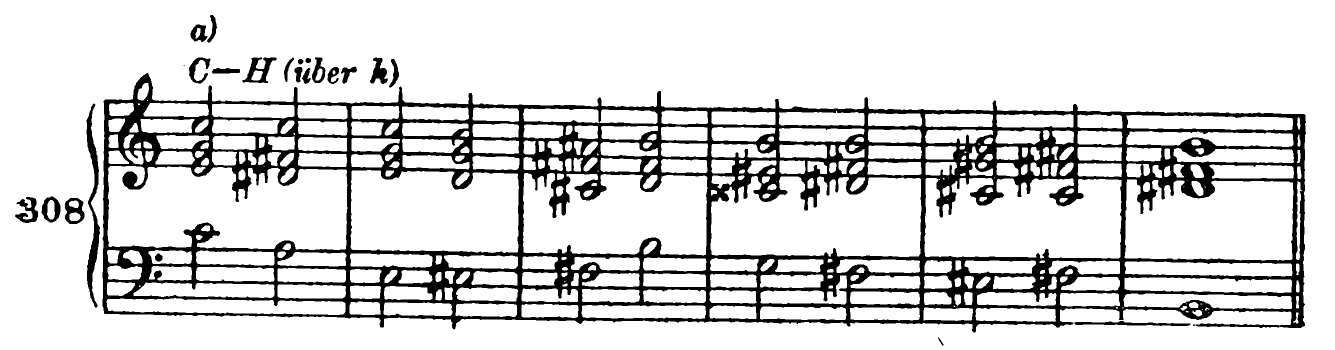
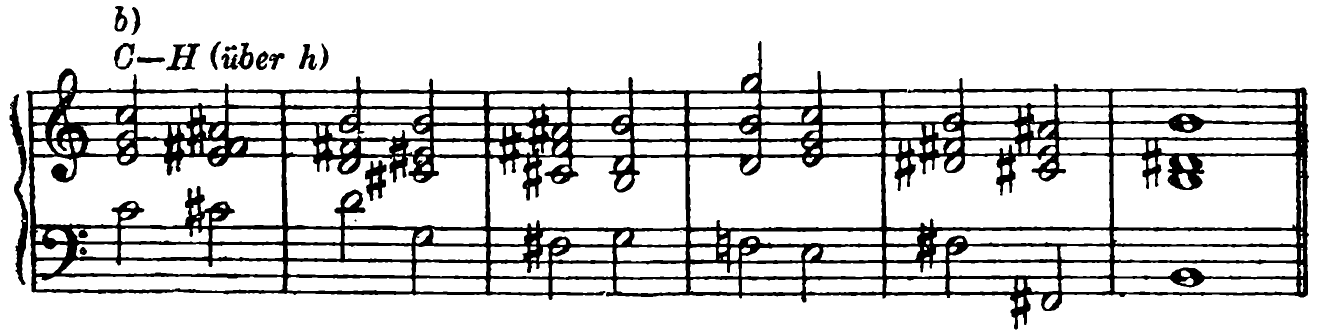
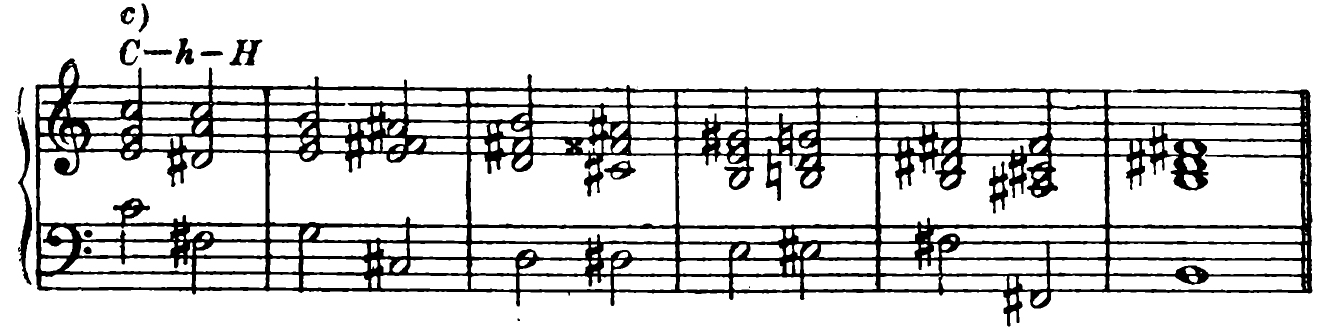
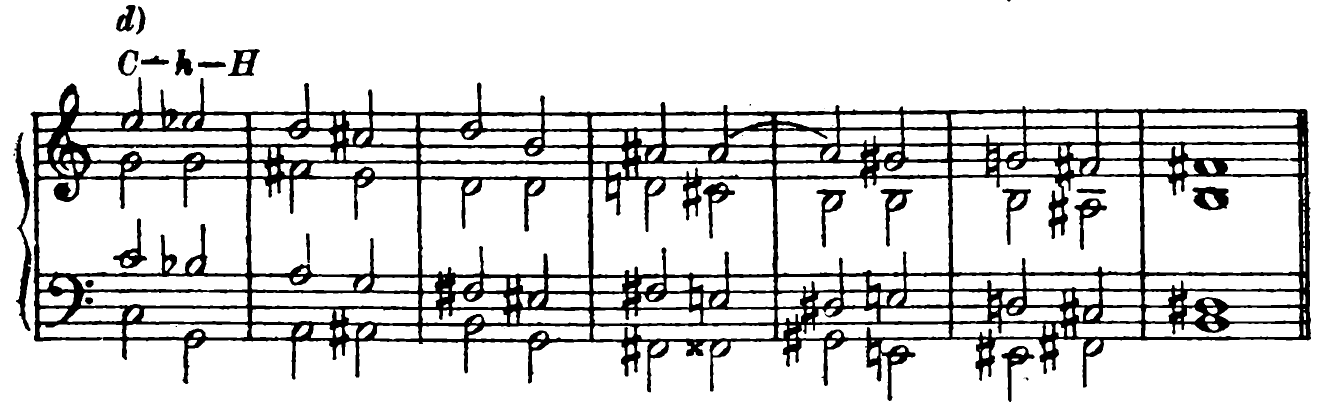
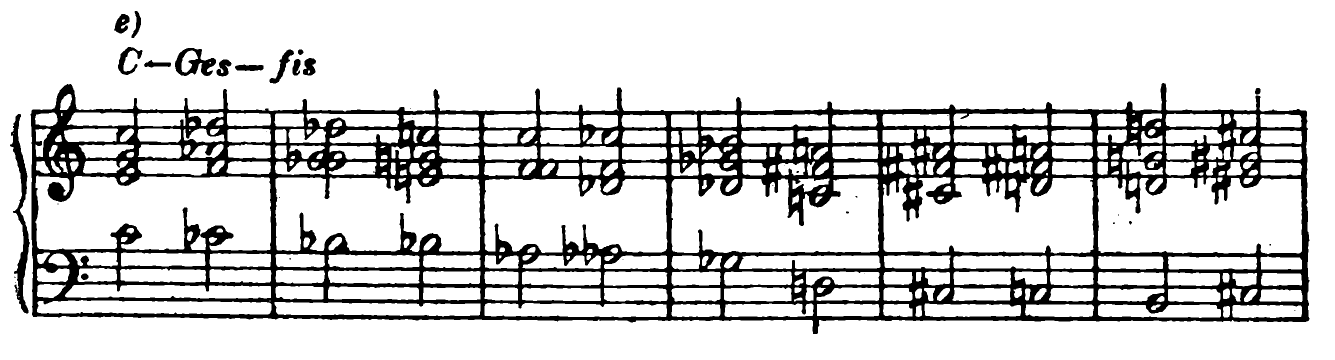
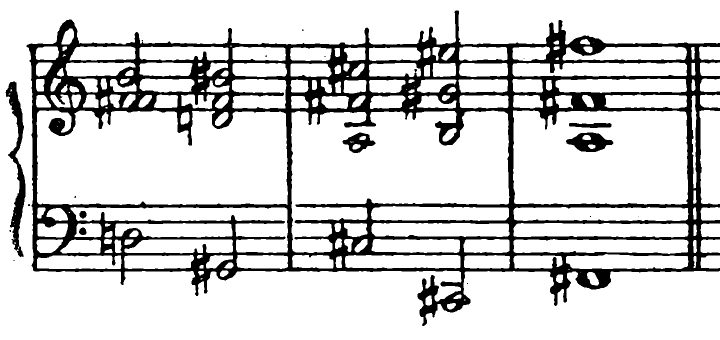
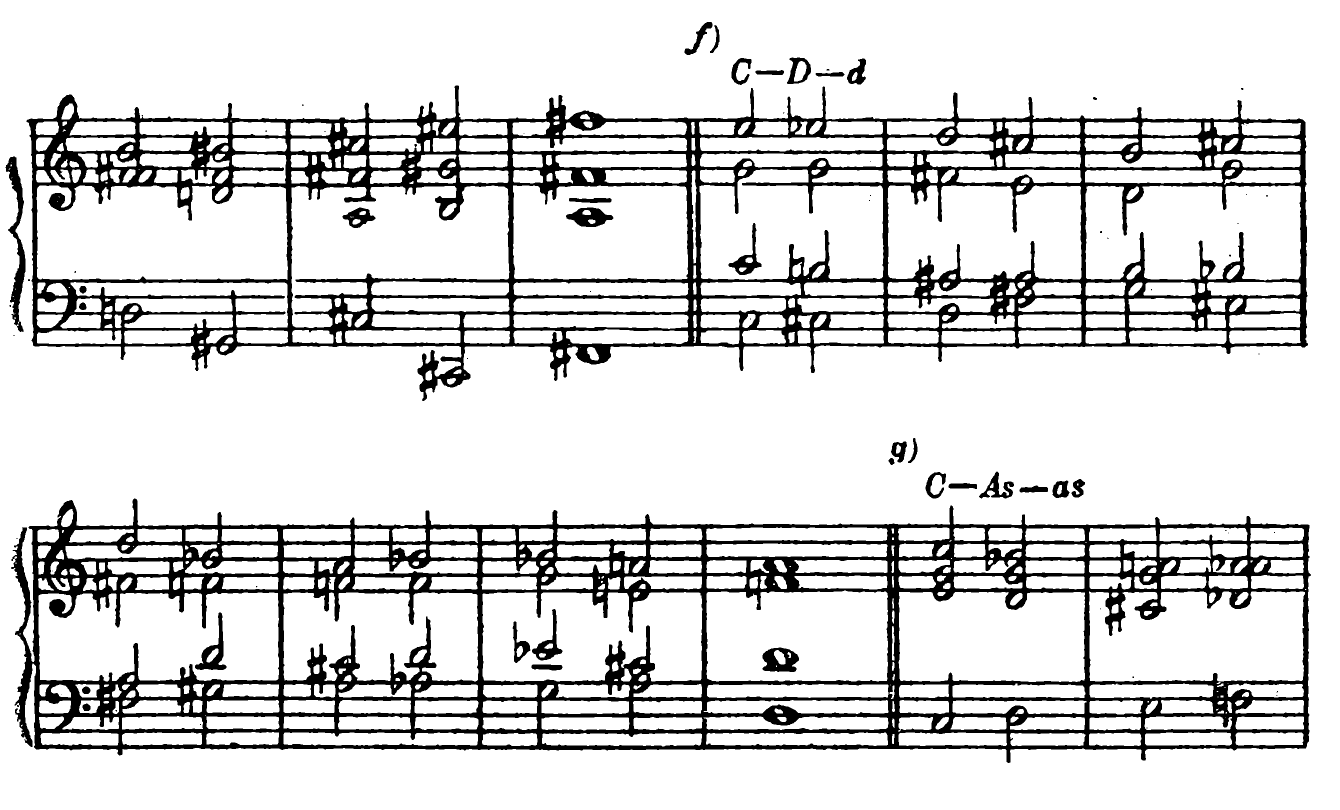
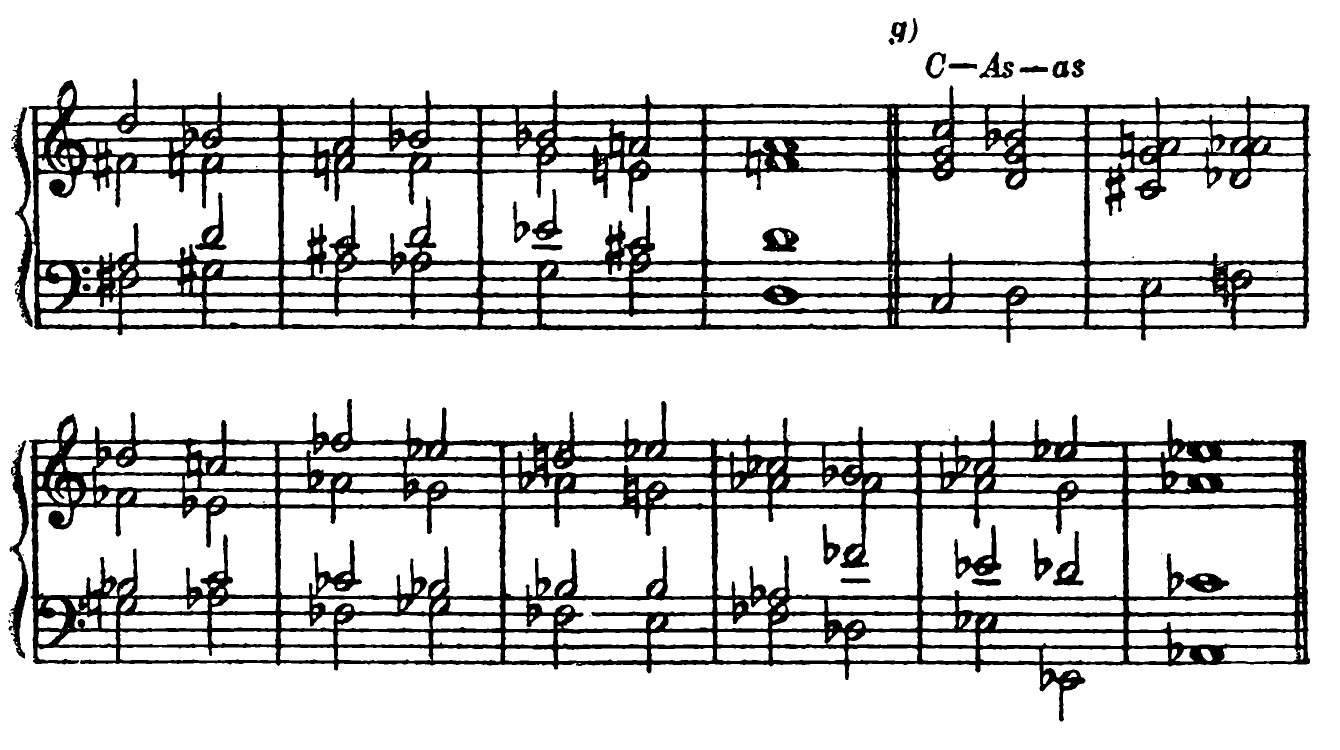
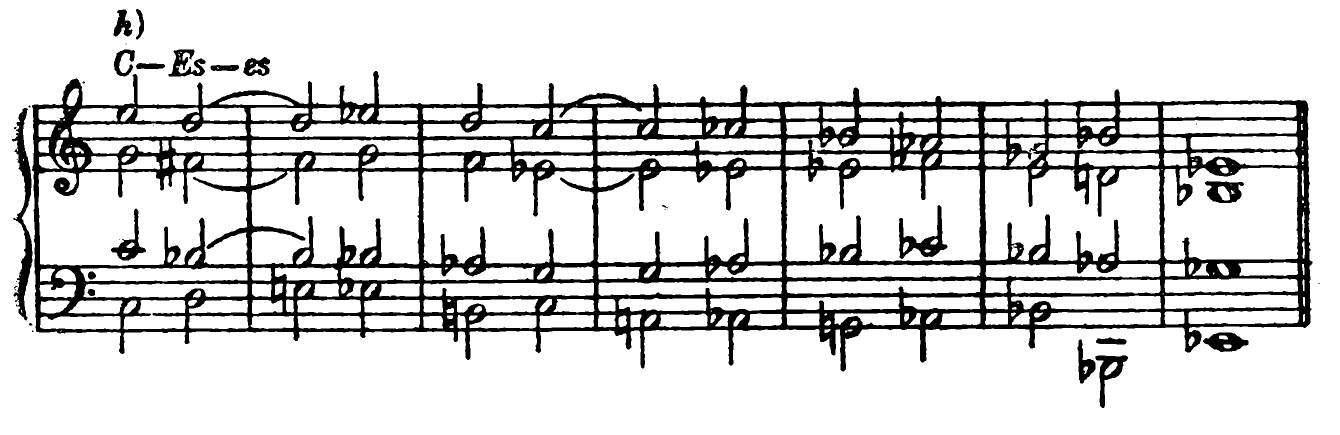
This readily recalls the methods for the third and fourth circles of fifths, which rest on similar principles. But it can be done with other means.
Another method:
One steers toward a vagrant chord—a Neapolitan sixth, an augmented six-five chord, an augmented triad, and so on—and thereby takes the first step toward modulation.
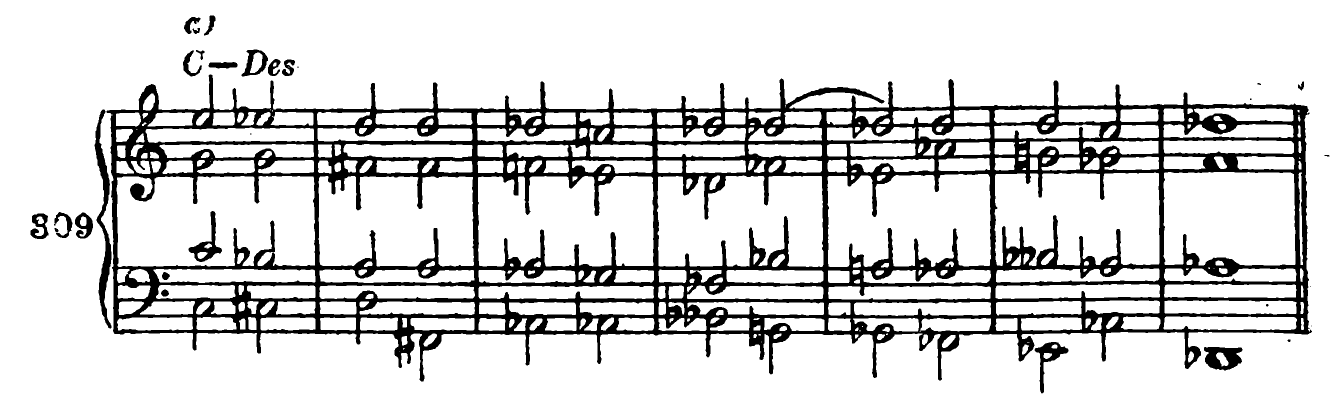
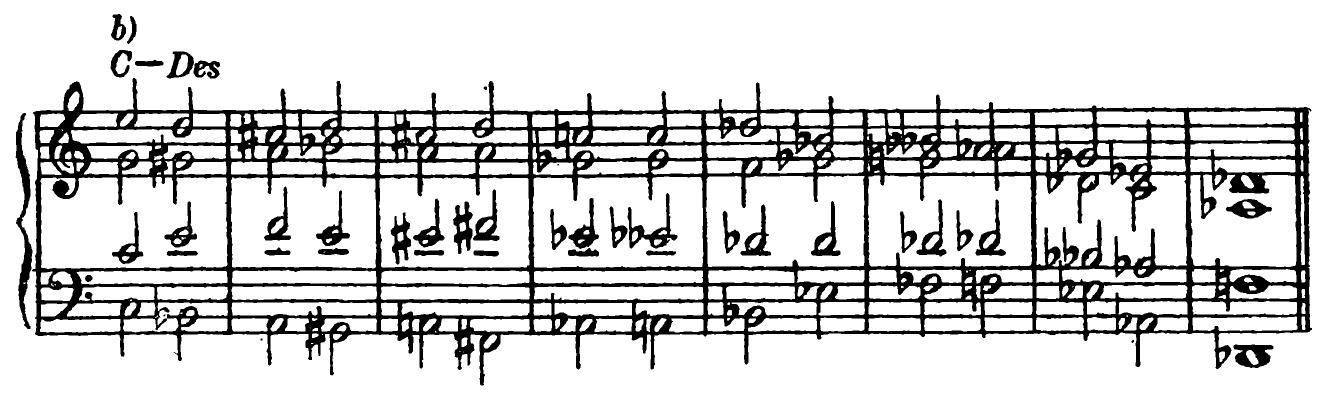
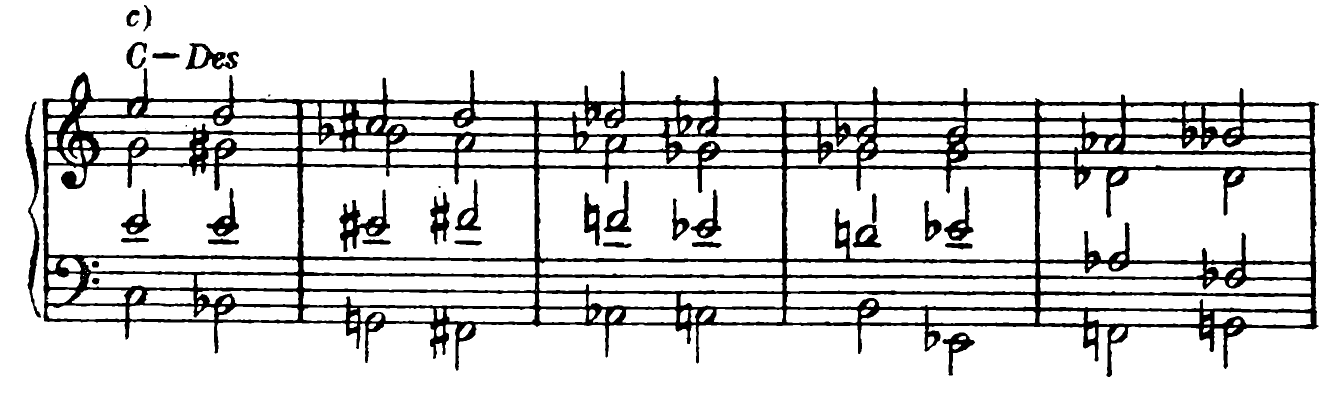
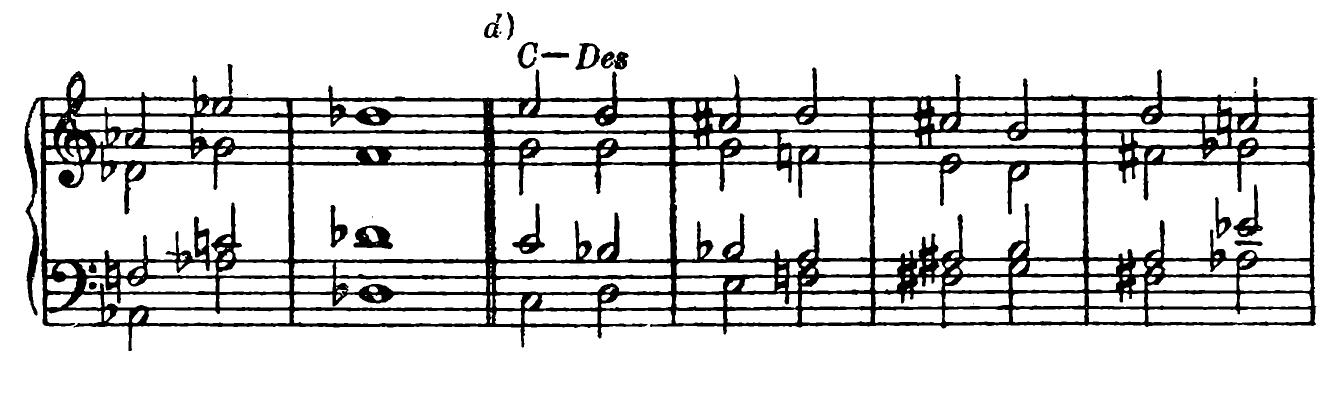
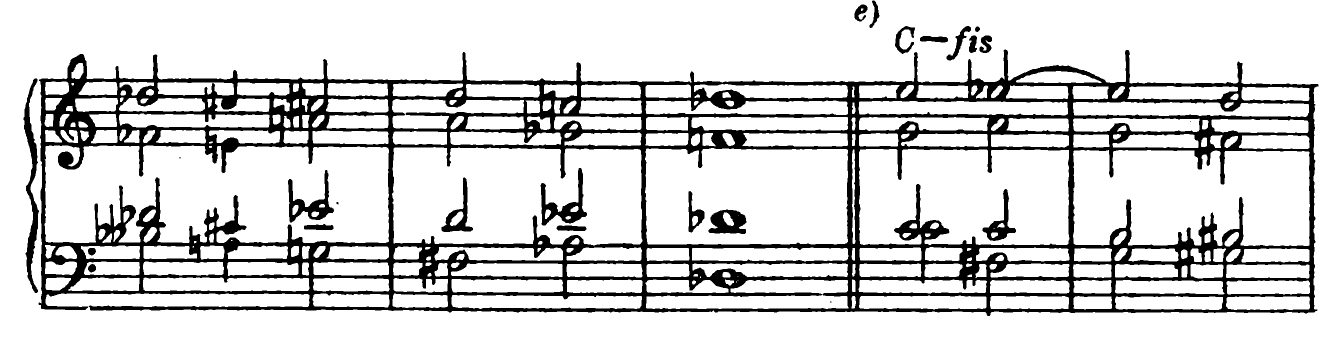
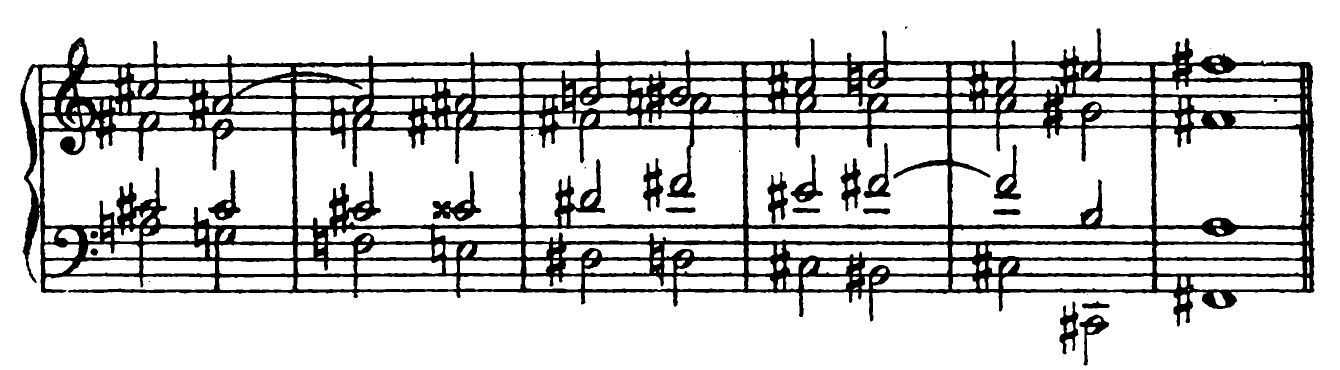
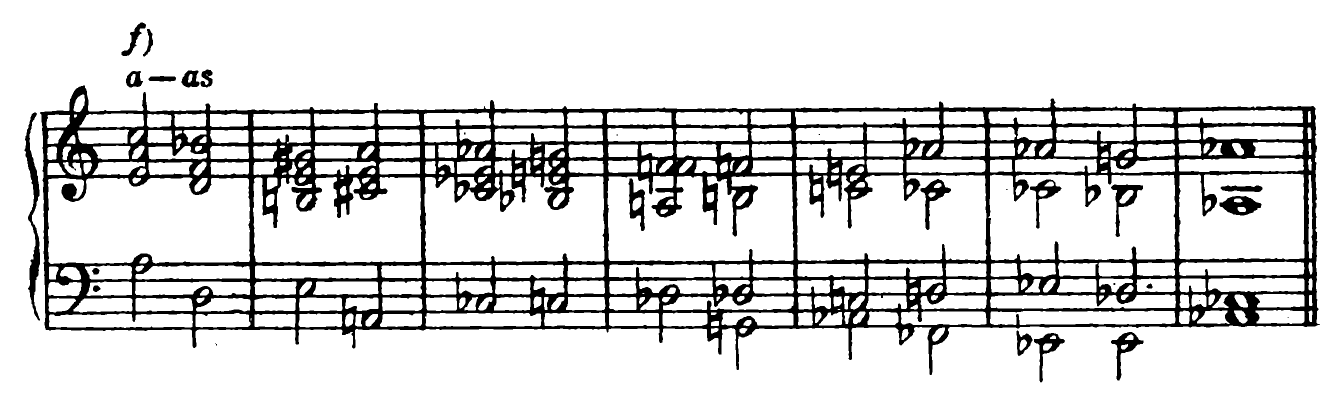
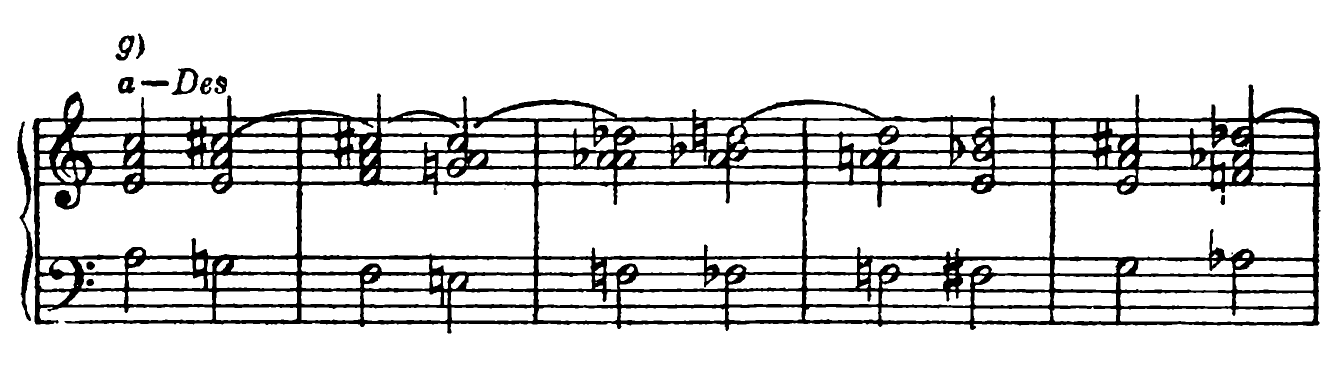
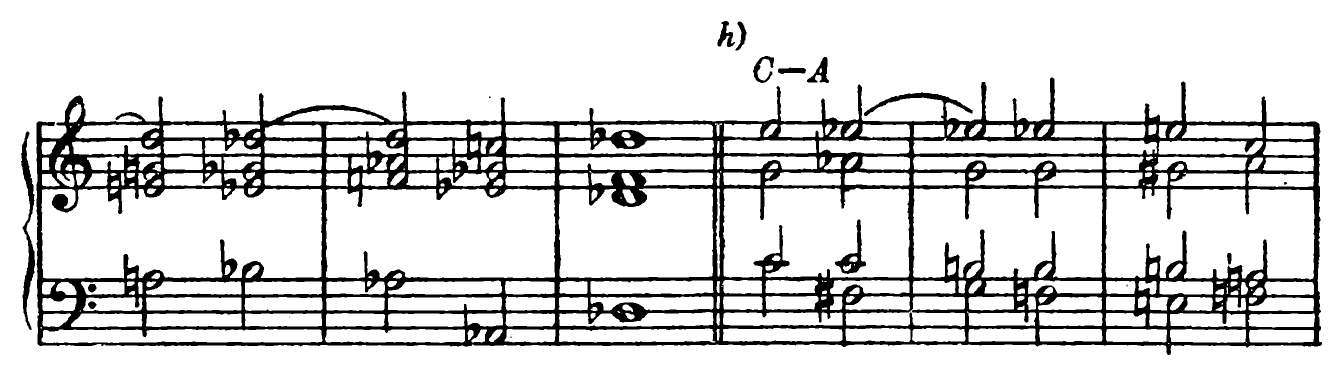
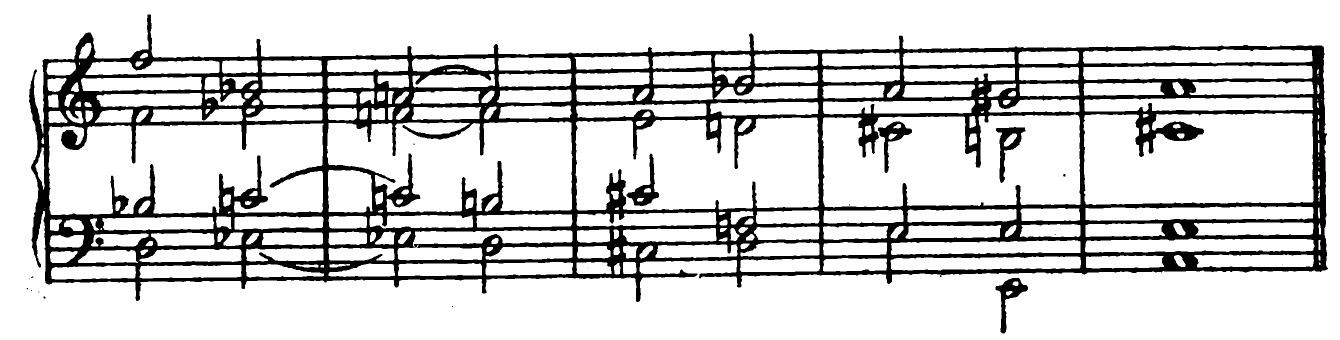
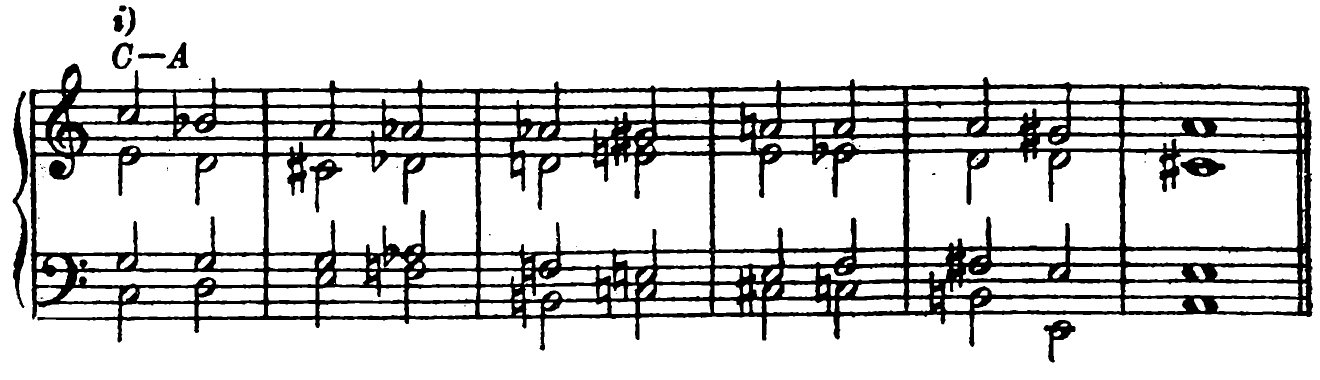
This can also be expressed differently: every major triad can be understood as a Neapolitan sixth chord, every dominant seventh chord as an augmented six-five chord. Naturally, this should not be the only means of modulation.
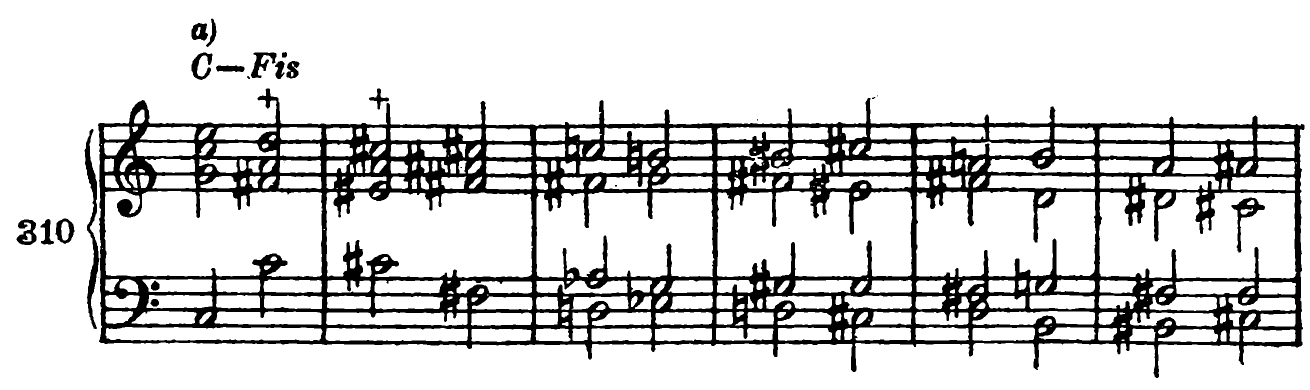
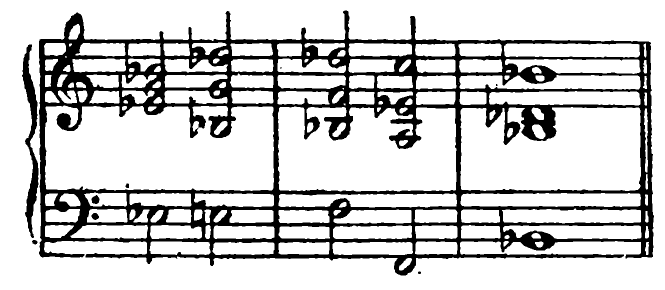
Example 310 presents something the pupil should practice. A succession of two chords, marked by crosses, is continued in various ways. What matters here is less that the whole proceeds toward a particular modulation than that one tries out such a chord’s capacity to turn in different directions.
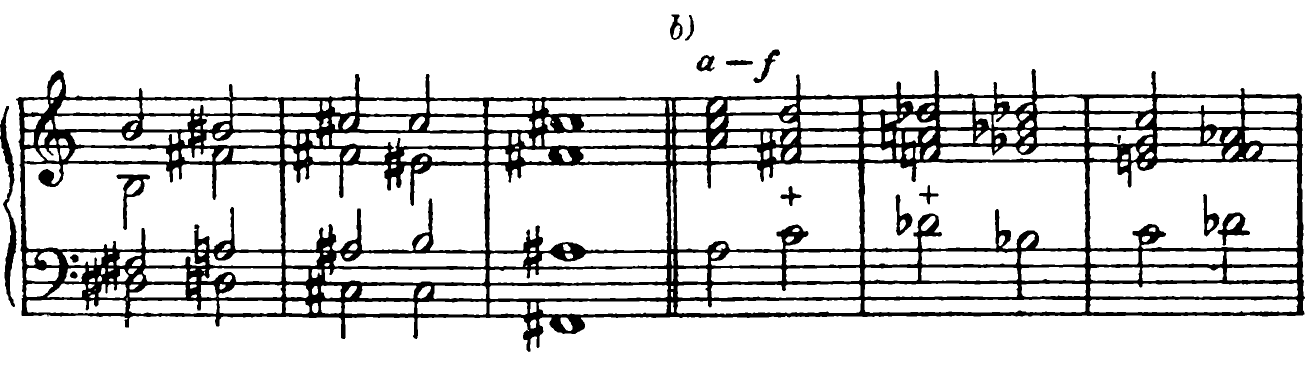
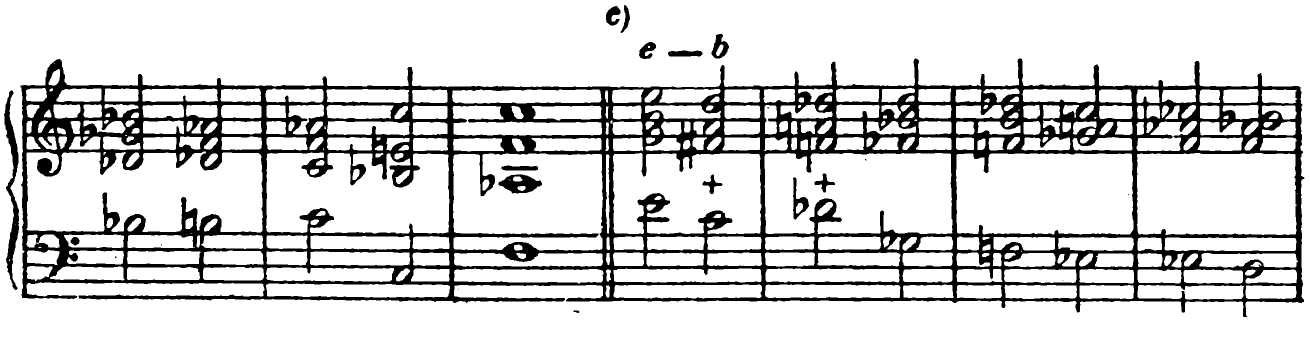
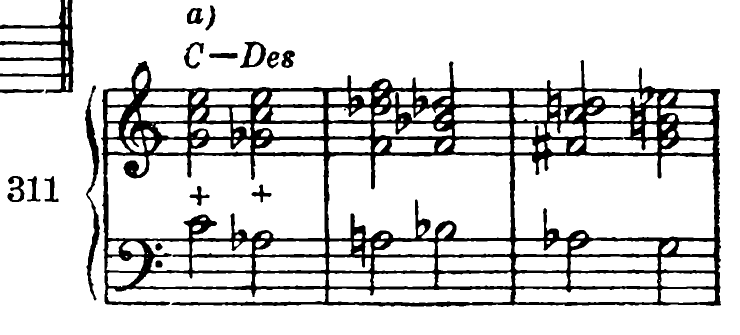
In 311 the same experiment is made with another chord succession, marked by crosses.
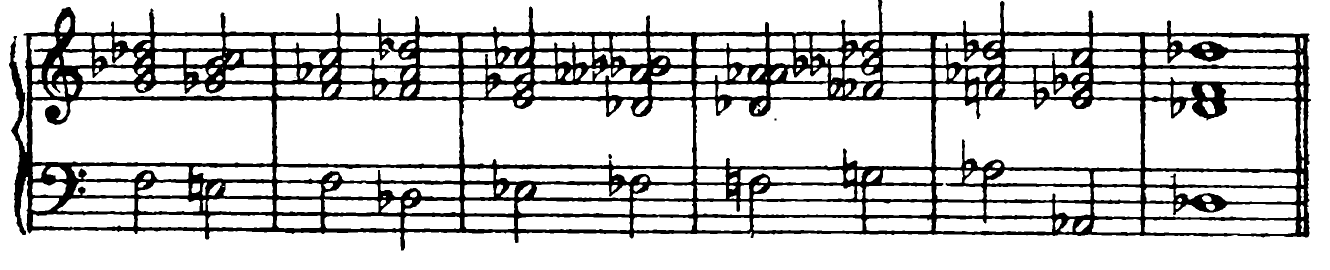
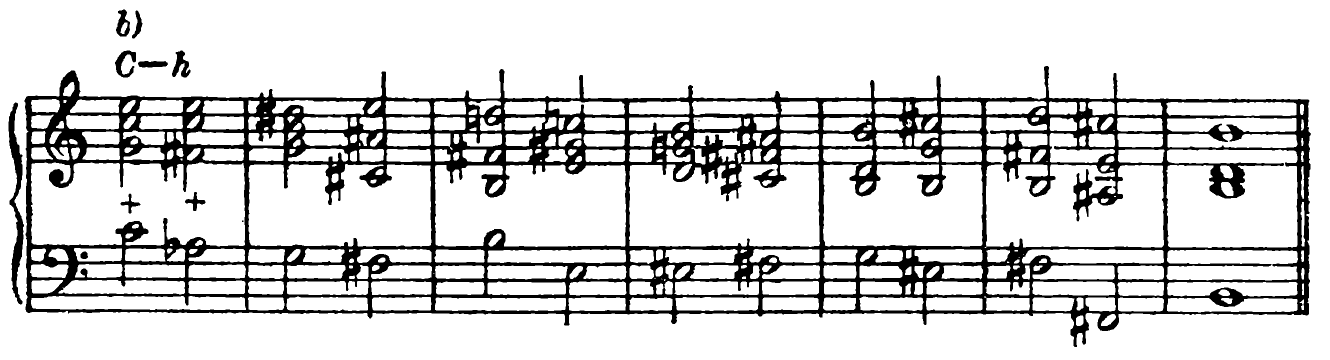
Example 312 shows how one can approach a key by long detours. What is always essential is that the destination was indicated beforehand.
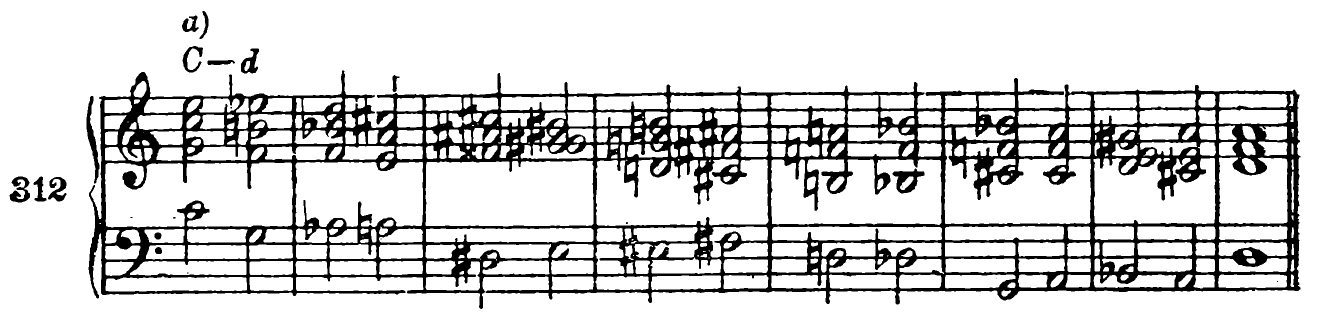
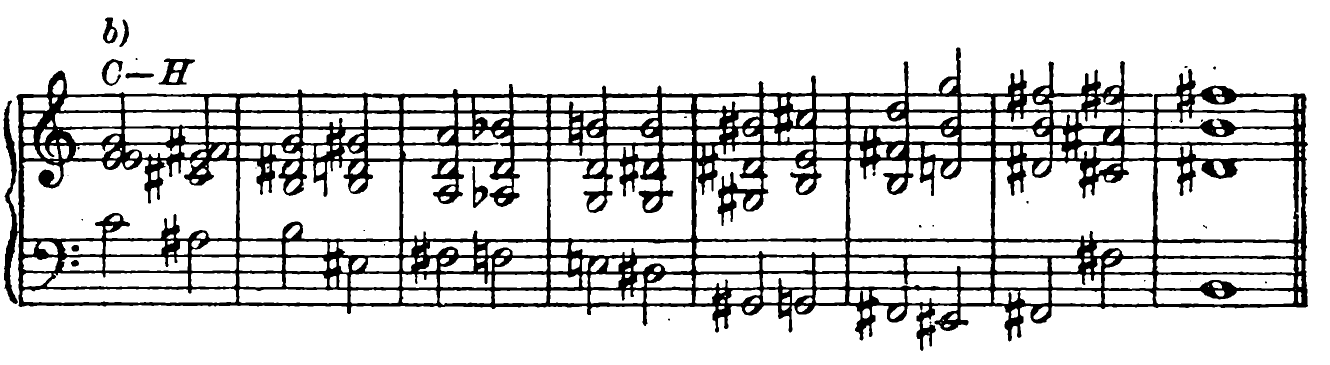
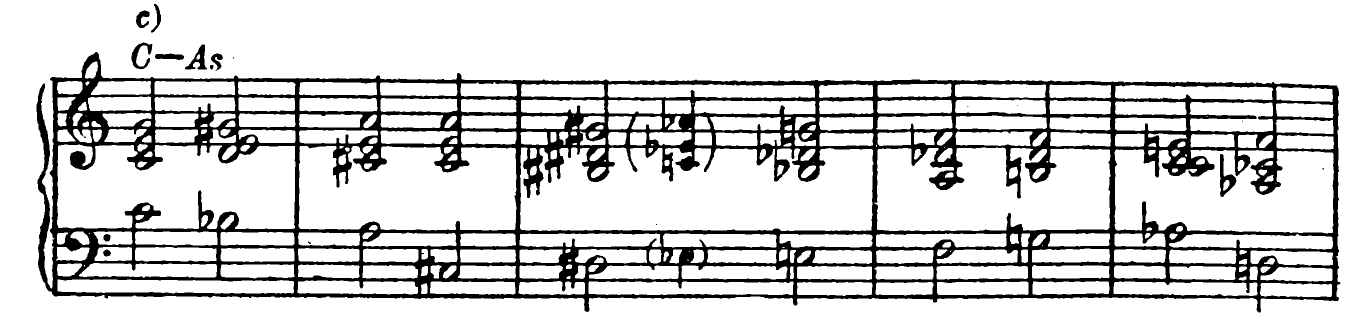
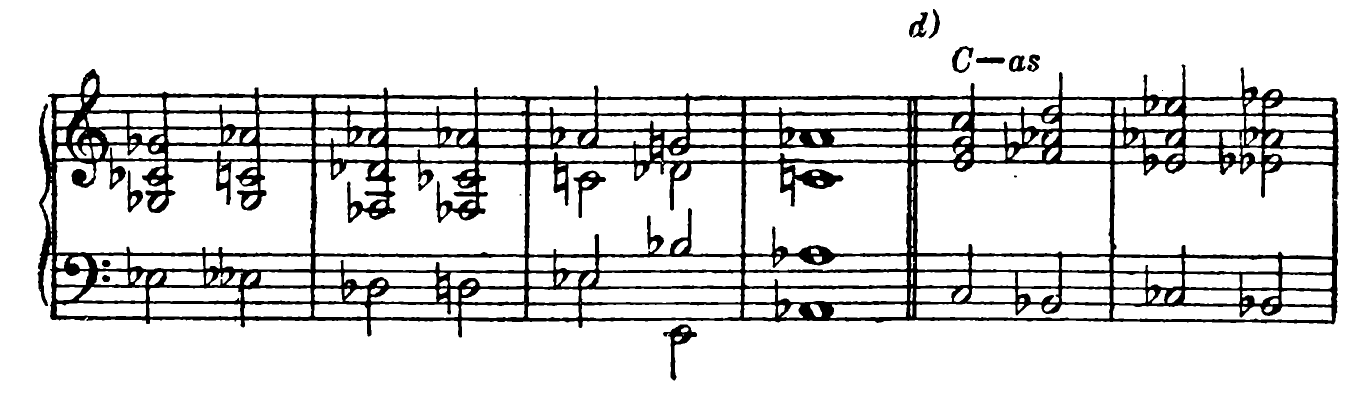
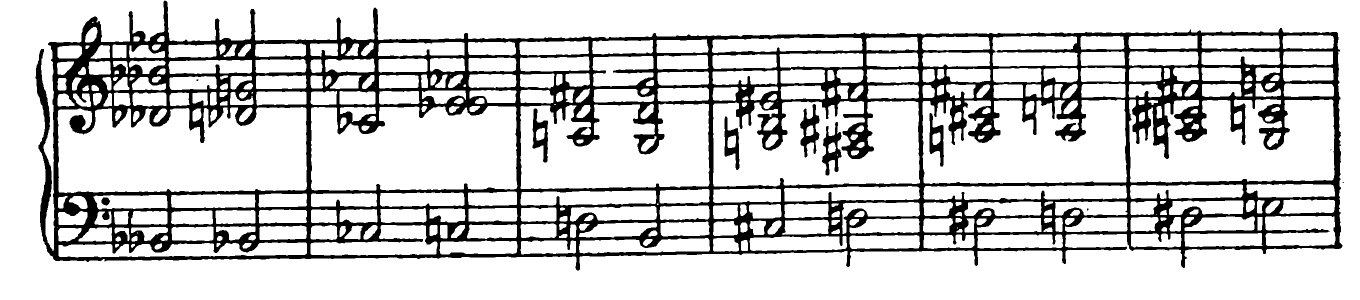
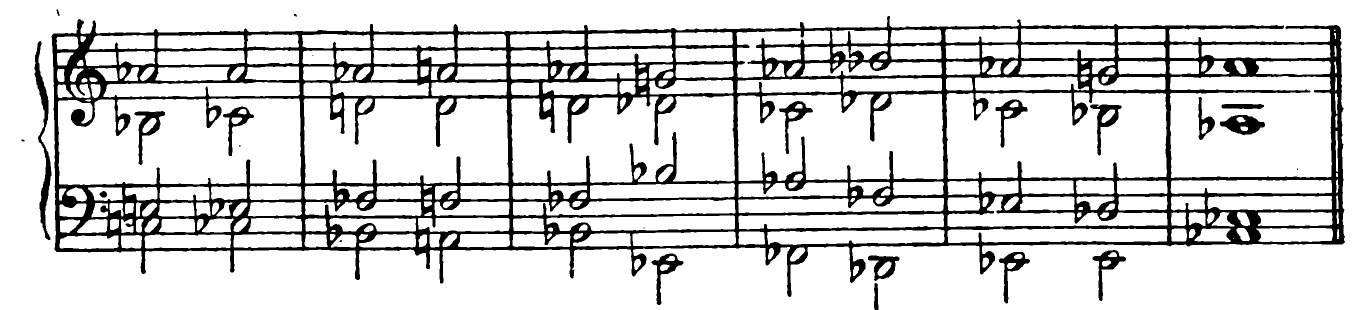
I do not myself find these examples particularly good. This is chiefly because there is no motive. Adding richer motion, neighboring notes, passing notes, and suspensions readily improves things somewhat, especially when, as in 313, small details gradually develop into an actual motive. But here too I must repeat: the pupil should attempt this only when he invents these faster notes together with the others.
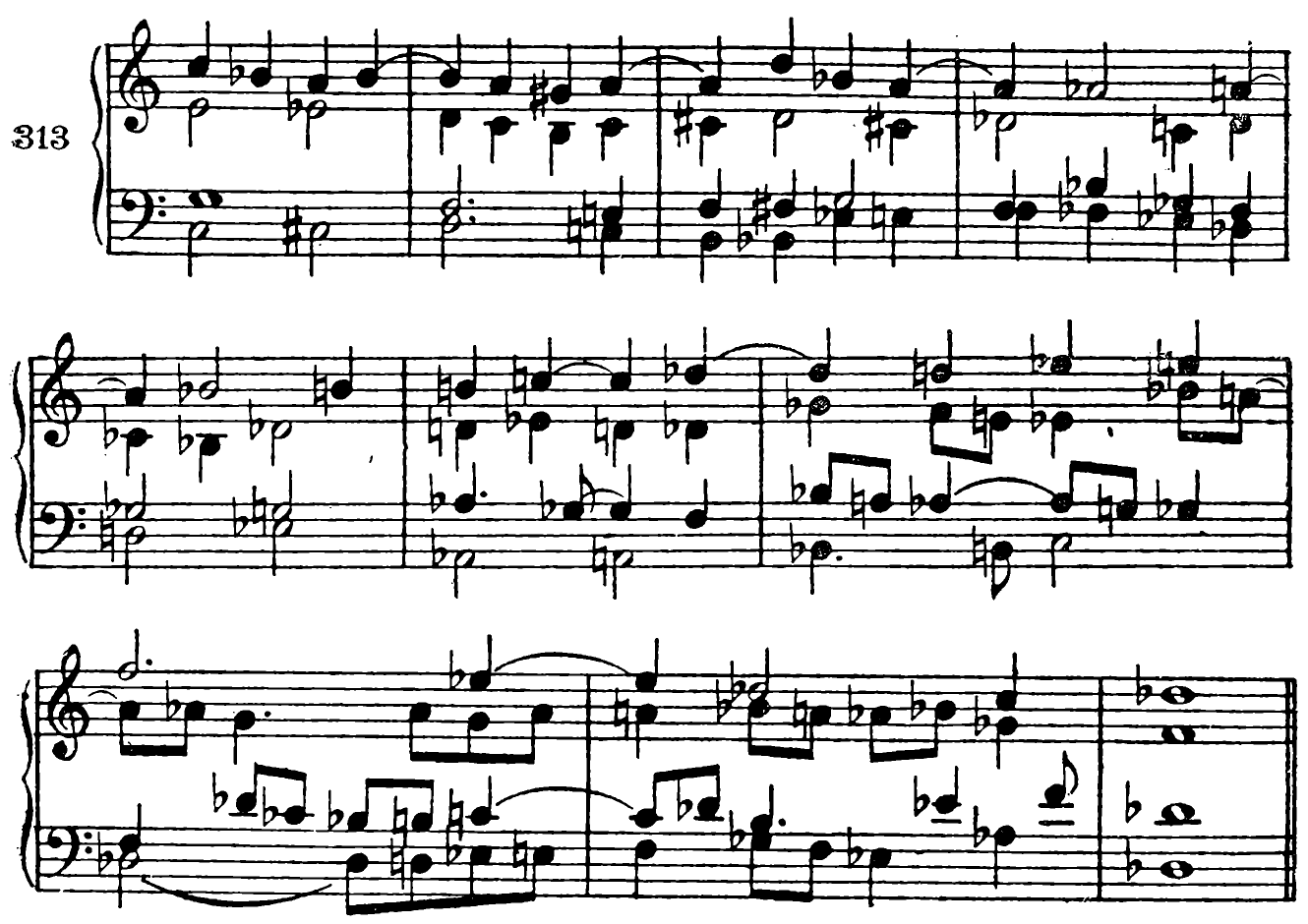
In these last examples I deliberately kept the spelling largely as the usual prescriptions demand. I wanted to show how little spelling itself suffices to explain origins, yet how greatly it impairs readability. Only where I myself would have been unable to find my way did I respell enharmonically. I must be forgiven for treating this question so lightly, for I am proud of it. I am proud that I have not devoted a moment's serious reflection to what is usually the academics' be-all and end-all, but have passed directly from freedom from preconceptions to understanding: the understanding that an insoluble problem lies here, caused by the inadequacy of our notation.