Playable Books
Pyotr Ilyich Tchaikovsky · section 16 of 36
Chapter XIV. The connection of dissonant Harmonies resolving into the tonic Triad
Read and hear this section in the playable edition →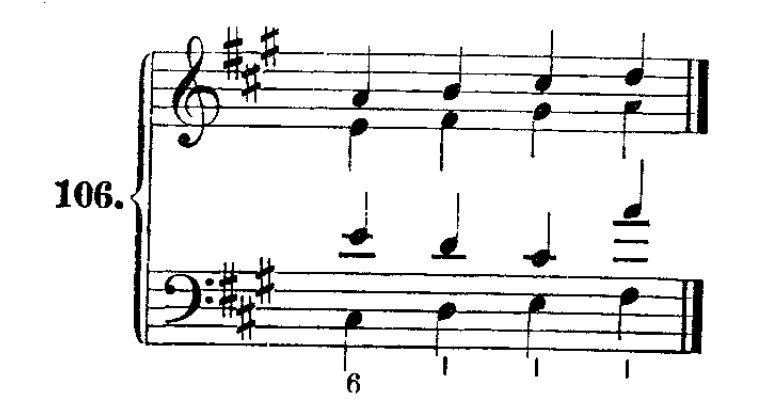
§ 40. The dissonant chords just treated, need not always resolve directly into the triad. In some cases these chords are repeated once, or several times. before being resolved; or they are even led first into other dissonant chords.
Following are a few such cases:
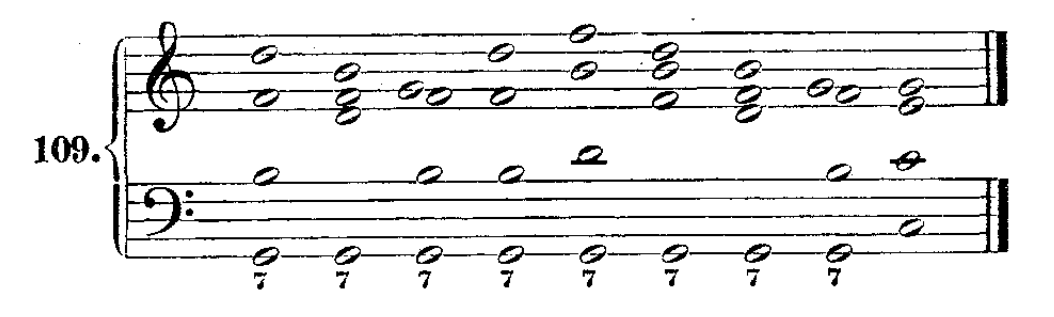
a) The fundamental form of the Dominant chord is repeated several times, whereby complete chords must not be mingled with incomplete ones lacking the fifth.
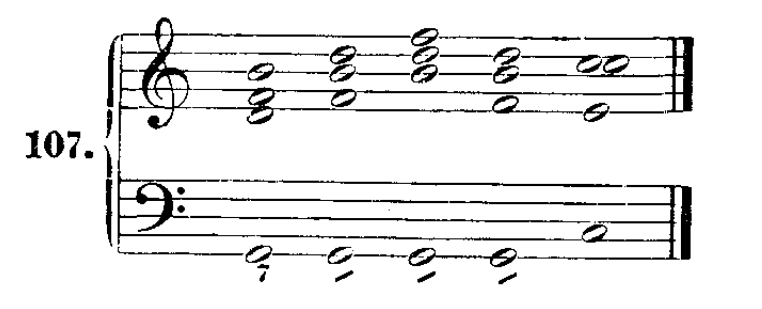
Where the fifth is wanting, such a repetition of the chord is permitted only on condition that the seventh is never led into the fundamental tone, except when it appears in the Alto, and the chord is in close position.
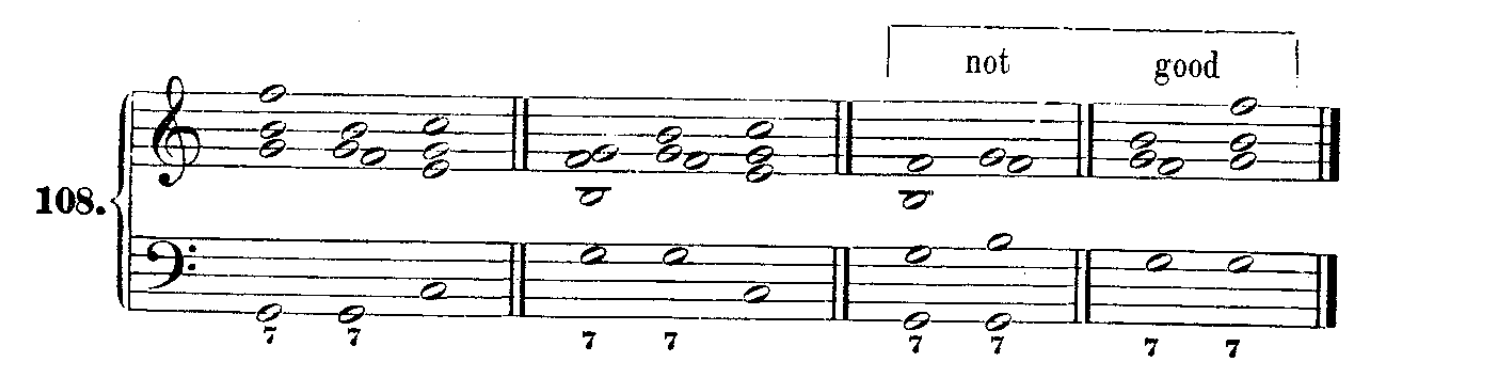
In free-voice-leading the Dominant chord may be repeated in. the most diverse positions, provided the seventh is never led into the fundamental.
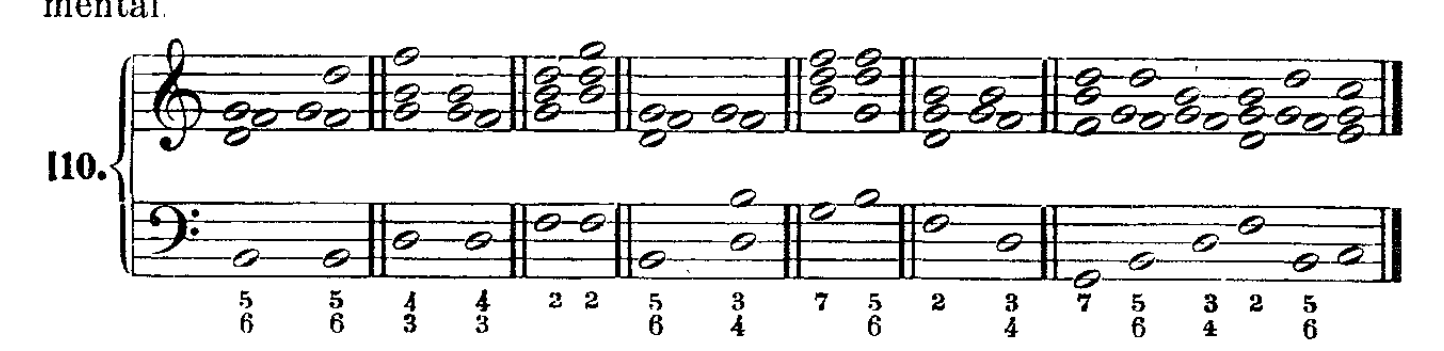
b) In connecting the inversions of the Dominant chord with one another and with the fundamental form, the seventh should, if possible, be retained in the same voice or at least in the same octave. In certain cases it may be led into another interval of the chord; but by no means into the fundamental.
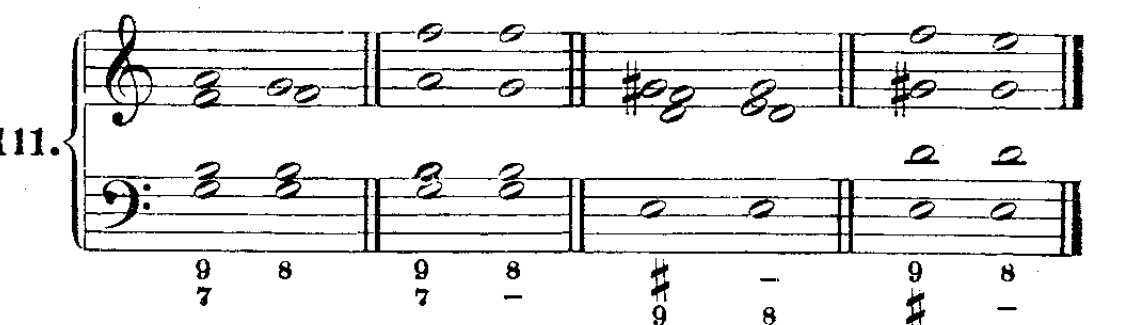
¢) Repetitions of the chord of the ninth are rare; in minor they involve the exceedingly harsh step of the augmented second—from the 6-th to the 7-th degree. Often, however, the chord of the ninth is followed by the chord of the dominant-seventh, which chord-combination results from premature resolution of the ninth into the fifth of the tonic triad (at the same time fundamental tone of the Dominant chord.
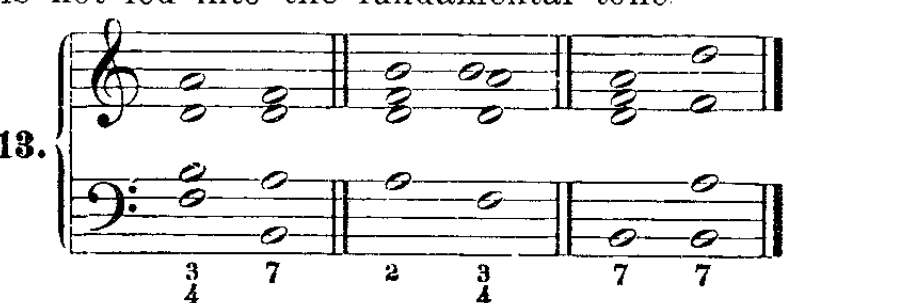
d) The connection of various forms of the minor chord of the seventh with one another is allowed only, if the seventh remains in the same octave:
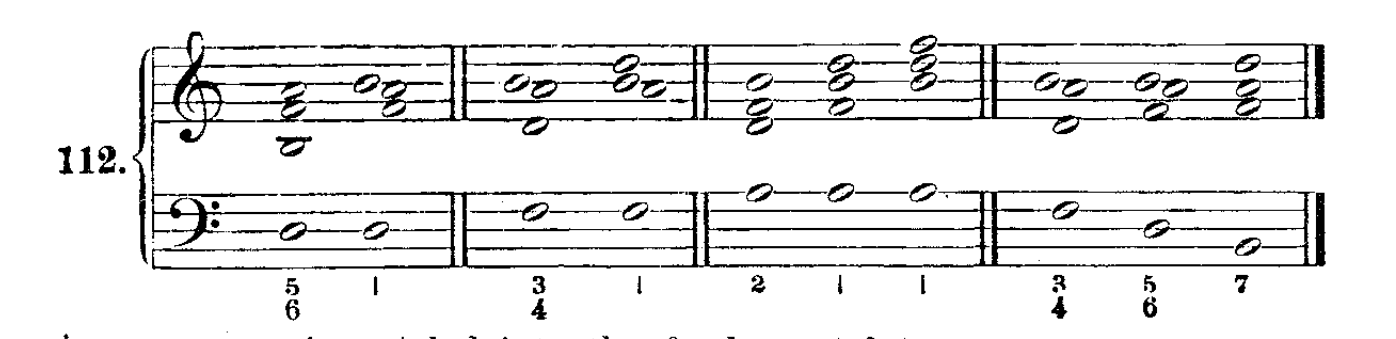
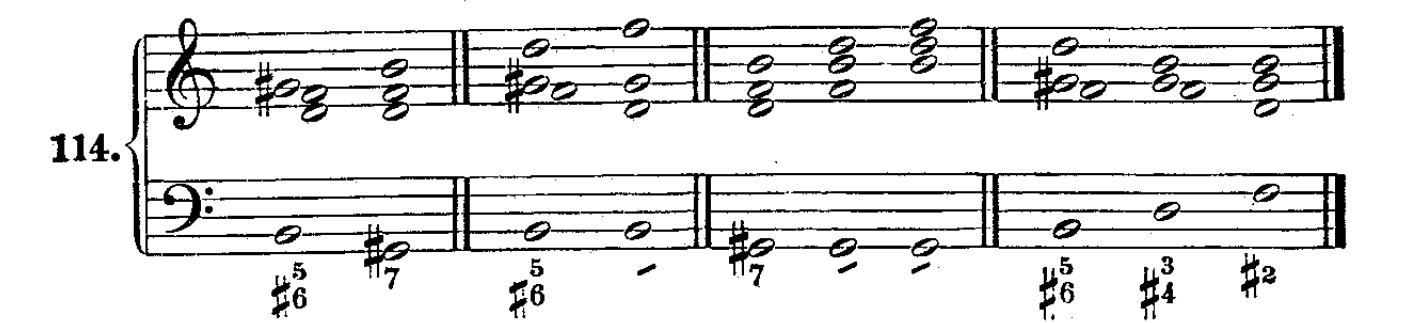
When diverse forms of the diminished chord of the seventh follow one another, the step of the augmented second has to be avoided.
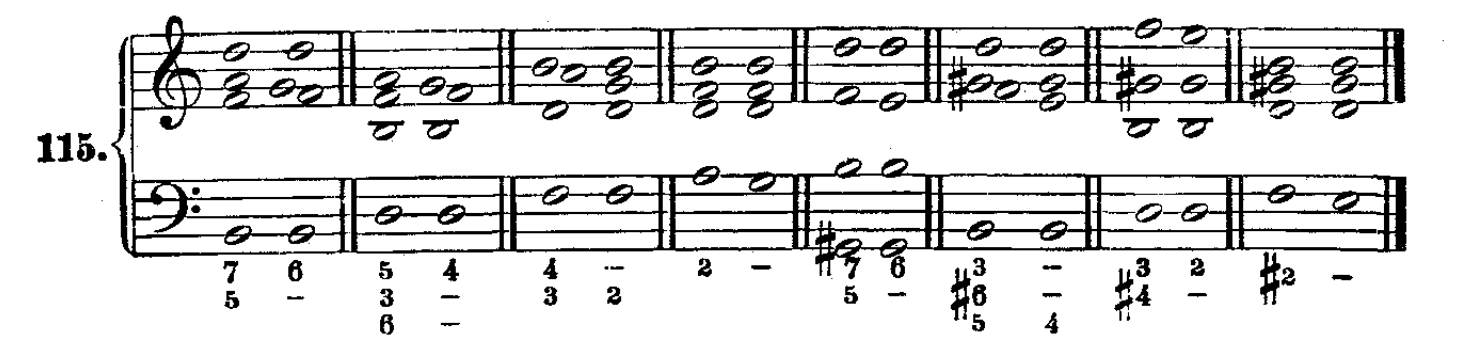
Like the chord of the ninth, the chord of the seventh on the 7-th degree may precede the Dominant chord, in which case the seventh (formerly ninth) descends one step into the fundamental tone of the Dominant chord.
e) The chords of the seventh on the 5-th and 7-th degrees may also be connected with the Dominant triad; the seventh must here resolve not into the fundamental tone, but into the fifth of the triad.
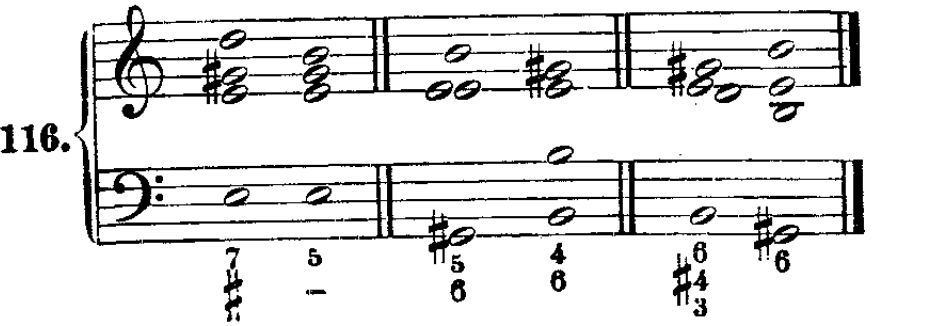
As regards the chords of the seventh on the 7-th degree, they can be connected with the Dominant triad only in case the latter stands between the second and third inversions of the chord of the seventh, and two voices remain stationary, while the Bass progresses in contrary motion to the third.