 Playable Books
Pyotr Ilyich Tchaikovsky · section 17 of 36
Chapter XV. Chords of sequence
Read and hear this section in the playable edition →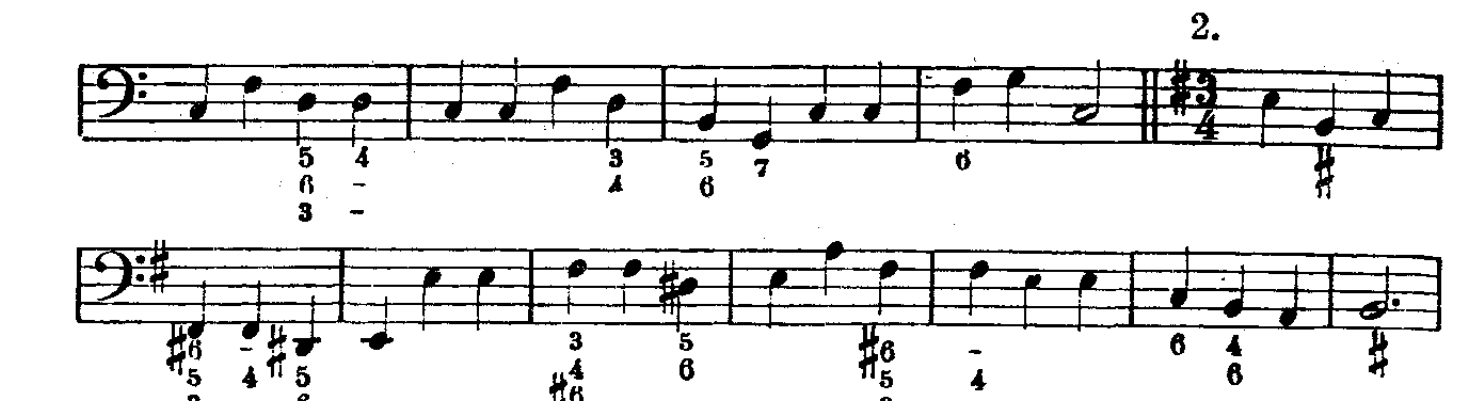

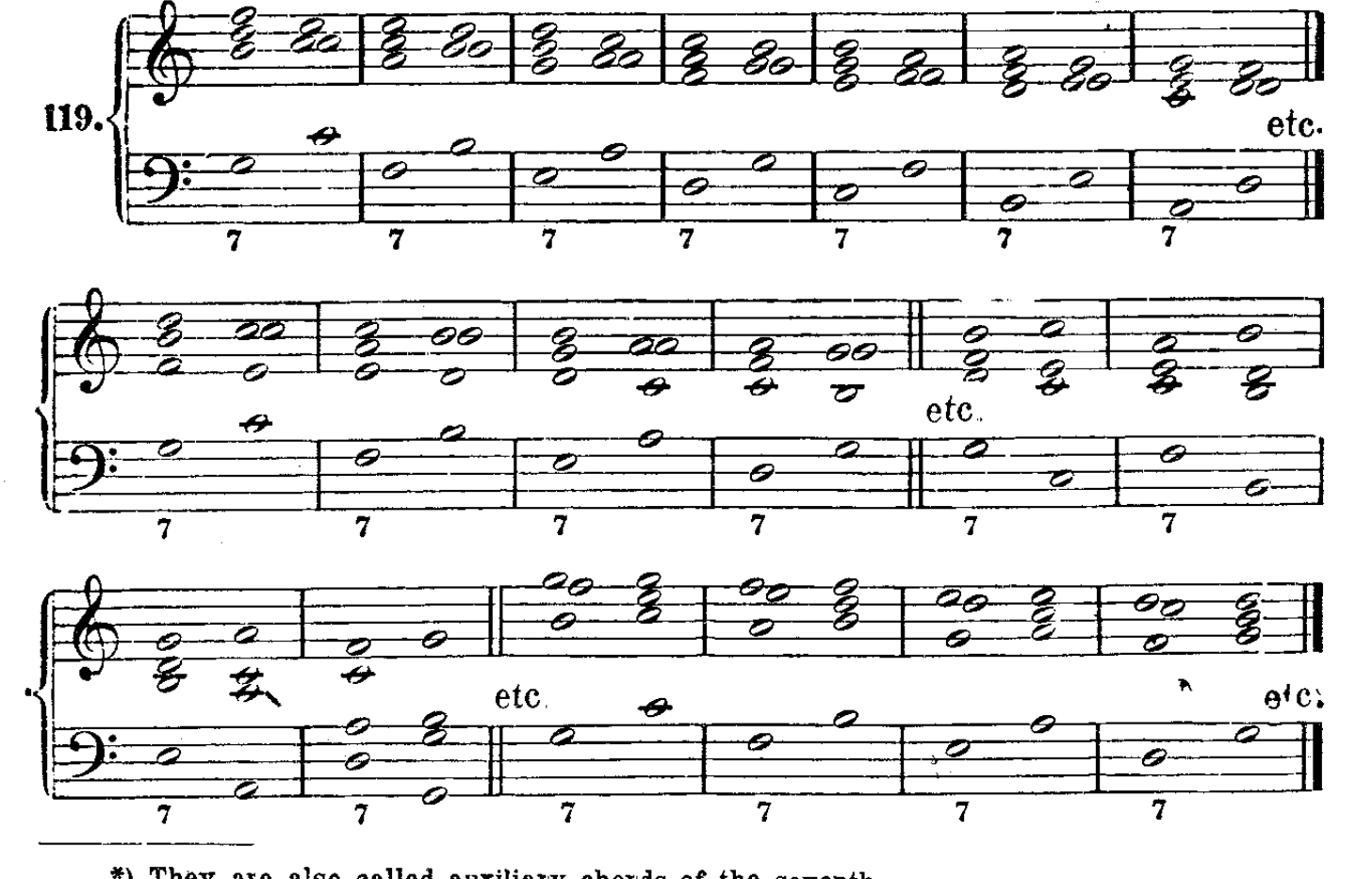
§ 41. If we repeat, several times
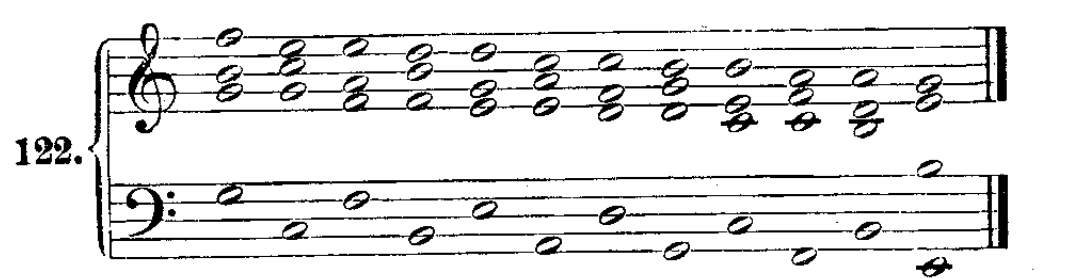
, &@ motive consisting of the dominant chord and the tonic triad, and descend one step with each repetition, we obtain a Sequence made u p of a series of chords of the seventh, each one of which — like the initial dominant chord — finds its solution in a triad a fourth higher or a fifth lower. Such chords of the seventh in sequences, are termed chords of sequence *).
*) They are also called auxiliary chords of the seventh.
Such Sequences may also consist of inversions of the chords
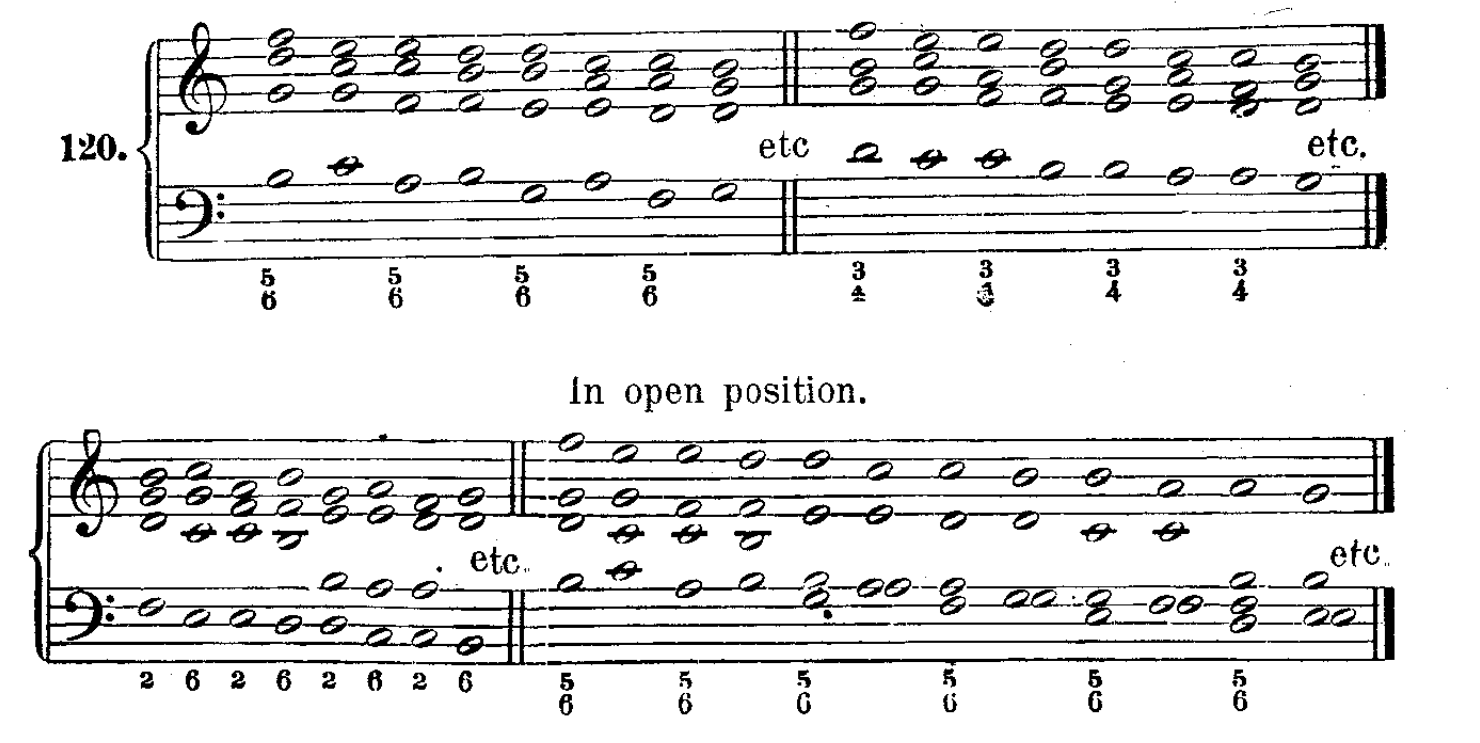
To establish a smooth connection between these chords, we must see, that each triad have two tones in common with the following Seventh chord.
This purpose we accomplish by leading the fifth of the seventh chord one step downward into the fundamental tone of the triad. If we fail to do this, the Sequence loses much in beauty and continuity; and the frequent recurrence of so many acute dissonances can no longer be justified. There is also danger of extremely harsh concealed fifths.
One common tone suffices, where the seventh-chord is in its fundamental form and lacks the fifth.
If the third of the seventh chord lies in an inner voice, it can be led two steps downward; but only in contrary motion to the Bass.
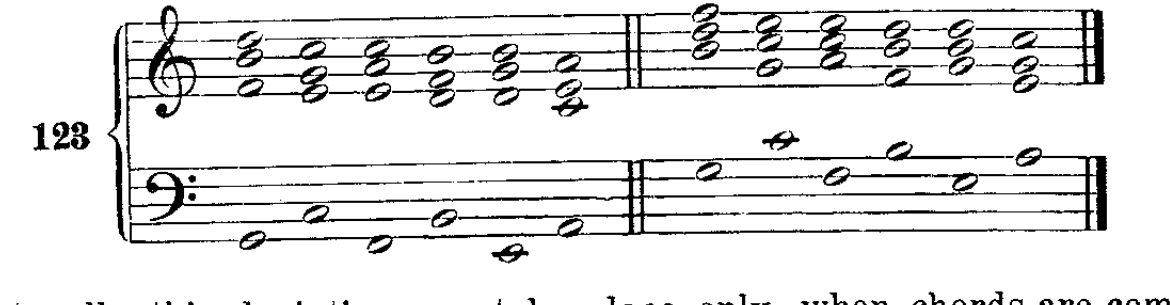
Naturally this deviation can take place only, when chords are complete and in the fundamental form.
§ 42. However smoothly we lead the harmonic progressions in these sequences, jumps are unavoidable. The bass, in the fundamental form of chords, proceeds by jumps of fourths and fifths; but these being characteristic in that voice, are by no means unpleasant. But in addition to this we find a periodically recurring jump of a third in one of the upper voices. Now, where so many strongly dissonant chords follow in close succession, it should certainly be our aim so completely to fuse them together, that not a single jump occurs.
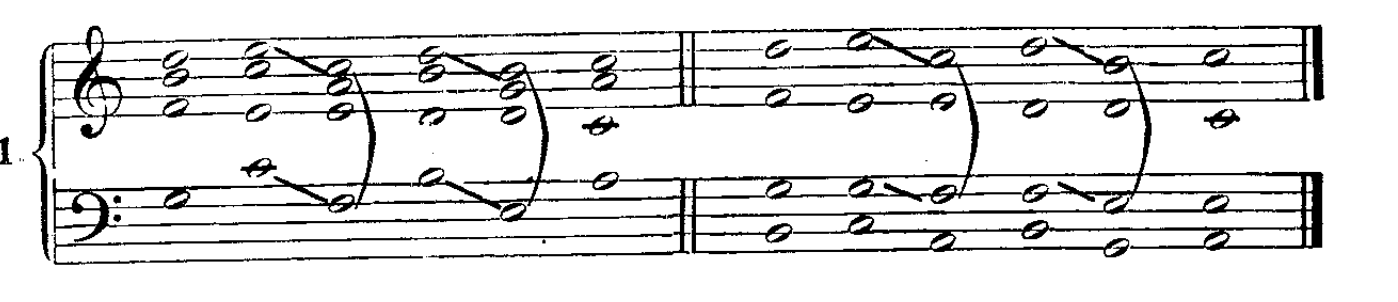
To accomplish this aim, we frequently permit the third of the seventh chord to remain stationary and unresolved; the result being an unbroken chain of sequence chords, each of which resolves into its successor.
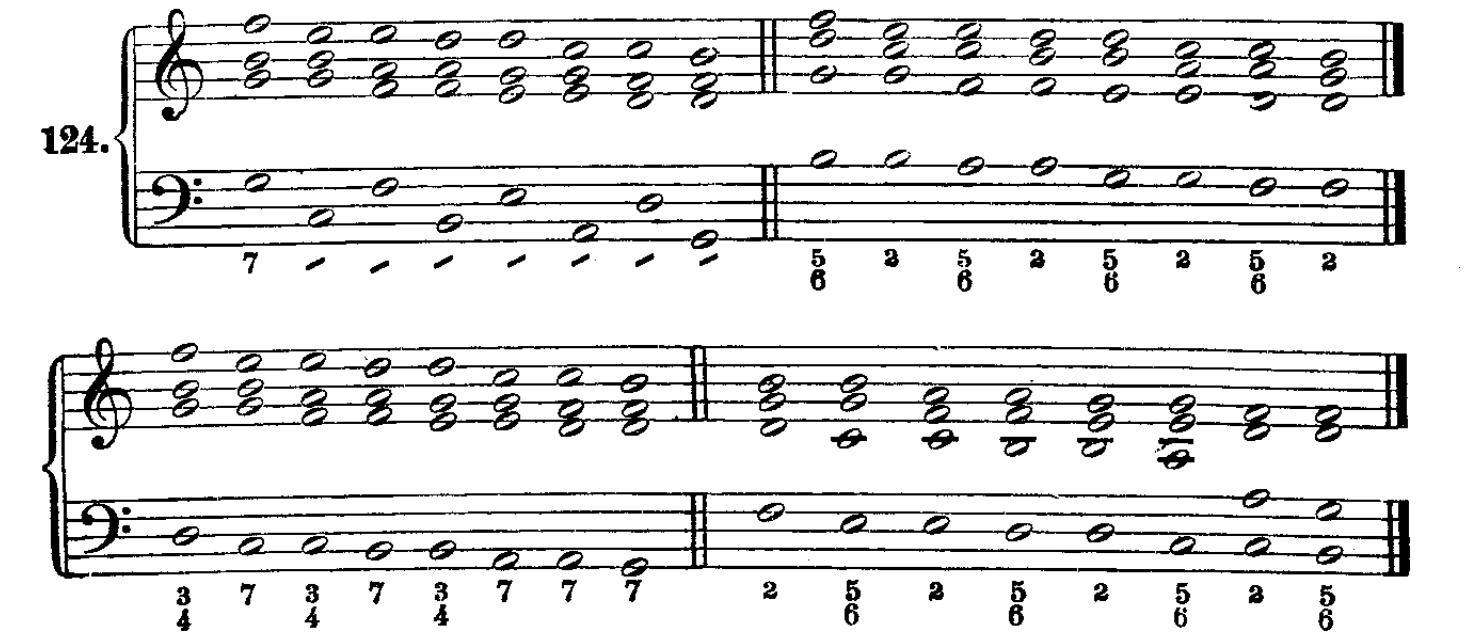
Such a sequence is but a modification of the original sequence; and the law of resolution is by no means violated, as each seventh chord contains the tones of the triad erected on its fundamental. This is illustrated in the following group of chords:

§ 43. Chords of sequence are not confined to the sequence; they may also appear otherwhere or in fragments of sequences. These fragments can be introduced by any seventh chord, we choose. We have to bear in mind, though, that the Seventh must at all times be prepared—that is, it must be contained in the same voice of the preceding chord.

If the third of a sequence chord in its fundamental form, lie in the upper voice, it may again—being no leading tone—progress two steps down: ward. ~
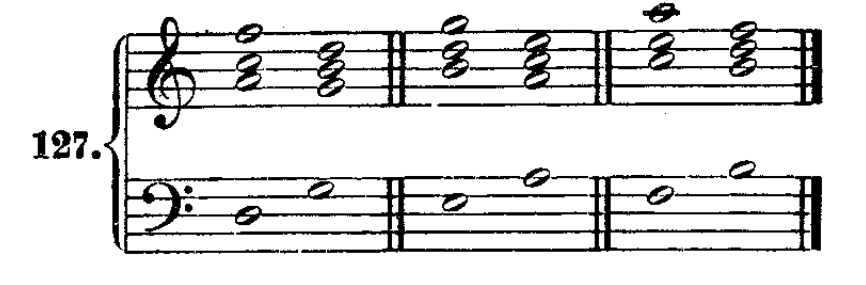
This cannot occur in the Seventh-chord on the first degree, as its third is leading tone to the triad on the 4-th degree.
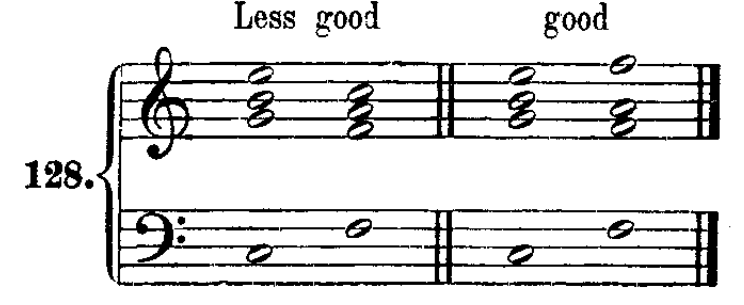
The fifth may—except in a sequence—progress at will, even upwards: e. g.
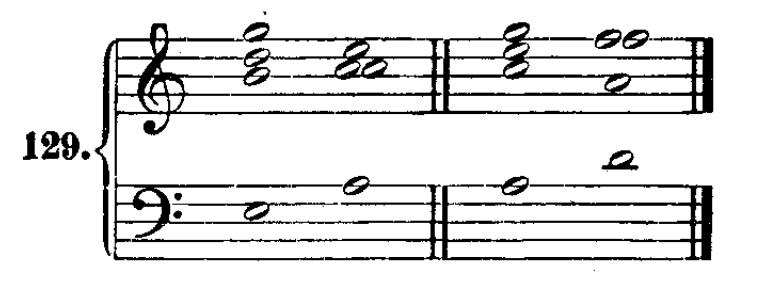
§ 44. To become more familiar with the sequence chords, let us divide them into groups:
a) There are two sequence chords that consist of a major triad and a major seventh: these we find on the I-st and 4-th degrees of the scale
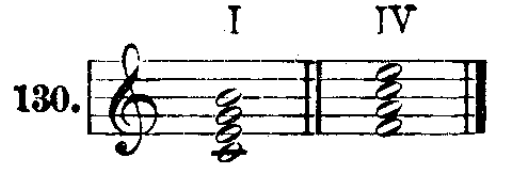
Their major seventh renders them extremely harsh, for which reason they are used less frequently than the others.
b) There are three sequence chords consisting of a minor triad and a minor seventh: they are found on the 2-nd, 3-rd and 6-th degrees of the
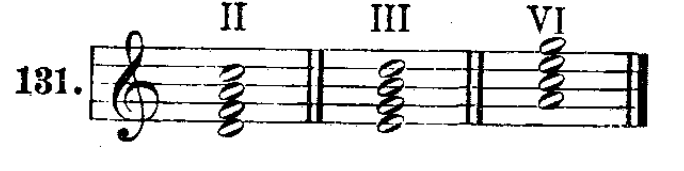
Being less dissonant than the first group, they are used more often.
Of special significance is the Seventh chord on the 2-nd degree, a fact, which the student will comprehend later on. For the present we will say that its importance arises out of the fact that it is resolved into the Dominant triad, next to the tonic the most important chord of the scale.
c) The two forms of the chord of the seventh on the 7-th degree must be clearly distinguished. As minor seventh chord it resolves into the tonic triad; as chord of sequence, however, it progresses into the triad on the 3-rd degree.
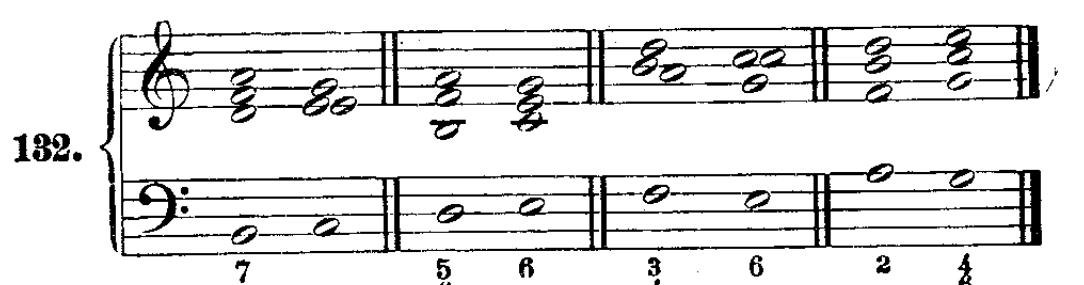
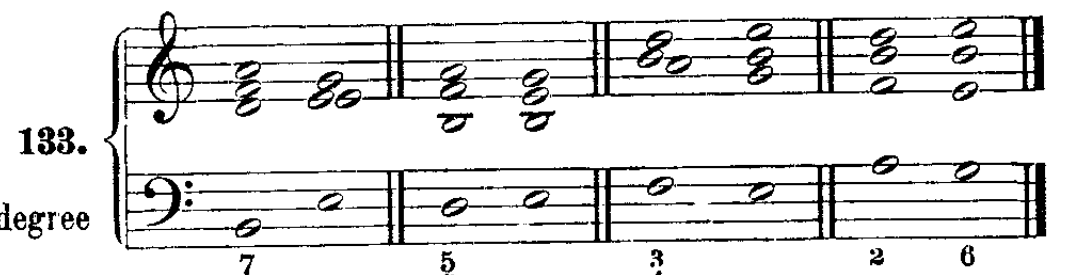
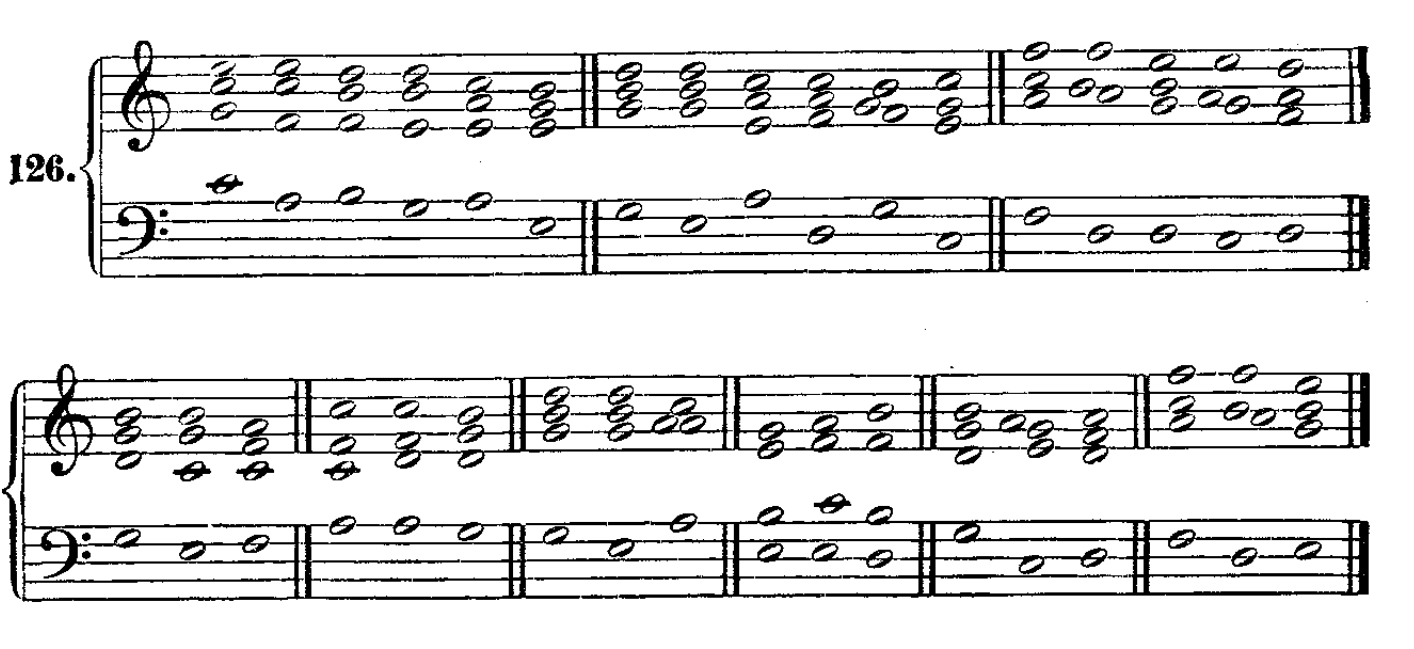
Ezercises. The pupil should write out and play all the existing chords of sequence in the several major keys. Not until he has thoroughly digested the rules governing the connection and resolution of sequence chords should he work the following exercises.
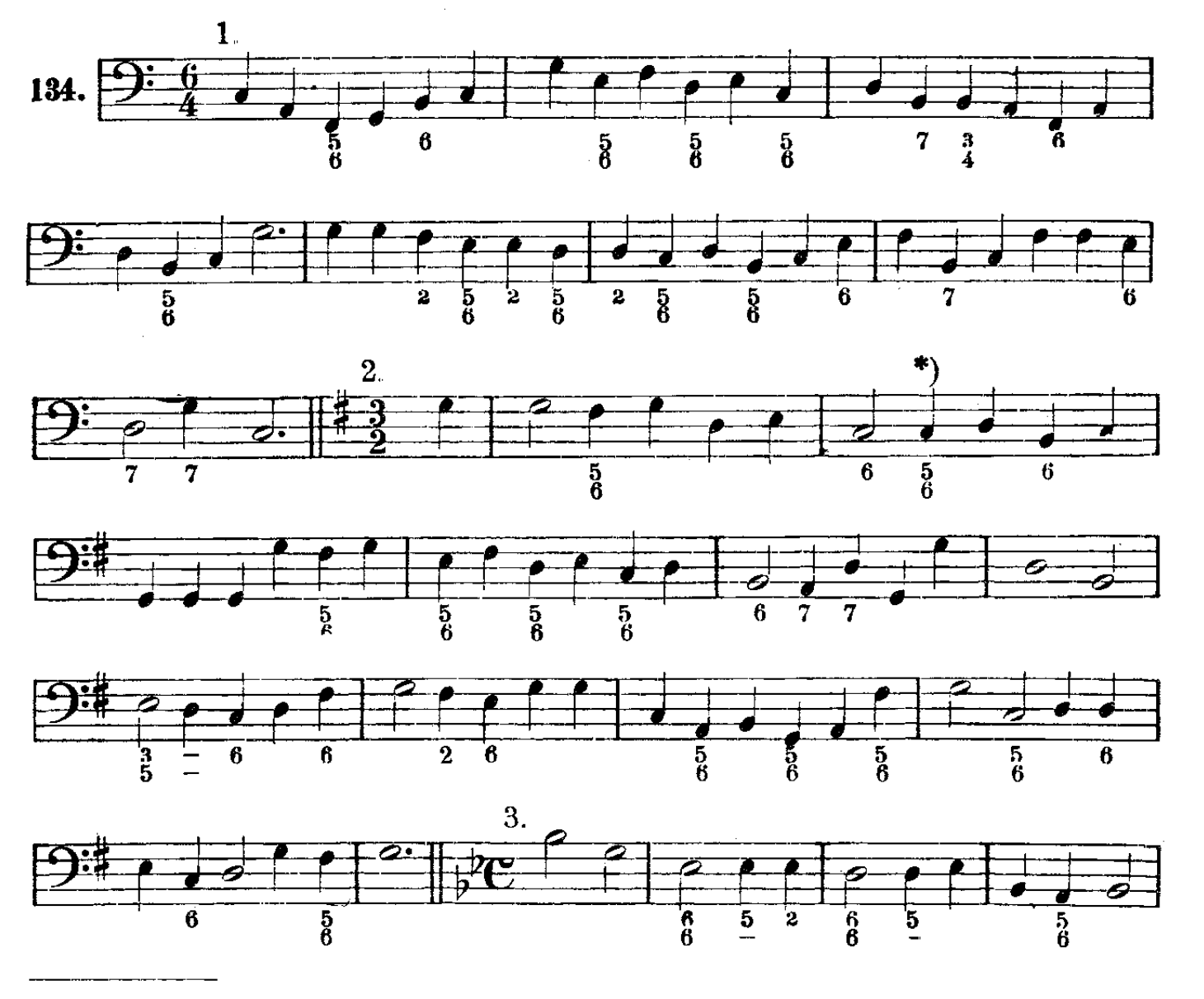
*) In this chord of the sixth and fifth the seventh cannot be prepared; since, however, it has 8 tones in common with the preceding chord, no preparation is needed. tndeed, the succession of triad and chord of the seventh on the same degree always sounds good, if the triad has the fundamental doubled.