 Playable Books
Pyotr Ilyich Tchaikovsky · section 15 of 36
Chapter XIII. Chords of the minor and diminished Seventh
Read and hear this section in the playable edition → Theory of HarmonyArnold Schoenberg · the leading-note seventh chord and the diminished seventh chord
 Practical Manual of HarmonyNikolai Rimsky-Korsakov · the leading-note seventh chord and the diminished seventh chord
 Treatise on HarmonyJean-Philippe Rameau · the leading-note seventh chord and the diminished seventh chord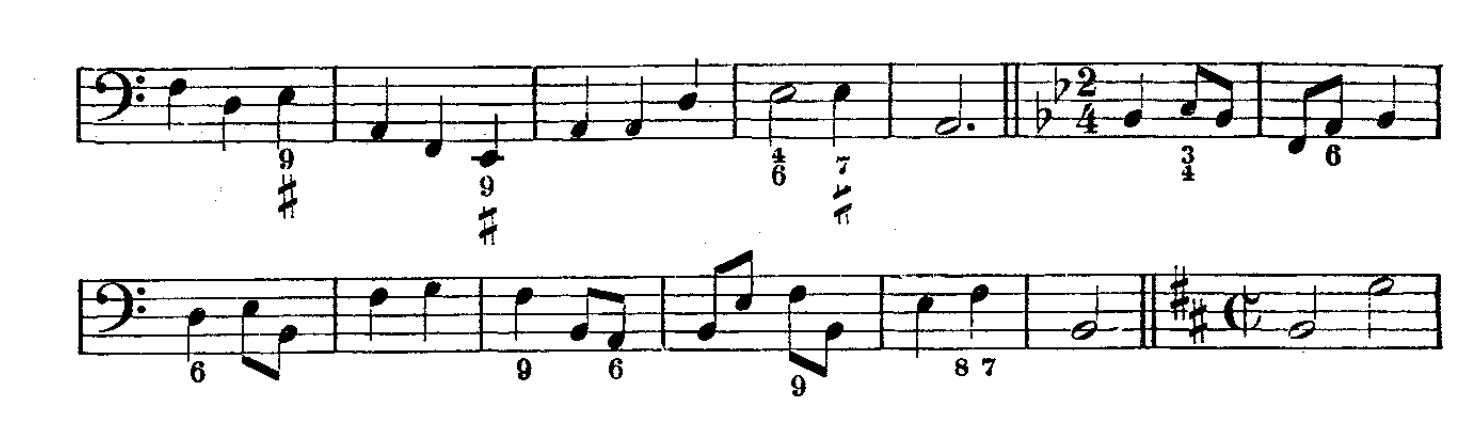
§ 37. Next in importance to the Dominant chord is the chord of the seventh on the 7-th degree of the scale. In major it is called: the chord of the
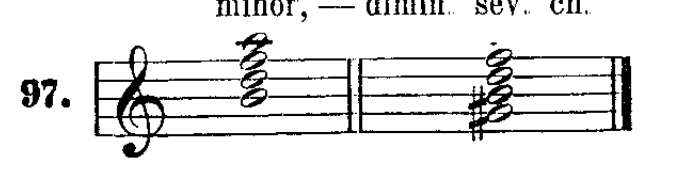
As regards their resolution, these chords are treated as chords of the ninth without fundamental tone. Consequently their fundamental tone (the third of the chord of the ninth) is led one degree upward—their third (fifth of the chord of the ninth) one degree upward or downward—their fitth (formerly seventh) and seventh (formerly ninth) one degree downward. Should the third lie below the seventh, it cannot progress downwards, or parallel Fifths would be formed.
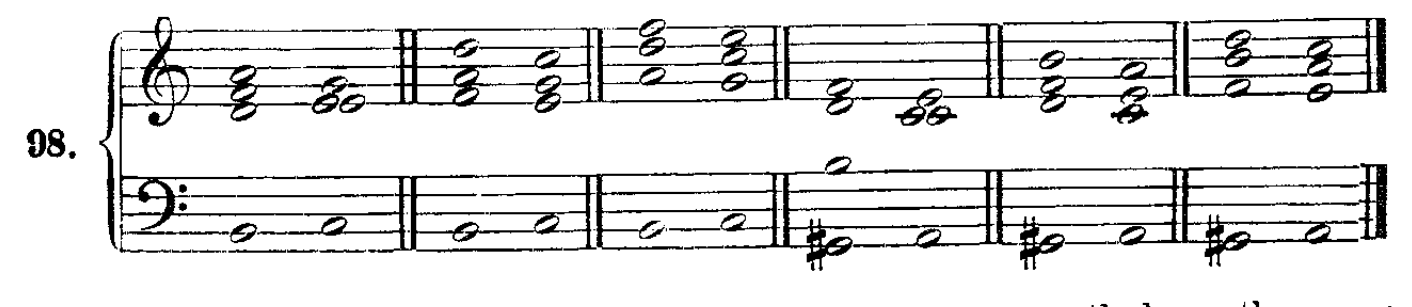
§ 38. The inversions of these two chords of the seventh bear the same names as those of the Dominant chord.
Chord of the
Sixth and Fourth Fourth & Third Second
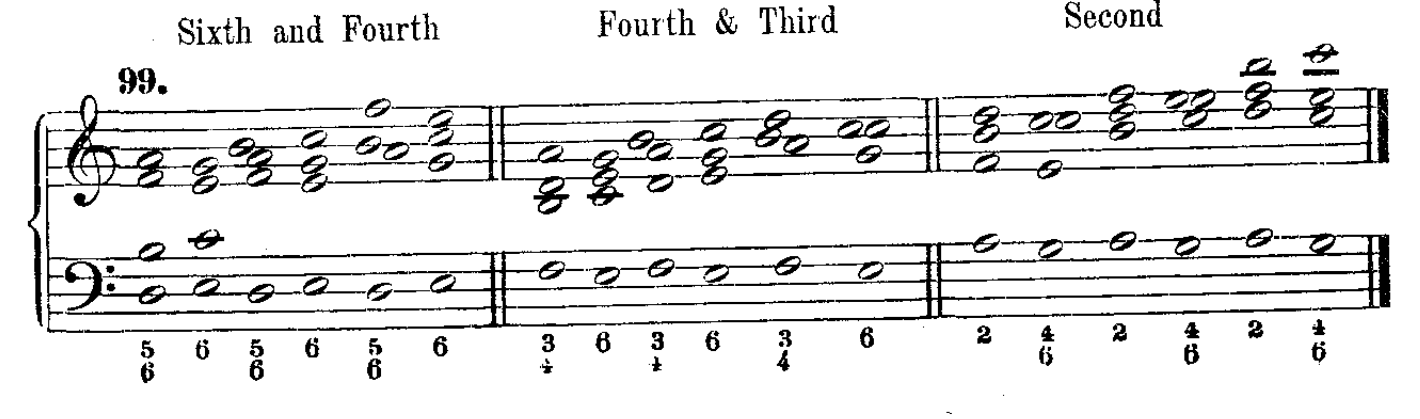
The fifth, (formerly seventh) if it lies in one of the middle-voices, may exceptionally be resolved upwards, provided no faulty progressions result.
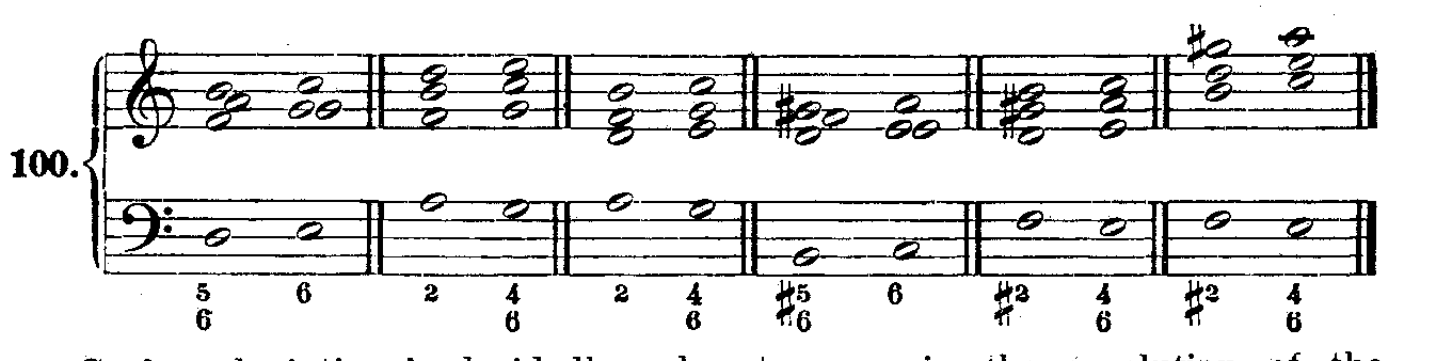
Such a deviation is decidedly advantageous in the resolution of the chord of the second, as the voices of the resulting six-four chord derive thereby a normal position.
§ 39. The chord of the diminished seventh gains greatly by being prepared, though this is not absolutely necessary, as in the case of the minor seventh-chord.
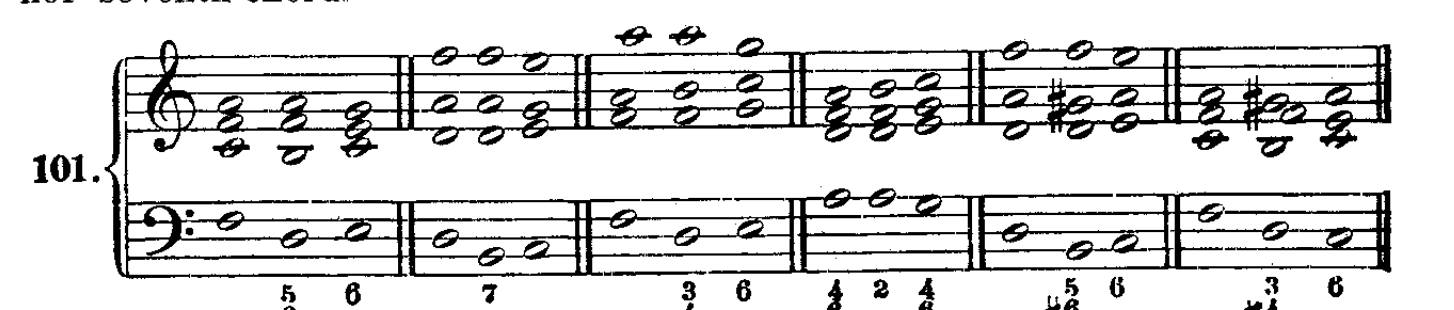
The tonic triad may be used as preparation for this seventh-chord, if it appears in the same position in preparation and resolution. In the same way also the Dominant triad, as it has two tones in common with this seventh chord.
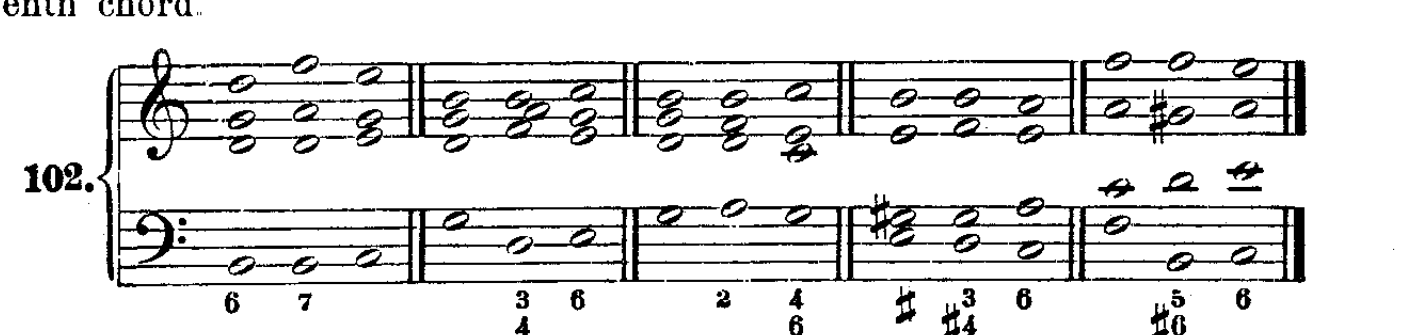
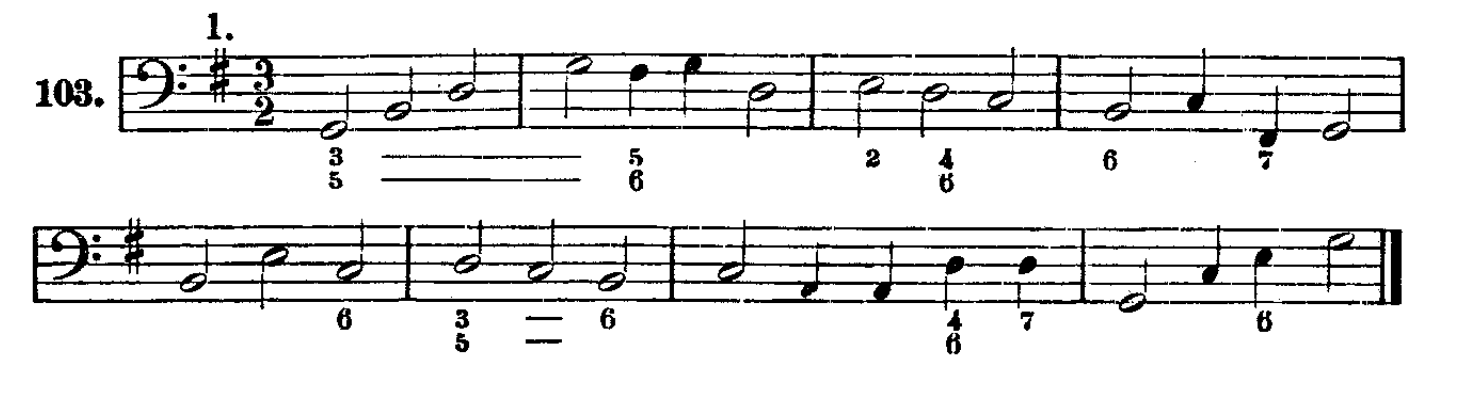
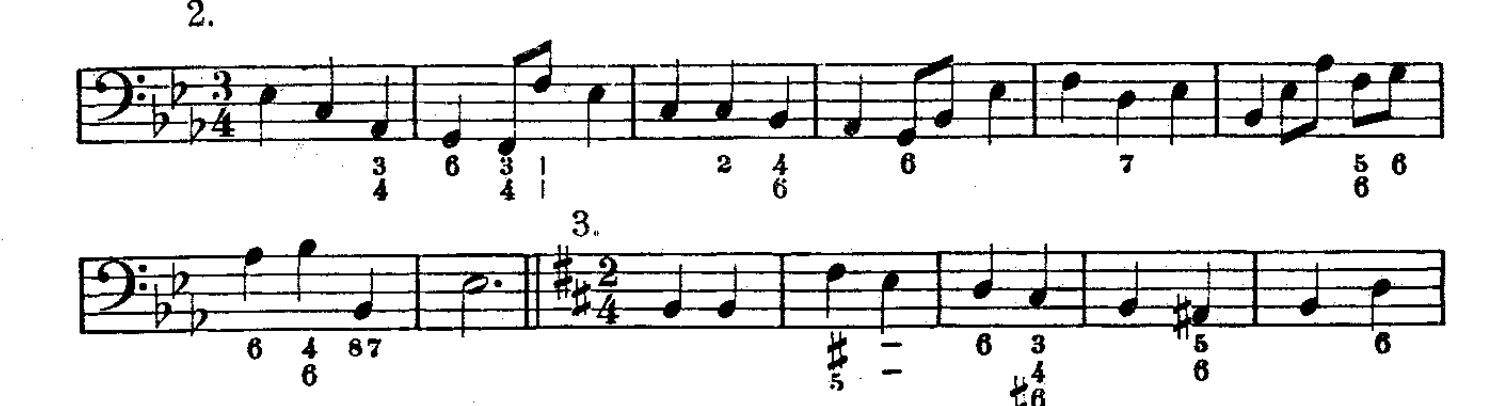
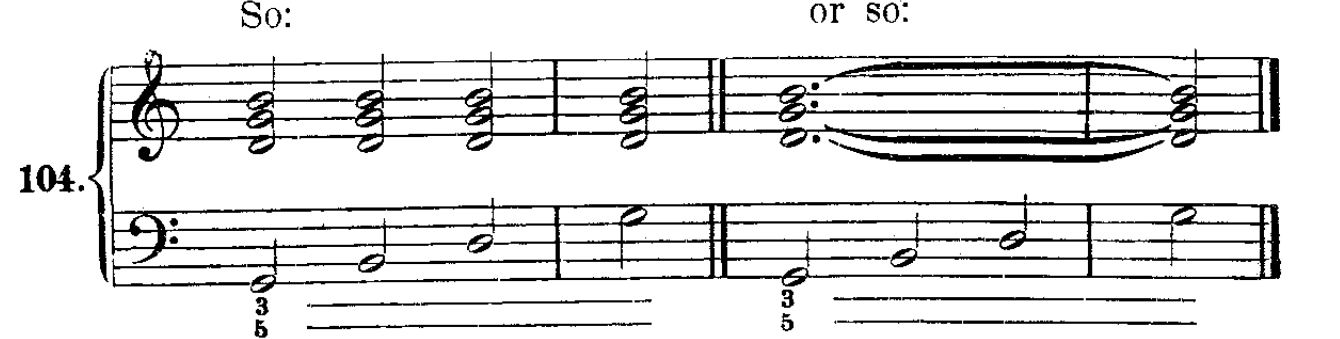
Note The horizontal lines in the figured bass notation indicate that the intervals next to which they are placed, have to remain stationary, while in the Bass sound the next following intervals of the chord in notation. For instance, in the first bar of the first exercise, the lines next the figures 8 indicate, that the intervals of the triad on G—which correspond to these figures—have to sound on during the following three notes of the Bass, thus giving rise to a chord of the sixth and a chord of the §.
The short line below the note f sharp in the last bar of the third exercise indicate that the third of the triad (leading tone) must remain stationary, while the octave progresses downward into the seventh.
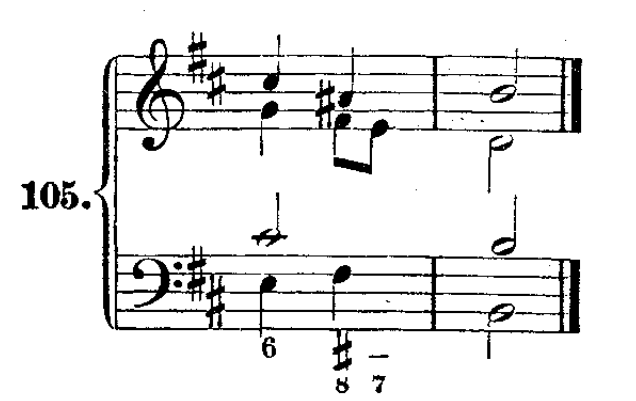
A short oblique or vertical line to a figure denotes the repetition of that figure.