 Playable Books
Pyotr Ilyich Tchaikovsky · section 21 of 36
Chapter XIX. Transient Modulation
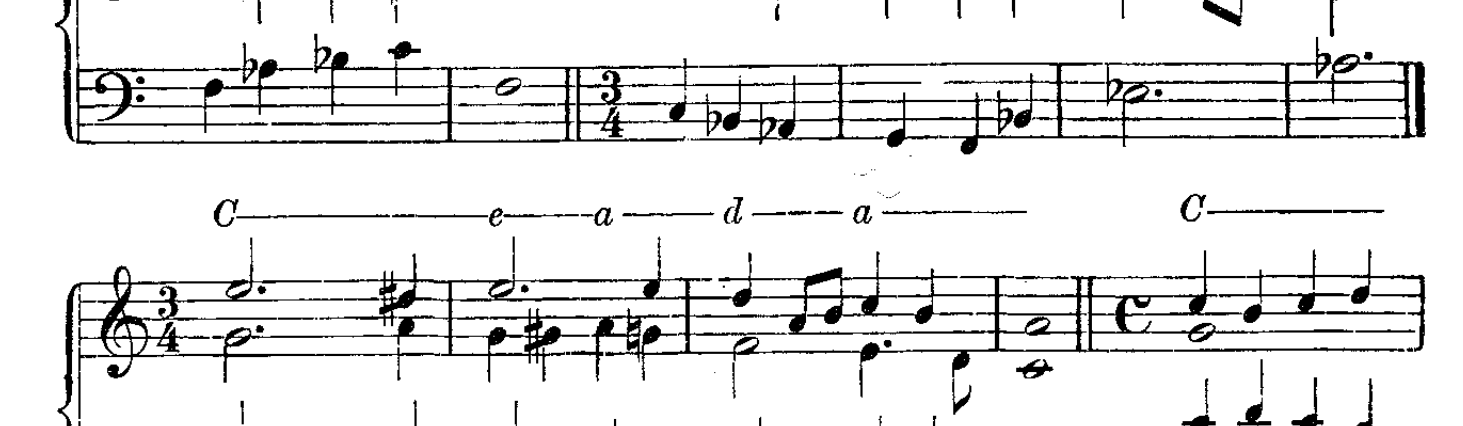
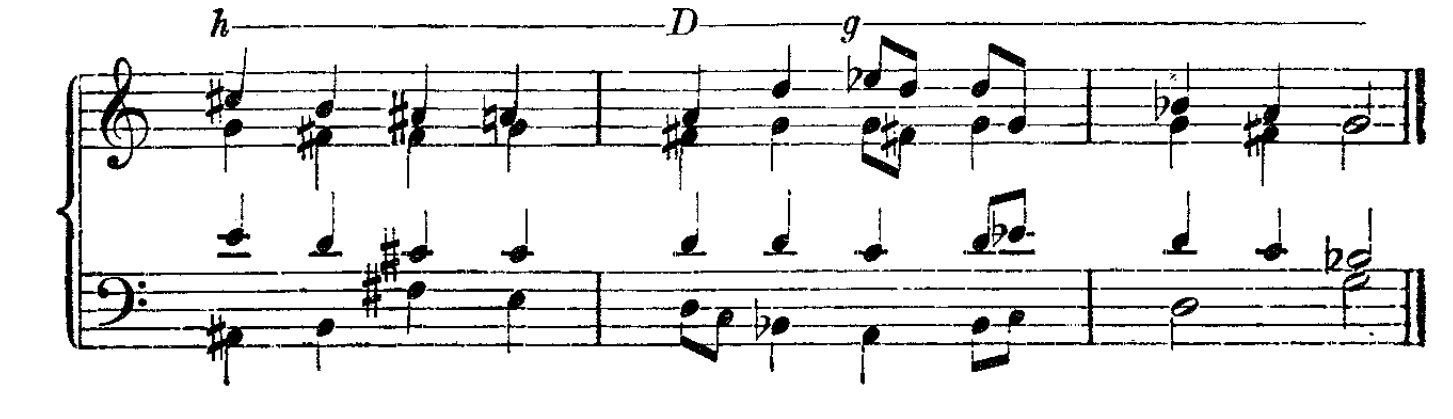
Read and hear this section in the playable edition →§ 57. Besides direct modulation, there is the indirect or transient modulation, which, instead of immediately introducing the desired key, first passes through one or more neighboring keys. It would be impossible to set down exact limits for such a degression; in general it may be said that one should choose, if not exactly the nearest-lying keys, at least such as are not too far removed from the original key. If we deviate in a direction opposite to the normal course *), we must always return to this course with the view to bring the modulation to its close.
*) By,normal course“ I mean the circle of fifths or modulations through parallel keys.
It is furthermore impossible exactly to constitute how long we remain in any neighboring key we touch; this must be entirely left to the individual musical susceptibility of the student.
The prolonged cadence should be introduced only after the last modulation; that is, when the goal has been reached.
Following are some examples of passing modulations.
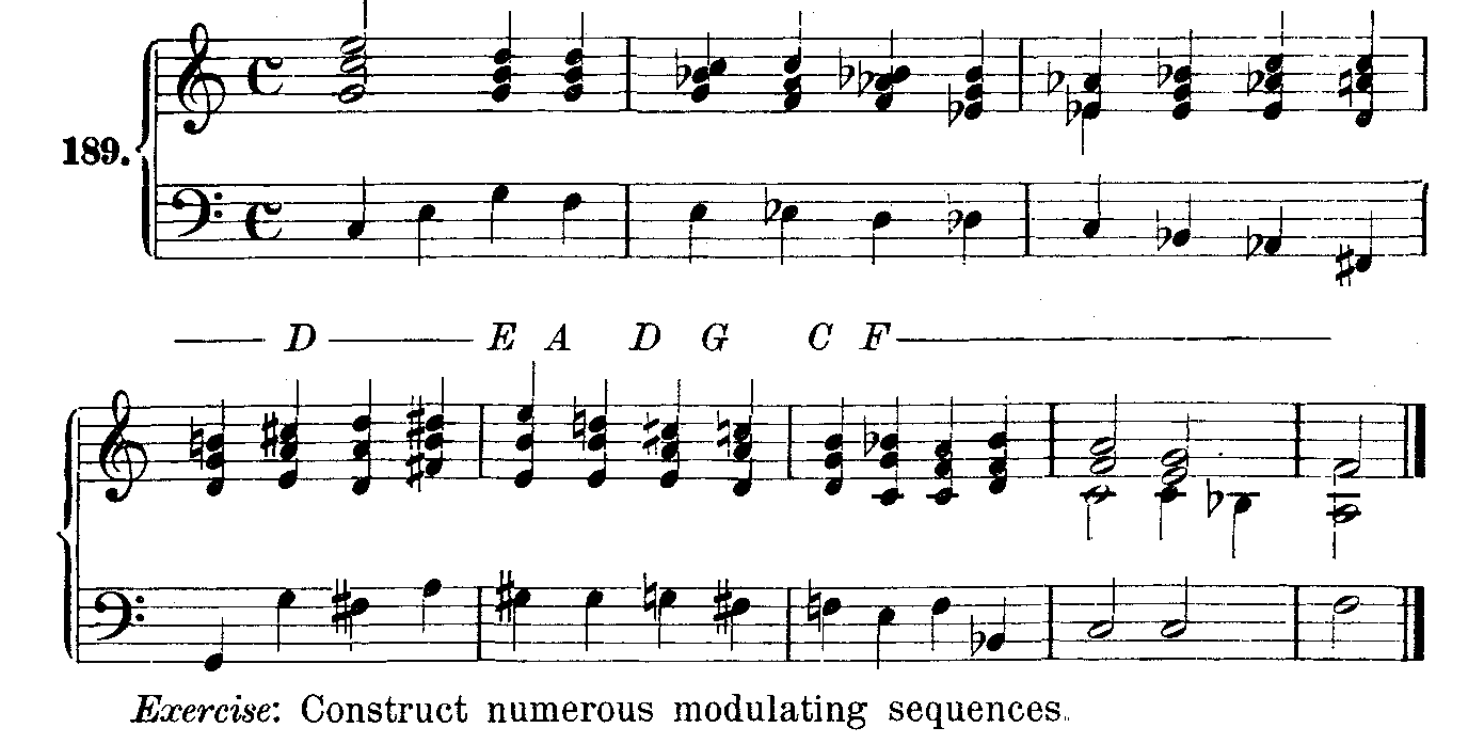
§ 58. Under this heading belongs also the transient modulation in form of a sequence. If a modulating chord be found in the motive of a sequence, it need not, in the repetition of the motive, modulate in the same—direction; in this we must be governed by the degree of relationship between the chords to be connected.
Here follow some modulations in form of sequence.
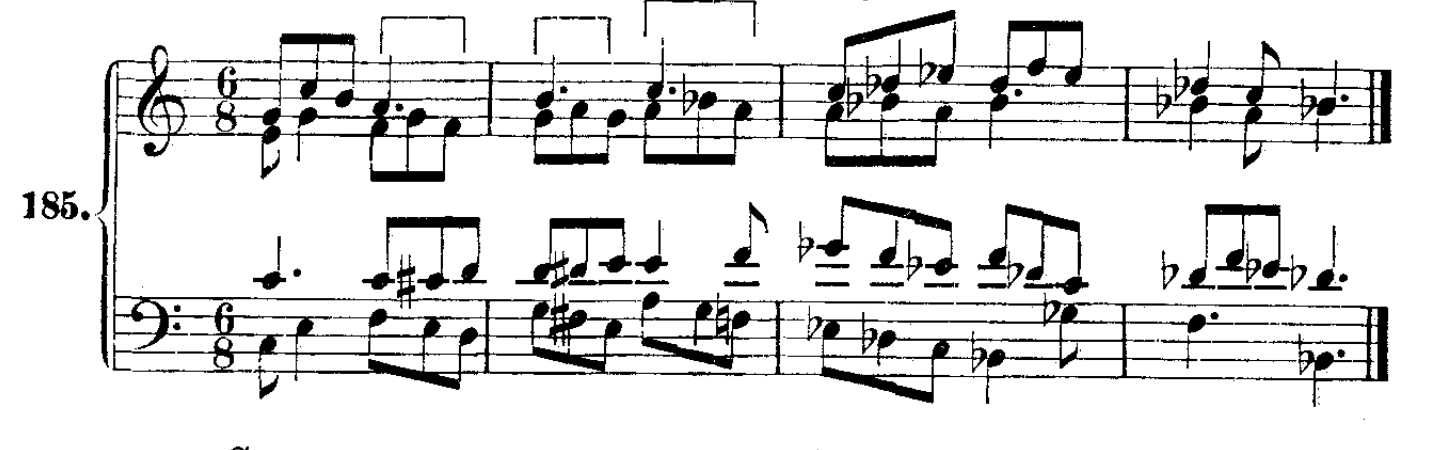
In the last example we do not definitively feel the modulation until the 5-th bar, while in the preceding four bars the keys a, F, and d are barely indicated by means of the chords of the seventh on the 2-nd degree and their resolution into the respective Dominant triads.
§ 59. There are also sequences, in which every chord constitutes a modulation. They are such, in which Dominant seventh chords or other chords resolving into the tonic succeed one another, always falling a fifth or rising a fourth, as in a sequence within the limits of one key. In such a sé- quence, each chord resolves into a chord which itself demands resolution, and forms at the same time the resolution of its predecessor.
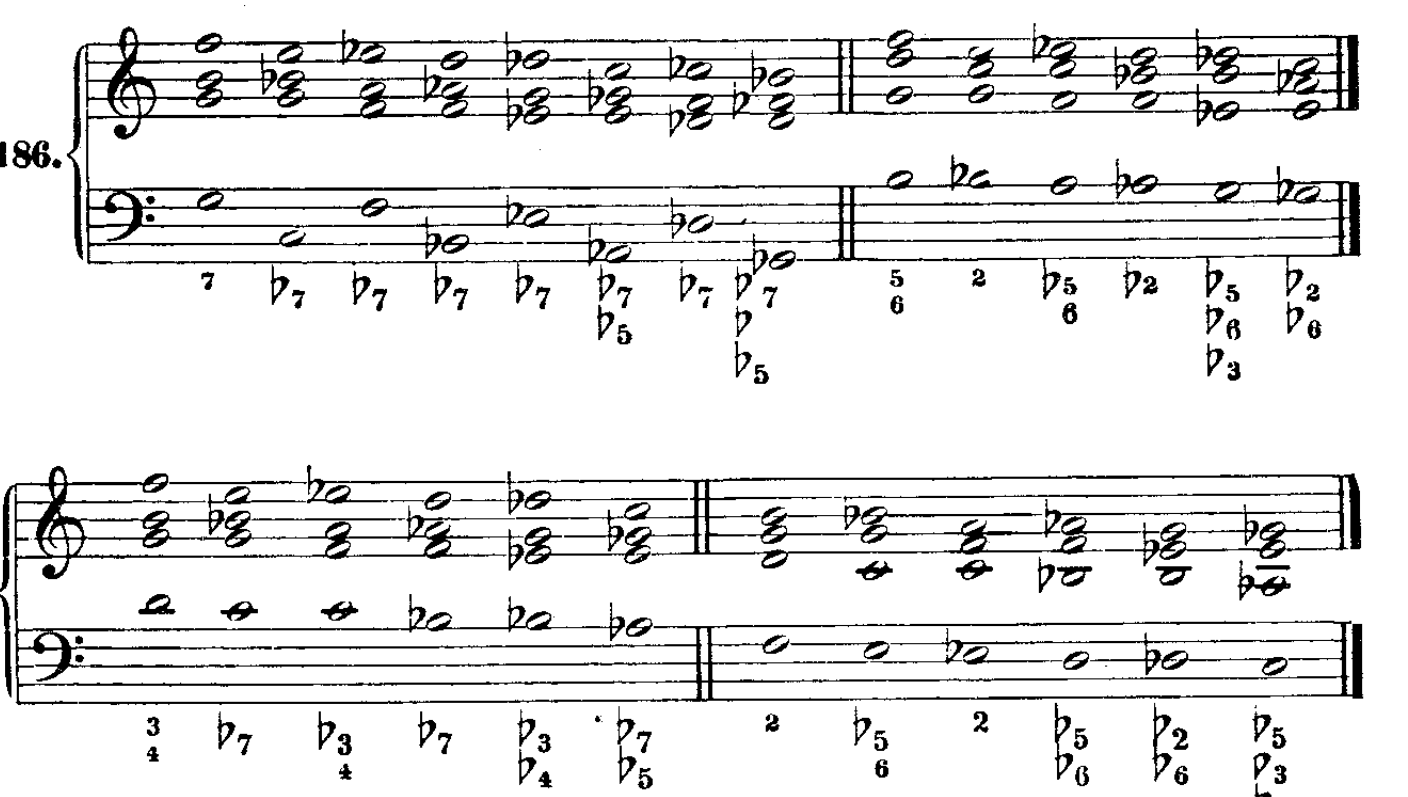
If we had five voices at our disposal, we could construct such a sequence, consisting of a chain of chords of the ninth resolving into one. another; in four—part writing this is not practicable, since the ninth must be resolved into the fifth of the following chord; now, in a four-voiced chord of the ninth it is just the fifth, that is omitted, because no other interval can be dispensed with.
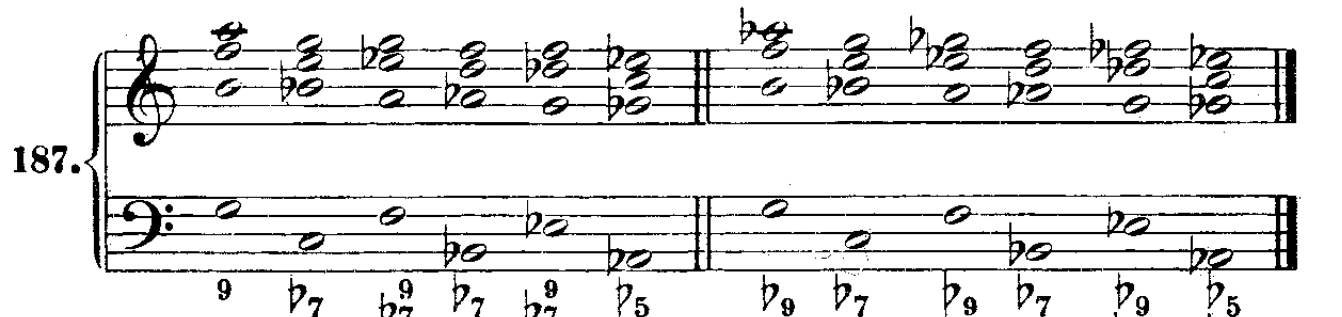
Tue following example shows a sequence composed purely of chords of
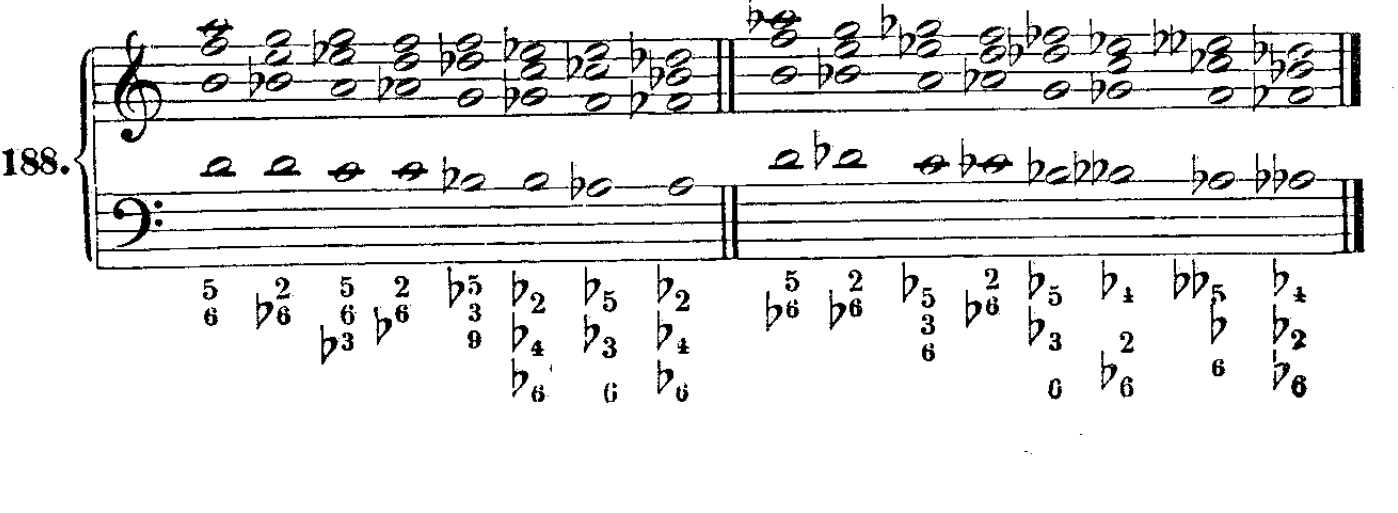
All these sequences can be applied in transient modulations *). Cc F B Eftat, A flat ——_—-=-G
Exercise: Construct numerous modulating sequences.