 Playable Books
Pyotr Ilyich Tchaikovsky · section 20 of 36
Chapter XVIII. Direct Modulation
Read and hear this section in the playable edition →




§ 52. The quality of indicating a certain key is possessed by all dissonant chords resolving into the tonic triad; also by the dominant triad, when followed by the tonic. The most important of all modulating chords is the Dominant chord; for, notwithstanding its resolution into the tonic triad, its very outward form shows, that it can belong to but one key; which is not the case with other modulating chords The chord of the minor seventh, for instance, while belonging to the major key on the 7-th degree of which it is erected, is also a member of the parallel minor key, on whose 2-nd degree it stands.
The Dominant chord, then, always belongs to but one key.
§ 53. Let us contemplate the modulations effected by means of this chord
The simplest and most direct modulation would consist of but three chords; the tonic triad of the given key, the chord of the Dominant-seventh and its resolution into the tonic of the new key.
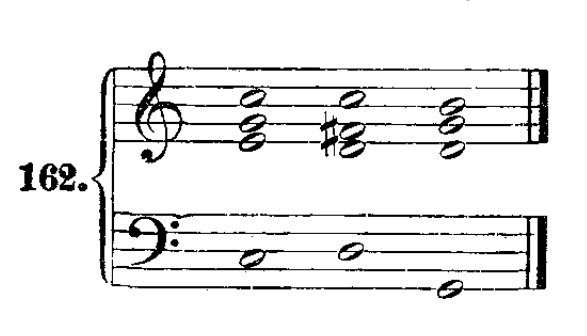
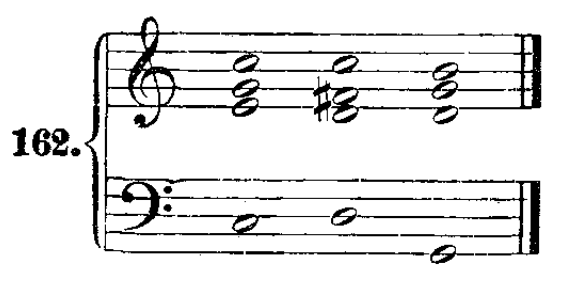
The following two rules of voice-leading should be observed in order to effect a smooth connection of these three chords.
I. The Dominant-seventh chord must possess at least one tone in common with the preceding chord, which tone must be retained in the same voice,
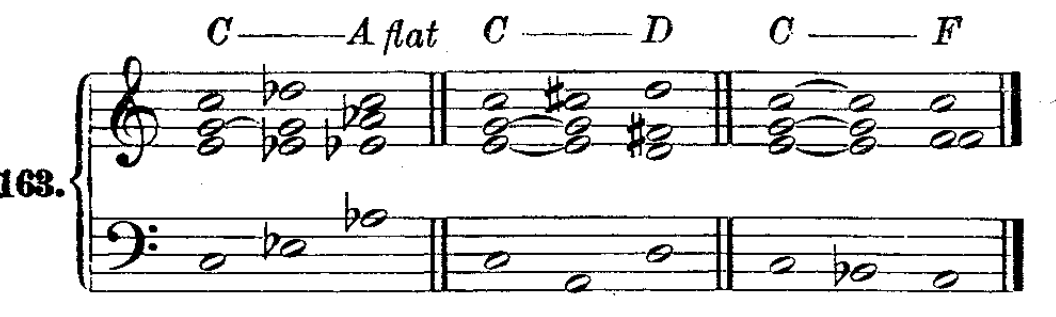
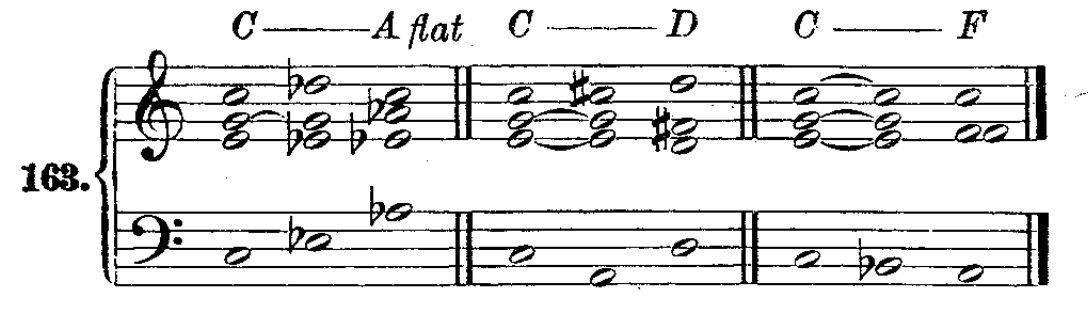
Where the first triad has no tone in common with the following modulating chord, we must use an intermediate chord—a triad belonging either to the original key, the key to be reached, or even a key not too remotely removed from the two in question This triad must be well connected with the original triad.
U. The two different forms of a degree, that is to say a tone and its chromatic alteration must remain in the same voice.


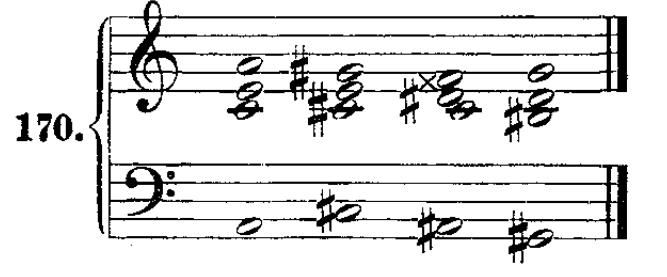
By not following this rule we obtain a very unpleasant relation between two voices; namely, the cross-relation


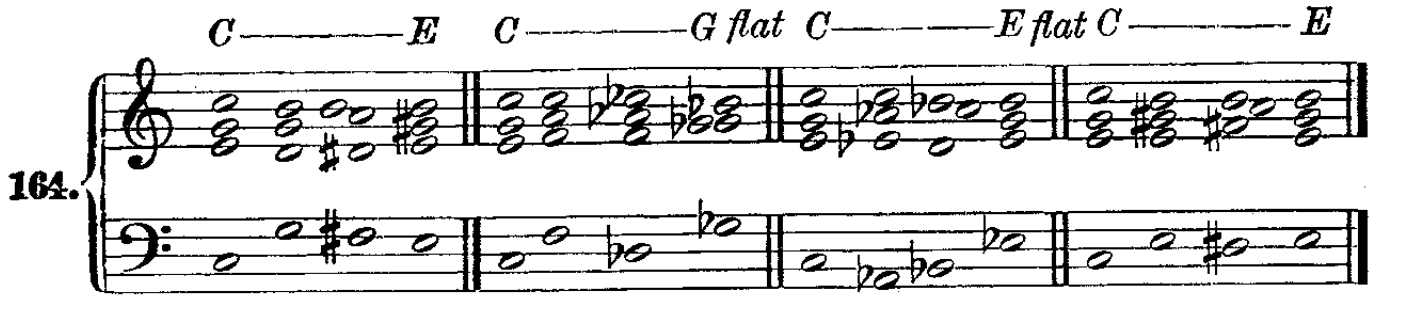
In the following modulations cross-relations appear.
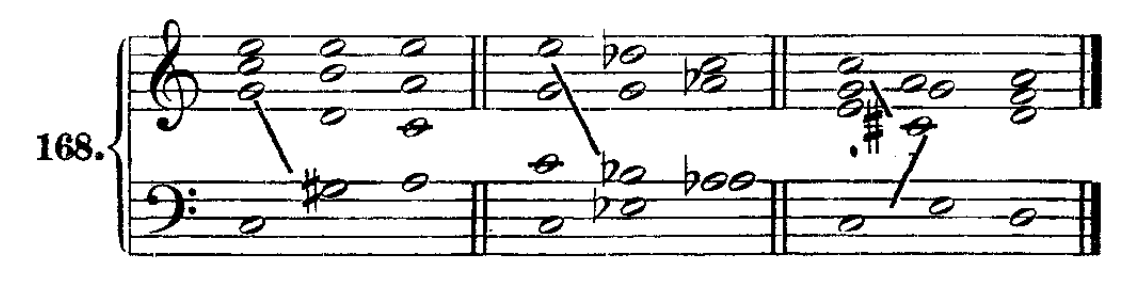
When the tone to be chromatically altered appears doubled, the effect of the cross-relation resulting is sufficiently mollified by: ‘observing the rule in one voice; a jump in the Bass is preferable to one in -an upper voice.
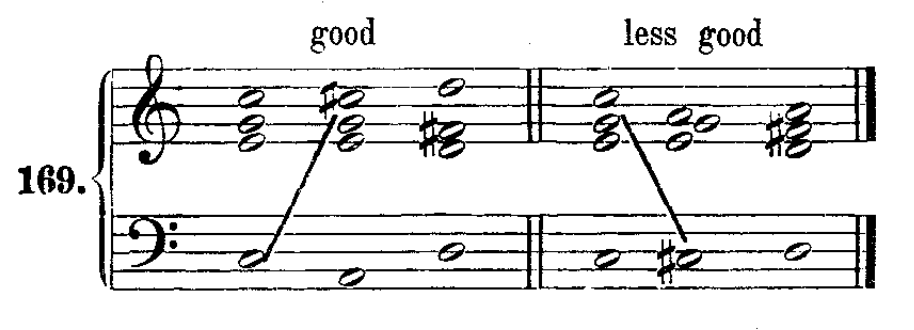
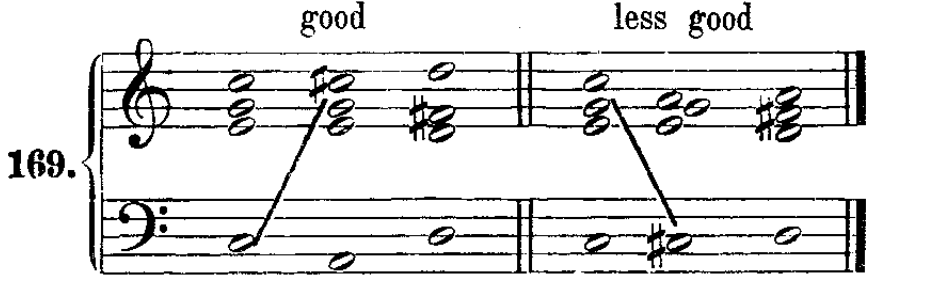
As the Dominant-seventh chord is the same in minor as in major, the modulation remains unchanged, whether leading to major or minor. Modulations starting from minor are more difficult to effect because there are fewer intermediate chords. Resource must frequently be had to triads of other keys; in modulating half a tone downwards such a course is indeed inva-
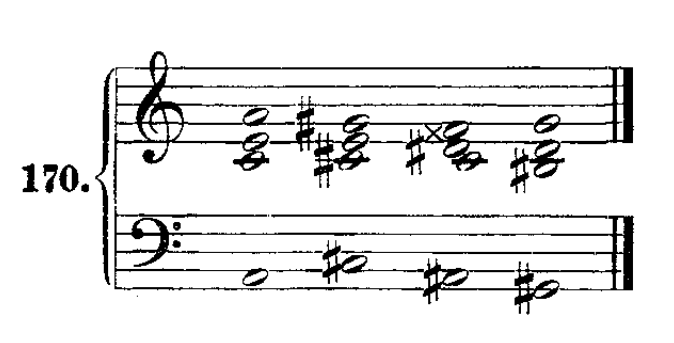
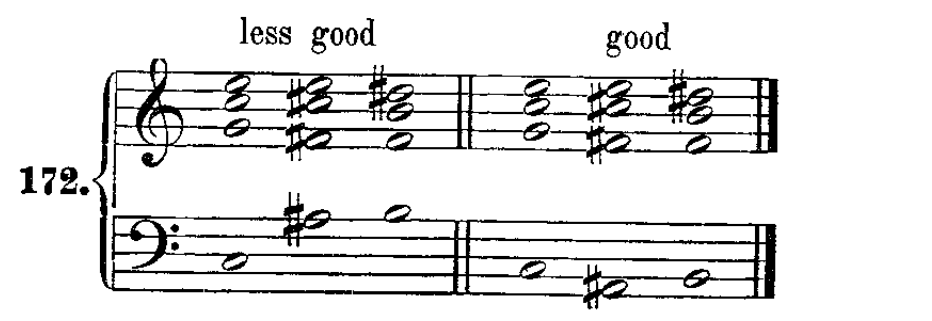
§ 54. From the above it will be seen that, in direct modulation, correct and fluent voiceleading is the chief consideration. Jumps are permissible only in the Bass, and then not always. Jumps of augmented intervals are unmelodic; it is best to substitute them by their inversions, that is, by jumps of diminished intervals. A step of an augmented second would, for instance, have to be replaced by one of a diminished seventh.
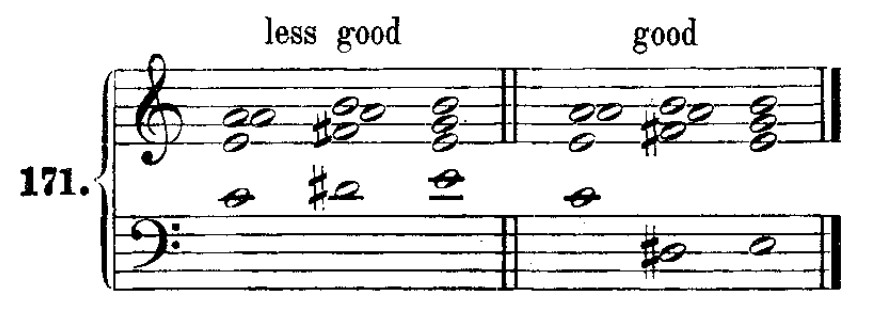
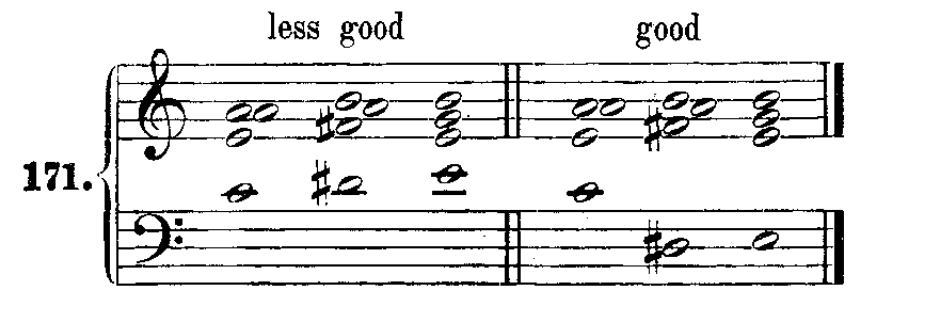
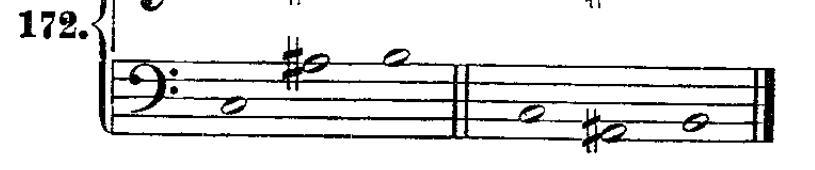
Instead of an augmented sixth use rather a diminished third.
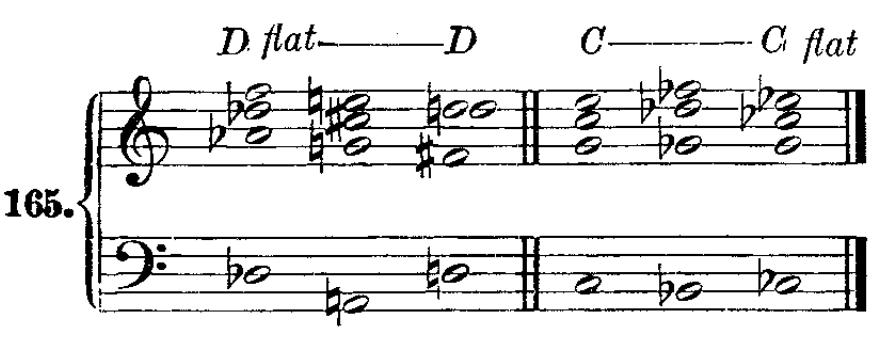
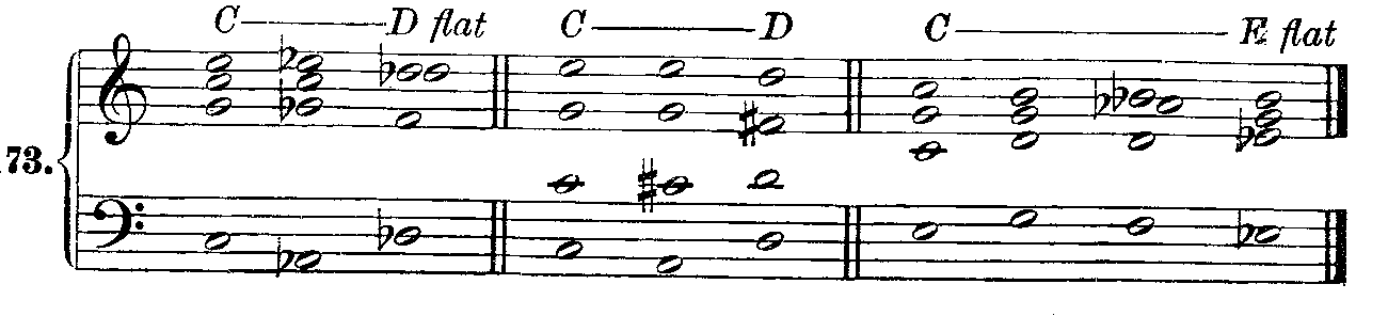
Following, are some examples of modulations from C to other keys.
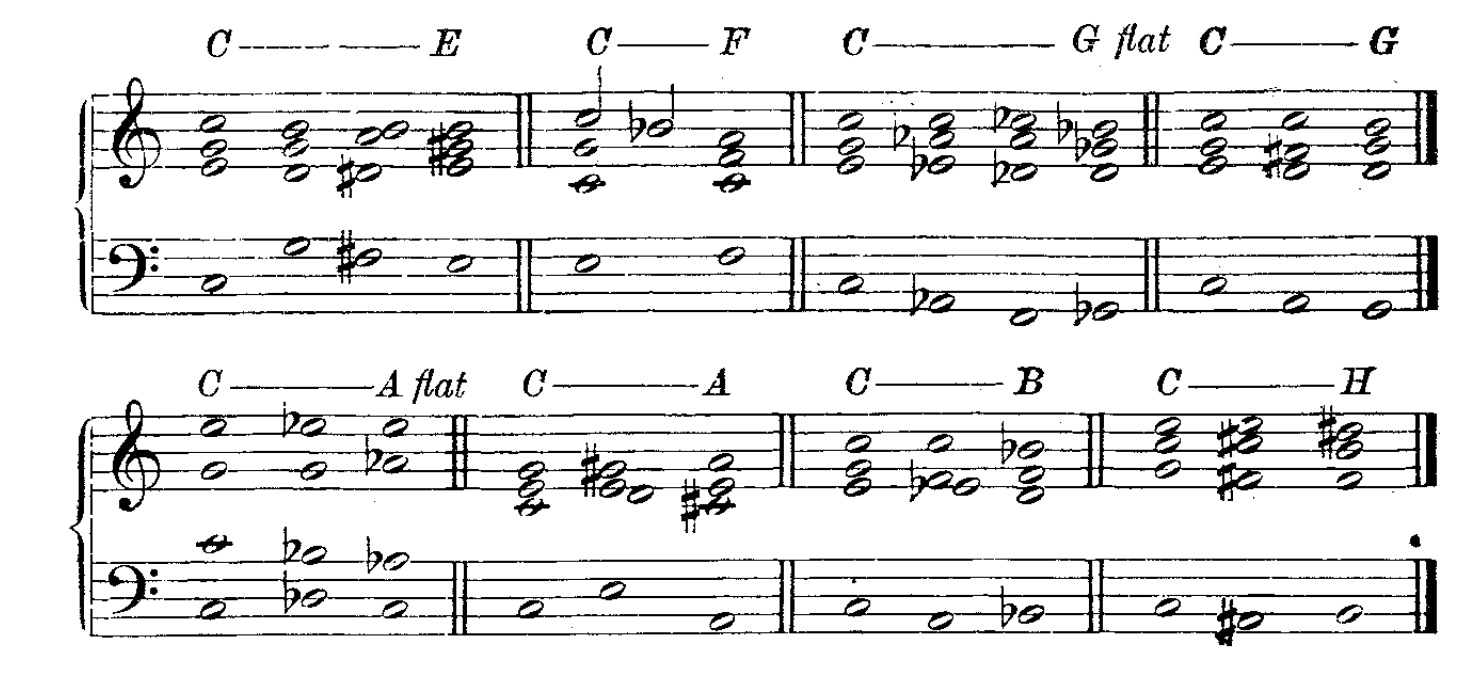
i-st Exercise. Work out similar modulations from and to all the different major and minor keys.
§ 55. Modulations by means of other chords resolving into the tonic triad are subject, for the most part, to the same rules.
a) The chord of the ninth occurs but rarely as a modulating chord, since its use is always fraught with difficulty.
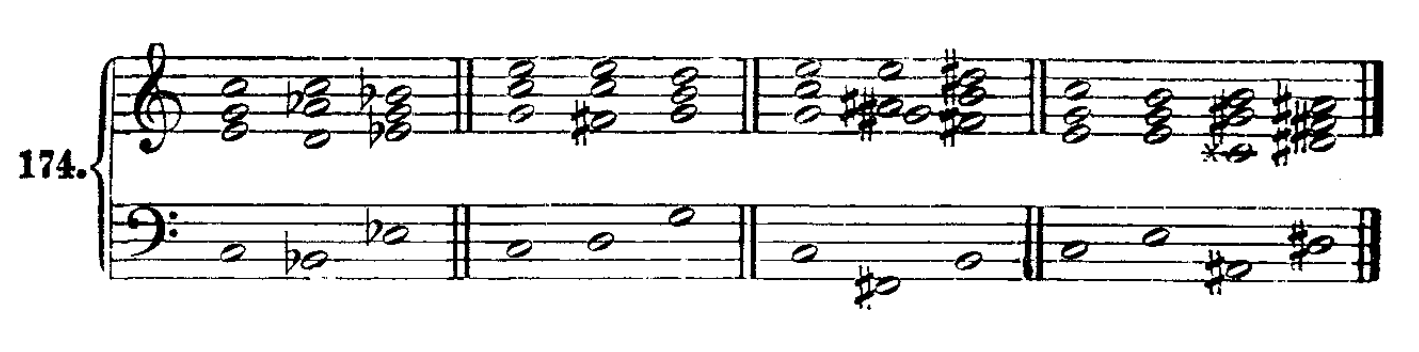
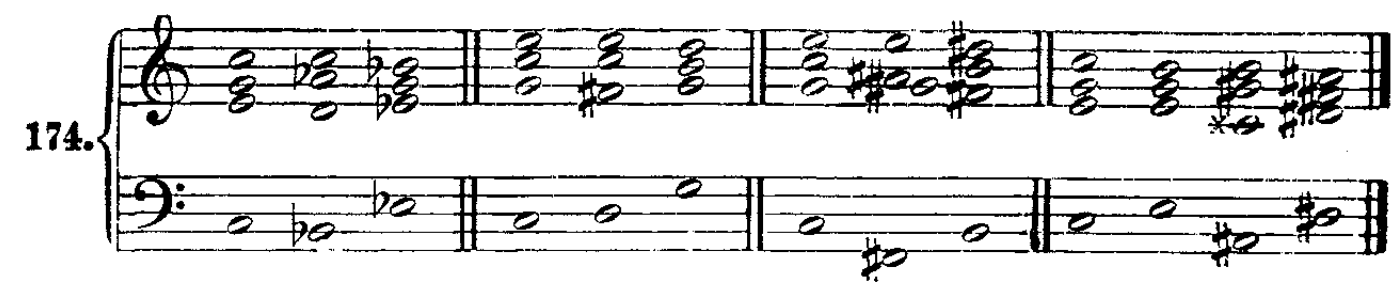
b) Modulations by means of the chord of the minor.seventh are also not frequent.
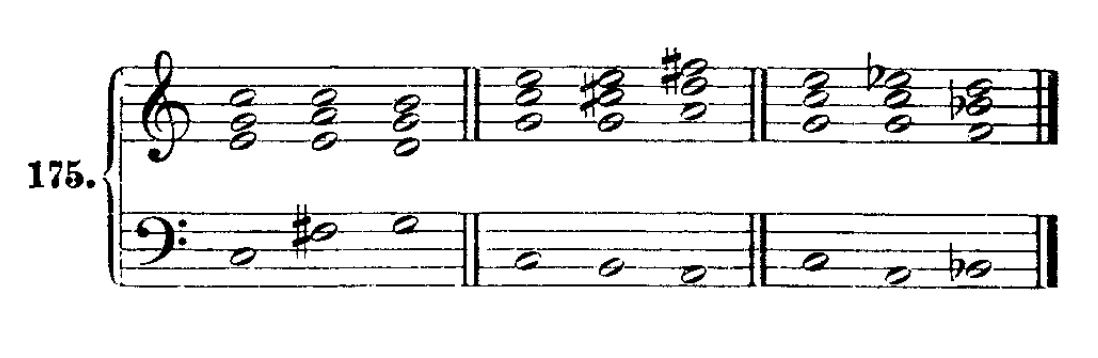
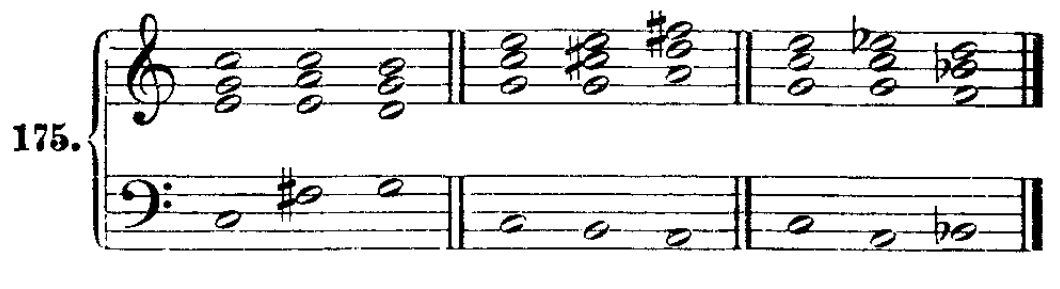
c) The chord of the diminished seventh is, by reason of a certain perculiarity, which we will discuss later, one of the most potent factors in moulation.
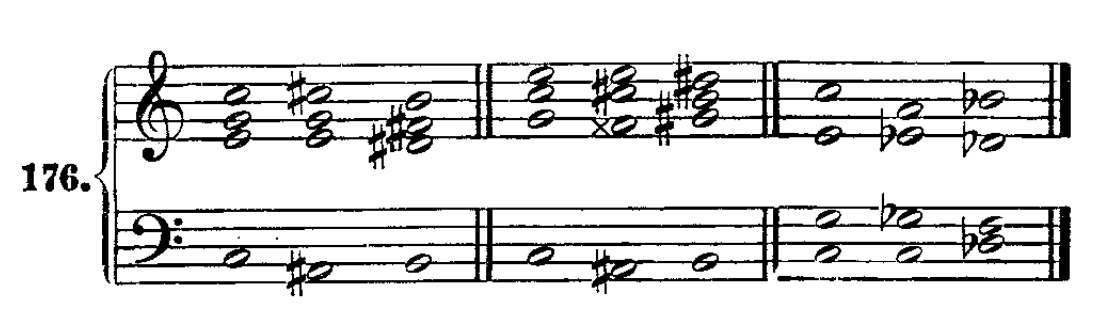
d) Modulation by means of the chord of the sixth of the diminished triad on the 7-th degree—which chord is available for modulating purposes by reason of its leading tone--is connected with some difficulty; yet it is much employed, especially in going over into neighboring keys.
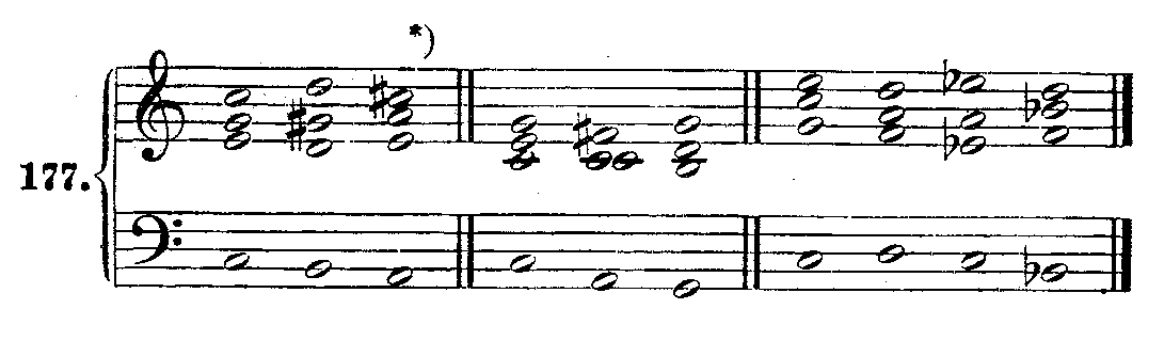
e) The Dominant triad is also used to advantage in modulating
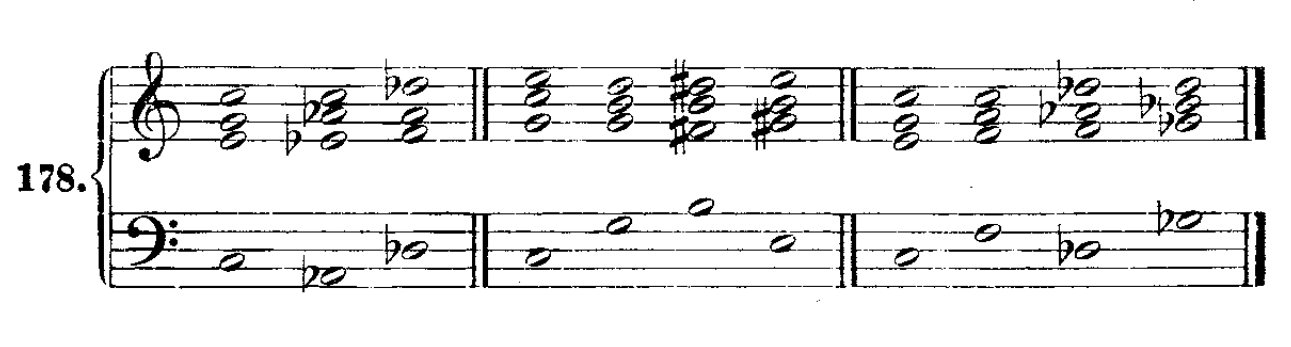
The chords of the minor ninth and diminished seventh. while being found only in minor, are resolvable both into major and minor, which fact adapts them for purposes of modulation.
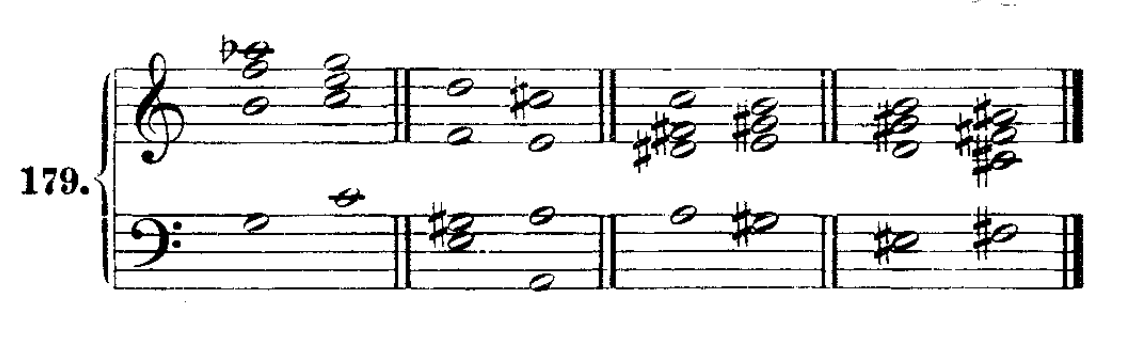
In order firmly to establish the new key and to round off the entire modulation, we employ a prolonged cadence
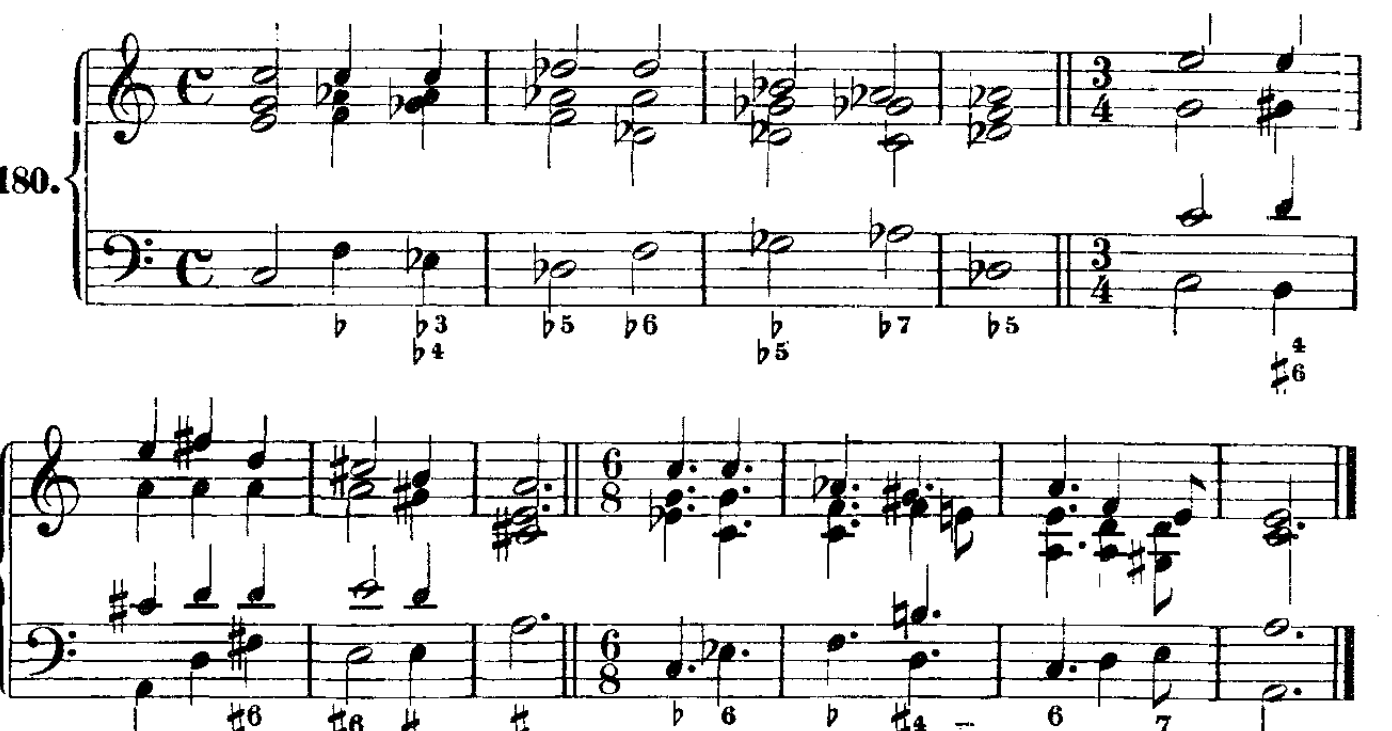
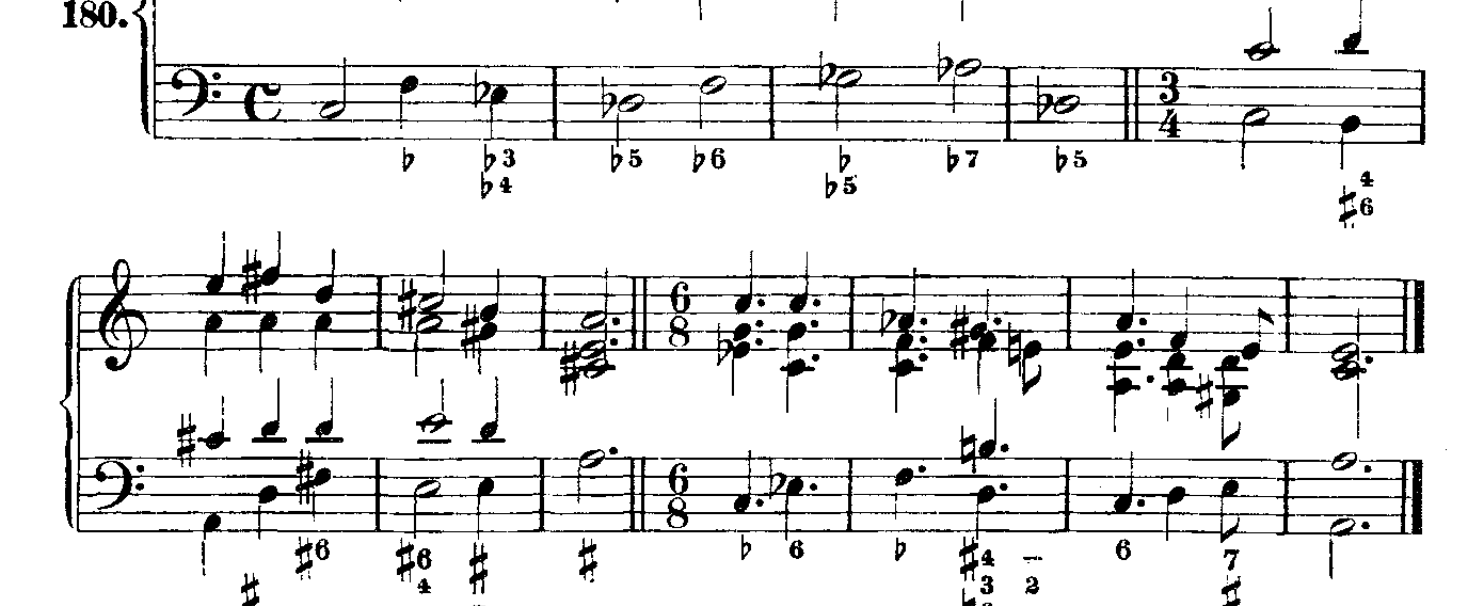
*) In this modulation the chords have no common tones; but the fact that all the voices proceed stepwise sufficiently justifies their absence.
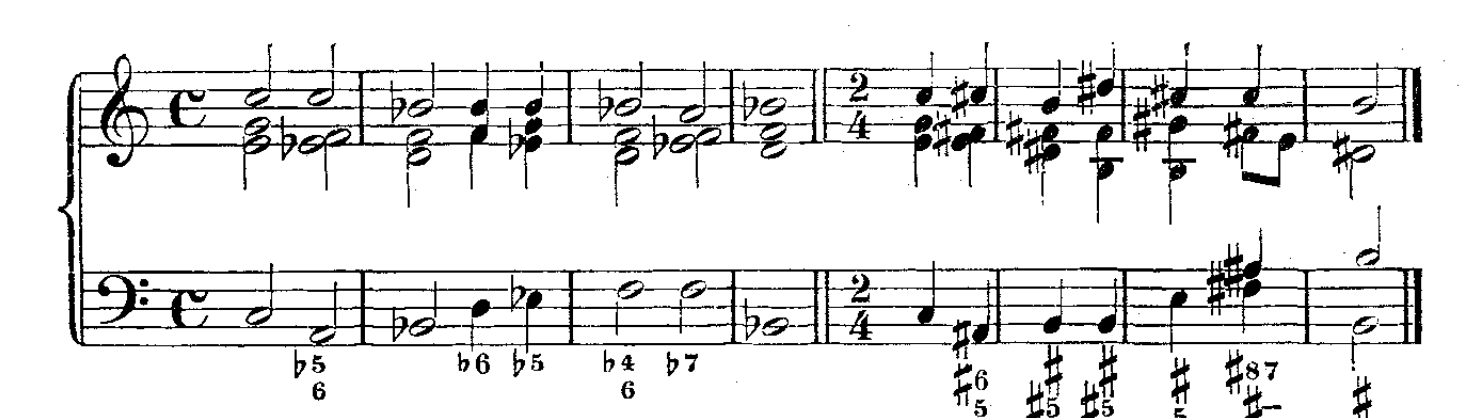
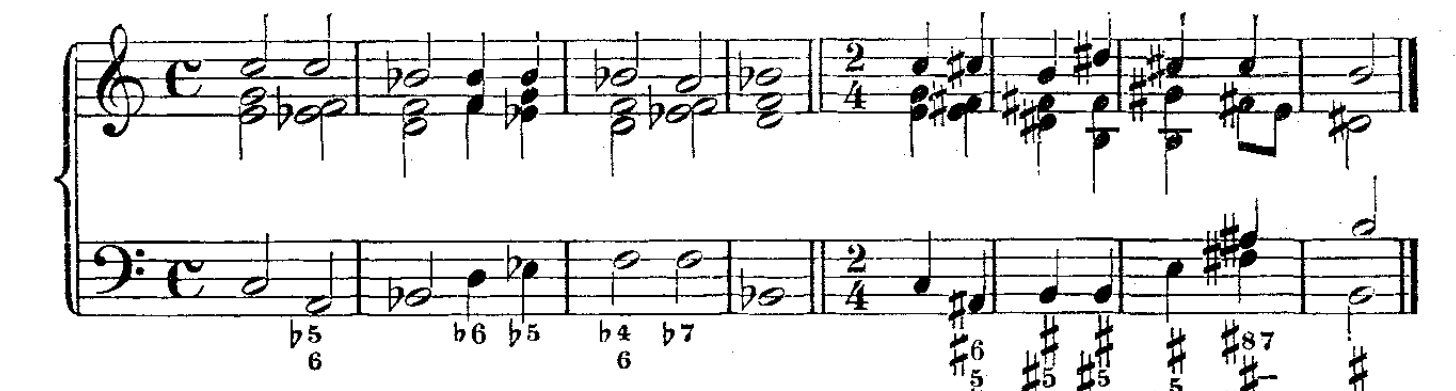
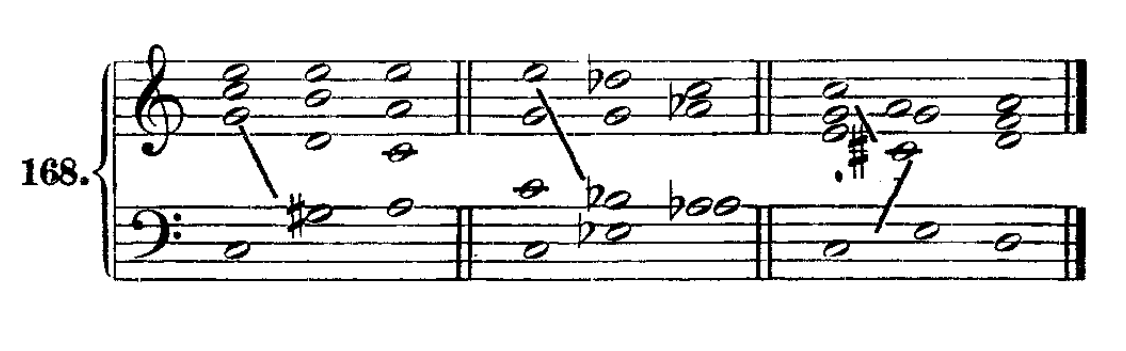
Note. All accidentals not occurring in the key must be noted in the figured bass. Instead of a sharp we often find an oblique line through the figure: #, 6, 3, z; the augmented fourth is frequently expressed by 4+.
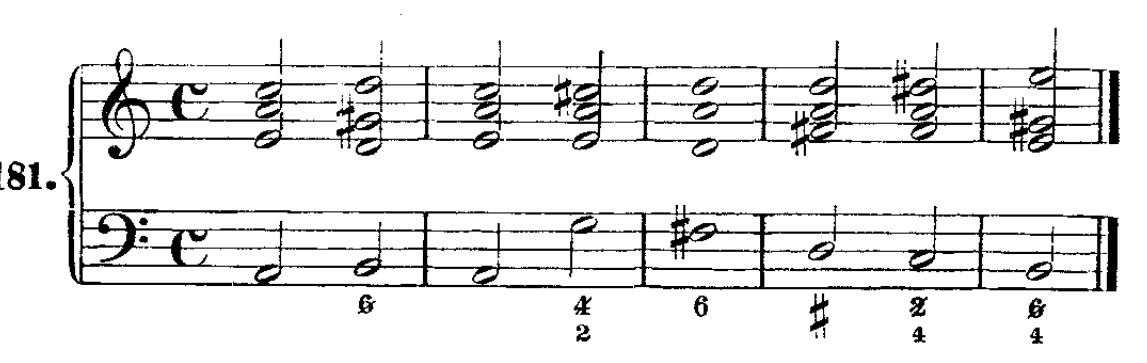
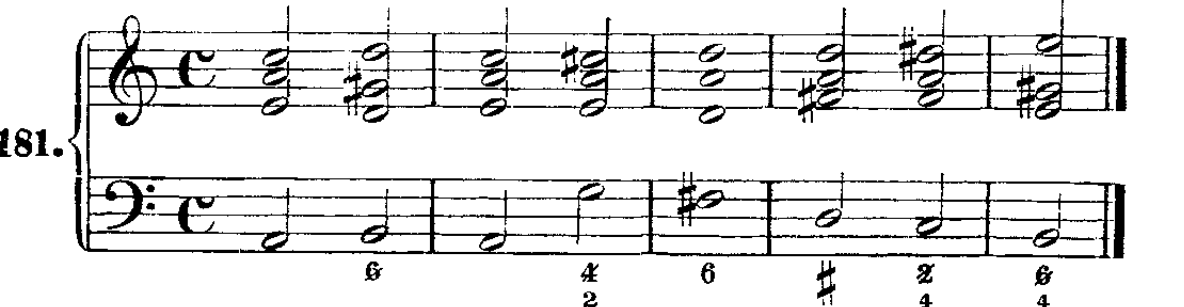
§ 56. Frequently modulation is begun by a cadence of the I-st class. This is the case, when the six-four chord of the key to be reached is also a member of the given key.
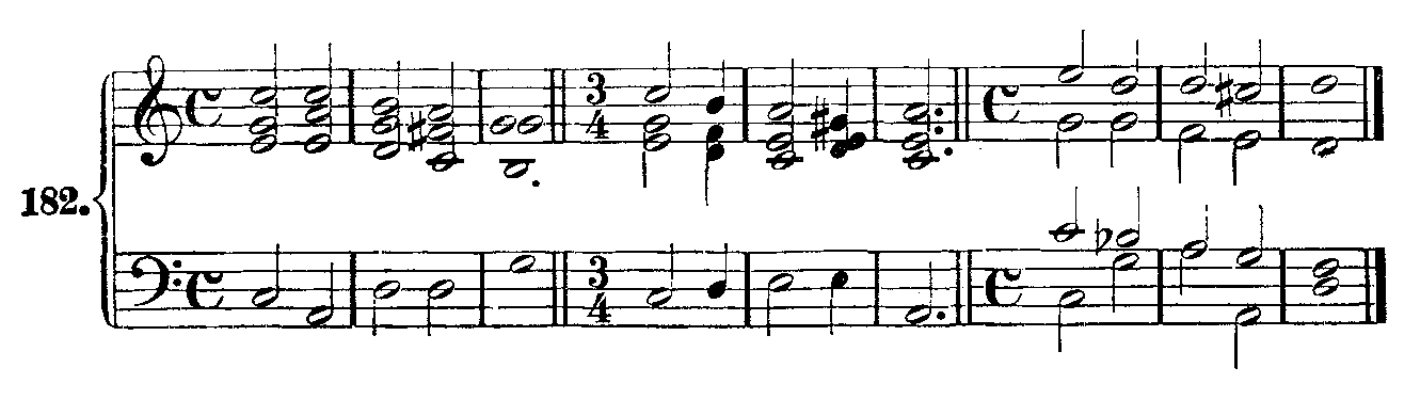
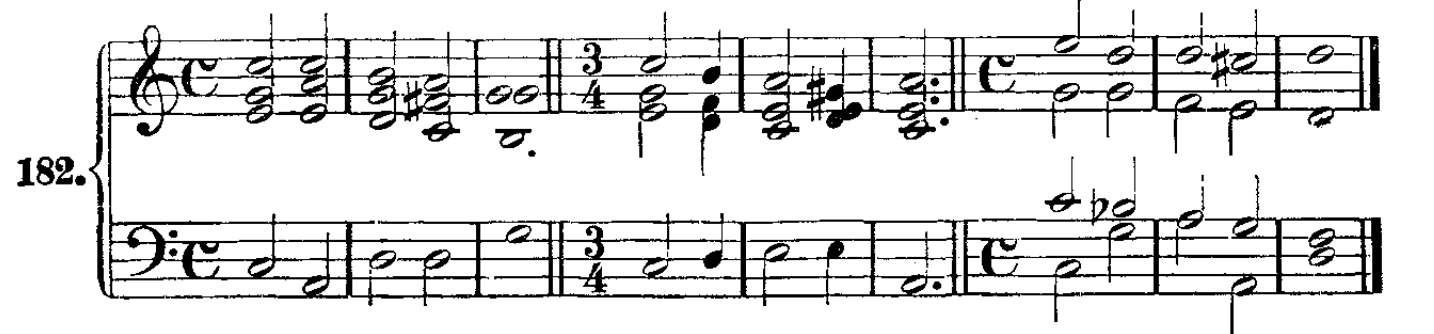
a-nd Exercise: Work out modulations by means of the chord of the ninth, chord of the minor seventh, chord of the diminished seventh, chord of the sixth of the diminished triad, and the Dominant triad.
3d-rd Exercise, Work out various modulations, using every possible timedivision, and closing off each modulation by a prolonged cadence.