 Playable Books
Pyotr Ilyich Tchaikovsky · section 33 of 36
Chapter XXXI. Harmonic figuration
Read and hear this section in the playable edition →§ 134 Harmonic figuration is specifically an instrumental form; in it the voices loose their individual melodic significance, and appear, in smaller rythmic divisions, as parts of one collective harmonic voice.
*) Here an organ point can be employed, the other voices taking up the sixteenth—figures of the Bass.
In harmonic figuration we either retain the original number of melodie voices, or double each voice in a different octave — according to the range of the instrument. The laws governing the connection of harmonies must be observed in figuration; but since the ear is barely allowed time to follow the details of the chord-connection, certain irregularities (as, for instance, forbidden progressions) that are liable to occur now and then, loose their disagreeable effect.
As regards forbidden octaves, we should distinguish whether they occur in the original voices, or merely as a consequence of the doubling of one of these voices. This difference is readily seen, if we drop all repetitions of intervals, and represent the figuration in four-part writing.
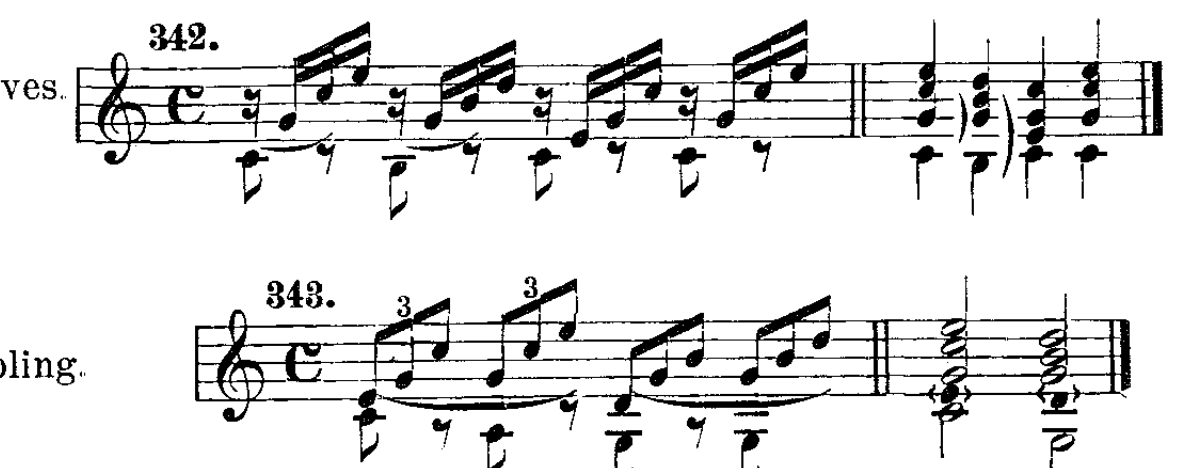
The most important points in figuration are, the evolving of the figure or motive, and a conscientious application of the same.
Given harmonies. J. Figuration.
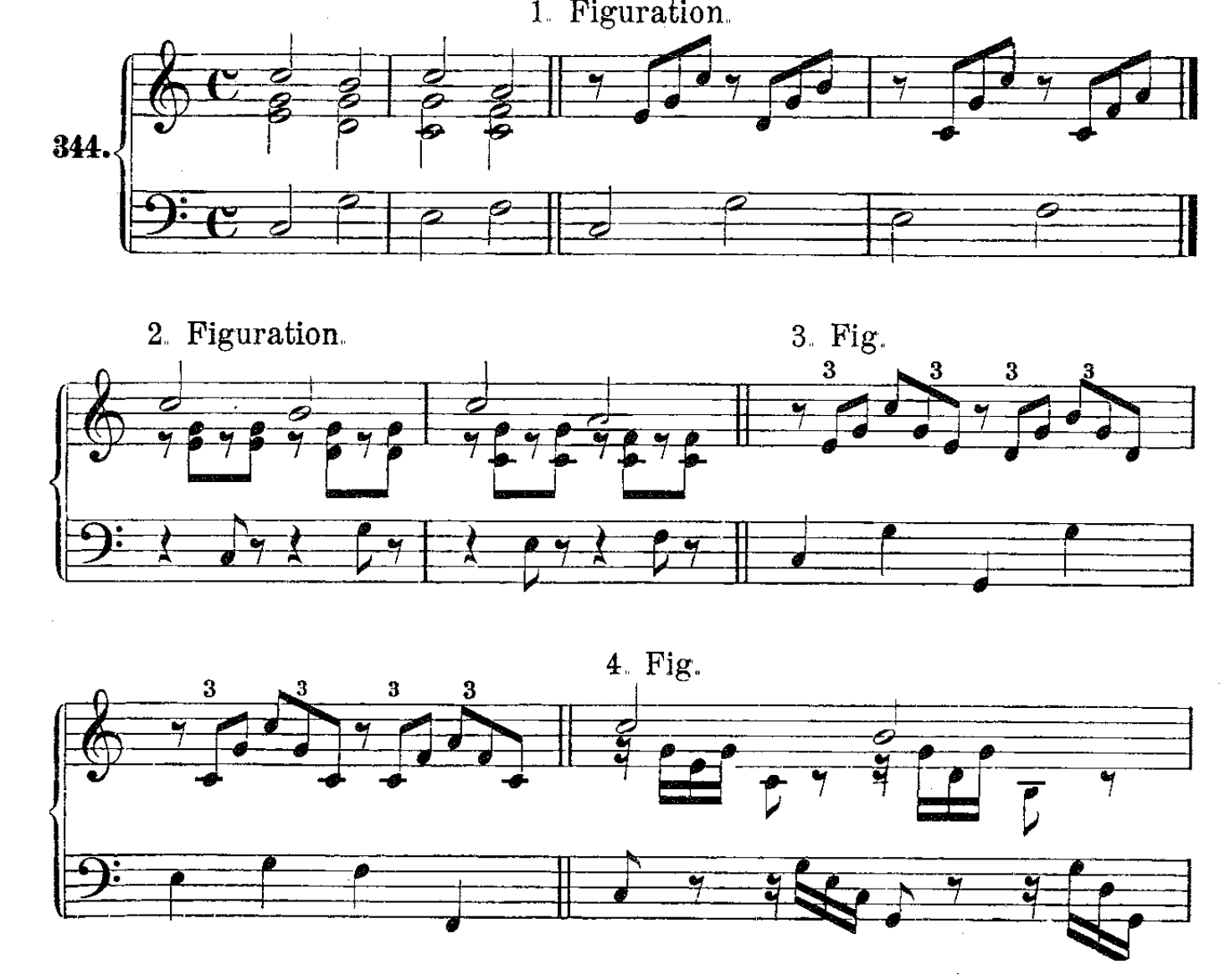

In the repetition of the figure facility of execution must always be an important consideration; the strict application of the figure may be dispensed with in cases where playableness demands such a course.
*) In the given four—voiced harmonies there is no doubling of the third in this chord of the sixth; at this point however the application of the motive demands it.
In Ne 6 of the above examples the pianoforte is supposed to be the performing instrument; consequently the second chord (G-triad) is arranged for the left hand in a manner not representing the position of voices in the original chord of four parts The original disposition of the parts could, in fast tempo, be difficult of execution.
§ 135. If the dimensions of the motive do not permit of its full repetition on smaller divisions of the measure, the repetition of a part will suffice at these points; the rythmical movement must, however, be preserved.
Harmonic figuration sometimes appears in conjunction with melodic figuration. This is seen in case 5. of example 344.; Exercise. Harmonize the following Basses, employing figuration.