Pyotr Ilyich Tchaikovsky · section 34 of 36
Chapter XXXII. The free Prelude Read and hear this section in the playable edition →
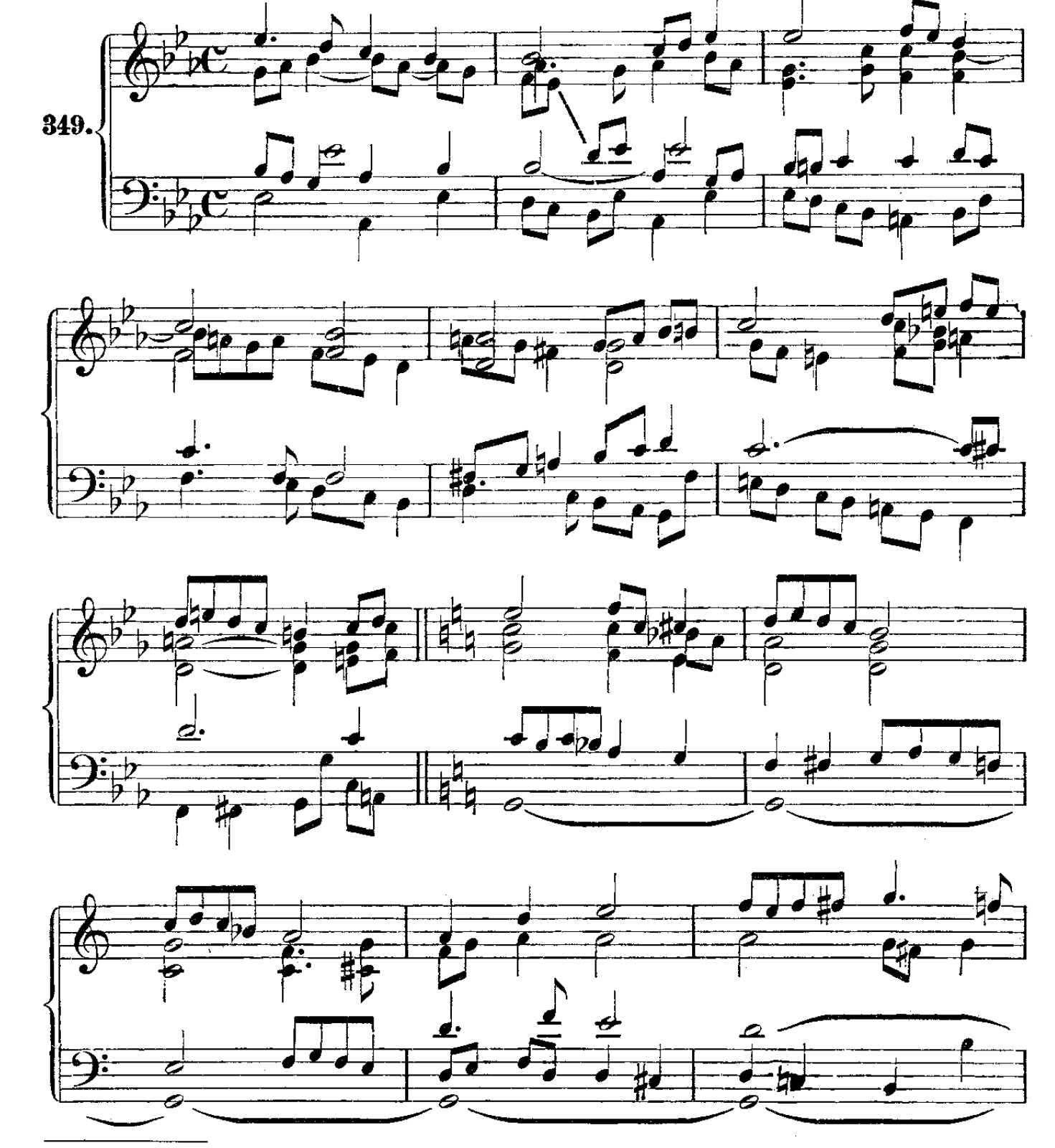
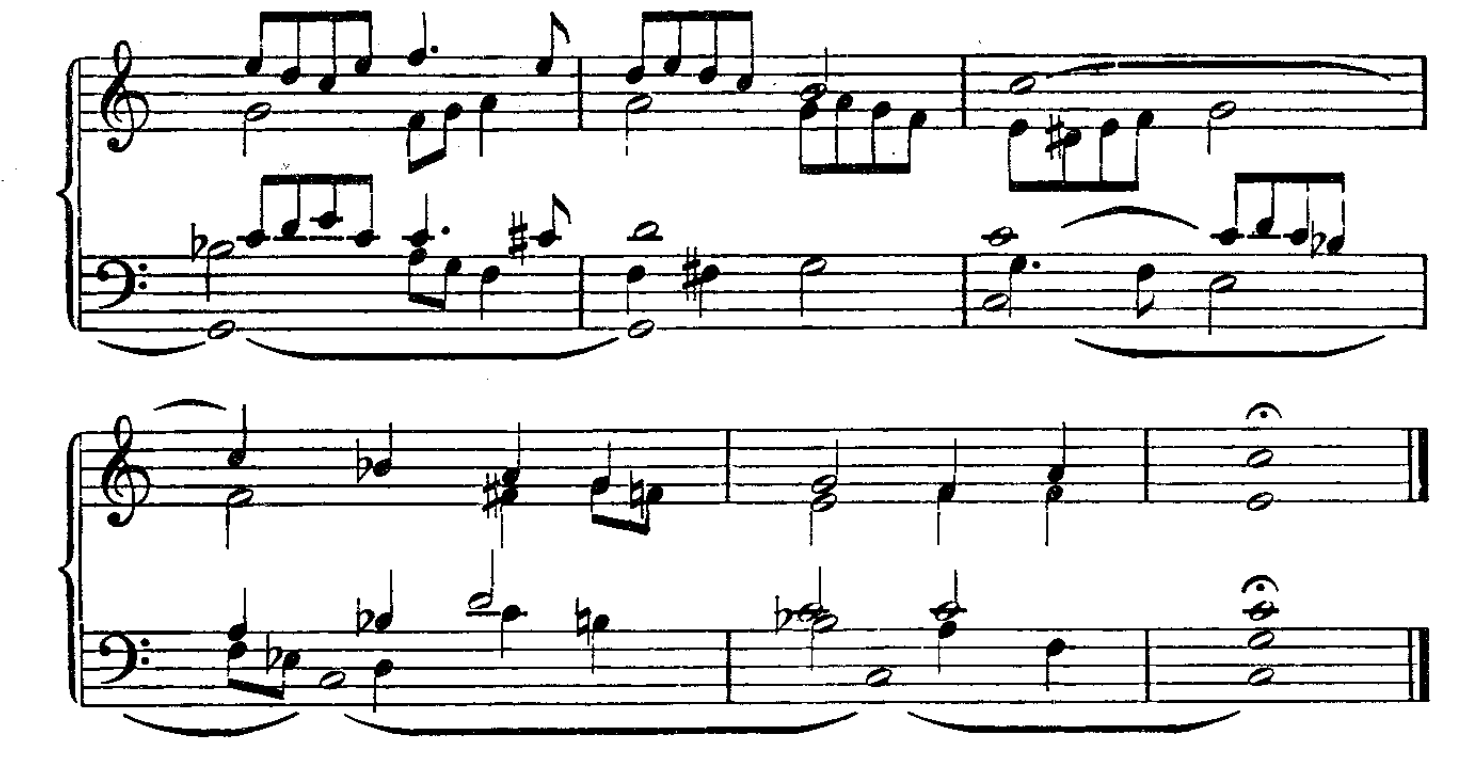
Fig. 369 · See it in the reader § 137. A valuable exercise is the writing of free chord-progressions, dominated by no particular voice and going through all sorts of modulations. Such exercises, which need not take any of the distinct forms recognized in musical composition, should be characterized chiefly by skilful harmonization *). They may either end in the original key, or constitute a passing modulation; at the close the organ-point can be employed.
Fig. 370 · See it in the reader *) The different forms in which musical thought is presented, will become known to the student Jater on,
Fig. 371 · See it in the reader Note. For the sake of clearness it would be advisable to employ a separate staff for each voice and to write the voices in their proper clefs.
← Chapter XXXI. Harmonic figuration All sections Chapter XXXIII. Deviations from the laws of Harmony → More Playable Books Reger, Modulation Explore Reger’s modulation method with 100 analyses and 102 playable examples. Fux, Counterpoint Learn how independent voices work together, one species at a time. Goetschius, Exercises in Elementary Counterpoint Build independent melodies through graded exercises, with 471 recorded examples. Goetschius, Counterpoint Applied Study imitation, canon, and fugue with 393 recorded examples. Prout, Bach’s Forty-Eight Fugues Follow Prout through all 48 fugues of the Well-Tempered Clavier, every example playable. Rameau, Treatise on Harmony Explore the foundations of harmony, composition, and accompaniment. Rimsky-Korsakov, Practical Manual of Harmony The classic harmony course, newly translated from the 1910 French edition, with all 640 examples playable. Schoenberg, Theory of Harmony Read all 22 chapters, with the original German beside a new English translation. Rimsky-Korsakov, Principles of Orchestration Discover instrumental colors through scores and orchestral recordings. Forsyth, Orchestration A witty, thorough guide to every orchestral instrument, with the original pages. Berlioz, Treatise on Instrumentation Berlioz’s treatise on the orchestra, revised by Richard Strauss, with the original pages. Sanganeria, Arrival Build jazz lines that land, with 30 original playable examples. Bona, Rhythmical Articulation Practice rhythm through 120 graded studies, with playable notation and original scans. ← All Playable Books  Playable Books