 Playable Books
Pyotr Ilyich Tchaikovsky · section 35 of 36
Chapter XXXIII. Deviations from the laws of Harmony
Read and hear this section in the playable edition →§ 138. The laws of harmony being the outcome of experience, and corroborated as they are, by our musical instinct, are in the main incontrovertible; but in a highly-developed harmonization the melodic tendencies of the voices are so powerful, that even the boldest deviations from these laws are sometimes justified by them. The preponderance of the melodic element and the influence it exerts on chord-progression is best exhibited in the irregular resolution of dissonant harmonies.
It is obvious that a total disregard of the laws of natural chord-connection can be indulged in only by the experienced composer, who, in the pursuance of aims higher than a mere pedantic, anxious observance of rules, knowingly deviates from harmonic laws.
The Dominant-Seventh chord, for instance, would, according to the laws arising out of its very nature, have to resolve into the tonic triad; it can, however, be resolved into other triads of its own or of strange keys, provided forbidden parallel progressions and cross-relations are avoided and melodious voice-leading is observed.
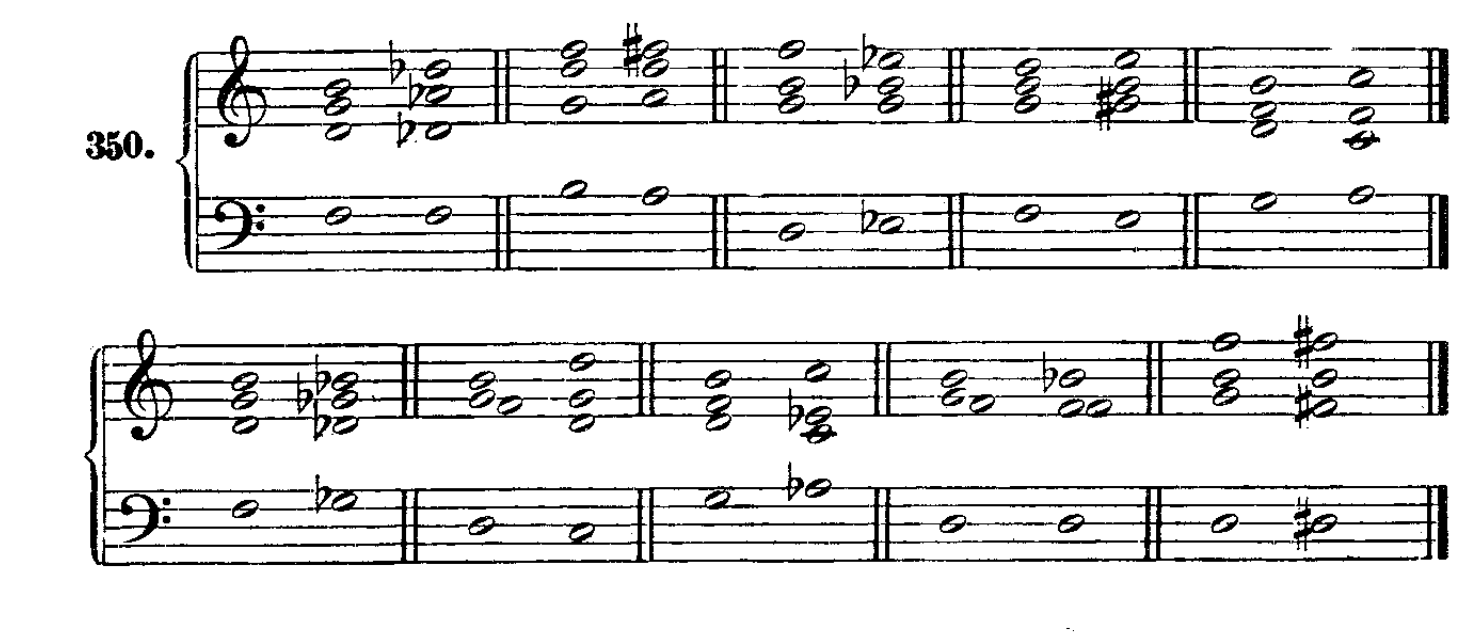
i” tt it it i TE
The Dominant-Seventh can even resolve into a dissonant chord, provided the voice-leading is good.
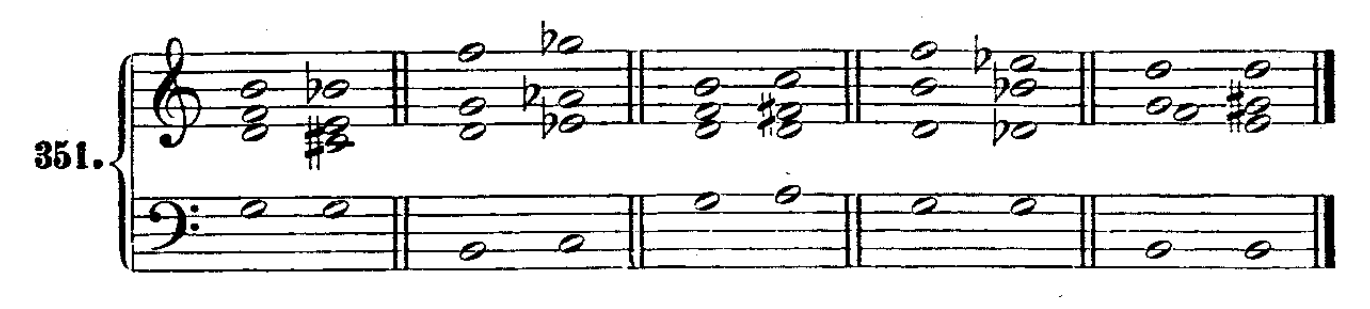
In like manner every dissonant chord can resolve into a chord other than its resolution, if such a deviation be demanded by the voice-leading or the higher aims of the composer.
These irregular resolutions of dissonant chords are called: interrupted cadences, or deceptive cadences.