 Playable Books
Hector Berlioz · section 43 of 67
Kettledrums
Read and hear this section in the playable edition →

Male choruses in the unison, introduced into dramatic music by the modern Italian school, are occasionally very effective; but they have been greatly misused. If certain masters continue using them, they do so out of mere laziness. or to please certain choral bodies which are unitble to execute’competently pieces in several parts.
On the other hand, double choruses are of remarkable richness and splendor. They are certainly not used too much at present. $ The men’s choruses in “Lohengrin” should be stndied as models of clarity and expressive characteriza-. tion.
It is to be regretted that the art of a-capella singing * (ie. choral works without any idstrumental accompaniment’ is no longer practiced in Germany— } «with very few praiseworthy exceptions—whereas it
is still cultivated in a few places abroad (e.g. in Hol-
land, Russia and above all at the Orfeo Catala in
For our musicians who are always in a hurry—composers as well as performers—double choruses are too tiresome to write and to study. In fact, the ancient composers who made the most frequent use of them usually wrote only for two alternating choruses of four voices each; choruses of eight real parts are rather rare even with them. There are also compositions for three choruses; if their basic idea is worthy of such rich realization, such choral bodies, divided into twelve or at least nine real voices, produce unforgettable impressions and make choral music of the grand style the most powerful of all the arts..
Percussion instruments
These are of two kinds: one comprises the instruments of fixed and musically determined pitch; the other, those whose sound has little musical value and can be ranked only among indefinite noises, is usable for special effects and for coloring the rhythm.
The kettledrums, the bells, the glockenspiel, the keyboard harmonica, the small ancient cymbals have fixed tones.
The bass drum, the tenor dram, the side drum, the tambourine, the cymbals, the gong, the triangle and the crescent produce only noises of various ‘characters..
One can also include here the birch rod, the castanets and the rattle. The birch rod is used in Mabler’s
Third Symphony, the rattle in my “Till Enlenspiegel”
(as a humorous imitation of the wild shrieks of market
women suddenly stirred up from their rest).
Eettledrums
Of all the percussion instruments, I consider kettledrums the most valuable; at least they are in most general use, and modern composers have achieved the most picturesque and dramatic effects with them. The old masters used them slmost exclusively in compositions of » brilliant and military character to sound the tonie and dominant in more or less common rhythms, combined almost always with the trumpets.
Modern composers still grossly misuse the kettledrams by employing them nmuch too frequently.
In the majority of orchestras there are only two kettledroms, the larger of which the lower tone. They are usually given the first and fifth steps of the key in which the composition is written. Up to quite recent times, some masters had the habit of invariably
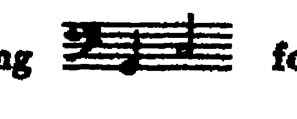
writing =S=5= for the kettledroms and merely
indicating the actual tones at the beginning of the piece. They wrote, for instance, Timpani in D, in which case
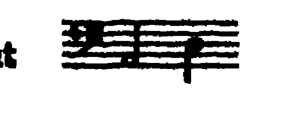
Gand C meant SSF; or, Timpani in G, mak-
"The activities of German mele choral societies are
the hardly worth a tasption of a few very large societies, particularly of trackers. e “helt artistic results being negilgible—with
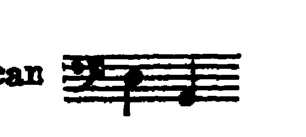
ing G and C to mean BSS These two examples
will suffice to demonstrate the shortcomings of this method. The composite range of the two kettledrums
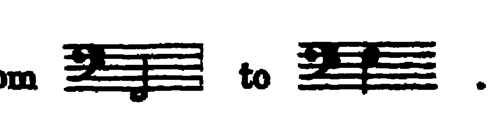
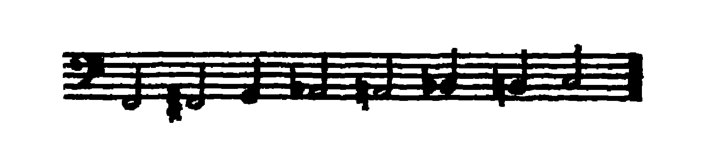
to say, by means of the screws increasing or diminishing the tension of the skin (the so-called head), the lower kettledrums can be tuned in the following pitches:
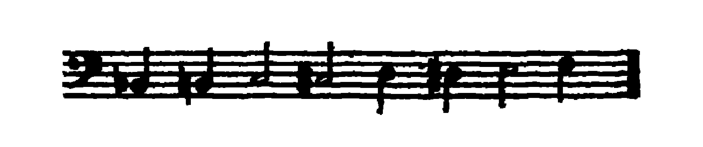
and the higher kettledrums as follows:
The keyboard harmonica
(Glass Harmonica) -
This instrument is of the same type as the preceding; its hammers, ‘however, strike glass plates. Its sound is of an extremely voluptuous delicacy and might be used in the most poetic effects. Its tone, like that of the keyboard with steel bars, is very weak. This fact should be kept in mind when it is to be combined with other orchestral instruments. The slightest forte accent of the violins would cover it completely. It would blend better with a light accompaniment in piszicato or in harmonics, or with some very soft tones of the flutes in their medium range.
The keyboard harmonica sounds as it is written. It can scarcely be given a range of more than two octaves.
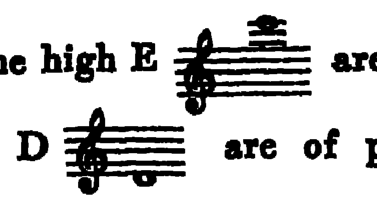
All tones above the high E — are scarcely audible and those below D — are of poor quality and even weaker than the rest of the scale. This shortcoming
might perhaps be remedied by using stronger glass plates for the low range.
Pianoforte manufacturers osually also build this charming and too little known instrument. It is written on two staves and in two G-clefs.
It should not be necessary to add that the manner of playing these two little keyboard instruments is the same as that on the pianoforte and that one can write for them (of course within the limits of their range) the same runs, arpeggios and chords as one would for a tiny pianoforte.
The Celestia, invented by Mustel in Paris, is an important addition to the orchestra. It may be considered an improved Glockenspiel, provided with a keyboard; its tone, produced by steel plates, is similar both to the Glockenspiel and to the harp. Its range is five octaves. Its beautiful sound is frequently utilized by modern French and Russian composers, but older works benefit by it as well (e.g. Papegeno’s aria in “Zauberfloete”),.
G. Charpentier in particular has combined it very subtly and effectively with other soft orchestral colors in his opera “Louise”.
The ancient cymbals
They are very small. Their sound rises in pitch as they become thicker and smaller. I have seen some in the Pompeian Museum at Naples which were no larger than a plaster. Their tone is so high and weak that it is scarcely audible unless all other instruments are silent. In ancient times they served to mark the rhythm of certain dances, probably in the same fashion as our modern castanets.
In the fairy-like Scherzo of my “Romeo and Juliet” Symphony I have employed two pairs, equal in sixe to the largest of the Pompeian cymbals (ic. somewhat smaller than a hand), and tuned in fifths. The lower one
gives, this Bb;, and the higher one this F:
To make them vibrate well, the players
E not strike them together with their entire surfaces but only with the edges. Any bell maker can manufacture these small cymbals. They are cast in brass or copper and then tuned in the desired key by means of a lathe. They should be at least a third of an inch thick. They are delicate instruments similar to the keyboard harmonicas, but their tone is stronger and can be heard through a large orchestra playing piano or mezxoforte.
The bass drum
Among the percussion instruments with indefinite sound the bass drum is certainly the one which has done the greatest mischief and has been most misused, in
-modern music. None of the great masters of the last century thought of introducing the bass dram into the orchestra. Spontini was the first to use it in-the triumphal march in “La Vestale” and later in several pieces of his “Fernand Cortes”; there it was in its proper place. But it is really the height of folly to use this instrument in all ensembles, in every finale, in the most meaningless choruses, in dance tunes and even in cavatinas—as has been done during the past fifteen years; to call the matter by its right name—it is really sheer brutality. The composers do not even have the excuse of intending to accentuate a basic rhythm against other accidental rhythms. No—they senselessly beat the accented parts of each bar, they crush the orchestra, they choke the voices. No longer is there any melody, harmony, form or expression left; the prevailing key remains scarcely recognizable, And yet they naively think they
have created an energetic instrumentation, something especially beautiful!
It is needless to add that in these cases the bass drum is almost never used without the cymbals—as if these two instruments were inseparable by nature. In some orchestras they are even played by the same musician; one of the cymbals is fastened on top of the bass drum, so that he can strike it with the other cymbal in his left hand while using the dromstick with his right hand. This economical procedure is intolerable; the cymbals lose their sonority and produce a noise similar to the sound of a falling bag full of old iron and broken glass. The resulting music is utterly trivial and devoid of any brilliance. It is perhaps suitable for the accompaniment of dancing monkeys, jugglers, mountebanks, swallowers of swords and snakes in public squares and at dirty street corners.
Nevertheless, the bass drum is of admirable effect if used skillfully. The entrance of the bass drum in a full orchestra can, for instance, redouble the force of @
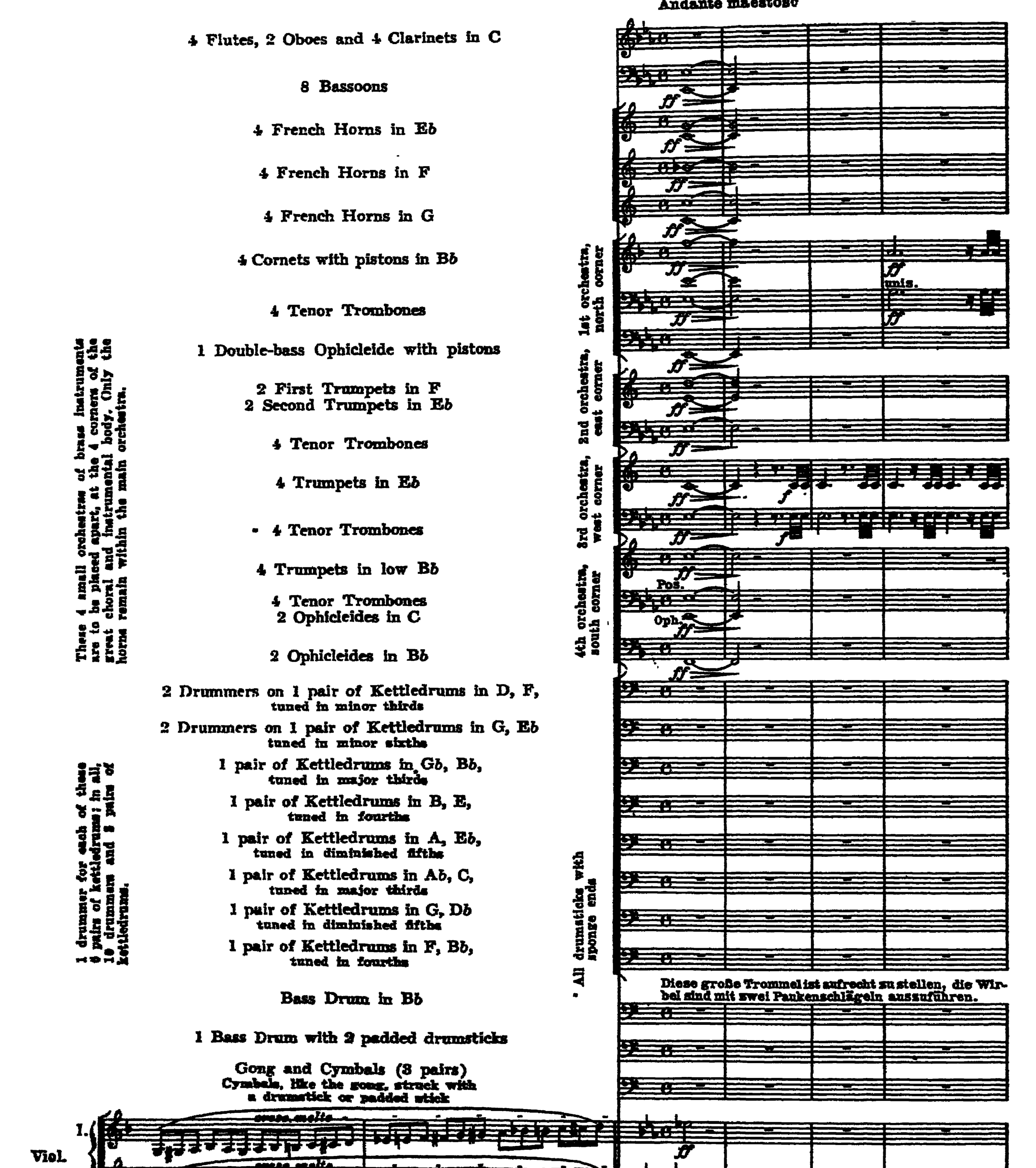
143. requiem, tuba mirum
& Flutes, 2 Oboes and + Clarinets in C
These 4 amall orchestras of brass Inatrumenta
2 Drummers on 1 pair of Kettledrums in D, F,
2 Drummers on 1 pair of Kettledrums in G, Eb
1 pair of Kettledrams in in A Ea,


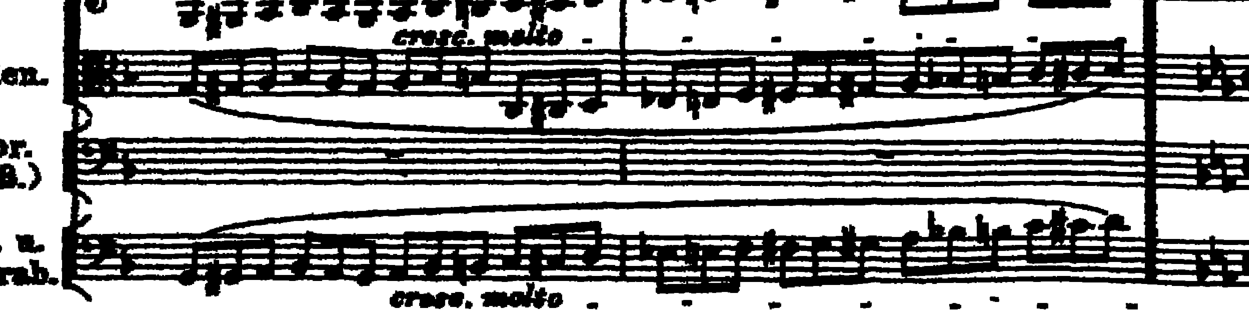
in - A ES ET SE Se a A SS eS Sl i eT ee
b & omer] ——L—— A Se ee ee ee ee ee ee ee ee Ee A | A AT Sh SAD a Sane ee ee SS SS a 8S SSS SS SS SS i Se a ee ee eS Oe Oe eee ee
———— ——— SS LE oS SS RE ES NT a Fl SN ee Se A ee a or) ——. eee ee | a we ST eee ener woe mete areee Stow Soe we cere ale Soe a I a SO
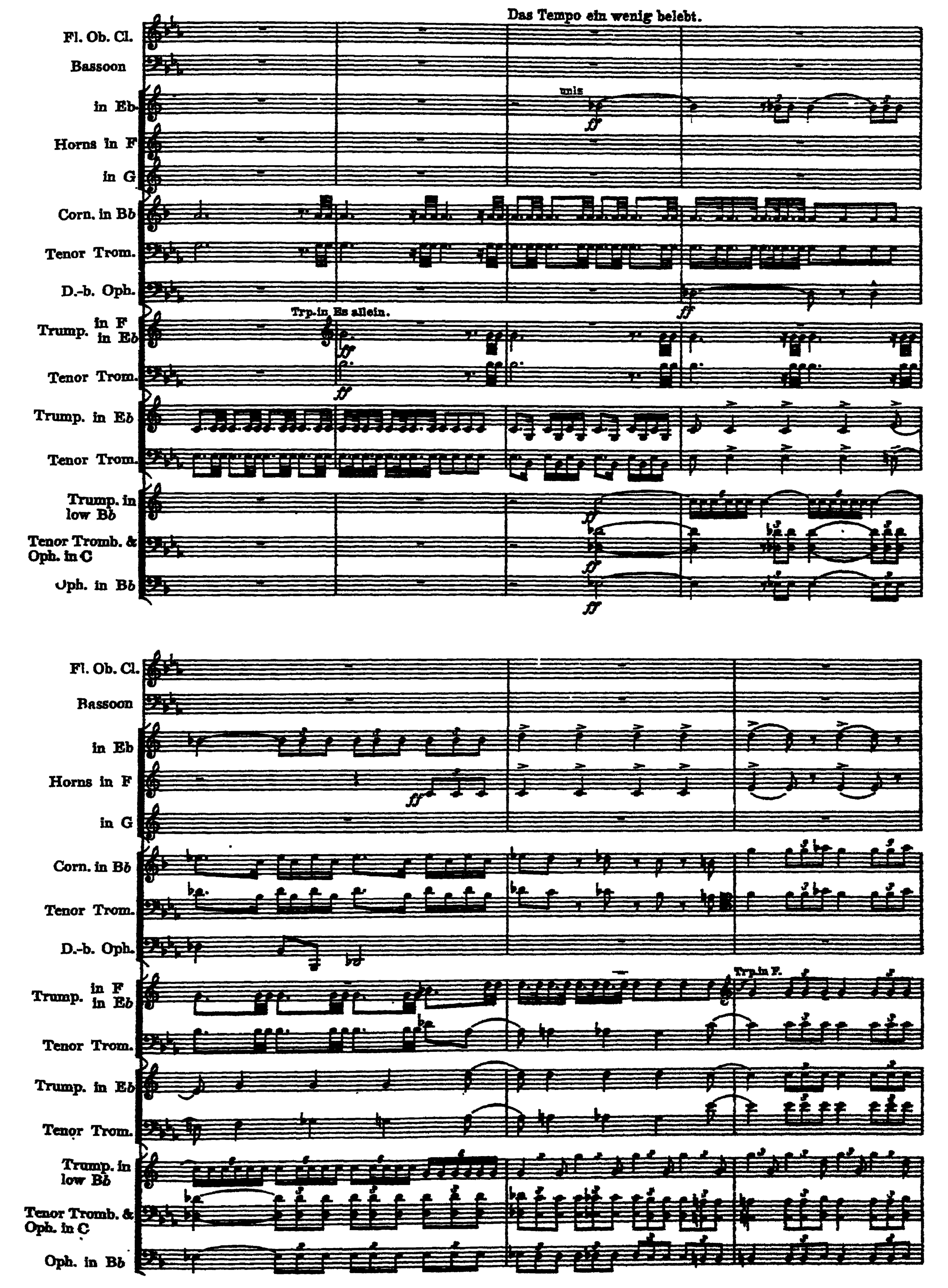
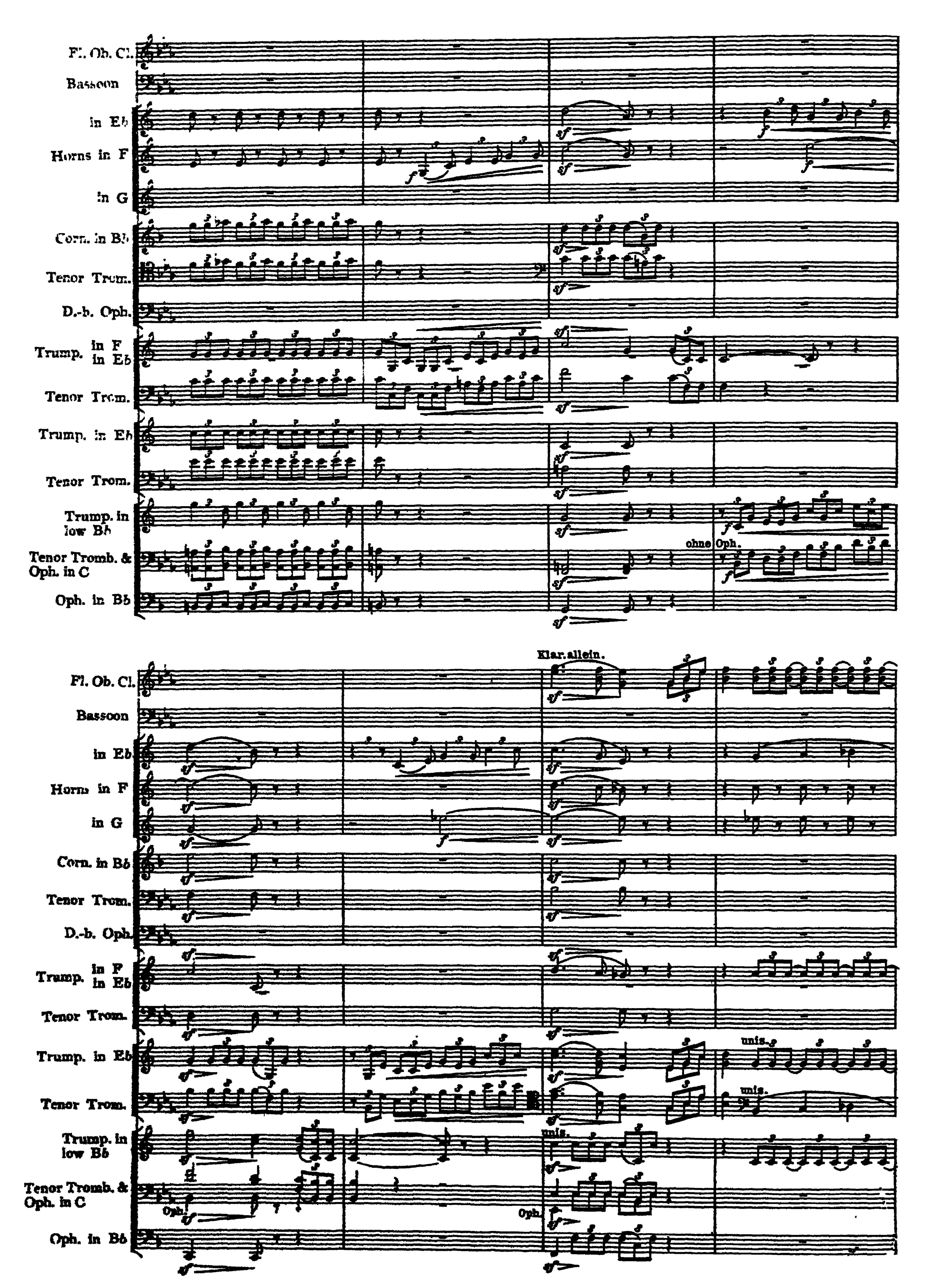
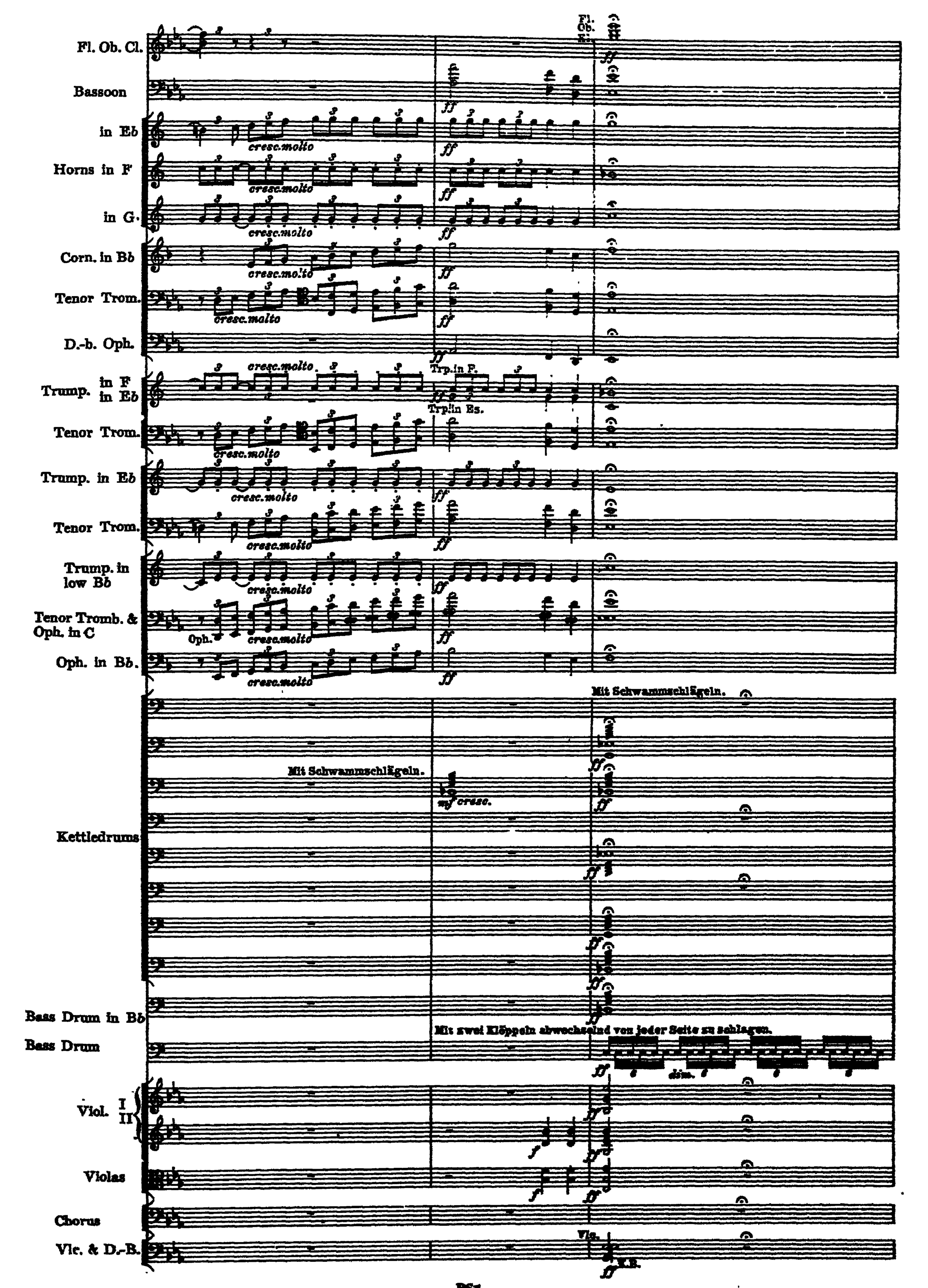
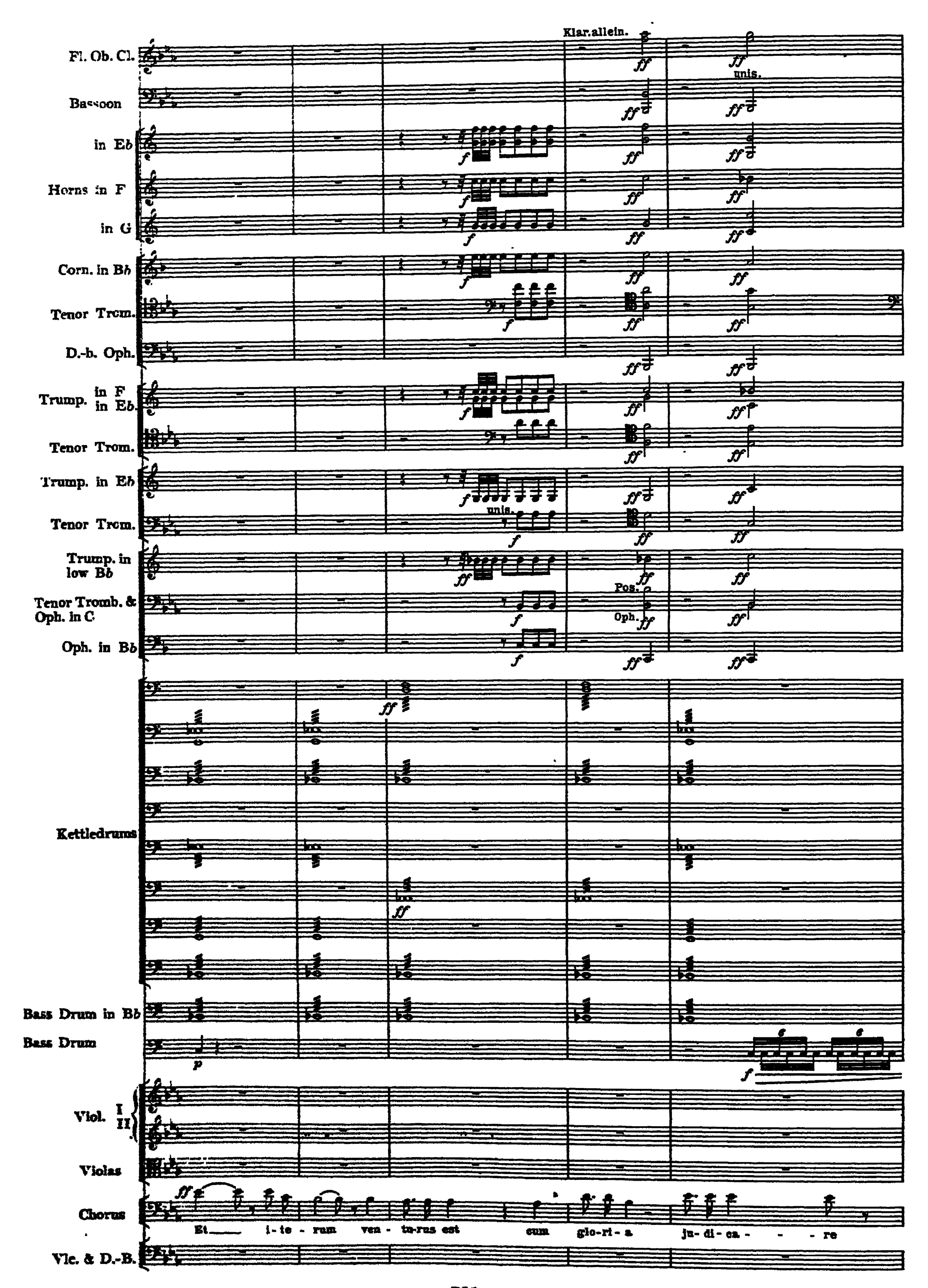
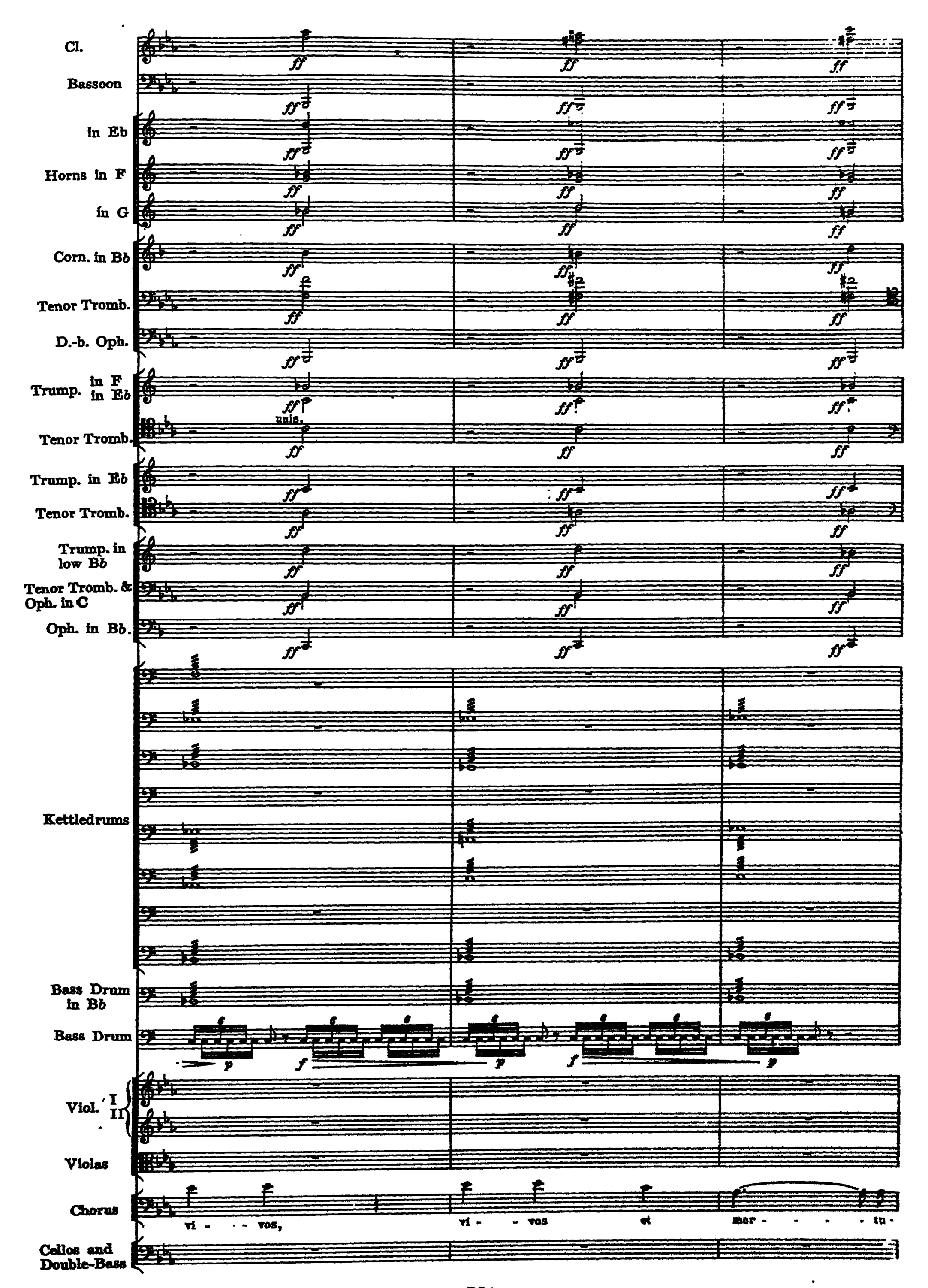
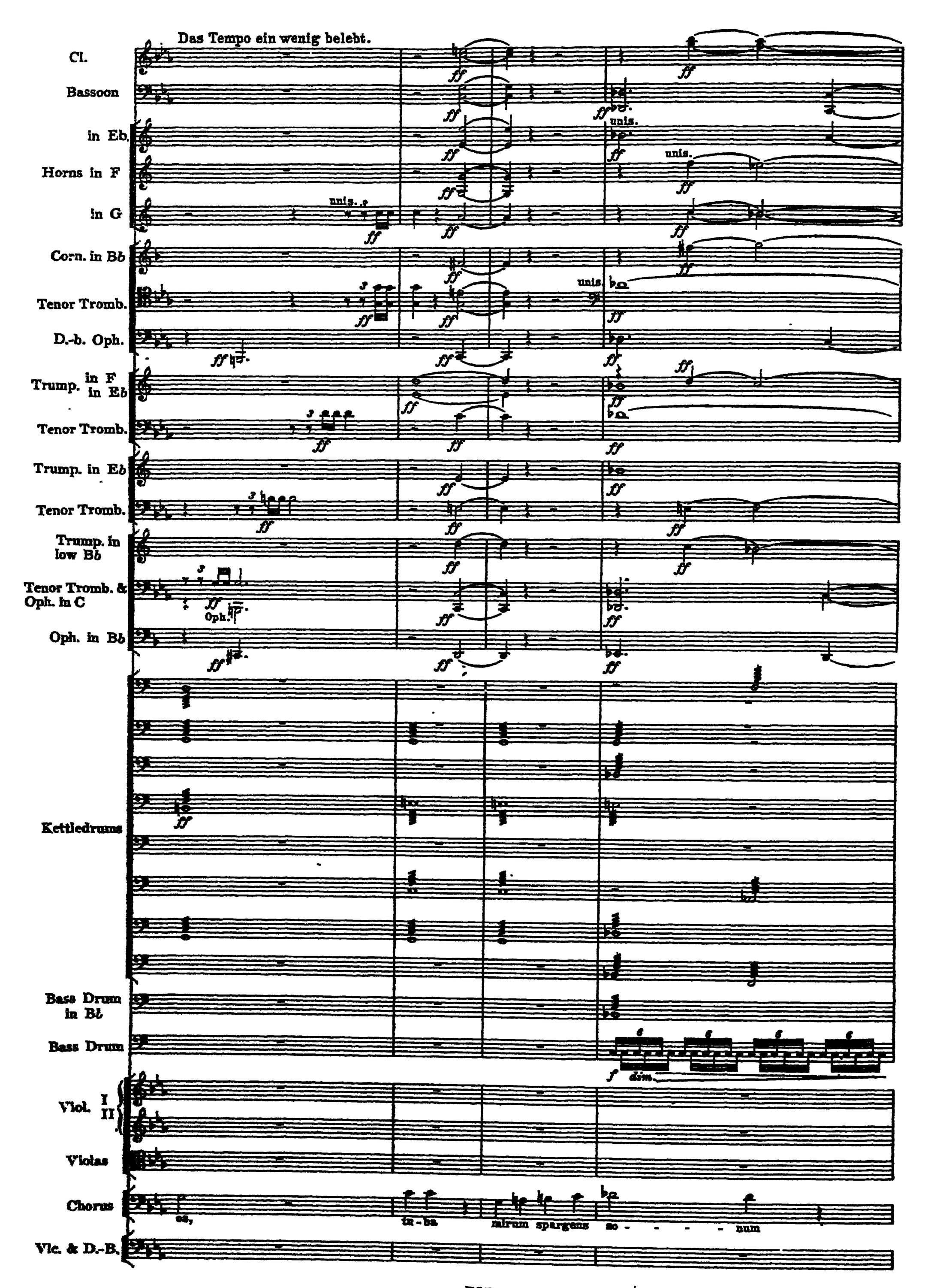
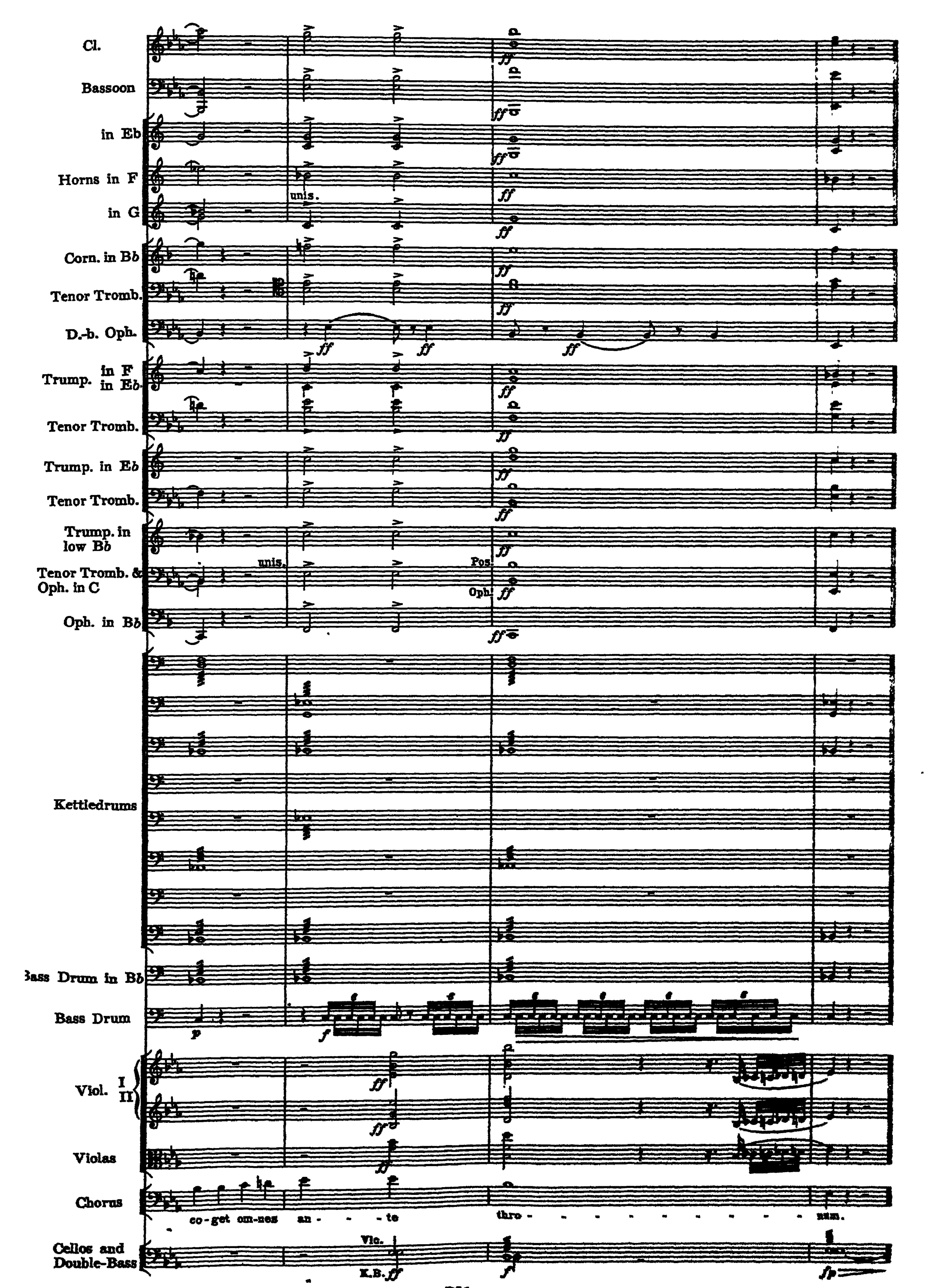
As stated above, kettledraums have 2 range of only one octave, The difficulty of obtaining skins sufficiently large to cover 2 shell bigger than that of the large bass kettledrum probahiy aceounts for the fact that no tone lower than F can be reached, But this does not apply to high kettledrams: i$ would certainly be easy tu gain the high G, A and B” by diminishing the diameter of the meta! shell, Such smail kettledrams might be of excellent effeet In many instances,
In the past kettledrummers rarely changed the tuning of their instrument in the course of a composition; however, composers now do not hesitate to require changes in tuning quite frequently. The performers might be spared this difficult and awkward proctdure if there were two pairs of kettledrums and two drummers in every orchestra. At any rate, if the tuning has to be changed, the performer must be given s number of rests commensurate with the change required. thus affording him time to effect it securely. Besides. the tuning should not be too far removed from the old one. For instance,
if the kettledrums are tuned in A and E SS
and one wants to go into the key of Bo, it would obviously he clumsy to have the new tuning in F and Bo
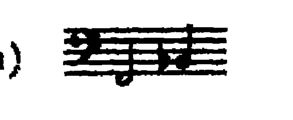
. which would involve tuning
down the low kettledrum by a third and the high one by
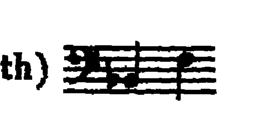
sn augmented fourth; the tuning Bb, F (fifth) Ee
necessitates the raising of both drums by only a semitone. It will easily be understood how difficult it is for the drummer to prepare a new tuning during a composition sbounding with medulations; he may have to
do the tuning for the keys of C or F while the orchestra is playing in B. This shows that the kettledrummer should not only be skilled in the manipulation of the drumsticks, but should be a gifted musician with a sensitive ear. This is why good kettledrummers are so rare.
There are three kinds of drumsticks. Their use changes the tone of the instrument to such an extent that composers are more than negligent if they fail to indicate in their scores which kind of stick they desire.
Sticks with wooden ends produce a rough, dry, hard sound, suitable only for single violent blows or to accompany a tremendous noise in the orchestra, Sticks with wodden ends covered with leather are less hard; they produce a sound less startling than the preceding, but still very dry. Unfortunately, in many orchestras only sticks of this type are used. The best sticks have sponge ends; their effect is less noisy and more musical. They should be used more frequently than the others. These sticks give the kettledrums a grave, velvety sound, which makes the tones very clear and hence the tuning very distinct; they can render many different shadings from the softest to the loudest, such as the other sticks could produce only with ugly or at least inadequate effect.
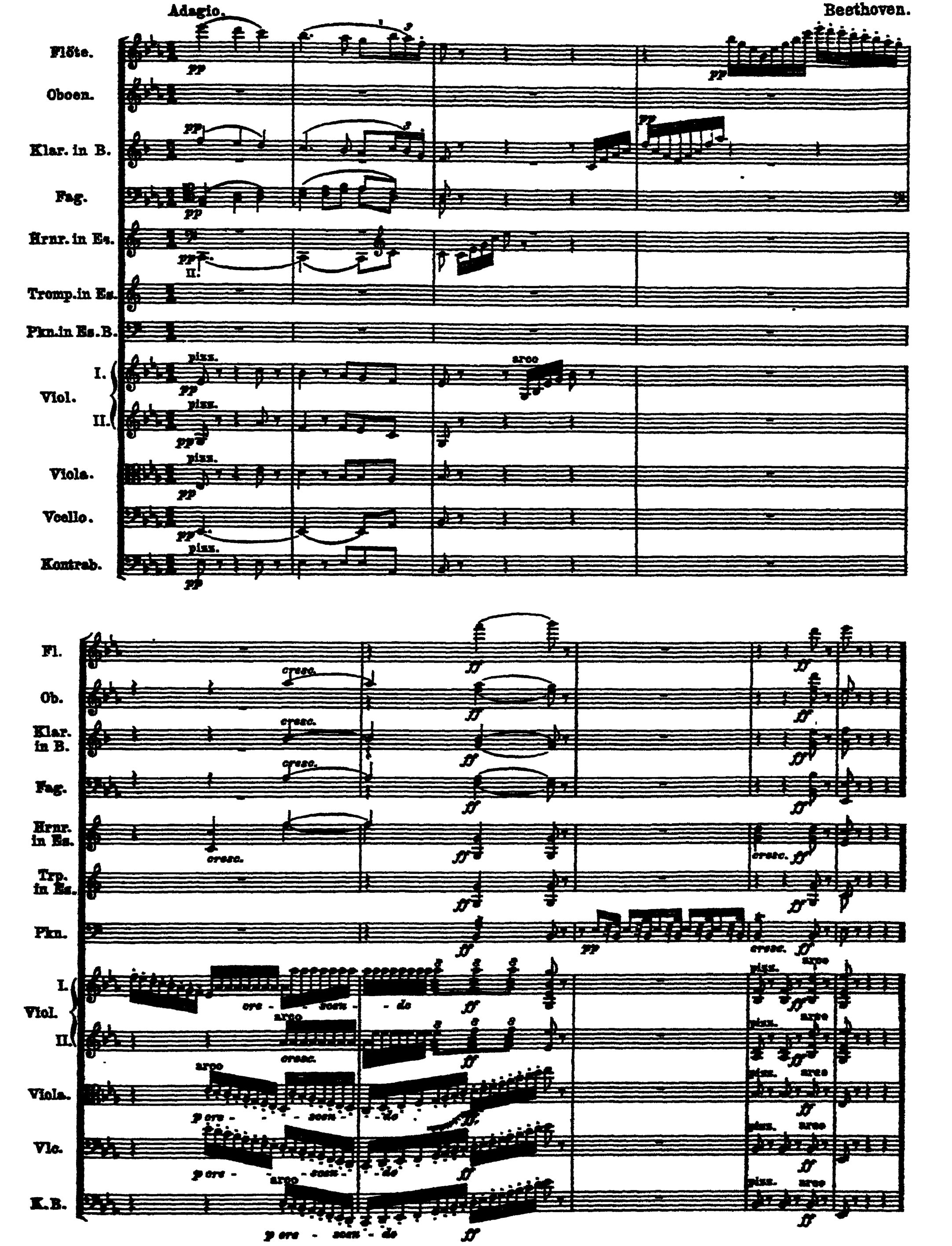
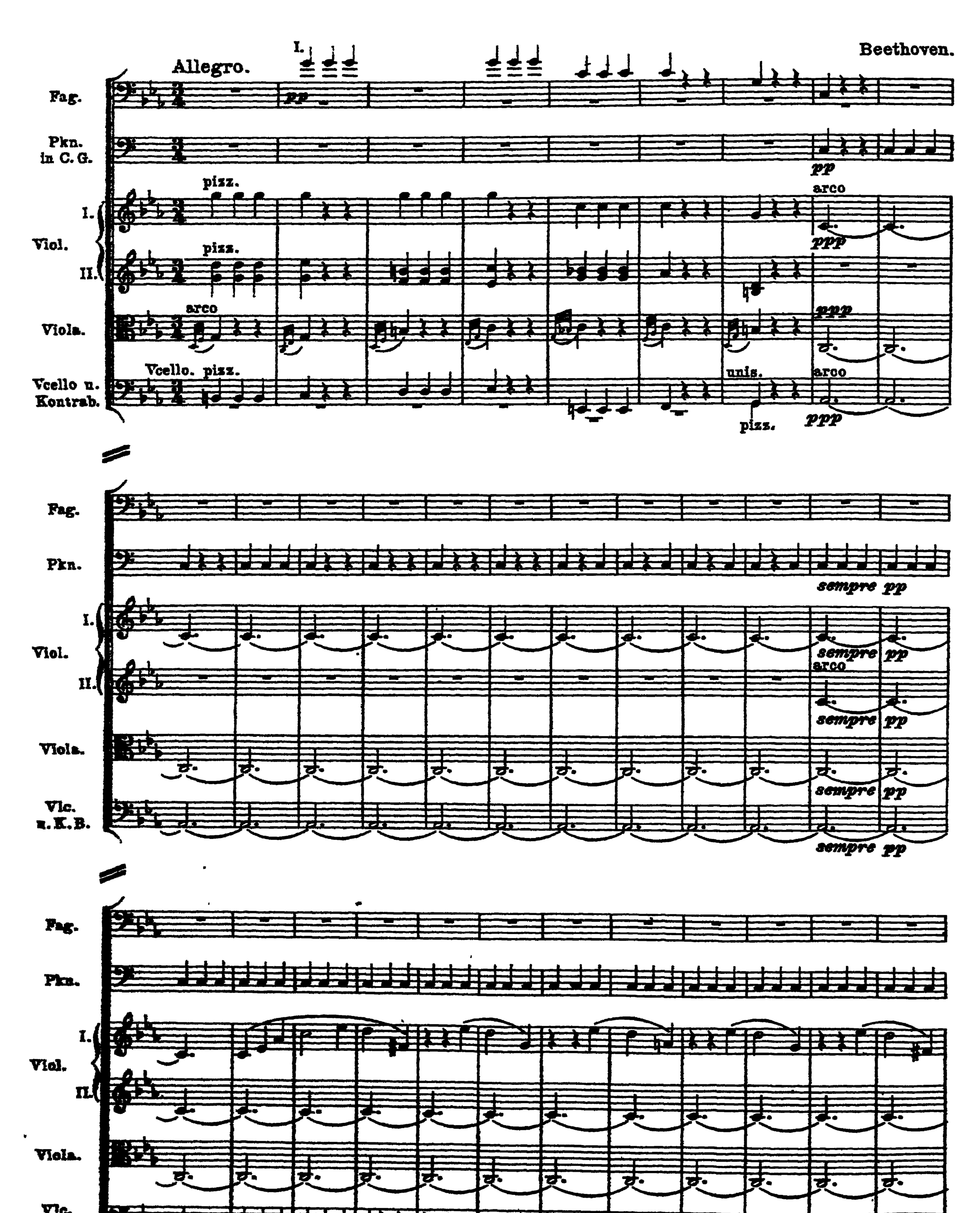
Whenever it is desired to produce mysterious, darkly menacing sounds, even in forte, sticks with sponge ends should be prescribed. Since the elasticity of the sponge accelerates the rebound of the stick, the player need only touch the skin very lightly to obtain very delicate, soft and close rolls in pianissimo. Beethoven has made excellent use of the pianissimo of the kettledrums in his Bemajor and C-minor Symphonies; these admirable passages lose much if played without sponge heads, even though the composer specified nothing in his scores on this point (Examples 144 and 145.)
144. SYMPHONY IN B’ MAJOR, 2nd MOVEMENT
145. symphony in C minor. transition to the finale
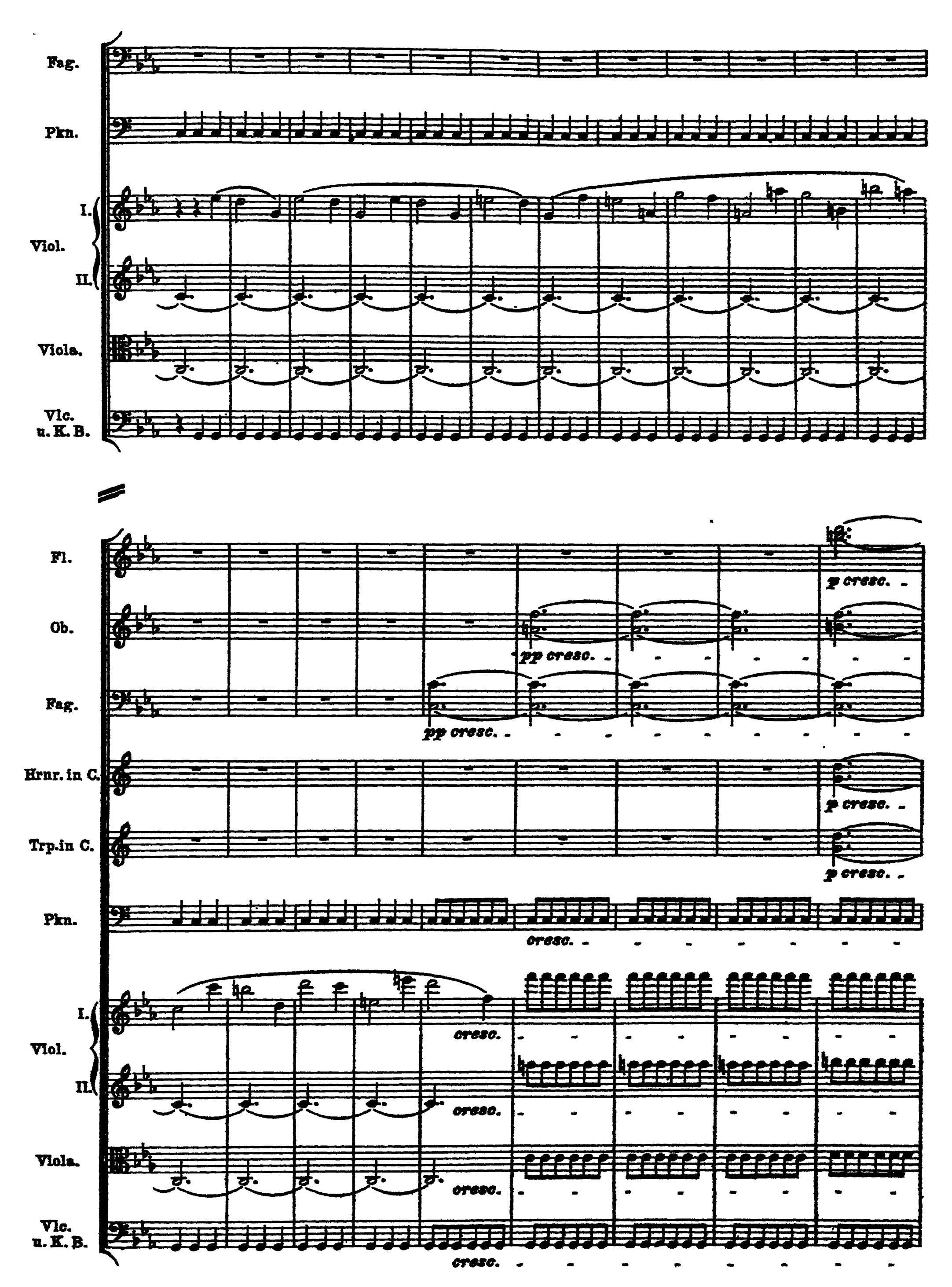
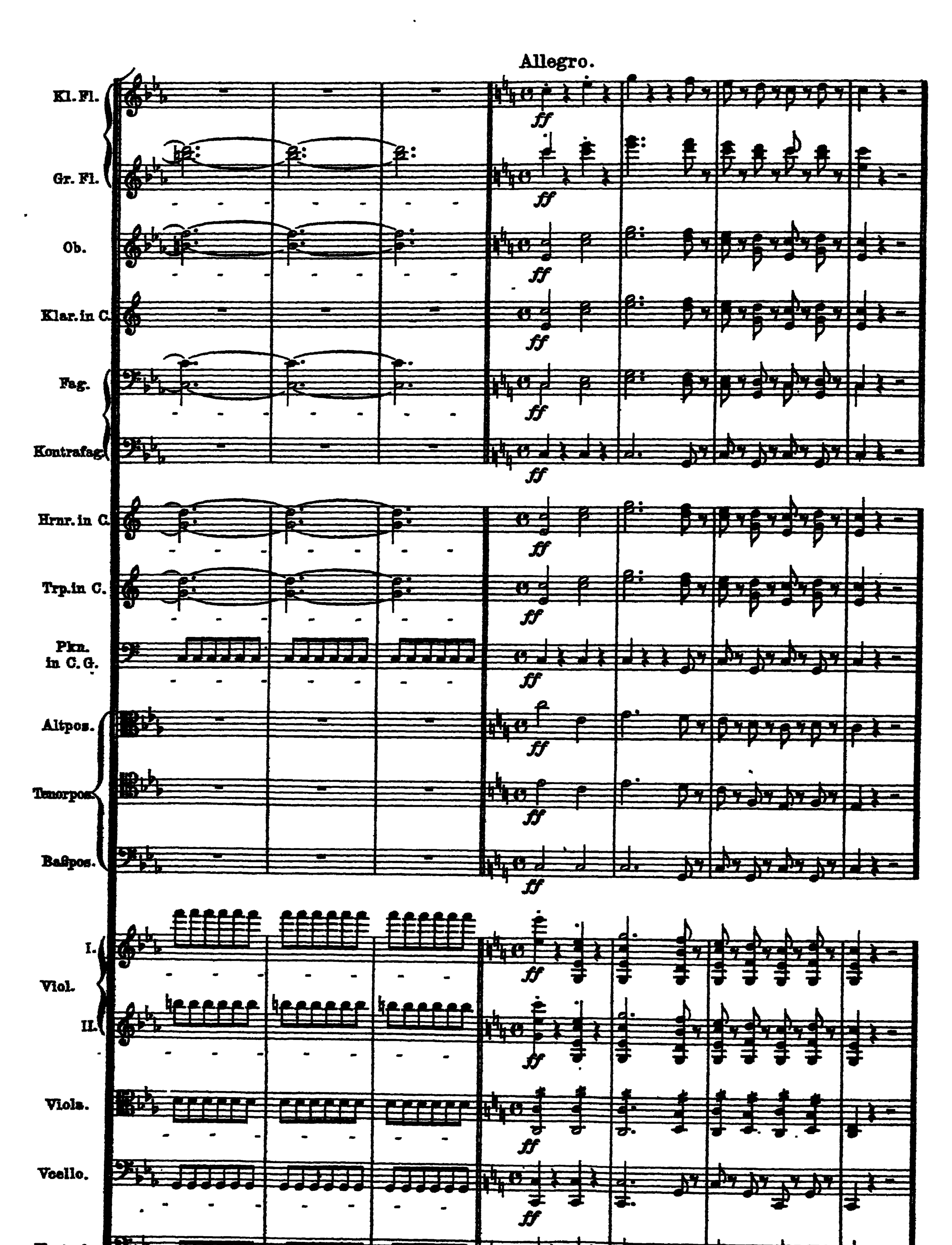
Wagner employs a single anxious pulse beat of the kettledrum in “Walkuere” in Siegmund’s monologue and the “Todesverkuendigung’—a sublime effect during the solemn silence of the entire orchestra.
There is a strange kettledrum passage in the second Finale of Beethoven's “Fidelio”:

To make the repetition of beats in this rapid tempo possible, this passage is executed with crossed arms. Particularly in the scores of the old masters, the indication muffled or covered kettledrums is frequently found. This means that the skin of the instrument is to be covered with a piece of cloth, which damps the sound and lends it a mournful expression. Drumsticks with sponge ends are preferable in this case. Sometimes it is advisable to indicate which notes the drummer should execute with two sticks and which with a single stick:

The nature of the rhythm and the position of the heavy accents should decide this choice.
The tone of the kettledrums does not extend very low.
It sounds just the way it is written—in the F-clef; it is therefore in unison with the corresponding notes of the violoncellos and not an octave below them, as is sometimes assumed. The pedal kettledrums, invented by Hans Schneller in Vienna, seem to have attained the facility of mechanism and the sensitivity in tuning which had been sought for such a long time. They permit rapid and precise changes in tuning by merely pressing a lever with the foot; at the same time they provide against irregular changes in the skin which are frequently caused by the weather.