 Playable Books
Johann Joseph Fux · section 6 of 32
Fifth species counterpoint: florid counterpoint
Read and hear this section in the playable edition →Try it yourself: write a florid line on Aloysius's model, and have it marked →

Fifth lesson
On the fifth species of counterpoint
This species is called florid counterpoint, so named because it should bloom like a garden with little flowers, with ornament of every kind, grace of melody, supple ease of motion, and a pleasing variety of note forms. For just as we use all the other operations of ordinary arithmetic—numeration, addition, subtraction, and multiplication—in division, so this species is nothing other than an assemblage and combination of the preceding species of counterpoint. There is nothing new to advise here except grace of melody. I urge and implore you never to forget that the greatest care and effort must be devoted to it.
Joseph. I shall do my utmost, but I scarcely trust myself to take up the pen without an example before my eyes.
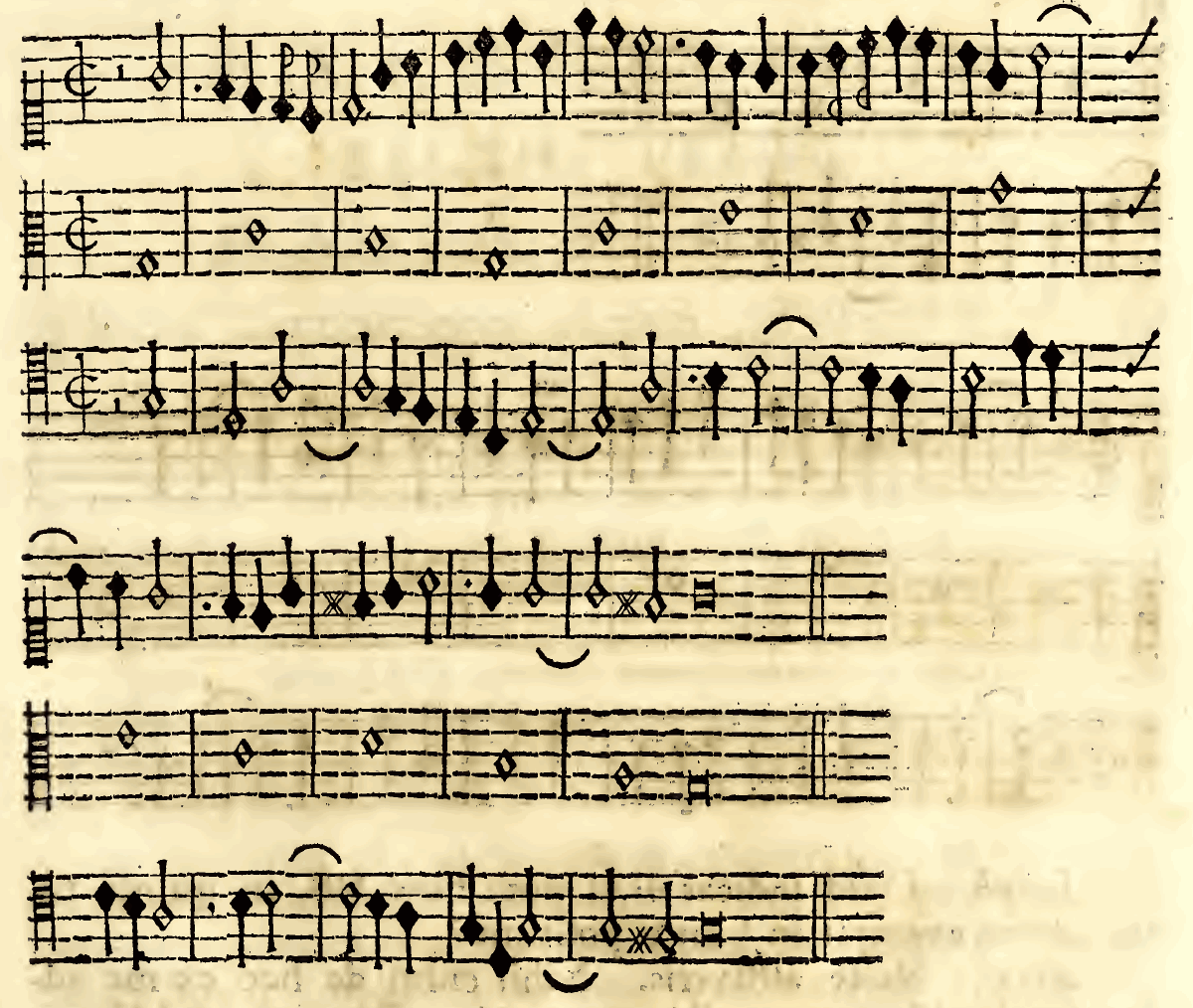
Aloysius. Be of good cheer; I shall construct the first example for you.
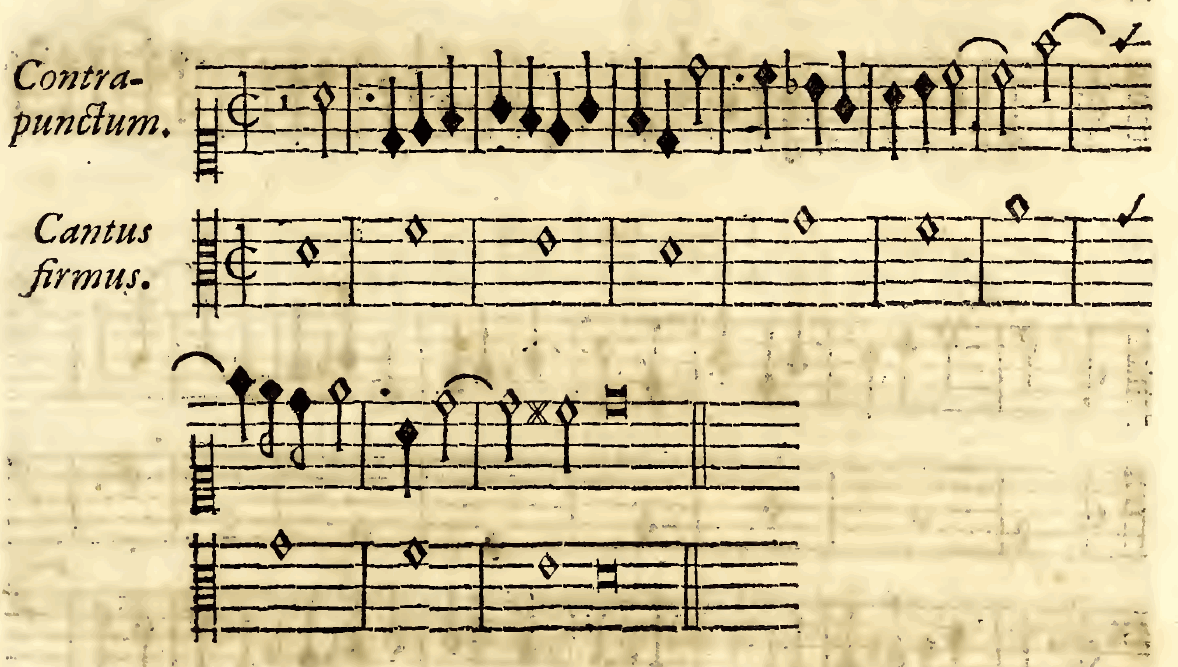
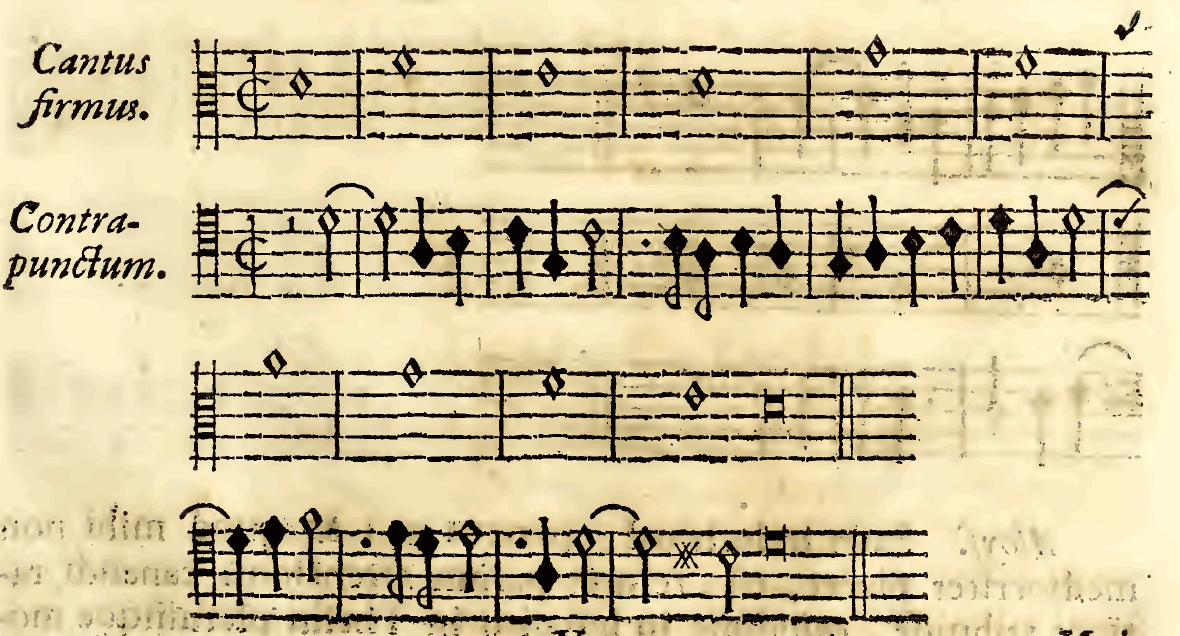
It remains, then, for you to adapt the counterpoints of the remaining cantus firmi to this model.
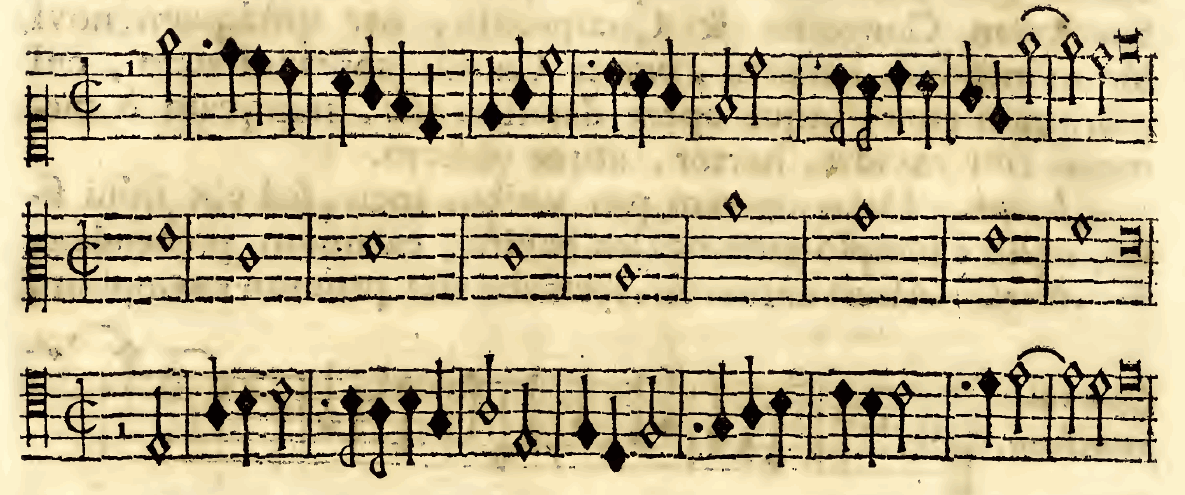
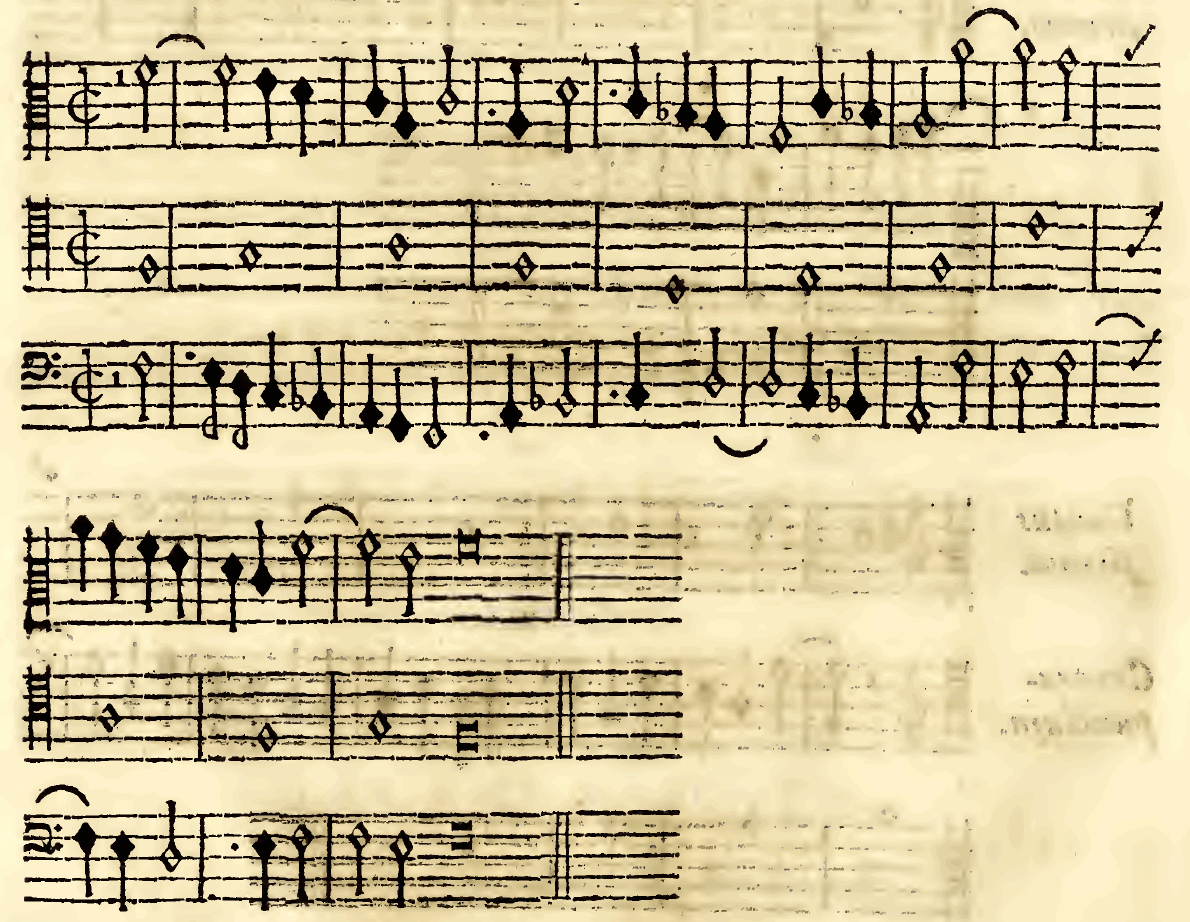
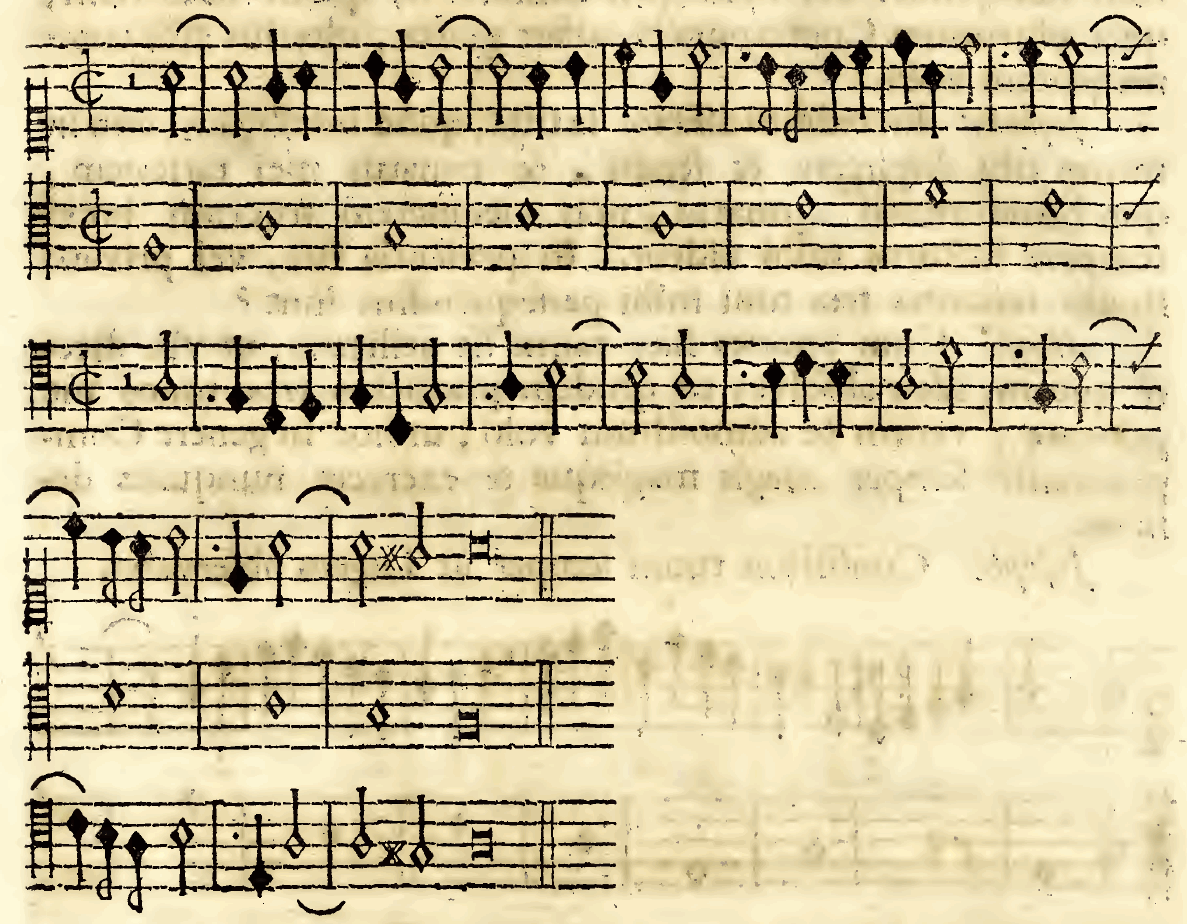
Aloysius. You have worked quite diligently. What pleases me no little is that you have devoted considerable attention to the melodic line and that, on entering the thesis, you have generally used oblique motion or syncopation. I wish to commend this practice to you further, because it adds very great grace to counterpoint.
Joseph. I am filled with incredible joy to understand that the manner of my study and effort is not wholly displeasing to you. Encouraged by this kindness, I think I shall make considerable progress in a short time. Should I pursue the remaining three modes in your presence or in private study?
Aloysius. Since this species is of such great usefulness that I can scarcely express it, you will complete the three modes just mentioned in my presence. But I wish to admonish you never to cease practicing this kind of composition ever more and more.
Joseph. I shall always observe your advice as a law.
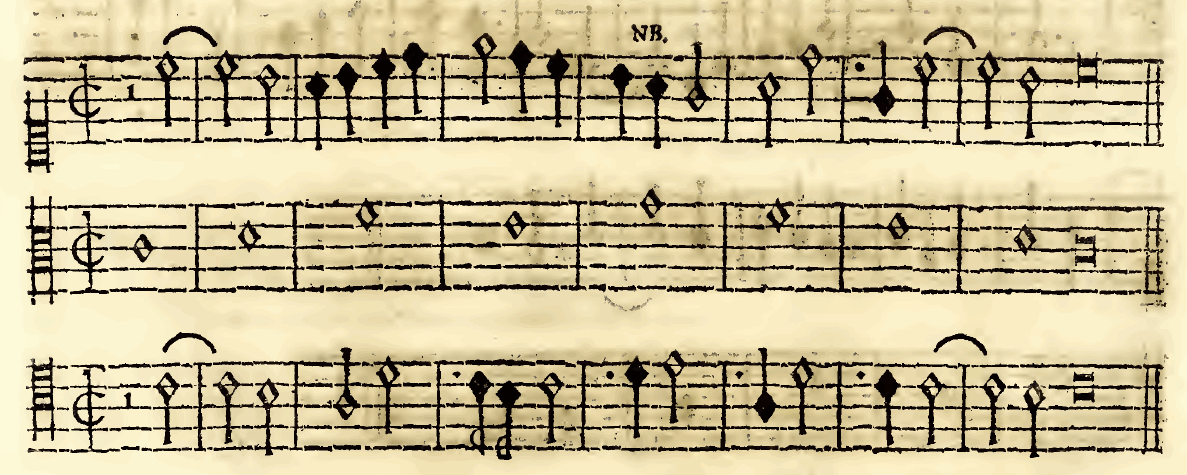
Joseph. What does the nota bene, NB, placed in the soprano in the fifth measure of the last example indicate?
Aloysius. Do not distress yourself, for you have not yet learned anything about this from me. I now tell you, not as a precept but as advice, that when two semiminims are placed at the beginning of a measure without a ligature immediately following, the melodic line seems to limp. Therefore, if you wish to use only two semiminims at the beginning of a measure, it will be more advisable to bind them to a following ligature, or to ease the flow with two further semiminims, as in the following example:

We have now completed two-voice composition, going through all five species with a cantus firmus as the foundation—praise be to God. Now we must return to the beginning, namely note against note in three-voice composition, and see what must be observed in each species and how composition for three parts should be undertaken.