 Playable Books
C. H. Kitson · section 7 of 10
Chapter V. Fifth Species
Read and hear this section in the playable edition →1. Fifth Species, or Florid Counterpoint, consists of a combination of the other Species, together with a few variants of them.
2. It is generally considered poor florid Counterpoint to write a series of bars of these species unmixed in the bar.

In fact, the best florid Counterpoint is that in which no bar is in any one species excepting the third. It will be seen in the following paragraphs how this can be accomplished.
3. Second and Third, or Third and Fourth Species can be mixed in the bar.
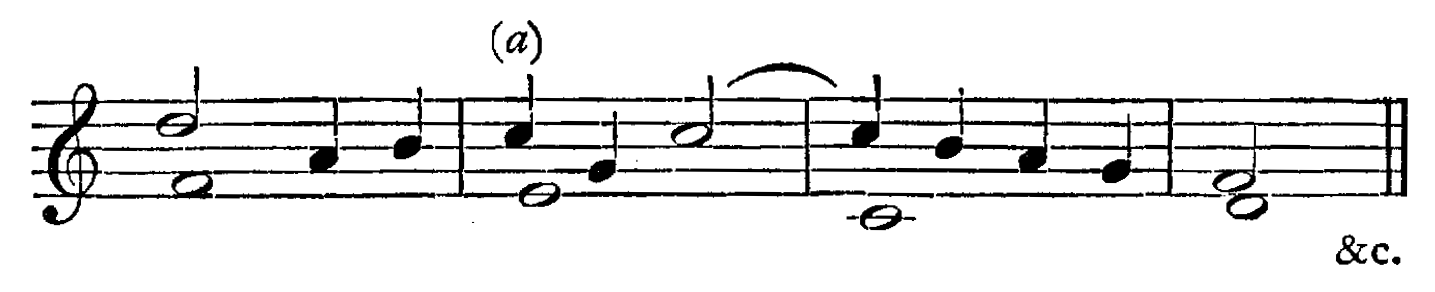
(a) Whenever the second minim of the bar is preceded by notes shorter than itself, it must be tied into the next bar, except at the Cadence.
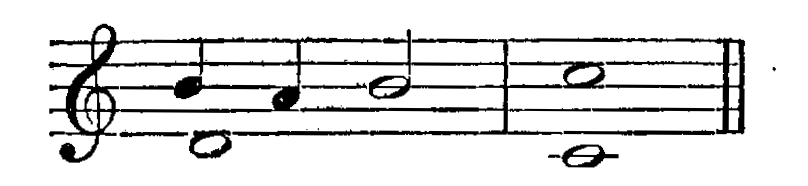
4. The second of two tied notes must always be of the same length or half the length of the first. But two tied crotchets are never used. The first of two tied notes must not be shorter than a minim.

(a) and (b) will be available only when other parts can maintain movement.
5. Occasionally two quavers may be used on the second and fourth crotchets.
(a) They must be approached and quitted by step.
(b) Only one group should be used in the same part in a bar.
The fewer the quavers, the better.

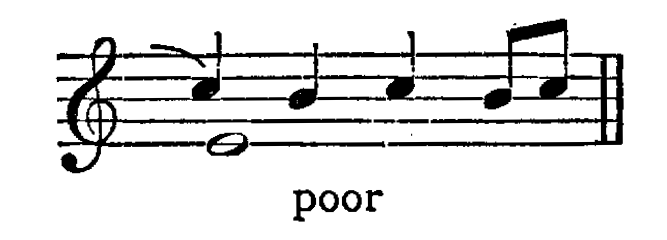
(c) Their use should not involve melodic tautology:
6. The first note of the Nota Cambiata idiom should always be tied to a minim in the previous bar:

7. An ordinary Fourth Species suspended discord
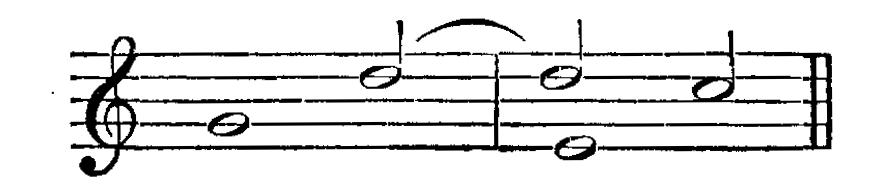
may be ornamentally resolved in the following ways:
(a) By anticipating the resolution on the second crotchet:
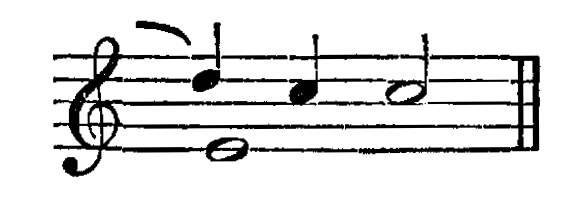
(b) By interpolating two quavers before the normal resolution:

(c) By leaping to and from another factor of the chord between the suspension and its normal resolution:
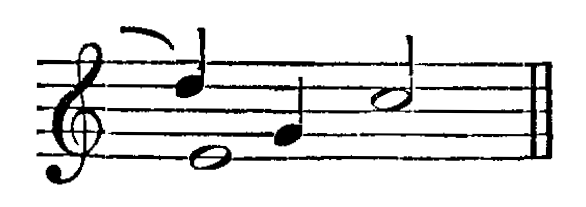
(d) By proceeding up one step, or down three between the suspension and its normal resolution:

In every case the ultimate resolution of the discord must be on the second minim, but it can be a crotchet:

The ornamental resolution of discords must not form faulty grammar:

8. The place for unessential notes
(a) Do not use a passing note on the third crotchet except in a part using four crotchets in the bar:

(b) Never use an auxiliary discord on the third crotchet:
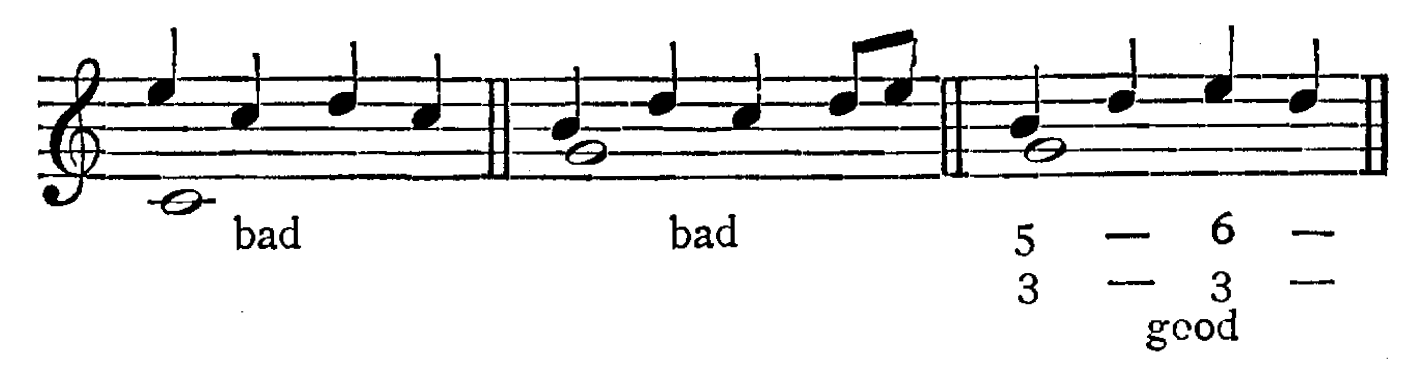
(c) No second minim of the bar should be unessential.
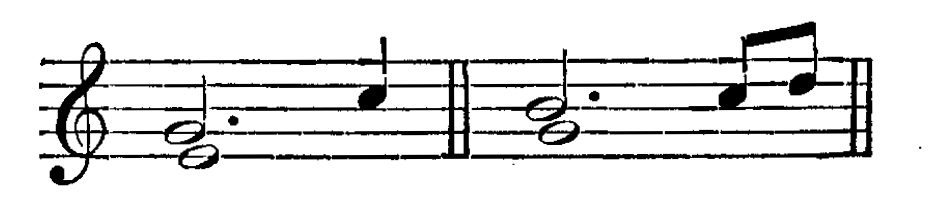
9. The use of a dotted minim on the first half of the bar is unavailable in two parts, owing to the halt on the second minim:
10. The first bar
Do not begin with a single crotchet, nor with quavers:

Use only the following rhythms:

11. The Cadence
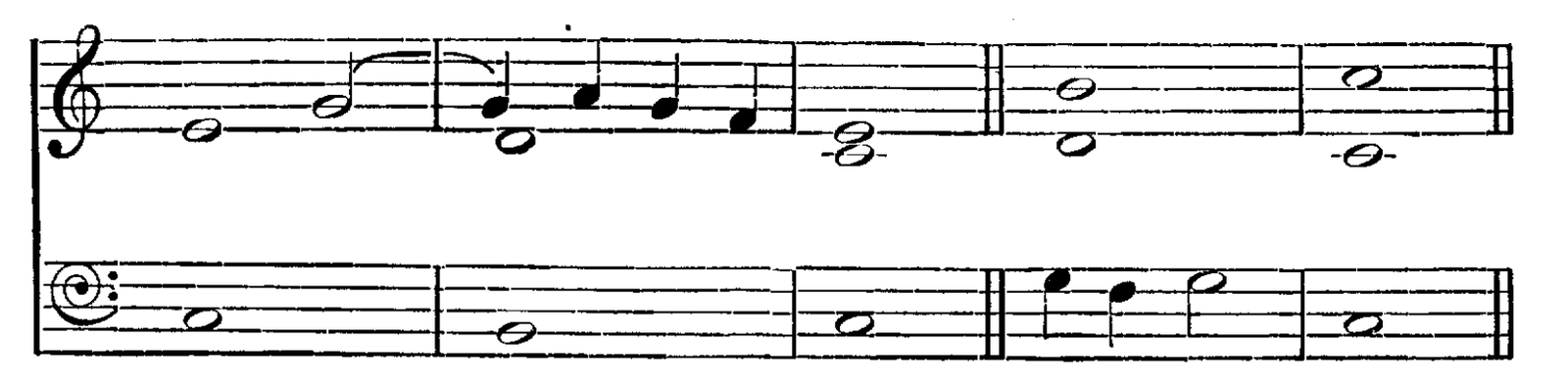
The last two notes of the Counterpoint must be Leading Note and Tonic. Use a suspended discord where possible.

otherwise:

In three parts the First Species can have the Leading Note:
12. In the intermediate bars:
(a) Vary the pitch of the points of repose:
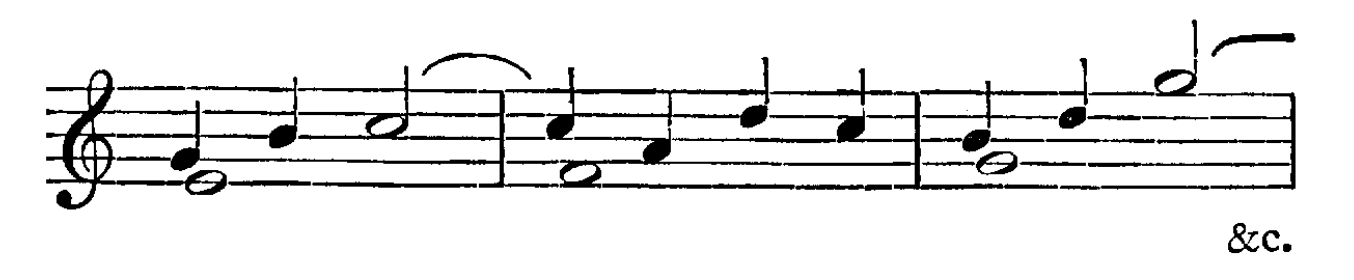
(b) Avoid a succession of more than two bars with the second minim tied:

(c) Do not use more than eight crotchets in succession (or their equivalent with quavers). They are better if divided between a bar and two half-bars:

(d) Do not use more than three untied minims in succession. Rarely use a bar of Second Species, except when there are two or more florid parts in combination.
(e) As in every other species too much conjunct movement is as bad as too much disjunct movement.
Exercises
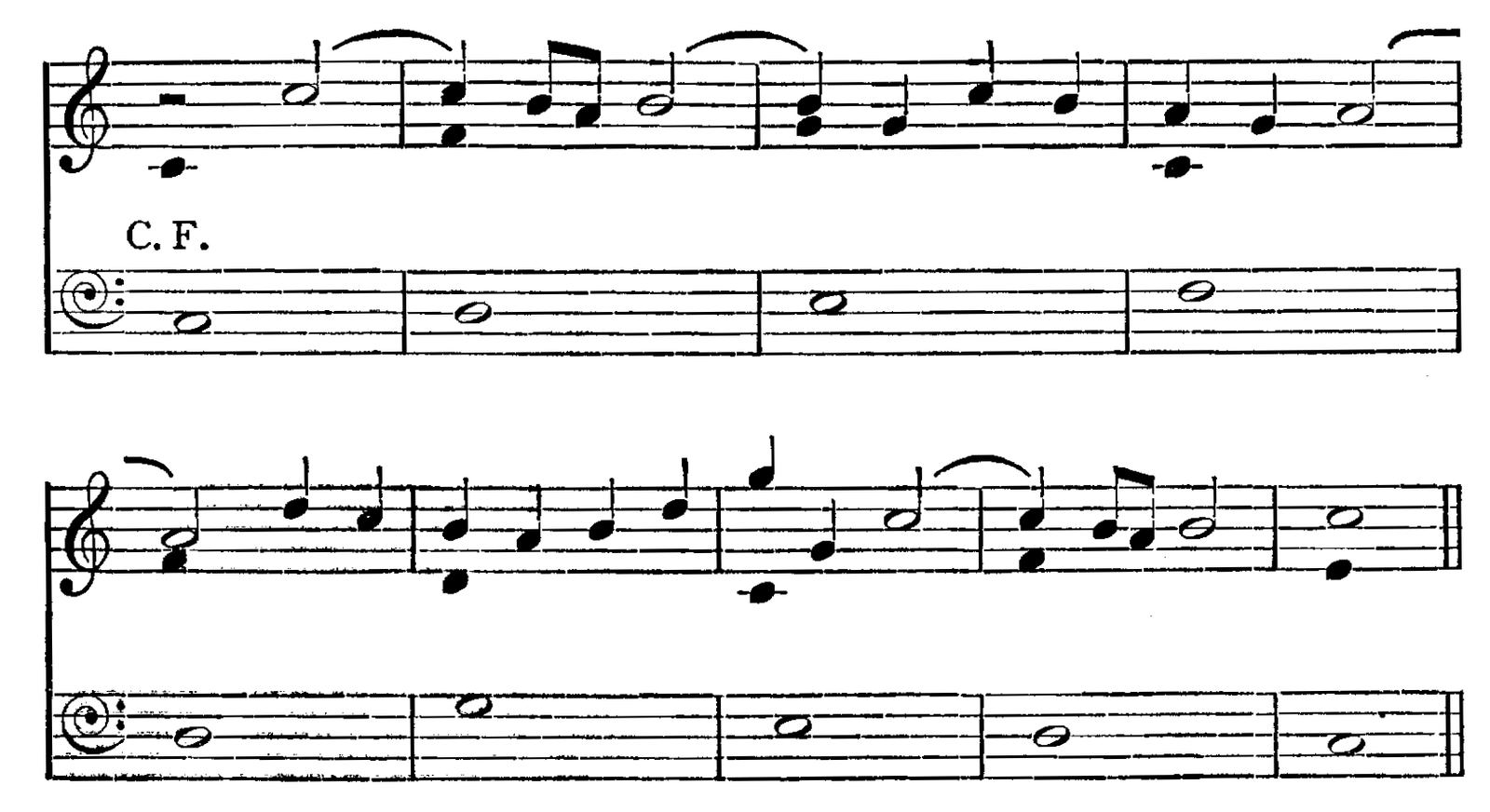
(extra third part in First Species given in black notes).
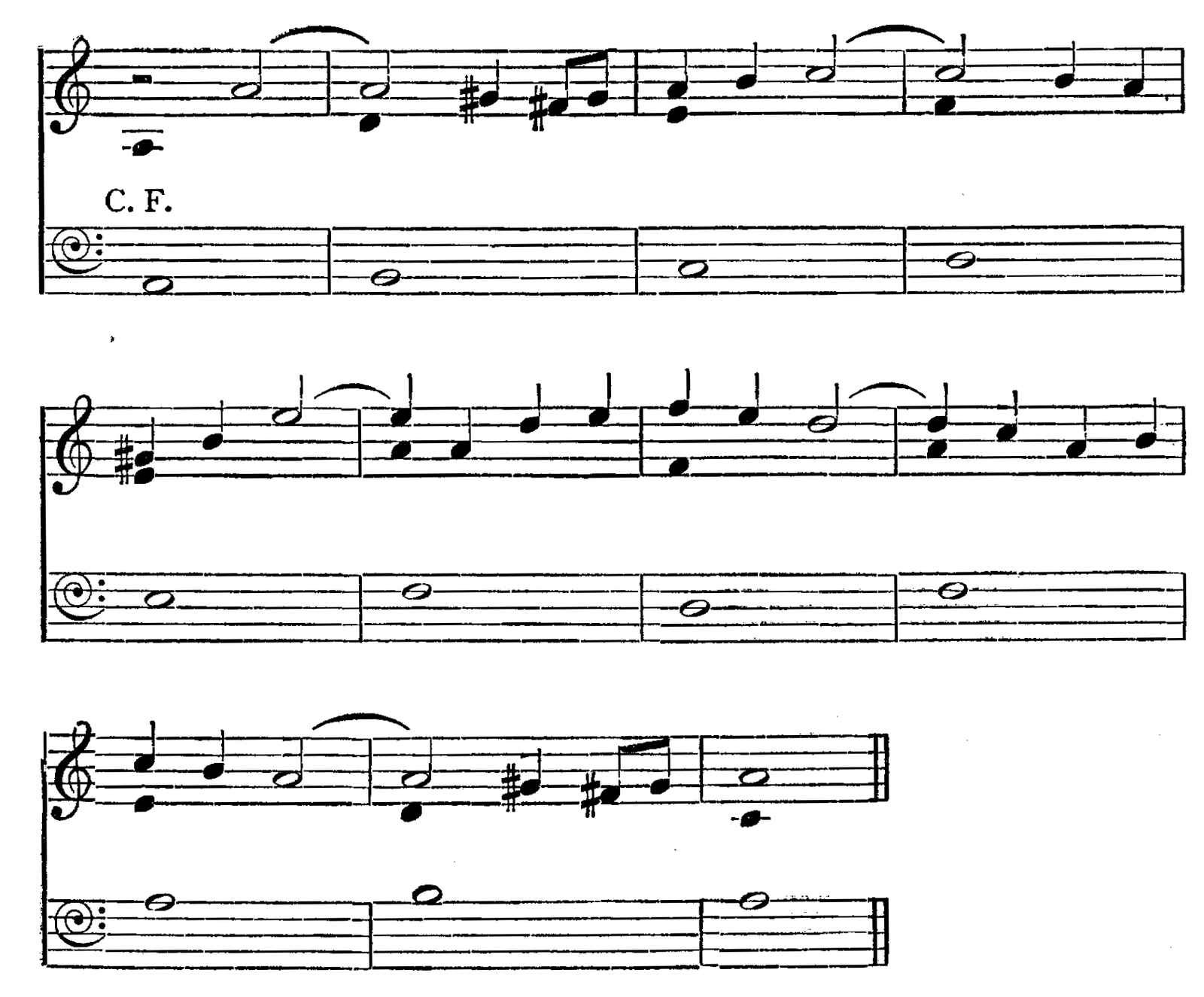
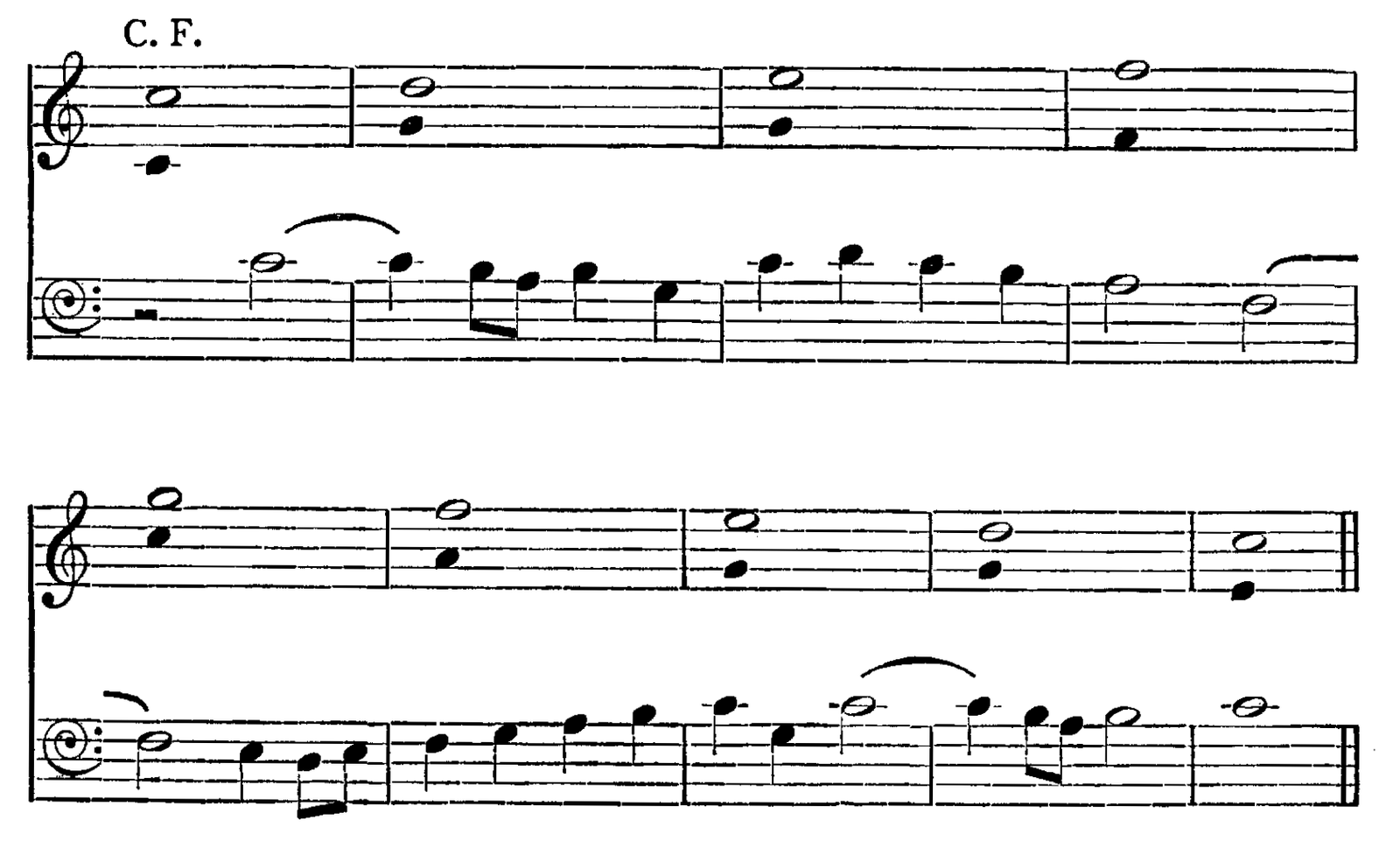
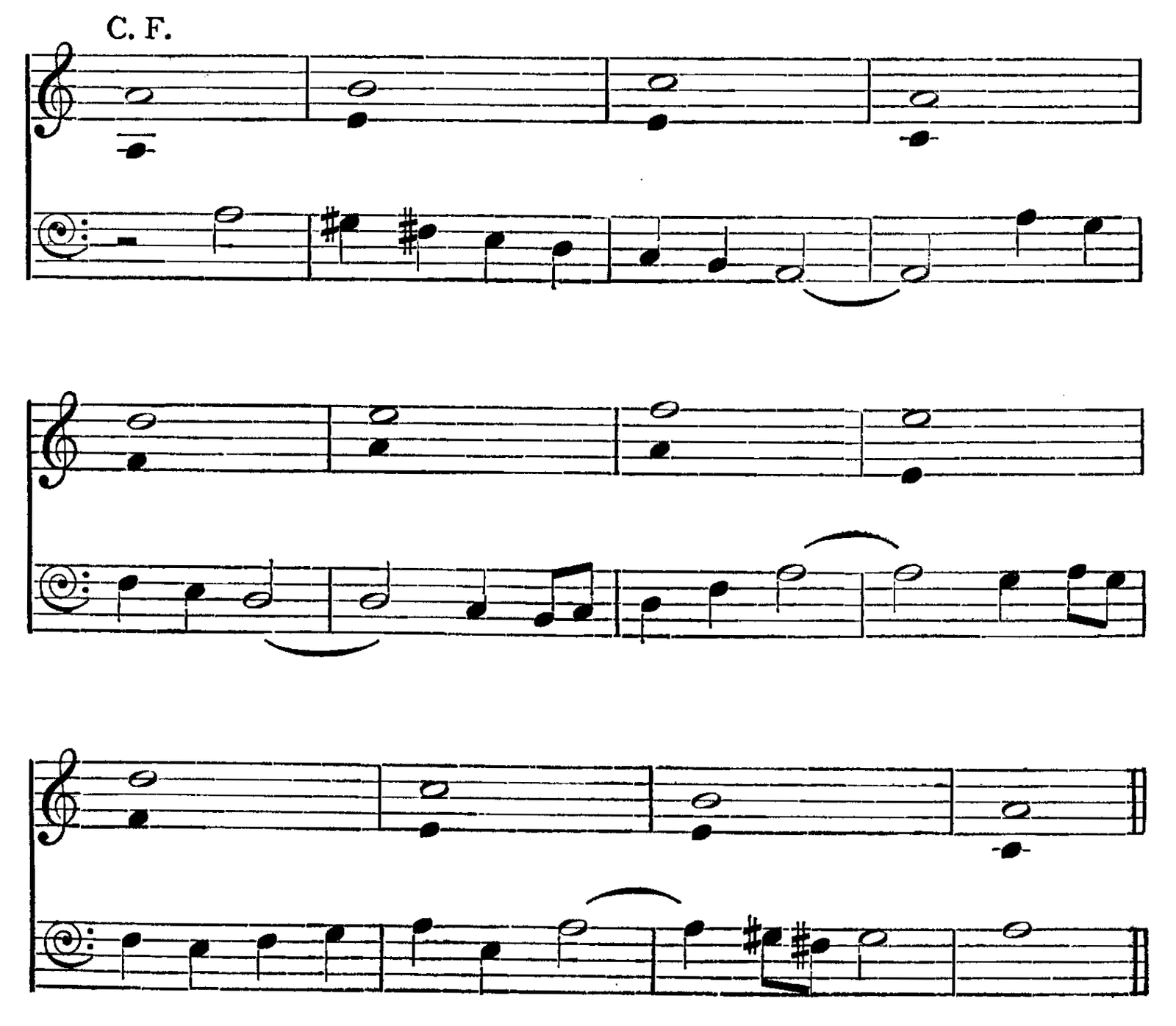
Exercises
Use the same Canti Fermi as in Chapter IV.
(1) To the Bass Canti Fermi add Soprano in Fifth Species.
(2) To the same add Soprano in Fifth, Alto in First Species, or Soprano in First, Alto in Fifth Species.
(3) To the Soprano Canti Fermi add Bass in Fifth Species.
(4) To the same add Bass in Fifth, Alto in First, or Alto in Fifth, Bass in First Species.