 Playable Books
Johann Joseph Fux · section 19 of 32
Fugue in two parts
Read and hear this section in the playable edition →
Second lesson
On fugue for two parts
I shall now teach you the art of composing fugues for two parts, first by a clear and very simple method. Take a subject of a few notes appropriate to the mode in which you intend to work, and write those notes in the part with which you have decided to begin. When they are finished, give the same notes to the second or following part, entering at the fourth or fifth, provided nothing is done contrary to the mode. Meanwhile, in the part with which you began the theme, build counterpoint with various note forms, as you have been taught in florid counterpoint. After some melodic continuation, arrange the parts so as to make the first cadence on the fifth of the mode. After this, with a rest of a whole or half measure, or even without a rest if a large leap intervenes, take up the theme again, generally in the part with which you began, but at a different interval from its opening. The other part, after a rest, will attempt to enter before the subject in the first part is finished. Then, after some further melodic continuation, construct a second cadence on the third of the mode. Finally, having placed the subject in either part, make the other enter with the subject immediately in its second measure, if circumstances permit. With the parts thus joined in the closest bond, bring the fugue to an end with a final cadence.
Joseph. I remember that you said above—
Aloysius. It is best to defer your doubt for now until the obscure matter is clarified by an example. I shall therefore take the subject with which the nature of the mode was demonstrated a little earlier and, conducting it in the manner prescribed, make a fugue. This model will lay an easier and more direct path for you. For example:
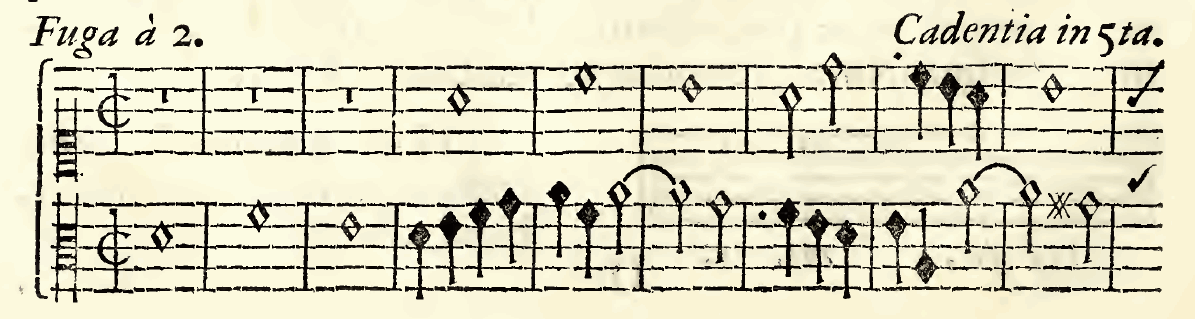
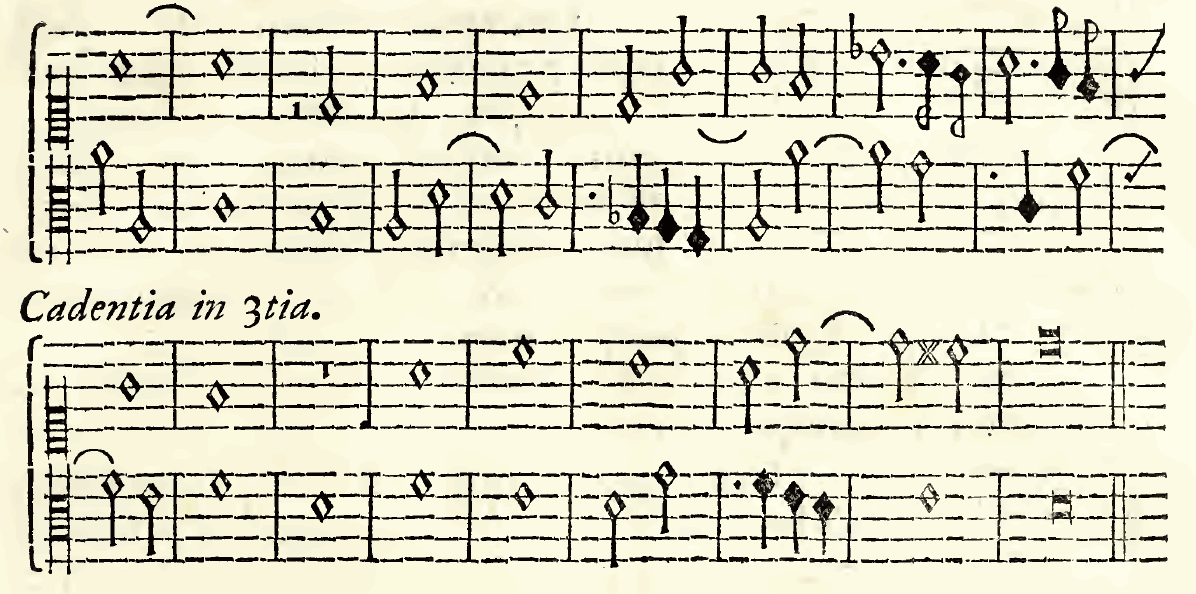
Observe that, when the subject is finished in the alto, the soprano takes it up at the fifth of the mode, while the alto meanwhile moves in the manner of florid counterpoint until the subject in the soprano is finished. After a brief melodic continuation in both parts, a cadence is made on the fifth of the mode. Next you see the alto repeat the subject a fifth of the mode lower, without a rest because it enters by leap. Then, after a rest, the soprano enters at the octave of the mode, but earlier than at the beginning, namely in the third measure of the subject, while the alto continues melodically. When the subject in the soprano is finally finished, after a brief continuation in both parts you see the second cadence constructed on the third of the mode. Lastly, you will find that, after the subject is taken up in the alto, the soprano immediately weaves in the same subject in the second measure, and the end is then made with a final cadence. Have no doubt, therefore, that by using this very simple method and practicing in the other modes you will gradually acquire a fuller knowledge of fugues.
Joseph. I see sharps and flats placed in some parts of this fugue, contrary to the precept against using them in the diatonic genus.
Aloysius. I think the precept should be understood of subjects, where, in order to recognize the nature and differences of the modes, the semitones must occur naturally, without the aid of a sharp or flat. The case is different in melodic continuation, where the use of sharps and flats is not only not forbidden but is sometimes necessary to avoid the harsh relation of mi against fa. These circumstances arise generally from the following opposition of mi against fa.
Now disclose the doubt that you had intended to put forward above.
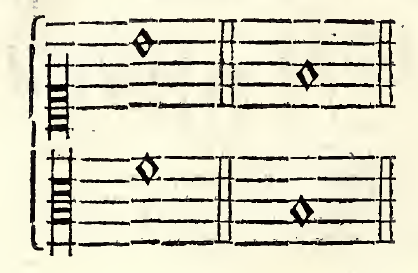
Joseph. In the distinction given above between fugue and imitation, you asserted that in fugue the following part would have the opportunity to enter only at the fifth, octave, and unison. Yet a little later, in the precepts for composing a fugue, you also mentioned the fourth.
Aloysius. In the first place, reference was made to the fundamental note and the following arrangement:
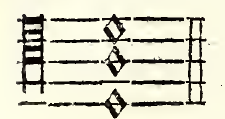
This certainly contains no fourth. In the second place, however, omitting the fundamental note and considering the upper part, I referred to the following arrangement:
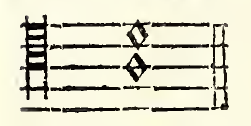
Although even in this case that A may be called the fifth, because the fundamental note D must be understood; hence the second part of the following example must be regarded as following at the fifth. For example:
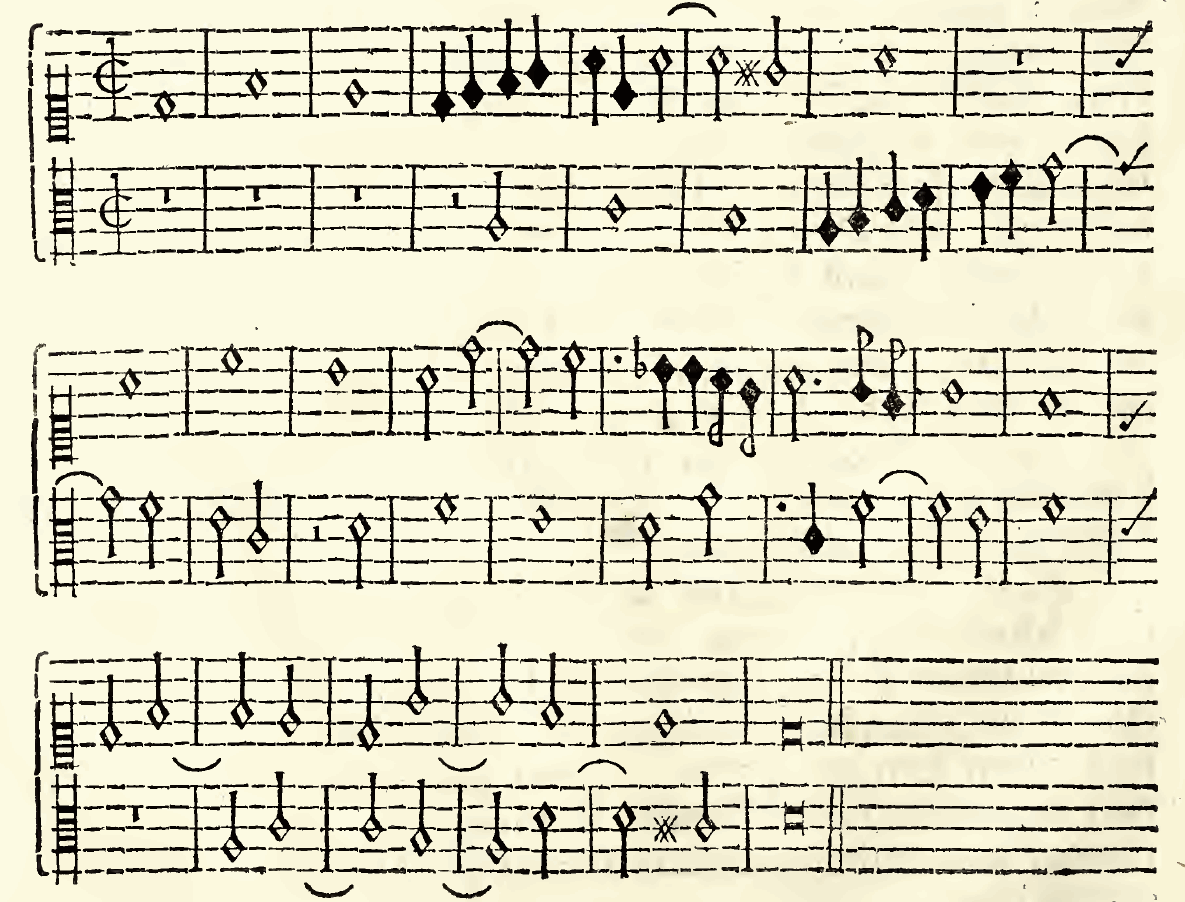
Joseph. Why do I see the note forms somewhat altered toward the end of the fugue, and that in the subject itself?
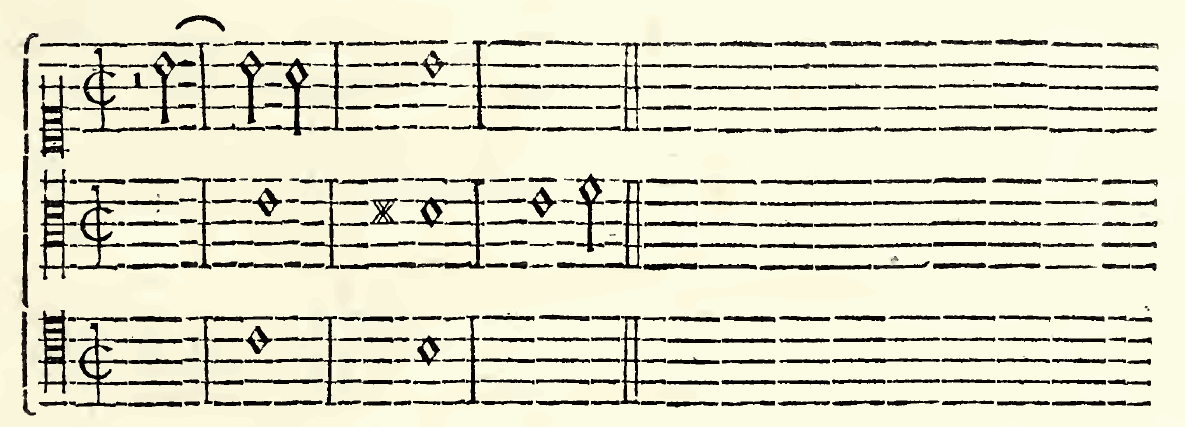
Aloysius. I say that it is not only permitted at times to tie notes that were untied, but that this adds a certain charm to the composition. Indeed, very often, where subjects cannot otherwise be drawn into close overlap, this breaking up of note forms is necessary. Now take up the second mode, E, yourself, and, choosing a subject suitable to none of the other modes, try to compose a fugue on the model of the preceding example. There is this difference, however: whereas in the first and all the other modes the first cadence is on the fifth, in this mode it must be made on the sixth. For, with a third part added that requires a major third, the melodic course would be too foreign to this mode, and the very bad course arising from mi against fa would offend the ears because of the F immediately following. For example:
Now that you have understood, as I think, everything necessary for this, set yourself to work.
Joseph. If my first attempt does not turn out well, Master, I ask you again and again not to take it amiss.
Aloysius. Put aside your fear, for you know my patience; nor am I ignorant of the difficulty of this study for beginners.
Mode E
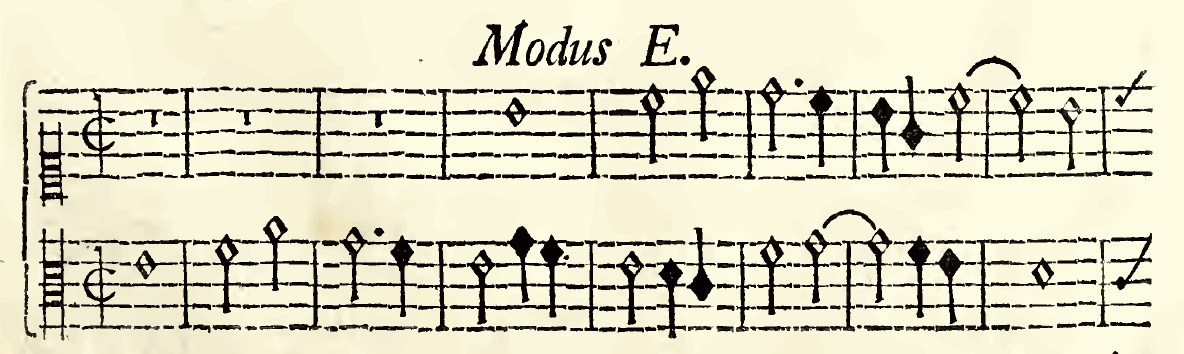
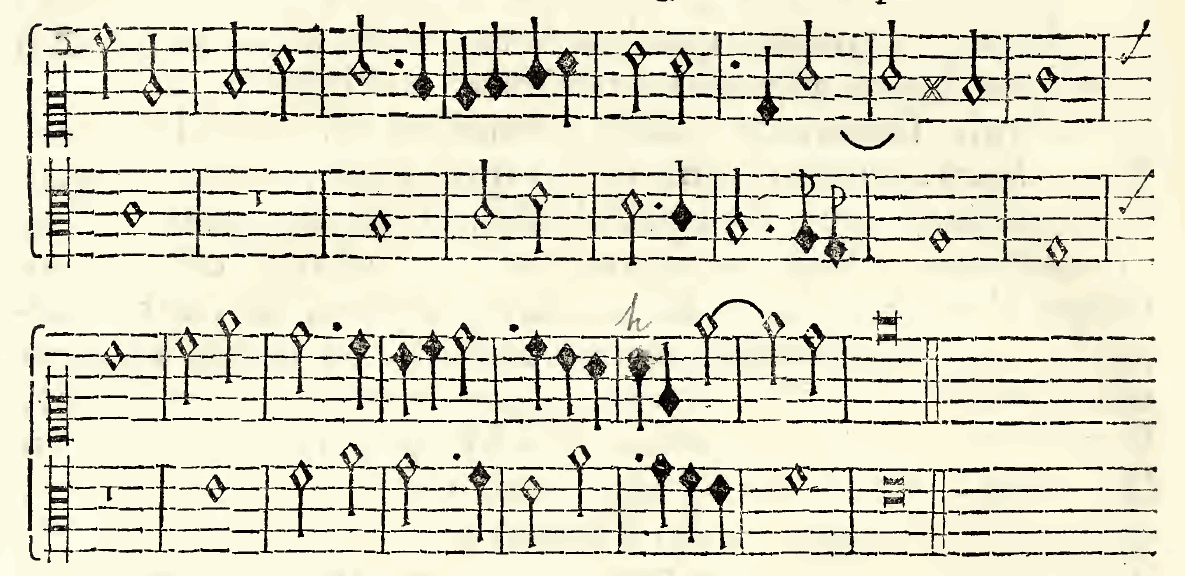
Joseph. I am confident that the subject cannot be applied to any other mode in the diatonic genus; but I wish to learn from you whether its treatment is equally fitting.
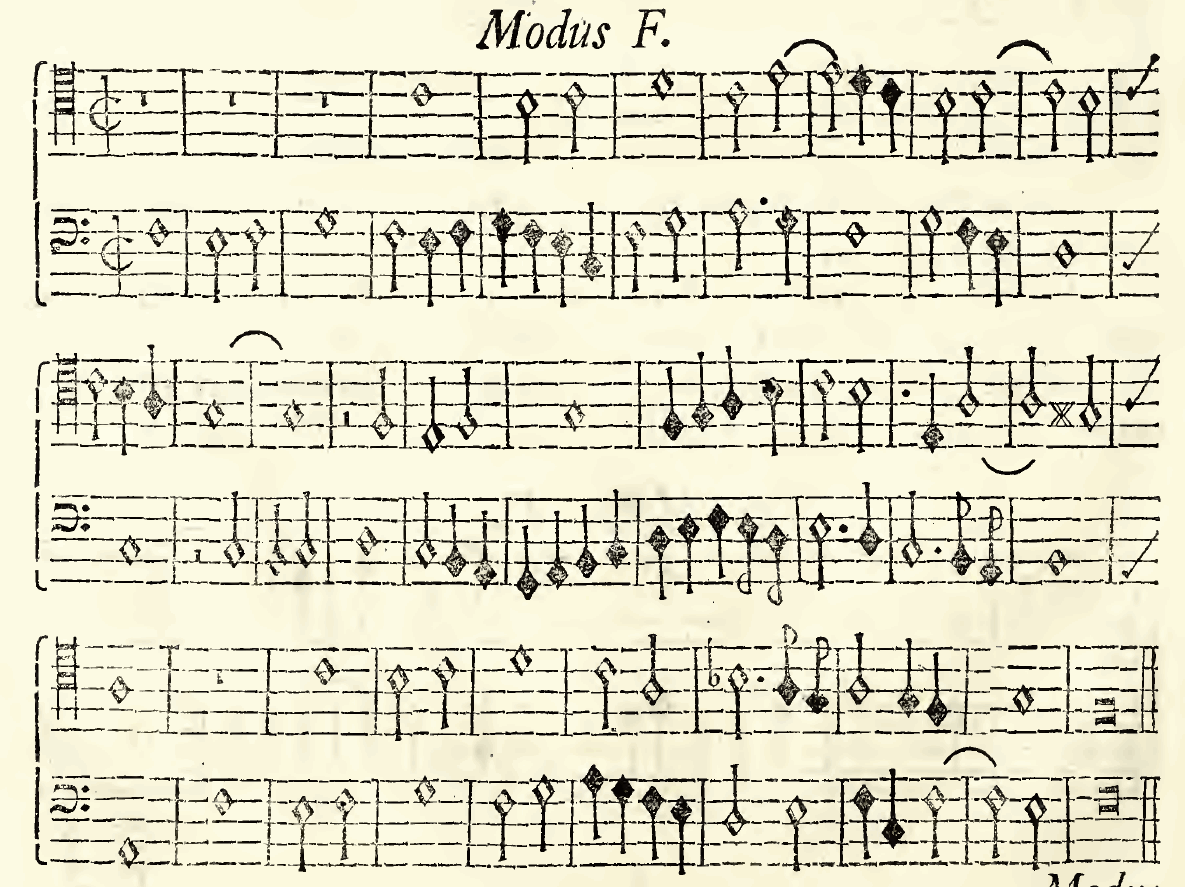
Aloysius. Take heart, Joseph: both the skillfully invented subject and its treatment almost surpass your beginner’s standing, and you give promise of no ordinary future progress in this art. Proceed now to mode F and the other pitches of the remaining modes.
Mode F
Mode G
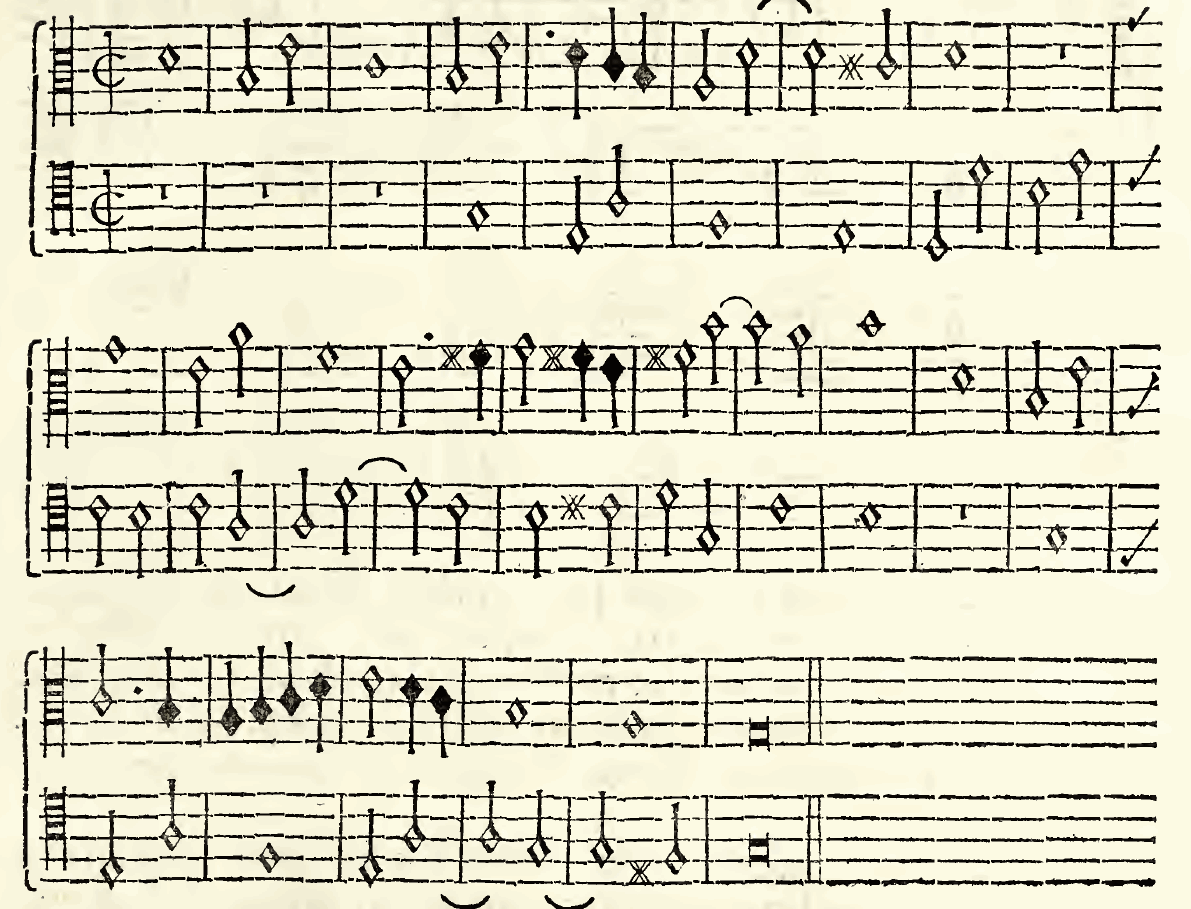
Joseph. In making the second cadence I hesitated somewhat as to whether it should be made as it is or in the following way. For example:
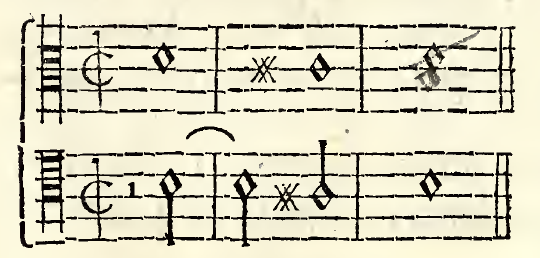
Aloysius. That cadence, which requires two sharps, indeed three when a third part is added, departs too far from the nature of this mode and is more suitable to a transposed mode, of which we shall speak below. The cadence by the seventh and sixth that you used is therefore valid. Now let us proceed to mode A, the fifth in our order. Since it differs somewhat from the other modes, I shall place an example before your eyes. For example:
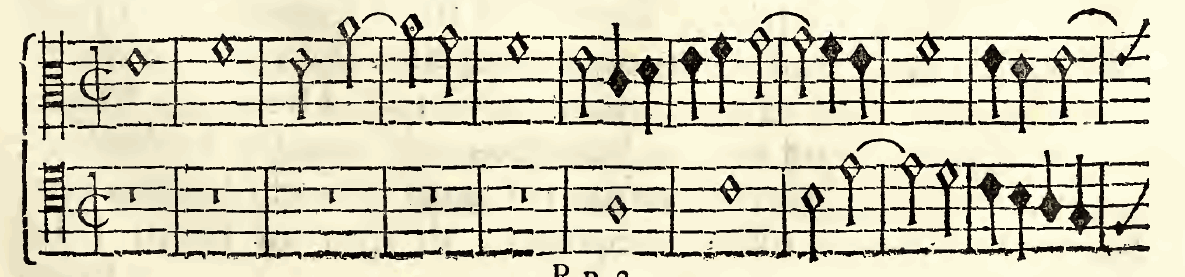
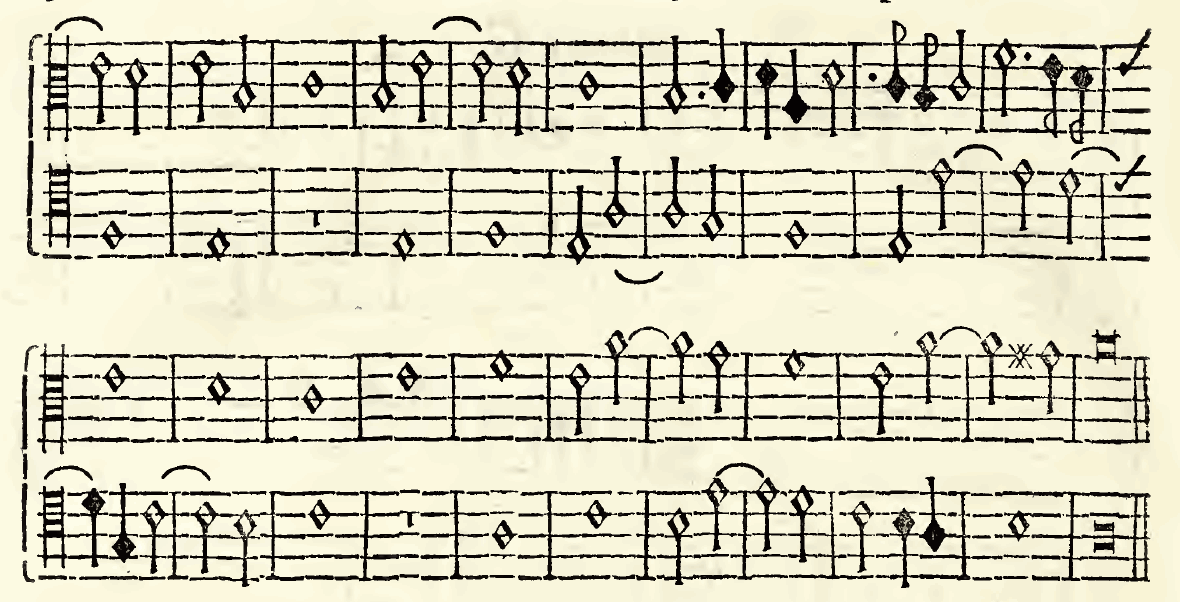
Joseph. I understand why you proceeded by the leap of a third from the first note of the second part to the second, because otherwise that fa expressed in the second note of the first part could not have been obtained. But I do not know why, after the first cadence, the subject was taken up again in the alto on B mi, thus on a pitch not suited to the mode.
Aloysius. This necessity is caused by the foundational part being on E, which prevents an entry on A because it is dissonant in relation to the E placed below. Yet nothing is taken away from the perfection of the composition; rather, it is improved if this occurs in the middle of the fugue, because by this means the parts of the subject are made equal throughout. A different judgment must be made concerning the beginning of the fugue, where the requirements of the mode and the pitch proper to the subject’s entry, of which we have already spoken, must be carefully observed.
Joseph. I have observed great difficulty in drawing subjects into closer and closer overlap, and it seems that subjects must be deliberately chosen for this purpose.
Aloysius. That is so. Subjects capable of being treated in this manner must therefore first be tested and sought out; reflection is needed before choosing. You may perhaps hear someone laughingly object: how commonplace and meager these subjects are, without any flavor! I shall by no means deny that this is so. For what is considered here is not sublimity of invention, but only the true nature of the modes in the diatonic genus, which is enclosed within rather narrow bounds. There will be greater freedom to range abroad and choose richer subjects when the use of the mixed genus is allowed, of which ample discussion was given at the end of Book One. Now proceed to the last mode, C.
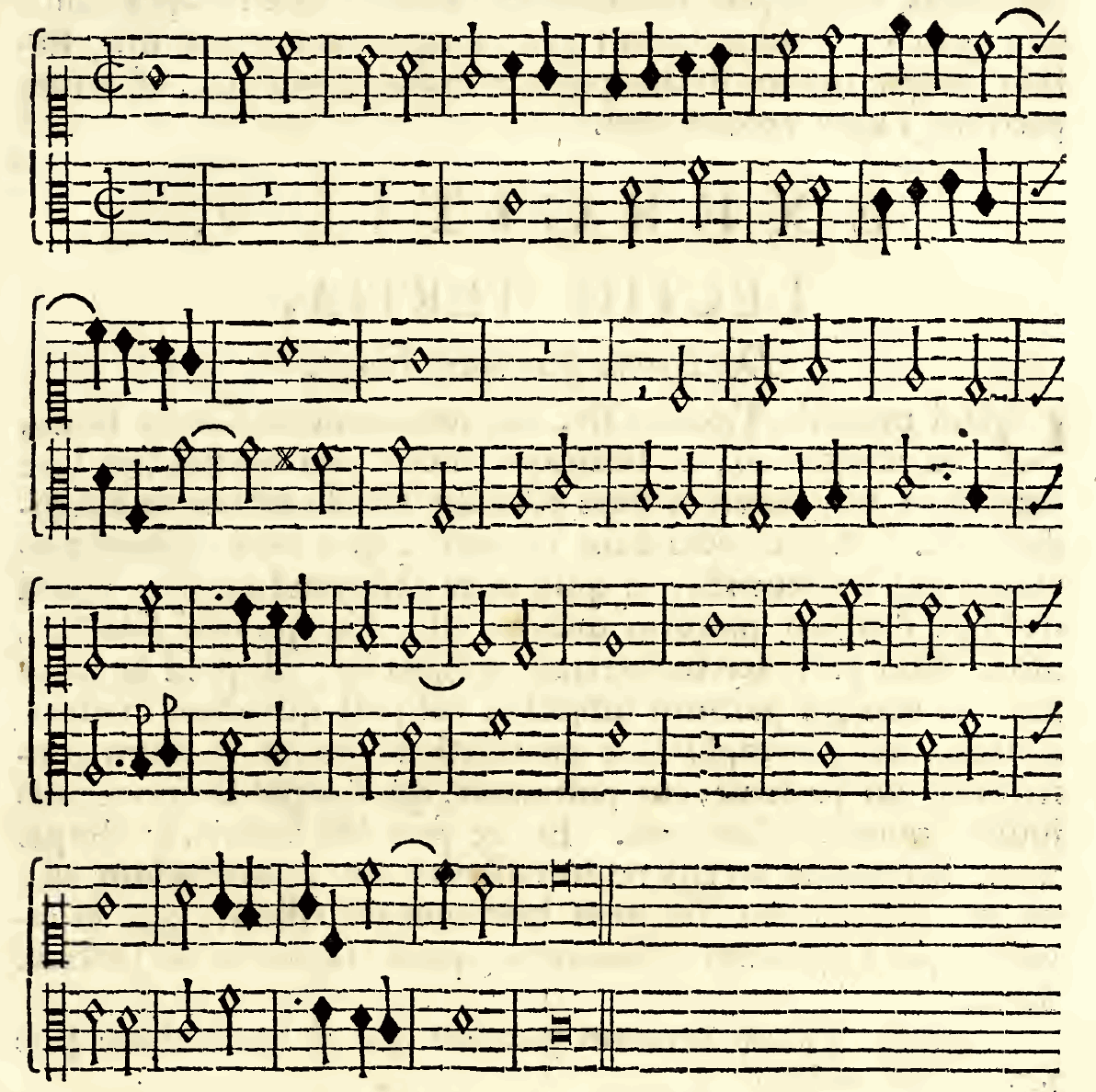
This, then, is the outline and entrance hall through which the way to fugues opens.
Just as the art of painting is not acquired without frequent preliminary drawing, so a fuller knowledge of fugues requires no short practice according to the prescribed model. I most strongly commend this to you, continually seeking one new thing after another.
Joseph. This genus seems poor to me and to suffer great scarcity, hence to leave only a narrow opening for invention.
Aloysius. I do not deny that it is more restricted than the mixed genus and does not offer so open a field for ranging abroad; but it is most suitable for recognizing the nature of the modes and their differences, and very necessary for a cappella compositions to be sung without organ. Nor is its poverty so great that there is no opportunity to find various kinds of subjects. Leaving the study of two voices to your private practice, then, let us proceed to fugues for three parts.