 Playable Books
Johann Joseph Fux · section 20 of 32
Fugue in three parts
Read and hear this section in the playable edition →

Third lesson
On fugues for three parts
I suppose that from what has been said thus far you now know the task of three-voice composition, whether with or without a cantus firmus: namely, that great consideration must be given to the complete triad. We must now see how a fugue for three parts is to be established and what must be observed in it. What was said of fugue for two parts also holds here until the time comes for the third part to enter. This occurs when the subject has been completed in both parts, either after some melodic continuation or immediately without it, as the disposition of the parts allows or requires; this must be weighed by the composer’s balanced judgment. So that this part may not seem to enter in vain and without adding new harmony, one must strive either to have it form the harmonic triad by its entry or to allow it to enter in a dissonance regulated through ligature, which is more elegant.
Joseph. Which of the two parts should the third part follow as regards interval?
Aloysius. Generally the one with which the subject first began, so that variety, to which great consideration must be given, is served. But if the disposition of the parts makes it seem more advisable to enter at another interval, you may follow your judgment, to which this precept must be adapted.
Joseph. Is the rule for cadences the same as that given a little earlier for two voices?
Aloysius. Not at all. Indeed, no formal or complete cadence—which closes with a major third—is to be made where you see no possibility for the subject to enter. Conversely, if you know that the subject can enter, I affirm that a cadence, whether complete or deceptive, may correctly be made not only on the fifth or third, but also on other intervals not too foreign to the nature of the mode.
Joseph. What do you mean, dearest Master, by a deceptive cadence?
Aloysius. You know that a formal or complete cadence concludes with a major third and proceeds from there to an octave. A deceptive cadence, however, using a minor third instead of a major one, eludes the formal cadence expected by the ear and deceives the listener’s expectation. Hence the Italians call it Inganno. Let us examine examples.
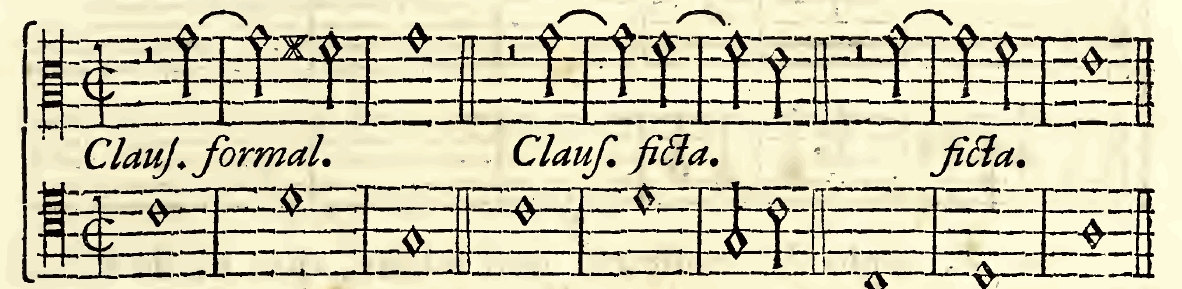
A formal cadence can also be avoided while retaining the major third in the upper part, when the foundational part evades the octave and takes another consonance. For example:
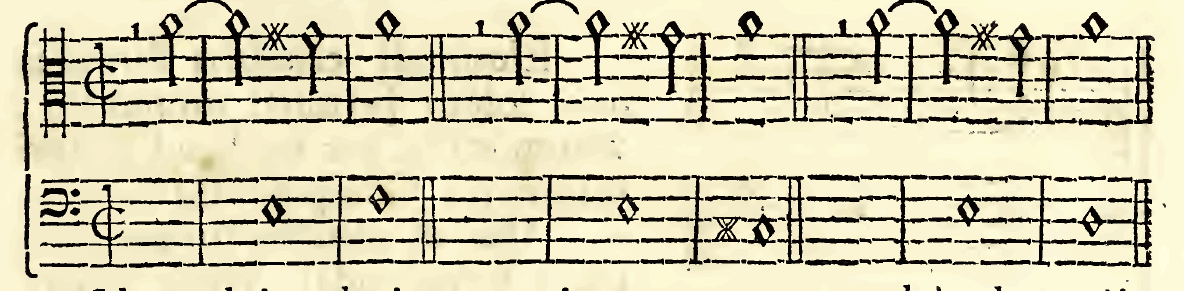
This occurs with much greater elegance in composition for several parts. For example:
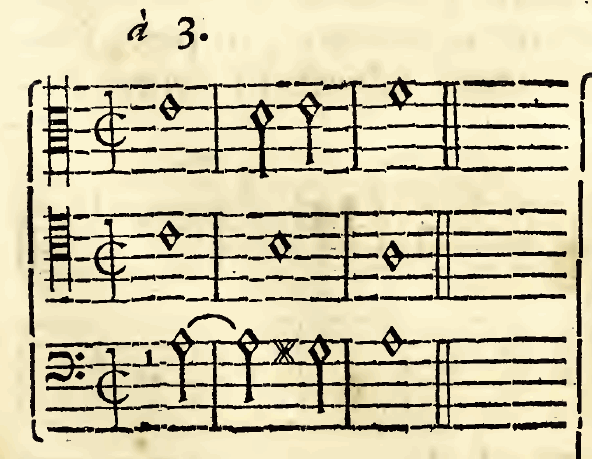
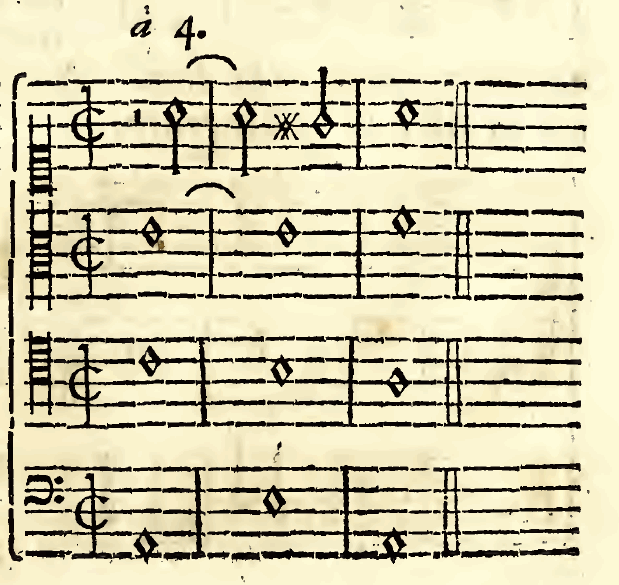
Let us now see how a formal cadence can stand by virtue of the subject entering even at an interval not very customary in the mode. For example, using the following subject:
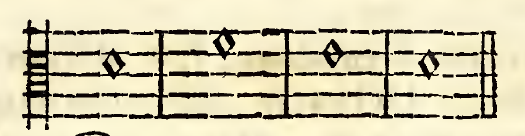
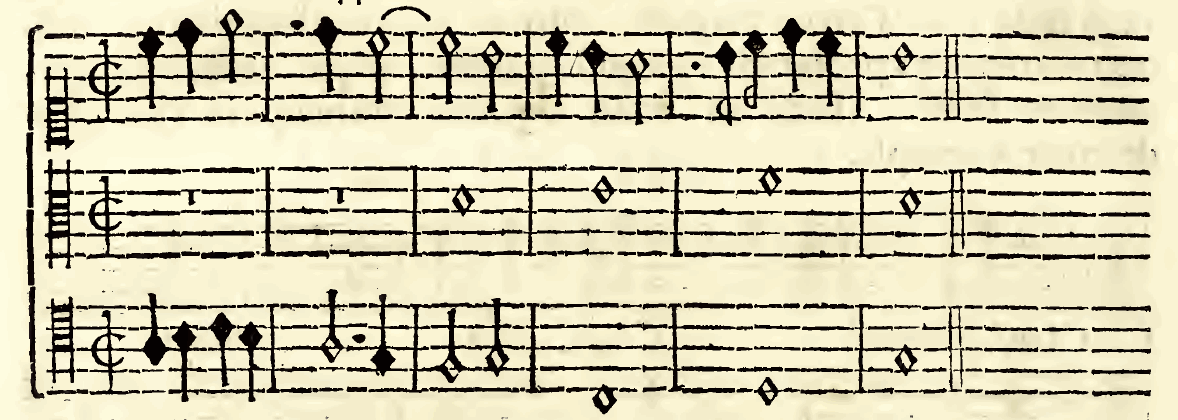
This example demonstrates not only how a formal cadence can be formed on the first note of the subject, but also how the other parts must be arranged for it. Let us now examine a cadence constructed on the second note of the subject:
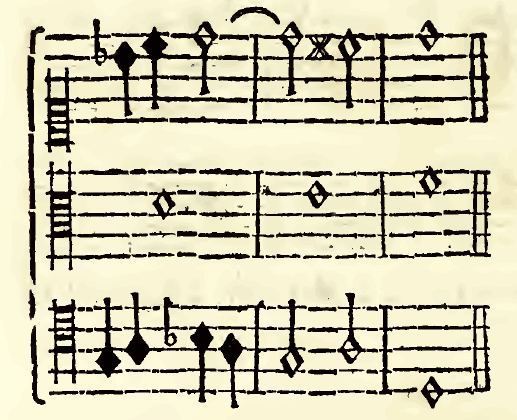
I declare that formal cadences of this kind are not only permitted, but also add no little ornament to the composition. So much for joining a formal cadence to subjects. I shall now teach by examples how cadences interwoven with subjects are to be evaded, including those involving a major third, by means of the foundational part. Let us take the subject used in the first fugue for two voices.
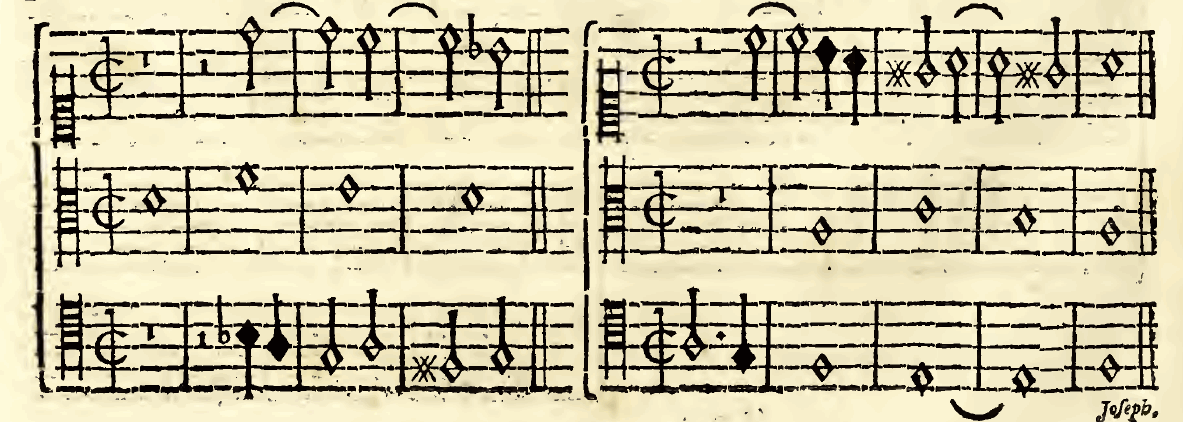
Joseph. Why did you establish so many cadences in two voices and restrict them here in three?
Aloysius. You know that the cadences allowed in two voices differ in nature from formal cadences: they consist of a seventh and sixth, or a second and third, and possess less repose. On examining the matter more carefully, one finds that cadences based on a seventh and sixth or a second and third are preparations for formal cadences rather than deserving that name themselves, because when a third part is added, with nothing else changed, they become formal cadences. For example:
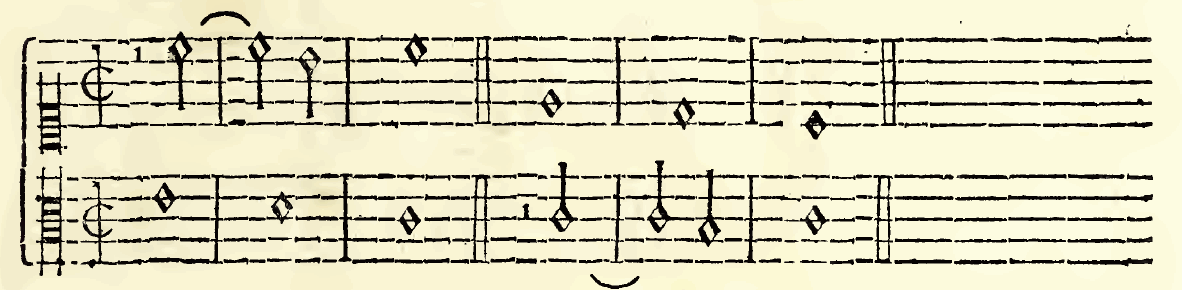
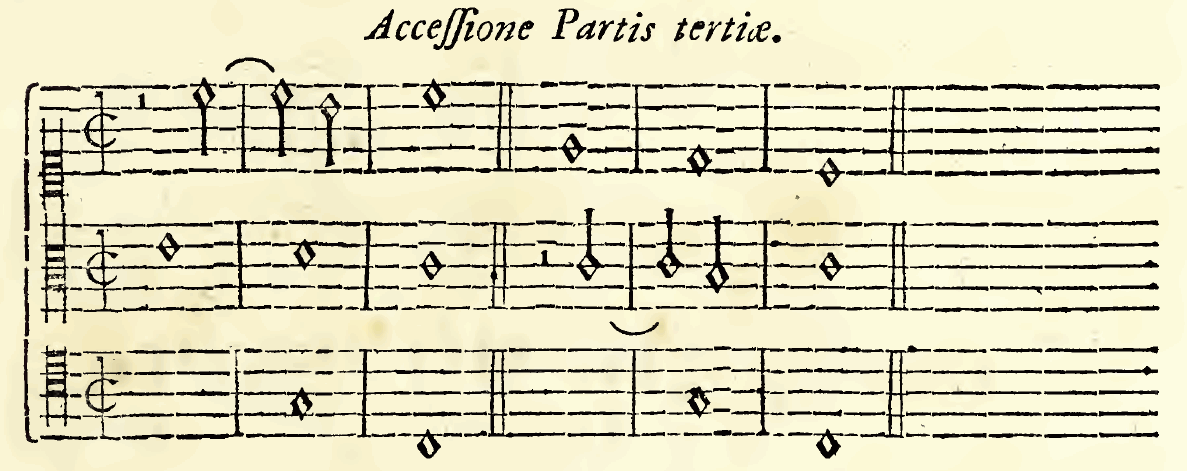
Joseph. I beg you, dearest Master, not to grow angry at so many little questions that may perhaps weary you.
Aloysius. Put them forward boldly, for I wish entirely to remove this stumbling block, against which I find so many practitioners so often stumble.
Joseph. Why is a formal cadence valid with an entering subject, but not admitted without it?
Aloysius. A formal cadence is a sign of repose and therefore should be used only at the end, or when a section has been completed in order to take up a new subject. But a subject entering in the formal cadence itself dispels the impression of repose and sustains the motion desired in this kind of composition until the end, thus signifying that the end has not yet arrived.
Joseph. With this doubt resolved and what has been said thus far understood, I consider myself sufficiently instructed to undertake fugues for three parts.
Aloysius. So be it—after I have first shown how the foundational part must be fitted to two parts proceeding downward through a seventh and sixth, and through a second and third. This will add no small ease to melodic continuation.
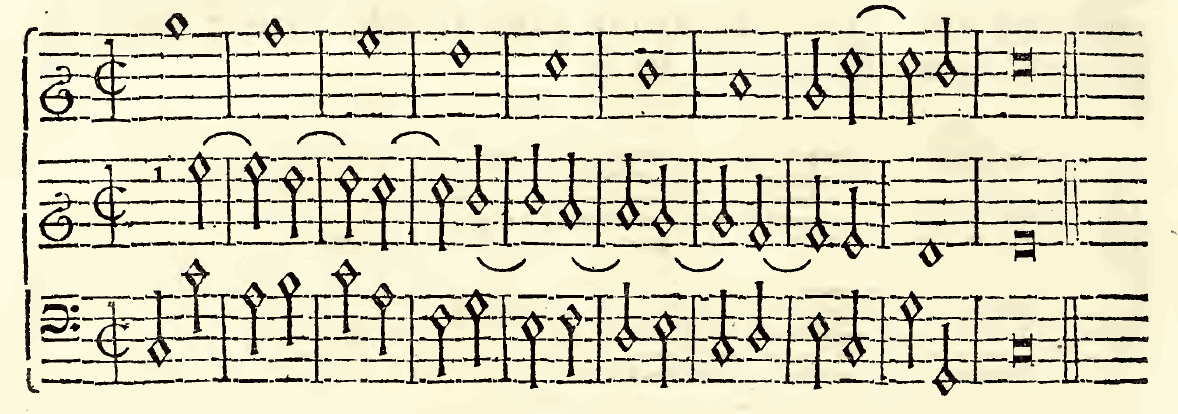
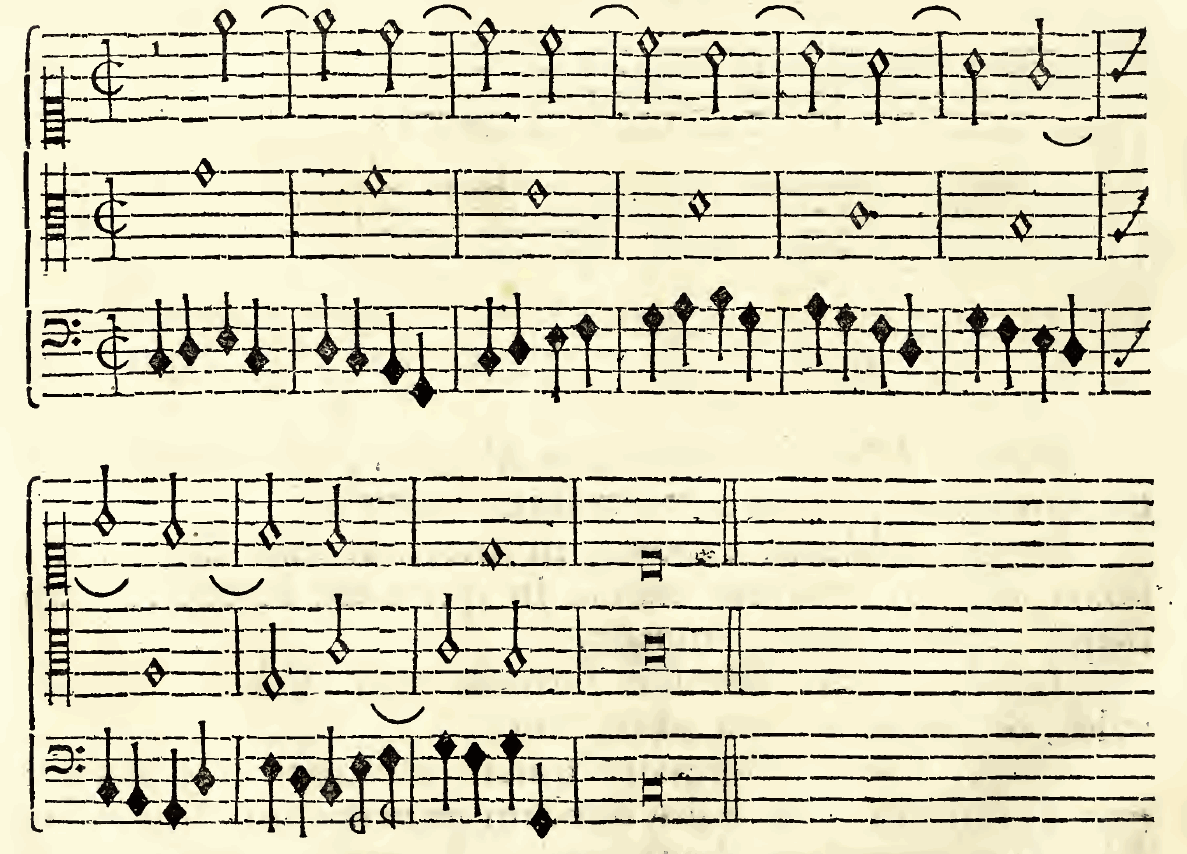
From these examples it must be inferred that, for a fifth and sixth placed together to have a place, there must be found between the upper parts a seventh resolved to a sixth, or a second resolved to a third. Understand the same also of a fourth and fifth occurring together. By means of some portion of this or a similar melodic progression, either outside or within the subject, you can help yourself and prepare the way for the entering subject. Let us therefore proceed to three voices, retaining the subjects of the preceding two-voice compositions and developing them in a texture of three parts. I shall provide the first example, which you are then to imitate in the other modes.
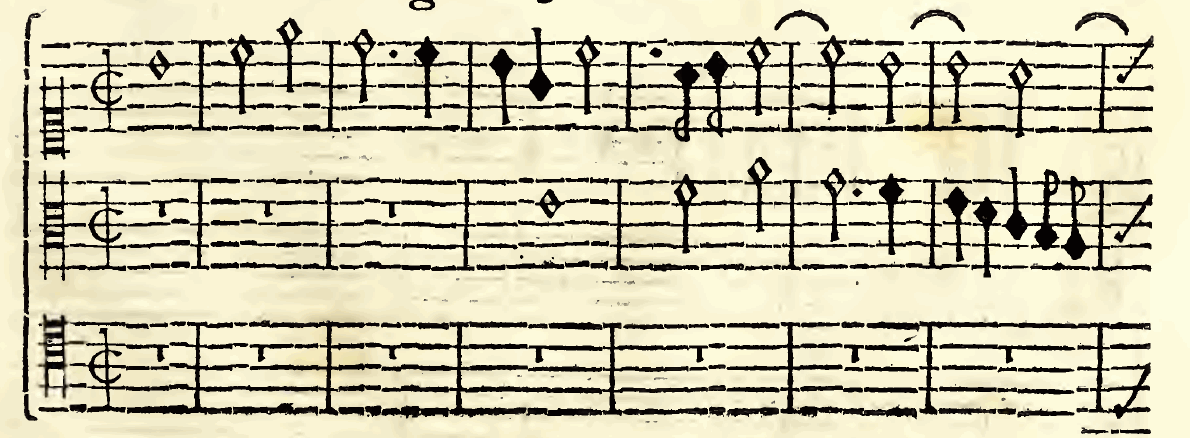
Fugue for three voices in mode D
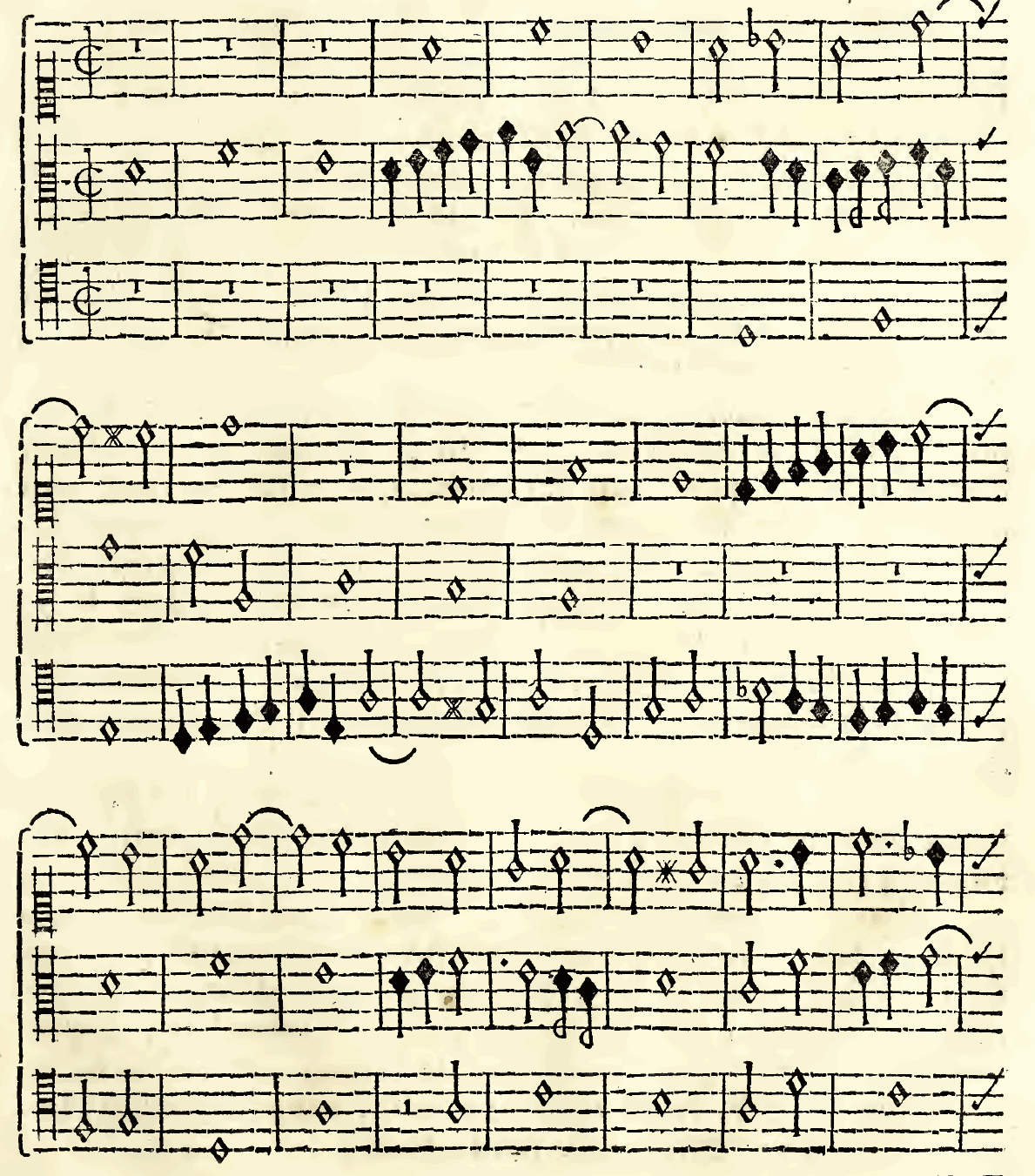
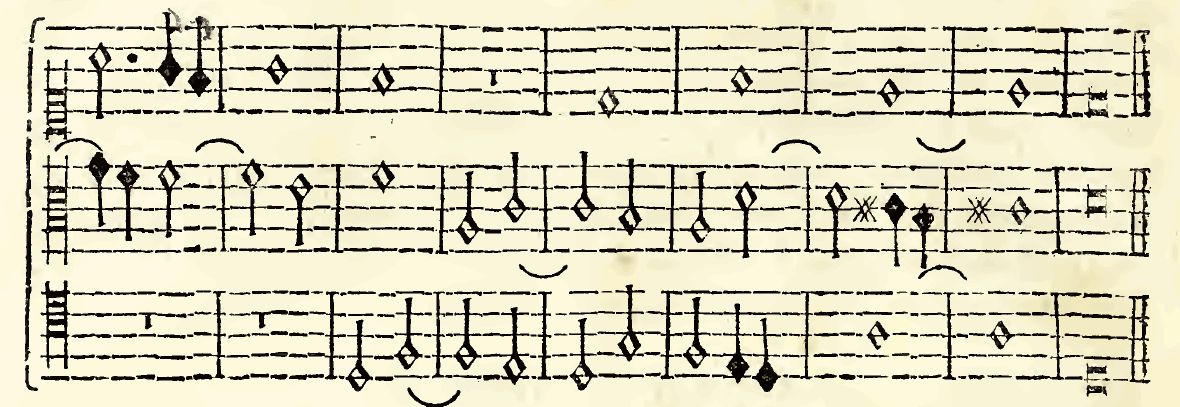
The beginning of this fugue contains nothing different from the one written for two voices until the entrance of the third part. There, while the subject continues, counterpoint is meanwhile constructed through an appropriate melodic continuation in the upper parts. After this the alto repeats the subject at a different interval from its beginning, while the foundational part continues melodically. During this time the soprano rests, aided by a pause, and, preparing for a new entrance, enters at a different interval from its opening, and in a dissonance strong enough to indicate the presence of the subject; the cadence is avoided with the aid of a minor sixth.
Observe also why, when the subject ends there, the alto is immediately given a rest of three measures. First, the upper and lower parts happen to be so close together that no suitable place is left for the alto in the middle. Second, the alto must shortly enter with the subject. Nor would I wish this entrance of the alto with a fifth and sixth to be passed over carelessly, for such a manner of entering adds the greatest force to the composition. Observe further the tenor’s entrance immediately afterward and the melodic continuation built above it.
Joseph. That entrance of the tenor does not seem to have been made in the prescribed manner, being accompanied neither by the harmonic triad nor by a dissonance, but consisting only of a sixth and octave.
Aloysius. I am greatly pleased by your mind’s attentiveness to everything. But you must know that that manner of entering was given as advice rather than as a precept. Moreover, besides the first note of the subject being of little weight because it is a minim, the sixth placed above it, strong in itself and easily heard, plainly reveals the entrance of the subject and makes up for the lack of harmony. Are you satisfied?
Joseph. Entirely.
Aloysius. Let us proceed, then, to examine the rest. Consider next the melodic continuation built above the subject. As this is continued in the upper parts, you see a cadence made on F, yet evaded by the subject entering in the tenor after rests. Then, with the note forms somewhat altered so that each part can enter with the subject in every measure, the fugue is finally brought to an end with a final cadence.
Joseph. From what has been said and done, I gather that a rest should never be placed unless the subject follows immediately.
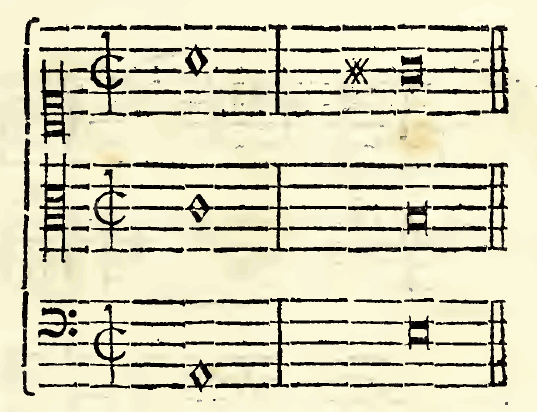
Aloysius. Indeed. Either the old subject or certainly a new one, to be repeated afterward in the other parts, must be introduced after a rest, unless you wish to experience the Gospel rebuke, Matthew chapter 22: “Friend, how did you enter here without a wedding garment?” Now take up mode E and try to compose a fugue for three parts in this or another not very different manner. Do not hesitate over the interval at which you construct cadences, provided the subject has an opportunity to enter elegantly in them. It will help, however, first to show the final cadence of this mode, which differs from those of the other modes.
Fugue for three voices in mode E
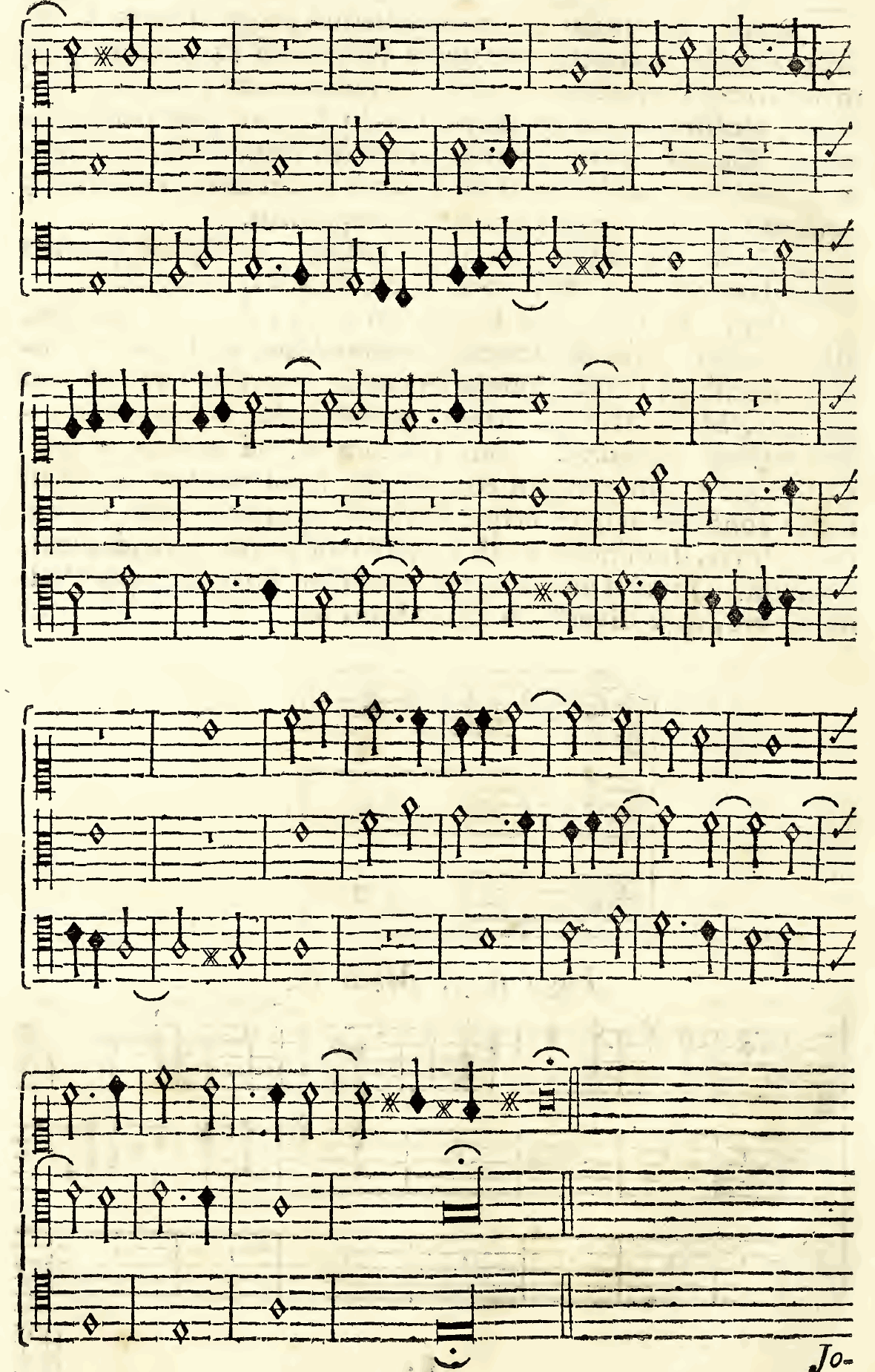
Joseph. Not without fear, revered Master, do I appear before you with this fugue. For I fear that you may observe that the cadence has been made on A more often than is proper.
Aloysius. Put aside your fear, Joseph. Far from censuring you, I marvel that, as a beginner in this matter, you have managed both to weave the subject so skillfully and to find melodic continuation so proper to the mode. The very character of the subject led you to repeat the cadence on A more often. This does not impair variety, since it is continually varied in different ways by the accompanying notes. If anything seems to lack the charm so much desired in musical phrases, it must be attributed to the restriction of the diatonic genus, and especially to the poverty of this mode. I also praise the graceful melody of the parts, neither impeded by the other, each moving most freely. Proceed now to mode F, and from there to the others.
Fugue for three voices in mode F
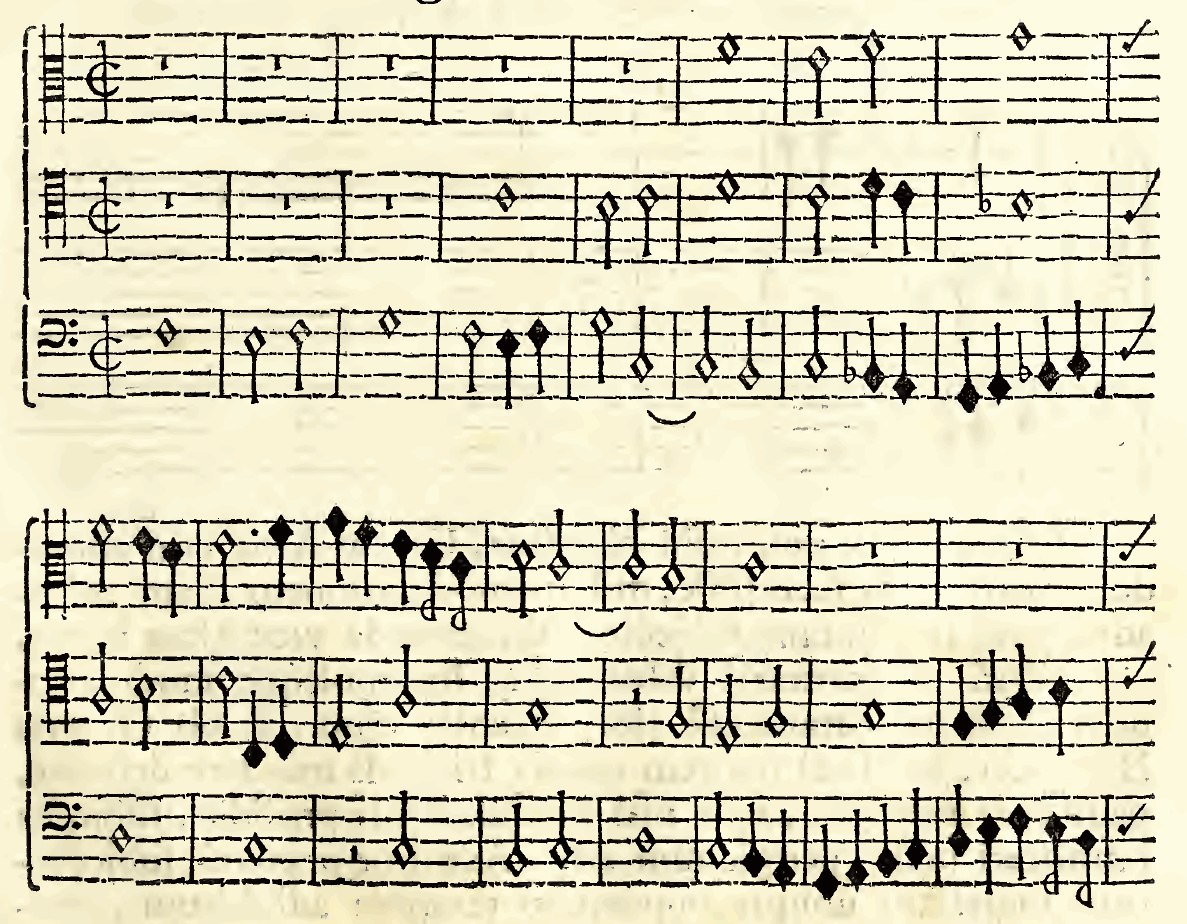
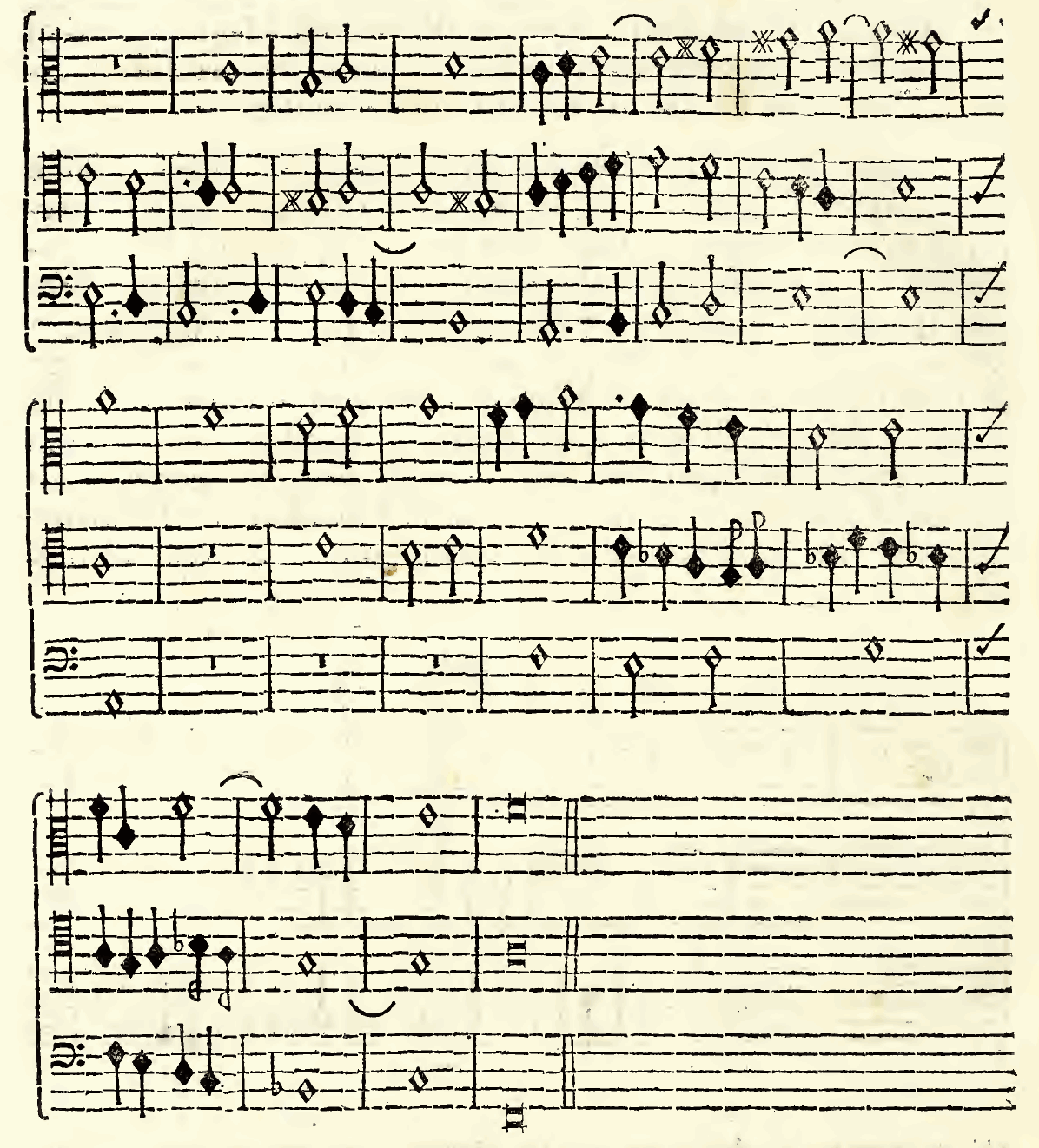
Joseph. I almost flatter myself that this fugue has not turned out very badly, unless you find fault with that melodic continuation mixed into the subject where the alto enters for the second time.
Aloysius. On the contrary, I say that this melodic continuation has been contrived very shrewdly and ingeniously. For since, because of the strictness both of the diatonic genus and of the mode, everything must proceed along a familiar path, it is clear that a little novelty can be mixed into the subject only with the aid of melodic continuation. I also admire the entrances of the subjects, everywhere employed at a suitable time, and the accompanying concordance according to the rules of counterpoint. Proceed to mode G.
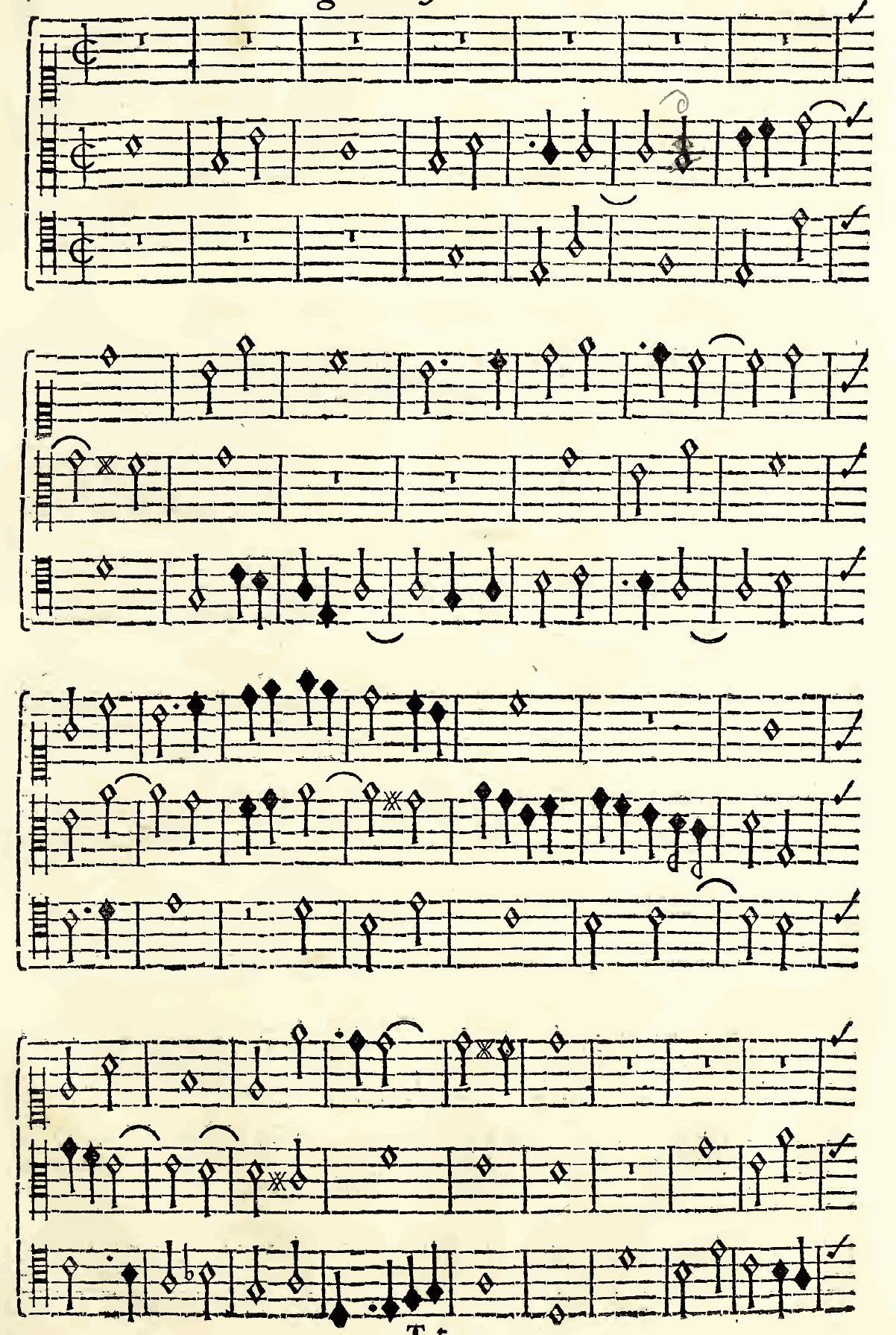
Fugue for three voices in mode G
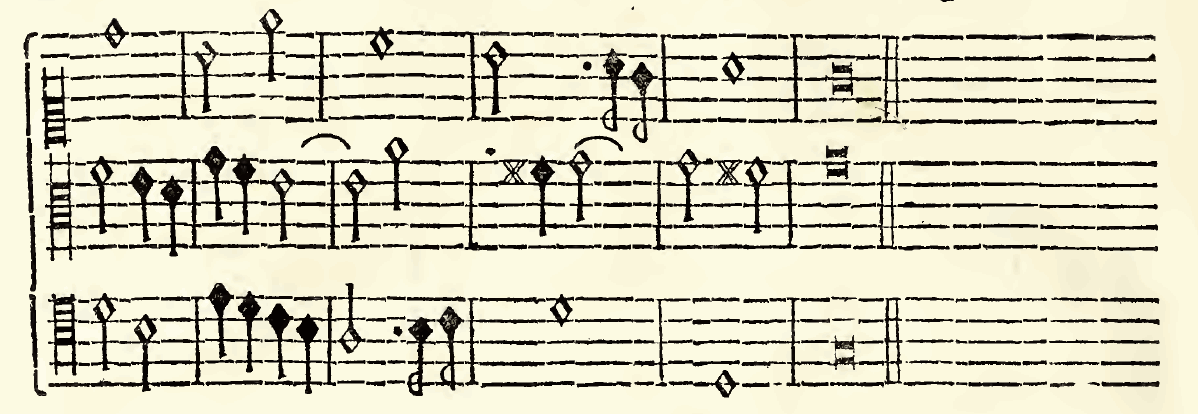
Fugue for three voices in mode A
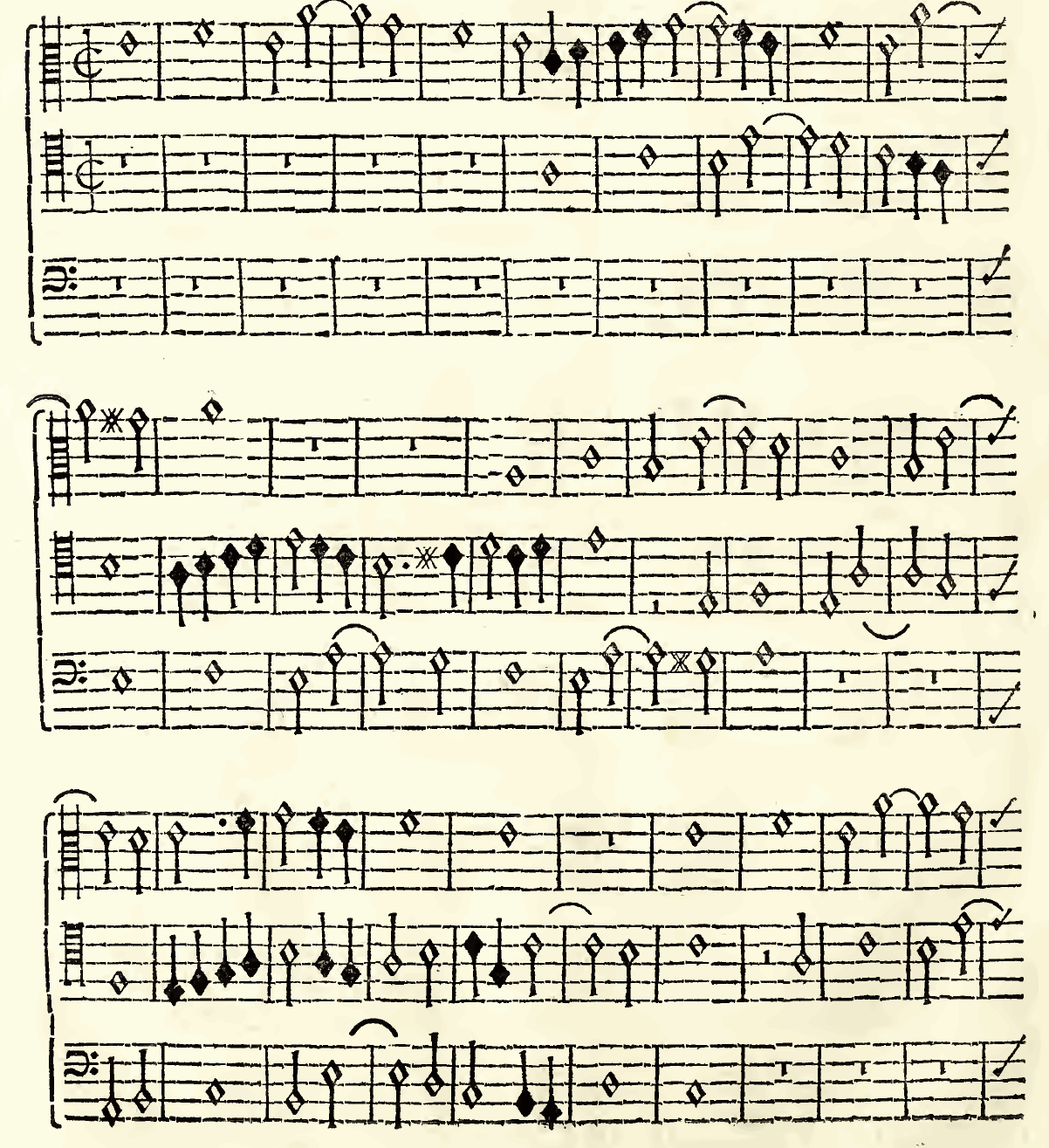
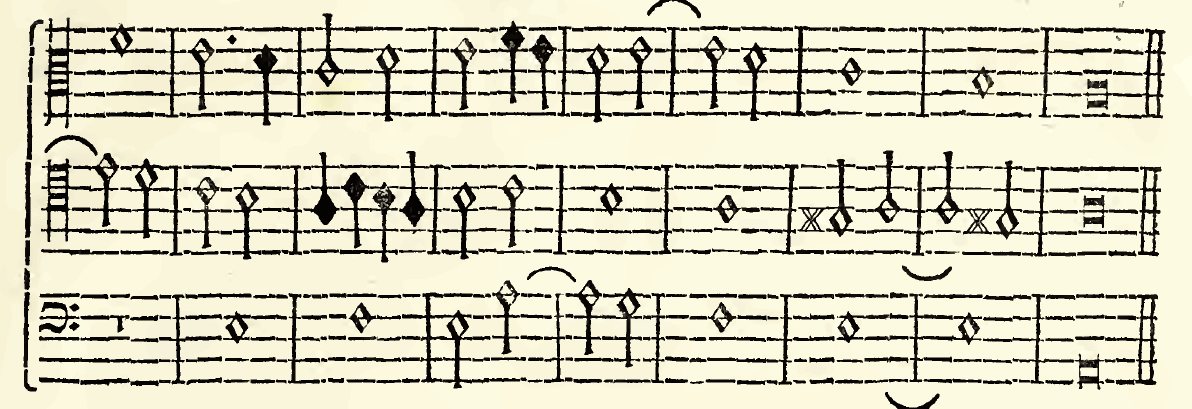
Fugue for three voices in mode C
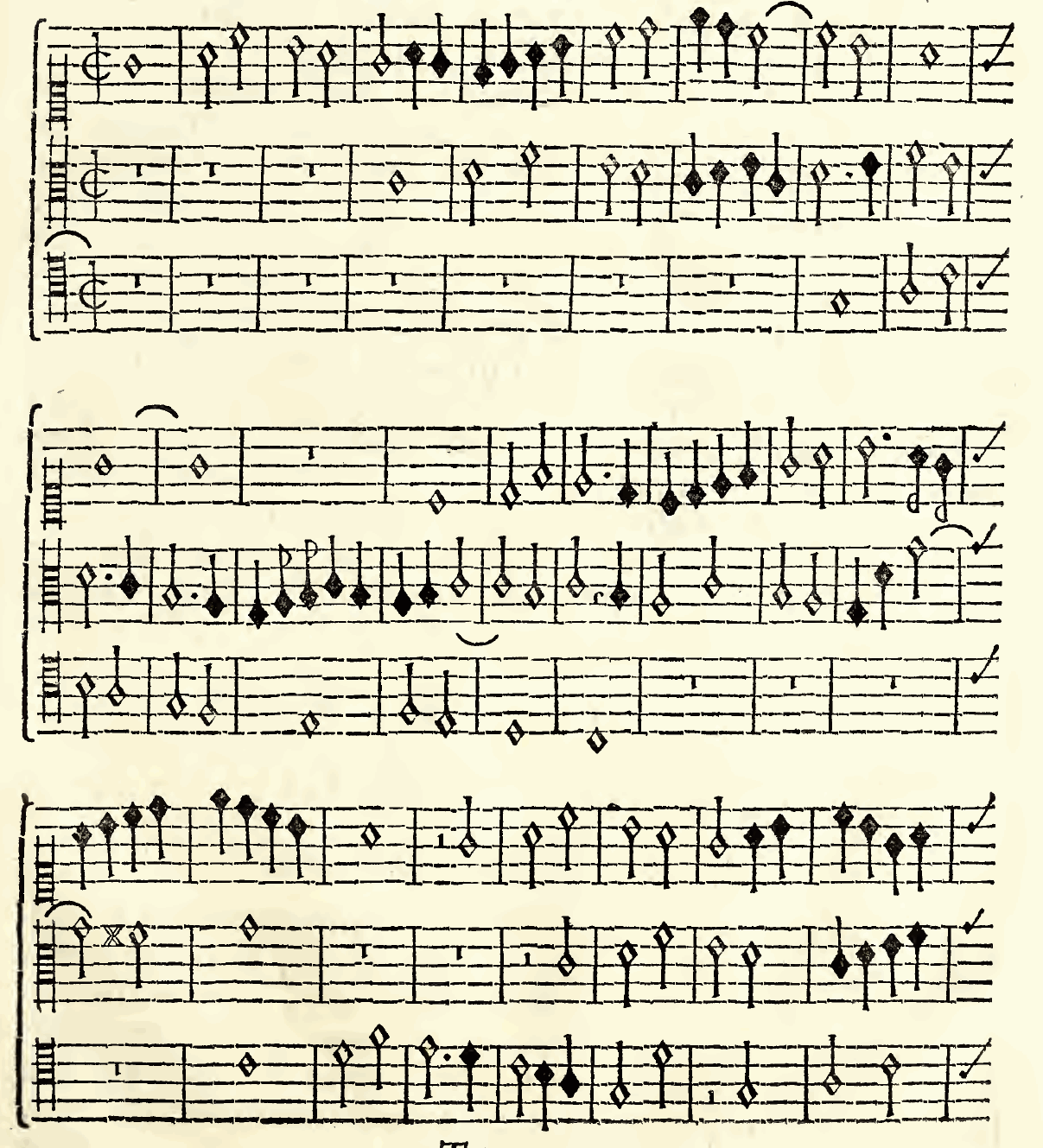
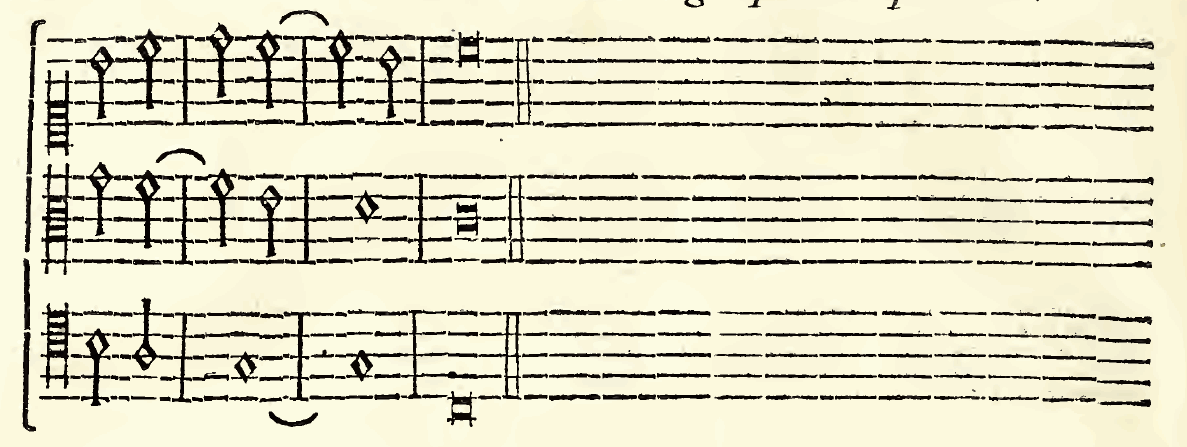
Aloysius. I am incredibly glad that, through this short and simple method of composing fugues, you have not merely acquired a slight acquaintance but have already progressed much further. This is clearly demonstrated by the parts proceeding with beautiful melody, resting at the proper time, and entering opportunely. Thus in this kind of composition nothing seems lacking to you except to acquire facility through continued practice over some time. Take care also to distinguish the composition with frequent ligatures inserted now in one part, now in another. It is scarcely credible how much seasoning they add to musical phrases, enabling almost every part, by acquiring a different motion, to become easily perceptible to the ear. I wish this to apply not only to this but to every kind of composition. Moreover, since perfection exists in three, I urge you again and again to continue devoting more private study to this, through which you will discover how much benefit and facility arise for composition in a greater number of parts. Now to four voices.