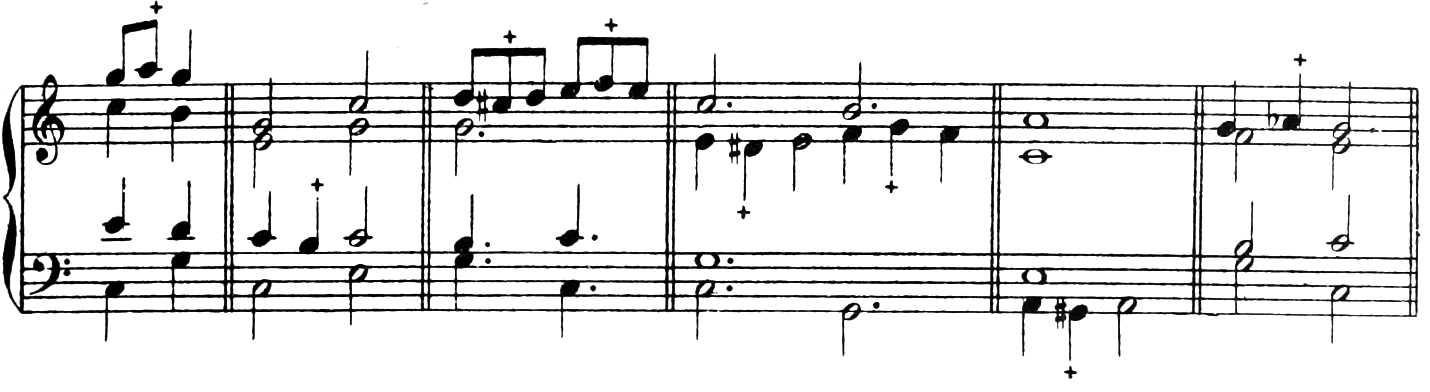
§ 68. — 1) By a neighbour note is meant the note placed on the weak beats of the bar or on the weak part of a beat, between two real notes of the same name, one degree above (upper neighbour note) or one degree below (lower neighbour note) the real notes.
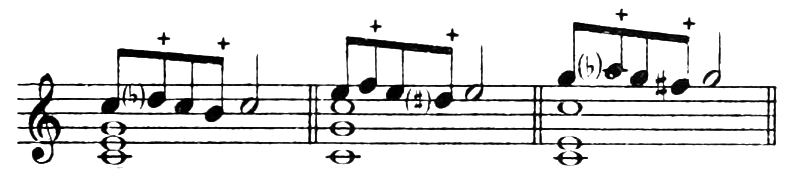
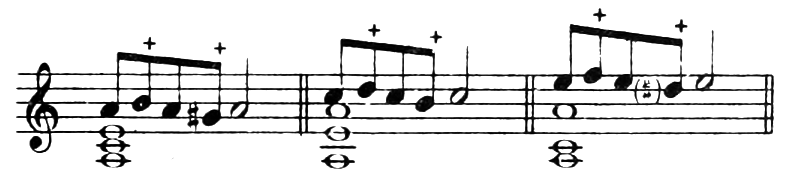
2) Neighbour notes, following the diatonic scale, lie a major or minor second from their real notes, but they may be brought to within a semitone of their real notes by an accidental; this chromatic drawing-closer is often obligatory for certain neighbour notes:
a) In the major triad:
The root requires: upper neighbour note: a major or minor second; lower neighbour note: a minor second. The third requires: upper neighbour note: a minor second; lower neighbour note: a major or minor second. The fifth requires: upper neighbour note: a major or minor second; lower neighbour note: a minor second.
The root requires: upper neighbour note: a major second; lower neighbour note: a minor second. The third requires: upper neighbour note: a major second; lower neighbour note: a minor second. The fifth requires: upper neighbour note: a minor second; lower neighbour note: a major or minor second.
where the altered neighbour note may be used simultaneously with the same note unaltered.
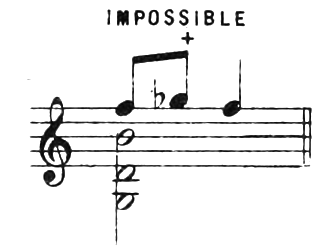
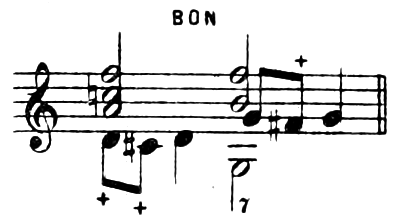
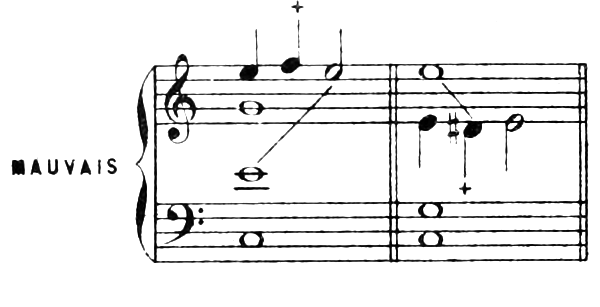
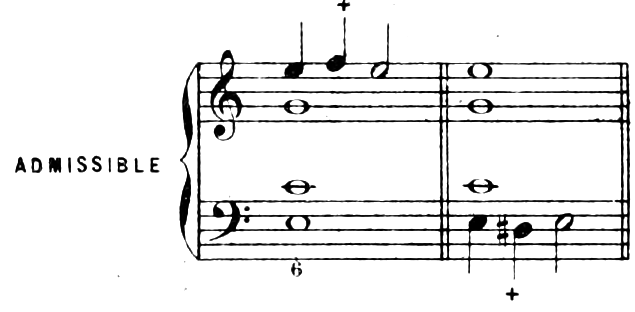
5) Upper and lower neighbour notes allow their principal notes to be doubled when these notes are at least an octave apart; an exception is made for notes that are the third of the chord, which may be doubled only in chords of the sixth:
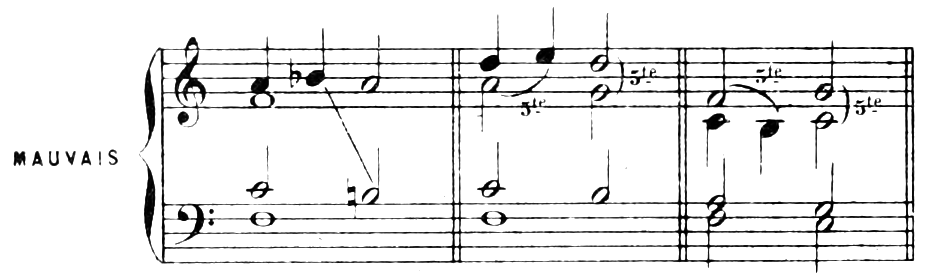
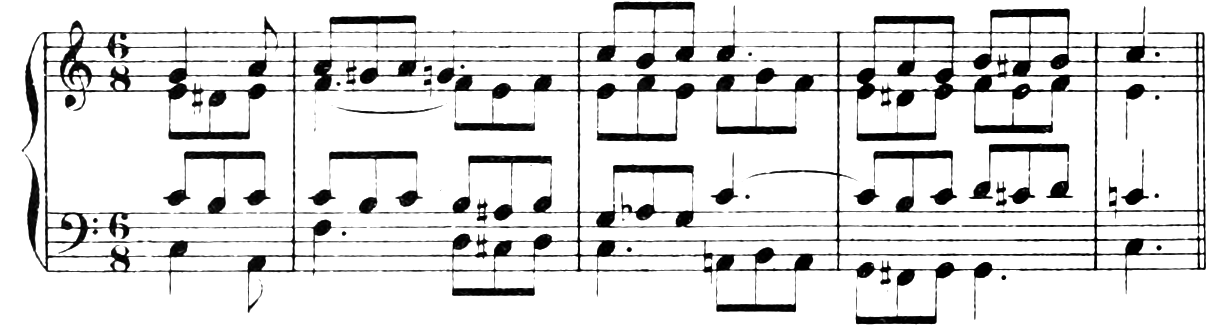
7) Neighbour notes in two parts at once must form parallel thirds or sixths, or move in contrary motion; neighbour notes in three parts at once are subject to the same rule, but they may also form chords of the sixth in parallel motion.
 Playable Books