Playable Books
Arnold Schoenberg · section 18 of 66
Inversions of seventh chords
Read and hear this section in the playable edition →
Like triads, seventh chords can be inverted: a member other than the root can be the bass note. With the third in the bass, the chord is called a six-five chord, more precisely six-five-three; with the fifth in the bass, a four-three chord, more precisely six-four-three; and with the seventh in the bass, a second chord, more precisely six-four-two.
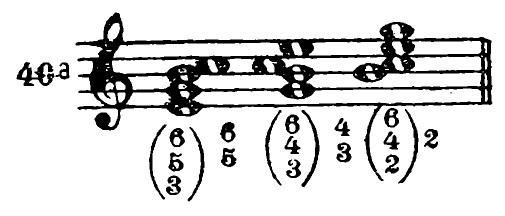
Inversions of seventh chords can now be used under the same conditions as inversions of triads: to provide possibilities for variety in the bass and avoid unpleasant repetitions. There are no new instructions here.
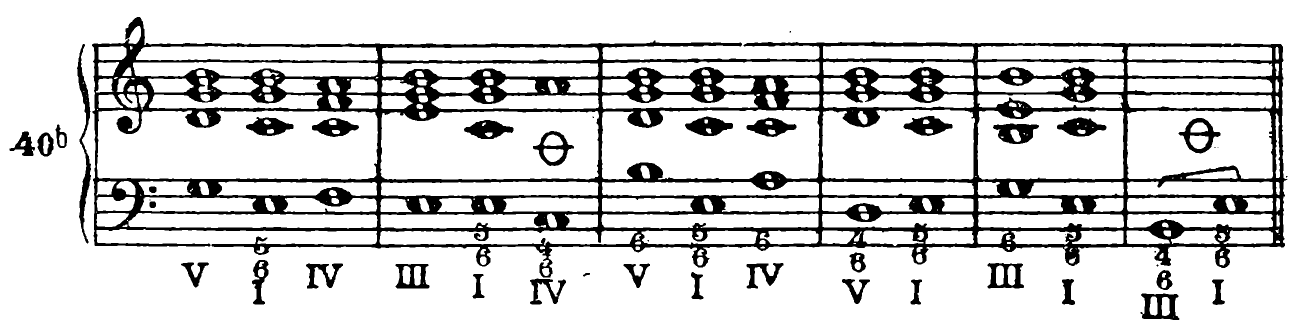
Example 40b prepares and resolves the six-five chord on degree I. Preparation by the third, through degree V, can use root position, a sixth chord, or a six-four chord. Preparation by the fifth, through III, can use root position or a sixth chord, but not a six-four chord, because of the bass leap B–E. The six-five chord may resolve into root position—always with a fourth leap in the root—or into a sixth chord, but not into a six-four chord. When resolving the six-five into the sixth chord, one might prefer the bass to move contrary to the descending seventh because of the hidden octaves, but this is not absolutely necessary. The same will hold for six-five chords on the other degrees, except that the conditions governing degree VII must also be considered.
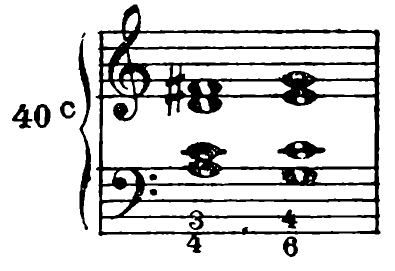
Earlier musicians imposed some restrictions on treating the four-three chord because, apart from the seventh, it is a six-four chord, having the fifth in the bass: a six-four chord with an added seventh. The pupil may treat the four-three chord as though it were a six-four chord—neither approach nor leave the bass note by leap, avoid two successive four-three chords, and avoid connecting it with a six-four chord. But this is really not absolutely necessary, since it contradicts living practice too strongly: practice shows precisely a case like 40c to be a very frequently used connection.
Example 40d shows preparation of the four-three chord by the third and fifth, and resolution into root position and the sixth chord; the six-four chord is impossible because of the “leap” (40d, nos. 3 and 4).
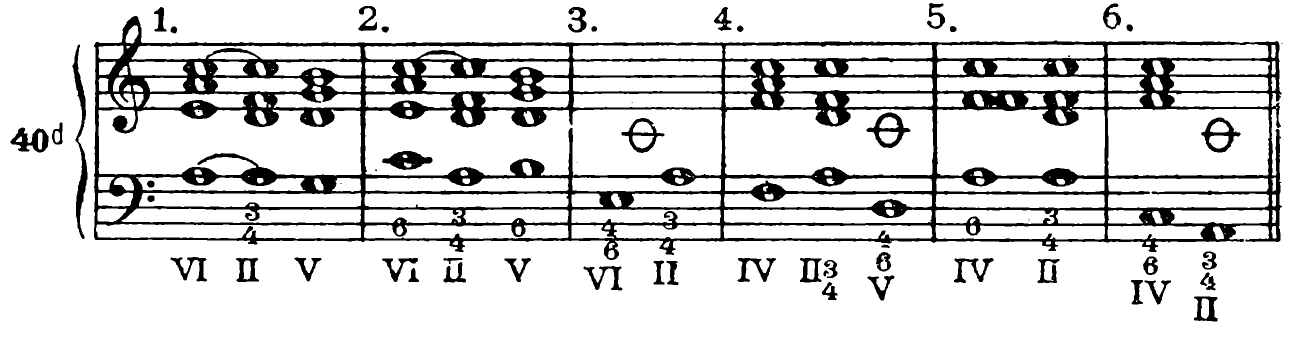
With the second chord, naturally, the seventh to be prepared must always have appeared earlier in the bass. Only a few cases are therefore possible. Resolution can take place only into the sixth chord, since the seventh must descend.
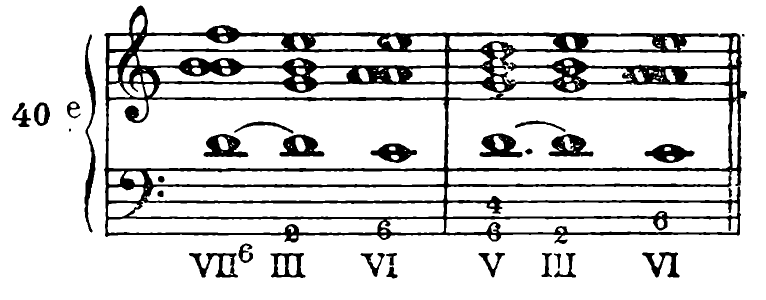
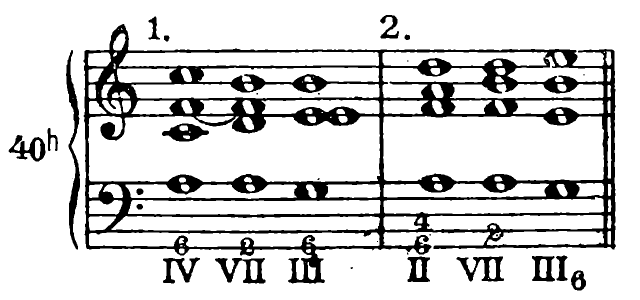
Degree VII presents the following:
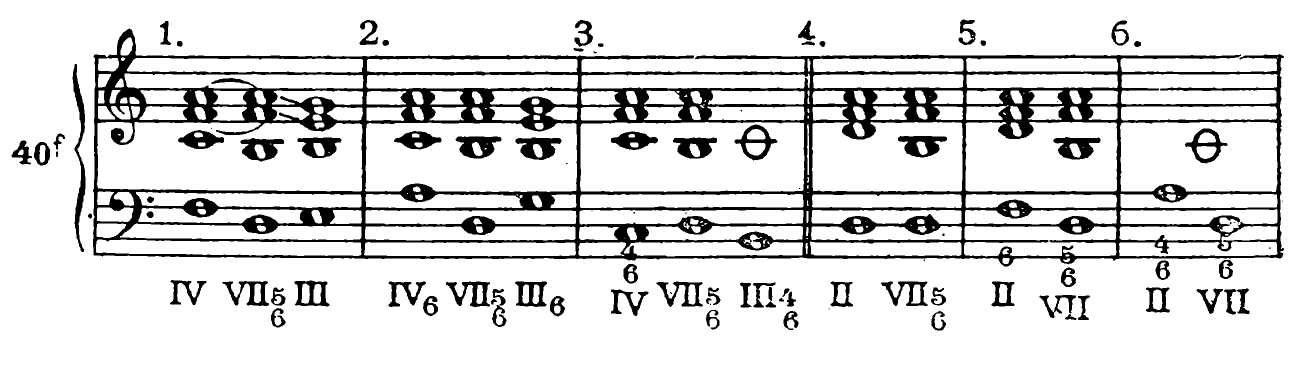
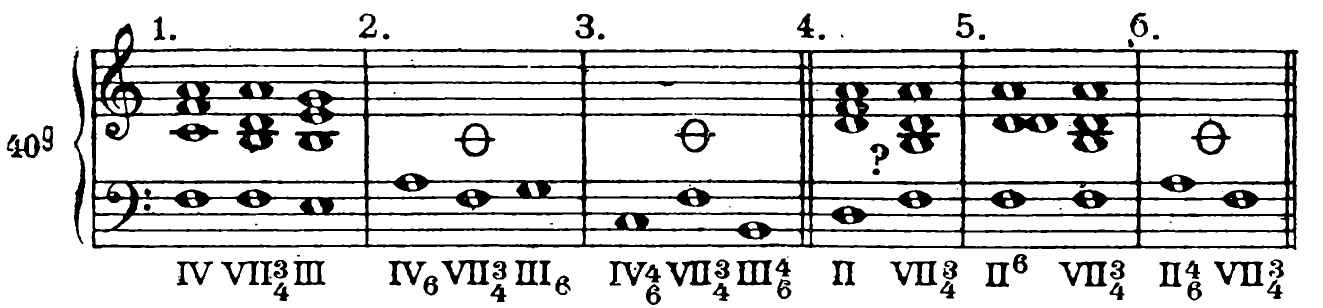
Notice that not only the seventh but also the diminished fifth must be prepared and resolved. In particular, see 40g, no. 1, where the F in the bass must also be prepared. Naturally, as in several earlier cases, the third is again doubled—for example when the six-five chord resolves into the sixth chord (40f, no. 2)—or the third of the sixth chord must be doubled to prepare the diminished fifth (40f, no. 5). Preparation of the four-three chord through the sixth chord on IV is excluded because the diminished fifth must be prepared (40g, no. 2; likewise nos. 4 and 6). Similarly, the four-three chord cannot resolve into the sixth chord, since F must descend rather than ascend. The second chord can be prepared only by the sixth chord on IV and the six-four chord on II.
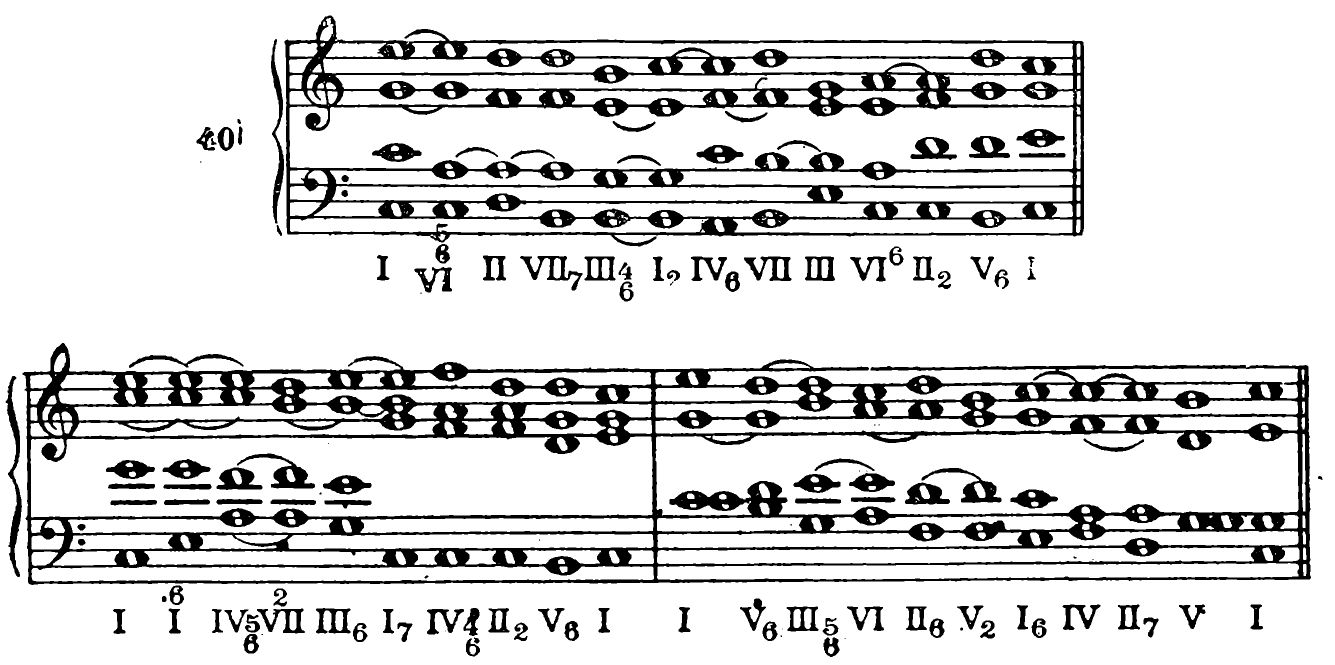
The pupil should practise preparing and resolving inversions of seventh chords in various keys, then make short passages.