Playable BooksREADING EDITIONS
Fux, Gradus ad Parnassum in English

Johann Joseph Fux · section 17 of 32

Imitation

Read and hear this section in the playable edition →

Sole lesson

On imitation

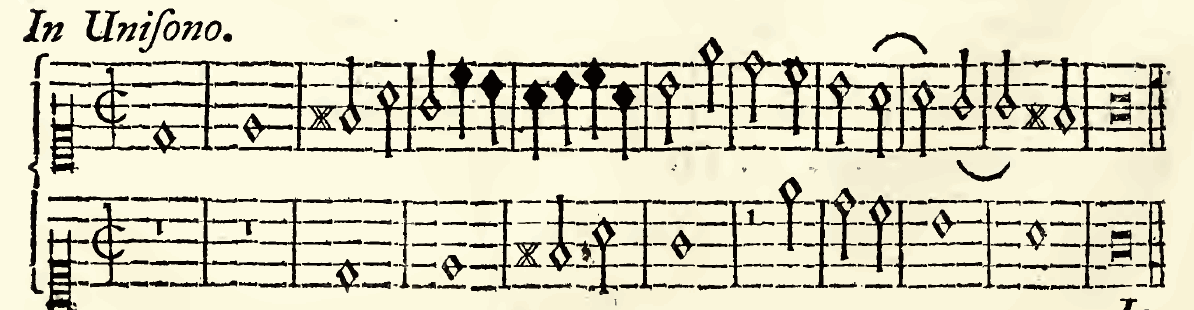
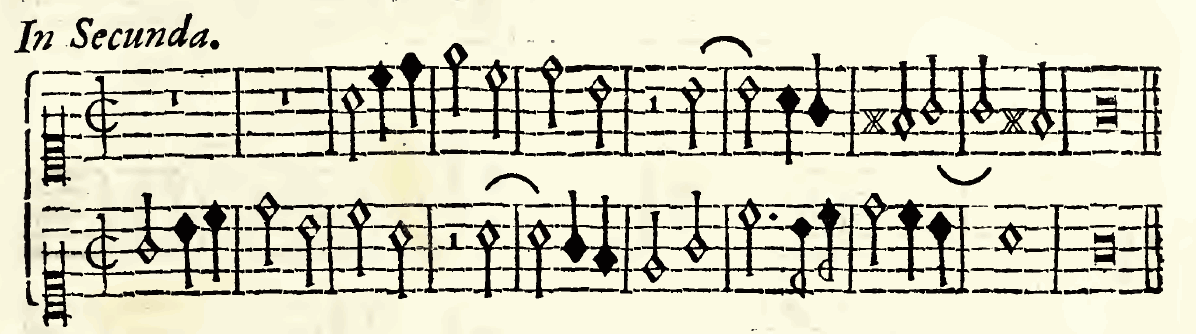
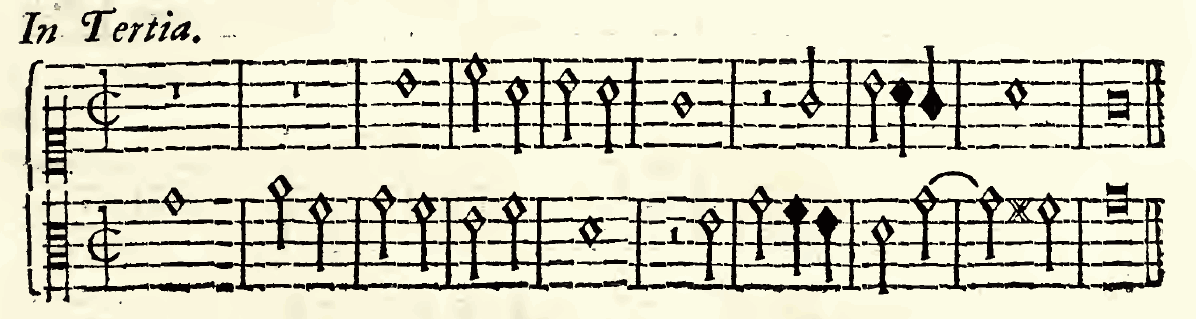
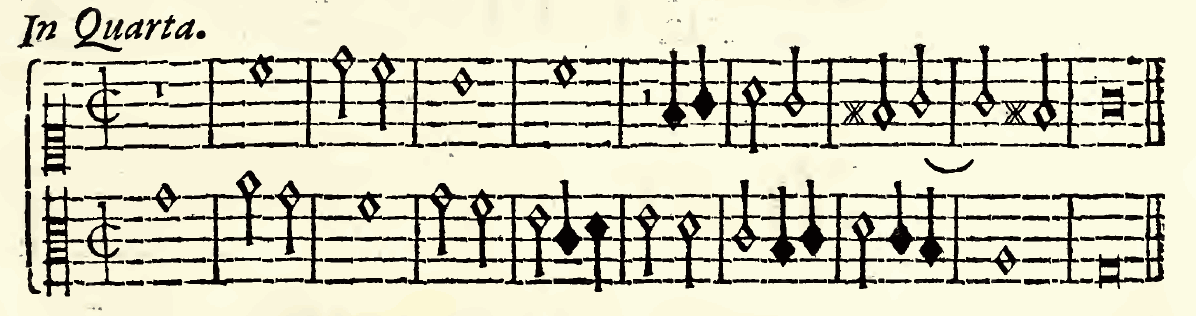
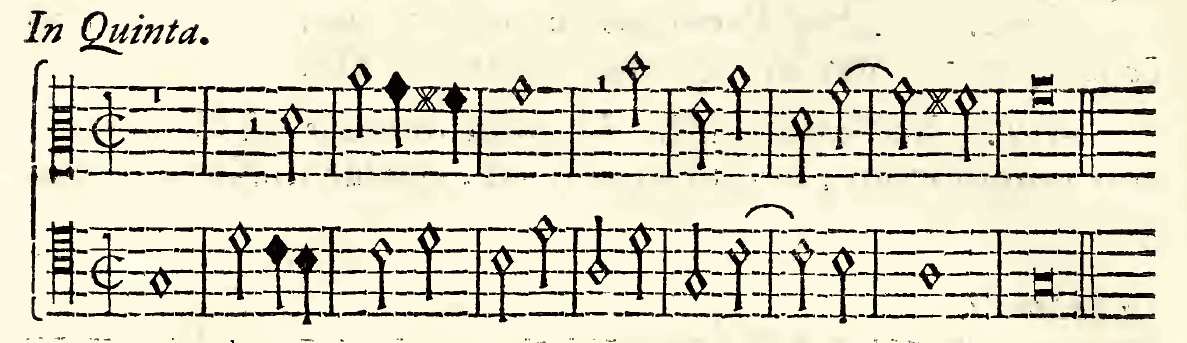
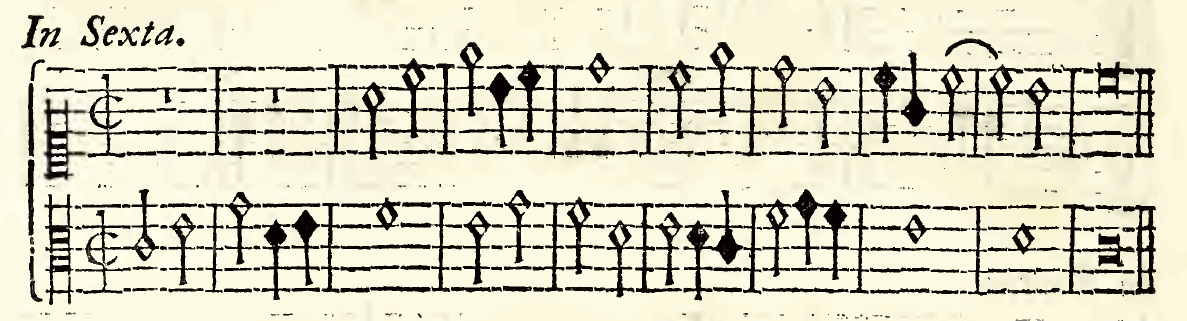
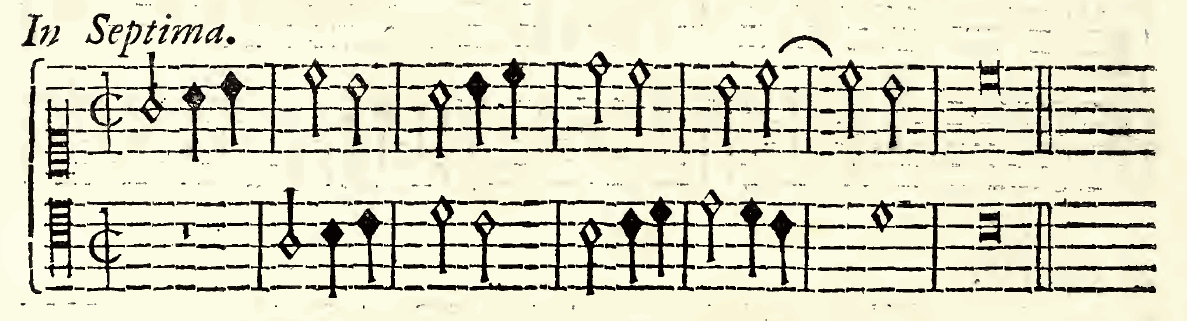
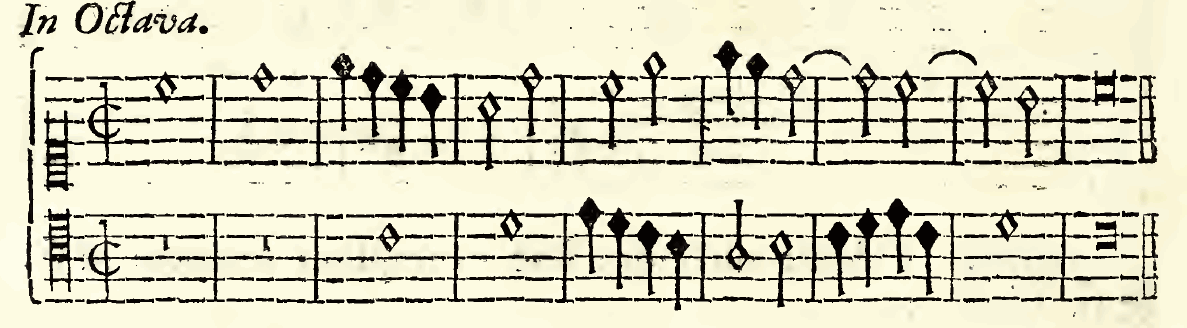
Imitation occurs when the following part follows the preceding one after a rest, preserving the same intervals by which the preceding part moved, without regard to mode, whole tone, or semitone. This can take place at the unison, second, third, fourth, fifth, sixth, seventh, and octave, as examples will make clearer.

Original notation, labels, figures and analytical annotations retained without redrawing.
Fig. 229 · Play this example in the reader ▶

Joseph. From this example I gather that not all the notes of the preceding part must be repeated in the following part.

Aloysius. You have inferred correctly. For that is the task of canons, not imitations, in which it is enough to follow certain notes.

Original notation, labels, figures and analytical annotations retained without redrawing.
Fig. 230 · Play this example in the reader ▶
Original notation, labels, figures and analytical annotations retained without redrawing.
Fig. 231 · Play this example in the reader ▶
Original notation, labels, figures and analytical annotations retained without redrawing.
Fig. 232 · Play this example in the reader ▶

Joseph. This last example seems to begin on C and end on G.

Aloysius. You have already forgotten what I said a little earlier: imitation is bound by no constraint of mode or tonal placement, and it is enough that the imitating part follows the footsteps of the preceding part in whatever manner. Moreover, imitation is customarily used less at the beginning of a composition than in its middle, where the strictness of the mode is not greatly attended to.

Original notation, labels, figures and analytical annotations retained without redrawing.
Fig. 233 · Play this example in the reader ▶
Original notation, labels, figures and analytical annotations retained without redrawing.
Fig. 234 · Play this example in the reader ▶
Original notation, labels, figures and analytical annotations retained without redrawing.
Fig. 235 · Play this example in the reader ▶
Original notation, labels, figures and analytical annotations retained without redrawing.
Fig. 236 · Play this example in the reader ▶

Aloysius. You will spend some time imitating these examples. Place a few notes at your discretion, copy them note for note into the other part at whatever interval you please, and, building above them with various note forms according to the precepts of counterpoint and with regard for graceful melody, you will construct a two-voice composition.