 Playable Books
Pyotr Ilyich Tchaikovsky · section 26 of 36
Chapter XXIV. Anticipation
Read and hear this section in the playable edition →

§ 78. By anticipation we mean a harmonic alteration of a chord, in which one or more of its voices adapt certain notes which really belong to the following chord. Anticipation, then, is the opposite of suspension, whieh latter, however, is far more important musically.
An anticipation must never take up an extensive part of the measure; on the contrary, the true purpose of anticipation is the enlivening of the rythm by dividing up notes of long duration.
Anticipations occur either singly, as in the last example, or in chains one after the other.;
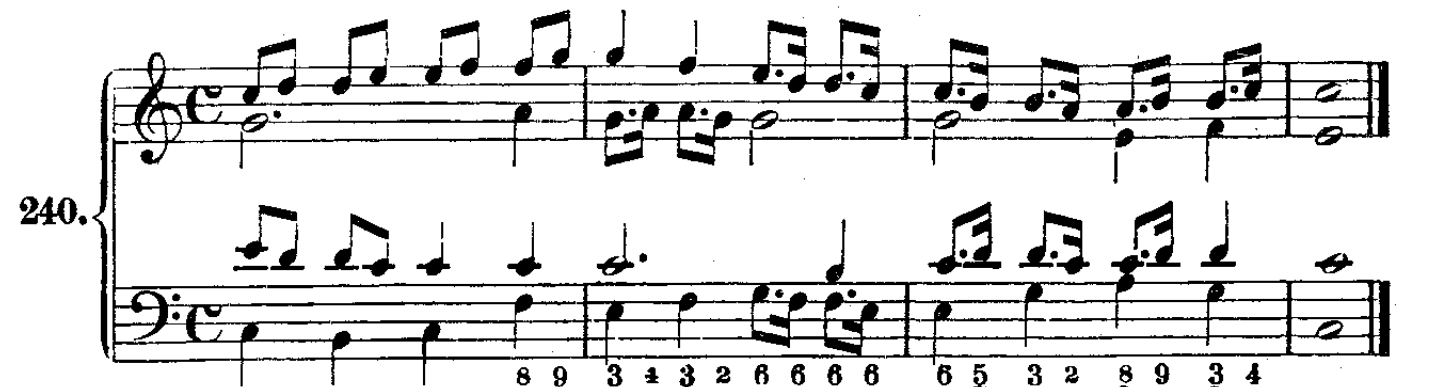
4 9 A suspension and an anticipation can occur simultaneously in one and the same chord; in which case the anticipation must be of shorter duration than the suspension.

§ 79. We have said that anticipation is the direct opposite of suspension; this must not, however, be taken literally, since anticipations can, for example, occur in skips, as in the case of suspensions.
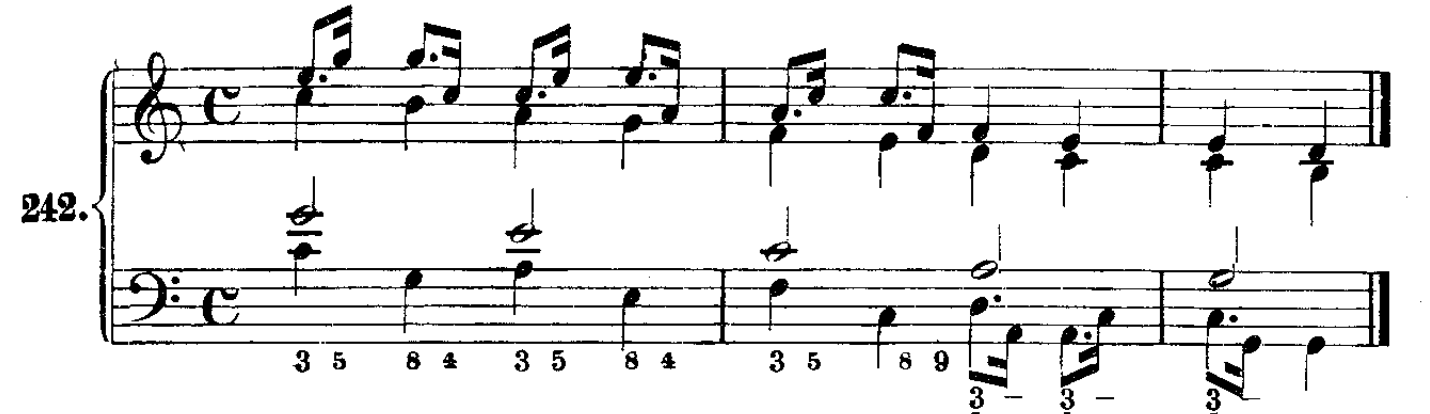
In anticipations our choice is not limited to any certain note of the following chord.
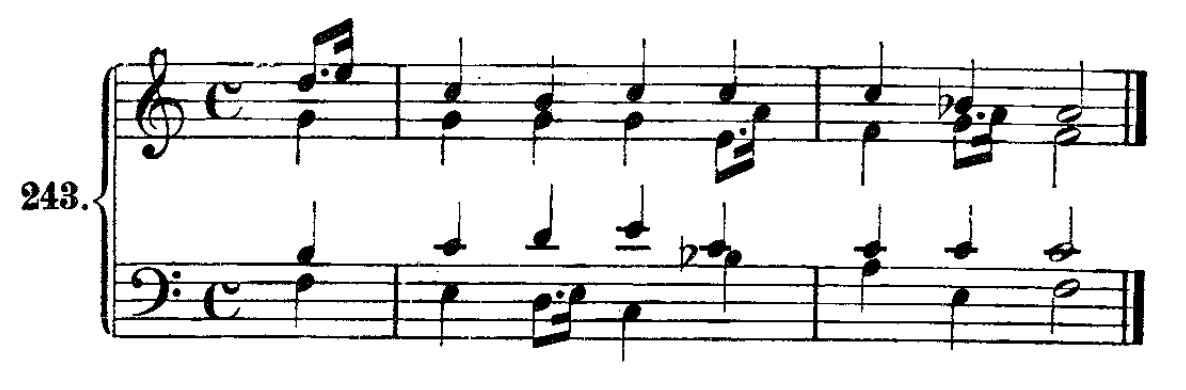
. In some cases we even employ a note, which does not actually occur in the following chord, but which might be considered part of it.
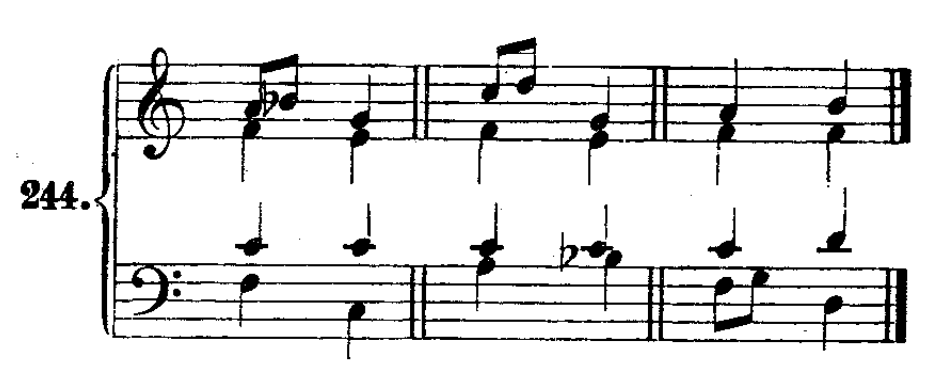
§ 80. Very similar to the anticipation is the so-called,Cambiata“. This is a note lying one step below the preceding note of the voice and progressing by a skip downward into the nearest interval of the following chord.
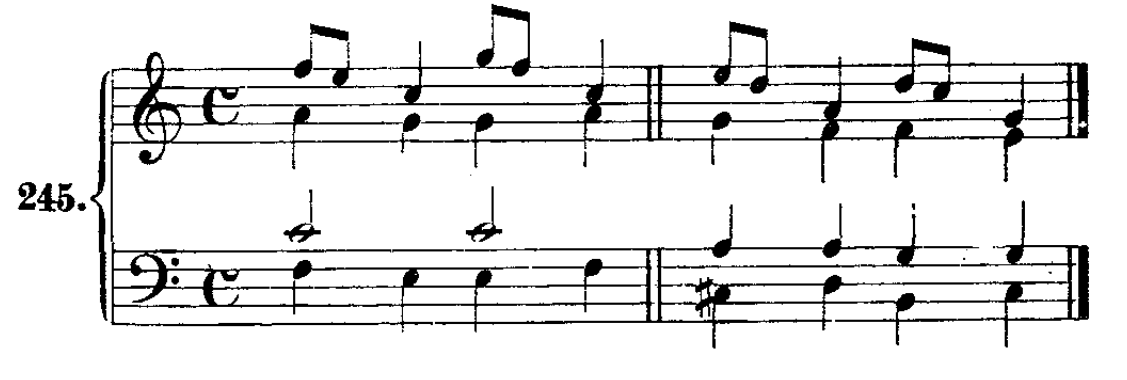
§ 81. There is a syncopated movement between Bass and upper voices, which gives rise in turn to a row of suspensions or anticipations, according to whether the Bass or the upper voices fall on the accented beats.
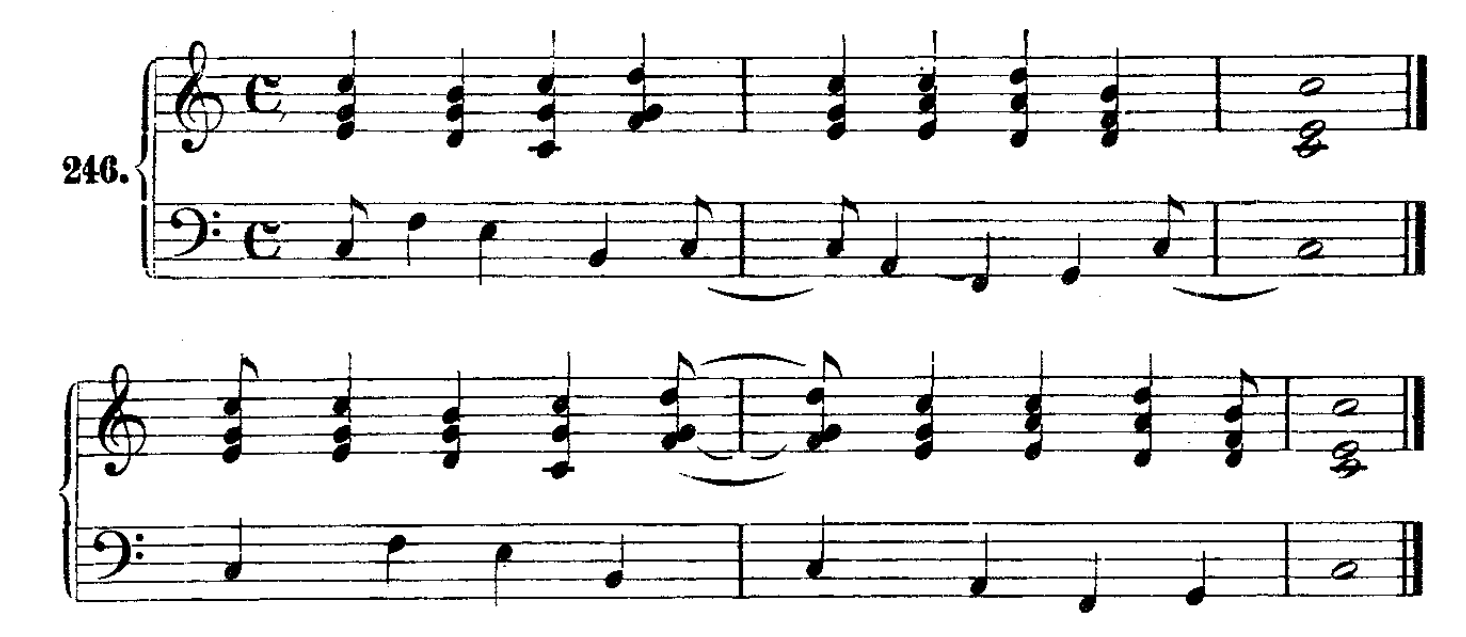
Exercises In the exercises the student should confine himself te the anticipations mentioned in § 78.
The other ones, as well as the cambiata he will find opportunity to employ later on.
In the harmonization of the following melodies anticipations are to be applied.
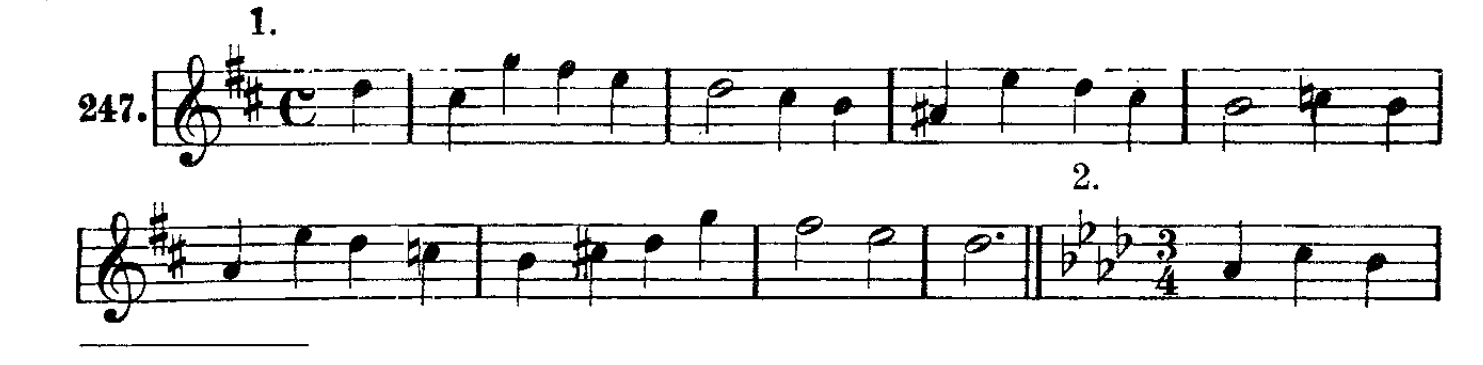
*) The note d can here be regarded as the ninth of the following chord.