 Playable Books
Pyotr Ilyich Tchaikovsky · section 11 of 36
Chapter IX. The Inversions of the Diminished and Augmented Triads
Read and hear this section in the playable edition →

in Harmony, and is, unlike the inversions of other triads, even more in use than its fundamental form. The reason for this is that the chord of the sixth of the diminished triad is in reality a consonant chord, its upper voices forming respectively a third and a sixth with the Bass. The fundamental form of this triad on the other hand, contains a diminished fifth and therefore belongs to the dissonant chords. The second inversion sounds exceedingly harsh aud is therefore hardly ever used, except in three-part-writing.
§ 27. In connecting the chord of the sixth of the diminished triad with other triads of the key the following two cases should be distinguished:
1) when it precedes the tonic triad.
2) when it precedes another triad of the scale.
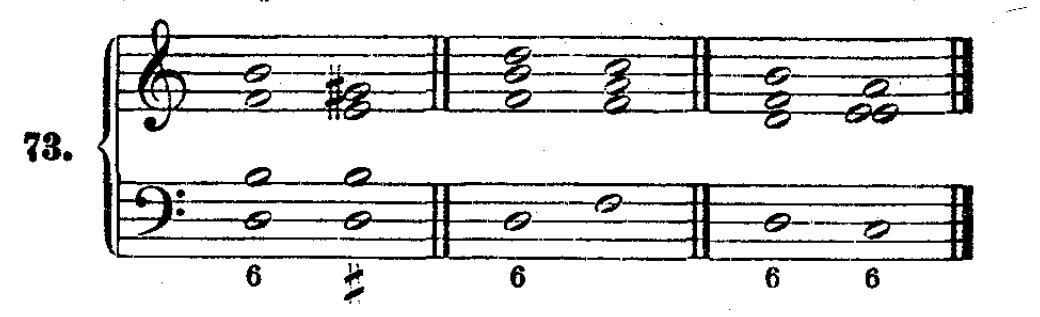
In the first case the fundamental tone of the triad is at the same time leading tone and must be led upward, for which reason it must not he doubled. The best tone to double here would be the fifth, though occasionally the third is doubled.
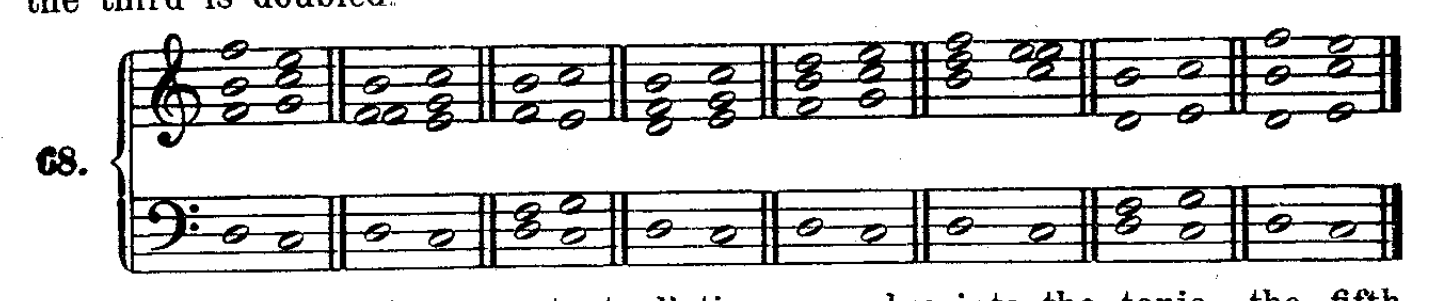
As the leading tone must at all times resolve into the tonic, the fifth of the diminished triad must not move upward, when placed above the fundamental tone, since forbidden progressions would necessarily arise.
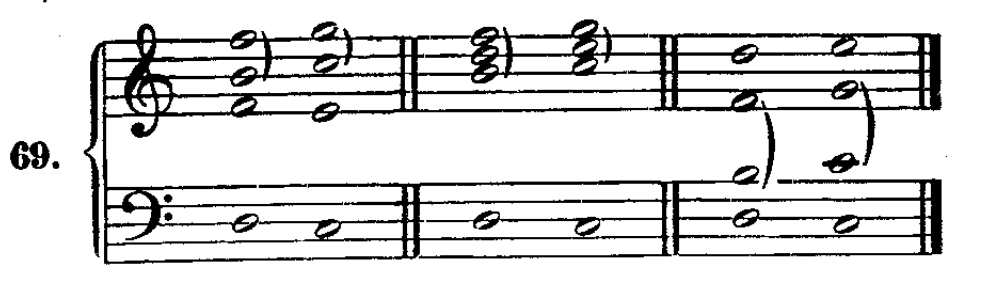
For this reason we must always avoid in the said chord of the sixth a position of voices, in which two fifths appear above the fundamental tone:
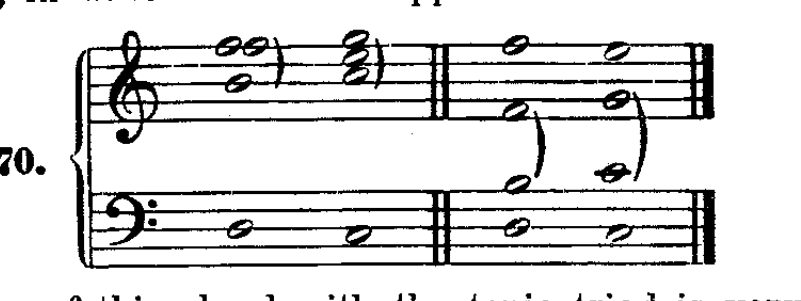

In the second of the above mentioned cases, chiefly the fundamental tone—(as in all other chords of the sixth) is doubled, since it is no longer leading tone.
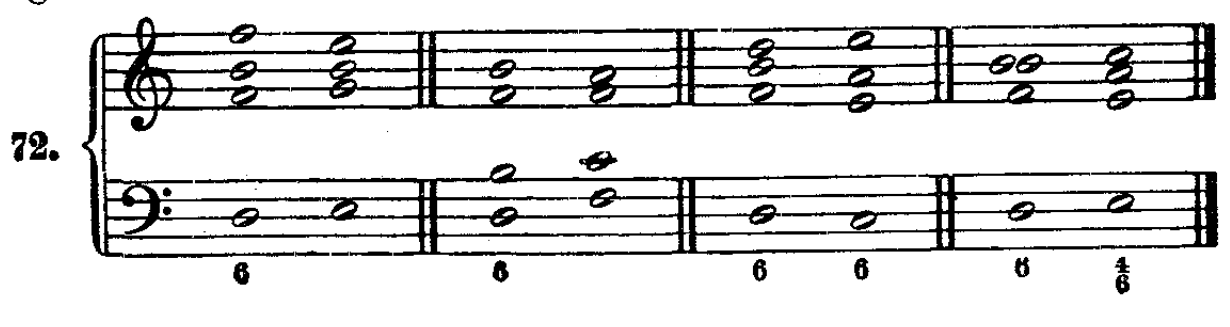
The use of the chord of the sixth of the diminished triad on the second degree (in minor) is subject to the general rules.
§ 28. The inversions of the augmented triad on the 3-rd degree in minor present so many difficulties in their connection with other triads (even though related), that for the present we must abstain from using them; the more so, as we shall return to this chord later on, when we shall treat it as an incidental or passing harmony of the major scale.
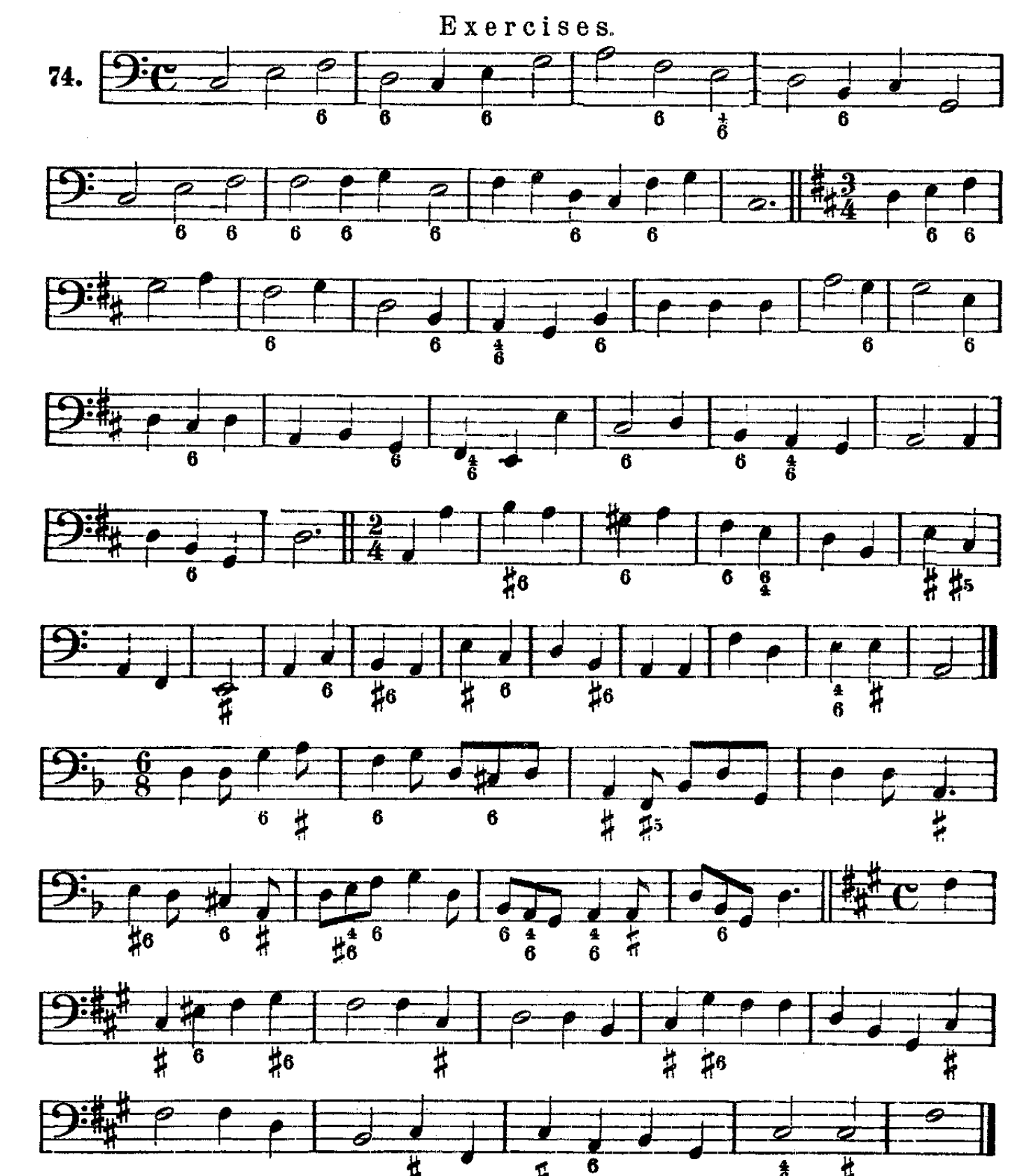
Note: The signs occurring in the last three exercises are applied in accordance with the rules laid down in division b. of the note to § 21.
Dissonant Harmonies, Chords of the Seventh and Chords of the Ninth.
_All chords consisting of four or five tones are dissonant chords, as their fundamental tone forms a seventh or a ninth with the uppermost tone. These chords are not independent harmonies. but find their support and justification in the chord that follows them. The leading of a dissonant into a consonant chord is called,resolution*. Every chord of the seventh must be resolved into a triad.