Pyotr Ilyich Tchaikovsky · section 23 of 36
Chapter XXI. The enharmonic properties of the chord of the diminished seventh Read and hear this section in the playable edition →
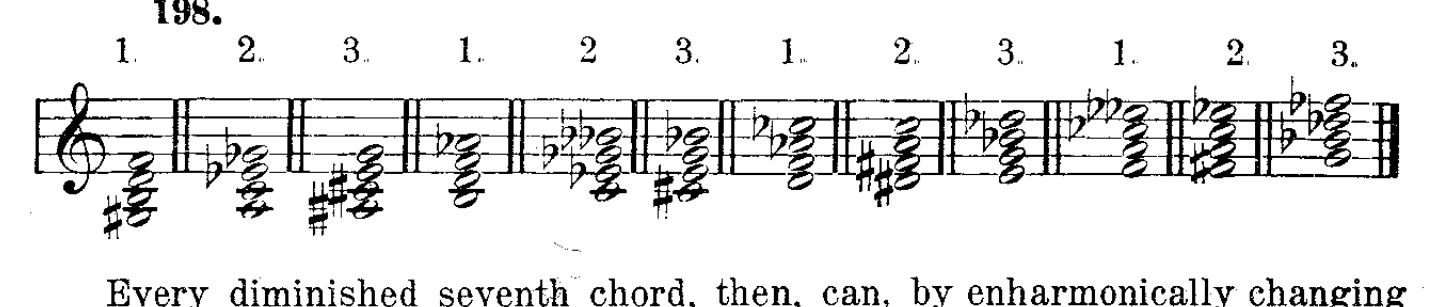
Fig. 242 · See it in the reader § 61. The diminished seventh chord consists of three minor thirds erected one on the other. In the inversions of the chord, we obtain in place of minor thirds, their enharmonic equivalents—angmented seconds. If we now substitute these augmented seconds by the corresponding minor thirds, each inversion thus enharmonically changed gives us a new diminished seventh chord.
Fig. 243 · Play this example in the reader ▶ a-minor C-minor e flat-minor g flat-minor
So that every diminished seventh chord is the equivalent of three other diminished seventh chords. Twelve keys, in all, are known | to us; consequently we recognize but three diminished seventh chords distinct in sound.
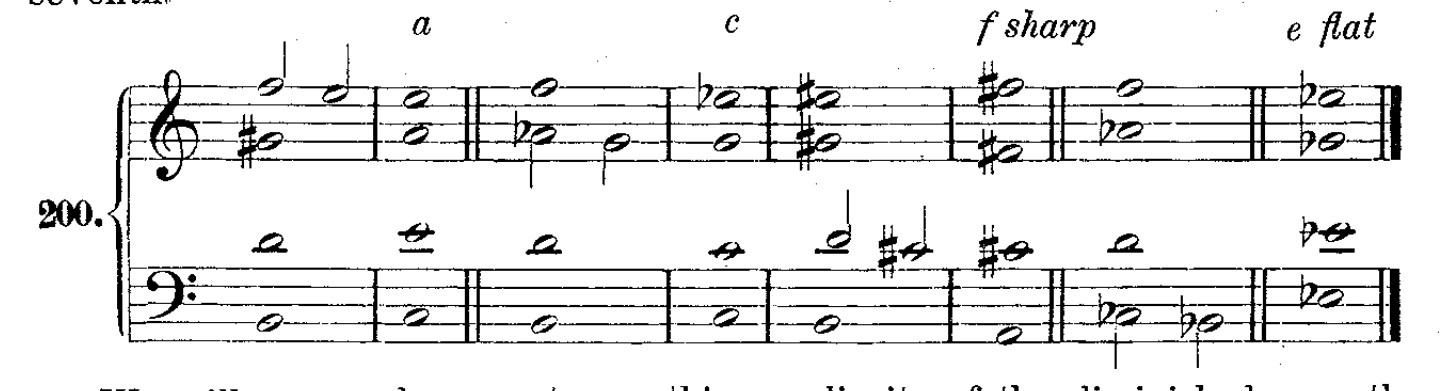
Fig. 244 · Play this example in the reader ▶ Every diminished seventh chord, then, can, by enharmonically changing its intervals, be resolved into four distinct triads.
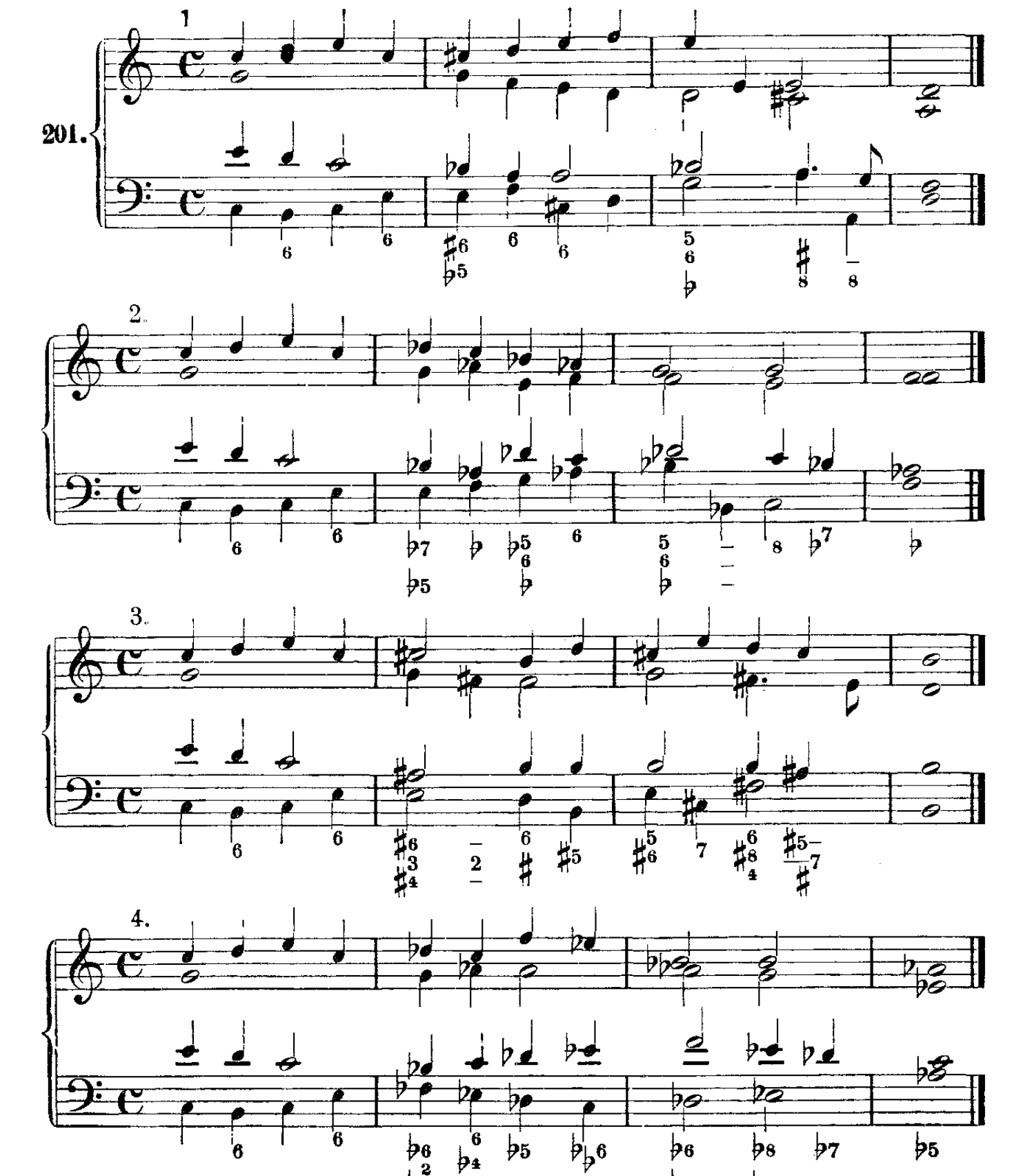
Fig. 245 · Play this example in the reader ▶ Fig. 246 · Play this example in the reader ▶ We will now endeavour to use this peculiarity of the diminished seventh chord for purposes of modulation.
Fig. 247 · See it in the reader Exercise. Make modulations from different keys employing in each case all tour resolutions of the diminished seventh chord.
← Chapter XX. Harmonization of given melodies with modulations All sections Chapter XXII. The Organ-point → More Playable Books Reger, Modulation Explore Reger’s modulation method with 100 analyses and 102 playable examples. Fux, Counterpoint Learn how independent voices work together, one species at a time. Goetschius, Exercises in Elementary Counterpoint Build independent melodies through graded exercises, with 471 recorded examples. Goetschius, Counterpoint Applied Study imitation, canon, and fugue with 393 recorded examples. Prout, Bach’s Forty-Eight Fugues Follow Prout through all 48 fugues of the Well-Tempered Clavier, every example playable. Rameau, Treatise on Harmony Explore the foundations of harmony, composition, and accompaniment. Rimsky-Korsakov, Practical Manual of Harmony The classic harmony course, newly translated from the 1910 French edition, with all 640 examples playable. Schoenberg, Theory of Harmony Read all 22 chapters, with the original German beside a new English translation. Rimsky-Korsakov, Principles of Orchestration Discover instrumental colors through scores and orchestral recordings. Forsyth, Orchestration A witty, thorough guide to every orchestral instrument, with the original pages. Berlioz, Treatise on Instrumentation Berlioz’s treatise on the orchestra, revised by Richard Strauss, with the original pages. Sanganeria, Arrival Build jazz lines that land, with 30 original playable examples. Bona, Rhythmical Articulation Practice rhythm through 120 graded studies, with playable notation and original scans. ← All Playable Books  Playable Books