 Playable Books
Concept index · Dissonance and embellishment
Nota cambiata
Taught in 3 books. Each one opens at the passage; ▶ plays the example beside it. Also called cambiata, changing note.
This index is Playable Books’ own: a first pass that finds the term’s words in each book, corrected by hand. The authors did not tag these passages, and their terms can differ (Fux’s “ligature” is a suspension). The quoted text is the book’s.
 Gradus ad ParnassumJohann Joseph Fux, 1725
- Third species counterpoint: four notes against one
A second case in which the common rule is departed from is the changed note, called Cambiata by the Italians, where from the second, dissonant note the progression is made by leap into a consonance, as may be seen in the following examples.
▶ Fig. 48 nearby
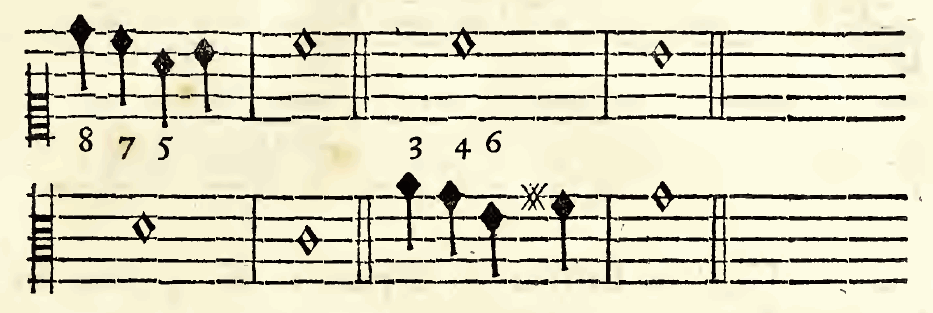 ▶ Fig. 48
 Guide to the Practical Study of HarmonyPyotr Ilyich Tchaikovsky, 1900
- Chapter XXII. The Organ-point
…when tones strange to the chord make their entrance—passing and changing notes.
▶ Fig. 222 nearby - Chapter XXIV. Anticipation
§ 80. Very similar to the anticipation is the so-called,Cambiata“. This is a note lying one step below the preceding note of the voice and progressing by a skip downward into the nearest interval of the following chord.
▶ Fig. 257 nearby - Chapter XXIV. Anticipation
The other ones, as well as the cambiata he will find opportunity to employ later on.
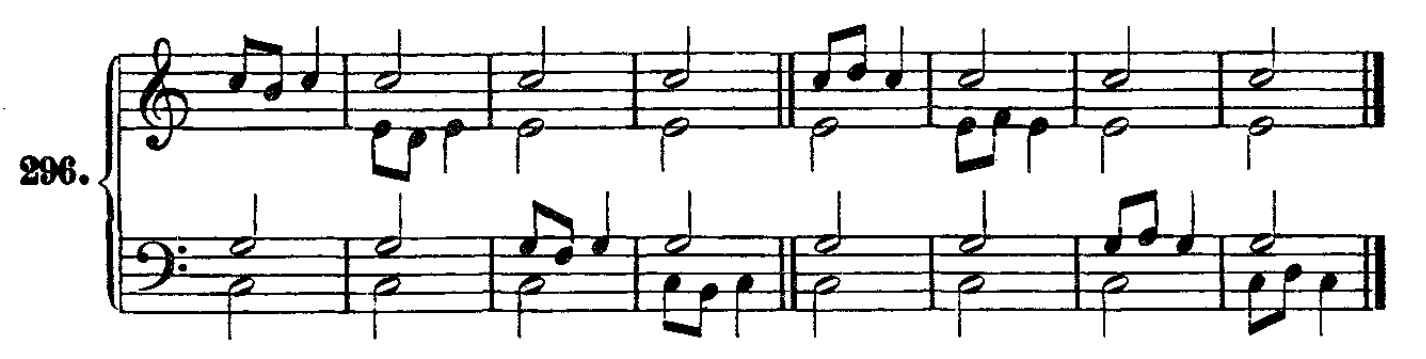
▶ Fig. 259 nearby - Chapter XXVIII. Changing-notes
§ 107. Changing notes fall on relatively unaccented beats, similarly to two identical harmonic notes. Every note of the chord has two changingnotes, one above and the other below.
▶ Fig. 310 nearby - Chapter XXVIII. Changing-notes
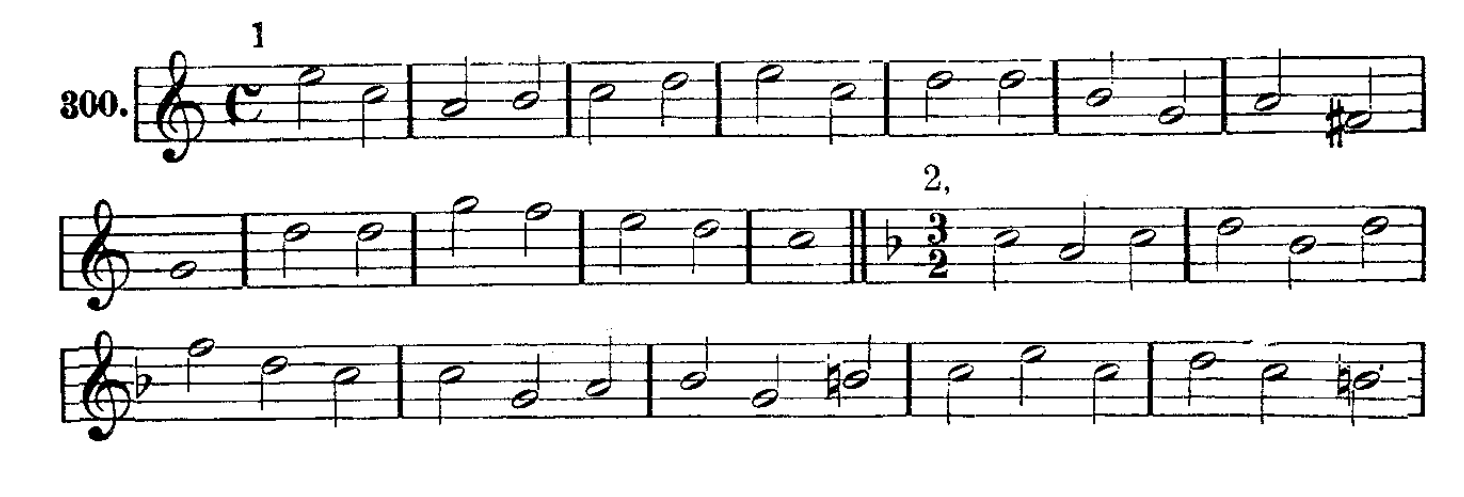
Exercise. In the harmonization of the following melodies seek appropriately to employ passing—and changing notes.
▶ Fig. 314 nearby - Chapter XXVIII. Changing-notes
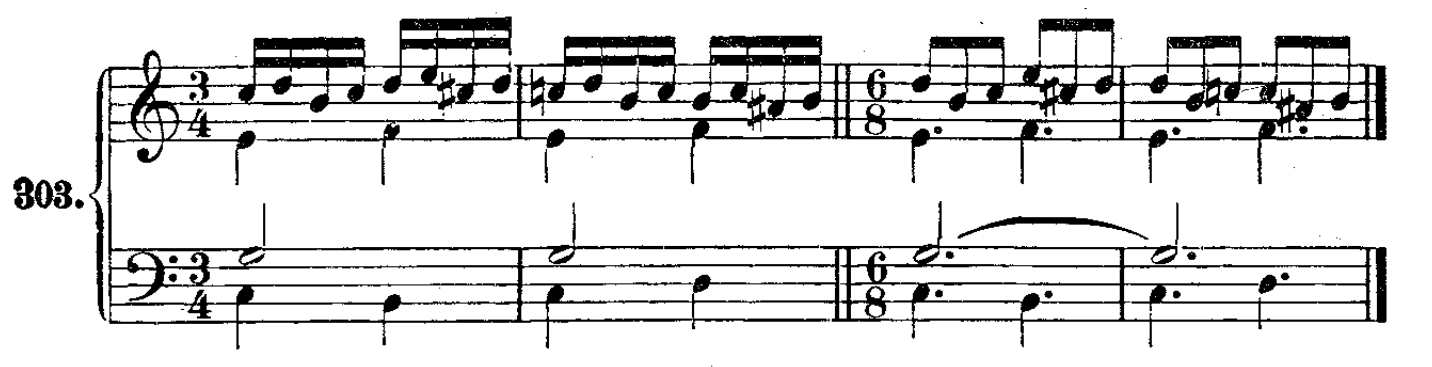
…notes. The d sharp in the Bass and the g sharp in the Soprano are merely changing notes entering by a skip.
▶ Fig. 317 nearby
5 more passages in Guide to the Practical Study of Harmony →
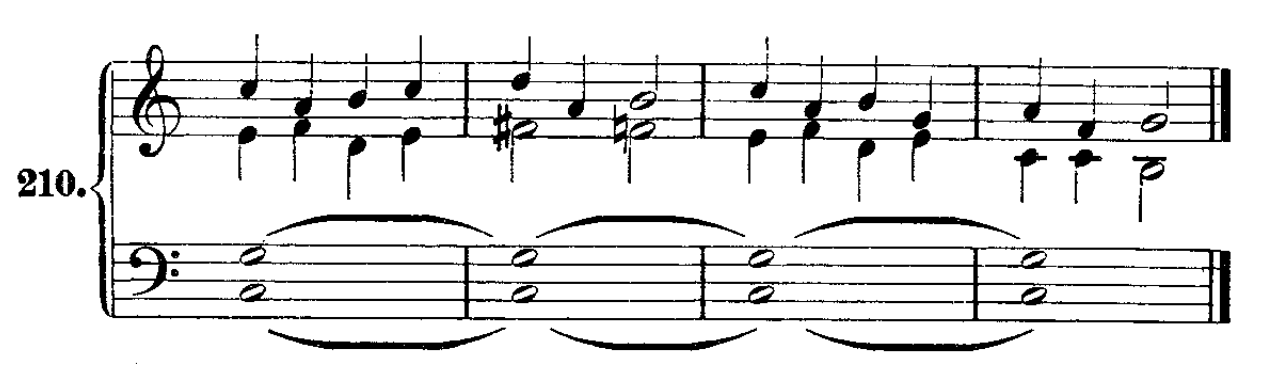 ▶ Fig. 222
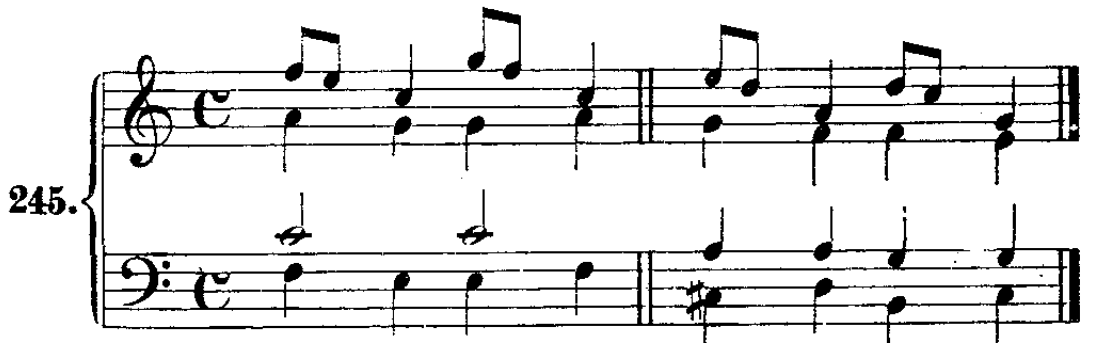 ▶ Fig. 257
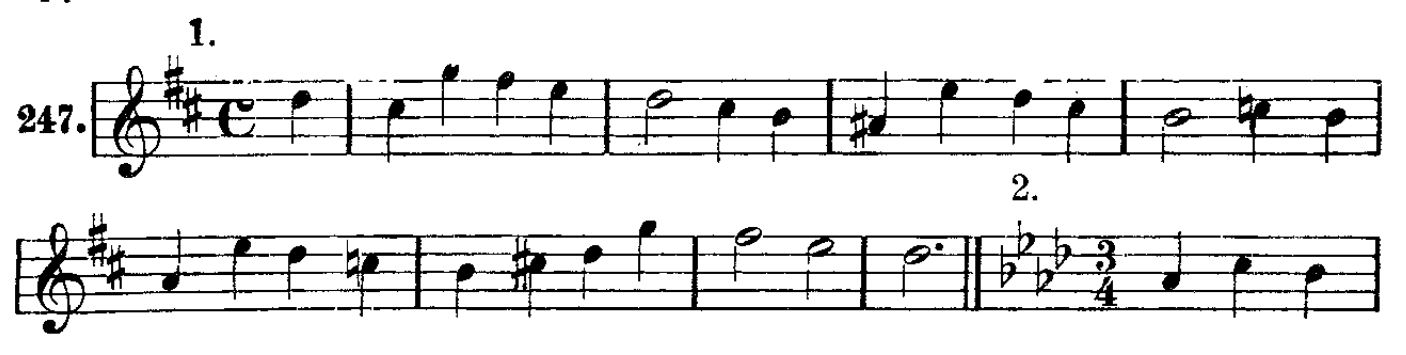 ▶ Fig. 259
 ▶ Fig. 310
 ▶ Fig. 314
 ▶ Fig. 317
 Theory of HarmonyArnold Schoenberg, 1922
- Secondary Dominants and Modal Chords · Footnote
…this is contradicted by the circumstance that Fux’s Wechselnote is called cambiata (from cambiare) in Italian, and that cambia valute (exchange office) and changer (to change) testify that in the Romance languages, without recourse to vexieren (to annoy,…
▶ Fig. 191 nearby - Meter and Harmony
…according to which a harmonic skeleton is to be clothed with passing notes, changing notes and other ornaments. This method recalls the kind of master-builder architecture that, in imitation forgetful of all meaning—for the technical reasons and the…
▶ Fig. 243 nearby - “Nonharmonic” Notes
…to harmony, but only notes foreign to the harmonic system. Passing notes, changing notes, suspensions, etc. are, like sevenths and ninths, nothing but attempts to include something that sounds like the more remote overtones among the possibilities of…
▶ Fig. 435 nearby - Suspensions and Other Nonharmonic Tones
…After all, the student need not bring in an excessive number of passing and changing notes as long as they do not yet occur to him. Admittedly, the pedagogical purpose that the generally customary exercise can serve is certainly not objectionable: it forces…
▶ Fig. 465 nearby - Suspensions and Other Nonharmonic Tones
The changing note is best explained as a written-out grace (Manier) or as a motive. Usually, at least in its simplest forms, it belongs to a figure that consists of one or more nonharmonic notes and circumscribes a consonant note.
▶ Fig. 465 nearby - Suspensions and Other Nonharmonic Tones
…for such standing formulas, which, performed slowly, are unquestionably changing notes, even if one will not grant that they are so in rapid succession as well. Admittedly, these are almost without exception cases where a note is circumscribed by the nearest…
▶ Fig. 467 nearby
 ▶ Example 132
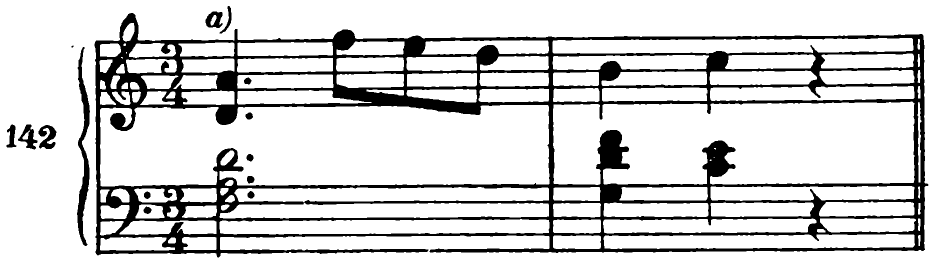 ▶ Example 142a
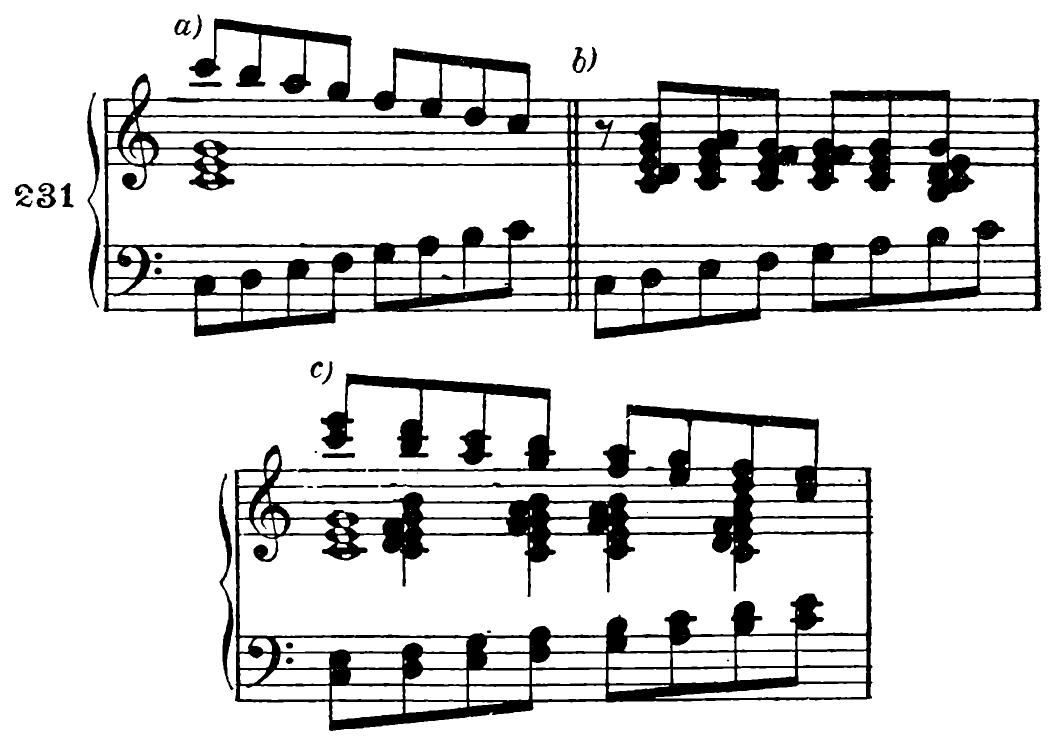 ▶ Example 231a
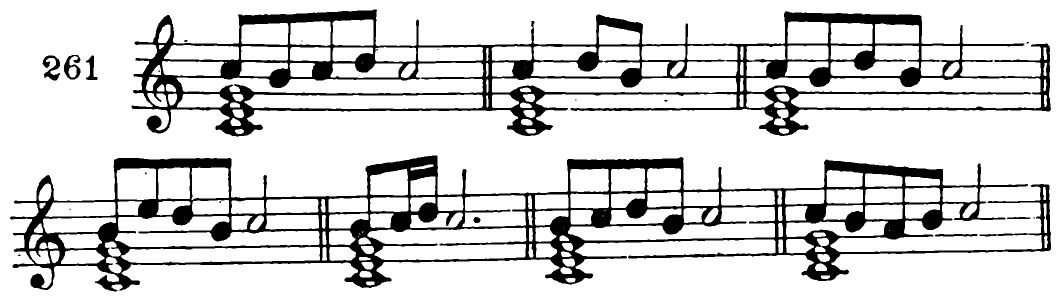 ▶ Example 261
 ▶ Example 263
More in Dissonance and embellishment
Suspension · Passing notes · Neighbor notes · Anticipation · Appoggiatura · Pedal point