 Playable Books
Concept index · Dissonance and embellishment
Suspension
Taught in 14 books. Each one opens at the passage; ▶ plays the example beside it. Also called suspensions, ligature, retardation.
This index is Playable Books’ own: a first pass that finds the term’s words in each book, corrected by hand. The authors did not tag these passages, and their terms can differ (Fux’s “ligature” is a suspension). The quoted text is the book’s.
 Gradus ad ParnassumJohann Joseph Fux, 1725
Start: Fourth species counterpoint: syncopation and suspensions →- Fourth species in three voices: ligatures · 18 playable examples
- Fourth species counterpoint: syncopation and suspensions
…But you will sometimes encounter a measure in which there is no room for a ligature; in that case the measure must be filled with untied minims until the opportunity to make a ligature presents itself. Come, and apply yourself to ligatures.
▶ Fig. 73 nearby - Fourth species counterpoint: syncopation and suspensions
You have done well, indeed; but why did you omit the ligature in the fifth measure? It could have been made if, after that third, you had used a fifth. That would have been the first note of the ligature, and, remaining on the same staff line, you would have…
▶ Fig. 73 nearby - Fifth species counterpoint: florid counterpoint
…that when two semiminims are placed at the beginning of a measure without a ligature immediately following, the melodic line seems to limp. Therefore, if you wish to use only two semiminims at the beginning of a measure, it will be more advisable to bind them…
▶ Fig. 90 nearby - Fourth species in three voices: ligatures
Here we must recall what was said about ligatures in two voices. Their manner of construction is not to be changed at all in three voices, but must be observed exactly. We need now only explain how the accompanying concordance is to be arranged when the third…
▶ Fig. 139 nearby - Fourth species in three voices: ligatures
Joseph. If ligatures change nothing, as was said, the first example with ligatures given a little earlier will be just as faulty as the second. Therefore, just as in the second example, with the ligatures removed, an immediate succession of several fifths…
▶ Fig. 143 nearby - Fourth species in four voices
From the lessons in two and three voices it is known that ligatures follow the completed species of semiminims, and I likewise assume that their nature is already understood. It remains now to explain which accompanying concordances ligatures require in four…
▶ Fig. 210 nearby
38 more passages in Gradus ad Parnassum →
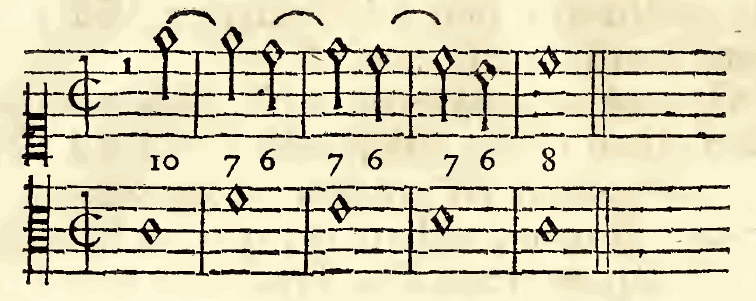 ▶ Fig. 62
Fourth species counterpoint: syncopation and suspensions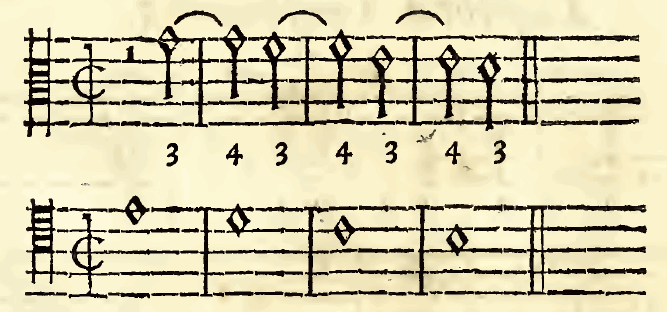 ▶ Fig. 63
Fourth species counterpoint: syncopation and suspensions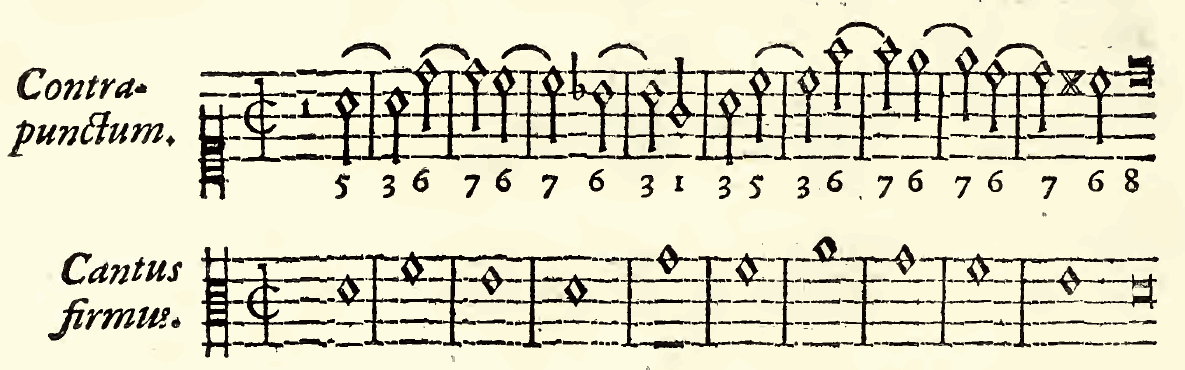 ▶ Fig. 73
Fourth species counterpoint: syncopation and suspensions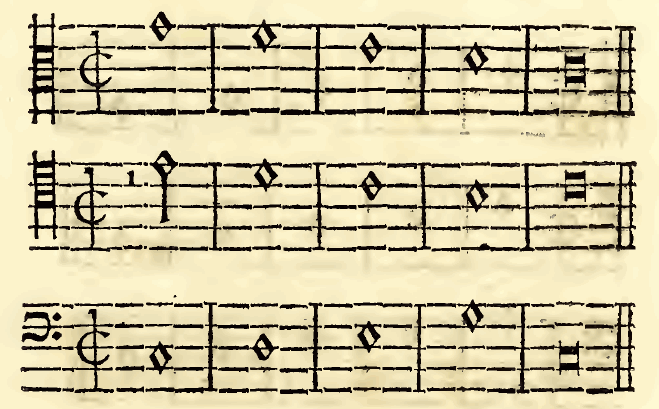 ▶ Fig. 139
Fourth species in three voices: ligatures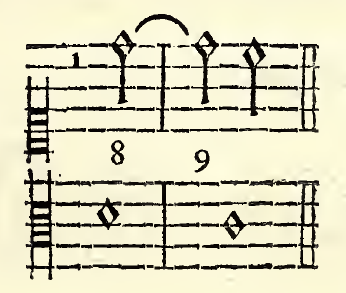 ▶ Fig. 143
Fourth species in three voices: ligatures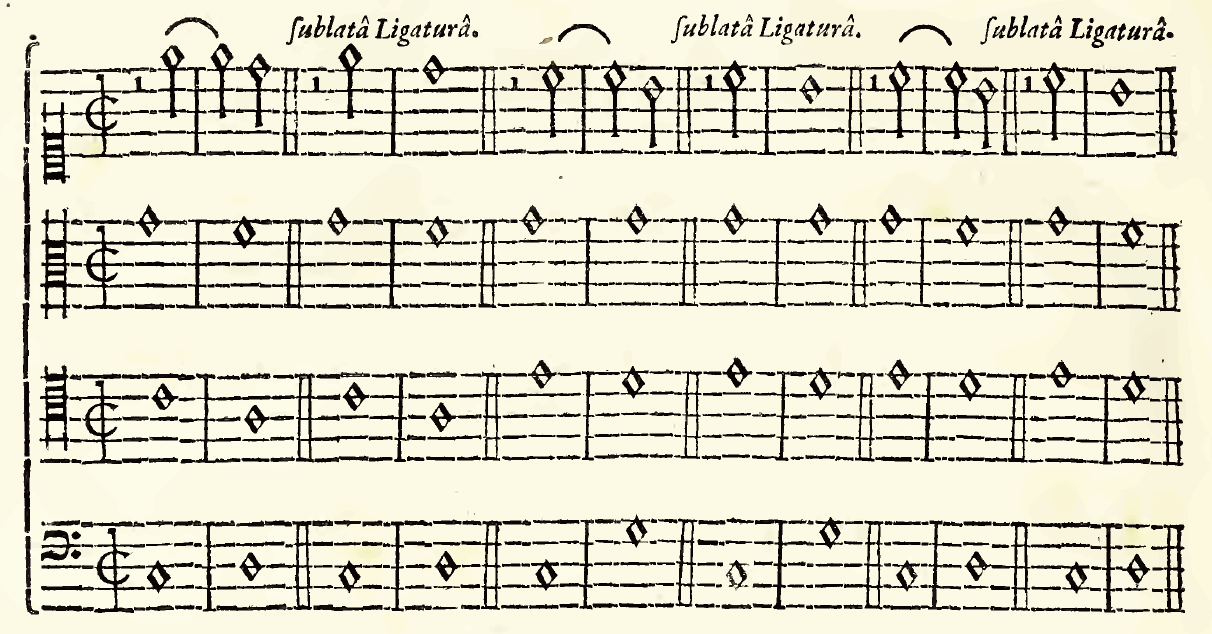 ▶ Fig. 210
Fourth species in four voices
 Exercises in Elementary CounterpointPercy Goetschius, 1910
Start: Chapter X. Syncopation, Or Shifted Rhythm →- Chapter XI. The Tie, Continued. Rests
…it is a foreign tone and strives for resolution. Such tones are called Suspensions, because they hold the correct harmonic tone " in suspense." Here, the second d " suspends " the real chord-tone c.
▶ Fig. 178 nearby - Chapter XI. The Tie, Continued. Rests
The second group is not wholly wrong, as the tied note is a suspension; and suspensions are rarely limited in their time-value. Groups 1 and 4 are intolerable, because the tying notes are abrupt anticipations.
▶ Fig. 179 nearby - Chapter XI. The Tie, Continued. Rests
…a tie, it is always best to make the tied note (the second one of the two) a suspension. In other words, the tied tone had best be foreign to the harmony of its beat, and then progress stepwise into the essential harmonic tone. In still other words, it is…
▶ Fig. 180 nearby - Chapter XI. The Tie, Continued. Rests
In the last measure, the suspension f is treated as upper neighbor, and carried over into the lower neighbor before resolving to e. See par. 92-7.
▶ Fig. 180 nearby - Chapter XI. The Tie, Continued. Rests
106. In the above example, each tied note was a suspension; the effect is therefore good.
▶ Fig. 181 nearby - Chapter XI. The Tie, Continued. Rests
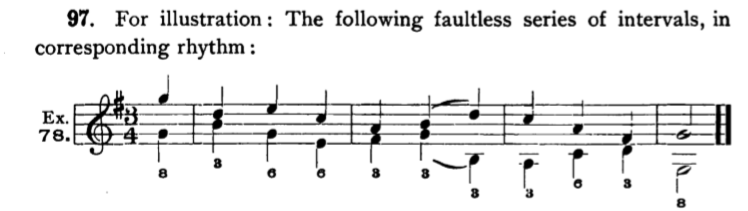
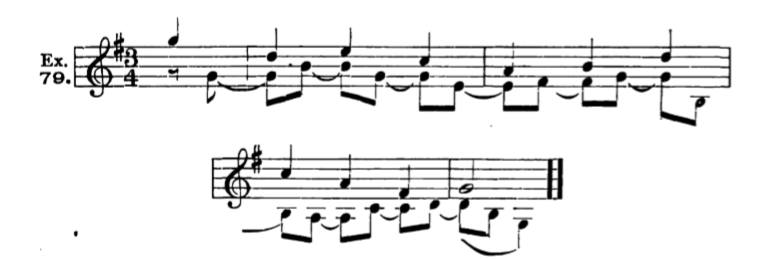
There, not every tied note is a suspension, but often a " good " interval,—in exact keeping with the faultless model, from which it was derived by merely shifting the notes forward.
▶ Fig. 182 nearby
 ▶ Ex.78
 ▶ Ex.79
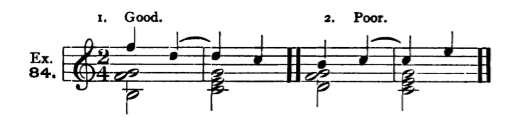 ▶ Ex.84-2
 ▶ Ex.85
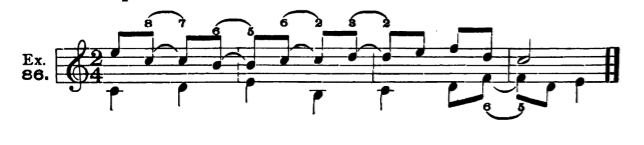 ▶ Ex.86
 ▶ Ex.87
 Counterpoint AppliedPercy Goetschius, 1902
- Chapter I
(2) It is possible to make an indirect or " ornamental " resolution of a Suspension, and of similar dissonant tones. Thus:
▶ Fig. 14 nearby - Chapter I
The interposed tones (marked × x), inserted between the Suspension and its resolving-tone, usually belong to the resolving-chord, as seen in the above illustra. tions; but brief diatonic passing-notes may be added. Thus:
▶ Fig. 15 nearby - Chapter I
That of all chord-sevenths, chord-ninths, and diminished 5ths and 7ths to descend; that of all raised (altered) scale-steps to ascend; that of all lowered scale-steps to descend; and that of Suspensions to pass into their respective resolving-tones.
▶ Fig. 31 nearby - Chapter I
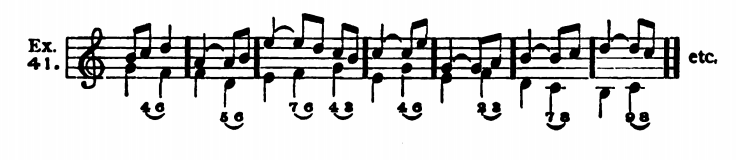
d. A brief tie, from a tone of less than half-beat duration (see b), is best justified when it gives rise to a Suspension:
▶ Fig. 50 nearby - Chapter I
provides for any " resolution" that may be necessary, — for example, in case of a Suspension);
▶ Fig. 52 nearby - Chapter II
…an unobjectionable one, — as transient (passing) note, neighboring-note, or suspension; and must be employed in such a manner as to confirm the distinction between unessential and essential tones. That is, the objectionable interval must be followed…
▶ Fig. 70 nearby
 ▶ Ex9-B
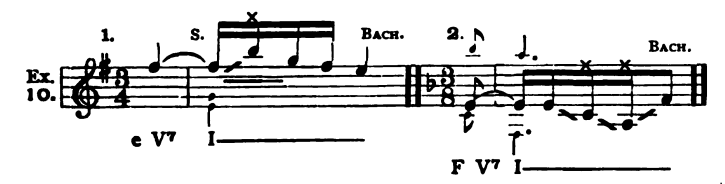 ▶ Ex10
 ▶ Ex21
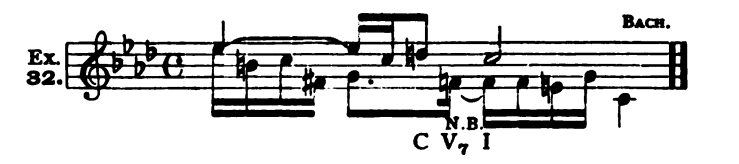 ▶ Ex32
 ▶ Ex33-2
 ▶ Ex41
 Treatise on HarmonyJean-Philippe Rameau, 1722
Start: Chapter fifteen →- Chapter thirteen
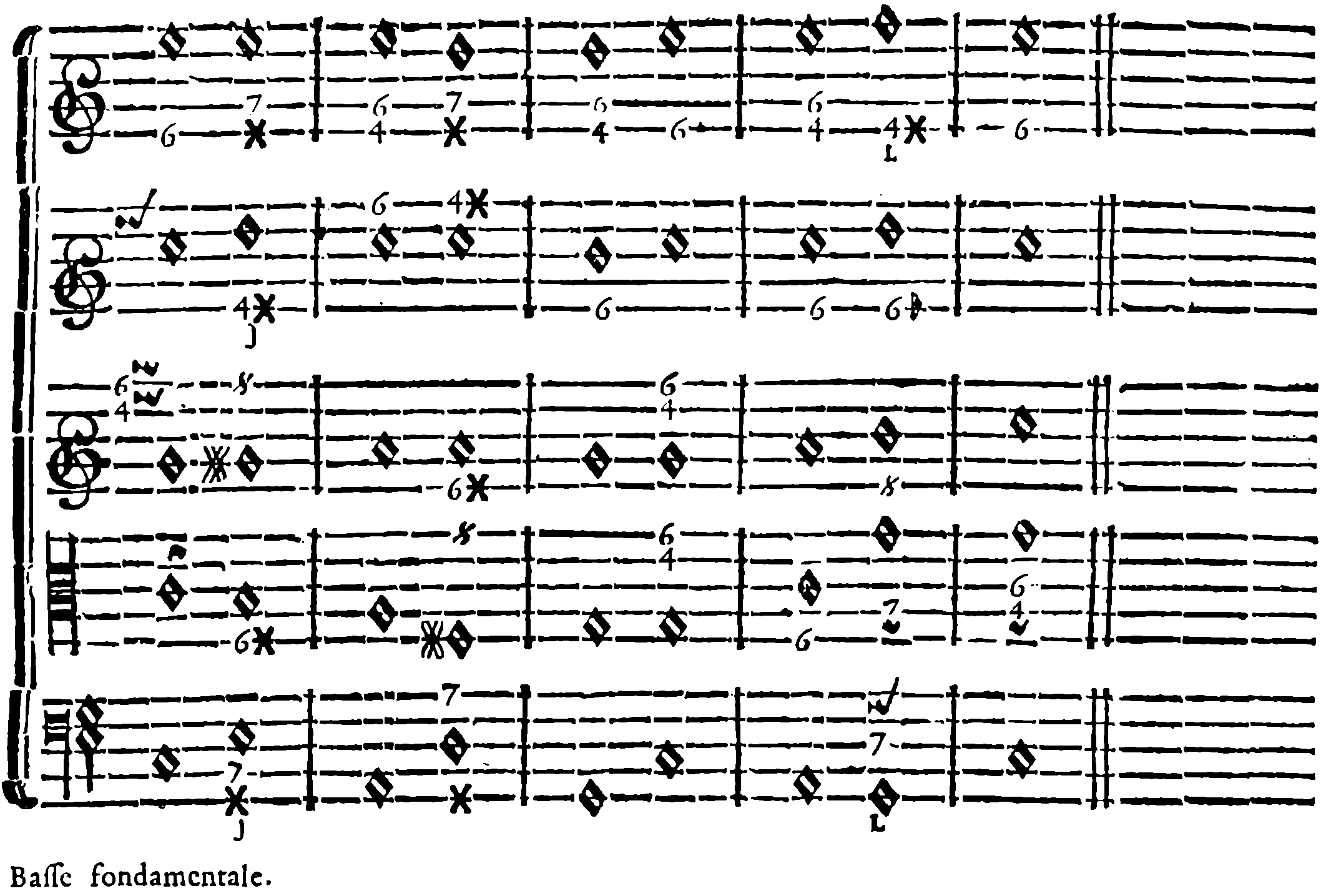
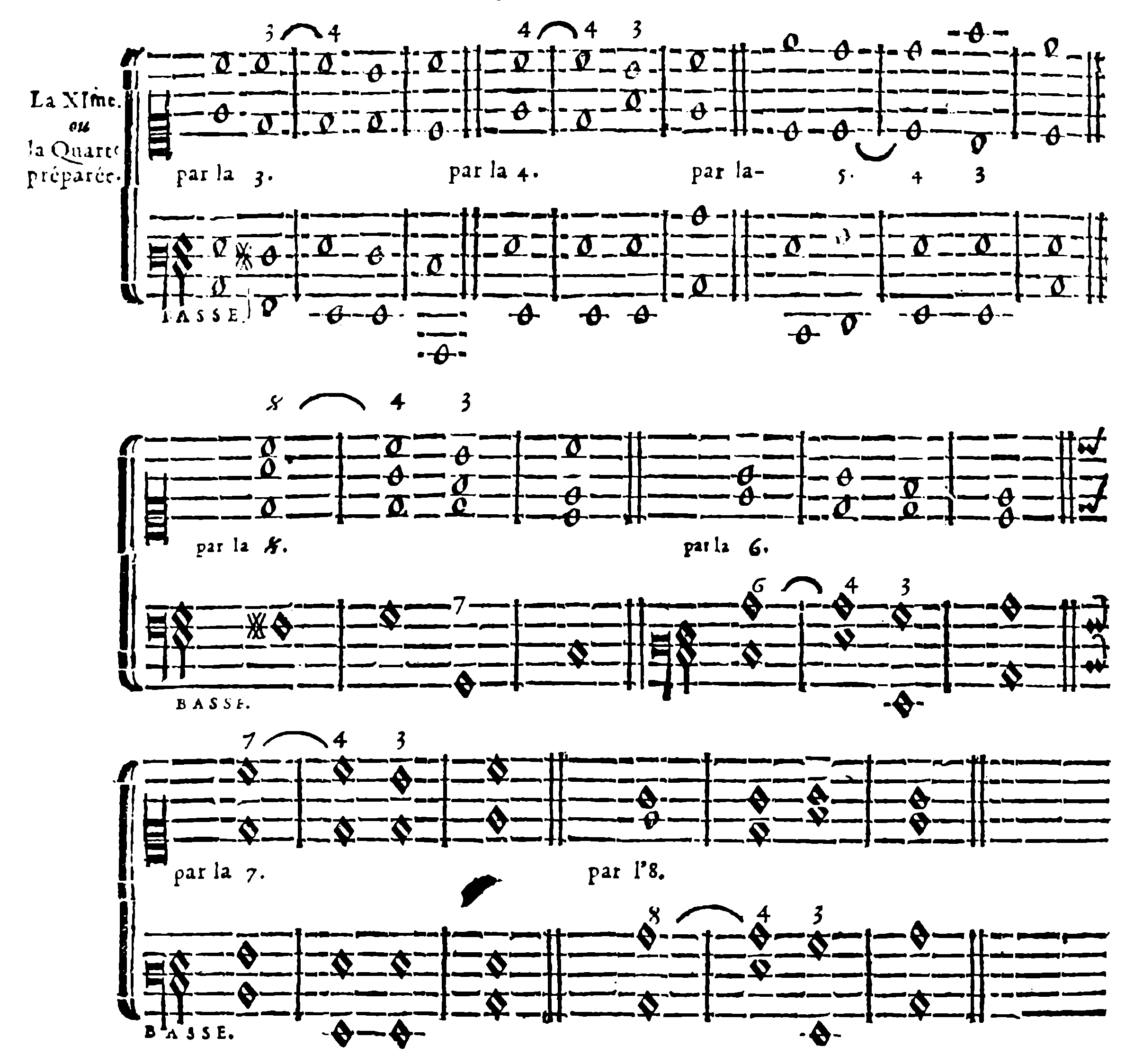
…Otherwise one of harmony's finest ornaments would have to be destroyed: its suspension through several dissonances, prepared by consonances accompanying those very dissonances. It is better to say that the rule applies only to the first dissonance, as at B. If…
▶ Fig. 63 nearby - Chapter fifteen
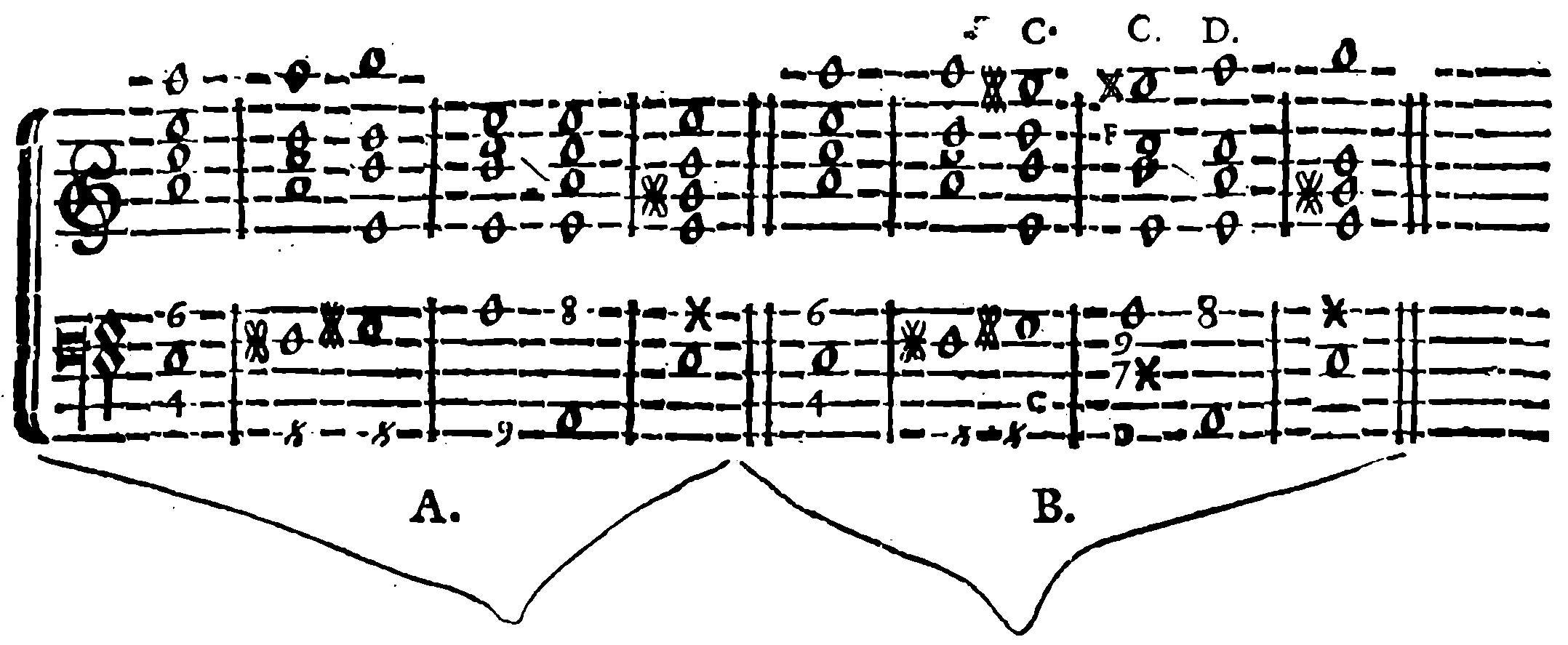
…remains on the same degree before proceeding to that sound, the resulting suspension deeply offends the ear, destroying the satisfaction that should have come from the consonance that first followed the dissonance. But if the duplicate descends, as a seventh…
▶ Fig. 75 nearby - Chapter seventeen
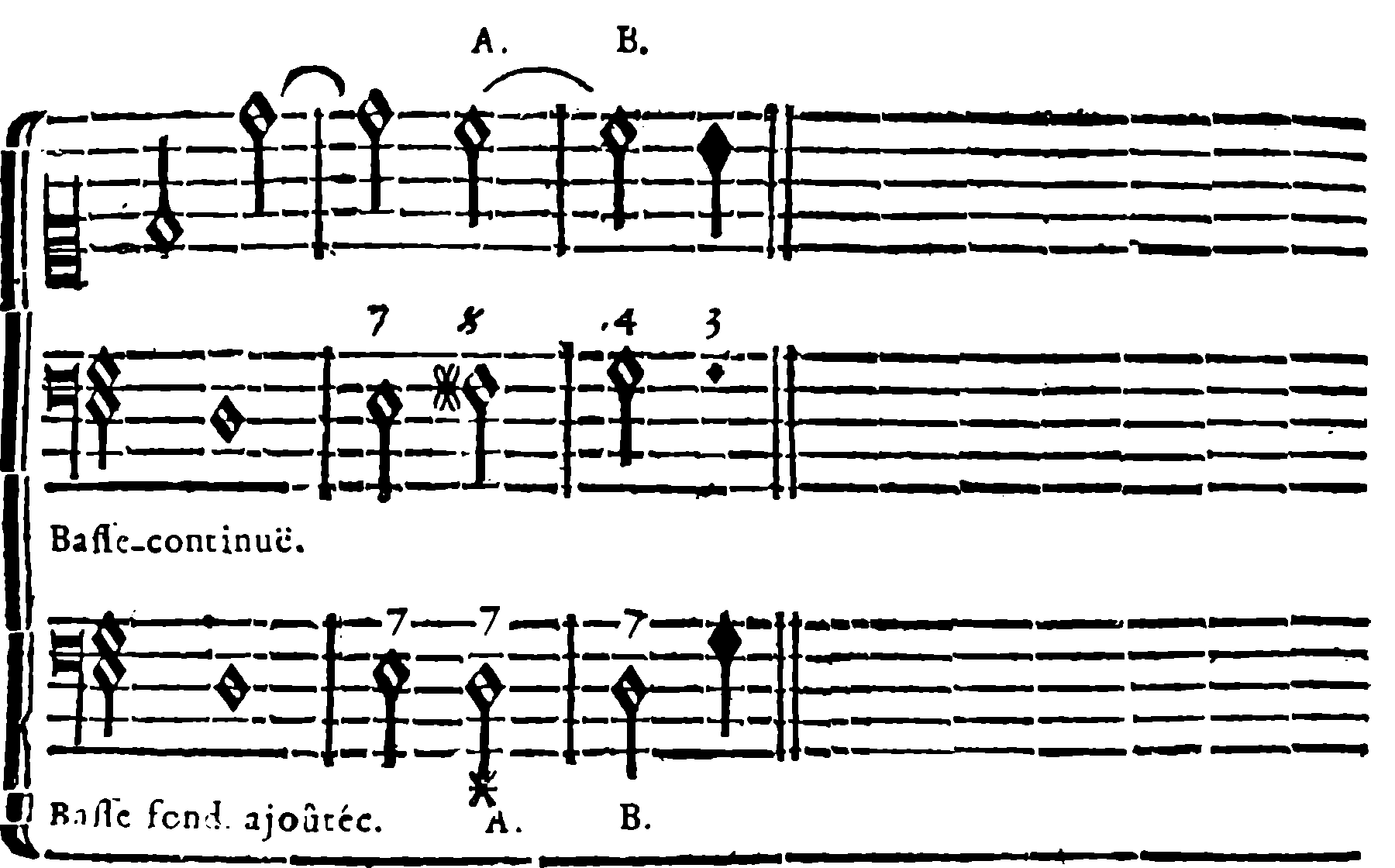
Brossard says on page 131 that a syncopated dissonance is often followed by a diminished fifth, which is often followed by a syncopated fourth, the diminished fifth serving as a sort of preparation. This satisfies only those who know it already. It misleads…
▶ Fig. 95 nearby - Chapter thirty-one
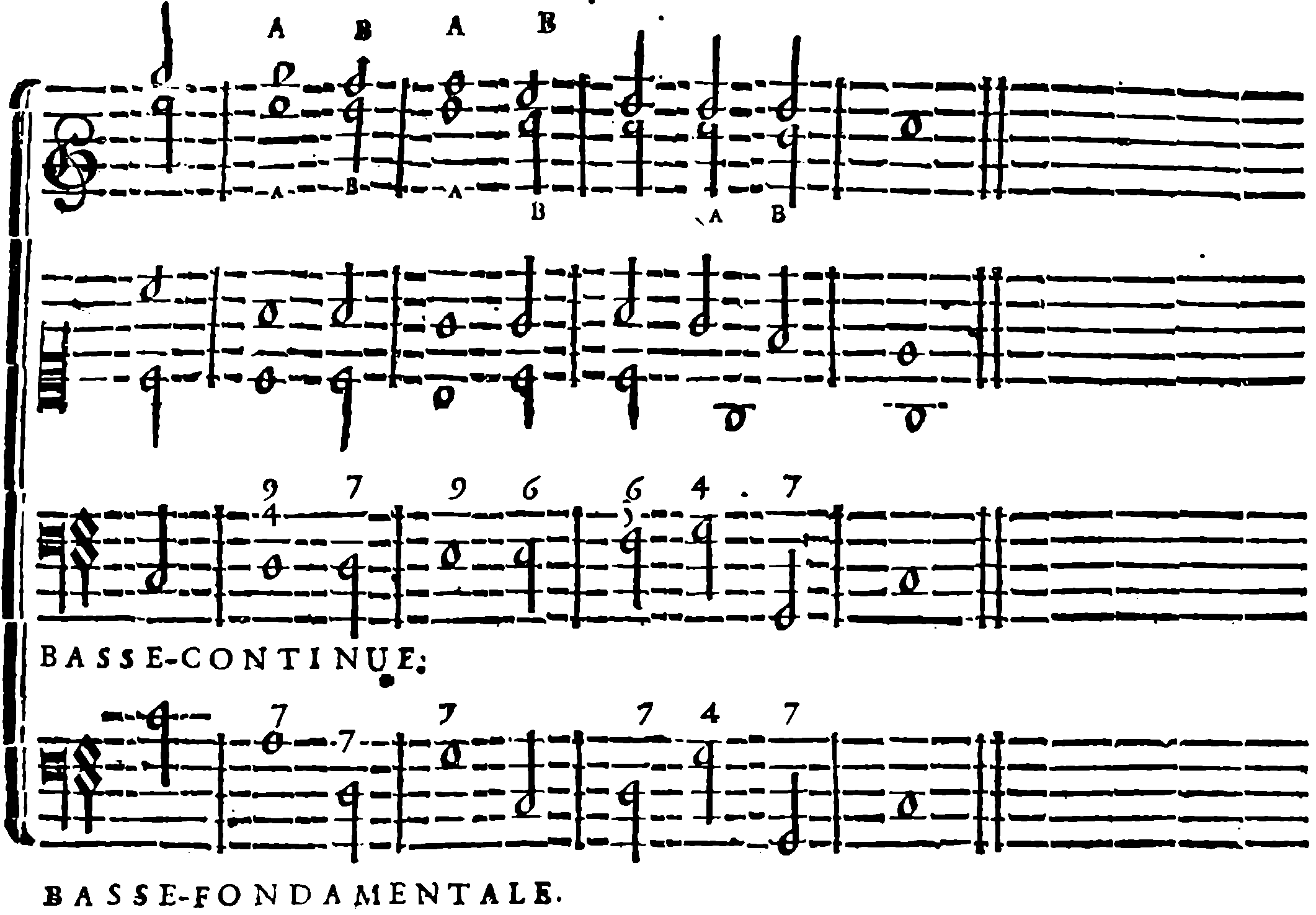
…full extent, although, when aptly employed, it sometimes provides pleasing suspensions of harmony and melody.
▶ Fig. 281 nearby
 ▶ Fig. 63
 ▶ Fig. 75
 ▶ Fig. 95
 ▶ Fig. 219
 ▶ Fig. 281
 Practical Manual of HarmonyNikolai Rimsky-Korsakov, 1910
Start: General Principles →- Suspensions
- Descending Suspensions · 8 playable examples
- Ascending and simultaneous suspensions · 4 playable examples
- Example of harmonic progressions with ascending and simultaneous suspensions · 2 playable examples
- Suspension of the diminished octave or of the augmented unison · 2 playable examples
- 27 (Suspensions) · 4 playable examples
- General Principles
§ 69. — 1) When a part, in passing from one chord to another, momentarily halts its stepwise motion and prolongs its entry into the second chord, it produces the device called retardation or suspension.
▶ Fig. 283 nearby - General Principles
According to the motion of the part, the suspension may be ascending or descending. The suspension must always fall on the strong beat of the bar or on the strong part of a beat; the preparation may be on the weak beat or on the strong beat of the preceding…
▶ Fig. 283 nearby - General Principles
2) The suspension must form a dissonant chord or an incidental combination. In his exercises the student will do well to refrain from consonant suspensions.
▶ Fig. 285 nearby - Descending Suspensions
§ 70.— 1) The note on which the descending suspension resolves must not be present in another part at the moment of the suspension:
▶ Fig. 289 nearby - Descending Suspensions
4) At the moment the descending suspension resolves, the other parts may change position and may even form a new chord, provided that the suspension is correctly resolved onto a consonance:
▶ Fig. 293 nearby - Melodic Ornamentation in the Strict Style
7) The descending suspension may be ornamented with the lower auxiliary of the delayed note, and the ascending suspension with the upper auxiliary; both are taken at the third from the suspension:
▶ Fig. 316 nearby
29 more passages in Practical Manual of Harmony →
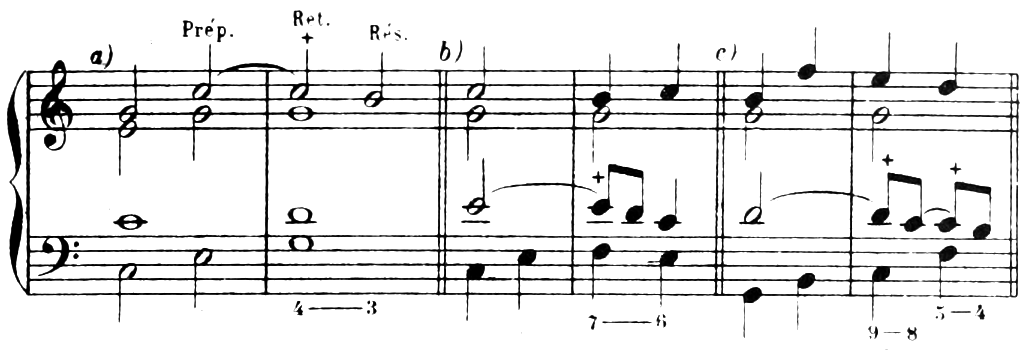 ▶ Example: a) Prep(aration), Sus(pension, +), Res(olution): soprano C held over from the C major chord into the G chord, resolving C–B (4–3). b) Tenor E held over a bass F and resolving in eighth notes E–D (7–6) before C. c) Tenor D held over a bass C (9–8), then tenor C held over a bass F (5–4).
General Principles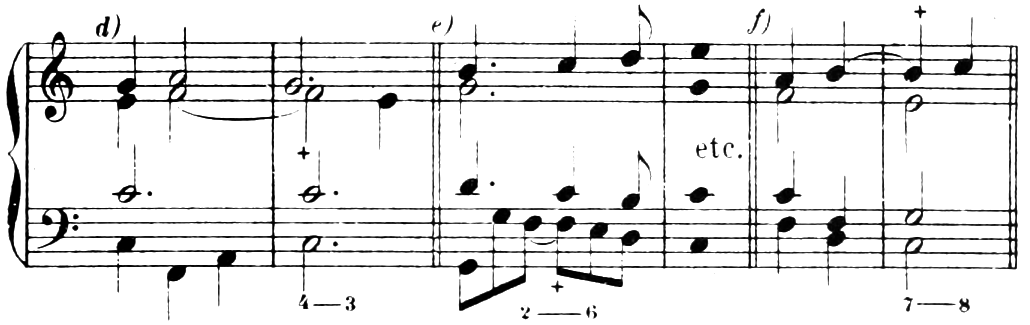 ▶ Example: d) in triple time, the alto F held over from the F chord and resolving to E on the third beat (4–3). e) The bass F held over in eighth notes (2) and resolving to E (6), then "etc." f) The soprano B held over the bass C and resolving to C (7–8).
General Principles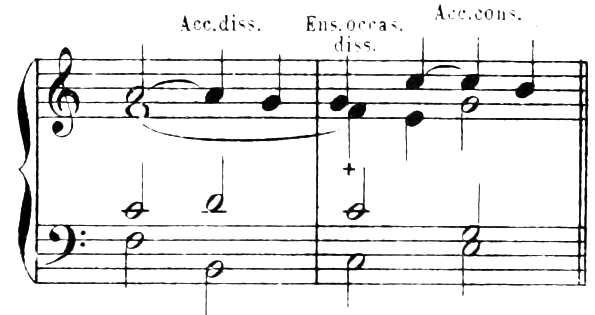 ▶ Example: a suspension forming a dissonant chord (soprano A held over B–D–F); one forming a dissonant incidental combination (alto F held over C, marked +); and a consonant suspension (soprano C held over E–G), which is to be avoided.
General Principles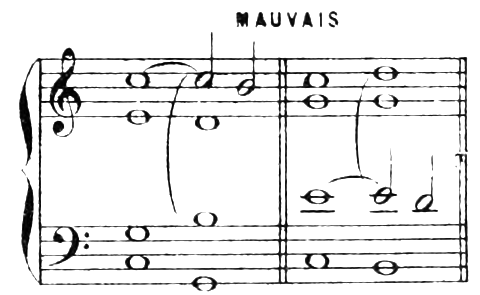 ▶ BAD: in the first fragment the soprano C is held over the G chord while the tenor already sounds B, its note of resolution; in the second, the tenor E is held over the bass B while the soprano already sounds D.
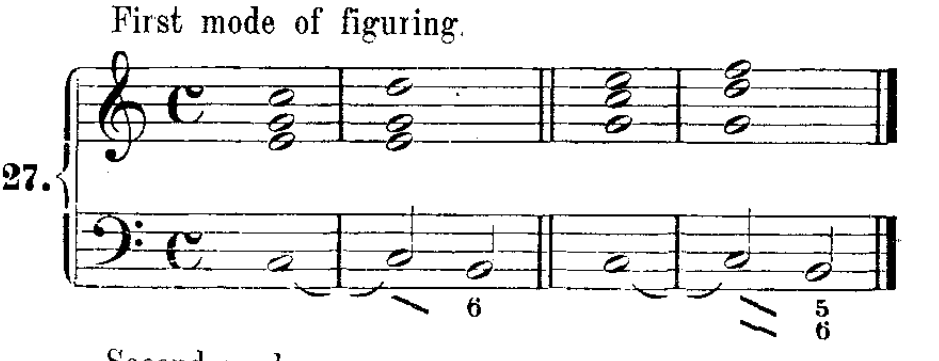
Descending Suspensions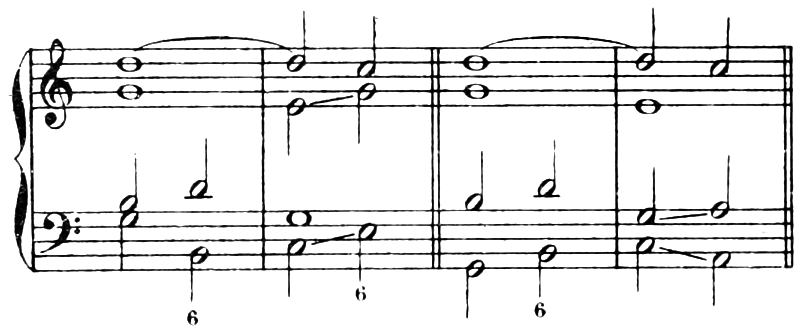 ▶ Example: the soprano's suspension D–C resolves while the other parts move (to C major in first inversion in the first pair of bars, to A minor in the second); figures 6 under the bass.
Descending Suspensions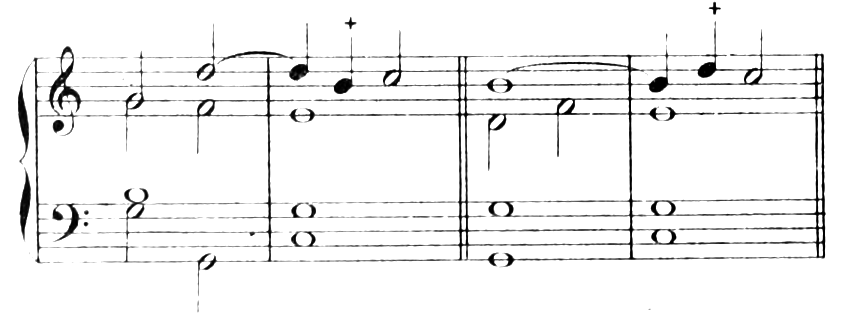 ▶ [Example]
Melodic Ornamentation in the Strict Style
 Guide to the Practical Study of HarmonyPyotr Ilyich Tchaikovsky, 1900
Start: Chapter XXIII. Suspensions →- Chapter XXIII. Suspensions
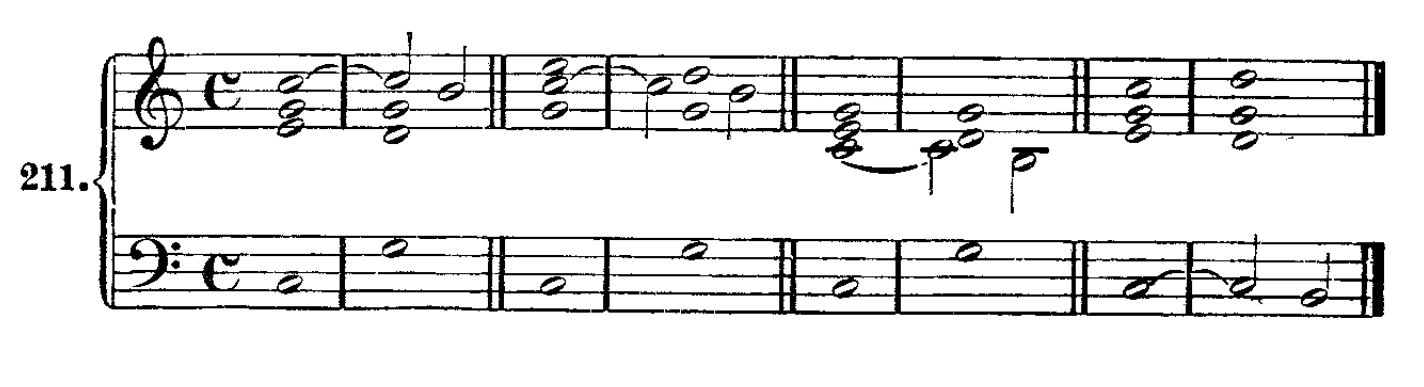
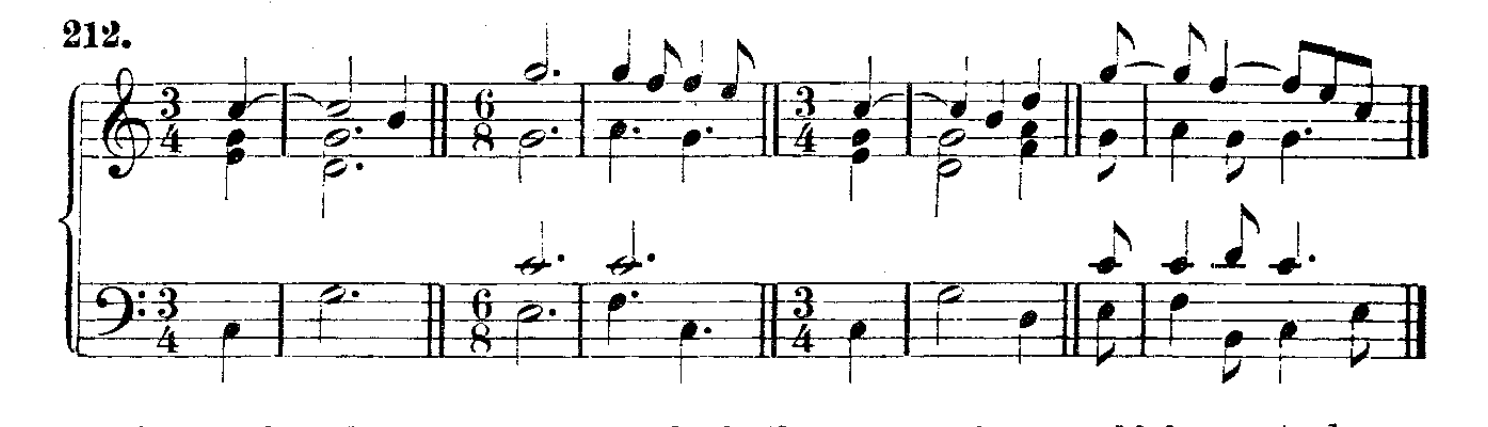
§ 70. The suspension downward appears where the voice progresses down by a step; this step may be either a major or a minor second. The suspension must be prepared and resolved. By the preparation of a suspension we mean that the note forming the suspension…
▶ Fig. 223 nearby - Chapter XXIII. Suspensions
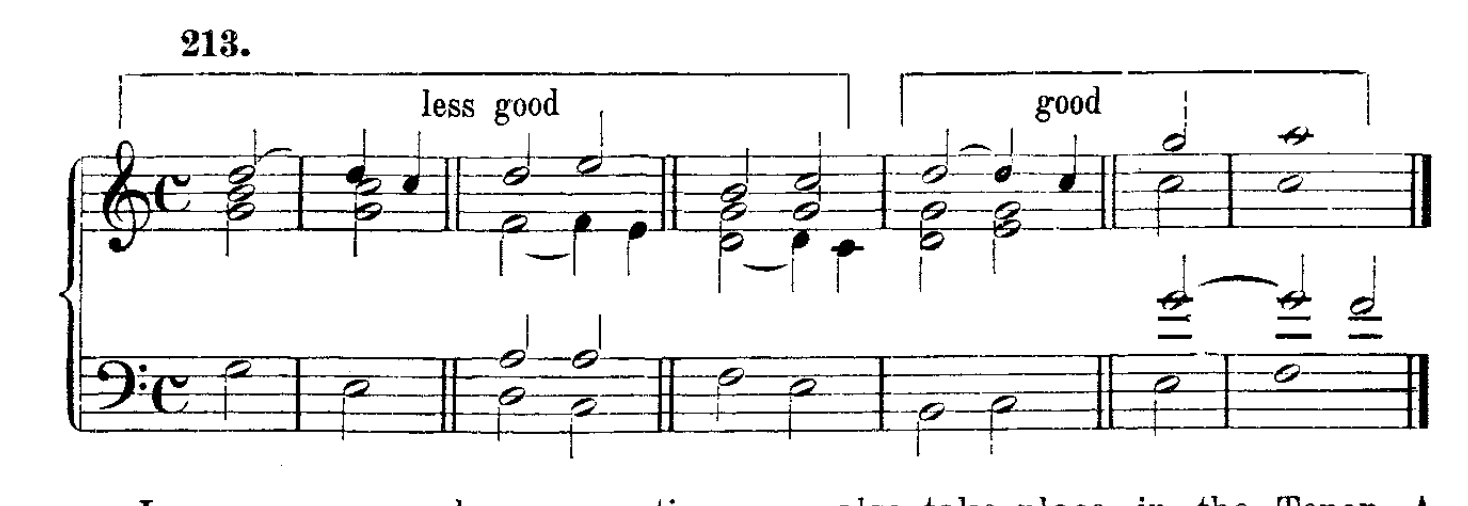
§ 71. Should the tone, into which the suspension would have to be resolved, be already contained in one of the three upper voices, no suspension can take place. The reason for this is that the musical ear tolerates the dissonance of a suspension only when it…
▶ Fig. 225 nearby - Chapter XXIII. Suspensions
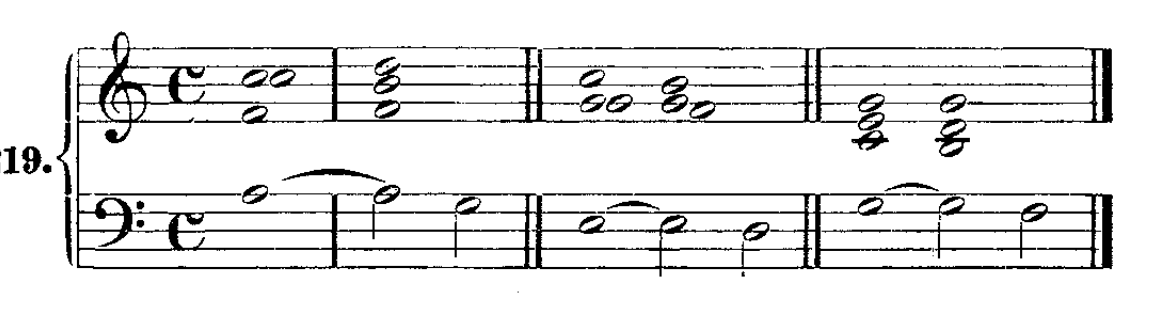
A suspension in the Bass is frequently found in the fundamental form of the Dominant-seventh chord as well as in its first two inversions; in the chord of the second, however, the suspension looses its dissonant character, as through the suspension itself the…
▶ Fig. 231 nearby - Chapter XXIII. Suspensions
Suspensions in the Bass can be figured in two different ways: a) all the intervals that result from the suspension are indicated by figures, while under the Bass note of the resolution a horizontal line is placed; b) under the chord of resolution are written…
▶ Fig. 238 nearby - Chapter XXIII. Suspensions
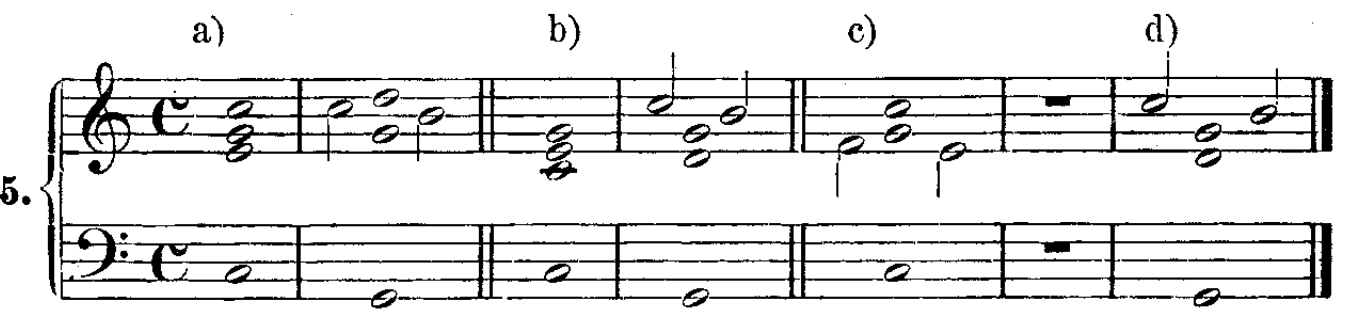
In case a) the preparation of the suspension, while appearing in the same octave, is effected by a different voice; at b) the preparation appears: neither in the same voice nor in the same octave; at c) there is no preparation at all, as the suspension…
▶ Fig. 247 nearby - Chapter XXIX. Strict Part-writing
…On this beat may also fall a changing-note following the resolution of a suspension (B). The preparation of a suspension must never be of shorter duration than the suspension itself.
▶ Fig. 337 nearby
49 more passages in Guide to the Practical Study of Harmony →
 ▶ Fig. 223
 ▶ Fig. 224
 ▶ Fig. 225
 ▶ Fig. 231
 ▶ Fig. 238
 ▶ Fig. 247
 PartimentiFedele Fenaroli, 1800
- or the Suspension of the Fourth · 3 playable examples
- or the Suspension of the Seventh · 15 playable examples
- Book I: Simple figured basses
…Rules (see the separate file). The first partimenti of this set avoid any suspensions or other dissonances. Later exercises introduce passing and suspended sevenths. A beginner can realize these basses with block chords in the right hand, or with a simple…
- Book II: Harder figured basses
…length and difficulty. They are intended to provide practice in handling suspensions of the kind introduced in Fenaroli’s Rules (see the separate file). Hint: “X” means “10.” A minimum level of realization requires that all suspensions be properly prepared and…
- or the Suspension of the Seventh
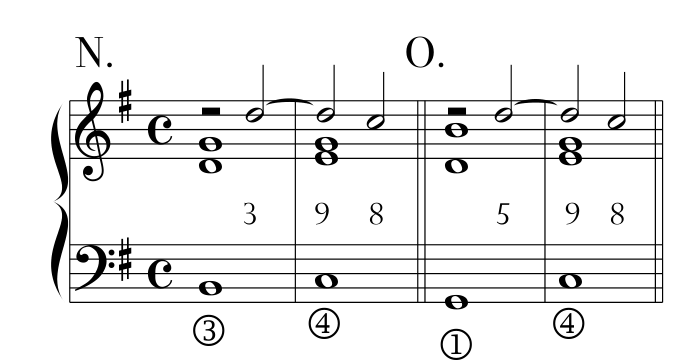
Concerning the Suspension of the Ninth.
▶ Fig. 65 nearby - or the Suspension of the Seventh
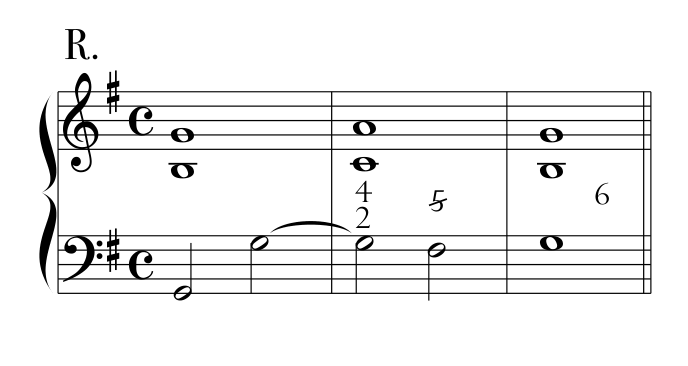
Concerning Suspensions of the Bass.
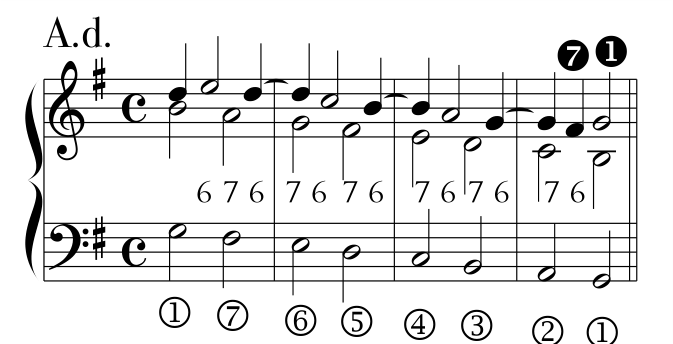
▶ Fig. 68 nearby - Concerning a Partimento that Descends Stepwise
…partimento descends a step to ⑦, the sixth placed over the ① holds to form a suspended 7th, which resolves to a 6th. This 6th forms a suspended 7th above the following note of the partimento, and this continues in sequence down to ②, on which the suspended 7th…
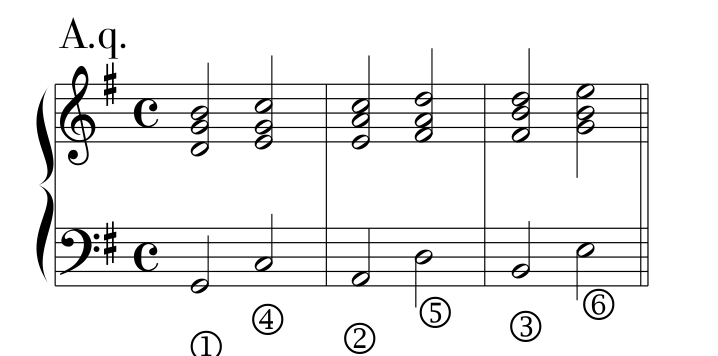
▶ Fig. 87 nearby - Concerning a Partimento that Falls by Third and Rises by Step
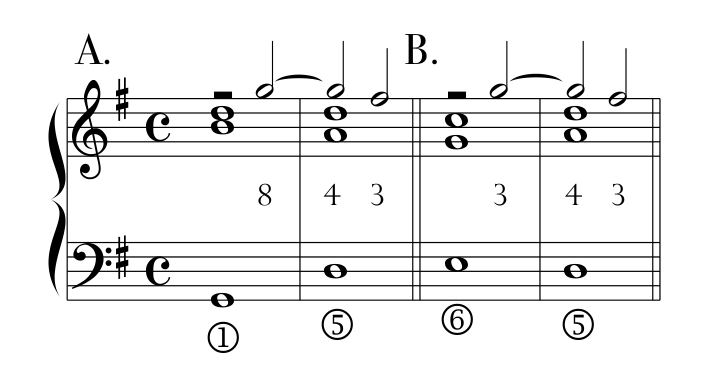
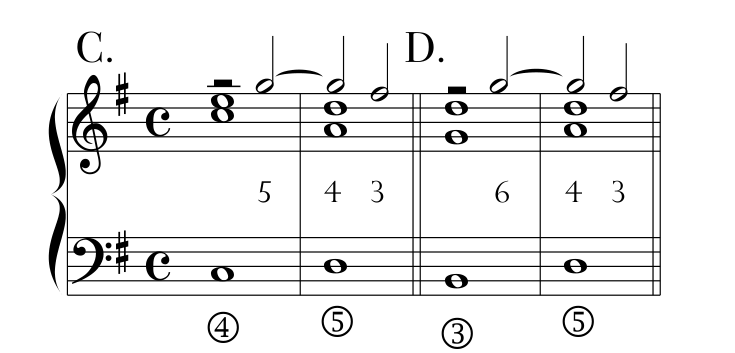
…the partimento that descends by 3rd, if one considers it as ⑥, one makes a suspension of a 7th prepared by the 5th of the preceding note of the partimento [①] in order to resolve it to a 6th on the second half of its time value. And thus one [progresses]…
▶ Fig. 99 nearby
 ▶ Fig. 59
 ▶ Fig. 60
 ▶ Fig. 65
 ▶ Fig. 68
 ▶ Fig. 87
 ▶ Fig. 99
 Supplement to the Theory of ModulationMax Reger, 1904
- From C-major · Footnote
…I mean the minor sub-dominant of a major or minor key, with unprepared suspension of the minor sixth before the fifth, which suspension need not necessarily be resolved upon the fifth of the minor sub-dominant. I call this chord “Neapolitan”, because A.…
▶ Fig. 13 nearby
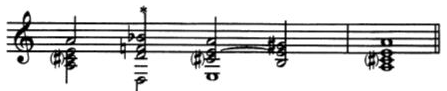 ▶ Extra-p31
 Theory of HarmonyArnold Schoenberg, 1922
Start: Suspensions and Other Nonharmonic Tones →- The Six-Four Chord in the Cadence
…according to which the six-four chord arises through passing motion and suspension, does not by itself suffice as an explanation (98b, c and d). In 98b one cannot speak of a suspended c, because the resolution this explanation needs is missing (in the tenor).…
▶ Fig. 137 nearby - “Nonharmonic” Notes
The treatment of these accidental simultaneous sounds in works of art differs from that of the acknowledged chords in the following way. The acknowledged chords are either consonances or dissonances. As consonances they are entirely free, subject at most to…
▶ Fig. 434 nearby - “Nonharmonic” Notes
…freely than in passing: do they not also occur often enough as unprepared suspensions? And what is an unprepared suspension essentially other than a chord? What is the appoggiatura but an embarrassed concession made by the keen ear to the concept-bound eye?…
▶ Fig. 436 nearby - Suspensions and Other Nonharmonic Tones
…prepare it at first, but later may also introduce it unprepared, as a “free suspension.” Preparation occurs as with any other dissonance: the dissonant tone was present in the preceding chord in the same voice. If the suspension is to be dissonant, it may be…
▶ Fig. 443 nearby - Suspensions and Other Nonharmonic Tones
The free suspension approaches the neighboring note. For the prepared suspension there was initially a rule that it should occur on the strong beat. As an exception (!) it was also allowed on the weak beat. Eventually, however, the exception appears almost…
▶ Fig. 450 nearby - Subject index
Suspension 175 (six-four chord as suspension), 381 ff., 402, 403 ff.; free suspension 404 f.; interrupted suspension 405 f.
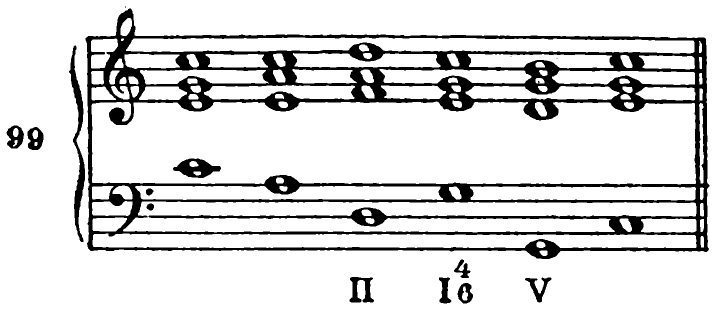 ▶ Example 99
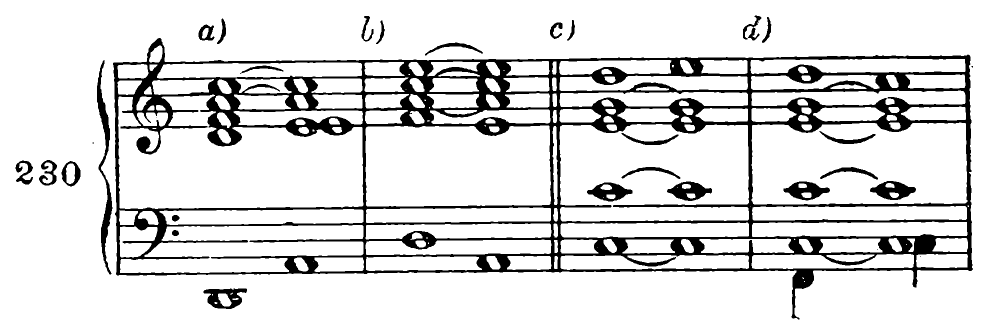 ▶ Example 230a
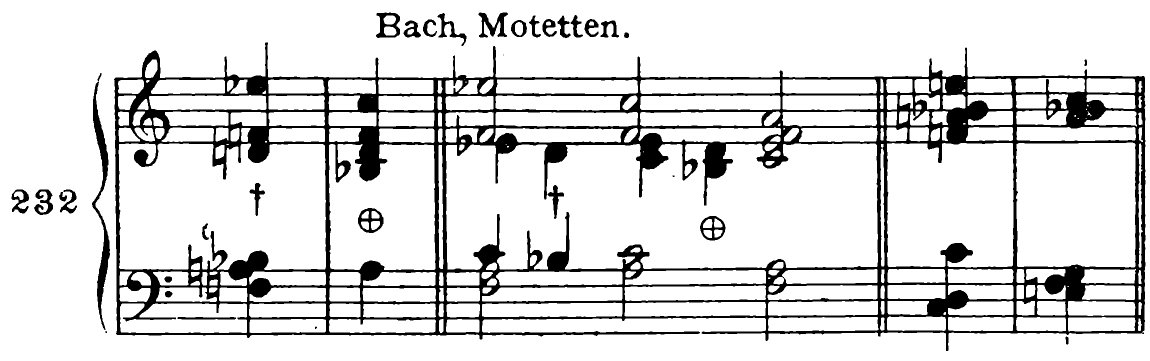 ▶ Example 232 — Bach, Motets
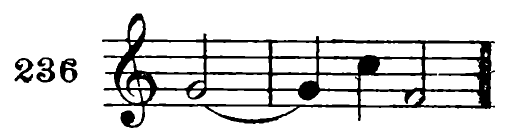 ▶ Example 236
 ▶ Example 237
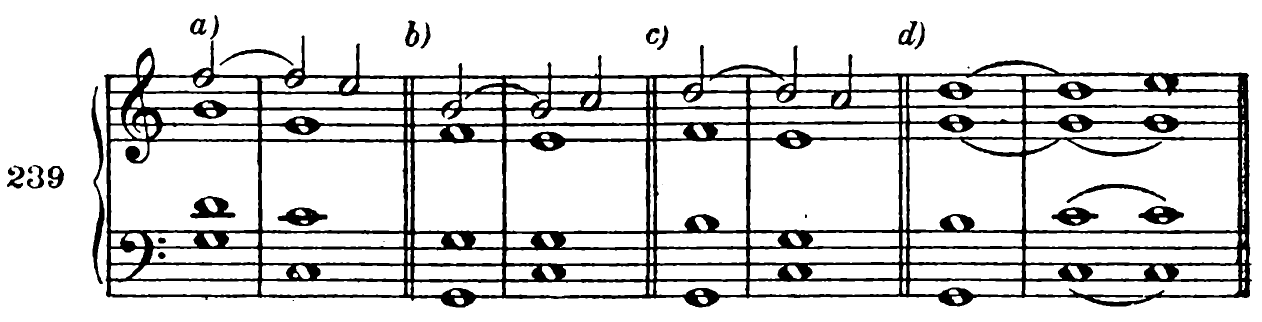 ▶ Example 239a
 Principles of OrchestrationNikolai Rimsky-Korsakov, 1922
- Footnotes
[12] Recently, bells have been made of suspended metal plates possessing the rare quality of a fairly pure tone, and which are sufficiently portable to be used on the concert platform. (Editor's note.)
 OrchestrationCecil Forsyth, 1914
- No. 27. The Saxophones
…is a thickish, flexible, and slightly convex reed secured by a metal ligature to the lower part of the mouthpiece. At its upper end-that is to say at the end nearest the player's lips—the reed lies close to the "table" of the mouthpiece. There is, however, a…
- No. 30. The Flute
A charming series of suspended sixths, played by three Flutes in unison in their bottom octave, may be found in Elgar's Enigma Variations (Dorabella, page 64 of the Full Score).
- No. 39. The Clarinet
…now for over a hundred years been secured in its place by means of a metal "ligature."
- No. 39. The Clarinet
…action of the player's lips and breath. If we loosen the two screws of the ligature and withdraw the thin slip of "cane" we find that the "cane' itselt completes the pipe at its extreme upper end. In other words the material of the pipe is cut-away on that…
- No. 40. The Bass-Clarinet
…on the lower side of the beak-mouthpiece immediately to the right of the ligature-screws. The student would do well to notice the necessarily great length of the metal rods controlling the lower keys. Apart altogether from the difficulties of regulating the…
- No. 56. The Dulcimer (or Cimbalom).1
Ligature, the, 253.
 Treatise on InstrumentationHector Berlioz, 1905
- Introduction
At first a succession of consonant chords, with a few suspensions here and there, was considered “music”. When later Monteverde dared to introduce the dominant seventh chord without preparation, he was violently blamed and abused for this innovation. In spite…
- On Conducting
A similar retardation, but from different causes, frequently occurs in the trumpet part when it contains rapid passages such as the following:
 ArrivalMayank Sanganeria, 2026
- Chapter 7 — Phrase Architecture
…but the accents fight the meter, and that's the point. The arrival grid is suspended for six beats, then restored by E on beat 3 of bar 2.
▶ Fig. 22 nearby
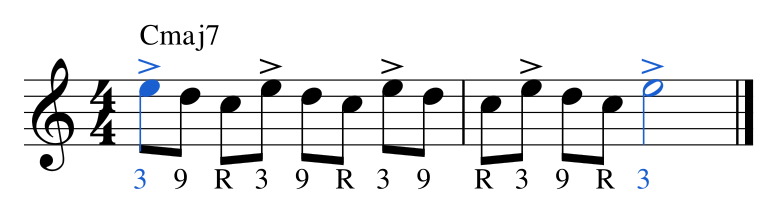 ▶ Ex. 7.5
 Complete Method for Rhythmical ArticulationPasquale Bona, 1905
Start: Study 58 →- Preliminary Remarks
…The Third Part is devoted to a study of everything that pertains to ligatures (tied notes) embellishments etc., etc.
More in Dissonance and embellishment
Passing notes · Neighbor notes · Anticipation · Appoggiatura · Nota cambiata · Pedal point