 Playable Books
Concept index · Counterpoint
Cantus firmus
Taught in 3 books. Each one opens at the passage; ▶ plays the example beside it. Also called cantus firmi, c.f..
This index is Playable Books’ own: a first pass that finds the term’s words in each book, corrected by hand. The authors did not tag these passages, and their terms can differ (Fux’s “ligature” is a suspension). The quoted text is the book’s.
 Gradus ad ParnassumJohann Joseph Fux, 1725
- First species counterpoint: note against note
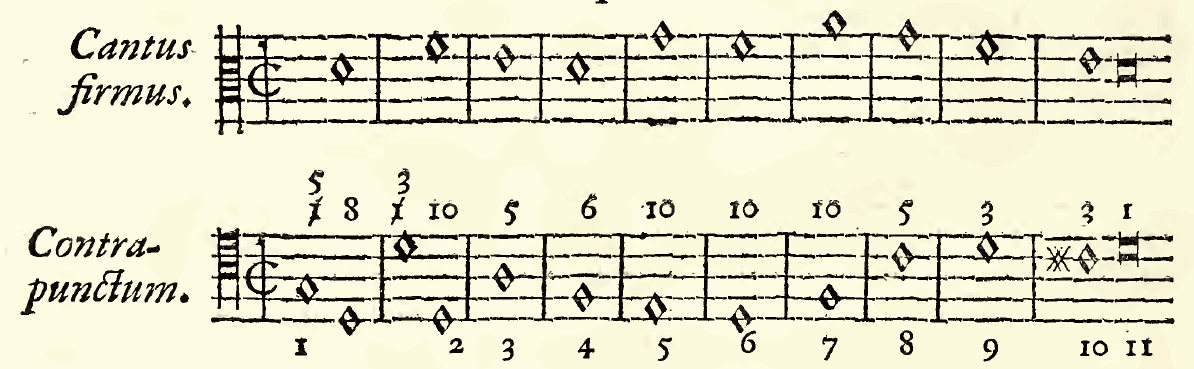
…path to further progress has now been laid for you. Now proceed: leaving the cantus firmus as it is in the alto, place a tenor below it as the counterpoint part, with this difference, however: just as in the preceding example you measured the consonances…
▶ Fig. 3 nearby - First species counterpoint: note against note
…the precept that the counterpoint must be fitted to the same mode as the cantus firmus, which I now wish to make known to you. Since the cantus firmus of the preceding example is in D, la, sol, re, as its beginning and end show, whereas you began in G, sol,…
▶ Fig. 3 nearby - Double counterpoint at the twelfth
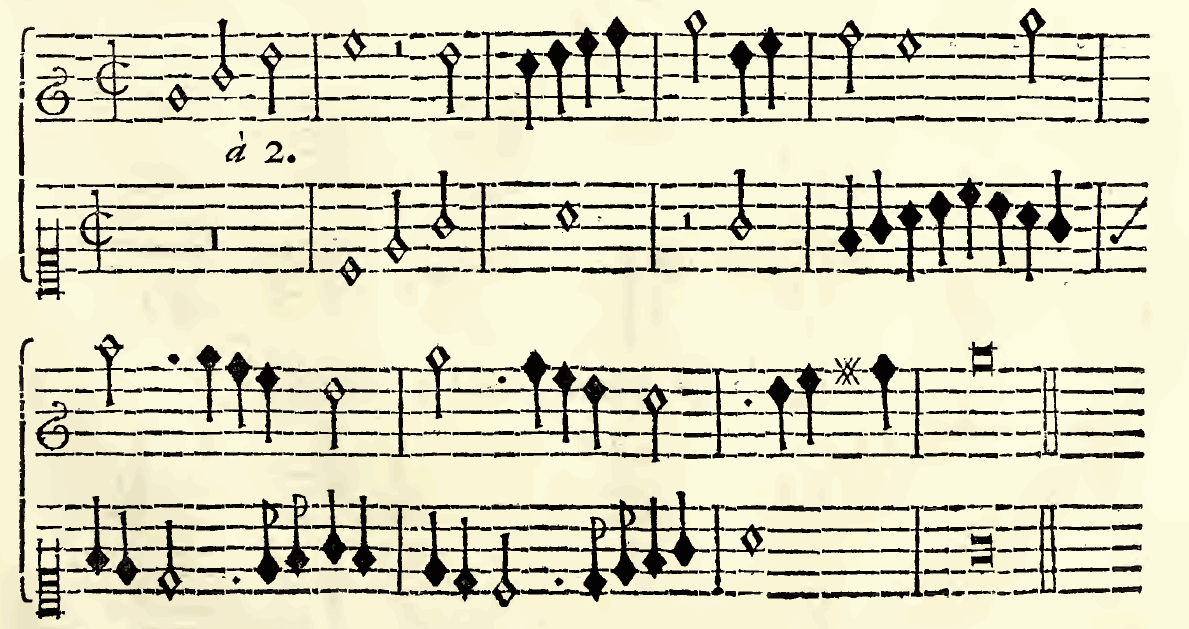
…third, where transposition of the parts and the strict constraint of the cantus firmus produce a less agreeable melodic course because of the harsh relation of mi against fa. This must be tolerated because of the nature of the cantus firmus and the mode.…
▶ Fig. 354 nearby - Double counterpoint at the twelfth
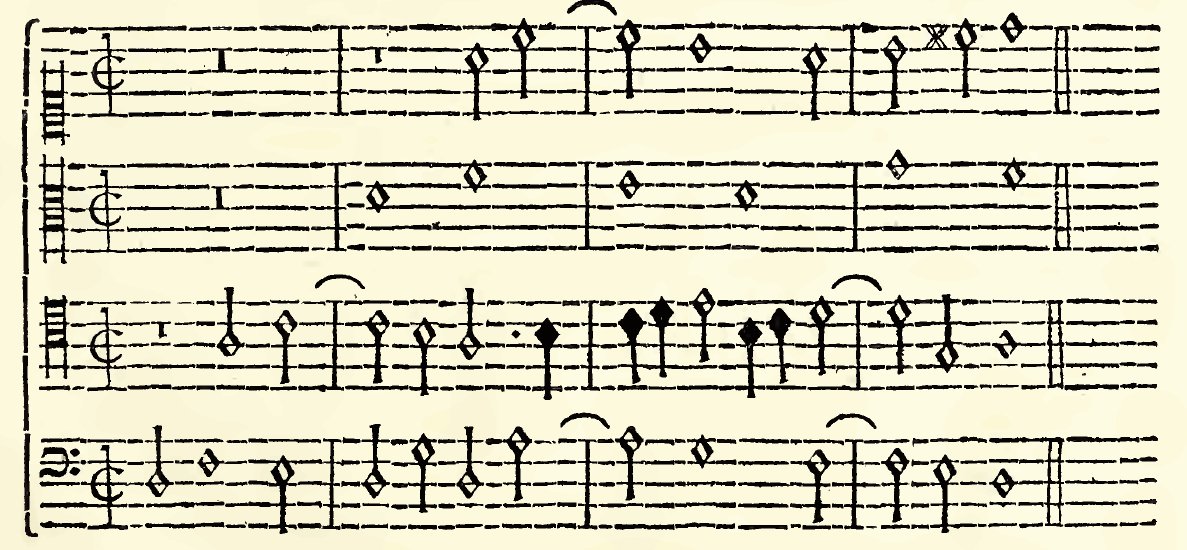
…making something similar. But before conceiving a subject to be woven into a cantus firmus, one must examine every measure of the cantus firmus with both eye and mind, to see whether that subject, either direct or contrary, can be fitted to it, if not in every…
▶ Fig. 384 nearby - Double counterpoint at the twelfth
In these ways, then, and others according to the character of the cantus firmus, the subject must be introduced, after first considering in the mind, as I said, when, where, and in which portion of the cantus firmus an entrance can suitably be made. Thus far I…
▶ Fig. 384 nearby - On a cappella style
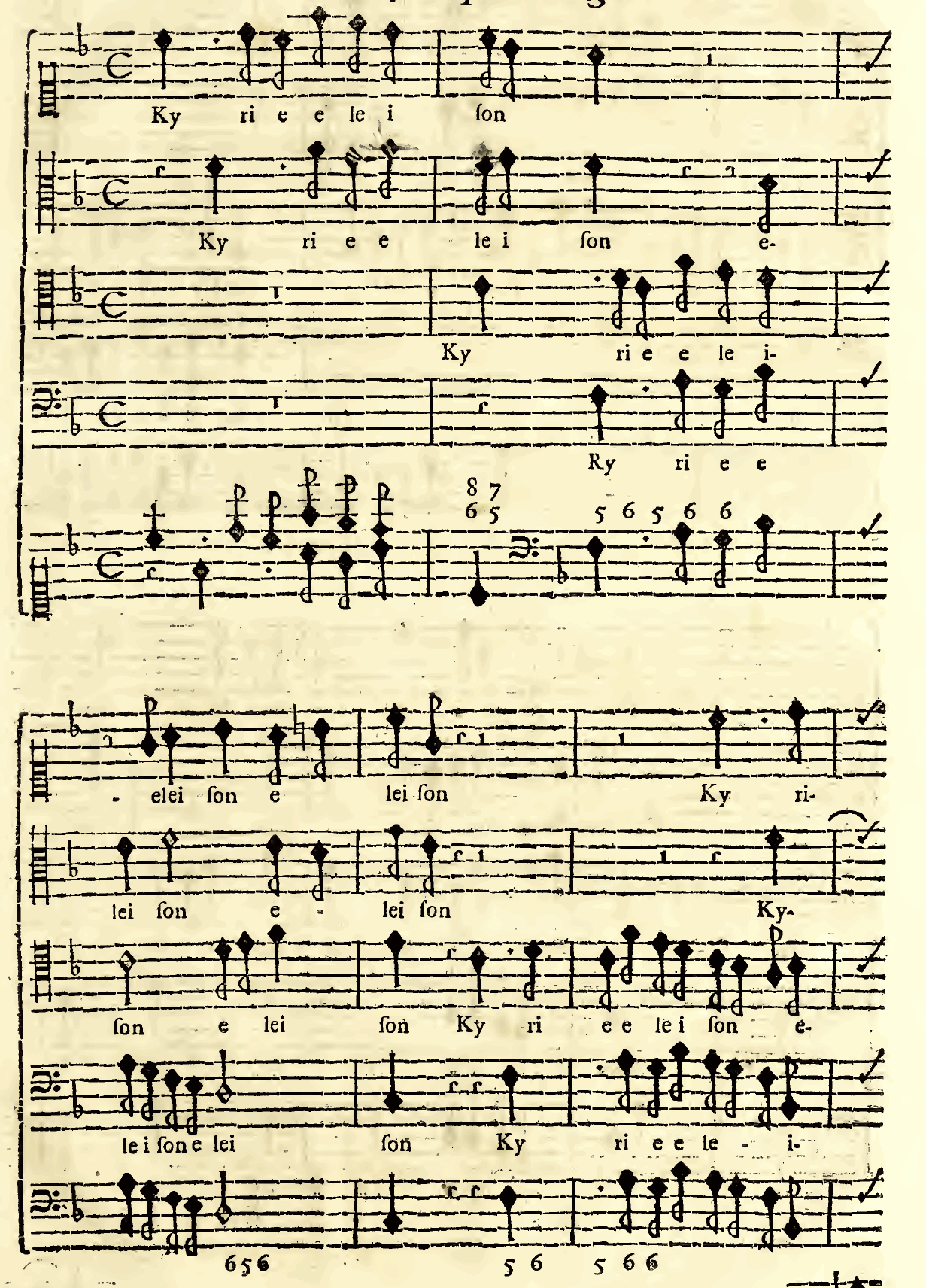
…have, Joseph, a model of composition worked out under the obligation of a cantus firmus, or Gregorian chant. If the subjects are less singable and not as expressive as in the preceding examples, attribute this to the restriction of the cantus firmus. In this…
▶ Fig. 477 nearby
 ▶ Fig. 3
 ▶ Fig. 354
 ▶ Fig. 384
 ▶ Fig. 477
 Counterpoint AppliedPercy Goetschius, 1902
- Chapter X
90. In the small species the adopted chorale melody (called the cantus firmus) is placed in the uppermost part, as regular Soprano, and in its original metric condition, without extensions or interruptions. The exercises are to be written for the Organ, and…
- Chapter X
92. The number of parts ordinarily employed is four: the cantus firmus, two inner parts, and the Pedal bass.
▶ Fig. 269 nearby - Chapter X
*I) C. F. — the cantus firmus, or given chorale melody.
▶ Fig. 270 nearby - Chapter X
6. The usual harmonic process must be pursued, more or less insistently, in defining the chord-basis of each beat or tone of the cantus firmus; but the effect of the accompanying (figural) voices must be thor. oughly polyphonic.
▶ Fig. 270 nearby - Chapter X
Bach, Vol. V, No. 30 (c. f. in Soprano, slightly embellished; running inner part ; Pedal independent). Vol. V, page 81 (Var. VI) — cantus firmus in Pedal-bass. Vol. V, page 86 (Var. IX) — canlus firmus in Pedal, as inner voice; two motives
- Chapter XI
A. Iwo examples of the Invention with chorale (minor and major, respectively), according to the above directions. Cantus firmus in the Soprano; 4-voice; the Motive at least one or two measures long; fairly strict manipulation.
▶ Fig. 310 nearby
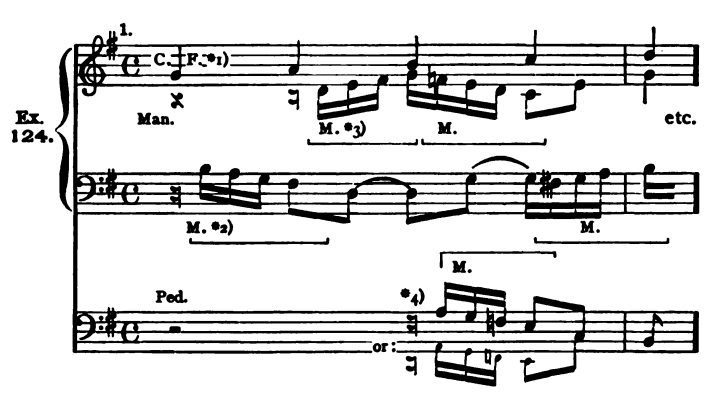 ▶ Ex124-1
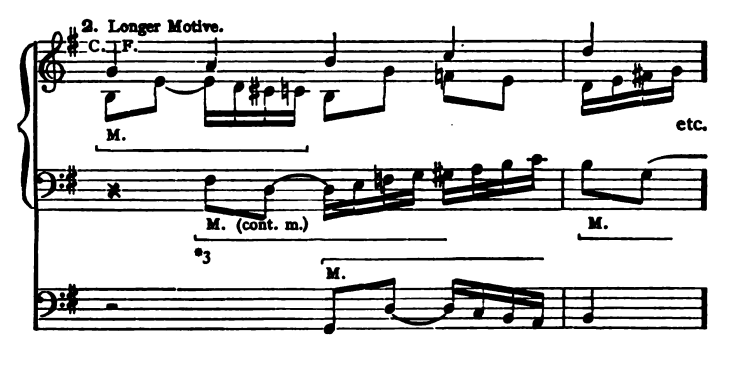 ▶ Ex124-2
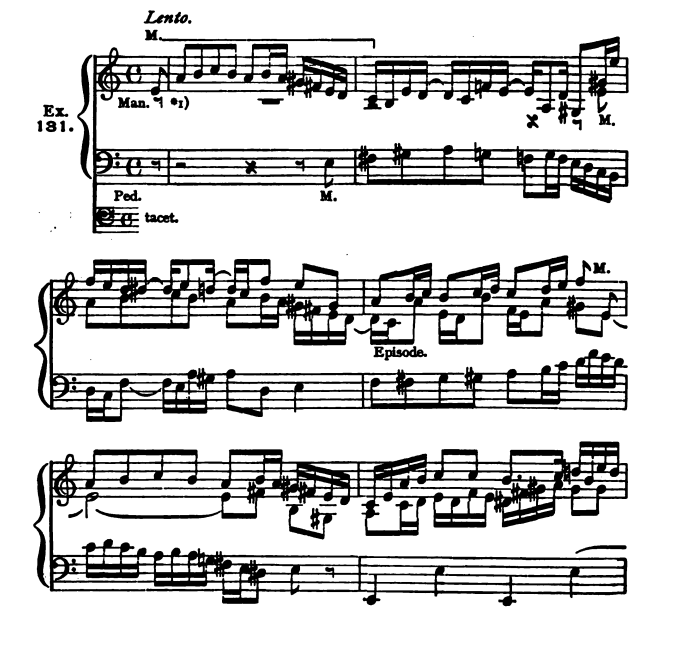 ▶ Ex131
 Guide to the Practical Study of HarmonyPyotr Ilyich Tchaikovsky, 1900
- Chapter XXIX. Strict Part-writing
§ 119. In our exercises we shall employ the Cantus firmus, which, being a melody of whole notes, can easily be transposed into any other voice. We will at first harmonize this melody in whole notes, writing each voice in its respective clef, and on a separate…
▶ Fig. 329 nearby - Chapter XXIX. Strict Part-writing
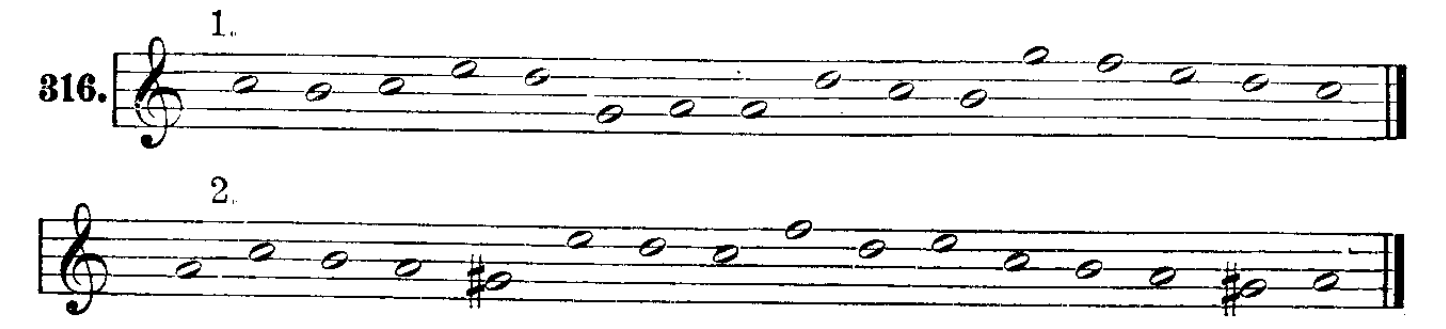
Exercise. Harmonize the following melodies, considering them as cantus firmus successively in each voice.
▶ Fig. 331 nearby - Chapter XXIX. Strict Part-writing
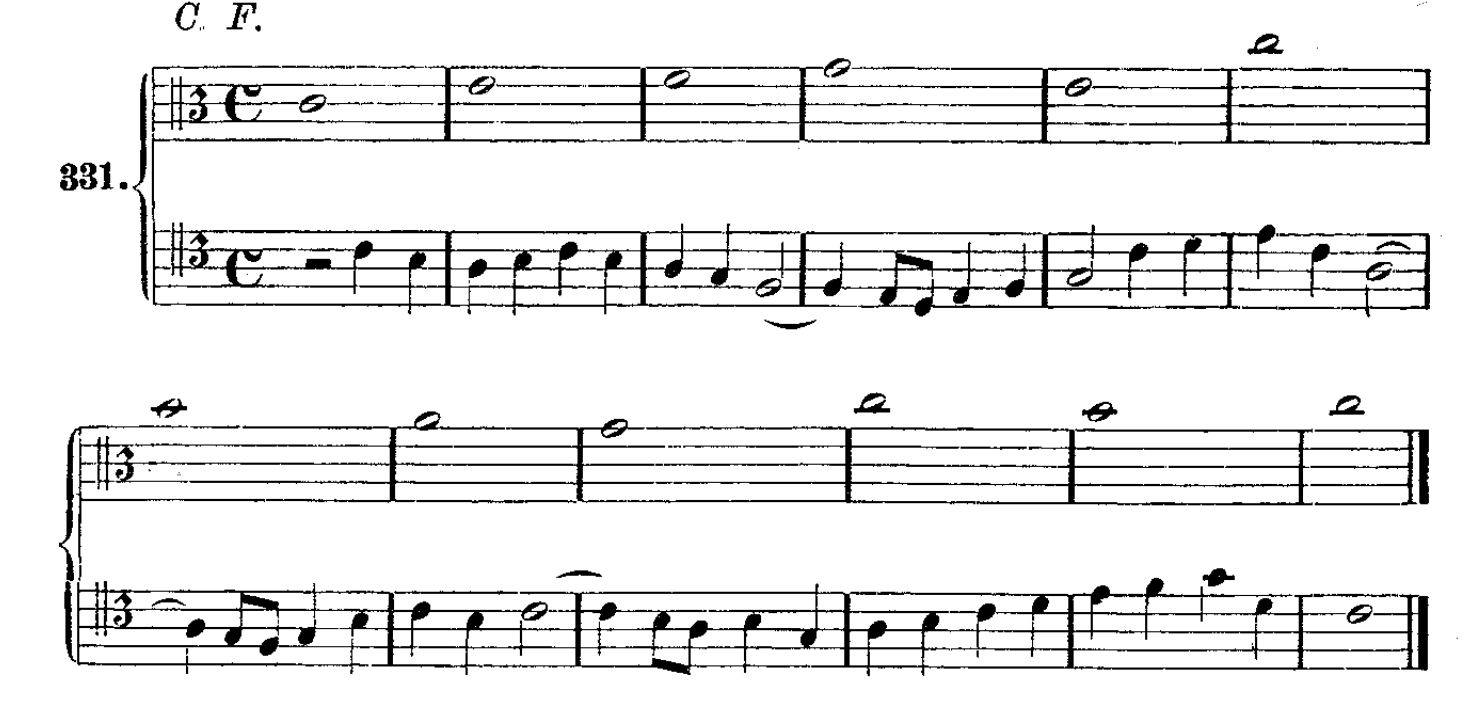
Note. In transposing the cantus firmus into another voice, we can employ some other key better suited to the limits of the voice in question.
▶ Fig. 331 nearby - Chapter XXIX. Strict Part-writing
Exercise. Harmonize in two and three voices a cantus firmus out of ene of the preceding exercises.
▶ Fig. 346 nearby - Chapter XXX. The further development of Voice-leading
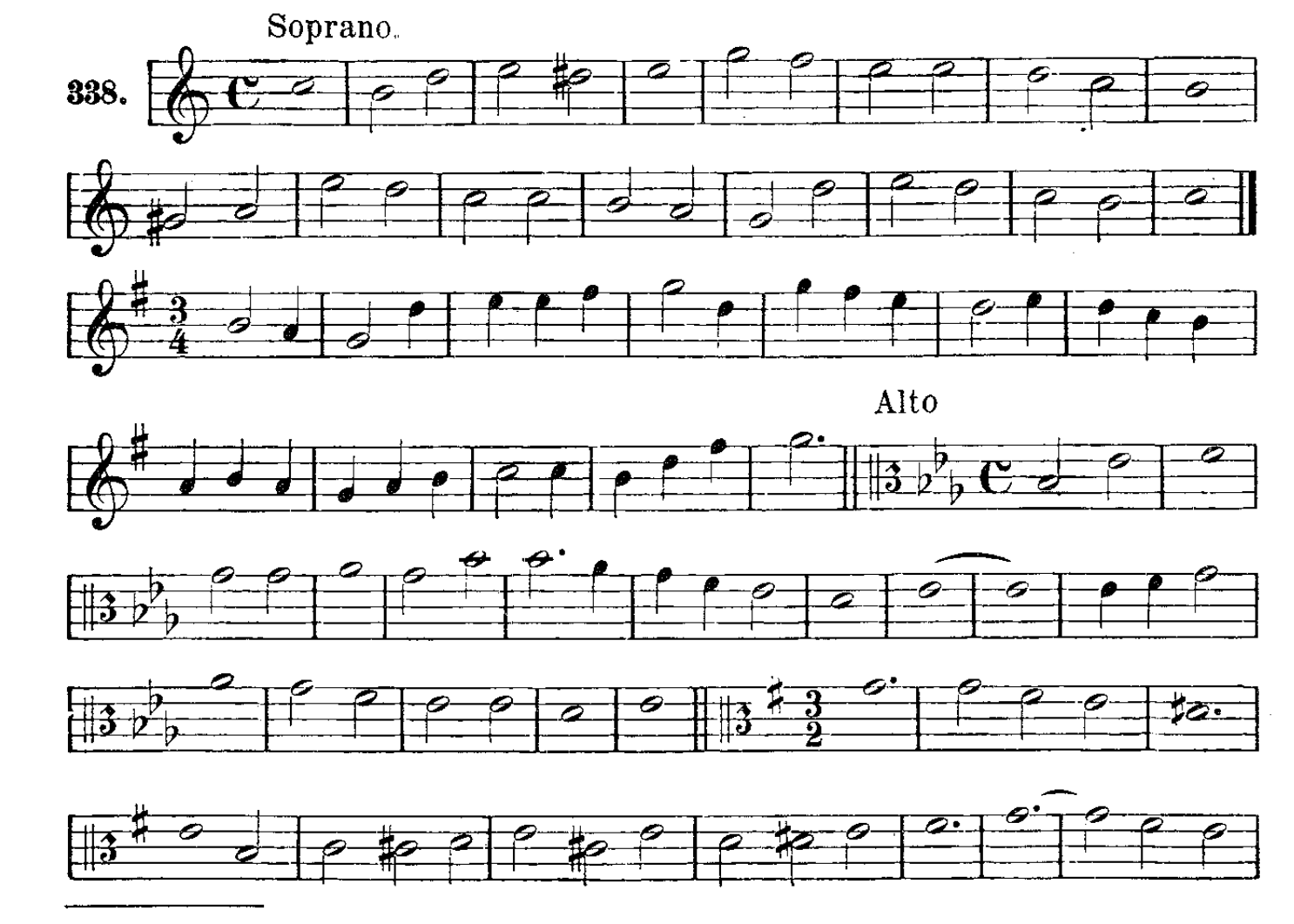
§ 131. The cantus firmus need not always be made up of whole notes. The following melodies are to be used as Cantus firmus in four, five, and six-part exercises.
▶ Fig. 353 nearby
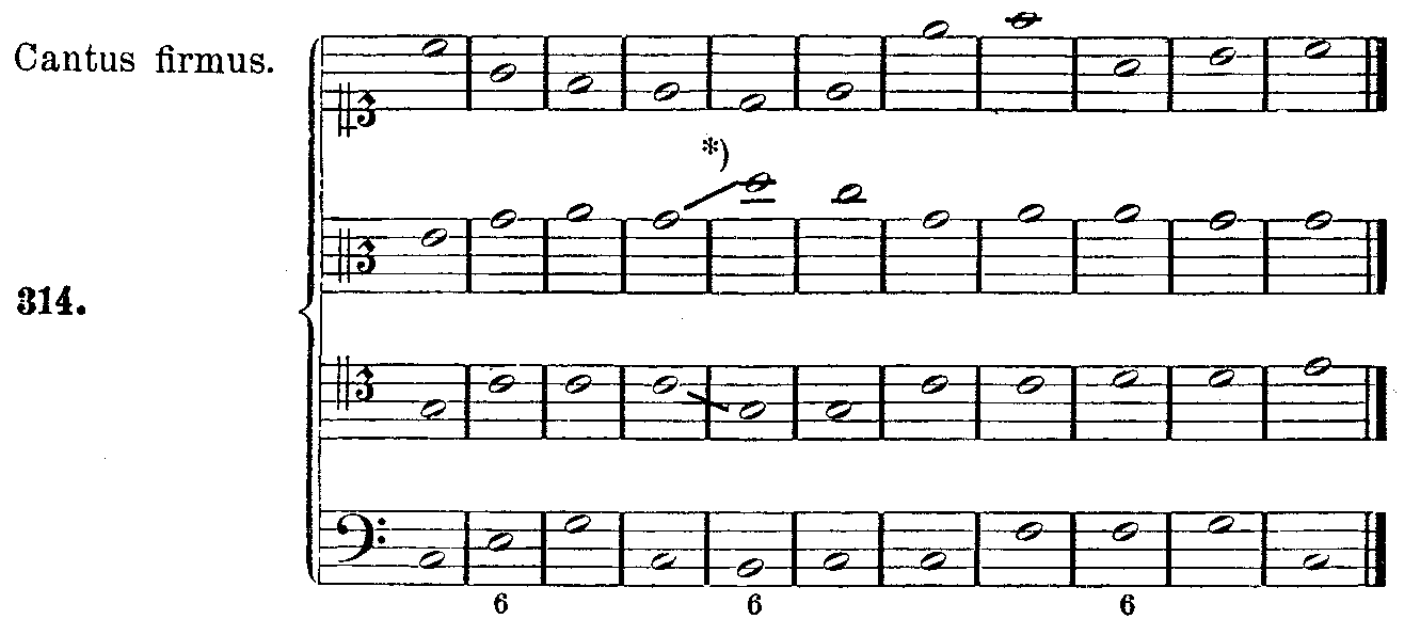 ▶ Fig. 329
 ▶ Fig. 331
 ▶ Fig. 346
 ▶ Fig. 353
More in Counterpoint
Species counterpoint · Consonance and dissonance · Contrary, oblique and similar motion · Parallel fifths and octaves · Voice leading · The melodic line