 Playable Books
Concept index · Imitation and fugue
Imitation
Taught in 11 books. Each one opens at the passage; ▶ plays the example beside it.
This index is Playable Books’ own: a first pass that finds the term’s words in each book, corrected by hand. The authors did not tag these passages, and their terms can differ (Fux’s “ligature” is a suspension). The quoted text is the book’s.
 Gradus ad ParnassumJohann Joseph Fux, 1725
Start: Imitation →- Four-part counterpoint: first species
…I said “as far as possible” because sometimes necessity, the melodic line, imitation, or the strictness of the subject will require that a hidden succession of fifths or octaves be tolerated.
▶ Fig. 169 nearby - Four-part counterpoint: first species
…make the doubling of consonances more clearly visible. Follow this model by imitation, then, and if any doubt remains, state it; if none remains, take up this same cantus firmus and work through it with the usual change of position, placing it successively in…
▶ Fig. 169 nearby - Florid counterpoint in four voices
…aside the cantus firmus for a time, I shall lead you to the knowledge of imitations and fugues. First, however, it must be stated that, outside the restriction of the cantus firmus, some dissonances may also be resolved in another way: for example, a ninth to…
▶ Fig. 228 nearby - Imitation
Imitation occurs when the following part follows the preceding one after a rest, preserving the same intervals by which the preceding part moved, without regard to mode, whole tone, or semitone. This can take place at the unison, second, third, fourth, fifth,…
▶ Fig. 229 nearby - Imitation
Aloysius. You have already forgotten what I said a little earlier: imitation is bound by no constraint of mode or tonal placement, and it is enough that the imitating part follows the footsteps of the preceding part in whatever manner. Moreover, imitation is…
▶ Fig. 233 nearby - Fugue in general
…fled, pursued by the following one. This would be true, were it not that imitation does the same, as was said. Therefore another definition must be established to distinguish fugue from imitation. I say, then: fugue is the repetition by a following part of…
▶ Fig. 237 nearby
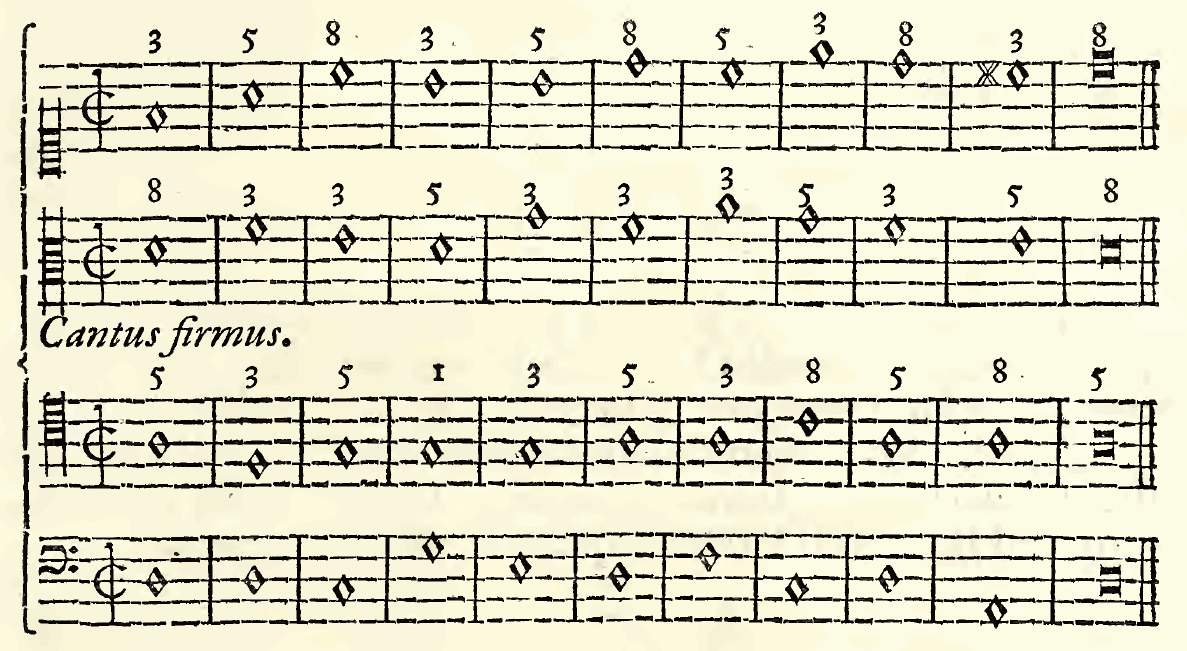 ▶ Fig. 169
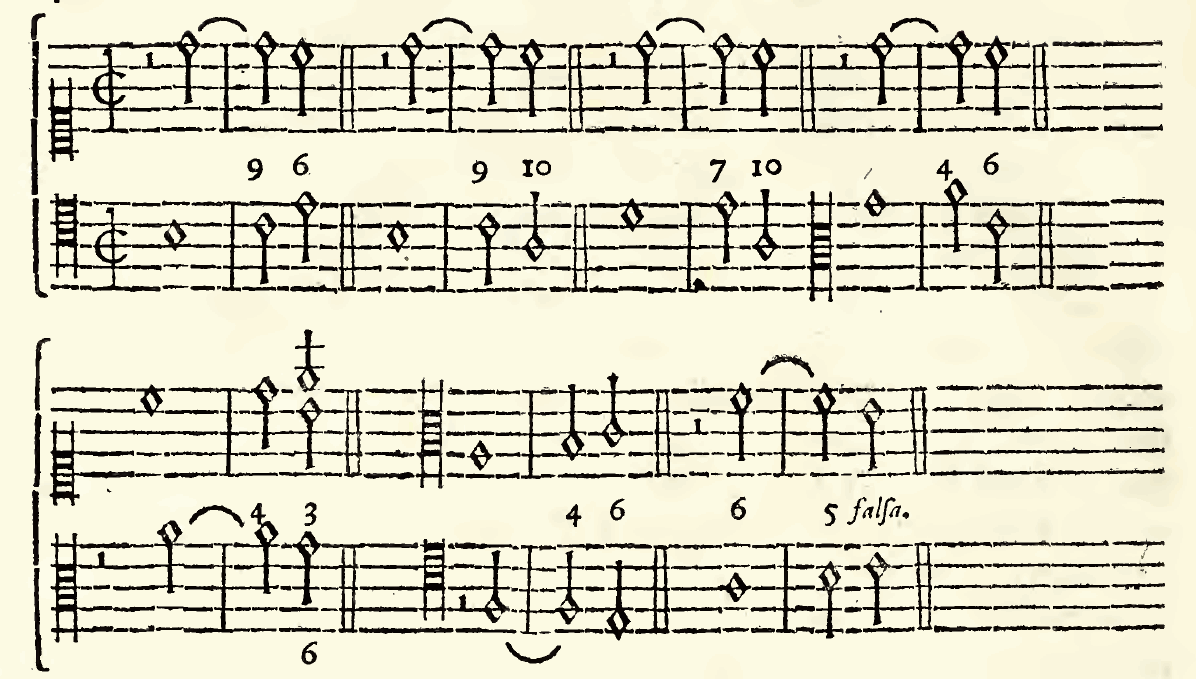 ▶ Fig. 228
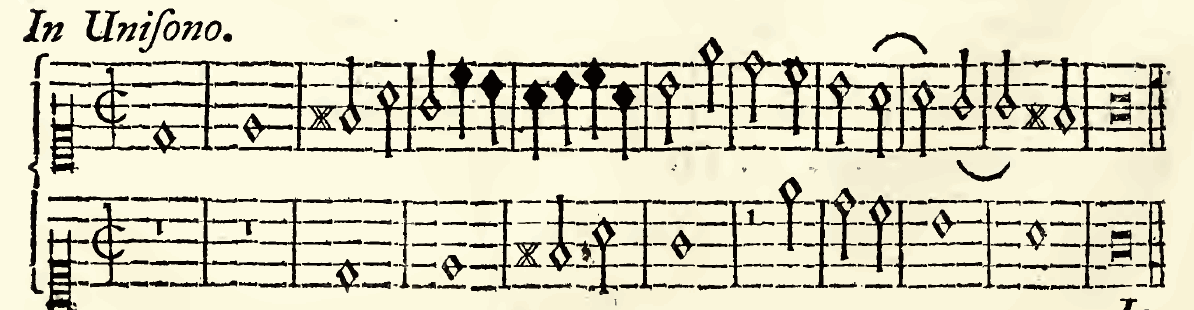 ▶ Fig. 229
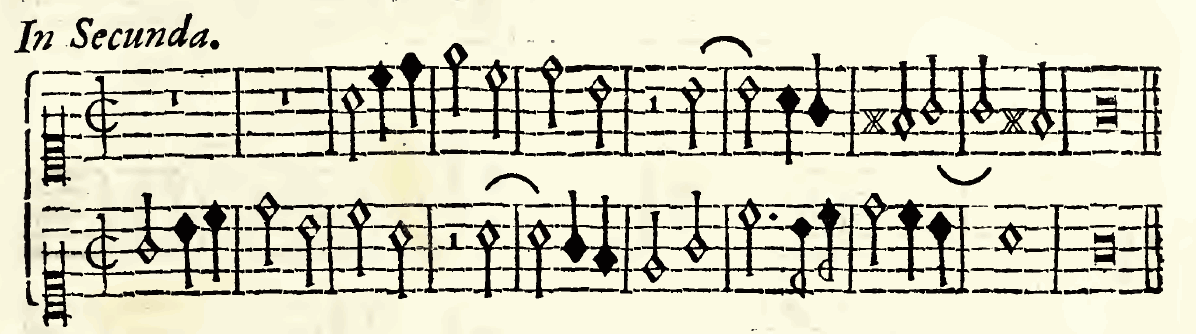 ▶ Fig. 230
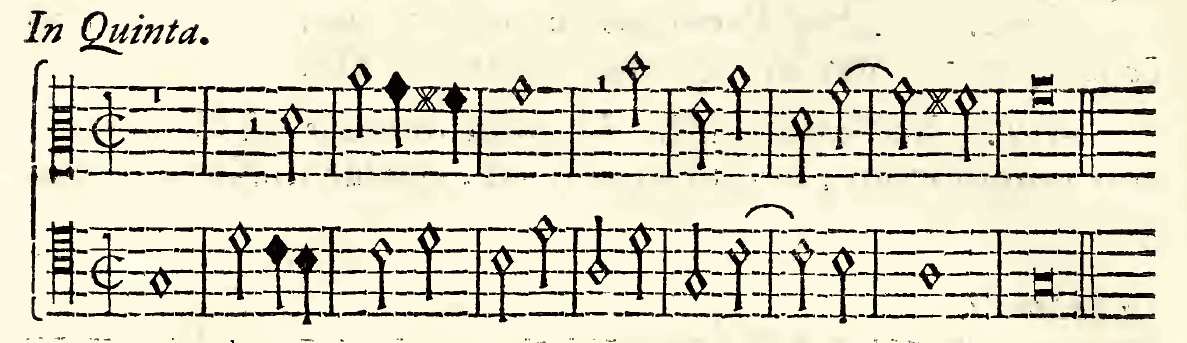 ▶ Fig. 233
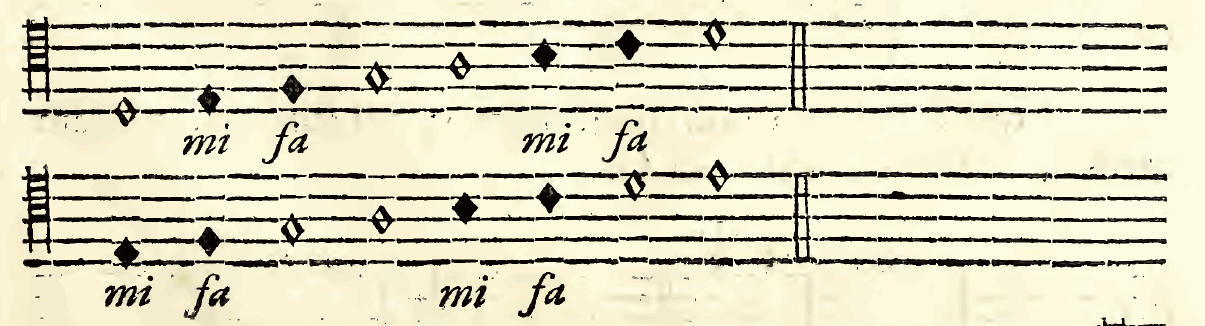 ▶ Fig. 237
 Exercises in Elementary CounterpointPercy Goetschius, 1910
Start: Chapter XV. Motive-Development. Imitation →- Chapter XV. Motive-Development. Imitation
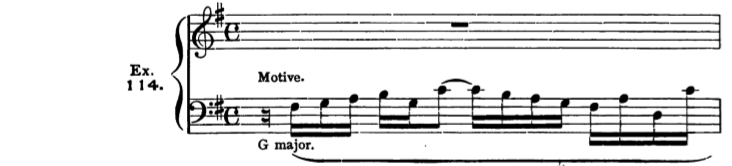
…other part. Such a reproduction of the Motive in another part is called its Imitation (not " repetition "). See Ex. 114, second measure. The term Imitation may be applied to each successive occurrence of the Motive, throughout the sentence; though the proper…
▶ Fig. 259 nearby - Chapter XV. Motive-Development. Imitation
…which the contrapuntal sentence is to consist. Then it is taken up, — or " imitated," — by the other part; usually upon the same beats of the measure as at first; and upon the same steps of the scale, either an octave higher, or an octave lower, than before…
▶ Fig. 259 nearby - Chapter XV. Motive-Development. Imitation
This is analyzed as follows: First, the " announcement" of Motive 1 (Ex. 113) in the lower part; followed by its " Imitation " an octave higher, in the upper part; and, below, the " contrapuntal associate " of this Imitation of the Motive.
▶ Fig. 260 nearby - Chapter XV. Motive-Development. Imitation
In No. 10 of these Inventions, the imitation of the motive (second measure, lower part), is not in the octave, but a fourth below the original tones. From this it will be inferred that the motive may recur upon any steps of the scale which may prove to be…
▶ Fig. 262 nearby - Chapter XV. Motive-Development. Imitation
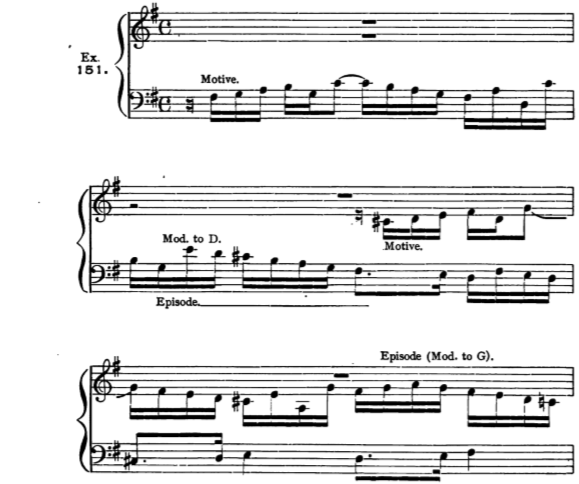
149. In continuing the manipulation of a Motive beyond the first Imitation (the point at which the above examples were interrupted), the possibilities are very numerous, and the greatest scope may be given to the freedom of the writer's imagination and to his…
▶ Fig. 262 nearby - Chapter XXI. Motive-Development
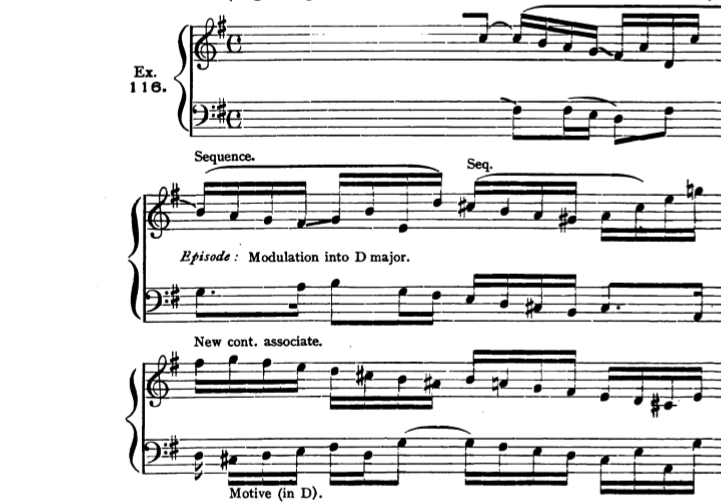
…as a brief episode, or interlude; and a similar episode is added to the Imitation. Both of these serve as modulations, to prepare for the transposed imitations: —
▶ Fig. 367 nearby
 ▶ Ex.113-1
 ▶ Ex.114
 ▶ Ex.116
 ▶ Ex.151
 Counterpoint AppliedPercy Goetschius, 1902
Start: Chapter IV →- Chapter IV
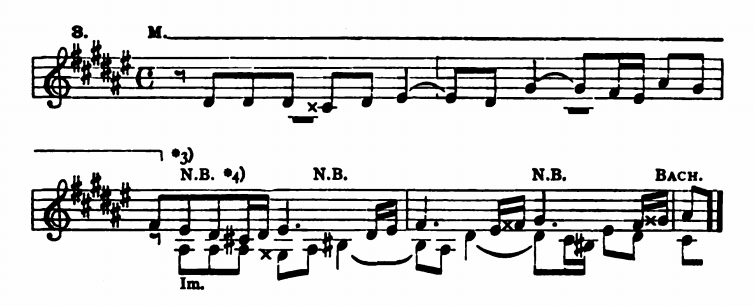
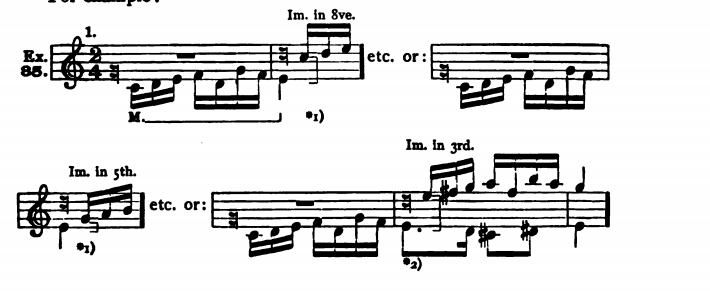
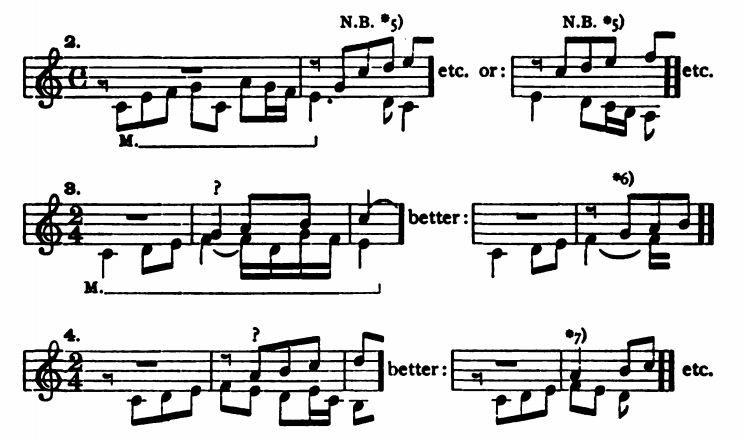
*1) Imitation of the motive in the 5th, above; i.e., each tone of the Imitation is the perfect 5th of the corresponding tone of the motive. It is a "strict " Imitation because the successive progressions coincide exactly, in quantity and quality, with those of…
▶ Fig. 154 nearby - Chapter IV
34. After the leading part has terminated its Motive, and the Imitation of the latter is annunciated in the other part, the leading part does not discontinue its movement, or even pause briefly, but carries its melodic line along, apparently independent of the…
▶ Fig. 189 nearby - Chapter IV
b. Ihe beginning of the Imitation must be properly adjusted (as regards harmony and modulation) to the termination of the motive. This will influence the choice of the interval of Imitation (par. 26a, b, c); may induce the employment of the unessential…
▶ Fig. 190 nearby - Chapter IV
*1)*1) The adjustment of the beginning of the Imitation to the termination of the motive is perfect, both as concerns interval and chord, in each of these cases. This is to be expected, when either the Imitation in the 8ve or 5th is chosen; i.e., these…
▶ Fig. 192 nearby - Chapter IV
*1) The Imitation is to be shifted forward in each case, - generally one beat, possibly a little more or less. The vacant space that consequently intervenes between the end of the motive and the beginning of the Imitation, must be very carefully filled out,…
▶ Fig. 211 nearby - Chapter IX
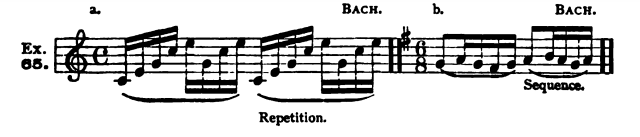
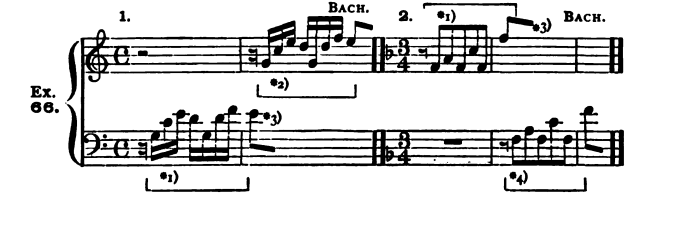
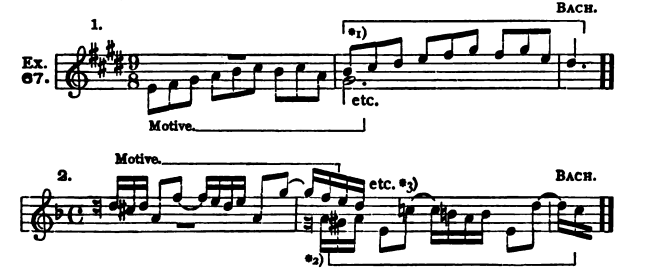
…" Aria" (general voice-independence, but little evidence of even incidental imitation, — the same is true of the following "Sarabande" and "Menuet"). Bach, Partita V, "Allemande" (quasi Invention; the M. evades strict definition, being rather of a rhythmic…
 ▶ Ex65
 ▶ Ex66
 ▶ Ex67
 ▶ Ex84-3
 ▶ Ex85-1
 ▶ Ex85-2-4
 Analysis of J. S. Bach’s Forty-Eight FuguesEbenezer Prout, 1910
Start: Introduction →- Introduction
IMITATION.—The copying of a passage or rhythmic figure, more or less strictly, and at a short interval of time, by a different voice.
- Introduction
CANON.—Strict, note-for-note imitation (though it may be at any interval) throughout a passage of some length. Canon (or stretto, or imitation) "at the octave," or "in the octave" is used to denote the interval separating the entries.
- Fugue 1 · Book I, No. 1 · BWV 846
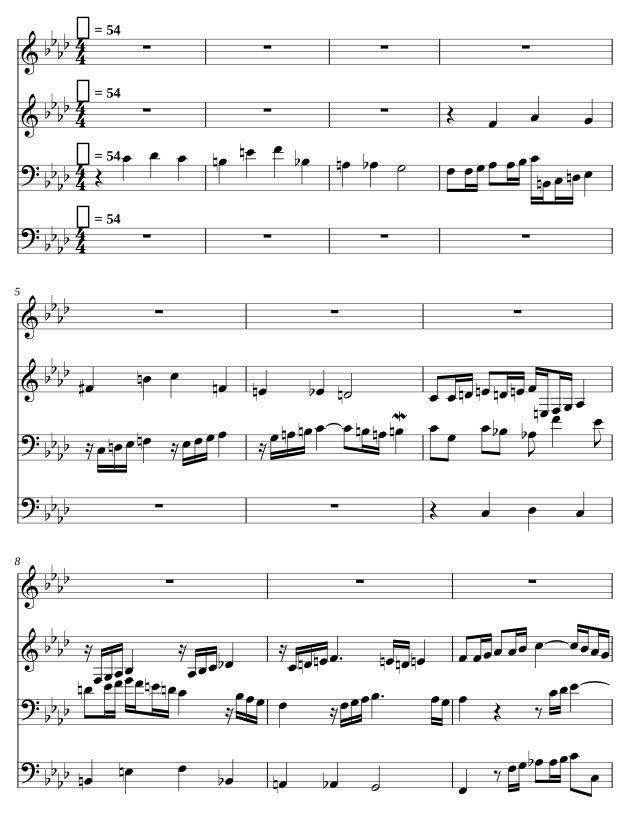
…is generally less modulation in fugues that contain much stretto or close imitation than those of simpler construction. Note that the entry of the treble in bar 15 is incomplete; the answer is interrupted, to allow the same voice to begin a new stretto. The…
▶ Fig. 2 nearby - Fugue 1 · Book I, No. 1 · BWV 846
…on the other hand there is none which displays more complete mastery of imitative writing, or furnishes a finer example of "the art of concealing art."
▶ Fig. 2 nearby - Fugue 12 · Book I, No. 12 · BWV 857
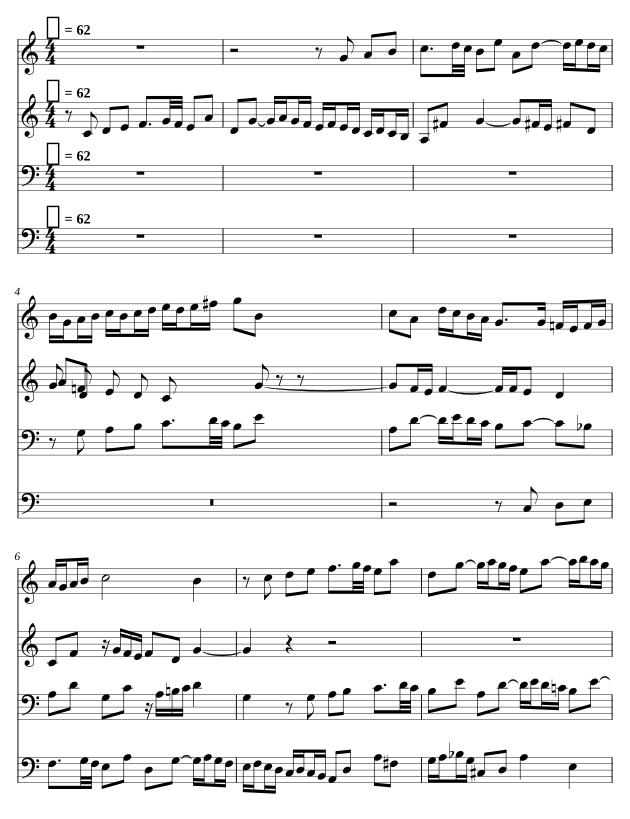
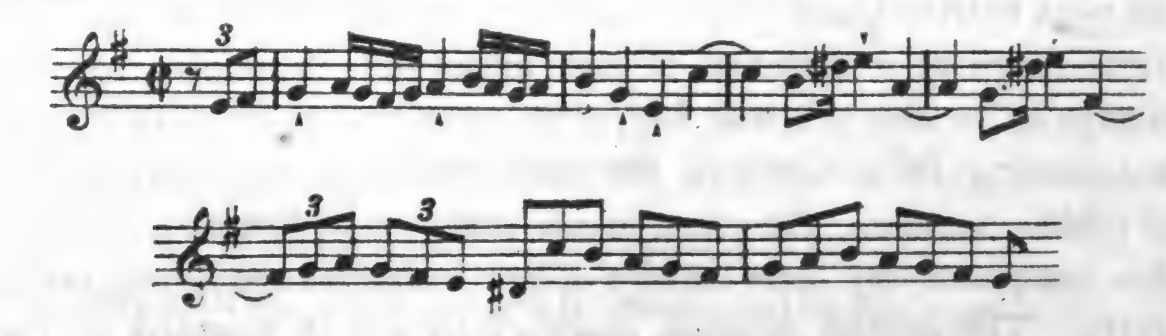
…first bar of the alto in the codetta is treated sequentially in the bass, imitated by the tenor, with a new counterpoint in the treble. In the fourth (bars 37 to 40) a part of the countersubject (bar 6) is worked sequentially in the treble and made the pattern…
▶ Fig. 32 nearby - Fugue 34 · Book II, No. 10 · BWV 879
…sequentially in the bass (bars 18 to 20) accompanied by passages of free imitation; and from bar 20 the scale passage of bar 18 is inverted in the treble, accompanied by new counterpoint which was partly suggested by that of bar 7. In the second episode (bars…
▶ Fig. 79 nearby
19 more passages in Analysis of J. S. Bach’s Forty-Eight Fugues →
 ▶ Complete score
 ▶ Complete score
 ▶ Prout’s excerpt · Fugue 34
 Treatise on HarmonyJean-Philippe Rameau, 1722
Start: Chapter twenty-eight →- CHAPTER TEN. On Chords by Supposition, with Which Cadences Can Also Be Avoided while Being Imitated · 2 playable examples
- CHAPTER TWELVE. On Borrowed Chords, with Which Perfect Cadences Can Be Avoided while Being Imitated · 2 playable examples
- Table Explaining Essential Terms
Distinguishing a cadence from its imitation. 68 and 69
- Table Explaining Essential Terms
IMITATION. Definition of imitation. 193 and 332
- CHAPTER NINE. On Avoiding Cadences while Imitating Them
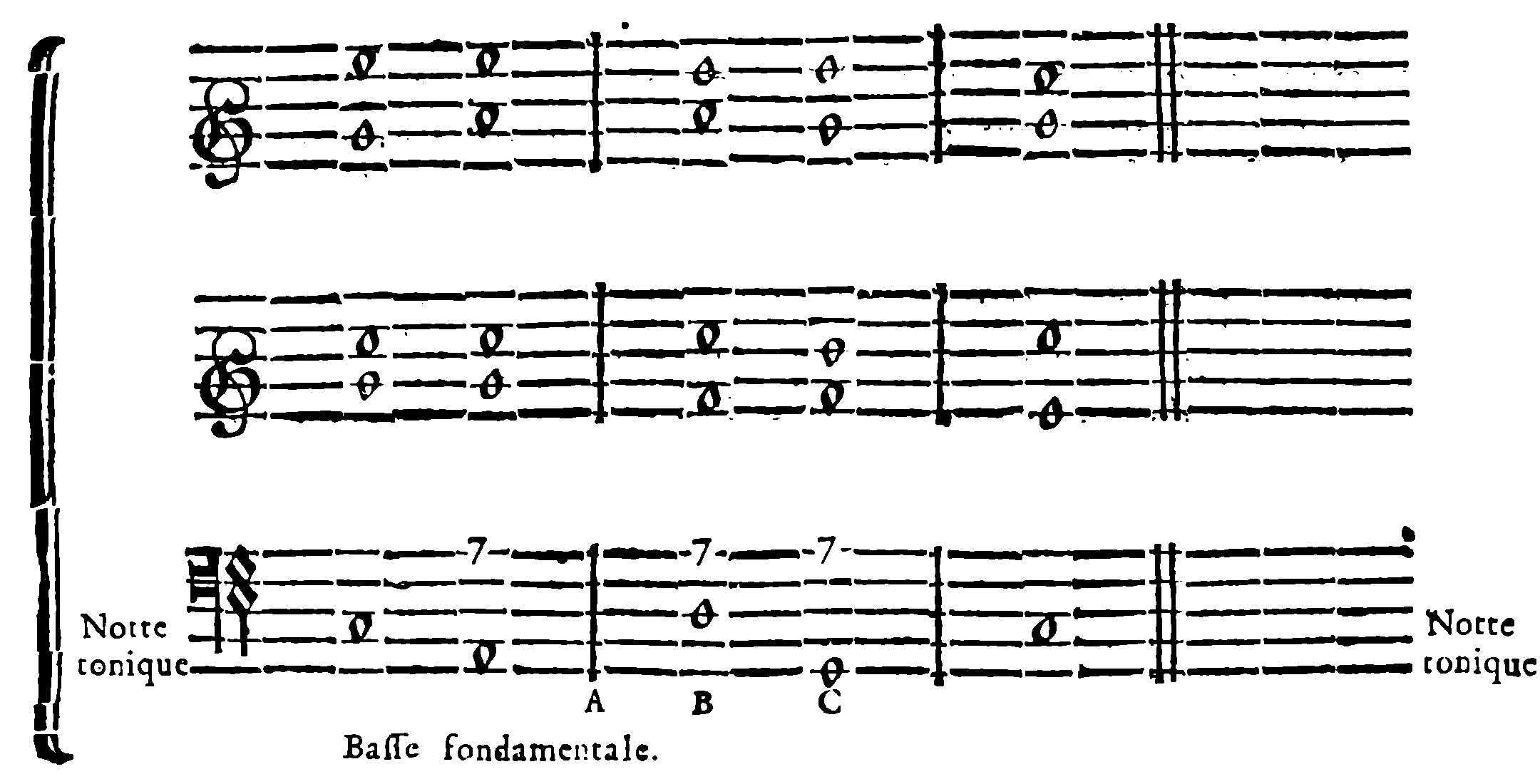
…seventh-chord structures immediately distinguish a cadence from its imitation and tell us whether the following note is tonic, and consequently which chord every note must bear. We are concerned here only with fundamental chords in the bass's fundamental…
▶ Fig. 51 nearby - CHAPTER NINE. On Avoiding Cadences while Imitating Them
We can also avoid perfect and interrupted cadences even in their imitation, by adding a sixth instead of a seventh to every second note of these cadences, provided the fifth is prepared by the preceding note's octave or third: the fifth then represents the…
▶ Fig. 52 nearby - Chapter twenty-eight
…should appear in the melody used to express them. This is what we call imitation. Its only limits are that its length or excessive repetition must not weary the listener. The composer is free to imitate part or all of the melody according to sound judgment.…
- Chapter twenty-eight
Fugue differs from imitation in that imitation may occur in a single part, ordinarily the one called the subject. Fugue, however, must be heard alternately in each part, where the part that began seems to follow the one that follows it, continuing in a chain…
12 more passages in Treatise on Harmony →
 ▶ Fig. 51
CHAPTER NINE. On Avoiding Cadences while Imitating Them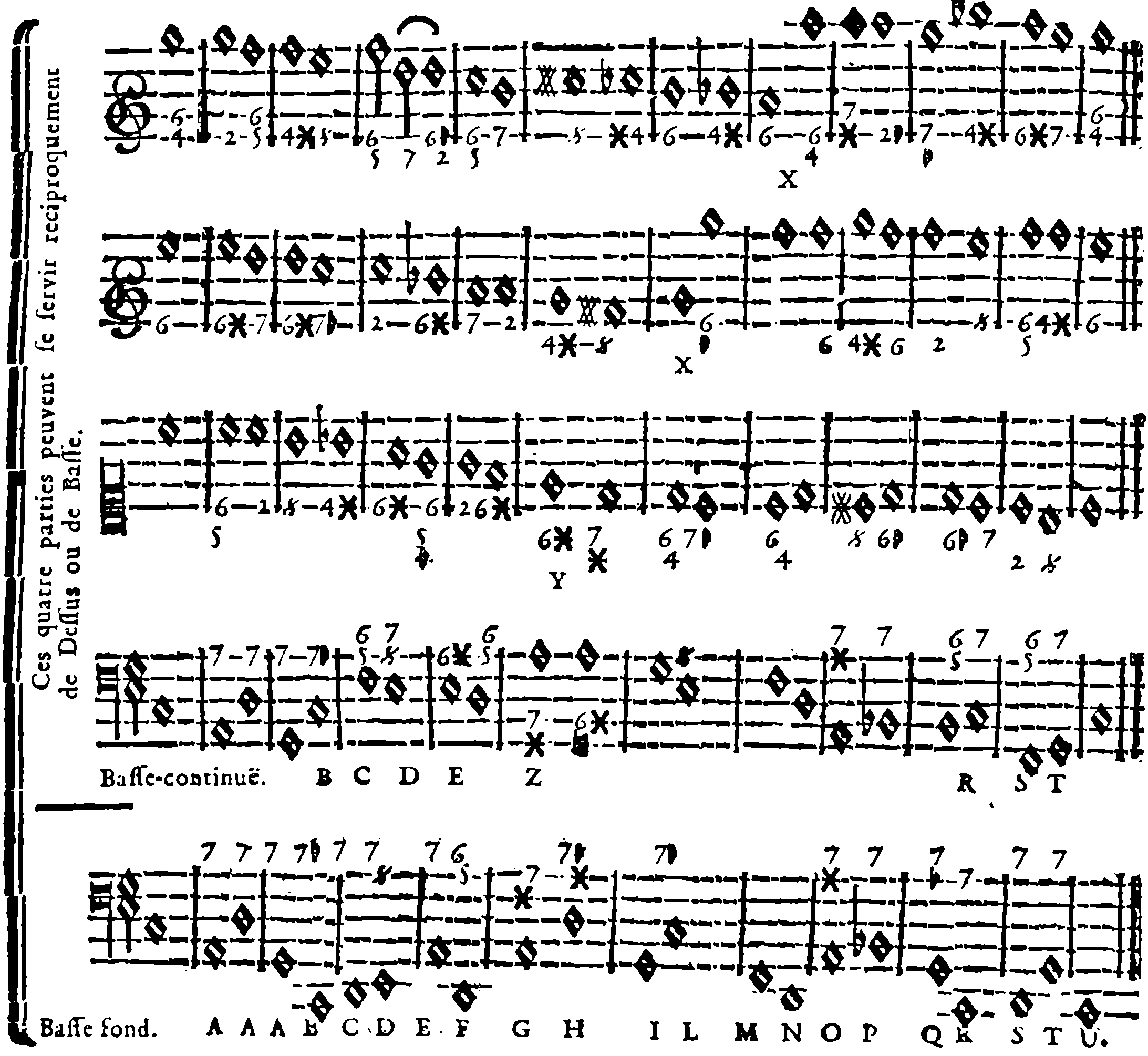 ▶ Fig. 52
CHAPTER NINE. On Avoiding Cadences while Imitating Them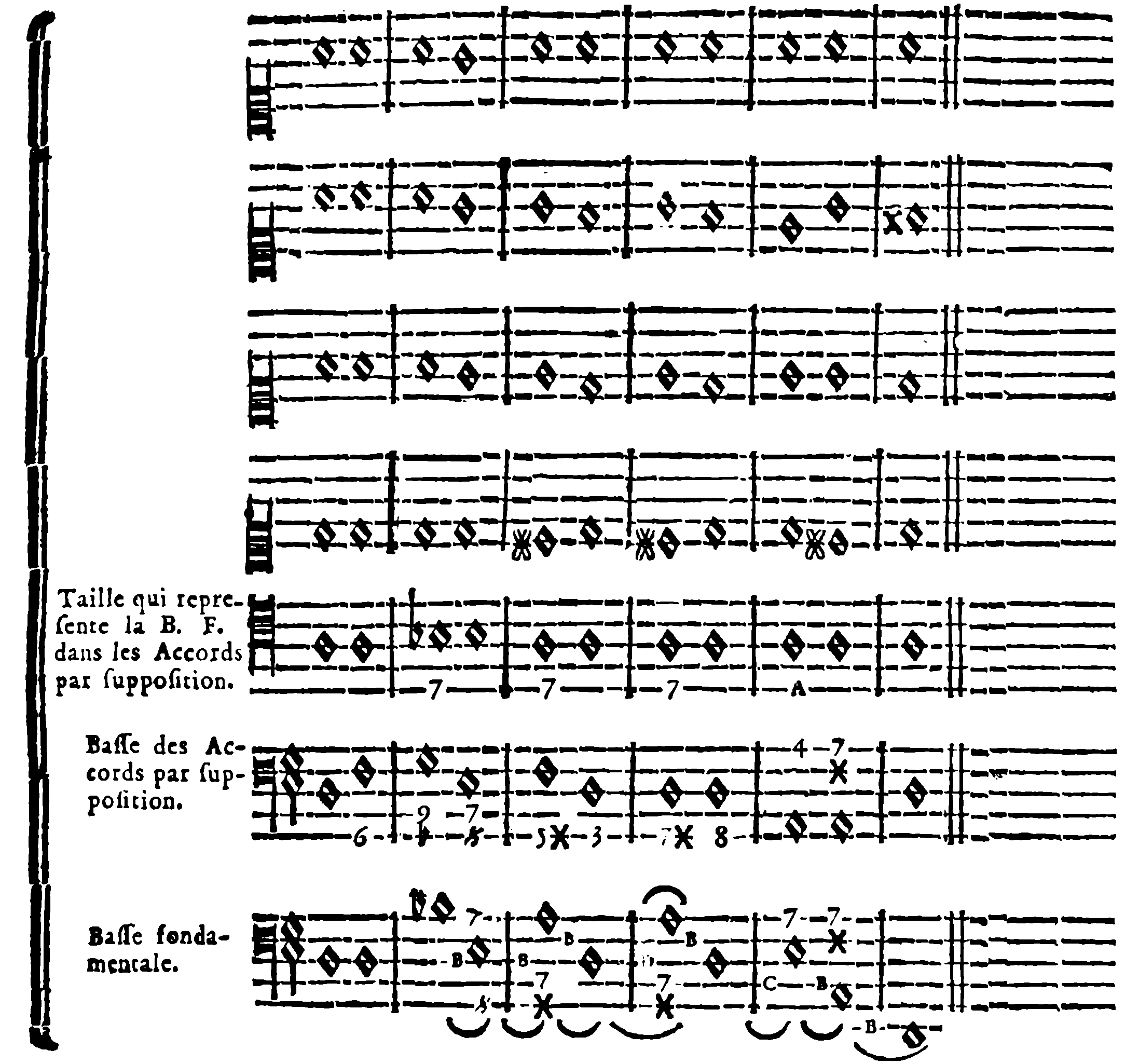 ▶ Fig. 53
CHAPTER TEN. On Chords by Supposition, with Which Cadences Can Also Be Avoided while Being Imitated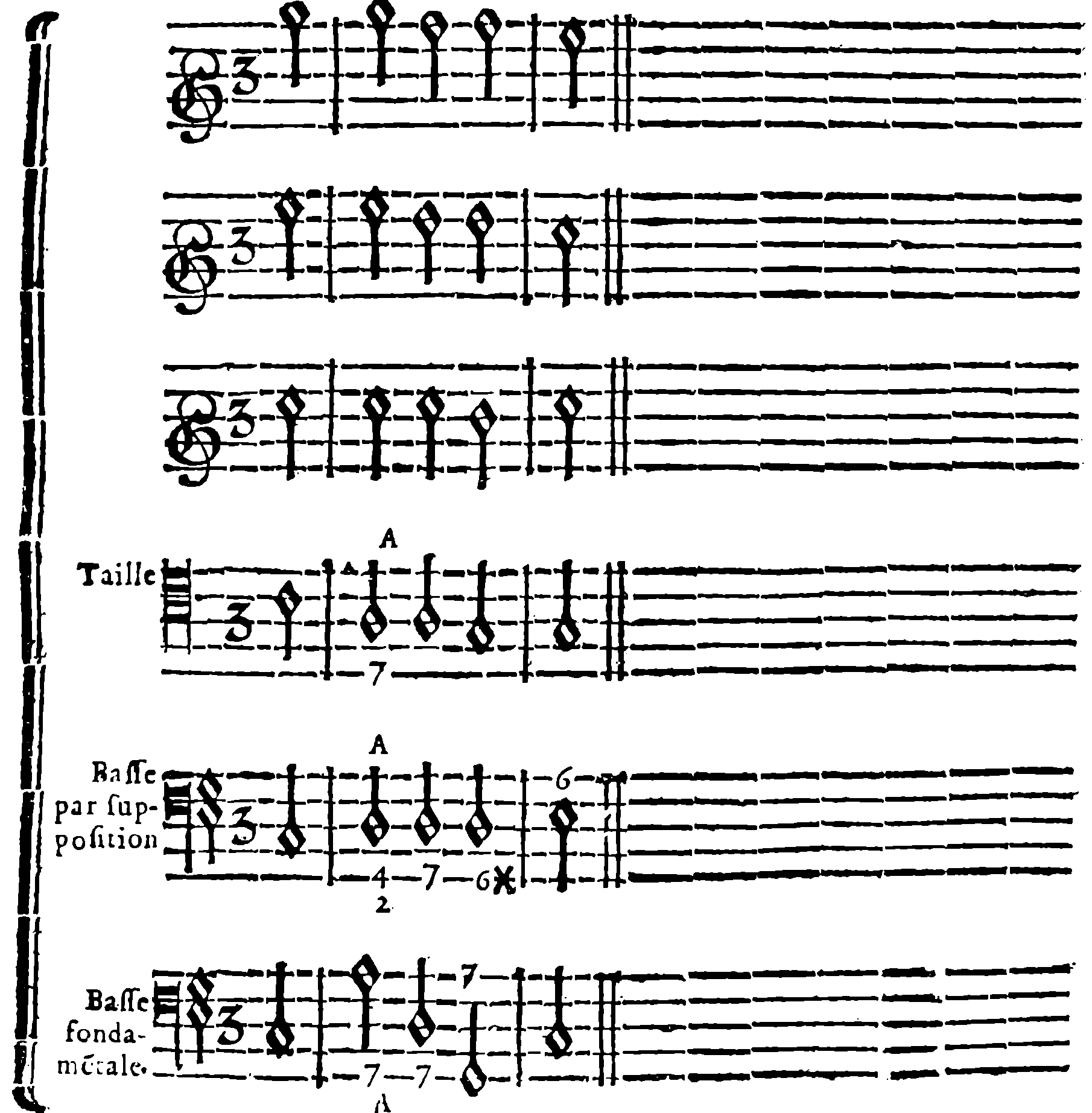 ▶ Fig. 54
CHAPTER TEN. On Chords by Supposition, with Which Cadences Can Also Be Avoided while Being Imitated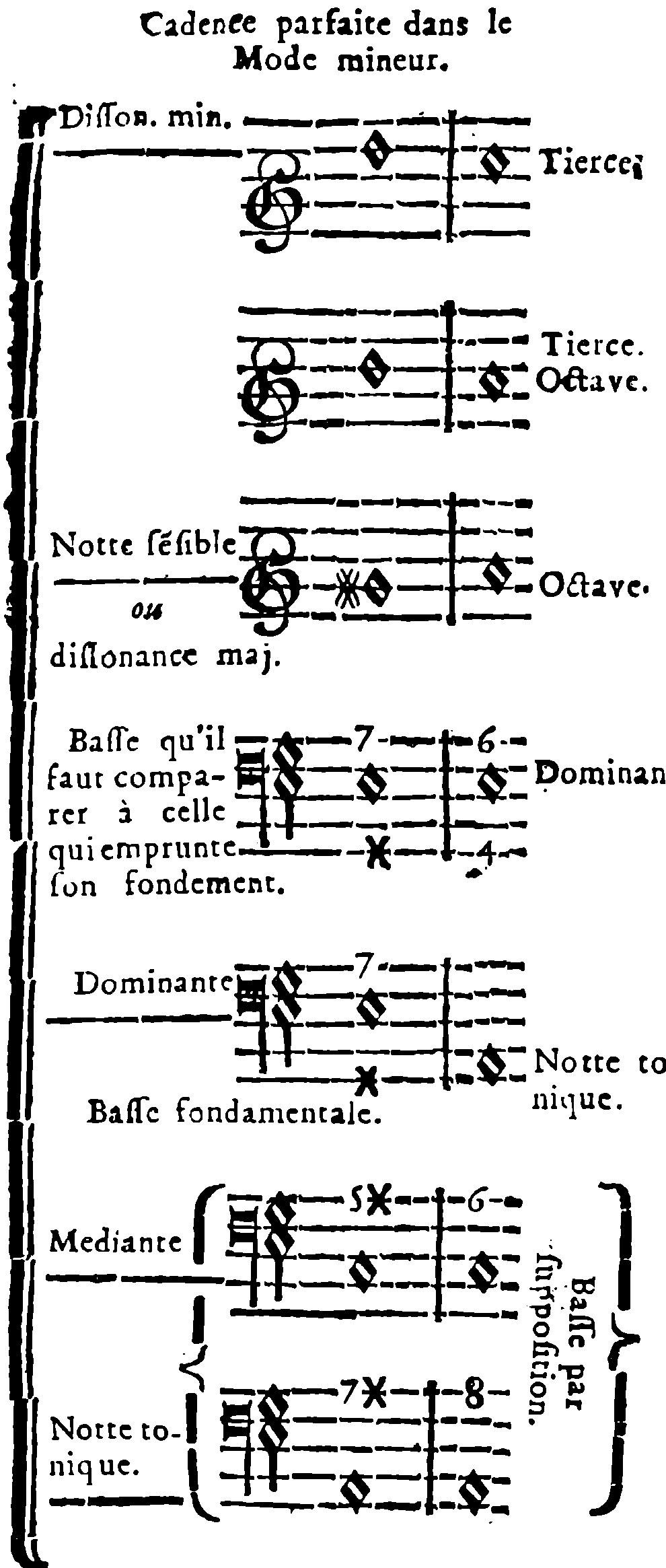 ▶ Fig. 55
CHAPTER TWELVE. On Borrowed Chords, with Which Perfect Cadences Can Be Avoided while Being Imitated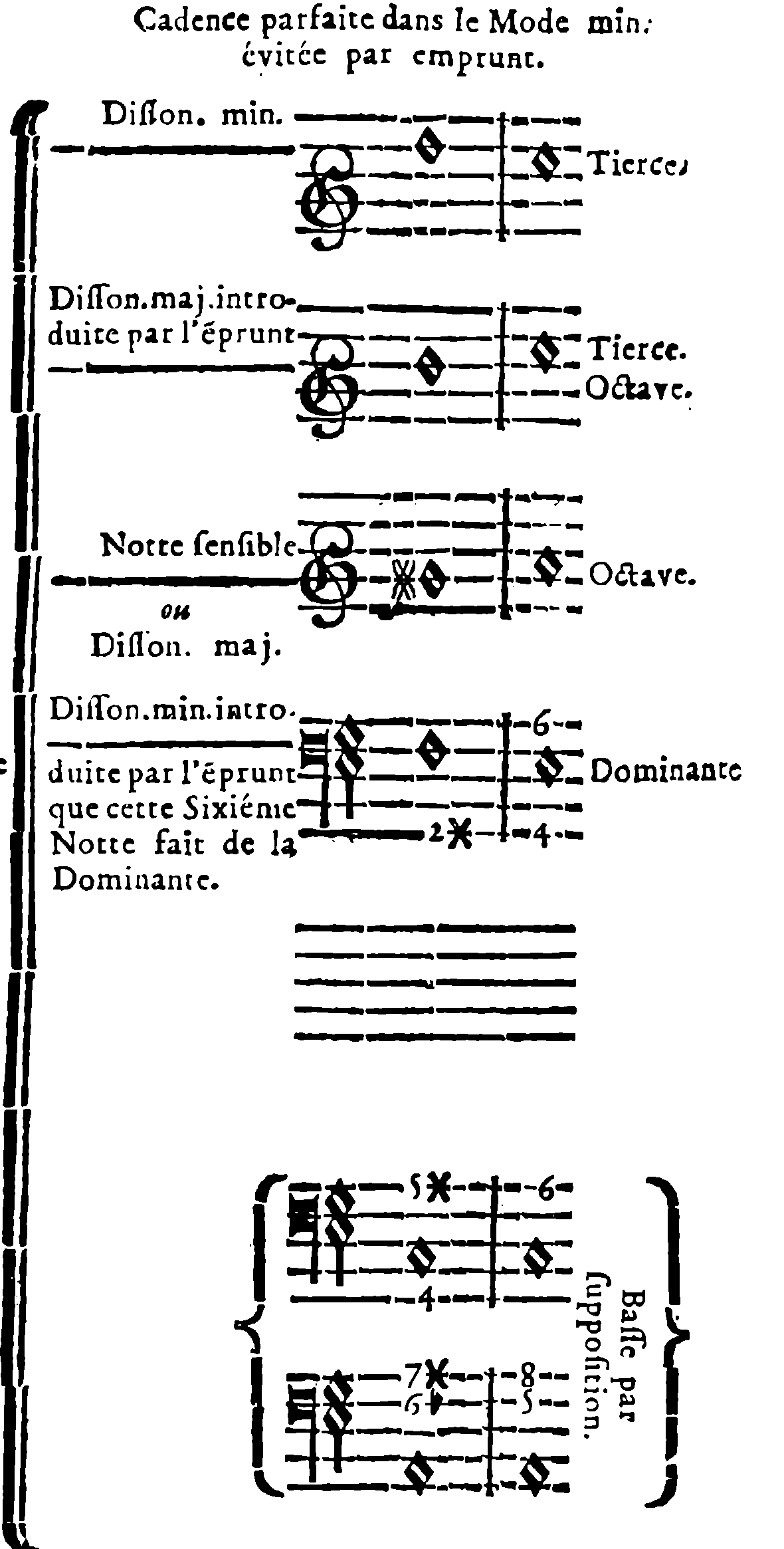 ▶ Fig. 56
CHAPTER TWELVE. On Borrowed Chords, with Which Perfect Cadences Can Be Avoided while Being Imitated
 Practical Manual of HarmonyNikolai Rimsky-Korsakov, 1910
- Preface to the First Edition
For the realizations in this manual I use four parts. For rests, staggered entries of the parts, imitation, the use of motives and the various accompaniment figures, I refer the pupil to the study of counterpoint and of free composition in all its forms.
 PartimentiFedele Fenaroli, 1800
- No. 7, Imitations · Gj 1429 · 1 playable example
- No. 9, Imitations · Gj 1431 · 1 playable example
- No. 14, Imitations · Gj 1440 · 1 playable example
- No. 19, Imitations · Gj 1445 · 1 playable example
- No. 20, Imitations · Gj 1446 · 1 playable example
- Book IV: Unfigured basses
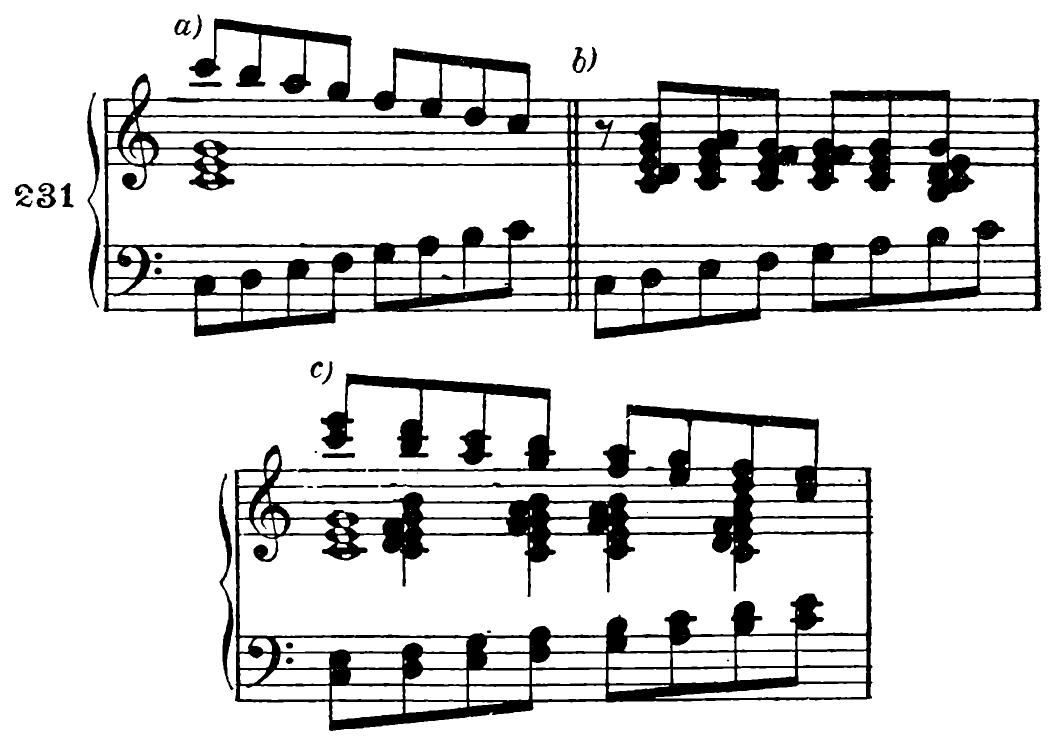
…figures. At an advanced level, the realization will feature extended melodic imitation and counterpoint.
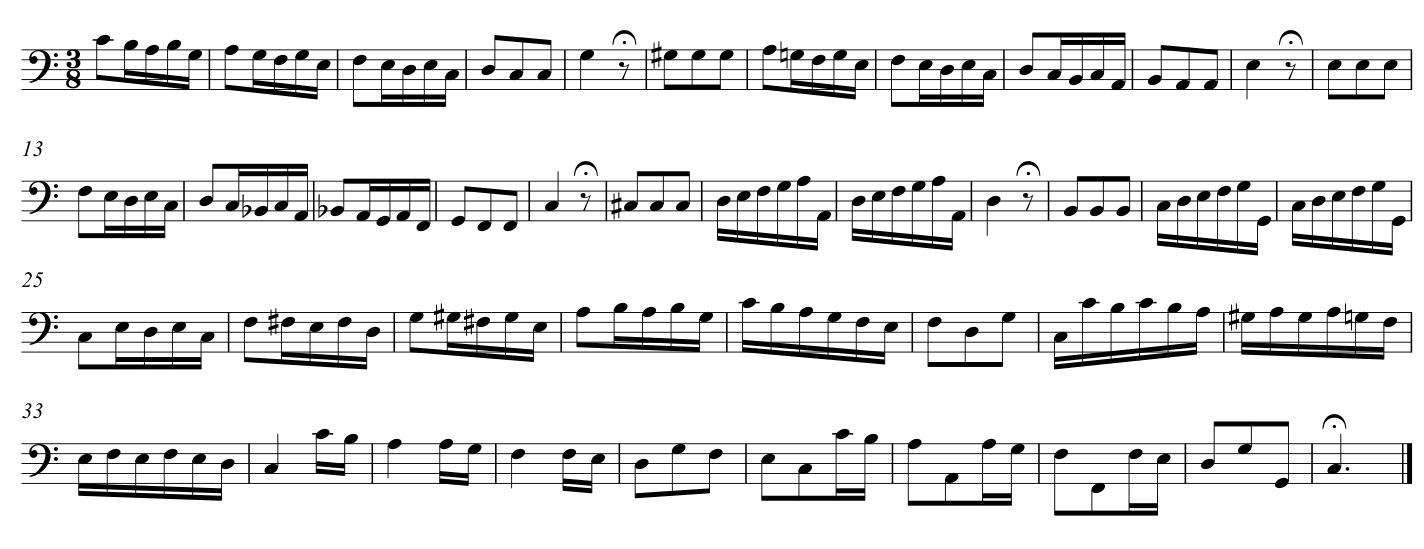 ▶ Fig. 214
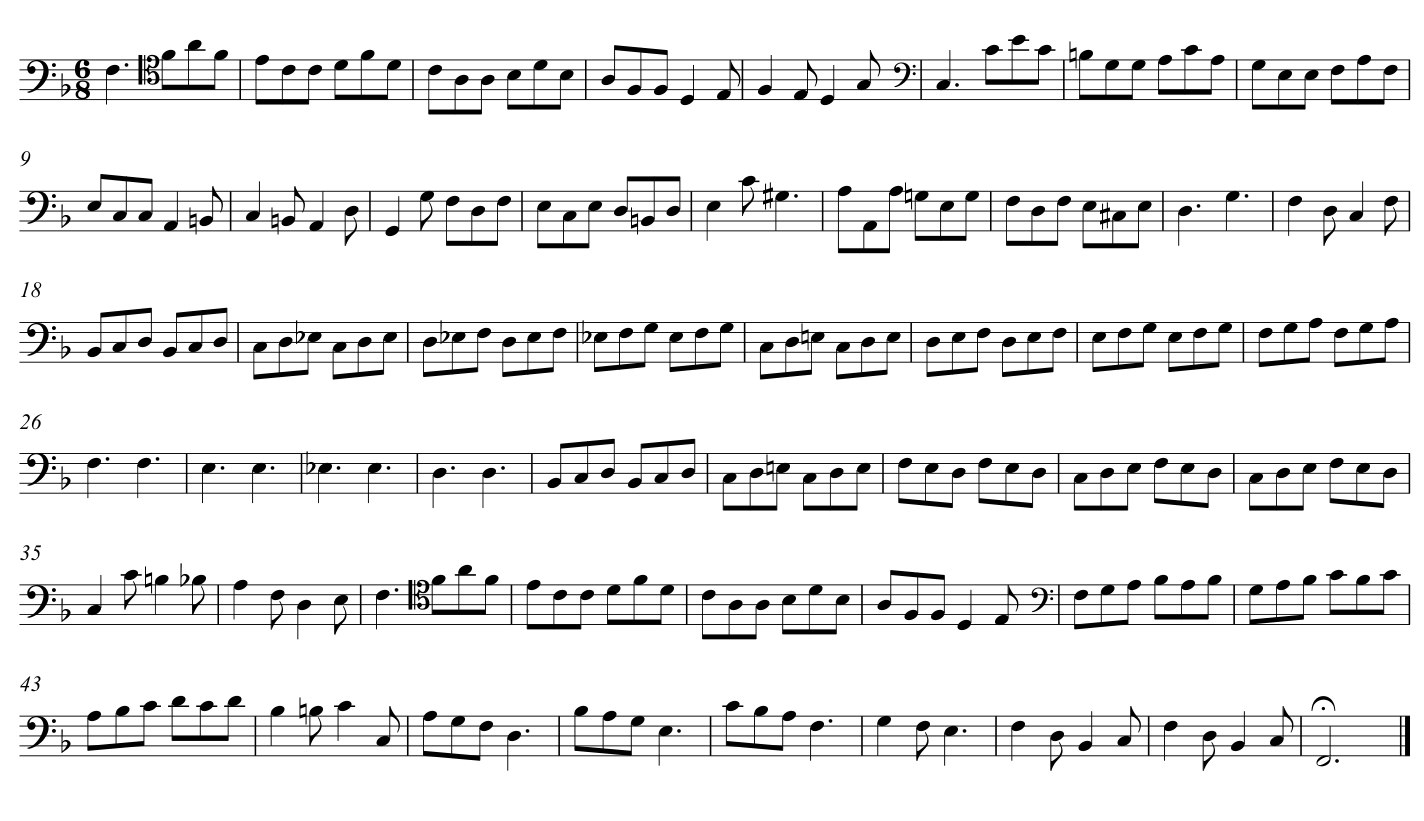 ▶ Fig. 216
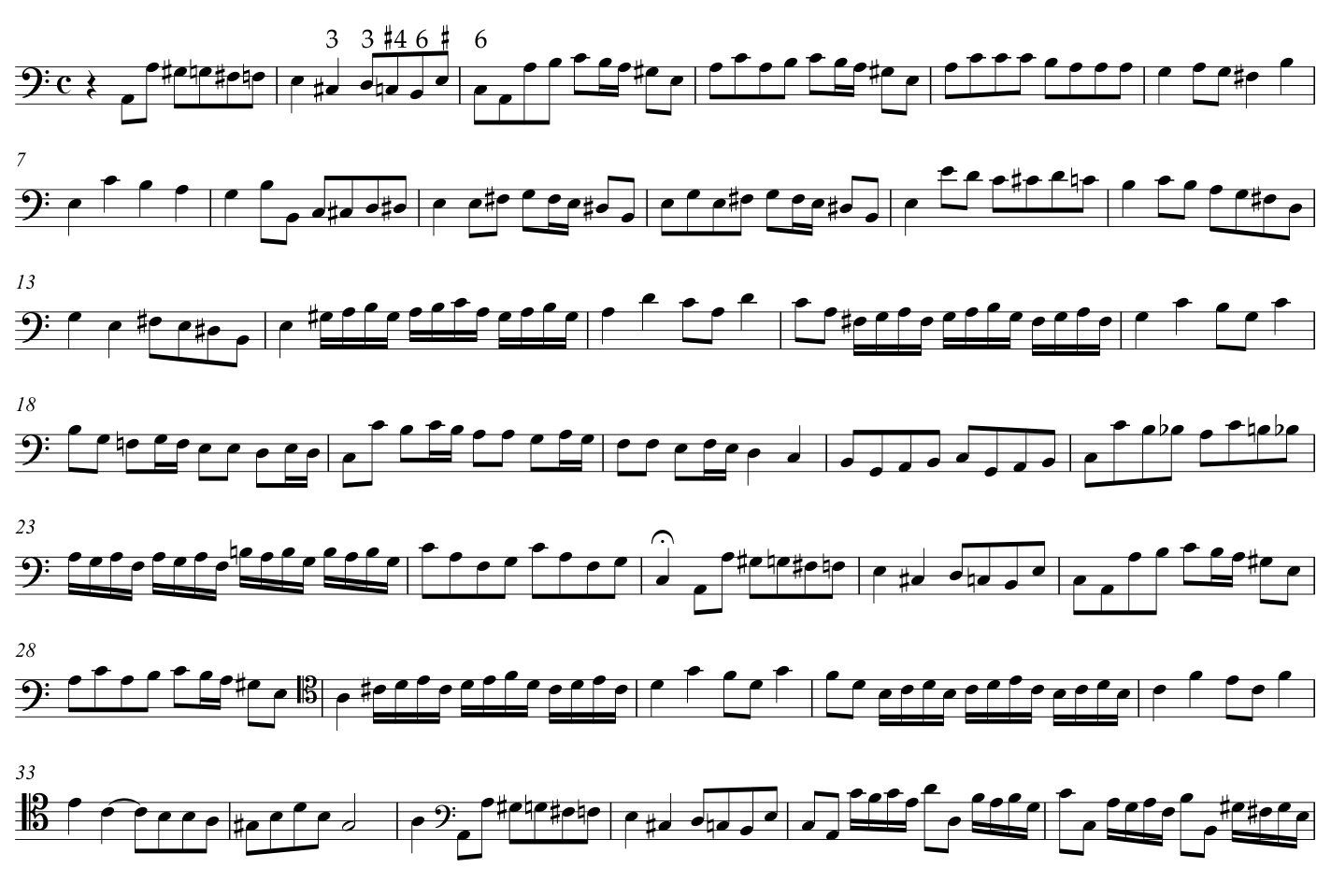 ▶ Fig. 225
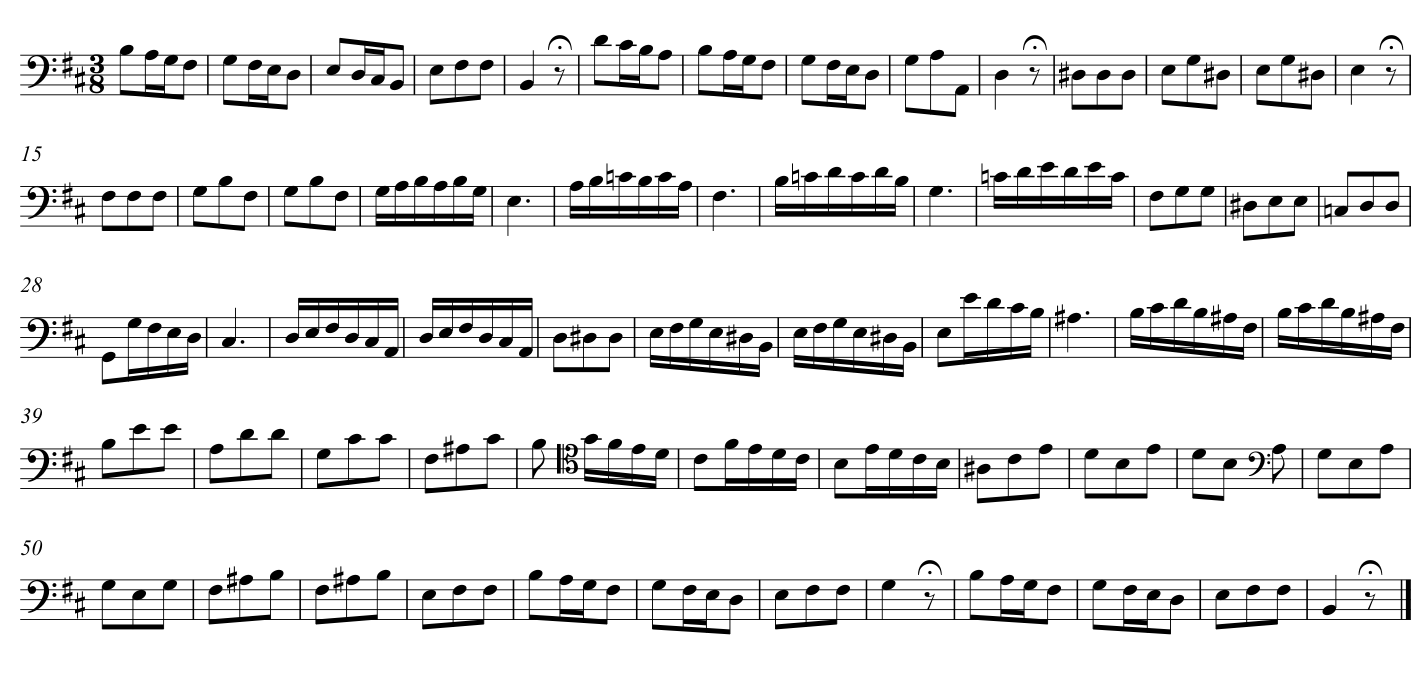 ▶ Fig. 230
 ▶ Fig. 231
 Theory of HarmonyArnold Schoenberg, 1922
- Consonance and Dissonance
At its lowest level, art is simple imitation of nature. But it soon becomes imitation of nature in the broader sense of the term: imitation not only of outer nature, but also of inner nature. In other words, it then represents not merely the objects or…
- The Major Key and Its Diatonic Chords
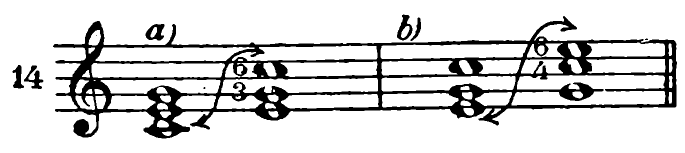
If the scale is the imitation of the tone horizontally, in succession, then chords are its imitation vertically, in simultaneity. If the scale is analysis, then the chord is synthesis of the tone. A chord is required to consist of three different tones. The…
- Inversions of triads
…rhythmic and melodic nuances. For if root position, as the most perfect imitation of the tone, represents the strongest form of the triad, the two less similar imitations, the inversions, are weaker forms. It follows naturally that the three forms of the triad…
▶ Fig. 22 nearby - “Nonharmonic” Notes
…different paths, fulfil the purpose of producing the most faithful possible imitations of the material; and these imitations are the more perfect, the more knowledge (whether intuitive, by ear, or thinking, analysing) succeeds in perceiving all the…
- “Nonharmonic” Notes
…model, by permitting it, invited it. The major consonances are direct imitations of the model, the other consonances indirect ones. Both are contained in the overtone series as overtones lying more or less near the fundamental. The remote ones, the…
▶ Fig. 435 nearby - 8. Chromaticism and Tonality
…artistic means is explained above all by the conscious or unconscious imitation of a model, and by the possibility that every imitation thus arising can itself become a model and be imitated again.
 ▶ Example 14a
 ▶ Example 231a
 Principles of OrchestrationNikolai Rimsky-Korsakov, 1922
- Repetition of phrases, imitation, echo
As regards choice of timbre, phrases in imitation are subject to the law of register. When a phrase is imitated in the upper register it should be given to an instrument of higher range and vice versa. If this rule is ignored an unnatural effect will be…
- Repetition of phrases, imitation, echo
In echo phrases, that is to say imitation entailing not only decrease in volume of tone but also an effect of distance, the second instrument should be weaker than the first, but the two should possess some sort of affinity. An echo given to muted brass…
- Voices (divisi); harmonic use of the mixed chorus
In fugato writing and fugal imitation for mixed chorus the distribution is generally in four parts, but this number may be increased for cumulative effects as in the example quoted. In such cases the composer should be careful as to the arrangement of the…
- B. Men’s chorus and women’s chorus
In fugato writing, and fugal imitation in three parts, allotted to a chorus composed of voices of one kind, the principal subject is given to two parts, the counter subject to one; by this method the doubled themes will stand out to better advantage.
 OrchestrationCecil Forsyth, 1914
- No. 7. The Cymbals."
…It is also found as the name of a stop on the Organ or Regal. The bell-imitation on the former instrument was usually effected Cy mad 3 eatres and diapay eye anton or as we should say are flage as tae The early 17th century Keyed Carillon (or, as we should…
- No. 10. The Rattle, the Wind-Machine, and the Anvil
This imitation of the "felon winds" that blow "from off each beaked promonotory" may be itself imitated (pianissimo) in the seclusion of the home by means of two fingers and an umbrella.
- No. 12. Bells
It need scarcely be said that bell-like sounds in the orchestra often depend for their effect on the associative ideas called up by the music. Instruments, perhaps sounding very little like a bell, repeat a passage which might well be executed by a peal of…
- No. 12. Bells
On the other hand, Wallace's little cracked bells in Villon depend for their success chiefly on their direct sound-imitation. The Triangle,
- No. 12. Bells
…the score and the four in the middle. The mind, accepting them both as sound-imitations, is forced to hover between the two. The artistic deception is only cleared up on a paper analysis.
- No. 56. The Dulcimer (or Cimbalom).1
…with Tenor-Drums, 31. Compass and notation, 11, 53. Egyptian and Greek, 461. Imitations oi, on Organ, etc., 35. On Bass-Drums, 28. Orchestral imitations of, 55-6. Orchestral substitutes for, 53-5. Orchestral suggestions of, 57-8. Saucer-shaped, 53.…
 Treatise on InstrumentationHector Berlioz, 1905
- Clarinets
of the night) the clarinet has frequently been used for the imitation of bird calls. (Example 88.)
- The Organ
…the Trumpet, the Clairon, the Clarinet, Oboe, English Horn, ete. Even the imitation of the human voice is attempted in a reedstop {Vox humana). Far more successful is the imitation of the celestial voice (Yor coelestis). In this stop each key is provided with…
- The Organ
…Is it that these innumerable entries of different voices, these canonic imitations, these fragments of twisted and tangied phrases pursuing and fleeing each other, even falling over each other, this confusion that excludes all true melody, where the chords…
- Voices
…for the support of alto or tenor melodies descending too low. The general imitation of this method is warmly recommended. A good example of beautiful treatment of the chorus is the a-capella prayer in the third act of “La Muette de Portici”, where the anisono…
- Kettledrums
(as a humorous imitation of the wild shrieks of market
More in Imitation and fugue
Canon · Invertible (double) counterpoint · Fugue · Subject, answer and countersubject · Episode · Stretto