 Playable Books
Concept index · Imitation and fugue
Subject, answer and countersubject
Taught in 3 books. Each one opens at the passage; ▶ plays the example beside it. Also called tonal answer, real answer, countersubject, fugue subject.
This index is Playable Books’ own: a first pass that finds the term’s words in each book, corrected by hand. The authors did not tag these passages, and their terms can differ (Fux’s “ligature” is a suspension). The quoted text is the book’s.
 Gradus ad ParnassumJohann Joseph Fux, 1725
- On various fugue subjects · 21 playable examples
- Fugue in general
…bounded by the limits of the fourth and fifth contained within the octave; fugue subjects must be regulated according to these limits. For example:
▶ Fig. 240 nearby - Double counterpoint
…take the subject of the first fugue used in the first mode and, weaving a countersubject into it, demonstrate how it is to be arranged and carried through the whole course of the fugue.
▶ Fig. 311 nearby - Double counterpoint
…and the example extracted by your impatience. Observe first that the countersubject is constructed at the unison after a rest of half a measure and is transformed into the octave through inversion of the subjects, as may be seen at numbers 1, 2, 3, 4, and 5.…
▶ Fig. 314 nearby - Double counterpoint
…at number 6 the parts leave the principal subject and play artfully with the countersubject alone, drawing it into close overlap.
▶ Fig. 315 nearby - Double counterpoint
…of the modes, treating them in the same way. But to provide variety, the countersubject should not always be introduced in the same manner, that is, in the first measure of the subject. Depending on the character of the principal subject, the countersubject…
▶ Fig. 316 nearby - Double counterpoint at the tenth
Here you see the alto proceeding with the bass countersubject entirely in tenths and producing a three-voice composition. The same occurs if the countersubject is raised an octave and lowered a third, according to the paradox given for this species of…
▶ Fig. 334 nearby
 ▶ Fig. 240
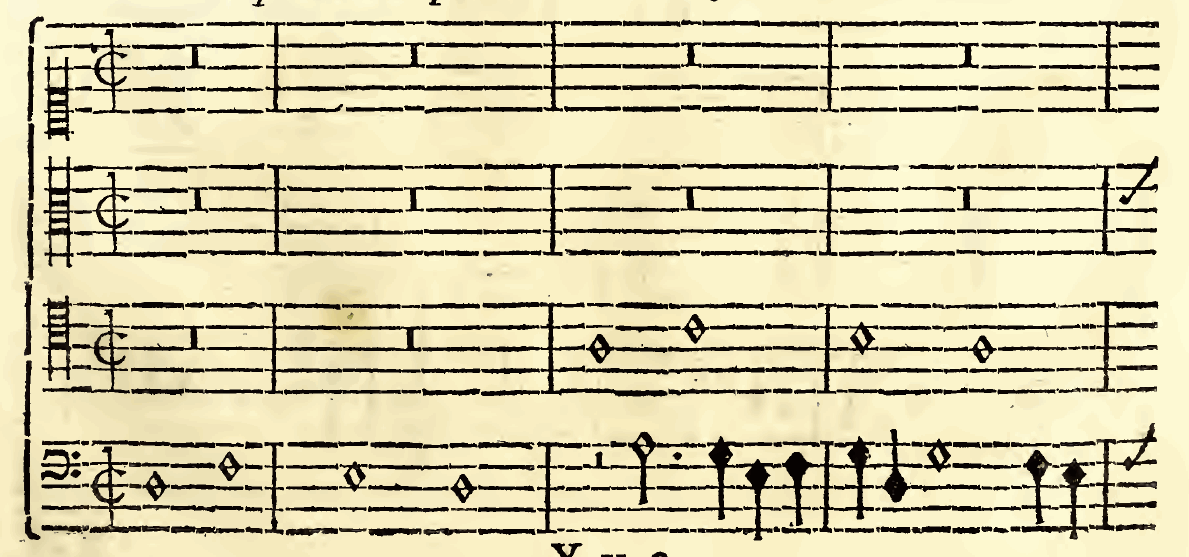 ▶ Fig. 311
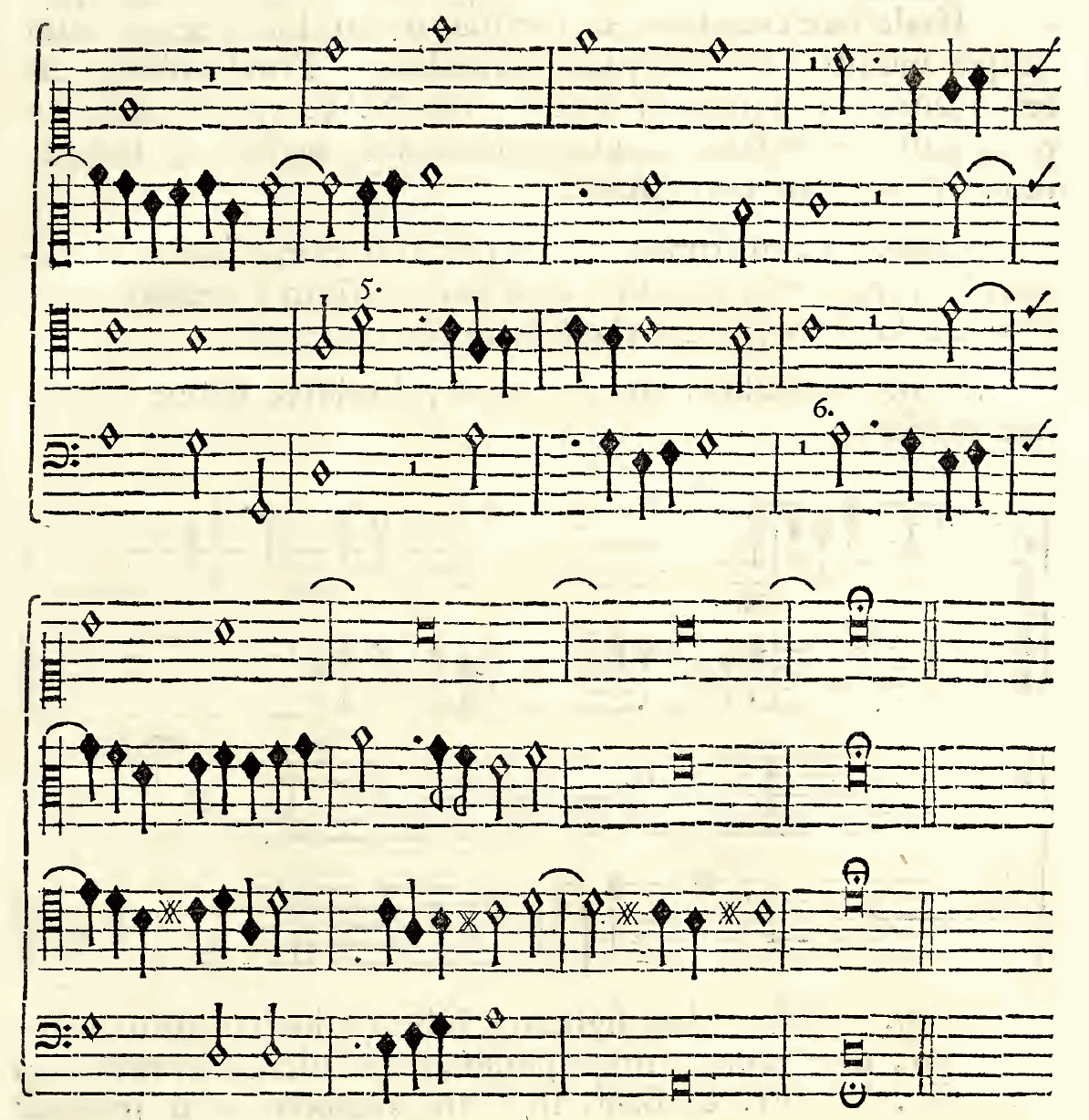 ▶ Fig. 314
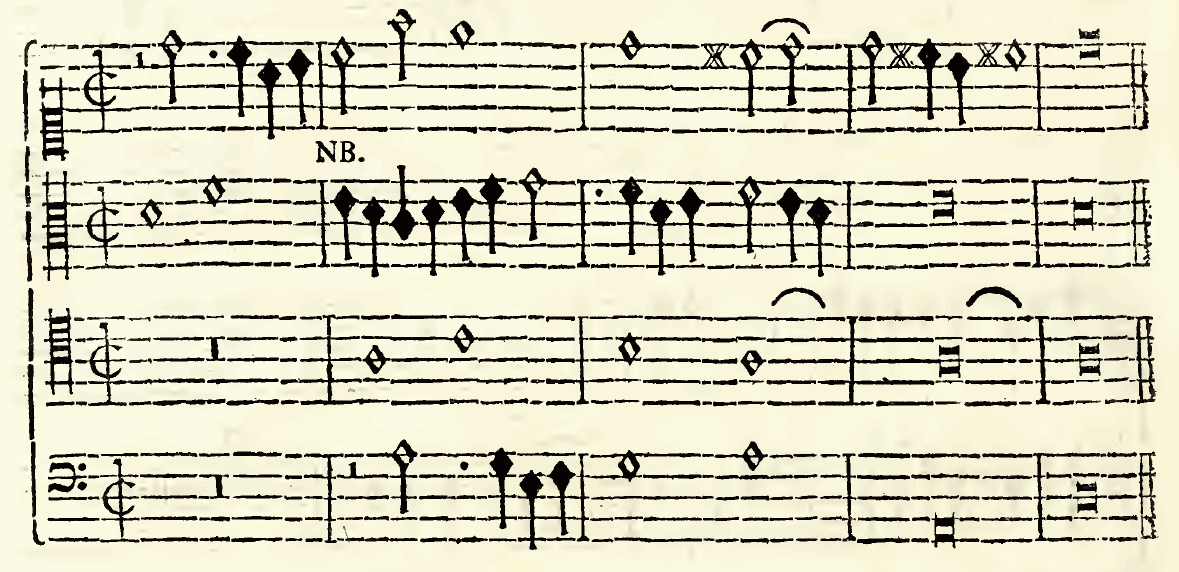 ▶ Fig. 315
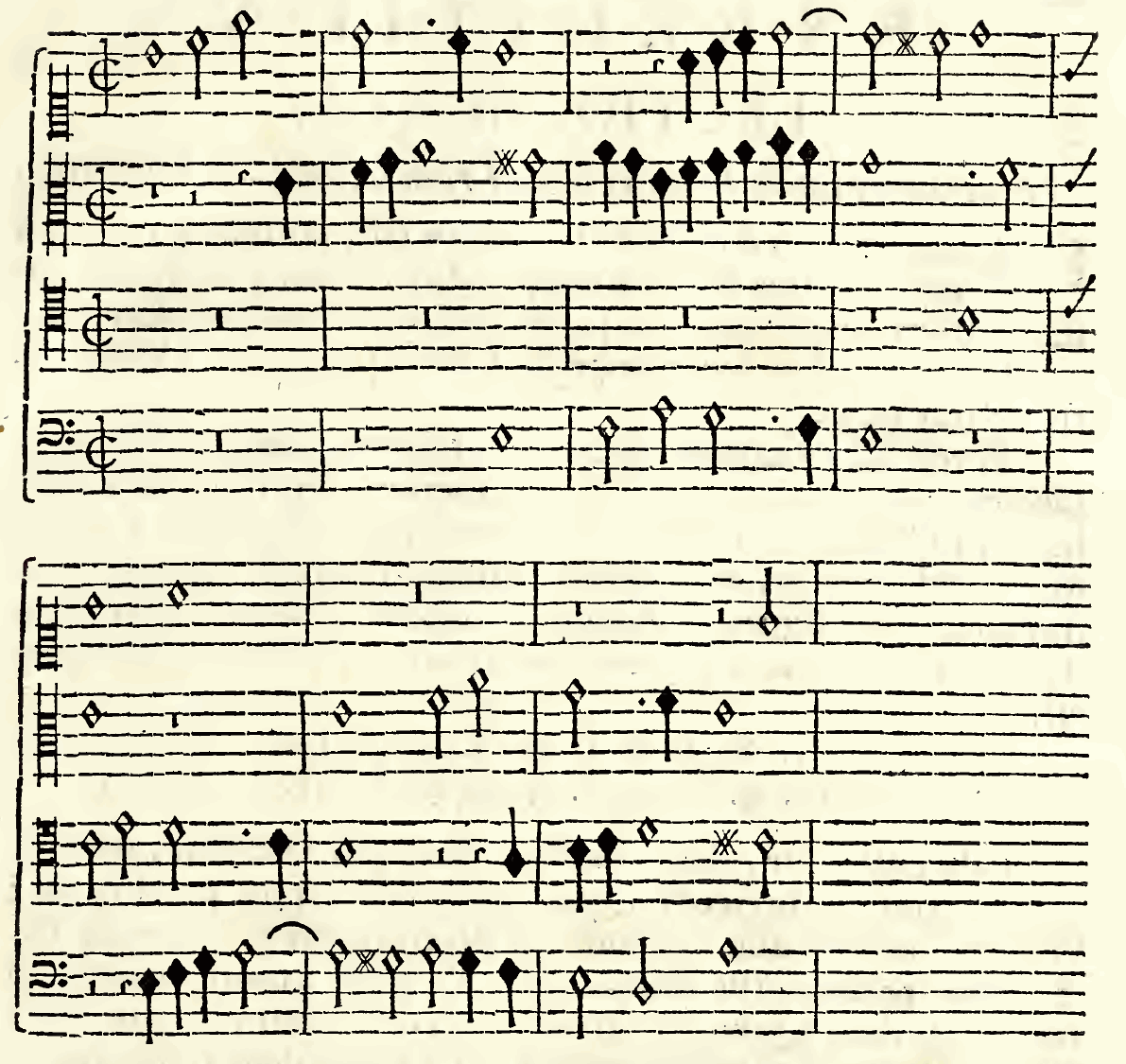 ▶ Fig. 316
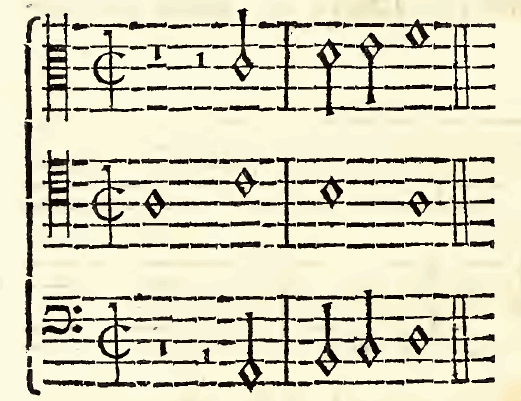 ▶ Fig. 334
 Counterpoint AppliedPercy Goetschius, 1902
- Chapter V
…chance, or upon that most delusive of resources, personal inspiration, for the answer to the vital and constantly recurring question, " What next? " Eminent and indispensable as the impulse of emotional or intellectual ardor (" inspiration ") becomes to the…
- Chapter IX
…the latter, though occasionally the MI. of the Prelude is derived from the Subject of the Fugue.
- Chapter XII
…part, as contrapuntal associate of the Response — is sometimes called the "Counter-subject"; as this term is misleading (in the Single Fugue), it will be spoken of here simply as the "Counterpoint." Comp. par. 34.
▶ Fig. 352 nearby
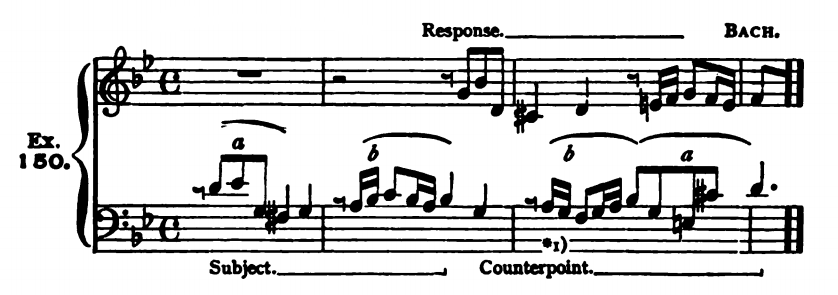 ▶ Ex150
 Analysis of J. S. Bach’s Forty-Eight FuguesEbenezer Prout, 1910
- Introduction
…the subject (hence the terms " dux " and " comes,” sometimes used instead of subject and answer). The first entries of the remaining voices usually alternate between the subject and answer, but there are occasional exceptions. There are two kinds of answer.…
- Fugue 4 · Book I, No. 4 · BWV 849
The bass leads, and the tenor replies with a real answer. No regular countersubject is introduced at this point; for though the counterpoint with which the tenor at bars 7 to 10 accompanies the entry of the subject in the alto is the same with which the bass…
▶ Fig. 9 nearby - Fugue 12 · Book I, No. 12 · BWV 857
is announced in the tenor, and is given a tonal answer in the alto (bar 4), in order that the initial dominant may be replied to by the tonic; but it is noteworthy that this tonal form of answer is not heard again throughout the fugue. There is a regular…
▶ Fig. 31 nearby - Fugue 23 · Book I, No. 23 · BWV 868
could have been given a real answer, but Bach has elected to regard the second, third, fourth and fifth notes in their relation to the dominant, and answer them by the corresponding intervals of the tonic, thus giving a tonal answer, somewhat as in No. 19. The…
▶ Fig. 56 nearby - Fugue 44 · Book II, No. 20 · BWV 889
…relative major, in which key the next entry is made, in the bass, with the countersubject in the treble. A passing note (F, quaver) is here introduced between the first two notes of the subject, as is also the case in the final entry, at bar 25. The second…
▶ Fig. 102 nearby - Fugue 46 · Book II, No. 22 · BWV 891
…the relative major, between treble and bass, the higher voice leading; the countersubject is absent. Bars 42 to 62 constitute an irregular counter-exposition, with both subject and countersubject in inverse movement. The tenor leads, commencing on the…
▶ Fig. 106 nearby
171 more passages in Analysis of J. S. Bach’s Forty-Eight Fugues →
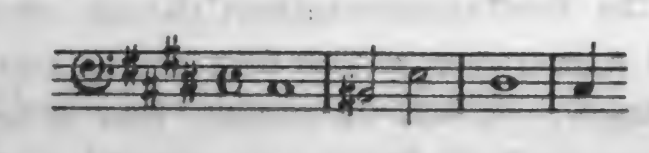 ▶ Subject · Fugue 4
 ▶ Subject · Fugue 12
 ▶ Subject · Fugue 23
 ▶ Prout’s excerpt · Fugue 44
 ▶ Prout’s excerpt · Fugue 46
More in Imitation and fugue
Imitation · Canon · Invertible (double) counterpoint · Fugue · Episode · Stretto