 Playable Books
Concept index · Cadence, key and progression
Cadence
Taught in 11 books. Each one opens at the passage; ▶ plays the example beside it. Also called cadences, authentic cadence, perfect cadence, plagal cadence.
This index is Playable Books’ own: a first pass that finds the term’s words in each book, corrected by hand. The authors did not tag these passages, and their terms can differ (Fux’s “ligature” is a suspension). The quoted text is the book’s.
 Gradus ad ParnassumJohann Joseph Fux, 1725
- First species in three voices
Aloys. You have exercised very prudent judgment about the final cadence. Because of the particular position of the semitone, the standard cadential formula is not possible there, and a particular form of cadence therefore had to be made. Nor should the major…
▶ Fig. 109 nearby - Fugue in two parts
…After some melodic continuation, arrange the parts so as to make the first cadence on the fifth of the mode. After this, with a rest of a whole or half measure, or even without a rest if a large leap intervenes, take up the theme again, generally in the part…
▶ Fig. 247 nearby - Fugue in two parts
…the soprano is finished. After a brief melodic continuation in both parts, a cadence is made on the fifth of the mode. Next you see the alto repeat the subject a fifth of the mode lower, without a rest because it enters by leap. Then, after a rest, the soprano…
▶ Fig. 248 nearby - Fugue in three parts
Aloysius. You know that a formal or complete cadence concludes with a major third and proceeds from there to an octave. A deceptive cadence, however, using a minor third instead of a major one, eludes the formal cadence expected by the ear and deceives the…
▶ Fig. 263 nearby - Fugue in three parts
I declare that formal cadences of this kind are not only permitted, but also add no little ornament to the composition. So much for joining a formal cadence to subjects. I shall now teach by examples how cadences interwoven with subjects are to be evaded,…
▶ Fig. 270 nearby - Fugue in three parts
Aloysius. You know that the cadences allowed in two voices differ in nature from formal cadences: they consist of a seventh and sixth, or a second and third, and possess less repose. On examining the matter more carefully, one finds that cadences based on a…
▶ Fig. 271 nearby
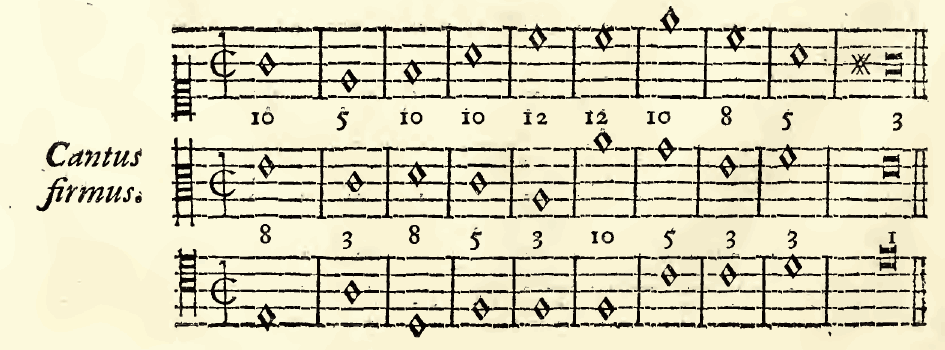 ▶ Fig. 109
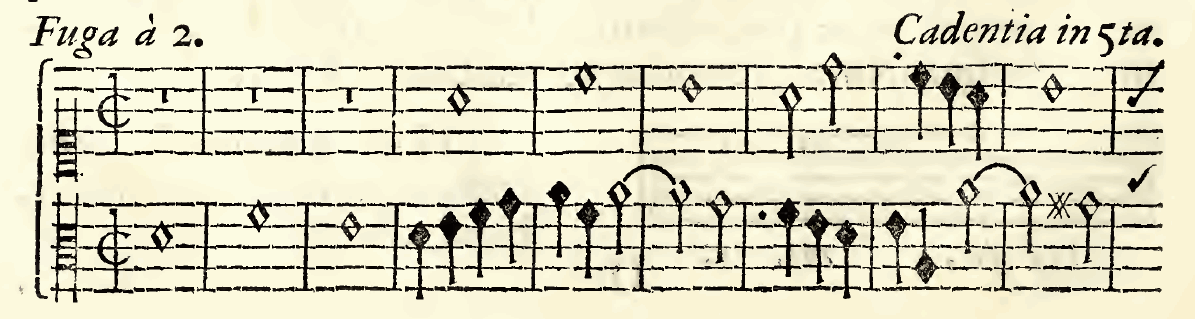 ▶ Fig. 247
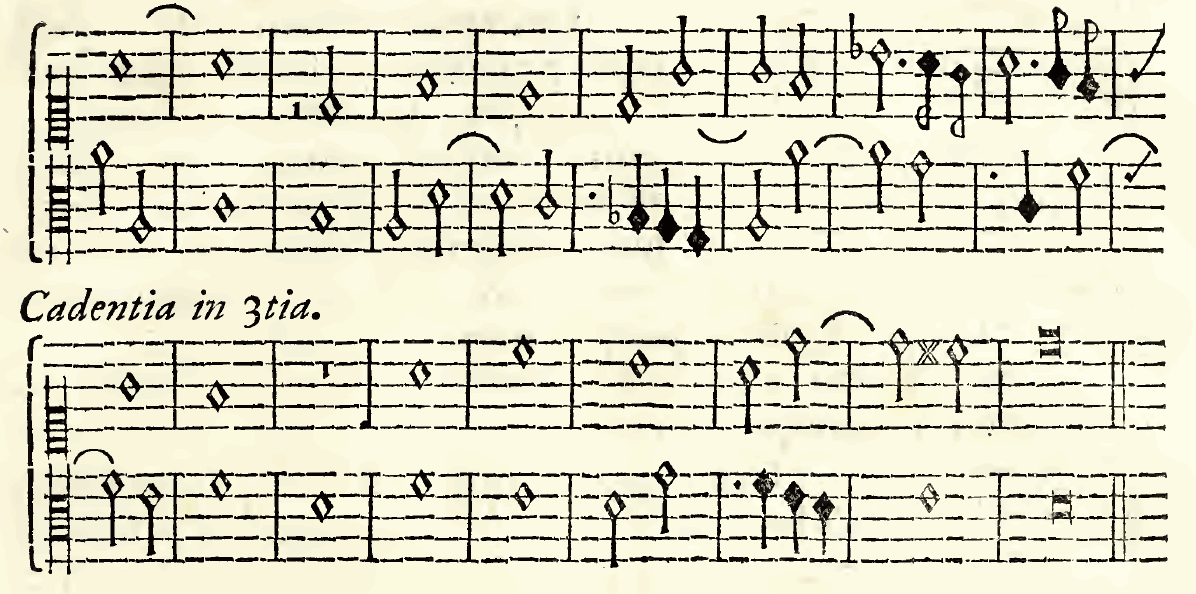 ▶ Fig. 248
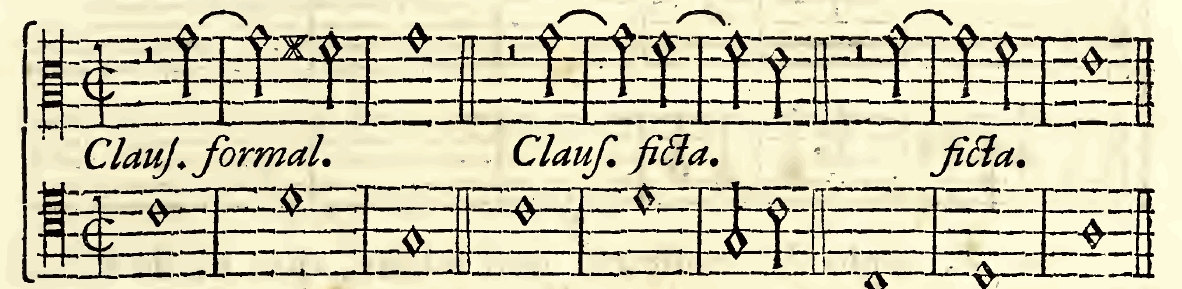 ▶ Fig. 263
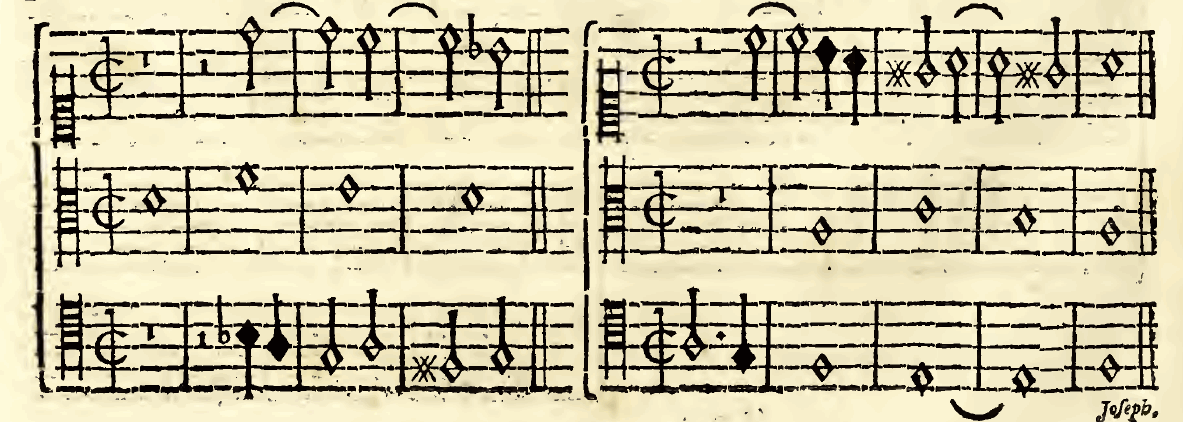 ▶ Fig. 270
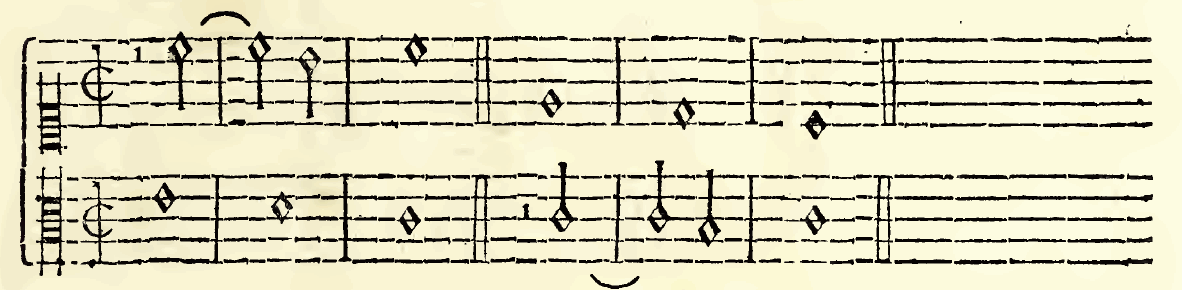 ▶ Fig. 271
 Exercises in Elementary CounterpointPercy Goetschius, 1910
- Chapter XII. Four Notes To A Beat
Observe that in all of these versions, and in nearly all recent examples, one of the parts usually carries on the quicker rhythm for a beat or so, at the cadence.
▶ Fig. 216 nearby - Chapter XV. Motive-Development. Imitation
…will be necessary (before rounding off the complete sentence with a perfect cadence in the original key) to introduce a few more episodic passages, modulations, and imitations of the Motive. Some of these are necessary, and determinable; though, in general,…
▶ Fig. 263 nearby - Chapter XV. Motive-Development. Imitation
11. Episode, and perfect cadence.
▶ Fig. 264 nearby - Chapter XV. Motive-Development. Imitation
Observe, further, the addition of extra parts, and the duplication of the lower part in octaves, at the approach to the perfect cadence.
▶ Fig. 264 nearby - Chapter XXI. Motive-Development
In measure 20, the distinct perfect cadence (in D minor). This is important
▶ Fig. 368 nearby - Chapter XXI. Motive-Development
In the final measure, the cadence in G major. See explanatory Notes to Ex. 149, first clauses.
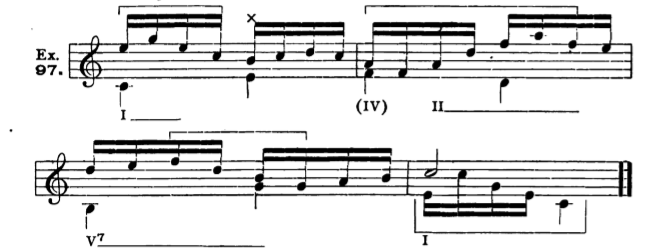 ▶ Ex.97
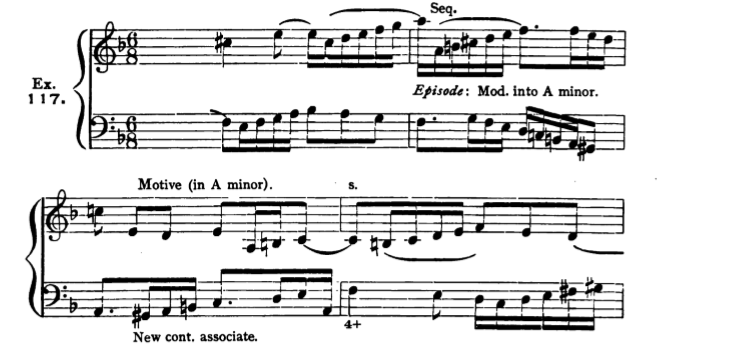 ▶ Ex.117
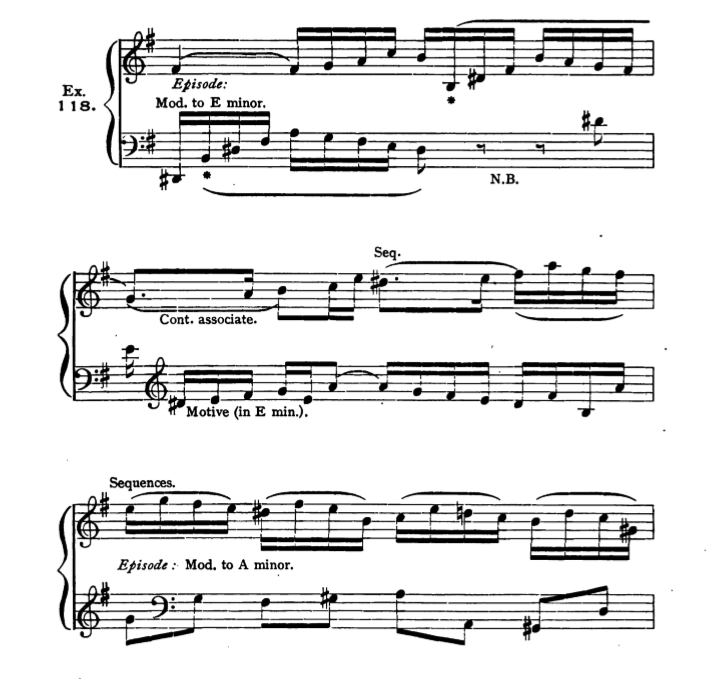 ▶ Ex.118
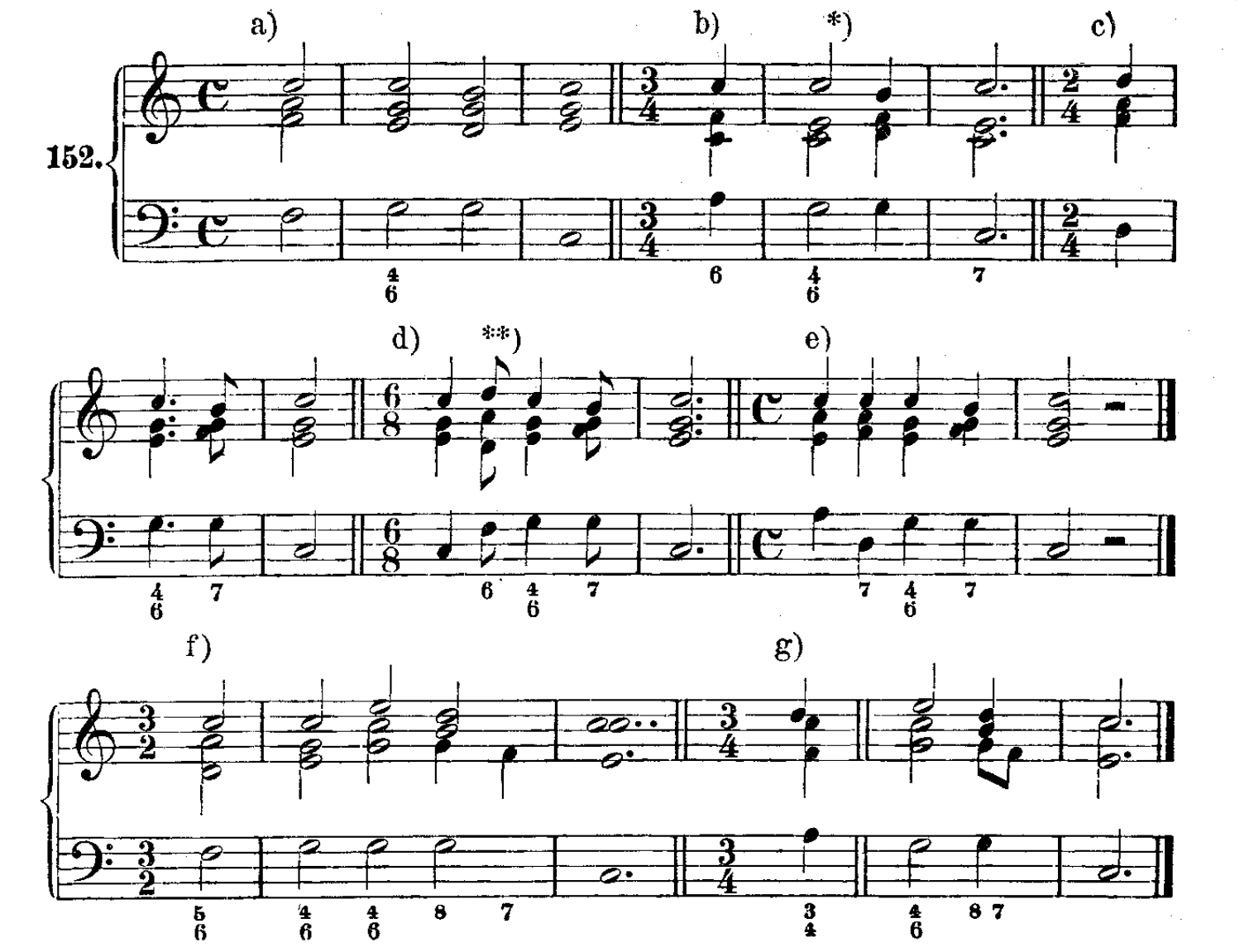
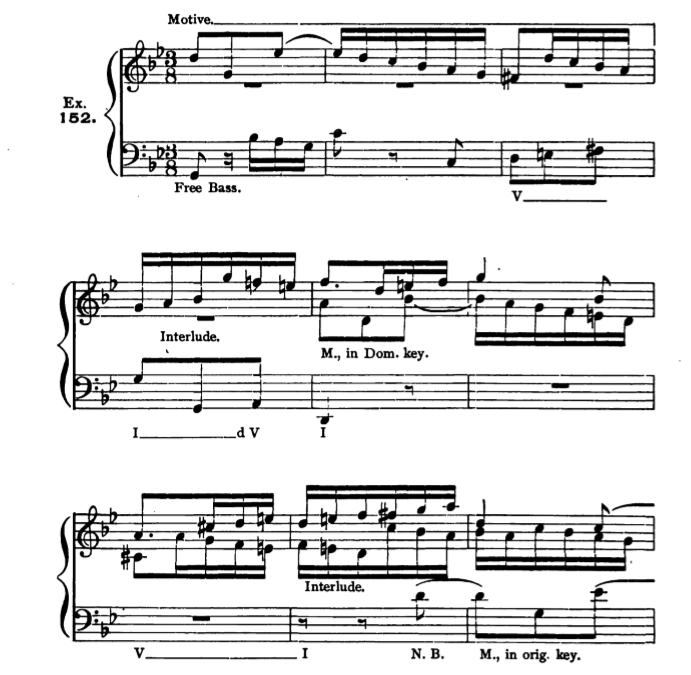 ▶ Ex.152
 Counterpoint AppliedPercy Goetschius, 1902
- Chapter V
h. The Cadences of polyphonic Sections are generally, as implied in par. 39a, much less decisive than those of homophonic forms, both in harmonic and rhythmic respect. Still, they assume the aspect of the Perfect cadence (only excepting a few rare instances…
▶ Fig. 222 nearby - Chapter V
*I) This cadence is much less distinct than the preceding ones, because the instability of the lower (Bass) part, and its culminating upon an Inversion of the Tonic harmony. But the weight of the upper part, resting for some time upon the Tonic note, is…
▶ Fig. 223 nearby - Chapter V
…once in Stretto; Part I is divided into two sections by a brief but decisive cadence in the 23rd measure (Relative key); Part II uses the Contrary motion for 20 measures, when two announcements in original motion lead to a Dominant semi-cadence ; Contrary…
- Chapter XII
126. The Exposition ends, as a rule, with a perfect cadence in the Dominant key (from a major beginning), or in the Relative key (from a minor beginning). Other keys, especially the original key itself, are possible, however, and not infrequently chosen. The…
▶ Fig. 356 nearby - Chapter XII
…"Fughettas" for pianoforte, op. 126; No. ¿ (two Sections, very vague cadence; begins with " Response "); No. 3 (three Sections, cadences vague); No. 4, ditto; No. 5, ditto (new, characteristic counterpoint in Sec. III) ; No. 7 (three Sections, cadences fairly…
- Chapter XVII. THE ROUND, OR ROUND-CANON
…Follower begins after 1o measures (irreg. Period-form); ends with perfect cadence. — No. 47 ; 3-voice, unison, after 14 measures (Group of 3 phrases, extended); perfect cadence. — No. 52; Round for 4 voices, unison, after 6 measures; the Canon is " endless,"…
▶ Fig. 415 nearby
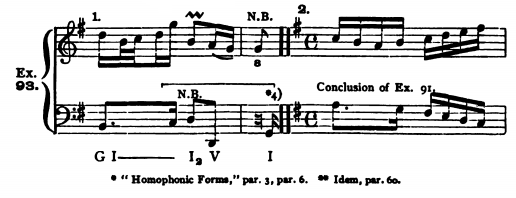 ▶ Ex93-1-4
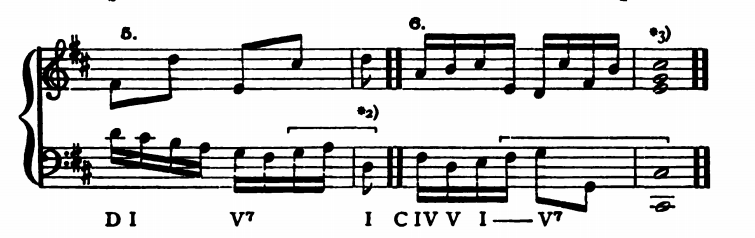 ▶ Ex93-5-6
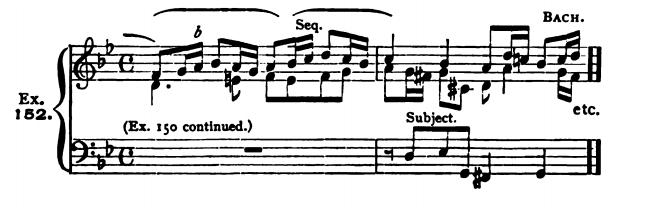 ▶ Ex152
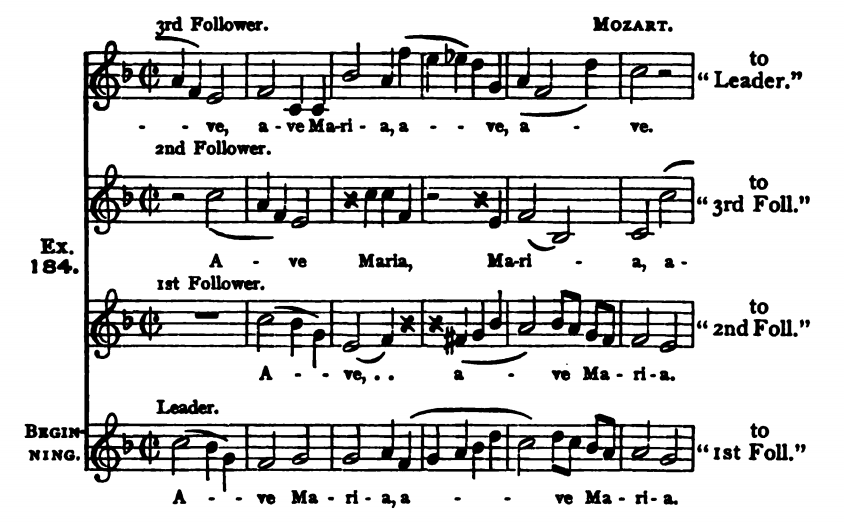 ▶ Ex184
 Analysis of J. S. Bach’s Forty-Eight FuguesEbenezer Prout, 1910
- Introduction
…separates entries that belong to the same group, or merely supplies a cadence to an entry, while an episode separates those belonging to different groups, making the modulations. Thus the term codetta is chiefly used in connection with the exposition, where a…
- Introduction
NOTE.—It is assumed that the terms belonging to simpler branches of musical theory, such as "cadence," "sequence," "pedal point," are already familiar to the student.
- Fugue 1 · Book I, No. 1 · BWV 846
…in C is answer instead of subject. We have here in fact an extended plagal cadence; it will be seen that the authentic full cadence precedes it (bar 23). The whole of this final section is built over a tonic pedal.
▶ Fig. 2 nearby - Fugue 3 · Book I, No. 3 · BWV 848
…with a prolongation of the preceding phrase, leading in bar 22 to a full cadence in E sharp minor. To this succeeds a sequential figure in the treble, made from the first bar of the subject, and accompanied (not sequentially) by semiquavers in alto, and, at…
▶ Fig. 7 nearby - Fugue 4 · Book I, No. 4 · BWV 849
…F sharp minor, with CS 2 in the alto; we have here, as in Fugue 1, a plagal cadence, following the authentic cadence that preceded. In spite of the comparatively small amount of modulation, this fugue is remarkable for its great variety combined with perfect…
▶ Fig. 12 nearby - Fugue 5 · Book I, No. 5 · BWV 850
…followed by an isolated entry (bass) in E minor in bar 15 leading to a full cadence in the same key (bar 17).
▶ Fig. 15 nearby
12 more passages in Analysis of J. S. Bach’s Forty-Eight Fugues →
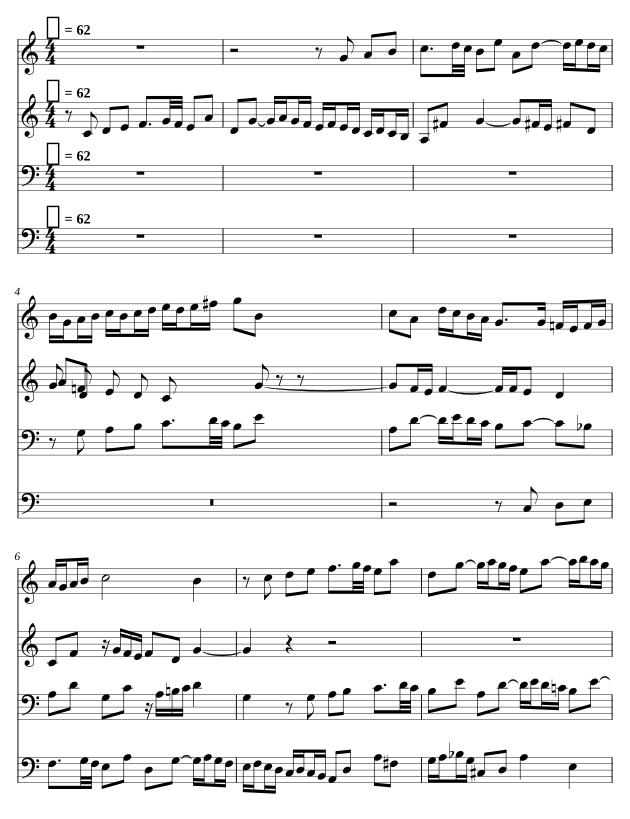 ▶ Complete score
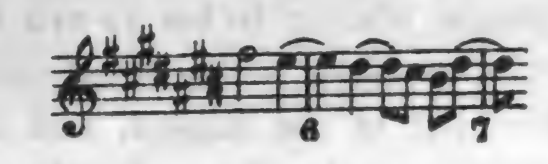 ▶ Analytical excerpt · Fugue 3
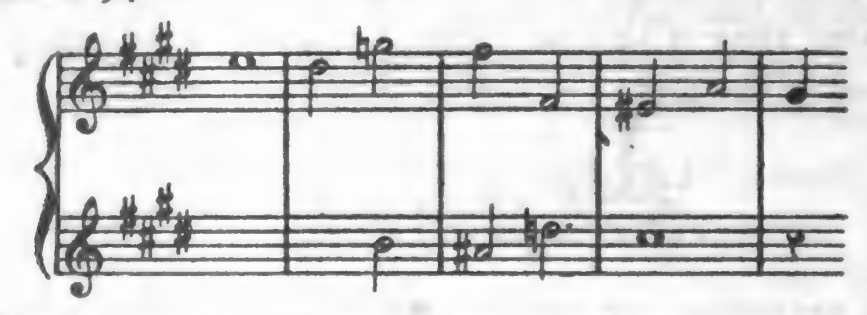 ▶ Stretto · two voices · Fugue 4
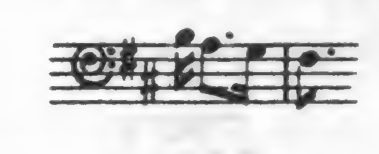 ▶ Analytical excerpt · Fugue 5
 Treatise on HarmonyJean-Philippe Rameau, 1722
Start: Chapter five → Start: Chapter seven → Start: Chapter six →- CHAPTER EIGHT. On Imitating Cadences by Inversion
- CHAPTER NINE. On Avoiding Cadences while Imitating Them · 2 playable examples
- CHAPTER TEN. On Chords by Supposition, with Which Cadences Can Also Be Avoided while Being Imitated · 2 playable examples
- CHAPTER TWELVE. On Borrowed Chords, with Which Perfect Cadences Can Be Avoided while Being Imitated · 2 playable examples
- Chapter six
This cadence differs little from the perfect cadence, since both are composed either of the same chords or of the same fundamental bass. If their chords are the same, the fundamental bass, which must descend a fifth in the perfect cadence, ascends diatonically…
▶ Fig. 46 nearby - Chapter thirty-five
First compose a bass with the most beautiful melody you can imagine, in a familiar key from which you can pass to several others equally familiar, as discussed in Chapter XXIV. Fill this bass with perfect cadences as often as possible, for this is the natural…
▶ Fig. 297 nearby - Chapter forty
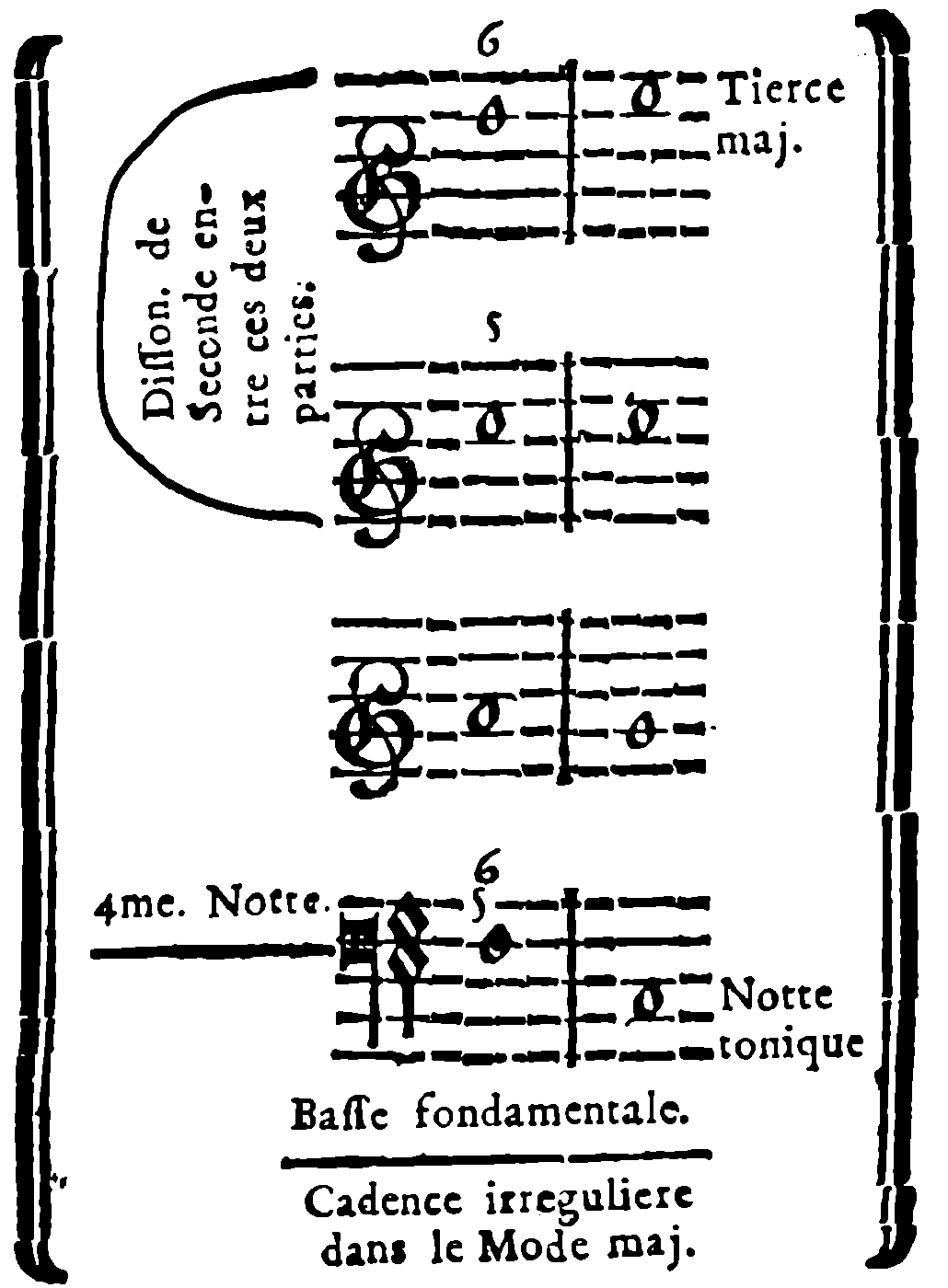
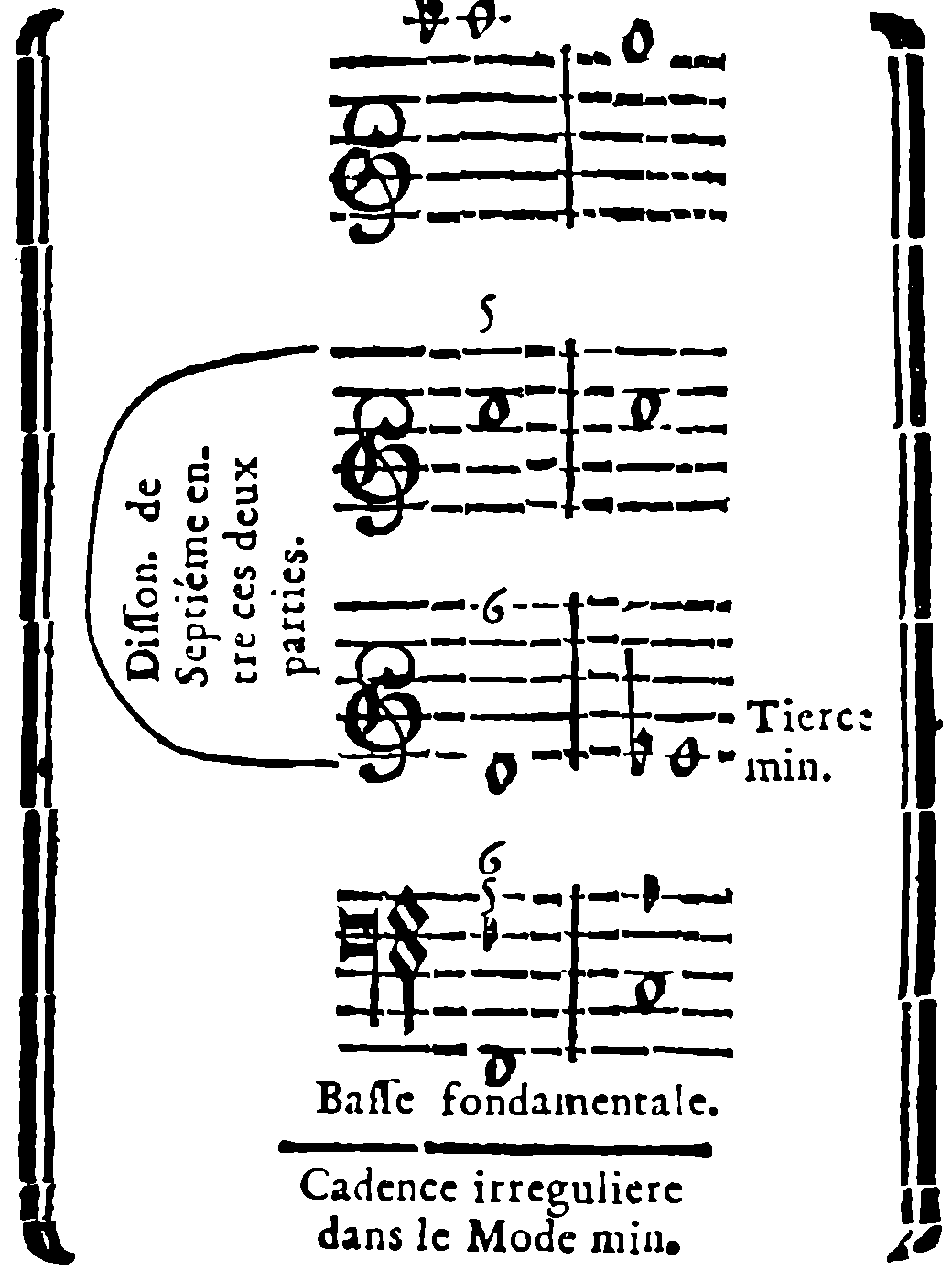
Cadences C, D, F, and G may be perfect or irregular, distinguished only by the freely chosen bass motion: ascending a fourth to the tonic for a perfect cadence, or descending a fourth to that tonic or the dominant for an irregular cadence. “Or the dominant”…
▶ Fig. 313 nearby - CHAPTER XI. Sixth chords
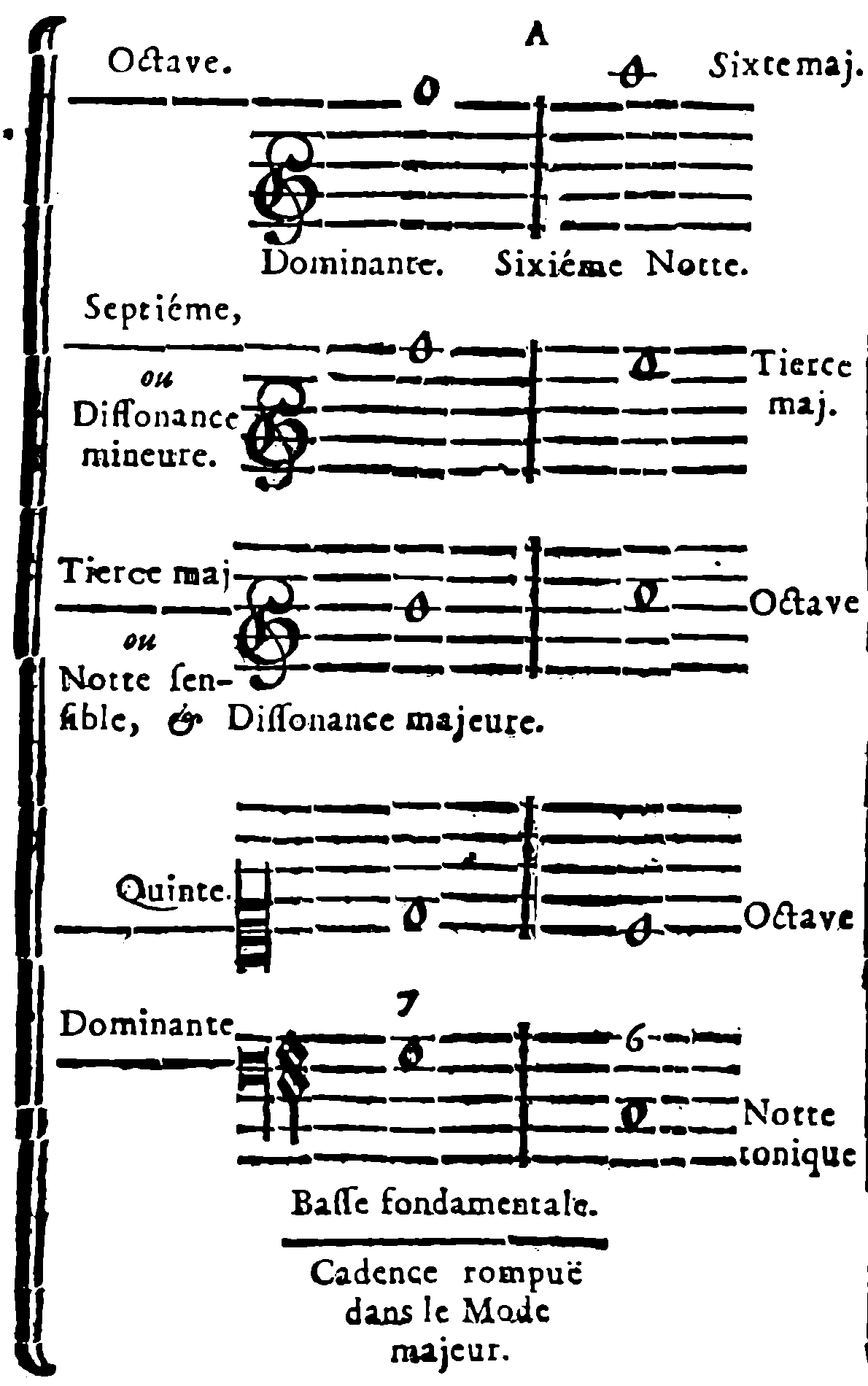
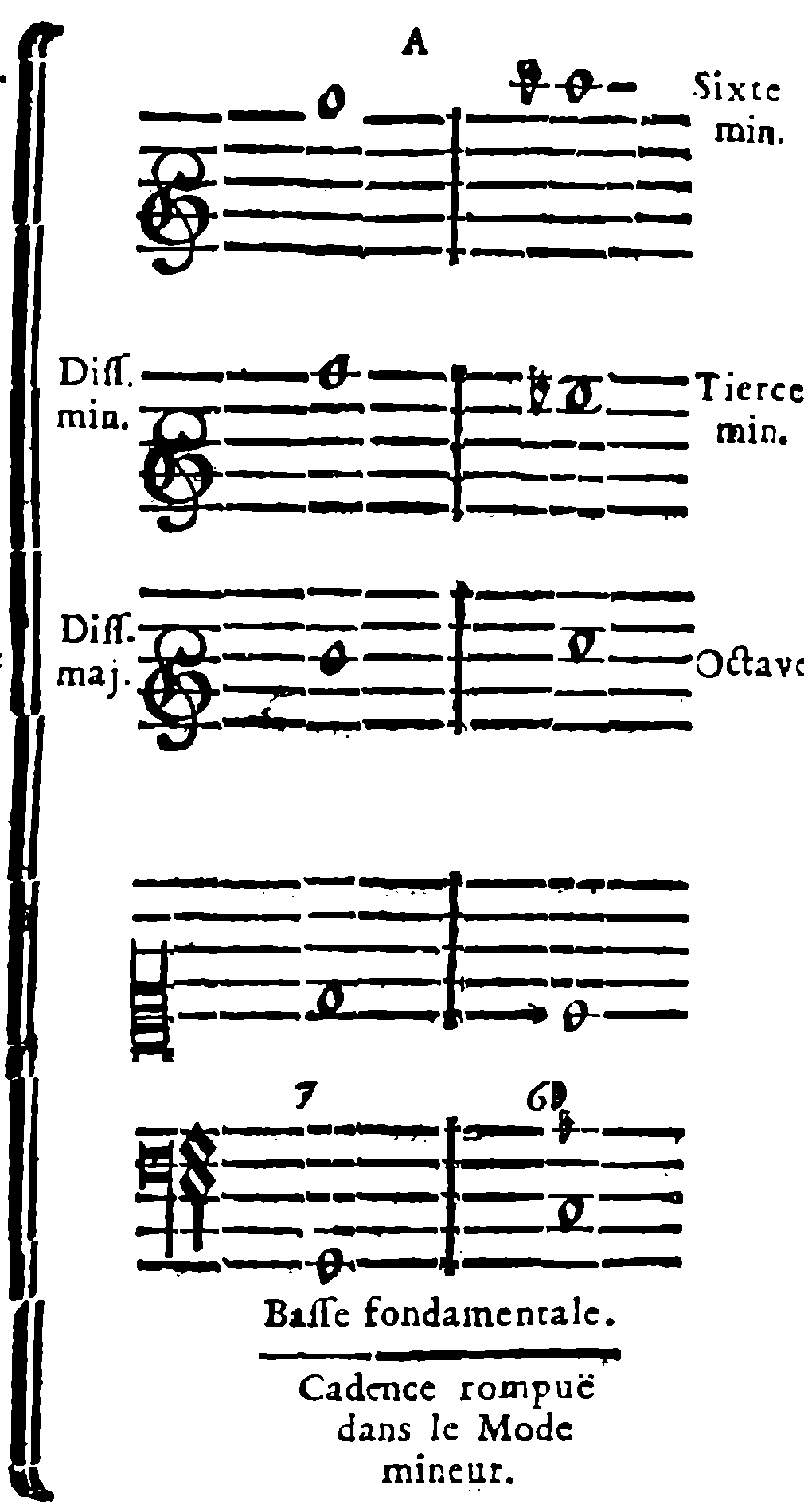
This last rule comes from the irregular cadence. This would also be a suitable place to discuss the perfect, imperfect and interrupted cadences, but these are included within our other rules. For example, a seventh chord followed by a sixth–fourth chord on a…
▶ Fig. 429 nearby - SUPPLEMENT: changes to two chapters and necessary corrections
Zarlin does not mention this cadence; Masson calls it imperfect. Brossard does likewise, using irregular only to describe where cadences are used. An irregular cadence, he says,b ends on a note outside the essential pitches of the current mode. These essential…
▶ Fig. 456 nearby - SUPPLEMENT: changes to two chapters and necessary corrections
…should guide us before later authors. He discusses almost only perfect cadence, calling its inversions Cadenze fuggite*—what interrupted cadence ought to translate. To approach his meaning in French, however, we should call those inversions imperfect.…
▶ Fig. 456 nearby
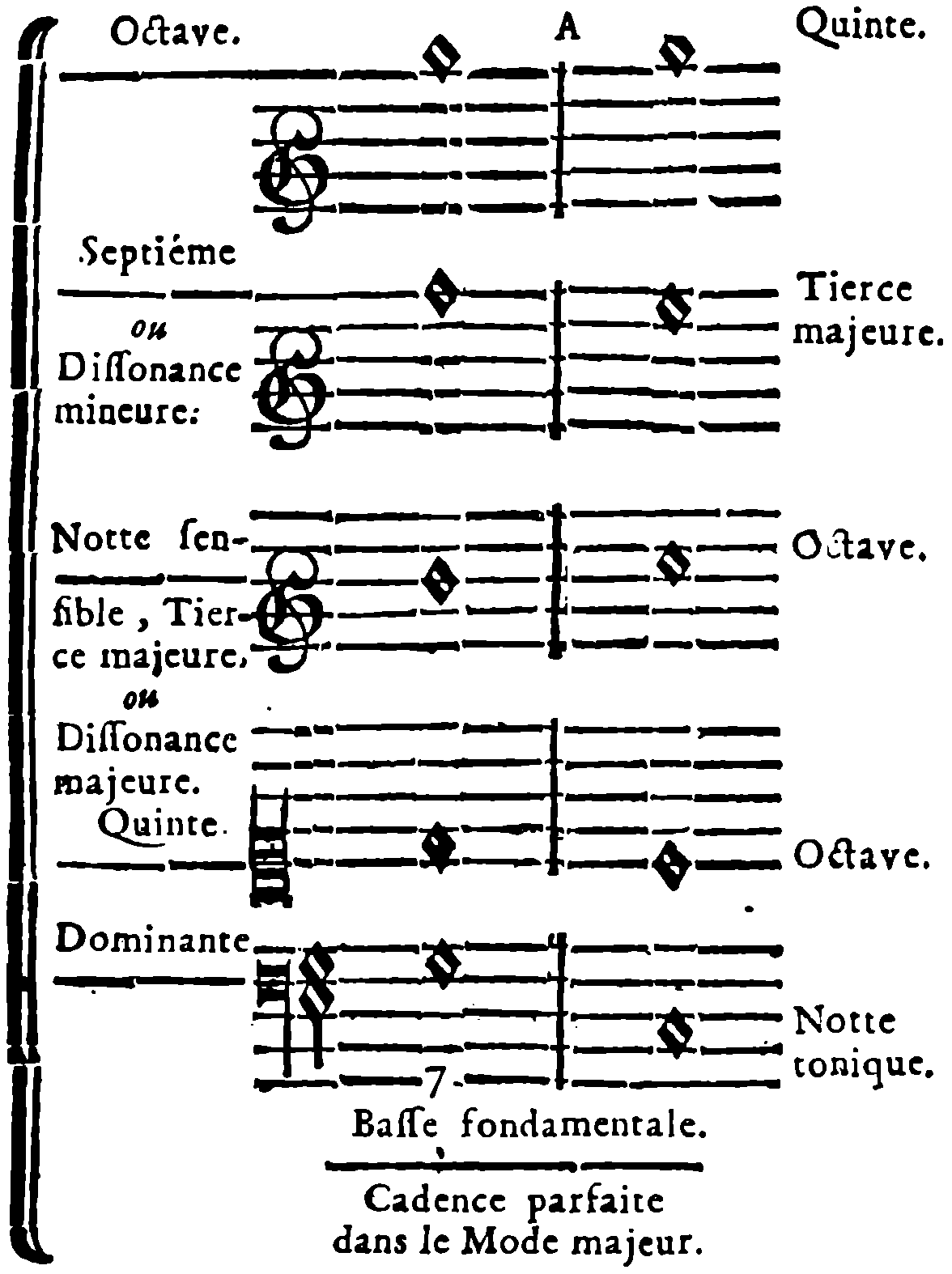 ▶ Fig. 41
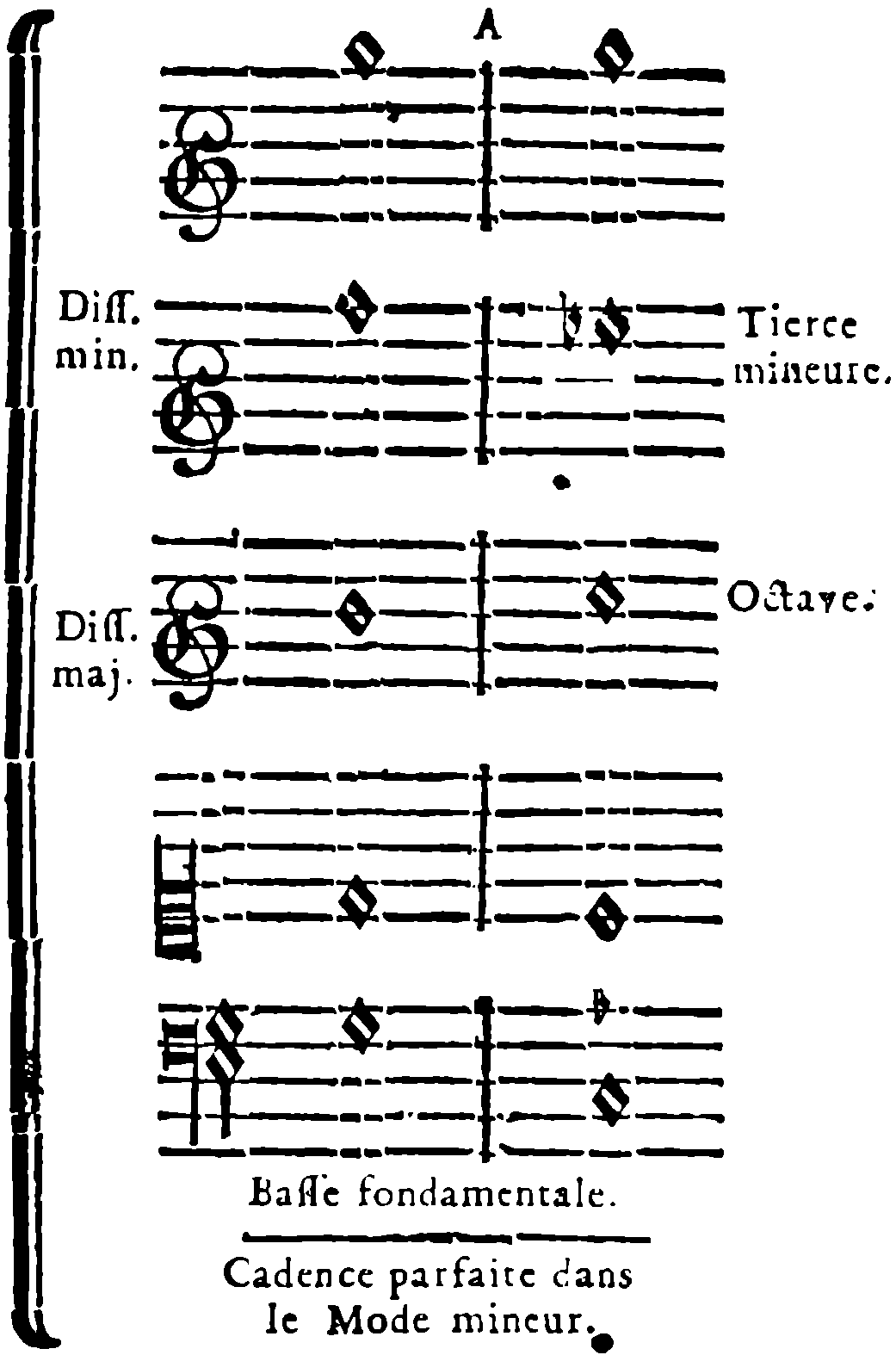 ▶ Fig. 42
 ▶ Fig. 46
 ▶ Fig. 47
 ▶ Fig. 48
 ▶ Fig. 49
 Practical Manual of HarmonyNikolai Rimsky-Korsakov, 1910
Start: Cadences, or Full Closes — Authentic and Plagal → Start: On the Half Cadence — On the Phrase → Start: Twofold Use of the Triad of the Sixth Degree → Start: Cadence Formula of the Second Kind (with the Six-Four Chord of the First Degree) →- Cadence Formula of the First Kind — with the Succession of Subdominant and Dominant · 2 playable examples
- The Triad of the Third Degree of the Natural Minor Mode (Phrygian Cadence of the First Kind) · 2 playable examples
- The Triad of the Seventh Degree of the Natural Minor Mode (Phrygian Cadence of the Second Kind) · 3 playable examples
- A special form of plagal cadence · 1 playable example
- On Borrowed Cadences · 2 playable examples
- 7 (Cadence formula of the first kind) · 4 playable examples
- 8 (Cadence formula of the second kind and the passing 6/4 chord) · 18 playable examples
- (Plagal cadences) · 4 playable examples
- Cadences, or Full Closes — Authentic and Plagal
3) Among full cadences we distinguish authentic cadences (dominant–tonic) and plagal cadences (subdominant–tonic).
▶ Fig. 81 nearby - On the Half Cadence — On the Phrase
§ 24. A stop on the triad of the fifth degree is called a half cadence, or authentic half cadence (a).
▶ Fig. 88 nearby - On the Half Cadence — On the Phrase
A musical idea that ends with a full cadence or with a half cadence is called a musical phrase.
▶ Fig. 88 nearby - The Sixth Chord of the Second Degree in the Major and Minor Modes
…degree may be used in minor as well as in major as a subdominant harmony, in cadences of the second kind after the triad of the first degree or its first inversion, and also in a turn of phrase that has the character of a cadence.
▶ Fig. 106 nearby - The Triad of the Third Degree of the Natural Minor Mode (Phrygian Cadence of the First Kind)
Examples 2 and 3 form a series of chords called the Phrygian succession (the name comes from the ecclesiastical Phrygian mode); when it is used as a half cadence in the minor mode it is called the Phrygian cadence.
▶ Fig. 113 nearby - The Triad of the Seventh Degree of the Natural Minor Mode (Phrygian Cadence of the Second Kind)
Each group of chords above is also called a Phrygian Succession; used as a half cadence in the minor mode, these groups are called a Phrygian Cadence.
▶ Fig. 116 nearby
44 more passages in Practical Manual of Harmony →
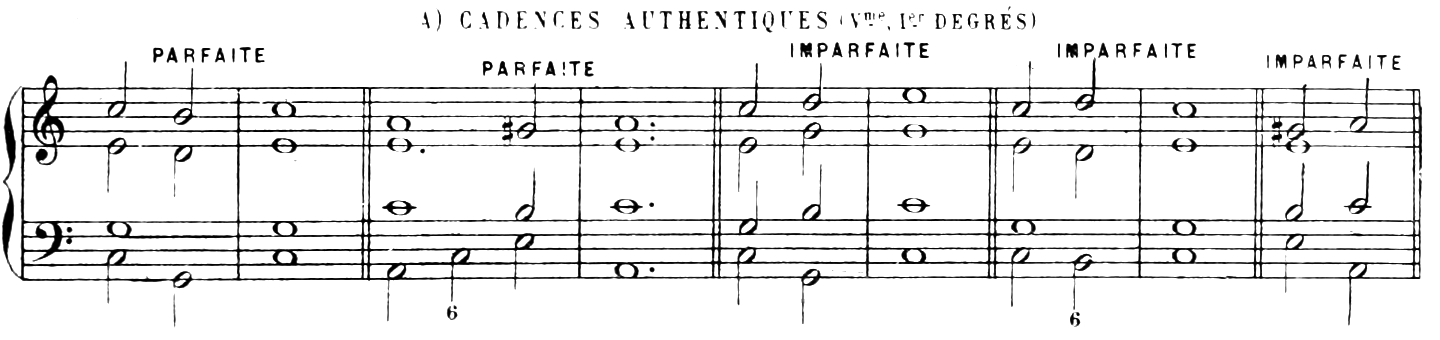 ▶ A) Authentic cadences (V–I): perfect, perfect, imperfect, imperfect, imperfect
Cadences, or Full Closes — Authentic and Plagal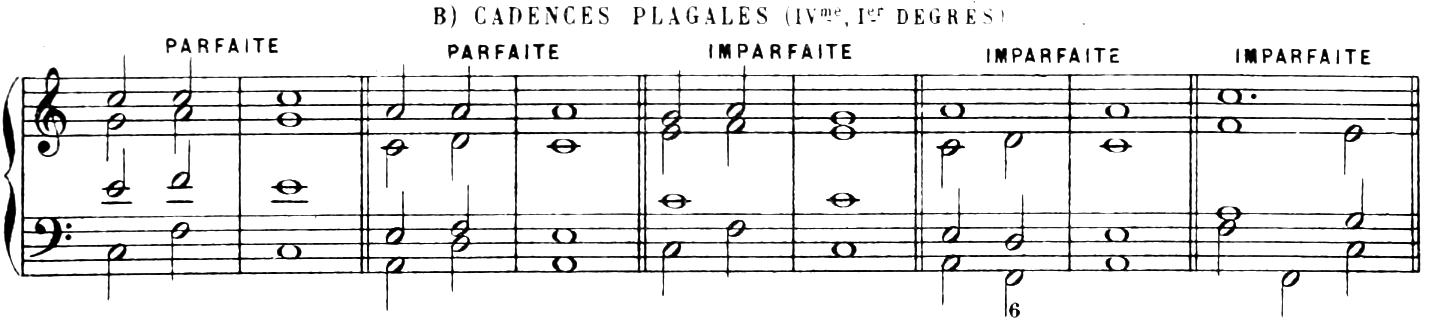 ▶ B) Plagal cadences (IV–I): perfect, perfect, imperfect, imperfect, imperfect
Cadences, or Full Closes — Authentic and Plagal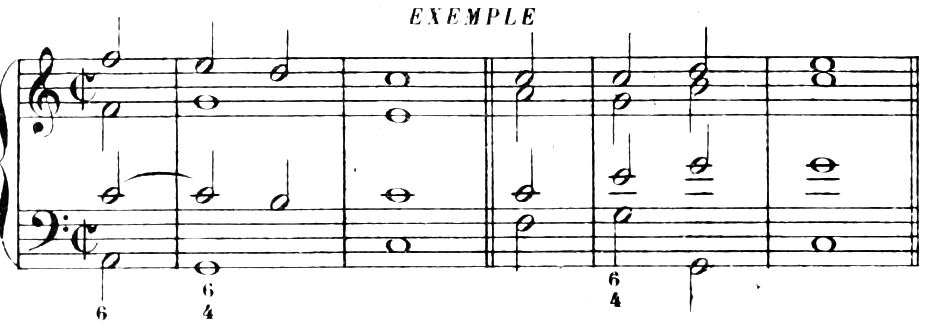 ▶ Example: two cadences in C major, cut time — IV6 or IV, the six-four chord on the strong beat, V, I
Cadence Formula of the Second Kind (with the Six-Four Chord of the First Degree)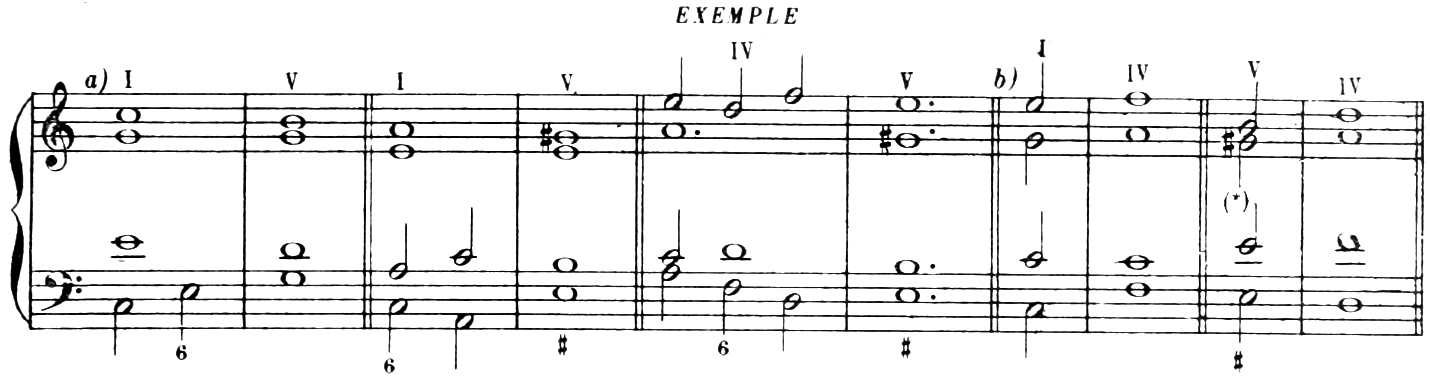 ▶ Example: a) authentic half cadences ending on V (C major, then A minor twice); b) plagal half cadences ending on IV (C major; then A minor, where V precedes IV)
On the Half Cadence — On the Phrase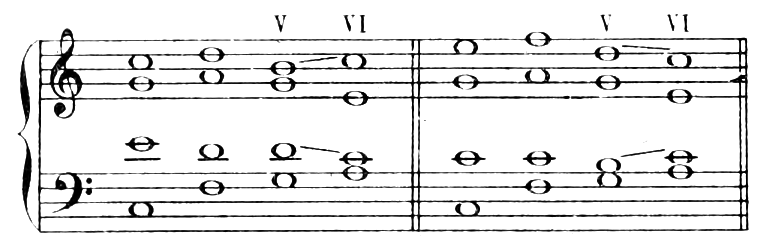 ▶ Deceptive cadences in C major: V–VI with the third (C) doubled in VI; the leading note B rises to C and the other upper voices fall
Twofold Use of the Triad of the Sixth Degree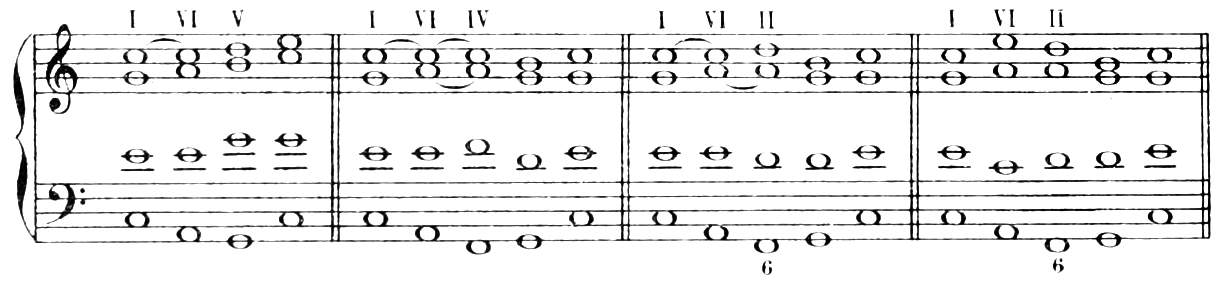 ▶ Four progressions in C major: I–VI–V–I; I–VI–IV–V–I; I–VI–II6–V–I (twice, with different spacing of VI)
Twofold Use of the Triad of the Sixth Degree
 Guide to the Practical Study of HarmonyPyotr Ilyich Tchaikovsky, 1900
Start: Chapter XXXIV. Cadences (closes) →- Chapter XVII. The Harmonization of a given melody
The augmented cadence consists of four chords, of which the last two (Dominant-seventh and Tonic) constitute the cadence, properly speaking. The first two chords must be the tonic and the subdominant. There are two kinds of prolonged cadence, depending on…
▶ Fig. 156 nearby - Chapter XVII. The Harmonization of a given melody
The cadence must be perfect; that is, the last triad must appear in the position of the octave or fifth; if this triad, however, is in the position of the third, the cadence is imperfect.
▶ Fig. 158 nearby - Chapter XXII. The Organ-point
This harmonic form is nothing more than a further development of the ordinary cadence of the first group. This cadence of the first group gives the feeling of a close, consisting, as it does, ot the three most important chords of the key (tonic, sub-dominant…
▶ Fig. 214 nearby - Chapter XXVII. Chords of the augmented Sixth
…degression is indeed so unnoticeable, that without the help of a prolonged cadence we scarcely get the impression of a modulation. As soon as the resolution of this chord into the dominant triad is amplified by the insertion of a prolonged cadence, the ear…
▶ Fig. 304 nearby - Chapter XXVII. Chords of the augmented Sixth
…still a fourth chord of the augmented sixth, which is frequently applied in cadences of the first class. This chord is found not on the 2-nd degree, but on the chromatically lowered 6-th degree; itis an augmented chord of the fourth and third with doubly…
▶ Fig. 304 nearby - Chapter XXIX. Strict Part-writing
…The same is true of all dissonant chords with their inversions. The cadence consists of the Dominant triad or its first inversion (the chord of the sixth of the diminished triad is also used), and its resolution into the tonic triad; the cadence must be a…
▶ Fig. 323 nearby
31 more passages in Guide to the Practical Study of Harmony →
 ▶ Fig. 156
 ▶ Fig. 158
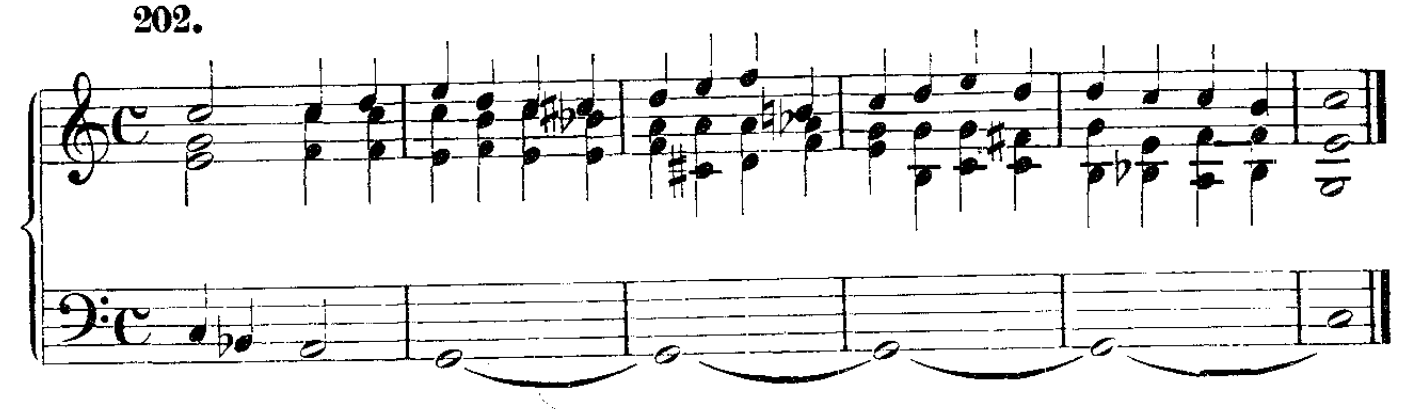 ▶ Fig. 214
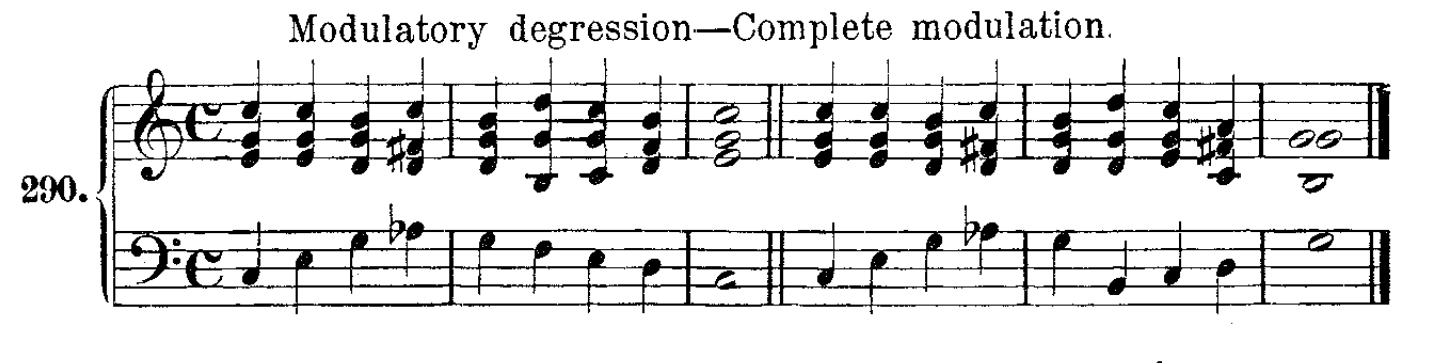 ▶ Fig. 304
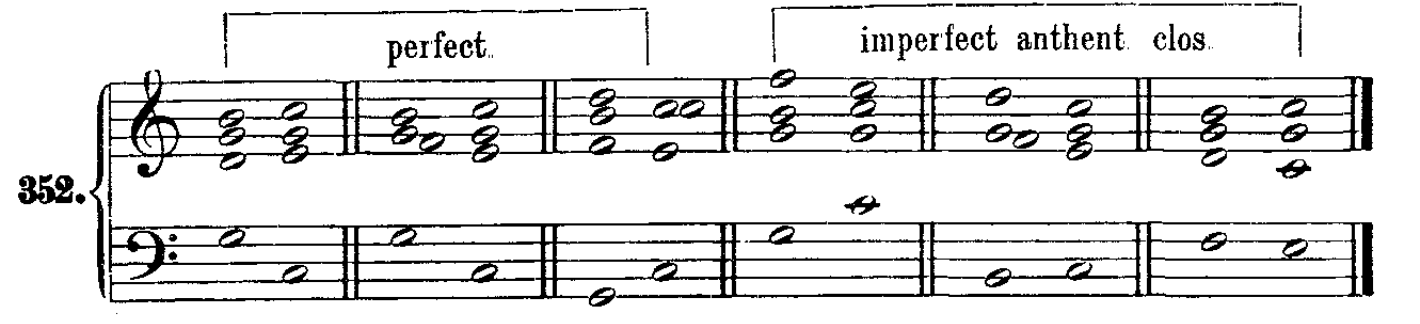 ▶ Fig. 367
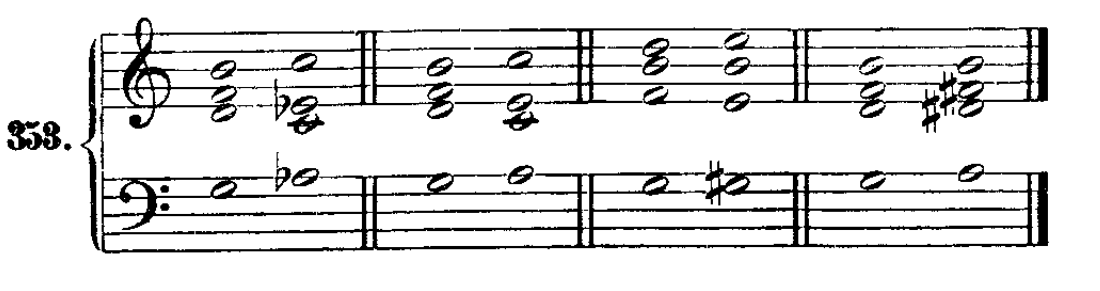 ▶ Fig. 368
 PartimentiFedele Fenaroli, 1800
- Concerning Cadences · 2 playable examples
- Book I: Simple figured basses
…the simplest partimenti of this set require prior knowledge of the three cadences and the Rule of the Octave as detailed in Fenaroli’s Rules (see the separate file). The first partimenti of this set avoid any suspensions or other dissonances. Later exercises…
- Book II: Harder figured basses
…motives or figures. The highest levels fully develop the phrase and cadence patterns indicated in the bass and smoothly connect sequential passages through the use of ascending or descending lines.
- Concerning Cadences
A cadence is when the bass goes from ① to ⑤, and [then] from ⑤ returns to ①.
▶ Fig. 44 nearby - Concerning Cadences
There are three types of cadences: simple, compound, and double. A simple cadence is when one gives the bass the simple consonances required by both ① and ⑤. That is, the ① takes the 3rd and 5th, and the ⑤ takes the major 3rd and 5th.
▶ Fig. 44 nearby - Concerning Cadences
A compound cadence is when, above ⑤, one makes a dissonance of a 4th prepared by the 8ve of ① [=❶] and resolved to the major 3rd of ⑤ [=❼].
▶ Fig. 45 nearby - Concerning Cadences
A double cadence is when, above ⑤, one puts the major 3rd and 5th, the 6th and 4th, the 4th and 5th, and then the major 3rd and 5th.
▶ Fig. 45 nearby
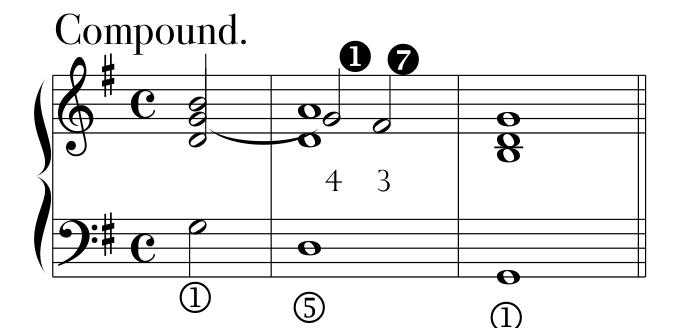 ▶ Fig. 44
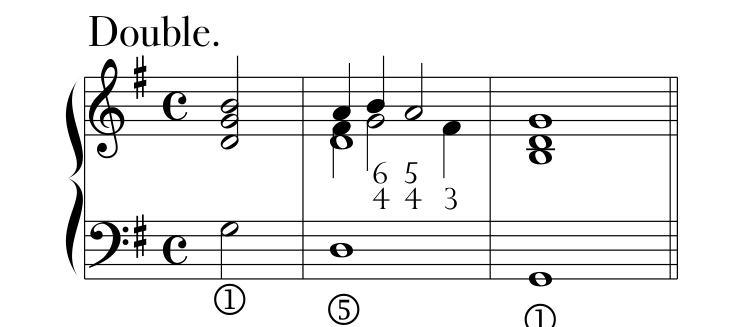 ▶ Fig. 45
 Supplement to the Theory of ModulationMax Reger, 1904
- Preliminary Remarks
…or super-dominant, as the case may be, i. e. I have given them in so-called cadence-like form, in order to thus lay before the pupil the fundamental principle of modulation in the clearest possible manner; the analyses of the examples of modulation will at…
- From C-major
Tonic C-major; use this C-major which is at the same time the sub-dominant of G-major. (Cadence!)
▶ Fig. 1 nearby - From C-major
Tonic C-major; relative (e-minor) to the dominant (G-major) of C-major; use this e-minor (1st inversion), which is also relative to the sub-dominant (G-major) of D-major. (Cadence!)
▶ Fig. 3 nearby - From C-major
Tonic C-major; relative (d-minor) to the sub-dominant (F-major) of C-major; use this d-minor, which is at the same time the minor sub-dominant of A-major. (Cadence!)
▶ Fig. 5 nearby - From C-major
Tonic C-major; relative (a-minor) to the tonic of C-major; use this a-minor, which is at the same time the minor sub-dominant of E-major. (Cadence!)
▶ Fig. 7 nearby - From C-major
Tonic C-major; relative (e-minor) to the dominant (G-major) of C-major; use this e-minor, which is also the minor sub-dominant in B-major. (Cadence!)
▶ Fig. 9 nearby
55 more passages in Supplement to the Theory of Modulation →
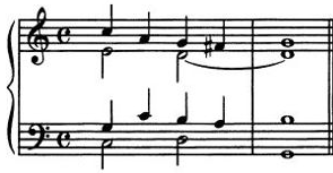 ▶ Ex-1
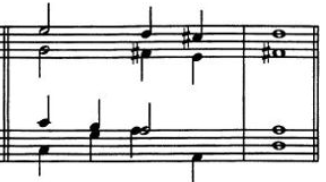 ▶ Ex-2
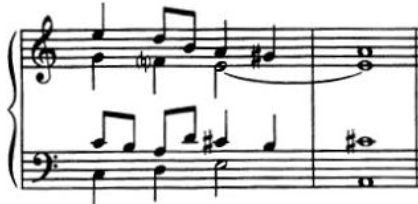 ▶ Ex-3
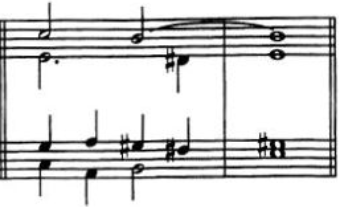 ▶ Ex-4
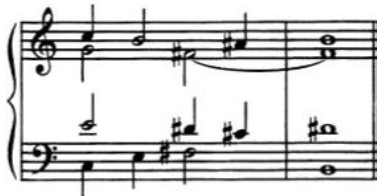 ▶ Ex-5
 Theory of HarmonyArnold Schoenberg, 1922
Start: Endings and cadences → Start: Deceptive cadences → Start: The Six-Four Chord in the Cadence →- Voice Leading and Cadences · 10 playable examples
- Deceptive cadences
The step from degree V to I bears the name authentic cadence; that from IV to I, plagal cadence. These are only names, technical terms, which tell us nothing of harmonic significance. We have already considered the authentic cadence. We have, however, no…
▶ Fig. 119 nearby - Deceptive cadences
First we introduce the deceptive cadence into the cadence and use it for the purpose mentioned earlier, the lengthening of the cadence. Some things must be observed in doing so. Since the deceptive cadence takes the cadential degree V (thus not just any V) as…
▶ Fig. 119 nearby - Modulation
…means. What this means can be is clear from the outset if one thinks of the cadence: in the first place degree V. Then, more generally: all those chords that contain the leading tone of the target key, hence often degrees III and VII as well. Naturally degree…
▶ Fig. 145 nearby - Chorale Harmonization
…a moment, we may understand the chorale, like any larger composition, as a cadence of greater or lesser size and richness. In the present case its smallest components would not be all the chords that occur, but the chords forming the partial closes at the ends…
▶ Fig. 401 nearby - Chorale Harmonization
…as in 219b, e, and f. But then so little time remains for the turn that the cadence may easily be insufficiently strong. In any case, if E-flat still occurs in the chord beneath the melody's C, the six-four chord of V cannot stand beneath the F, since the…
▶ Fig. 407 nearby - Closes
In example 218 a plagal close was used in place of a cadence. This is often necessary in chorale harmonization, as in 226a, where one must resort to a plagal close if G is not to be the third of E-flat. The plagal close is a formula capable of ending even…
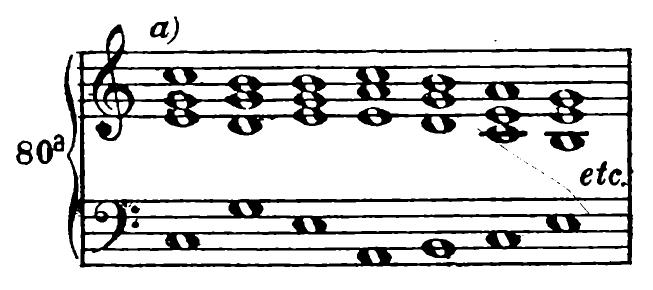 ▶ Example80a
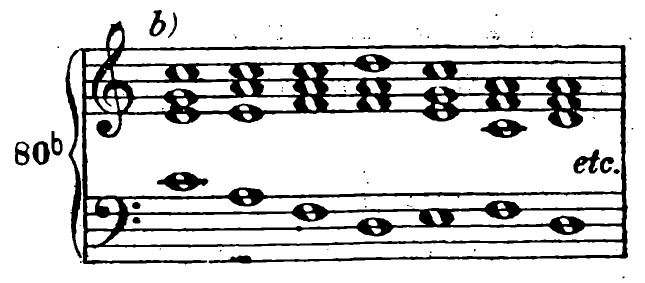 ▶ Example 80b
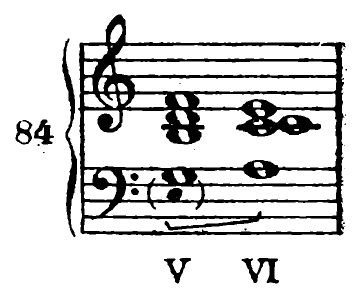 ▶ Example 84
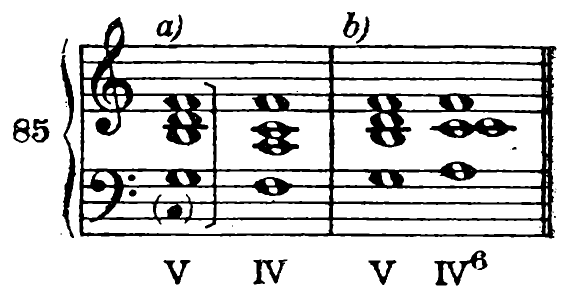 ▶ Example 85a
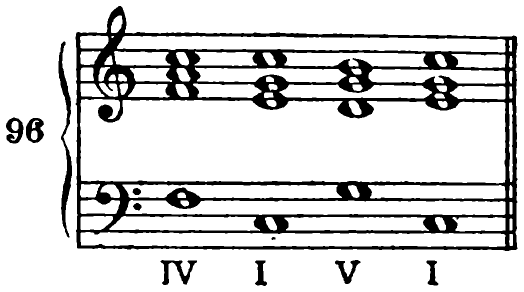 ▶ Example 96
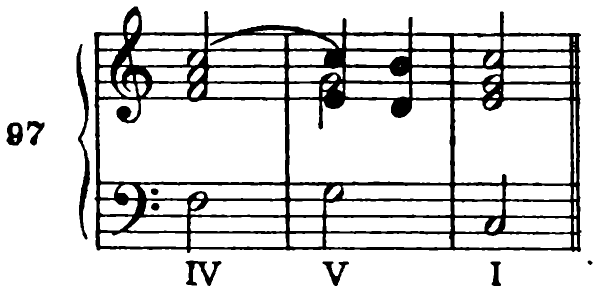 ▶ Example 97
 Principles of OrchestrationNikolai Rimsky-Korsakov, 1922
- Soli in the strings
* Spanish Capriccio H, K, R, and the cadence on p. 38.
- Use of percussion instruments for rhythm and colour
* Spanish capriccio P (cf. Ex. 64); the cadences to be studied in the 4th movement, where they are accompanied by various percussion instruments.
More in Cadence, key and progression
Deceptive cadence · Modulation · Sequence · Modes · The leading note · Figured bass and partimento · Fundamental bass · Harmonizing a melody