 Playable Books
Concept index · Cadence, key and progression
Harmonizing a melody
Taught in 8 books. Each one opens at the passage; ▶ plays the example beside it. Also called harmonization, chorale, given melody.
This index is Playable Books’ own: a first pass that finds the term’s words in each book, corrected by hand. The authors did not tag these passages, and their terms can differ (Fux’s “ligature” is a suspension). The quoted text is the book’s.
 Exercises in Elementary CounterpointPercy Goetschius, 1910
- Chapter IV. The Association Of Two Melodic Lines
…simple regulations of harmonious union. In other words, for each tone of the given melody, a tone is chosen that will blend or harmonize consonantly with it, so that the new melody which results will agree, tone for tone, with the former. The new melody is…
▶ Fig. 39 nearby - Chapter IV. The Association Of Two Melodic Lines
41. If the interval 8 (octave) is applied to each successive tone of a given melody, the result is as follows:
▶ Fig. 42 nearby - Chapter IV. The Association Of Two Melodic Lines
…this process nothing more has been obtained than an exact duplication of the given melody. No new melody has been produced, and therefore this cannot be called an association of different melodies.
▶ Fig. 42 nearby - Chapter IV. The Association Of Two Melodic Lines
…of these three different consonant intervals. Thus, as applied to the above given melody:
▶ Fig. 44 nearby - Chapter IV. The Association Of Two Melodic Lines
' 46. Further, a few inferior and faulty versions, with the same given melody:
▶ Fig. 50 nearby - Chapter XXIV. Contrapuntal Harmony
A given Soprano is placed one octave lower for the Tenor; and a given Bass, one octave higher for the Alto. The given Soprano is transposed either a 4th or 5th downward for the Alto; and the given Bass a 4th or 5th upward for the Tenor. For example, if the…
▶ Fig. 414 nearby
 ▶ Ex.31
 ▶ Ex.34
 ▶ Ex.36
 ▶ Ex.40d
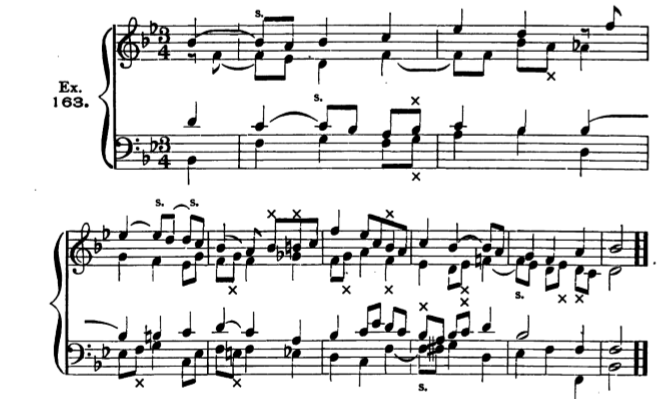 ▶ Ex.163
 Counterpoint AppliedPercy Goetschius, 1902
Start: Chapter X →- Chapter IX
c. The Chorale-Prelude is an organ composition, designed to precede the congregational intonation of the opening chorale in the Lutheran and other Reformed church-services, chiefly in Germany. Hence its M. is derived recognizably from the first line of the…
- Chapter IX
88. The contrapuntal elaboration of the Chorale (the characteristic representative of German ecclesiastic song since the days of the Reformation) has always been regarded by serious German masters of the past three centuries as a most important and truly…
- Chapter XI
…the thematic or figural voices are the chief, essential factors, while the chorale melody is (at least apparently) an incidental factor. The first Line of the c.f. is preceded by an introductory exposition of the Motive; similar thematic Interludes occur…
▶ Fig. 304 nearby - Chapter XI
…neighboring-notes, etc., in florid rhythmic form) that the original stern chorale-melody is completely transformed into a graceful (though dignified and impressive) Zyric melody or "Aria." This dissolution of the c. f. must be so effected, however, as to…
▶ Fig. 313 nearby - Chapter XIV
156. The Chorale-Fugue. Somewhat allied to the Chorale-Invention, par. I1o, which review. The Subject, or Subjects, are derived from the first, or later, Lines of the chorale, and manipulated in the usual manner. But the chorale-melody, as such, is absent.
- Chapter XXII
…at the beginning should be, as a rule, maintained uniformly throughout the chorale; therefore it is usually necessary to experiment repeatedly with the whole, before valid relations can be determined; and it is not considered unpermissible, in case the…
▶ Fig. 448 nearby
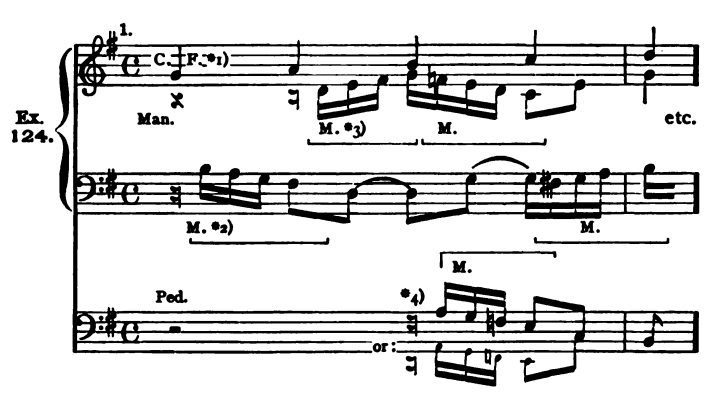 ▶ Ex124-1
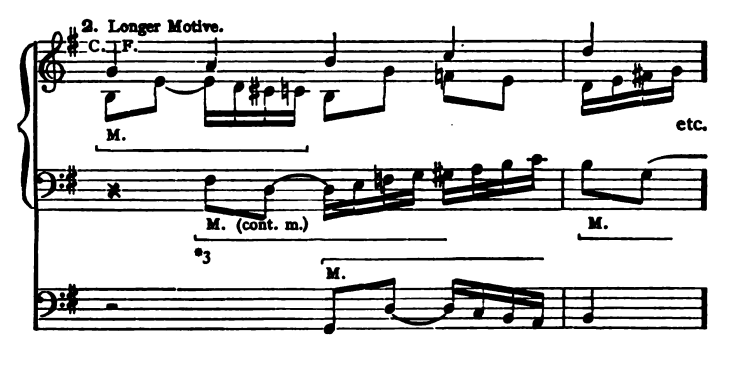 ▶ Ex124-2
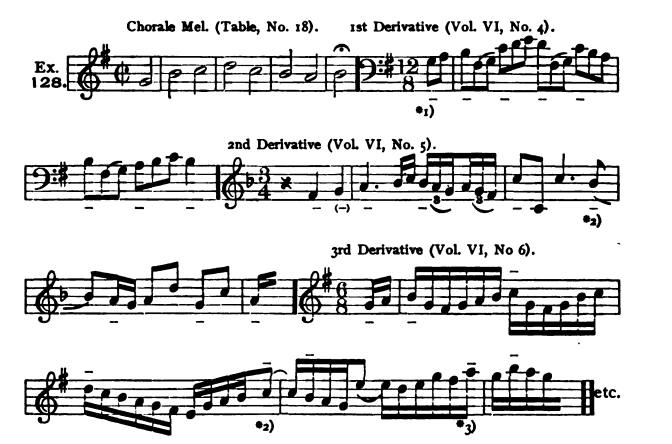 ▶ Ex128-1-3
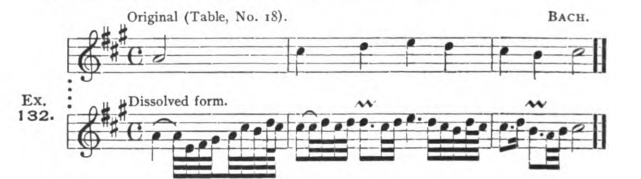 ▶ Ex132
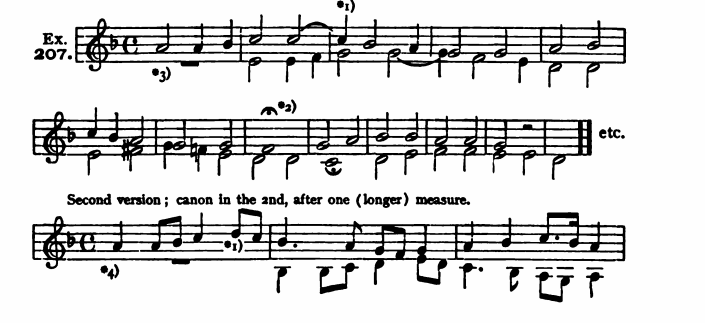 ▶ Ex207
 Practical Manual of HarmonyNikolai Rimsky-Korsakov, 1910
Start: Harmonizing Chorales (in One Key) → Start: On the Figured Chorale, and the Harmonization of a Melody Containing Melodic Ornamentation →- Exercise No. 1 (given melodies) · 3 playable examples
- Exercise No. 2 (given basses) · 1 playable example
- Exercise No. 3 (given basses and melodies) · 1 playable example
- Exercise No. 4 (Given Basses and Melodies) · 1 playable example
- Exercise No. 5 (given basses and melodies) · 1 playable example
- Exercise No. 6 (given basses and melodies) · 1 playable example
- Exercise No. 7 (given basses and melodies)
- Exercise No. 8 (given basses and melodies)
- Exercise No. 10 (given melodies) · 1 playable example
- Exercise No. 11 (given basses) · 1 playable example
- Exercise No. 12 (given basses and melodies)
- Exercise No. 13 (given basses and melodies)
- Exercise No. 14 (given basses and melodies)
- EXERCISE No. 15 (GIVEN MELODIES)
- EXERCISE No. 16 (GIVEN MELODIES)
- Exercise No. 17 (given basses)
- Exercise No. 18 (given melodies, chorales)
- EXERCISE No. 19 (GIVEN BASSES AND MELODIES) · 1 playable example
- EXERCISE No. 20 (GIVEN BASSES AND MELODIES) · 1 playable example
- EXERCISE No. 21 (GIVEN BASSES AND MELODIES) · 1 playable example
- EXERCISE No. 22 (GIVEN BASSES AND MELODIES) · 1 playable example
- EXERCISE No. 23 (GIVEN BASSES AND MELODIES)
- USE OF SEVENTH CHORDS in the Realization of Chorales
- EXERCISE No. 24 (GIVEN CHORALES) · 1 playable example
- THE USE OF MODULATION in harmonizing a melody · 2 playable examples
- EXERCISE No. 25 (GIVEN MELODIES, CHORALES) (Strict style) · 1 playable example
- Exercise No. 27 (given basses and melodies)
- EXERCISE No. 28 (FIGURED CHORALES)
- EXERCISE No. 32 (GIVEN MELODIES) · 2 playable examples
- Harmonizing Chorales · 2 playable examples
- Chorale melodies · 9 playable examples
- Chorale melodies · 12 playable examples
- Chorale melodies with modulations · 21 playable examples
- 28 (Harmonize these chorale melodies with ornamentation in the three lower parts) · 19 playable examples
- Given melodies (Anticipation) · 3 playable examples
- Melodies with given basses (Indirect anticipation.) · 6 playable examples
- Given melodies (Polytonic successions) · 30 playable examples
- Preface to the First Edition
…and so on. But in truth they offer little or almost no teaching on how to harmonize a melody or how to choose chords well.
- Preface to the First Edition
…mastered every rule in these treatises still does not know how to set about harmonizing a melody, composing a prelude of a few bars, or modulating to any given key; his modulations are harsh and abrupt, and his progressions — even those of consonant chords —…
- Preface to the First Edition
…have succeeded in setting out, clearly and fairly completely, the methods of harmonizing a melody and of modulating, starting from the simplest means and proceeding gradually to the most complex. For this work I owe a debt of gratitude to the friendly…
- Preface to the First Edition
1) To harmonize a chorale in block chords in the strict style (example, p. 50).
- Preface to the First Edition
2) To harmonize a chorale with strict melodic decoration in the three lower parts, leaving the melody unchanged (example, p. 68).
- Harmonizing Chorales (in One Key)
5) In the middle of the chorale perfect cadences should be avoided; the cadence of the 2nd kind (with the six-four chord) is used rarely, and only at the end of the chorale.
36 more passages in Practical Manual of Harmony →
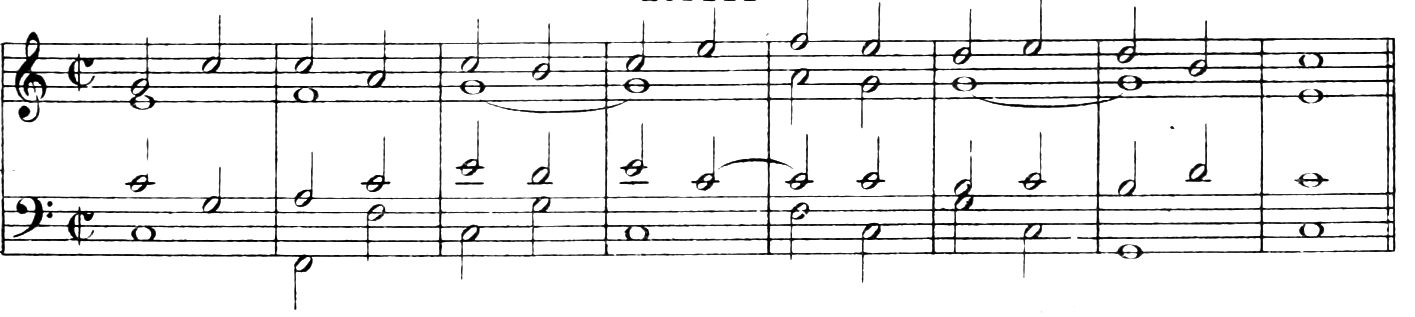 ▶ Model: a given melody harmonized with I, IV and V in C major
Exercise No. 1 (given melodies)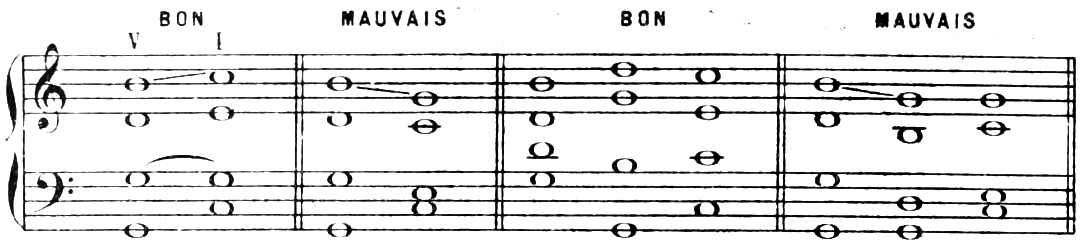 ▶ V–I in C major: good when the leading note B rises to C; bad when it falls to G
Exercise No. 1 (given melodies)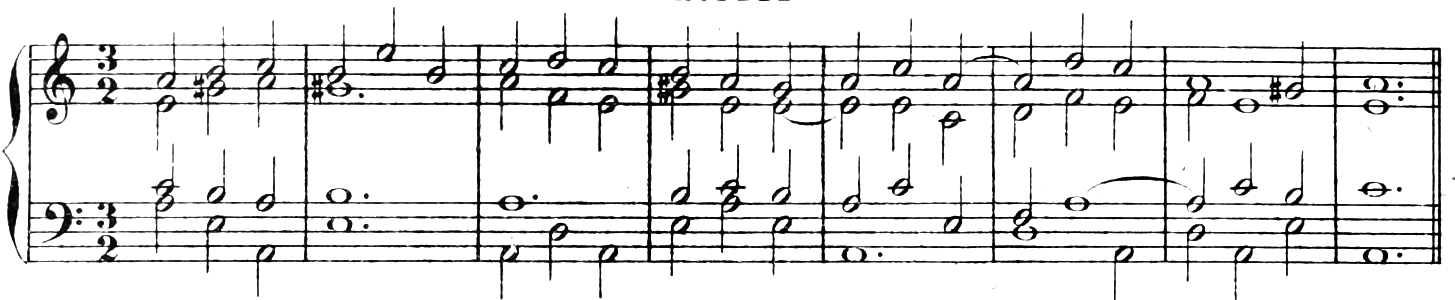 ▶ Model: a given bass in A minor, 3/2, harmonized with I, IV and V
Exercise No. 2 (given basses)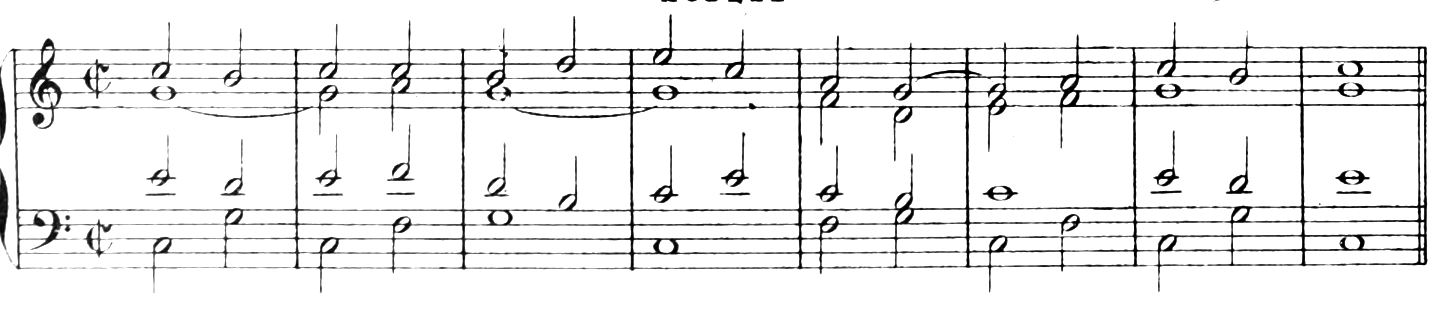 ▶ Model in C major, cut time, using I, IV and V
Exercise No. 3 (given basses and melodies)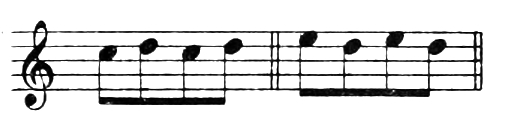 ▶ [Example]
On the Figured Chorale, and the Harmonization of a Melody Containing Melodic Ornamentation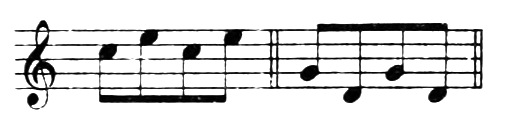 ▶ [Example]
On the Figured Chorale, and the Harmonization of a Melody Containing Melodic Ornamentation
 Guide to the Practical Study of HarmonyPyotr Ilyich Tchaikovsky, 1900
Start: Chapter XVII. The Harmonization of a given melody →- Chapter XX. Harmonization of given melodies with modulations · 7 playable examples
- Table of contents
Chapter XVII. The Harmonization of a given melody — 54
- Table of contents
Chapter XX. Harmonization of given melodies with modulations — 72
- Chapter VIII. The Inversions of the Triad
…rules, however, will be disclosed to him later on, in the harmonization of given melodies,
▶ Fig. 59 nearby - Chapter XVII. The Harmonization of a given melody
§ 47. The proper use of the triads, in their fundamental form is already known to us. But the functions exercised by their inversions in the harmonization of given melodies (especially in the case of the six-four chord) we must inspect more closely.
▶ Fig. 149 nearby - Chapter XX. Harmonization of given melodies with modulations
§ 60. When, in a given melody, notes occur with accidentals foreign to the key, we infer that at such points the melody modulates into some other key. What key this shall be, is determined by different circumstances. If we regard the note with the accidental…
▶ Fig. 202 nearby
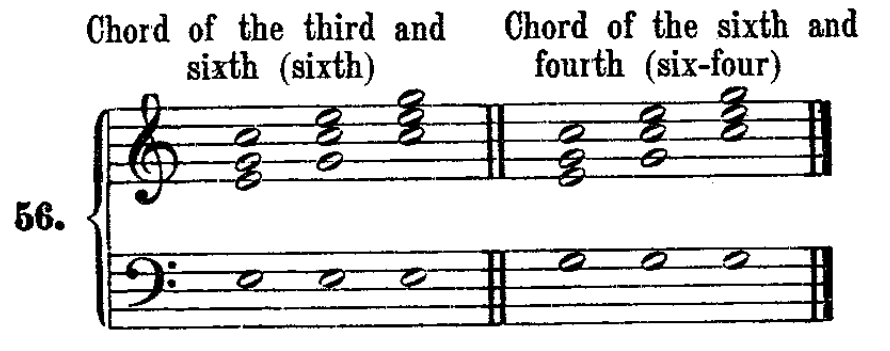 ▶ Fig. 59
Chapter VIII. The Inversions of the Triad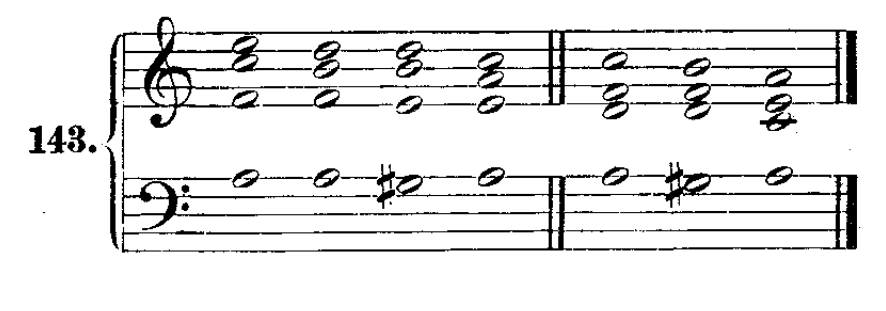 ▶ Fig. 147
Chapter XVII. The Harmonization of a given melody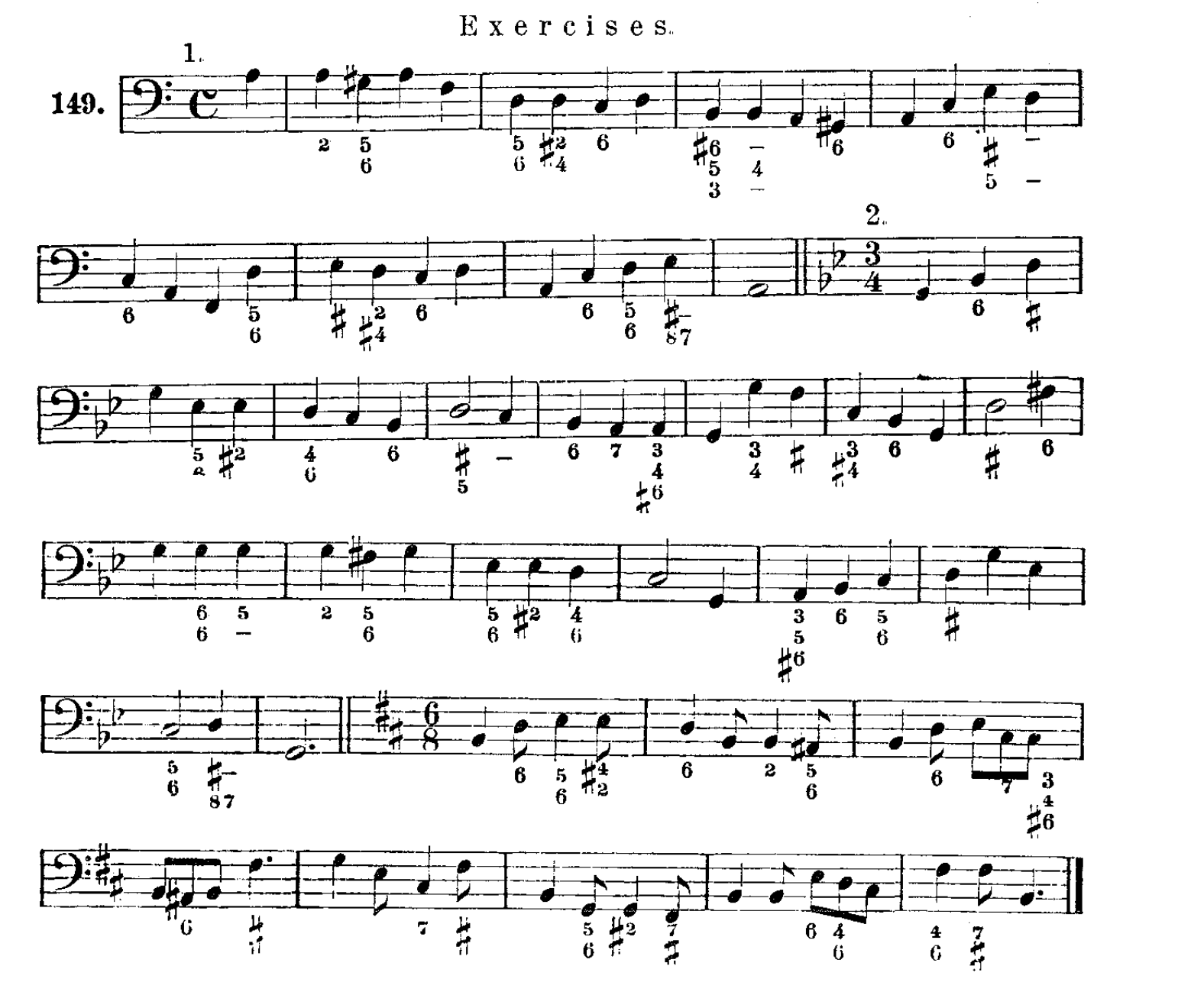 ▶ Fig. 148
Chapter XVII. The Harmonization of a given melody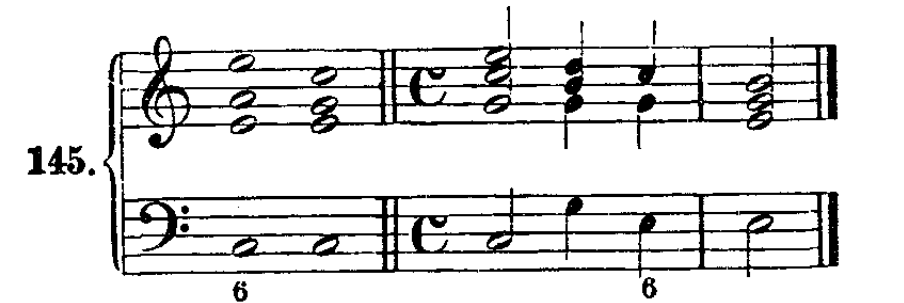 ▶ Fig. 149
Chapter XVII. The Harmonization of a given melody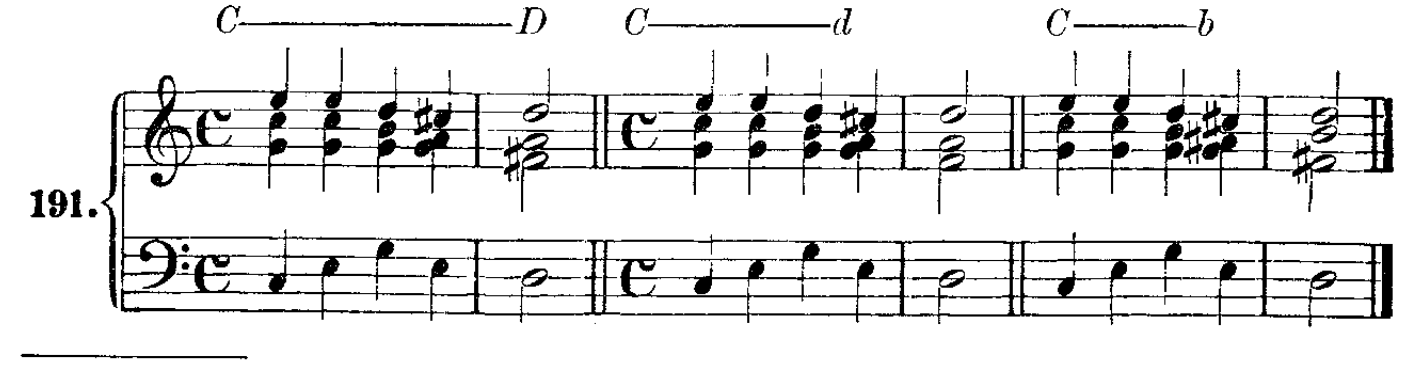 ▶ Fig. 202
Chapter XX. Harmonization of given melodies with modulations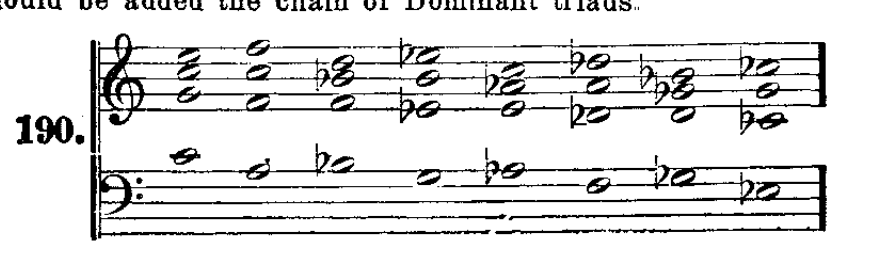 ▶ Fig. 203
Chapter XX. Harmonization of given melodies with modulations
 PartimentiFedele Fenaroli, 1800
- Book IV: Unfigured basses
Fenaroli’s Book IV contains unfigured basses. Without figures, how does a performer know which chords to use? All the patterns introduced in the previous three books are employed in Book IV, so instead of asking “What chord comes next?” ask “Which pattern is…
 Theory of HarmonyArnold Schoenberg, 1922
Start: Chorale Harmonization →- Chorale Harmonization
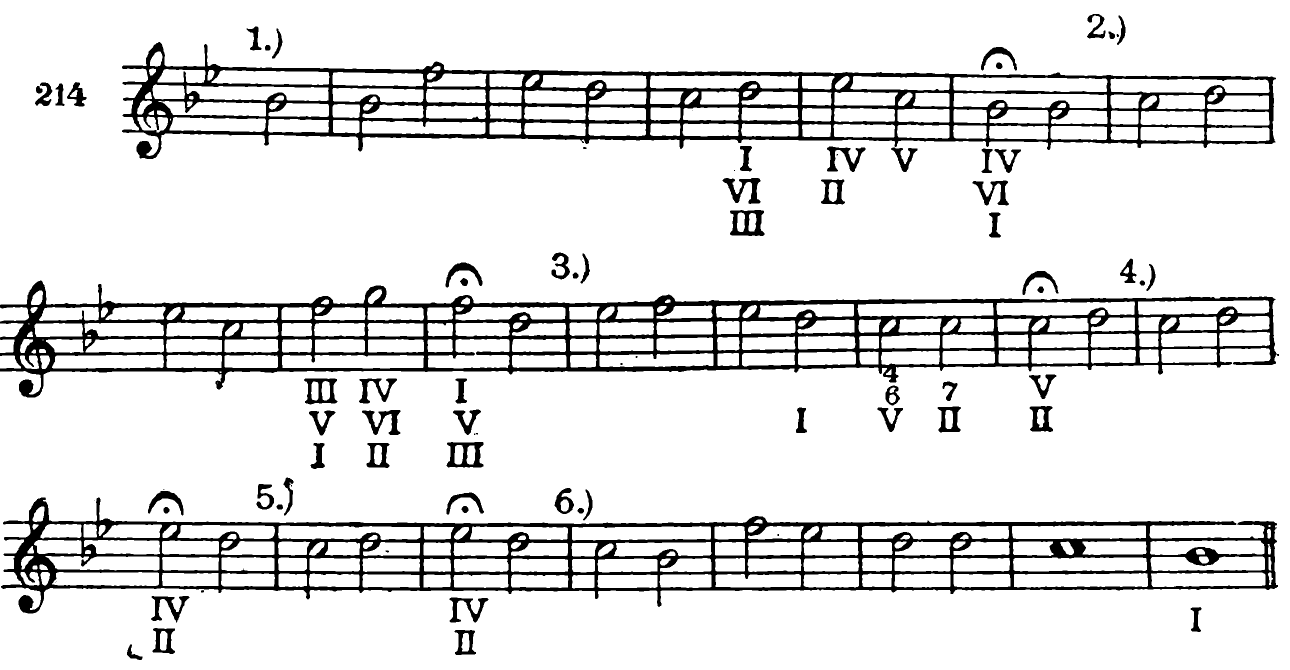
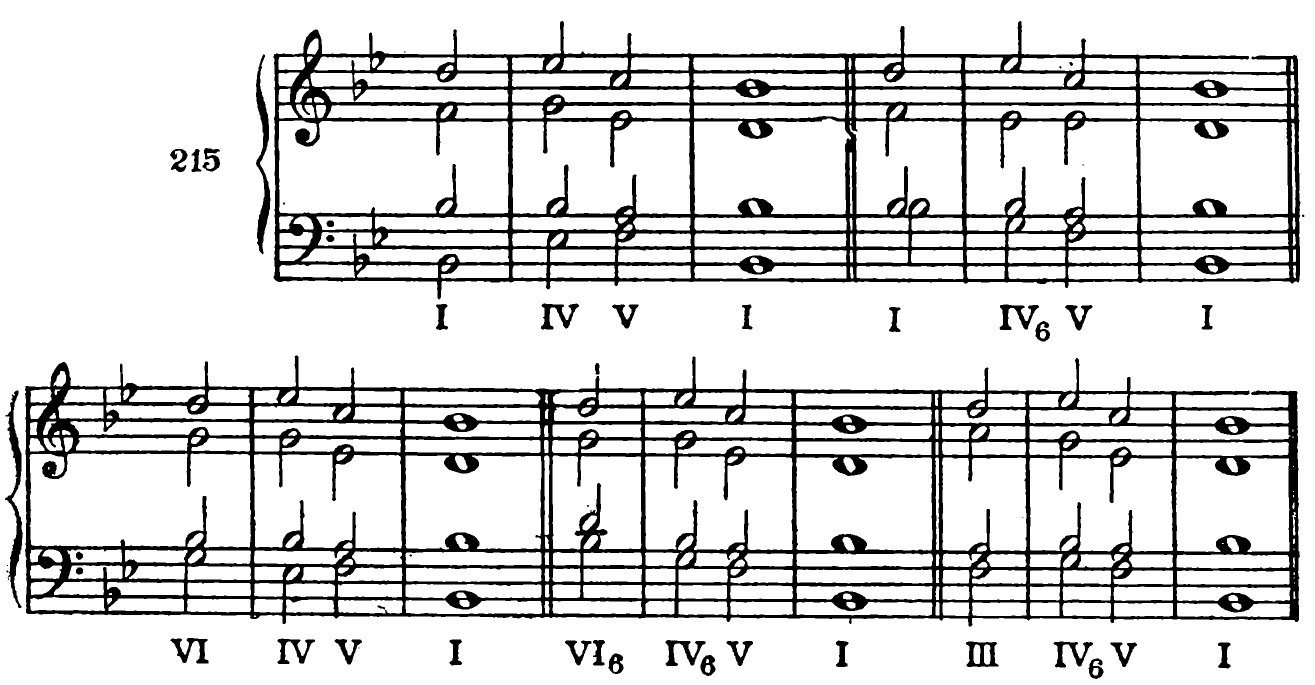
…from assigning modern melodies as harmonization exercises. The form of the chorale melody is so simple and lies so far behind us that we may perhaps see through it: perhaps we can truly recognize its relationships as precisely as is necessary to obtain similar…
- Chorale Harmonization
In the chorale, articulation is expressed by the holds at the ends of musical phrases, which coincide with the ends of the lines of verse and divide the thought into parts. In such simple artistic forms, the individual parts stand in the simplest relationships…
▶ Fig. 401 nearby - Chorale Harmonization · Footnote
* The pupil should take the melodies from a collection containing chorales harmonized by masters. He will have to exclude many because they are in church modes with which he does not know how to work. The final chord can serve as a sign for distinguishing the…
▶ Fig. 401 nearby - Chorale Harmonization · Footnote
* The pupil will be inclined to use everything he has learned so far in chorales. At first glance one would have to say that this is not good, because attaching complicated harmony to such a simple melody would violate its style. Theoretically, this seems…
▶ Fig. 402 nearby - Chorale Harmonization
…possible, and a good result is therefore not easily attained. Mendelssohn's chorale harmonizations show this best: how difficult even a master often finds it to inhabit a style that is not his own. Brahms usually succeeds better, having attained outstanding…
▶ Fig. 426 nearby - Suspensions and Other Nonharmonic Tones
…itself. You will find they are all melodies, often just as beautiful as the chorale melody itself. And that is surely a different purpose from this external one! Then try leaving out what you take to be incidental changing notes. Mostly the result becomes…
▶ Fig. 470 nearby
 ▶ Example 214 — melody
 ▶ Example 215 — 1
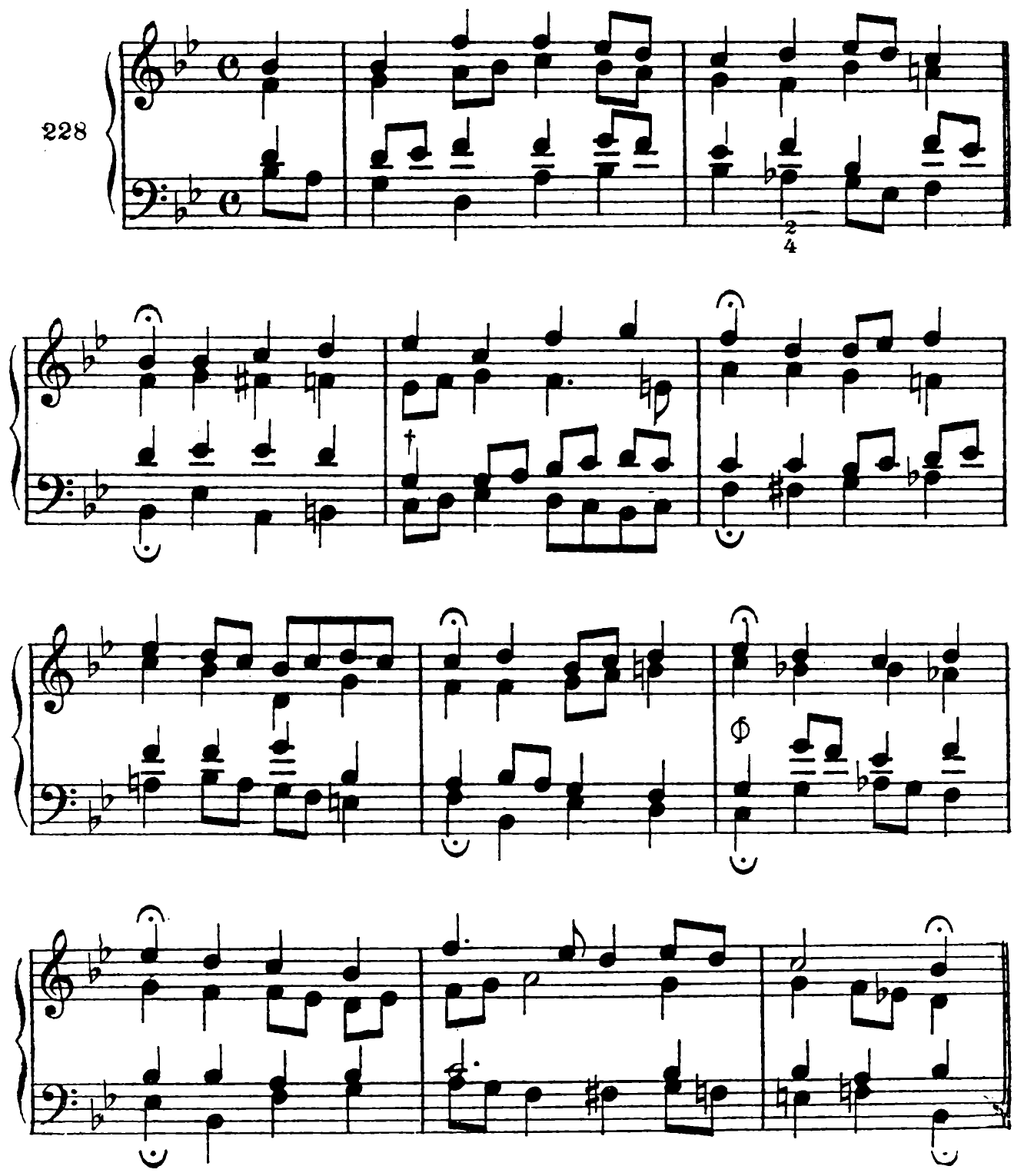 ▶ Example 228 — main
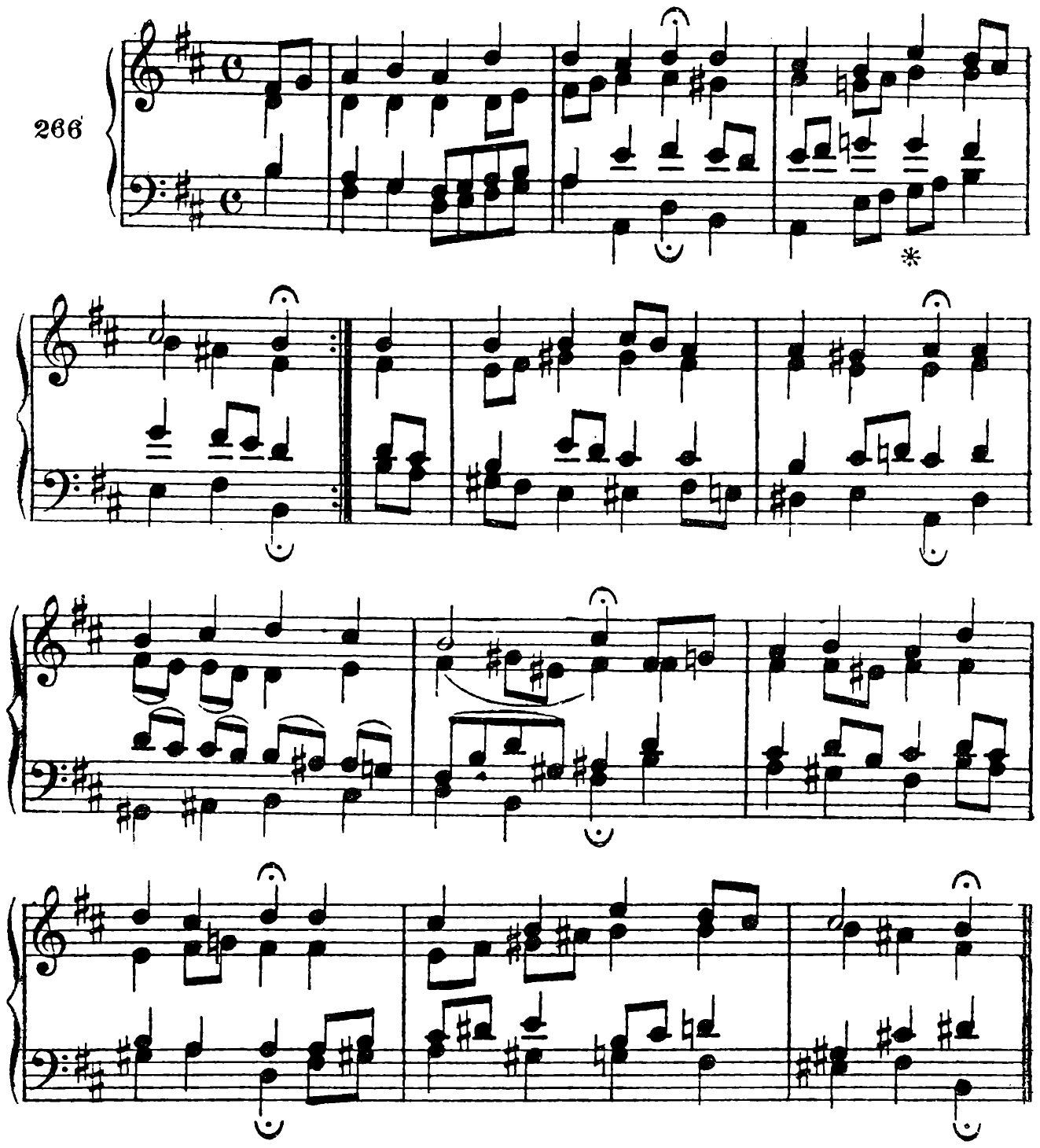 ▶ Example 266
 Principles of OrchestrationNikolai Rimsky-Korsakov, 1922
- Writing in several parts
When chords of widely-divided harmony are distributed throughout several harmonic registers, the register occupied by the horns need not be doubled; the arrangement of the chord will resemble that of a chorale written for double or triple choir. For example:
▶ Fig. 101 nearby - Trios, quartets etc
…whole, without any distinctive predominant feature in any one part (as in a chorale) is employed for songs or ensembles in traditional style, prayers, hymns, etc. If this method is adopted for the quartet of voices,
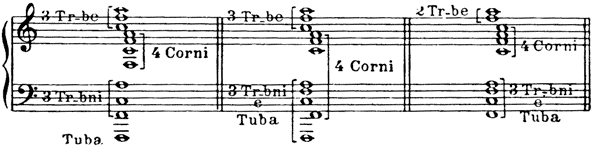 ▶ Fig. 101
 OrchestrationCecil Forsyth, 1914
- No. 20. The Valve Horn' in F
…it was the custom at Church-Festivals to give each of the four parts of the chorale to a Trombone in unison with the voices, and it was either to this Soprano-Trombone or to the old Zinke' that the highest part was allotted.
- No. 38. The Double-Bassoon
…in this Symphony. Instead of these, it is perhaps better to quote the simple chorale-subject in the Più Andante of the last Movement. In this passage the Double-Bassoon doubles the Bass-Trombone in the octave below. It always "tells" wonderfully in…
More in Cadence, key and progression
Cadence · Deceptive cadence · Modulation · Sequence · Modes · The leading note · Figured bass and partimento · Fundamental bass