 Playable Books
Concept index · Cadence, key and progression
The leading note
Taught in 10 books. Each one opens at the passage; ▶ plays the example beside it. Also called leading tone, leading note.
This index is Playable Books’ own: a first pass that finds the term’s words in each book, corrected by hand. The authors did not tag these passages, and their terms can differ (Fux’s “ligature” is a suspension). The quoted text is the book’s.
 Exercises in Elementary CounterpointPercy Goetschius, 1910
- Chapter XX. Three-Part Counterpoint
…to double. Measure eight is still worse, because of the collision with the leading-tone (i).
▶ Fig. 355 nearby - Chapter XX. Three-Part Counterpoint
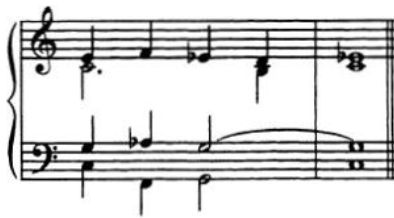
…(lower part), as keynote of G-flat, is made identical with /-sharp, as leading-tone of g minor. At the end of the measure, this same/-sharp becomes the raised 4th scale-step of C. In measure five, the g (upper part), which was the 4th step of d minor, is held…
▶ Fig. 362 nearby - Chapter XXII. Four-Part Harmony
It is almost always wrong to double the 7th scale-step (the leading-tone).
▶ Fig. 375 nearby - Chapter XXII. Four-Part Harmony
…In the last chord, the 5th is omitted, because of the resolution of the leading-tone (7th scale-step) in the Tenor; and therefore the root is tripled.
▶ Fig. 378 nearby
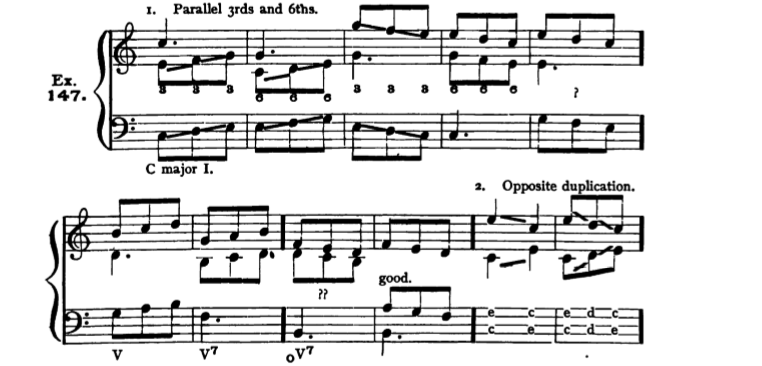 ▶ Ex.147
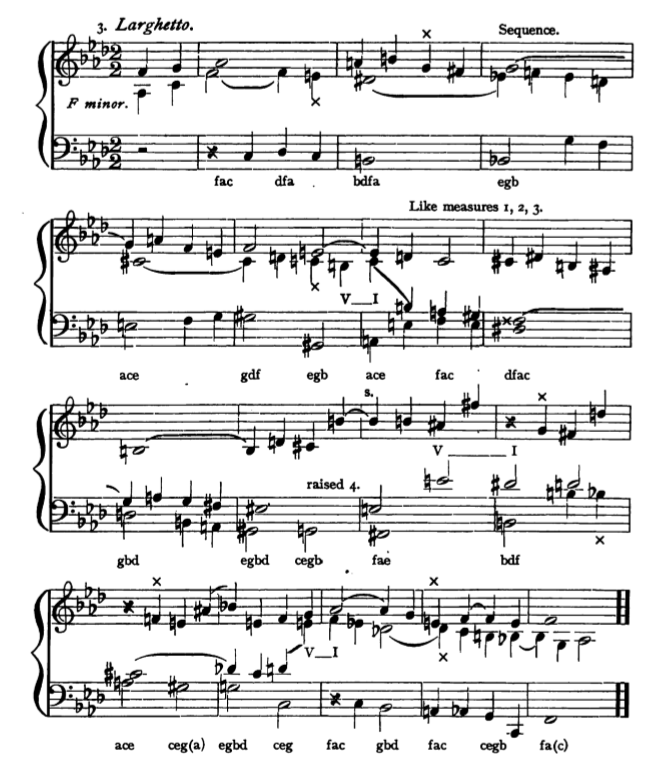 ▶ Ex.149-3
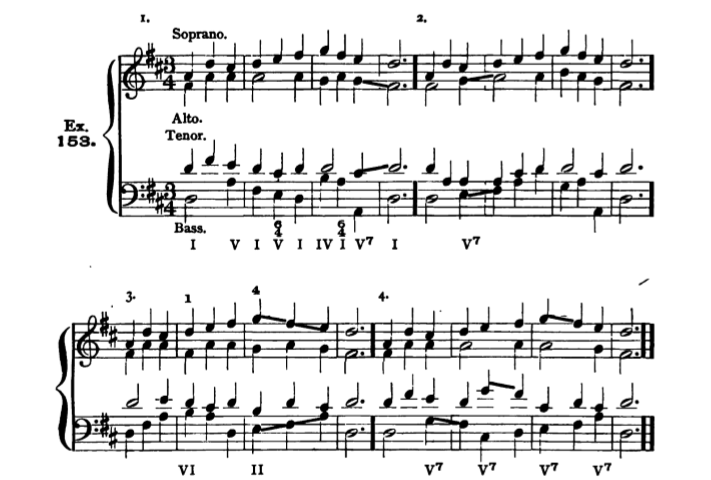 ▶ Ex.153-1
 Counterpoint AppliedPercy Goetschius, 1902
- Chapter I
That of the 7th scale-step (Leading-tone) is to ascend diatonically; that of the 6th scale-step to descend diatonically; and that of the 4th scale-step to descend diatonically.
▶ Fig. 30 nearby - Chapter I
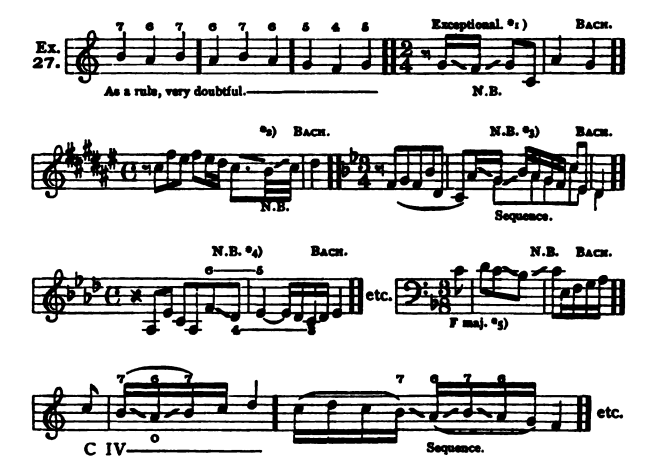
…prevailing C-major key.—*2) Same as note *I).-*3) An embellishment of the Leading-tone a, as in Ex. ga, neatly conducted into a sequence of the preceding figure. -*4) A deferred resolution of both the 6th and 4th steps. — *5) Like note *I); ¿b is taken,…
▶ Fig. 40 nearby - Chapter II
…common; it may represent the duplication of any scale-step excepting the Leading-tone (step 7), but is best as Tonic, Dominant, or Subdominant; if it occurs at the weaker steps (2nd, 3rd or 6th) its effect must be carefully tested. The perfect 5th is rare, and…
▶ Fig. 64 nearby - Chapter II
* Triad and 7th-chord on the Leading-tone. See the Author's " Mat. of Mus. Comp.," par. 187,
▶ Fig. 87 nearby - Chapter II
…descending also, when the harmony is Dominant; this is because of the proper leading-tone (7th scale-step), which is characteristic of the Dominant harmony, and not to be altered.
▶ Fig. 122 nearby - Chapter II
…influenced by the coming chord (key). *6) The lower neighbor of the Leading-tone (7th step) is almost always a whole-step.
▶ Fig. 128 nearby
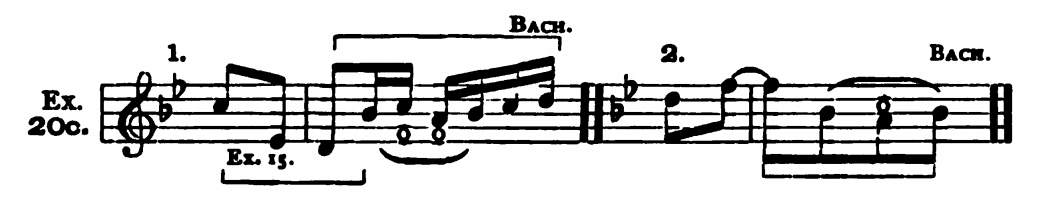 ▶ Ex20-C
 ▶ Ex27
 ▶ Ex38-3
 ▶ Ex52-1-2
 ▶ Ex58
 ▶ Ex62
 Analysis of J. S. Bach’s Forty-Eight FuguesEbenezer Prout, 1910
- Fugue 10 · Book I, No. 10 · BWV 855
…to the unrelated key of F sharp minor by closing the answer on the leading-note of B minor. There is a regular countersubject commencing after the semiquaver rest, and terminating on the first note of bar 5.
▶ Fig. 27 nearby - Fugue 19 · Book I, No. 19 · BWV 864
…tonal answer, according to an idiom whereby he always prefers to regard the leading-note as the third of the dominant, and answer it by the third of the tonic, unless it be an obvious auxiliary note; compare No. 23, also, to some extent, Nos. 18 (second note)…
▶ Fig. 48 nearby
 ▶ Subject · Fugue 10
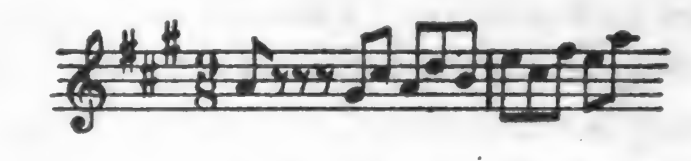 ▶ Subject · Fugue 19
 Treatise on HarmonyJean-Philippe Rameau, 1722
- Chapter fourteen
As soon as the leading note appears in a dissonant chord, it certainly determines a melodic conclusion. It must consequently be followed by the tonic's perfect chord, upon the tonic or in its derived forms. If the leading note is absent from a dissonant chord,…
▶ Fig. 218 nearby - Chapter twenty-five
…This E, being the lower sound of the diminished fifth, therefore becomes the leading note. Consequently the chord on B-flat must conform to the key prepared by the leading note, since this B-flat is not included in C, the key now being left. The dominant of C…
▶ Fig. 257 nearby - Chapter twenty-five
The first new sharp encountered certainly marks a leading note; if two or three are found in succession, the last must always be taken as the leading note. Thus a sharp beside F makes that note the leading note and simultaneously indicates G as the key. If,…
▶ Fig. 259 nearby - Chapter twenty-five
The note at H becomes the leading note both because of the semitone progression between it and the note following in the next measure, and because the diminished-fifth chord it then bears is the same as the seventh chord required by the note immediately…
▶ Fig. 261 nearby - CHAPTER XV. How to prepare and resolve all dissonances, and thereby recognize the current key and the chords belonging to each of its notes
…the major dissonance more readily, notice that it is always formed by the leading note of the current key. That leading note is always the major third of the tonic dominant, and the dissonant chord containing it is always formed from that dominant’s seventh…
▶ Fig. 436 nearby - CHAPTER XV. How to prepare and resolve all dissonances, and thereby recognize the current key and the chords belonging to each of its notes
Starting in a given key, you know its leading note. If the key changes during the piece, a sharp appearing as a figure, attached to a figure, or attached to a bass note will mark the new leading note. Conversely, a flat added to the old leading note, or the…
▶ Fig. 437 nearby
85 more passages in Treatise on Harmony →
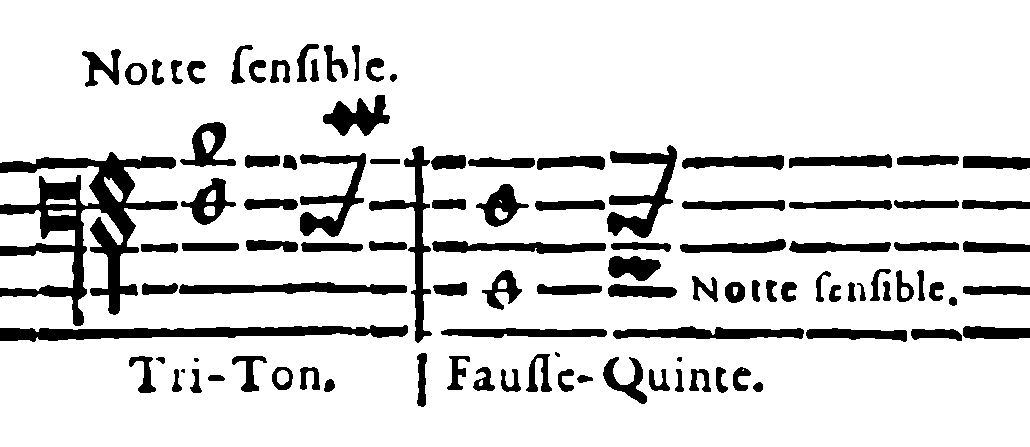 ▶ Fig. 218
Chapter fourteen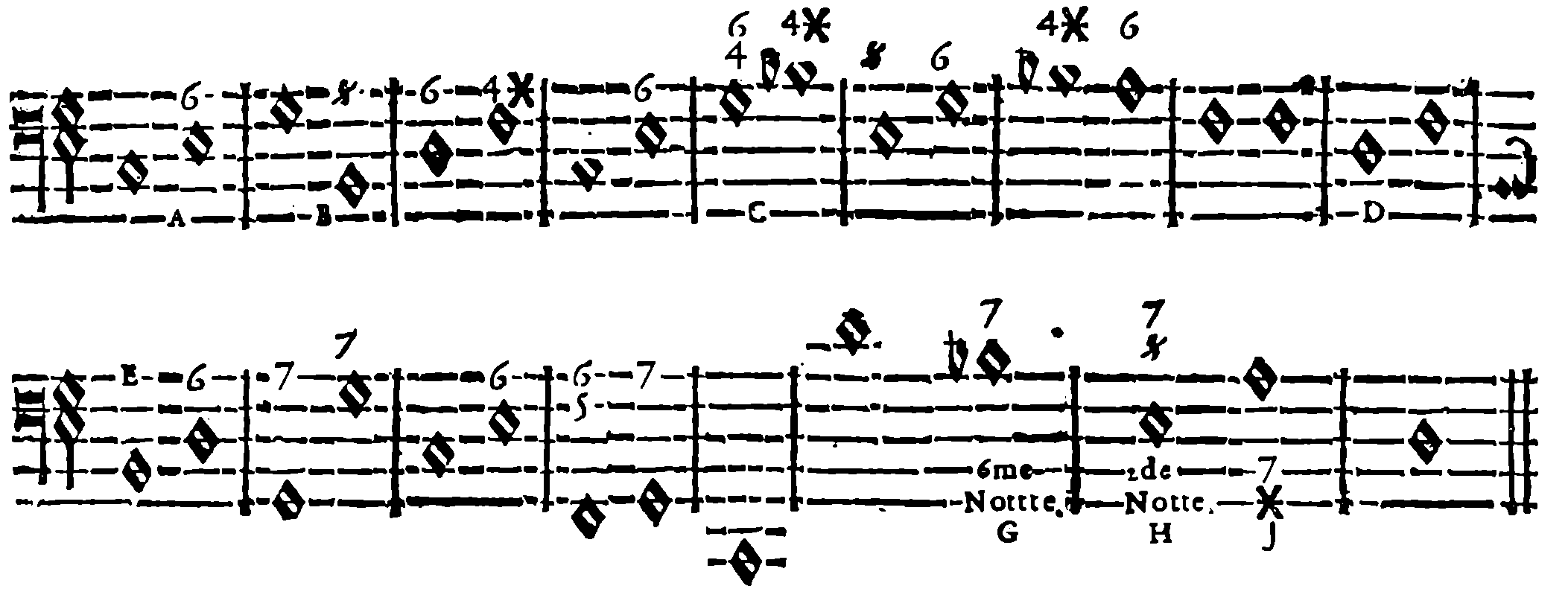 ▶ Fig. 257
Chapter twenty-five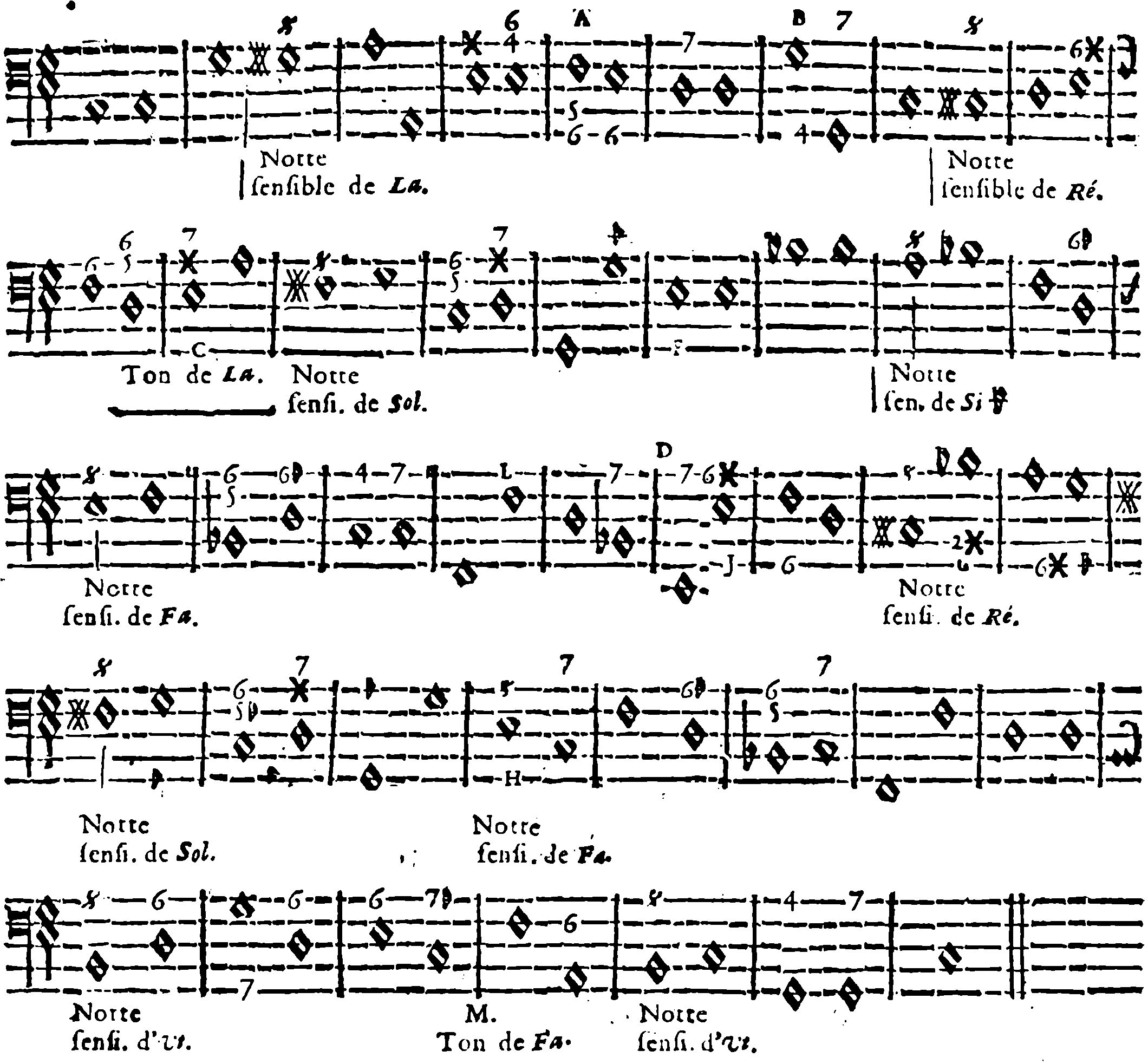 ▶ Fig. 259
Chapter twenty-five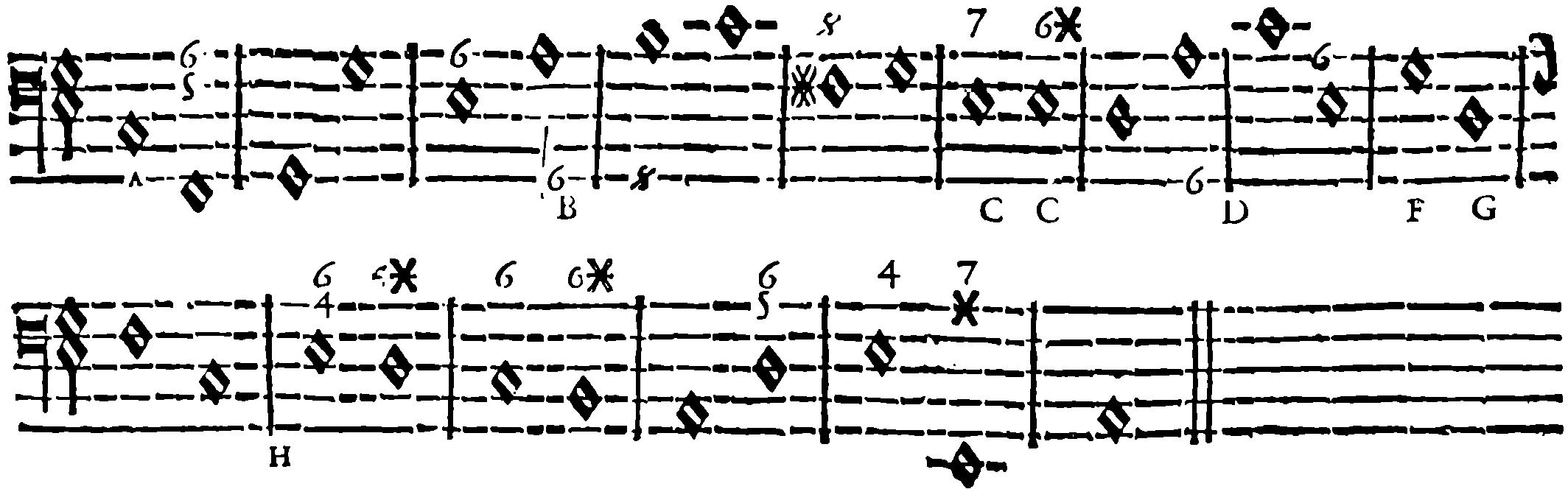 ▶ Fig. 261
Chapter twenty-five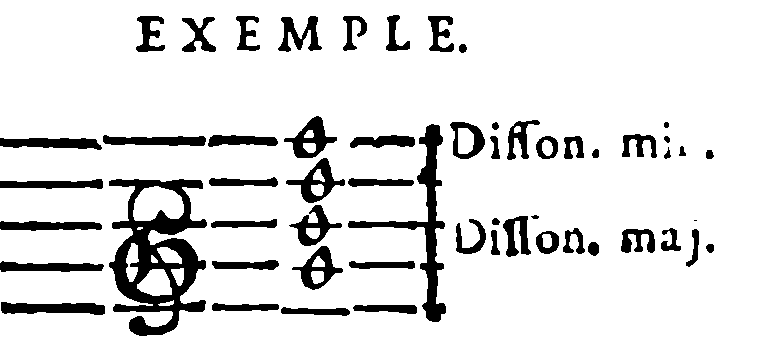 ▶ Fig. 436
CHAPTER XV. How to prepare and resolve all dissonances, and thereby recognize the current key and the chords belonging to each of its notes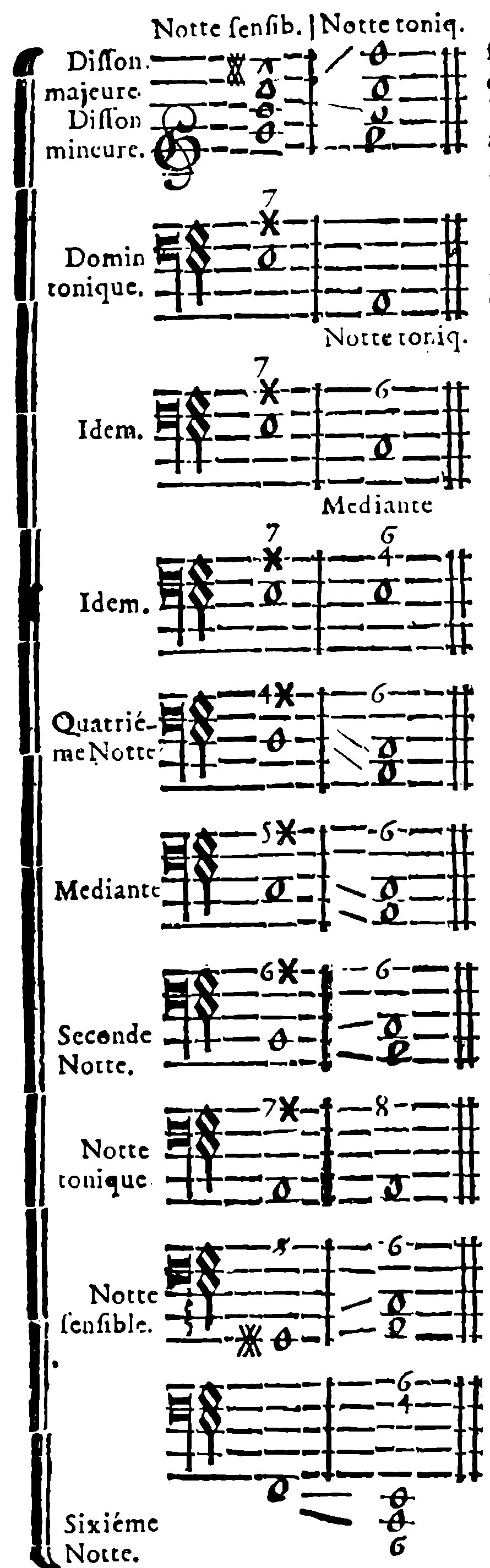 ▶ Fig. 437
CHAPTER XV. How to prepare and resolve all dissonances, and thereby recognize the current key and the chords belonging to each of its notes
 Practical Manual of HarmonyNikolai Rimsky-Korsakov, 1910
- The leading-note seventh chord
- (Leading-tone seventh chord) · 3 playable examples
- Seventh Chords
Among the second-order seventh chords, those on the leading notes of the natural major mode and the harmonic minor mode are called leading-note seventh chords.
▶ Fig. 43 nearby - Seventh Chords
Minor leading-note seventh chord (half-diminished):
▶ Fig. 43 nearby - Seventh Chords
Diminished leading-note seventh chord:
▶ Fig. 44 nearby - Seventh Chords
…and the harmonic minor mode; the latter is chosen because it contains the leading note, which the natural minor lacks. For progressions among chords on all degrees, the natural minor and harmonic major modes are used as well.
▶ Fig. 44 nearby - Exercise No. 1 (given melodies)
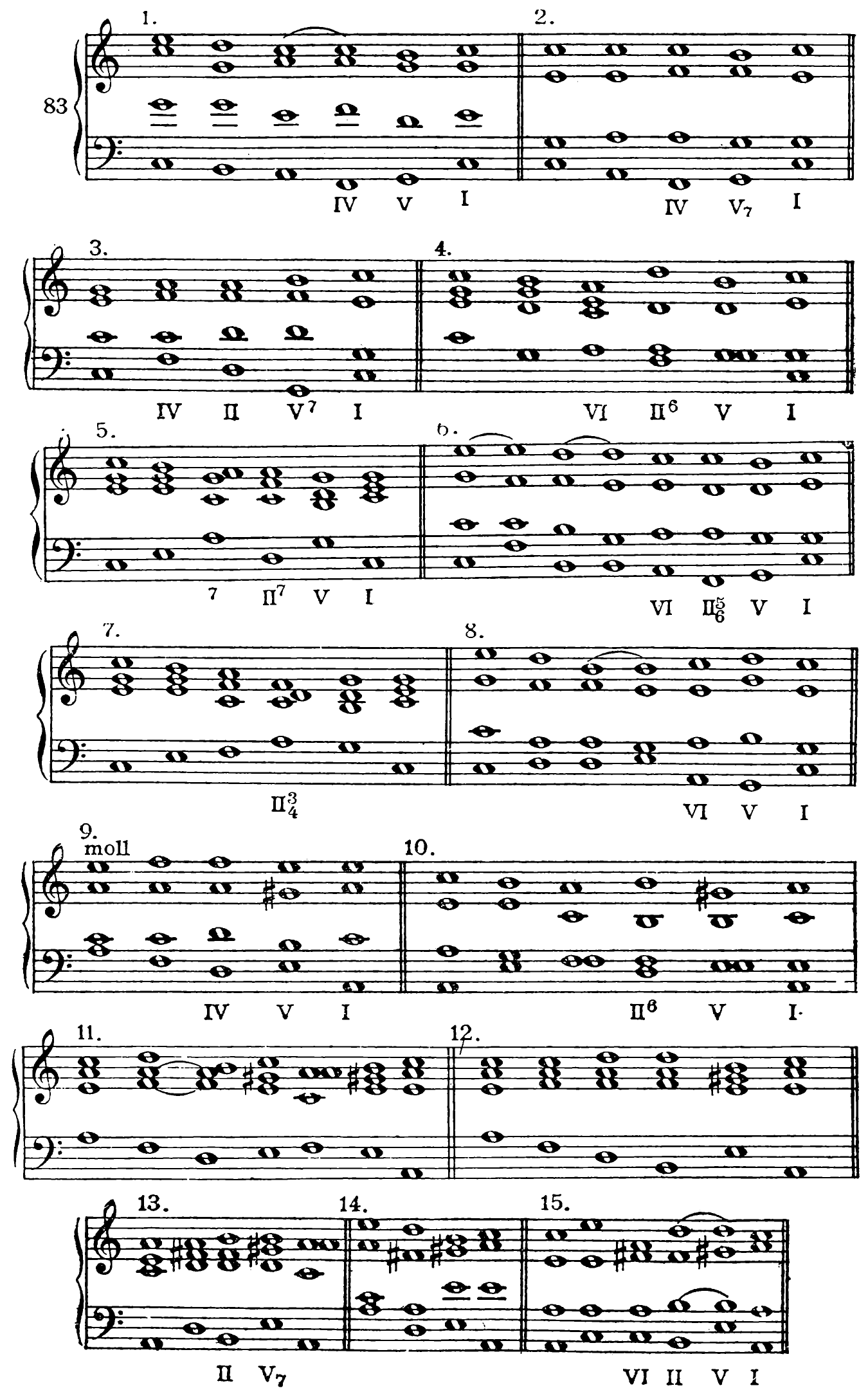
2) Always let the leading note rise. To do this, connect harmonically to the tonic chord the chord of the fifth degree that lies beneath the leading note.
▶ Fig. 67 nearby - Minor and Diminished
3) We advise the student to use the leading-note seventh chord exclusively in root position; moreover, the use of the diminished leading-note seventh chord of the major mode and of the harmonic minor mode is preferable to the minor leading-note seventh chord…
▶ Fig. 138 nearby
13 more passages in Practical Manual of Harmony →
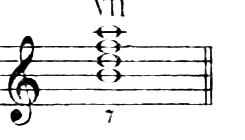 ▶ Leading-note seventh of C major: B–D–F–A
Seventh Chords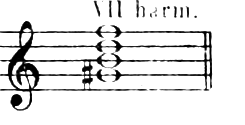 ▶ Leading-note seventh of A harmonic minor: G♯–B–D–F
Seventh Chords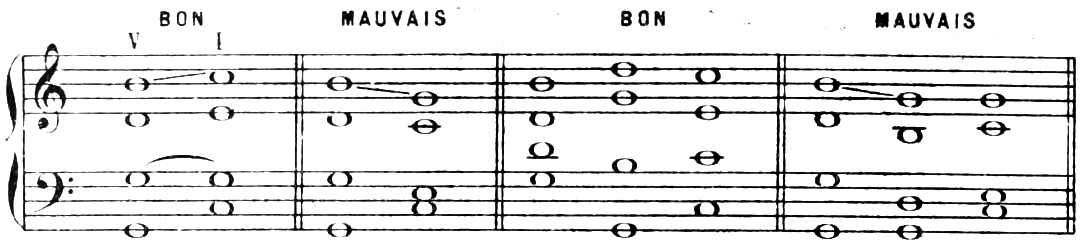 ▶ V–I in C major: good when the leading note B rises to C; bad when it falls to G
Exercise No. 1 (given melodies)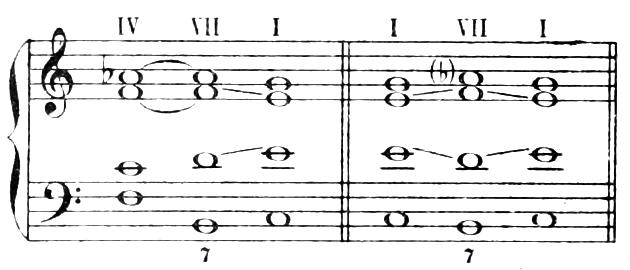 ▶ Leading-note seventh chord in C major: IV–VII7–I (prepared by IV, two common notes) and I–VII7–I (prepared by I)
Minor and Diminished ▶ Exercise 21 (Leading-tone seventh chord), given bass 1: A♭ major (four flats), 2/4, figured
(Leading-tone seventh chord) ▶ Exercise 21, given bass 2: E minor (one sharp), 3/4
(Leading-tone seventh chord)
 Guide to the Practical Study of HarmonyPyotr Ilyich Tchaikovsky, 1900
- Chapter IV. Deviations from rules governing the connection of related Triads
If the leading tone, the third of the Dominant triad, is in the Soprano voice, and the Dominant triad is followed by the tonic, the deviation is not permitted, as the tendency of the leading tone is to move ‘upward a halftone into the tonic. Should we find it,…
▶ Fig. 35 nearby - Chapter IV. Deviations from rules governing the connection of related Triads
The same holds good for the tonic triad, if succeeded by the sub-dominant triad. In this case the third of the tonic triad partakes of the nature of the leading tone, since these two chords have the same relationship as Dominant to Tonic.
▶ Fig. 36 nearby - Chapter VI. The Harmony of the Minor Scale
…the 7-th step is raised by half'a tone. This is done in order to establish a leading-tone, which, as the pupil will perceive later, is indispensable to the cadence **). Hence arises the characteristic interval of
▶ Fig. 42 nearby - Chapter VI. The Harmony of the Minor Scale
…of the augmented second should be avoided at all times. For this reason the leading-tone (third of the dominant triad) is led upwards in joining the triads on the 5-th and 6-th degrees. The triad on the 6-th degree then appears with doubled third and an…
▶ Fig. 50 nearby - Chapter VIII. The Inversions of the Triad
If the chord of the sixth of the dominant triad is followed by the tonic, the third of the former must never be doubled, as it is the leading tone.
▶ Fig. 64 nearby - Chapter IX. The Inversions of the Diminished and Augmented Triads
In the first case the fundamental tone of the triad is at the same time leading tone and must be led upward, for which reason it must not he doubled. The best tone to double here would be the fifth, though occasionally the third is doubled.
▶ Fig. 71 nearby
12 more passages in Guide to the Practical Study of Harmony →
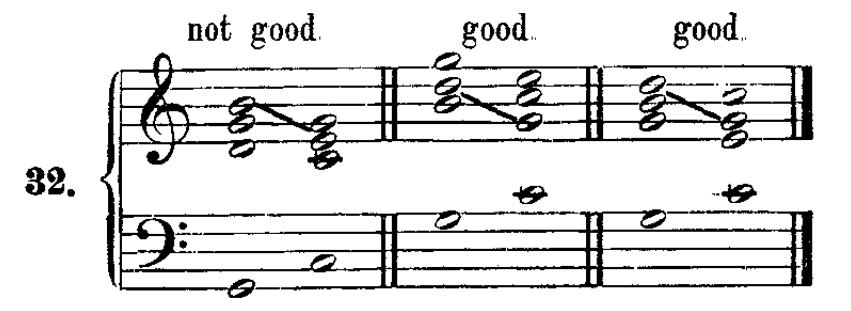 ▶ Fig. 35
Chapter IV. Deviations from rules governing the connection of related Triads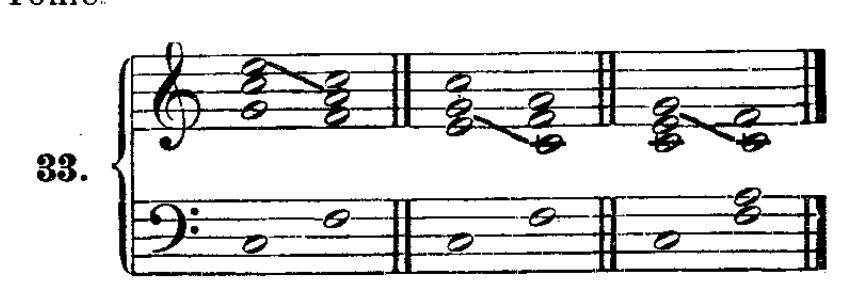 ▶ Fig. 36
Chapter IV. Deviations from rules governing the connection of related Triads ▶ Fig. 42
Chapter VI. The Harmony of the Minor Scale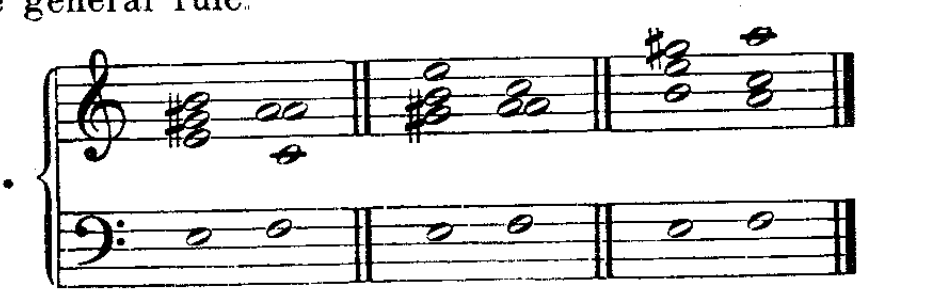 ▶ Fig. 50
Chapter VI. The Harmony of the Minor Scale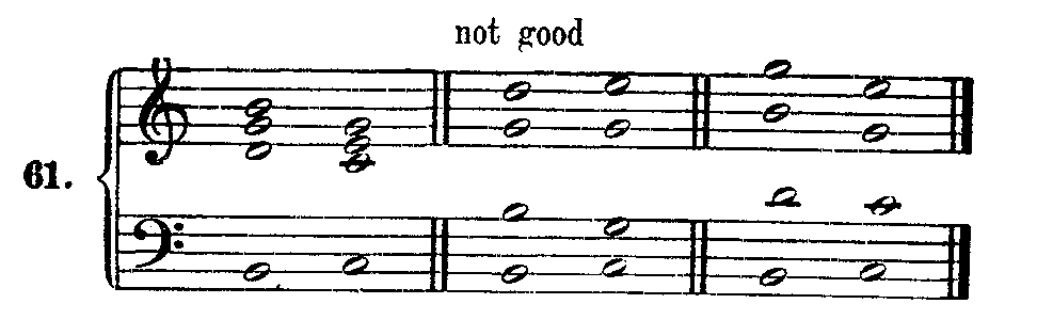 ▶ Fig. 64
Chapter VIII. The Inversions of the Triad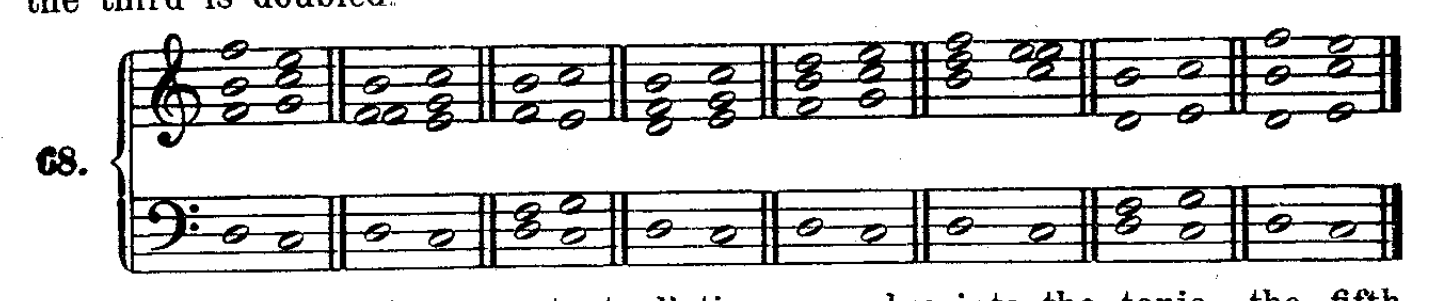 ▶ Fig. 71
Chapter IX. The Inversions of the Diminished and Augmented Triads
 PartimentiFedele Fenaroli, 1800
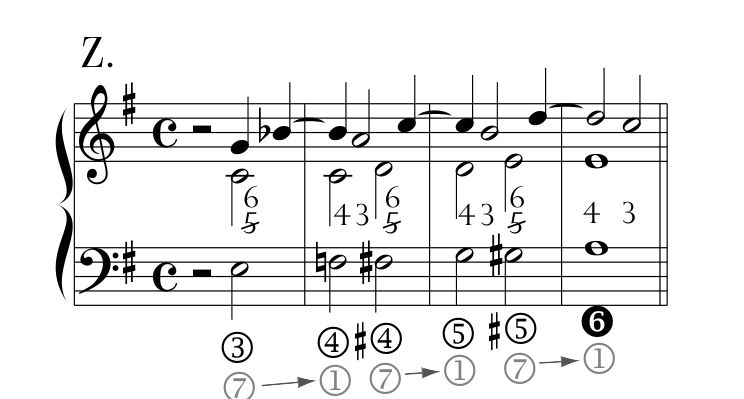
- that Rises by Semitone and Begins said Ascent from ③
…added the diminished 5th in consideration of [the partimento] being on the leading tone. Consider the subsequent note of
▶ Fig. 80 nearby
 ▶ Fig. 80
 Supplement to the Theory of ModulationMax Reger, 1904
- From C-major · Footnote
The Dorian sixth is the major sixth in minor, which must always be led upwards (to the leading tone); for instance, f♯ in a-minor; this f♯ can be taken as the “Third” in D-major and also as the “Fifth” in the b-minor triad! (Hence D-major and b-minor: Chords…
▶ Fig. 70 nearby - From a-minor
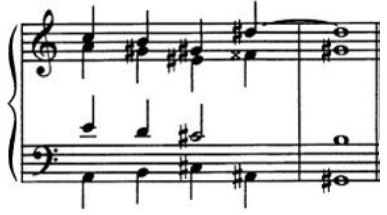
Tonic a-minor; translate the chord of the sixth (b d g♯) (aVII) f♯II; dominant (C♯-major) of f♯-minor; use this C♯-major, which is at the same time the chord of the Dorian sixth (c♯ e♯ g♯) in g♯-minor; dominant (D♯-major) of g♯-minor; tonic g♯-minor. (Notice…
▶ Fig. 105 nearby
 ▶ Ex-34
 ▶ Ex-51
 Theory of HarmonyArnold Schoenberg, 1922
- Connecting Triads and Sixth Chords
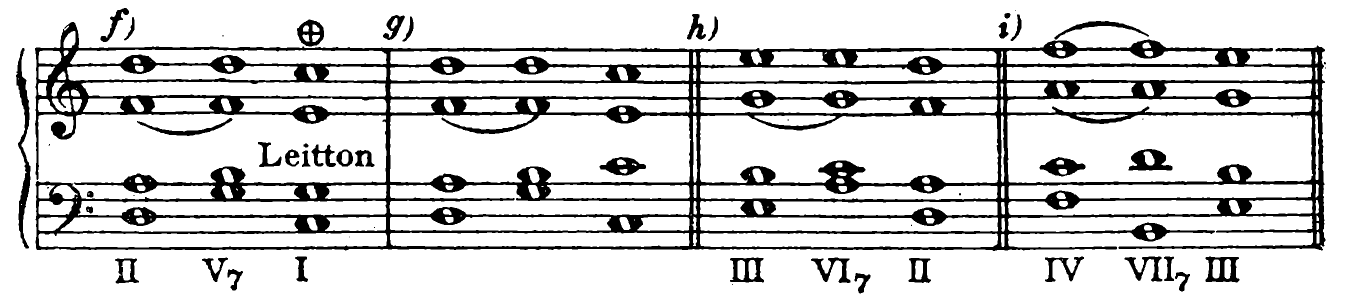
…its difficulty of intonation. This is best done by leading b, the “ascending leading tone,” upward to c, and f, the “descending leading tone,” downward to e. Since this is not always possible, example 25 supplies several other possibilities, in measures 5–10.
▶ Fig. 40 nearby - Seventh chords
…requiring B to move to C. B, the seventh note of the scale, is called the leading tone—more precisely, the ascending leading tone. Leading it upward to the eighth note follows the model of the ascending major scale. Yet it must follow this melodic impulse, the…
▶ Fig. 51 nearby - The Minor Key
…when the seventh note was to move to the eighth, it was changed into a leading tone: g-sharp replaced g. This, however, produced the augmented interval f–g-sharp, which the older musicians preferred to avoid. Consequently f was also replaced by f-sharp, so…
- The Minor Key
…seventh note, and consequently the sixth, by raised notes occurred only for leading-tone purposes. Where there is no such purpose, the unraised scale notes remain. It is therefore incorrect to base the discussion on the so-called harmonic minor scale. The only…
- Endings and cadences
…chord tones in common with I, and that is a shortcoming here. But it has the leading tone, and so marks the boundary against F major, and its root progression is relatively strong (a step of a third downward). It ought therefore to be suitable after all.…
▶ Fig. 118 nearby - 1. Altered Chords
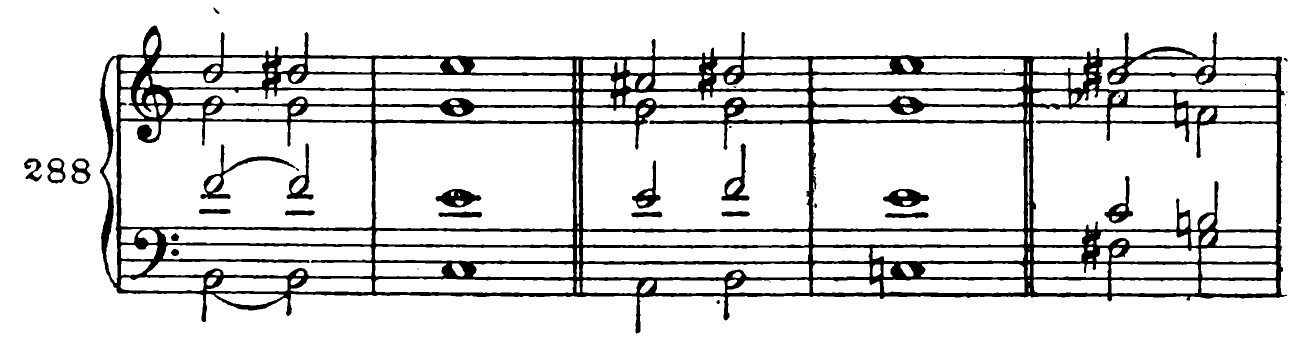
…more—that altering a tone is primarily caused by the need for an artificial leading tone. An upward alteration will readily continue another semitone upward; a downward alteration, which creates a descending leading tone, another semitone downward. But an…
▶ Fig. 505 nearby
 ▶ Example 25
 ▶ Example 31f–i
 ▶ Example 83, cadence 1
 ▶ Example 288-1
 Treatise on InstrumentationHector Berlioz, 1905
- The Harp
…culty of ski one string and then releasing and at once ga. because the leading-tone (enharmonic) and the tonic are played on the same string.
- The Concertina
…ear of all peoples cultivating modern music demand that in certain cases the leading tones, which are drawn upward to the higher tonic, become slightly higher than in the welltempered scale, and that correspondingly the minor seventh and ninth, drawn downward…
More in Cadence, key and progression
Cadence · Deceptive cadence · Modulation · Sequence · Modes · Figured bass and partimento · Fundamental bass · Harmonizing a melody