 Playable Books
Concept index · Cadence, key and progression
Modes
Taught in 8 books. Each one opens at the passage; ▶ plays the example beside it. Also called church modes, dorian, phrygian, lydian.
This index is Playable Books’ own: a first pass that finds the term’s words in each book, corrected by hand. The authors did not tag these passages, and their terms can differ (Fux’s “ligature” is a suspension). The quoted text is the book’s.
 Gradus ad ParnassumJohann Joseph Fux, 1725
- On modes
…of octaves as from the diversity, character, and style of peoples: thus Dorian, Hypodorian, Phrygian, Lydian, and so forth. By these names they indicated the differing character and style of nations, which each people used according to its native custom, just…
▶ Fig. 400 nearby - On modes
…modes, so that there is no difference except that the melodic course of the authentic mode must occupy the higher range, and that of the plagal the lower. Nor does this author require that subjects of the authentic mode always proceed upward and those of the…
▶ Fig. 417 nearby - On modes
…Berardi, otherwise an author of no mean standing, seems to distinguish the authentic mode from the plagal only by name, without regard to subjects ascending or descending or to a high or low melodic range. Indeed, he places the melodic course lower in the…
▶ Fig. 419 nearby - On modes
…with the opinions of other authors, would assign this last example to the plagal mode, when the nature of its subject and its melodic course seem more suited to the formation of the authentic mode? Still more remarkable is the following composition, given by…
▶ Fig. 419 nearby - On modes
Aloysius. Not at all. It is enough to take account of the intonations and ecclesiastical modes—knowledge of which you should seek from chant specialists—and in melodic writing to follow the advice just given without the restriction of a plagal mode. You will…
▶ Fig. 423 nearby - On modes
Aloysius. Joseph Zarlino and most others of that age regarded C, or Dorian, as the first mode. Later, almost all more recent practitioners assigned the first place to D, formerly called Phrygian. It is enough for us to have demonstrated that only six modes…
▶ Fig. 423 nearby
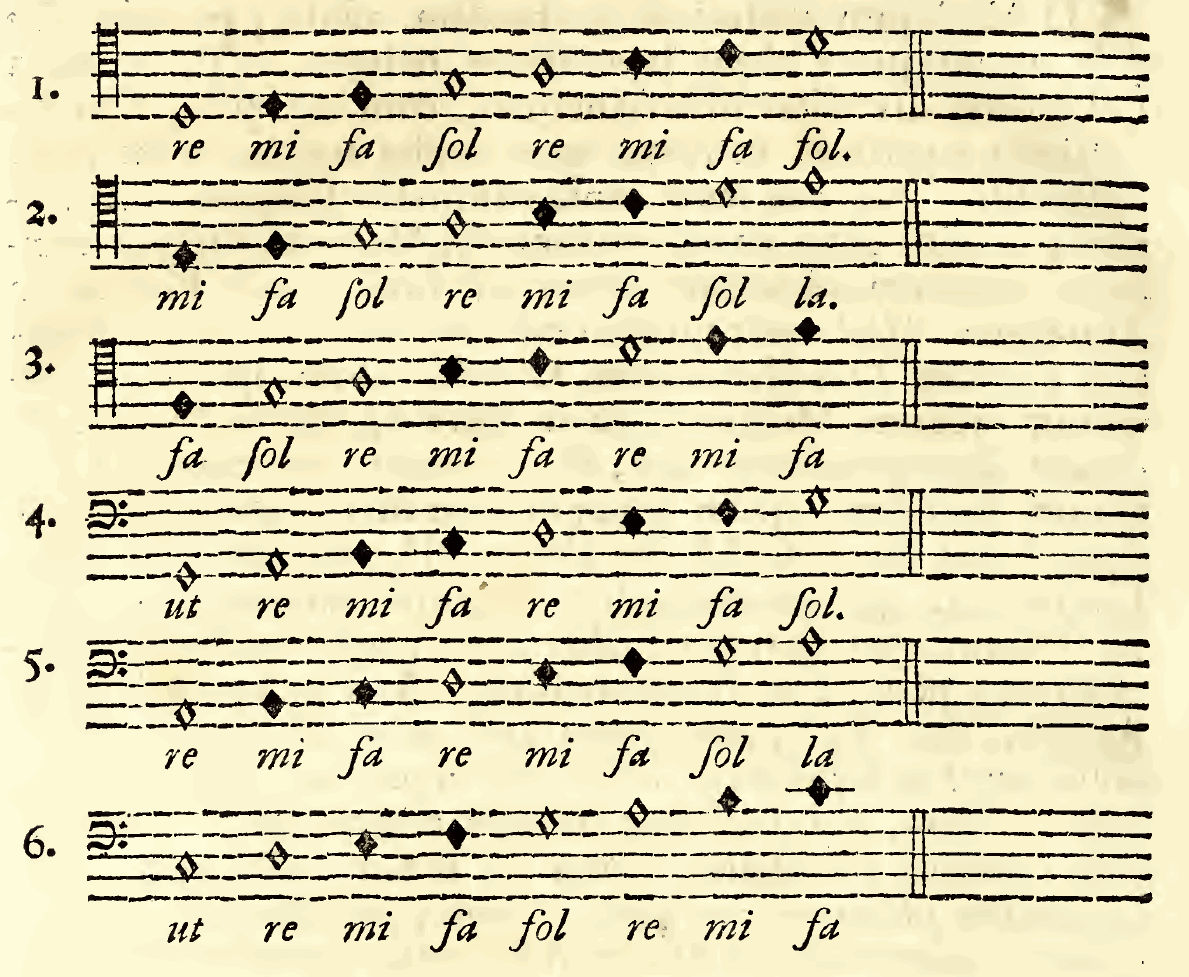 ▶ Fig. 400
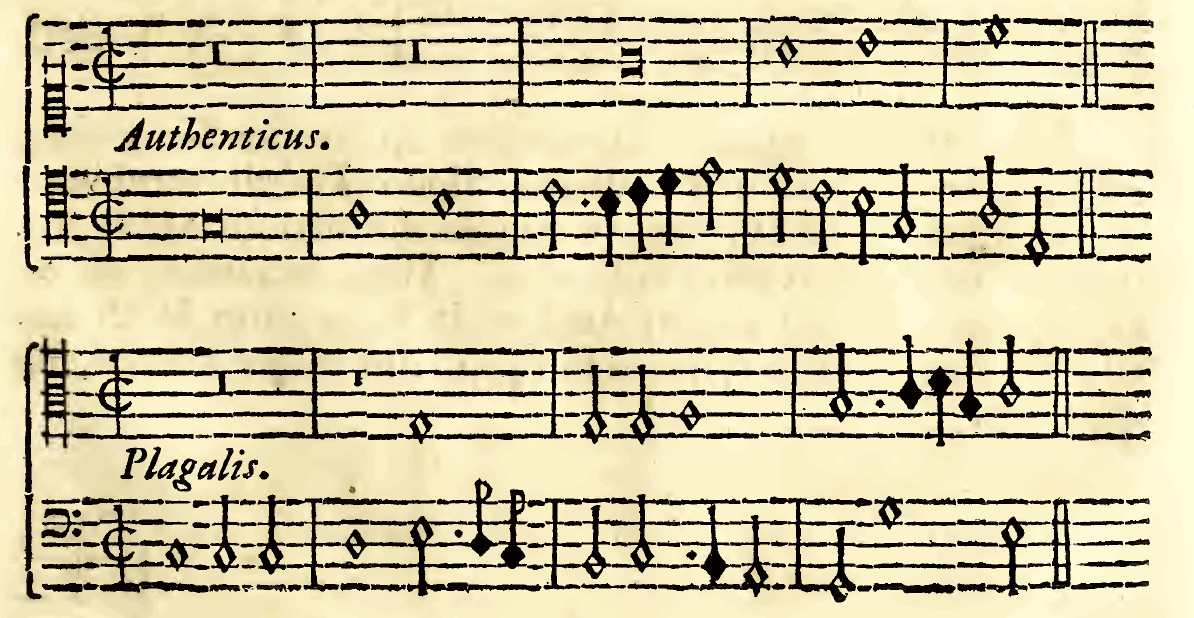 ▶ Fig. 417
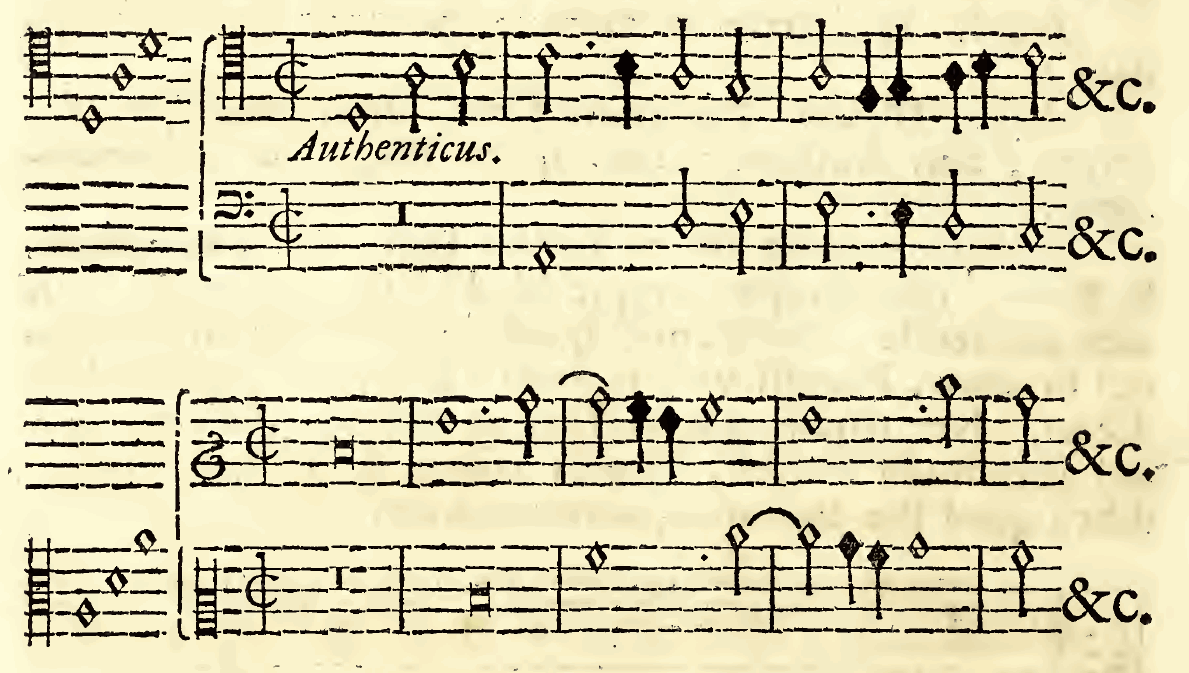 ▶ Fig. 419
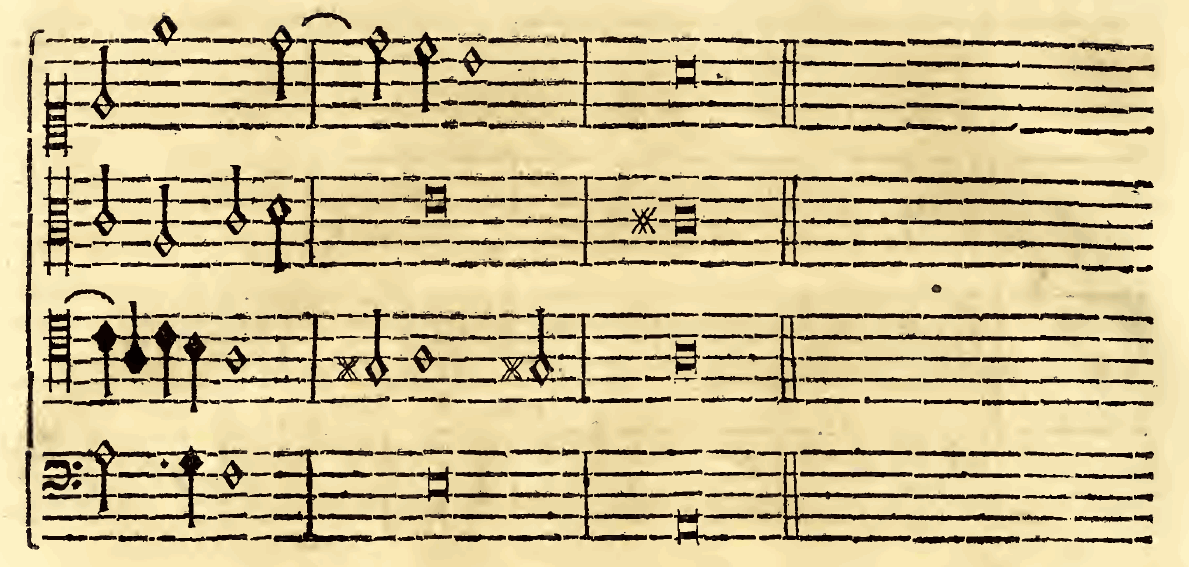 ▶ Fig. 423
 Practical Manual of HarmonyNikolai Rimsky-Korsakov, 1910
- The Triad of the Third Degree of the Natural Minor Mode (Phrygian Cadence of the First Kind) · 2 playable examples
- The Triad of the Seventh Degree of the Natural Minor Mode (Phrygian Cadence of the Second Kind) · 3 playable examples
- The Triad of the Third Degree of the Natural Minor Mode (Phrygian Cadence of the First Kind)
Examples 2 and 3 form a series of chords called the Phrygian succession (the name comes from the ecclesiastical Phrygian mode); when it is used as a half cadence in the minor mode it is called the Phrygian cadence.
▶ Fig. 113 nearby - The Triad of the Seventh Degree of the Natural Minor Mode (Phrygian Cadence of the Second Kind)
Each group of chords above is also called a Phrygian Succession; used as a half cadence in the minor mode, these groups are called a Phrygian Cadence.
▶ Fig. 116 nearby - Supplement to § 32
In the Phrygian cadence of the first kind, the sixth chord of the natural seventh degree may be used, with the bass doubled:
▶ Fig. 117 nearby
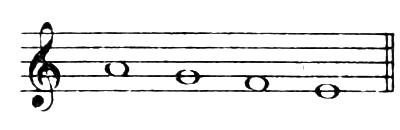 ▶ The second tetrachord of the natural A minor scale, descending in the melody: A–G–F–E
The Triad of the Third Degree of the Natural Minor Mode (Phrygian Cadence of the First Kind)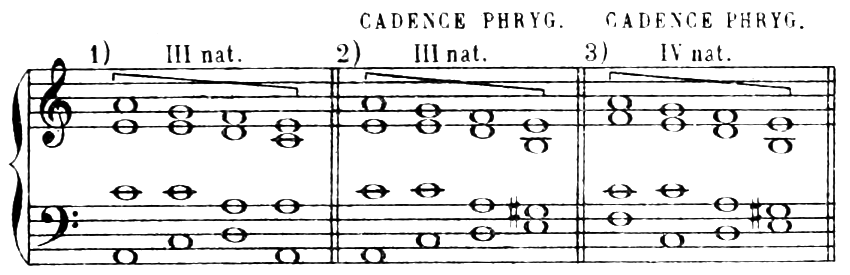 ▶ Three progressions in A minor with the natural III triad (C major) under the descending tetrachord A–G–F–E: (1) I – III – IV – I; (2) and (3), labelled “Phrygian cadence”, I or VI – III – IV – V
The Triad of the Third Degree of the Natural Minor Mode (Phrygian Cadence of the First Kind)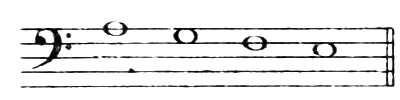 ▶ The second tetrachord of the natural A minor scale, descending in the bass: A–G–F–E
The Triad of the Seventh Degree of the Natural Minor Mode (Phrygian Cadence of the Second Kind)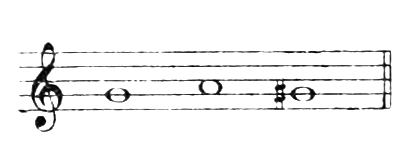 ▶ The faulty melodic motion G–A–G♯ (natural seventh degree, back through A to the raised leading note)
The Triad of the Seventh Degree of the Natural Minor Mode (Phrygian Cadence of the Second Kind)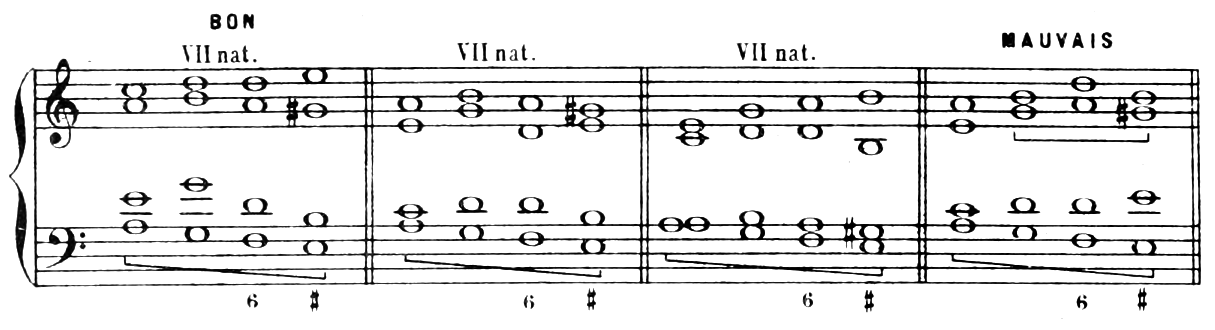 ▶ Phrygian succession in A minor with the natural seventh-degree triad: three good versions (I–VII nat.–IV6–V) and a bad one (I–VII nat.–IV6–V with the alto moving G–A–G♯)
The Triad of the Seventh Degree of the Natural Minor Mode (Phrygian Cadence of the Second Kind)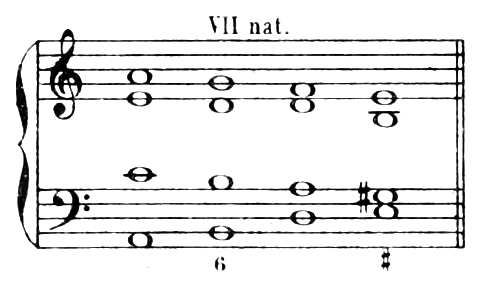 ▶ Phrygian cadence of the first kind in A minor with the sixth chord of the natural seventh degree (bass B doubled): I–VII nat.6–IV–V
Supplement to § 32
 Supplement to the Theory of ModulationMax Reger, 1904
- From C-major
Tonic C-major, which is used, as it is also the chord of the Dorian*) sixth in g-minor; dominant (D-major) with 7th (2nd inversion) of g-minor.
▶ Fig. 68 nearby - From C-major · Footnote
The Dorian sixth is the major sixth in minor, which must always be led upwards (to the leading tone); for instance, f♯ in a-minor; this f♯ can be taken as the “Third” in D-major and also as the “Fifth” in the b-minor triad! (Hence D-major and b-minor: Chords…
▶ Fig. 70 nearby - From C-major
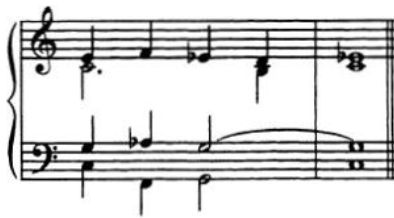
Tonic C-major; minor sub-dominant (f-minor) in C-major; use this f-minor (f a♭ c), which is also the chord of the Dorian sixth in e♭-minor; dominant (B-major) of e♭-minor and tonic e♭-minor.
▶ Fig. 76 nearby - From C-major
Tonic C-major; chord of the Neapolitan sixth (f a♭ d♭) in C-major; use this chord of the sixth (f a♭ d♭), which is at the same time the Dorian sixth (D♭-major as chord of the sixth) in a♭-minor; dominant (E♭-major) and tonic of a♭-minor.
▶ Fig. 78 nearby - From C♯-major
NB. To modulate to e♭-minor, use the f-minor (f a♭ c), which is also the chord of the Dorian sixth in e♭-minor; dominant (B♭-major) of e♭-minor. (Cadence!)
▶ Fig. 86 nearby - From a-minor
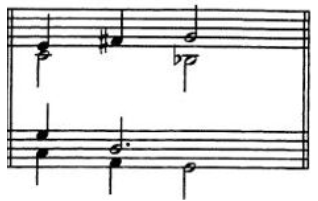
Tonic a-minor; translate the chord of the sixth (b d g♯) (aVII) f♯II; dominant (C♯-major) of f♯-minor; use this C♯-major, which is at the same time the chord of the Dorian sixth (c♯ e♯ g♯) in g♯-minor; dominant (D♯-major) of g♯-minor; tonic g♯-minor. (Notice…
▶ Fig. 105 nearby
 ▶ Ex-33
 ▶ Ex-34
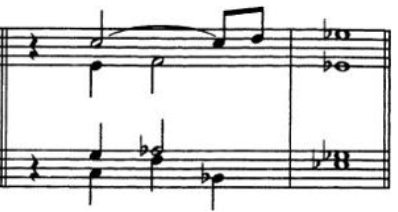 ▶ Ex-37
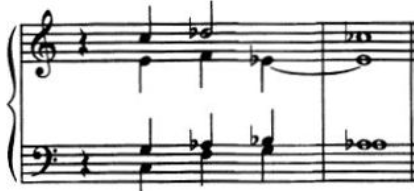 ▶ Ex-38
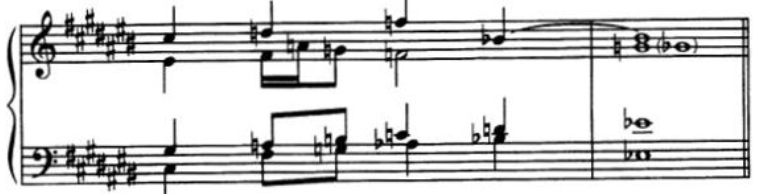 ▶ Ex-42
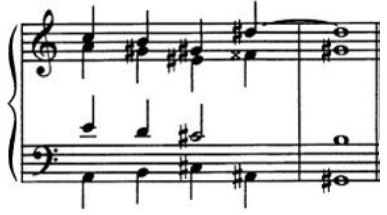 ▶ Ex-51
 Theory of HarmonyArnold Schoenberg, 1922
- The Major Key and Its Diatonic Chords
…they are sat through and worn out. Did tonality fare any differently in the church modes? It is easy for us to say today, “The church modes were unnatural, but our keys agree with nature.” In their day, people presumably believed that the church modes agreed…
- The Minor Key
…clarify the nature of minor. Both major and minor are remnants of the seven church modes. Our present major is the Ionian of the older musicians, and our minor their Aeolian. The other five church modes began as follows: Dorian on d, Phrygian on e, Lydian on…
- The Minor Key
…of the seven notes of a series. For example, within c, d, e, f, g, a, b, Dorian began with d and ran d, e, f, g, a, b, c. Like our major and minor, these series could be transposed, so that there were actually eighty-four modes, although not every…
- Secondary Dominants and Modal Chords
I have already mentioned the peculiarity of the church modes of bringing variety into the harmony by means of accidentals (that is, signs of alteration which incidentally and temporarily change the diatonic tones of a scale). Most textbooks usually try to…
▶ Fig. 168 nearby - Secondary Dominants and Modal Chords · Footnote
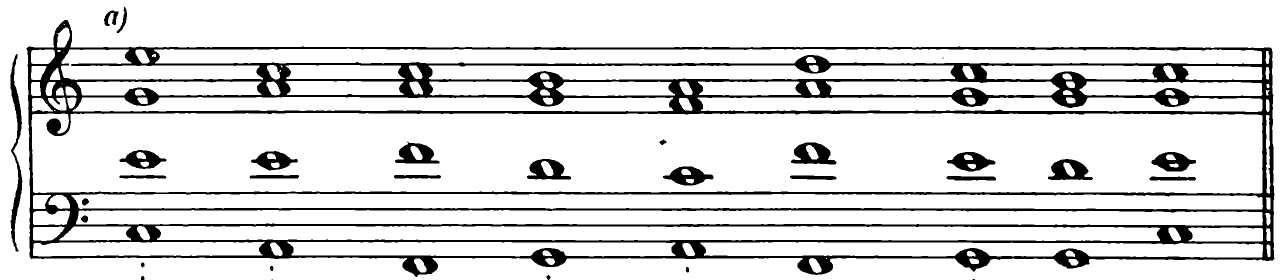
…so rich in ideas, has also hit upon opening up the wealth of the old church modes, by introducing concepts such as “Dorian sixth,” “Lydian fourth,” etc. But by giving the individual phenomena names, he makes them into special cases and at the same time cuts…
▶ Fig. 172 nearby - Secondary Dominants and Modal Chords
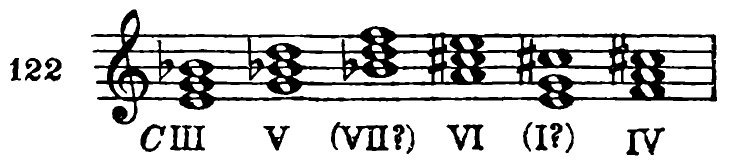
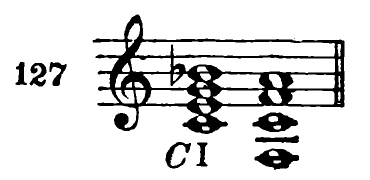
These are the dominants of the old church modes. They contain the raised (altered) seventh tone, the leading tone to the eighth (the fundamental). Specifically: the II degree contains that of the Mixolydian, the III that of the Aeolian, the VI that of the…
▶ Fig. 175 nearby
 ▶ Example 122
 ▶ Footnote example a) (unnumbered)
 ▶ Example 127
 Principles of OrchestrationNikolai Rimsky-Korsakov, 1922
- Instruments on the stage and in the wings
h) Harp, reproducing the effect of an aeolian harp:
 OrchestrationCecil Forsyth, 1914
- No. 47. The Viola (or Tenor)
…mental linking of its antique tone-colour with the dark hues of the ancient Dorian mode. Whether this be so or not, it is a fact that a large number of effective melodic_passages in the minor-mode have been assigned to the instrument. In place of quoting any…
 Treatise on InstrumentationHector Berlioz, 1905
- Clarinets
…tones; it has a melancholy similar to the trembling harmonies of the aeolian harp. (Example
 ArrivalMayank Sanganeria, 2026
- Chapter 1 — The Two Axes
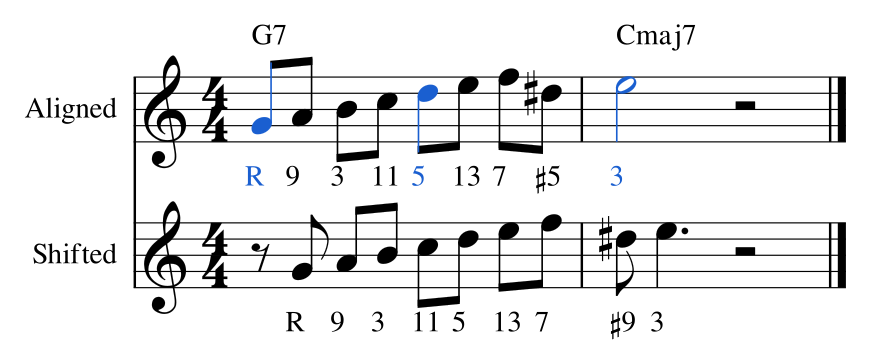
Ex. 1.2 plays the same eight notes twice. In the top version, the G Mixolydian scale starts on G on beat 1. Every beat carries a chord tone of G7 (R, 3, 5, 7), the upbeats carry the tensions, and the last upbeat, D♯, steps into E on the downbeat of Cmaj7.
▶ Fig. 3 nearby - Chapter 6 — Scales as Runways
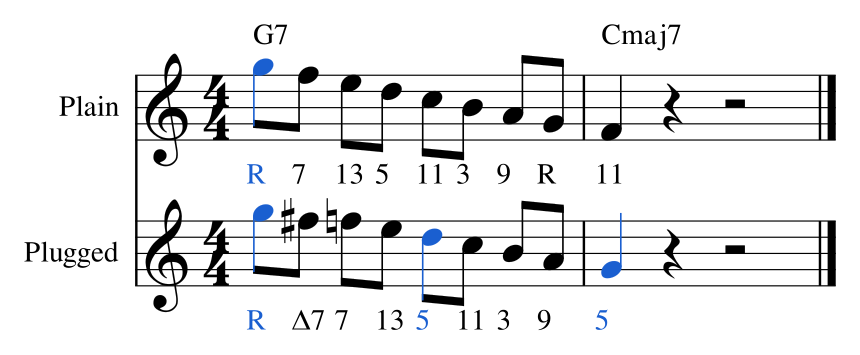
Ex. 6.1 — G Mixolydian descending from G, plain and plugged. Plain: the beats carry R, 13, 11 and 9, and the run lands on F, the 11th of Cmaj7. Plugged: F♯ between G and F keeps R, 7, 5 and 3 on the beats, and the run lands on G.
▶ Fig. 15 nearby - Chapter 6 — Scales as Runways · Table
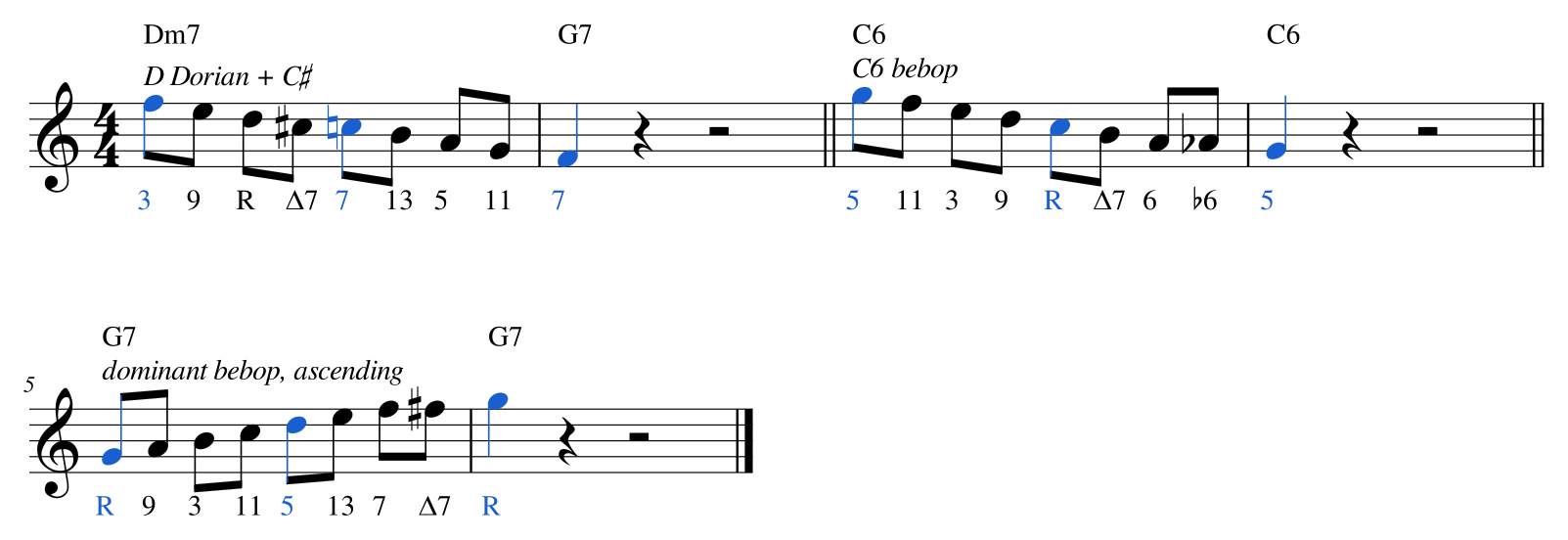
Chord | Scale | Adjacent chord tones | Plug | Common name G7 | G Mixolydian | F – G | F♯ | Dominant bebop scale C6 | C major | G – A | G♯ / A♭ | Major bebop scale Dm7 | D Dorian | C – D | C♯ | Dorian bebop scale Cmaj7 | C major | B – C | None: already a half…
▶ Fig. 16 nearby - Chapter 6 — Scales as Runways
Ex. 6.2 — Three plugged runways: D Dorian descending (C♯ between D and C), C6 bebop descending (A♭ between A and G) and dominant bebop ascending (F♯ between F and G).
▶ Fig. 16 nearby - Chapter 7 — Phrase Architecture
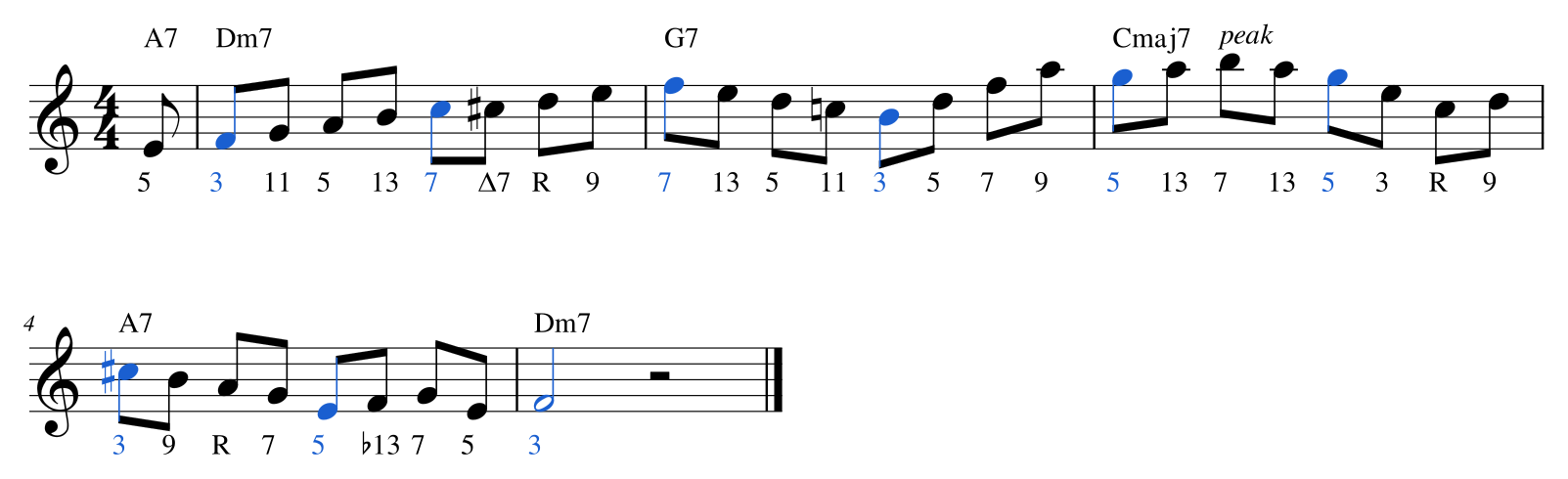
Trace the contour. A one-note pickup leads into a Dorian runway that rises through the C♯ plug. Bar 2 turns at the top, runs down to B and climbs again. Bar 3 reaches the peak and turns down. Bar 4 descends through A7 and ends with an enclosure, G above and E…
▶ Fig. 20 nearby - Chapter 9 — Applying the System
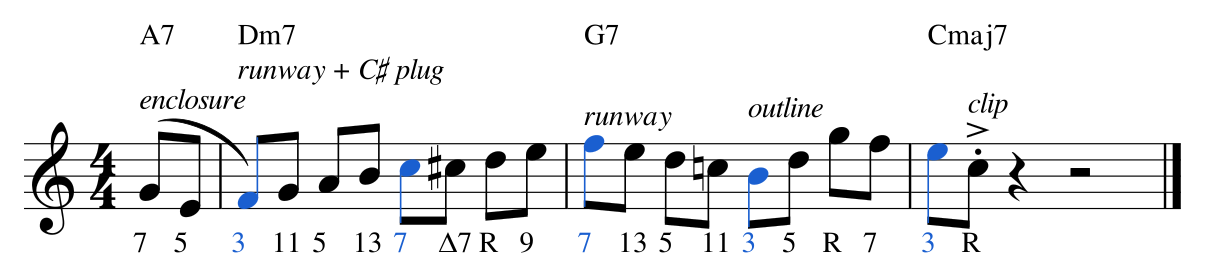
- Pickup: a two-slot enclosure, G and E around F. - Bar 1: an arrival on F, then a rising D Dorian runway. The C♯ plug keeps F, A, C and D on the beats, and the last upbeat, E, steps into F. - Bar 2: an arrival on F, a runway down to B on beat 3, then an…
▶ Fig. 25 nearby
 ▶ Ex. 1.2
 ▶ Ex. 6.1
 ▶ Ex. 6.2
 ▶ Ex. 7.3
 ▶ Ex. 9.1
More in Cadence, key and progression
Cadence · Deceptive cadence · Modulation · Sequence · The leading note · Figured bass and partimento · Fundamental bass · Harmonizing a melody