 Playable Books
Concept index · Chords
Inversions and the chord of the sixth
Taught in 11 books. Each one opens at the passage; ▶ plays the example beside it. Also called inversion, first inversion, sixth chord, chord of the sixth.
This index is Playable Books’ own: a first pass that finds the term’s words in each book, corrected by hand. The authors did not tag these passages, and their terms can differ (Fux’s “ligature” is a suspension). The quoted text is the book’s.
 Exercises in Elementary CounterpointPercy Goetschius, 1910
- Chapter XVI. Three-Part Harmony
172. This refers principally to the first inversion, — the chord of the 6th, which is almost invariably good.
▶ Fig. 282 nearby - Chapter XVI. Three-Part Harmony
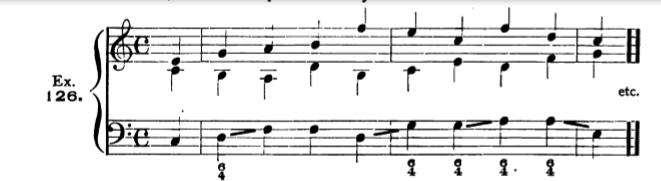
The second inversion of any triad-form (the 6/4 chord) is rare and hazardous. It would be wise for the student to avoid all 6/4 chords, excepting the second inversion of the I, and of the IV. These are good.
▶ Fig. 283 nearby - Chapter XVII. Secondary Chords
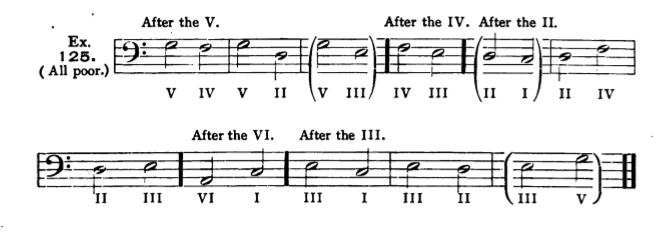
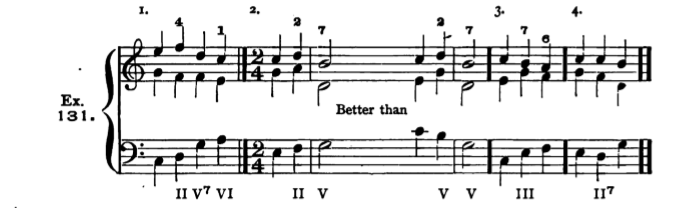
180. The best of these chords are the II and its first inversion, and the II7 and its inversions. They harmonize steps 4 and 2.
▶ Fig. 297 nearby - Chapter XVII. Secondary Chords
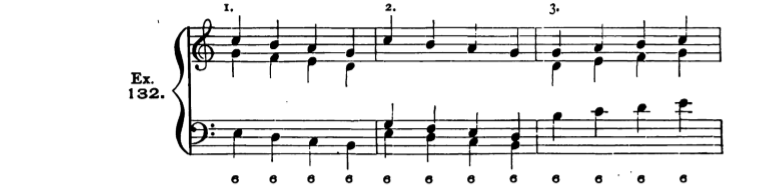
182. Successive first inversions (chords of the 6th) are always good; especially when used in stepwise progression. Thus:
▶ Fig. 298 nearby - Chapter XXV. Four-Part Counterpoint
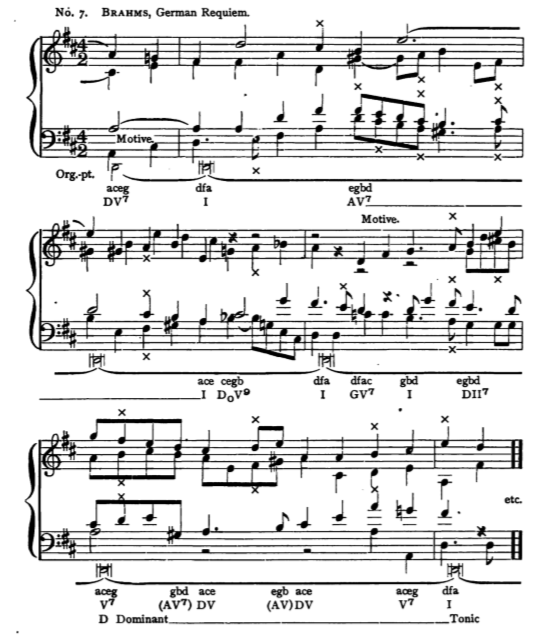
In No. 6: At the beginning there is a succession of Sixth-chords, over the tonic organ-point. Compare paragraph 182 (Ex. 132).
▶ Fig. 432 nearby
 ▶ Ex.125
 ▶ Ex.126
 ▶ Ex.131
 ▶ Ex.132
 ▶ Ex.171-7
 Counterpoint AppliedPercy Goetschius, 1902
- Chapter IV
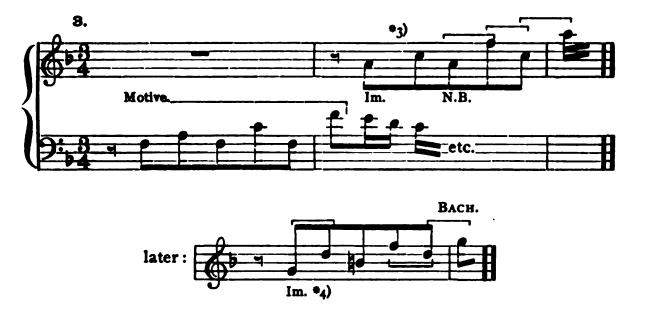
At *3) the triad-form of the motive is changed, both by enlargement and contraction, to the form of a "chord of the sixth." At *4) it is changed to a chord of the seventh.
▶ Fig. 159 nearby
 ▶ Ex70-A3
 Analysis of J. S. Bach’s Forty-Eight FuguesEbenezer Prout, 1910
- Fugue 5 · Book I, No. 5 · BWV 850
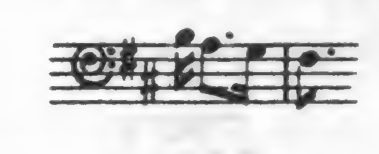
…in the treble are now in the bass; the harmony, as before, is a series of chords of the sixth descending by thirds; and the sequence is continued for one bar longer. At bar 20, the beginning of the subject is heard, as if in stretto, in all the voices.
▶ Fig. 15 nearby
 ▶ Analytical excerpt · Fugue 5
 Treatise on HarmonyJean-Philippe Rameau, 1722
Start: Chapter eleven →- CHAPTER XI. Sixth chords · 1 playable example
- Chapter sixteen
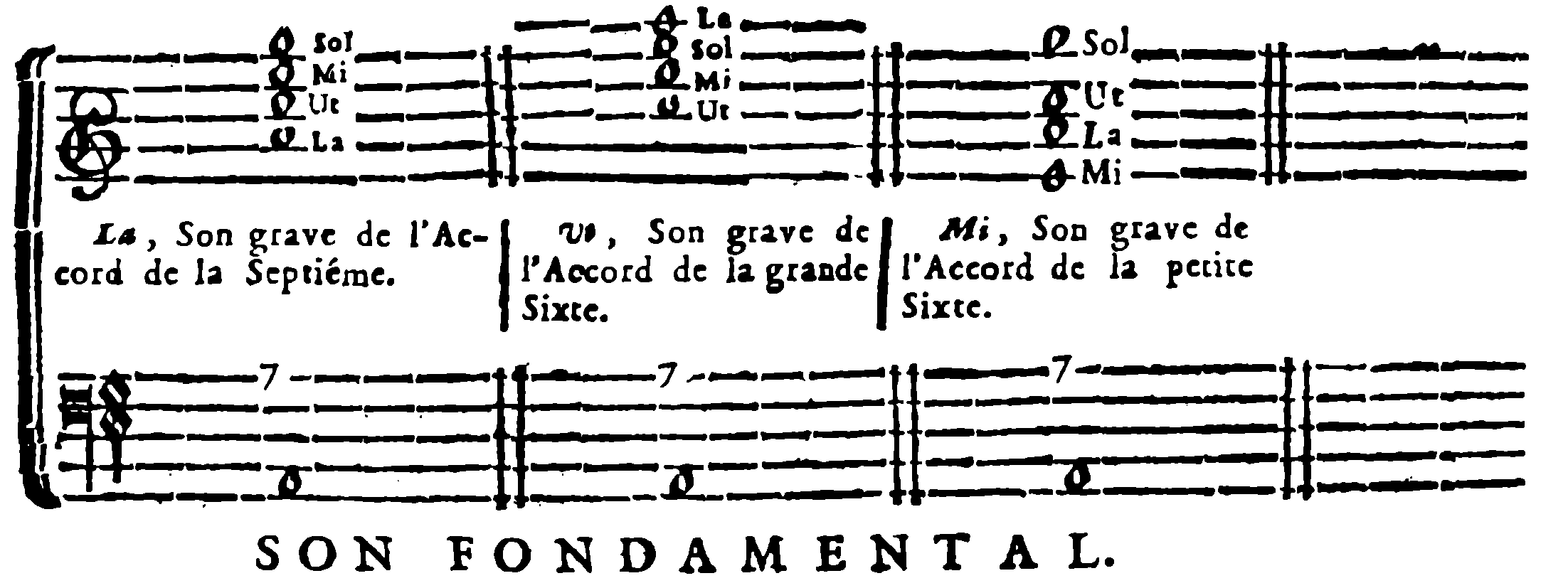
…take a genuinely dissonant sound for a consonant one. For example, the small-sixth chord contains only three consonances above its bass: third, fourth, and sixth. But compare the third with the fourth, and these sounds form a dissonance together. Likewise, the…
▶ Fig. 76 nearby - Chapter sixteen
Have these small- and great-sixth chords been rejected because Zarlino or other authors did not mention them, or because the fourth occurs in the small-sixth chord? Yet Zarlino did not discuss the seventh chord whose major third forms a new dissonance with its…
▶ Fig. 78 nearby - Chapter eighteen
…being discussed and gave vague accounts of the principle. Knowledge of inverted chords evidently accumulated over time through experience alone. Treating them as originals lost sight of the foundation, generating endless detours, exceptions, and ambiguities,…
- CHAPTER XVII. Recapitulation of the different chord successions
…one. After a given dissonant chord, if a seventh, small-sixth or great-sixth chord follows, the seventh may be reduced to a perfect chord and the other two to a simple sixth chord. The small-sixth chord may also be reduced to a sixth–fourth chord, and the…
▶ Fig. 440 nearby - CHAPTER XVII. Recapitulation of the different chord successions
A sixth–fourth chord may follow a small-sixth chord when the bass descends diatonically, or a great-sixth chord when it ascends. Therefore a small-sixth chord following either of those chords in the specified progression may be reduced to a sixth–fourth chord,…
▶ Fig. 441 nearby - CHAPTER XVII. Recapitulation of the different chord successions
A sixth chord naturally follows a tritone chord in descending diatonic motion, or a major small-sixth chord in ascending motion. A small-sixth or great-sixth chord following either of those in the corresponding progression may therefore be reduced to a sixth…
▶ Fig. 441 nearby
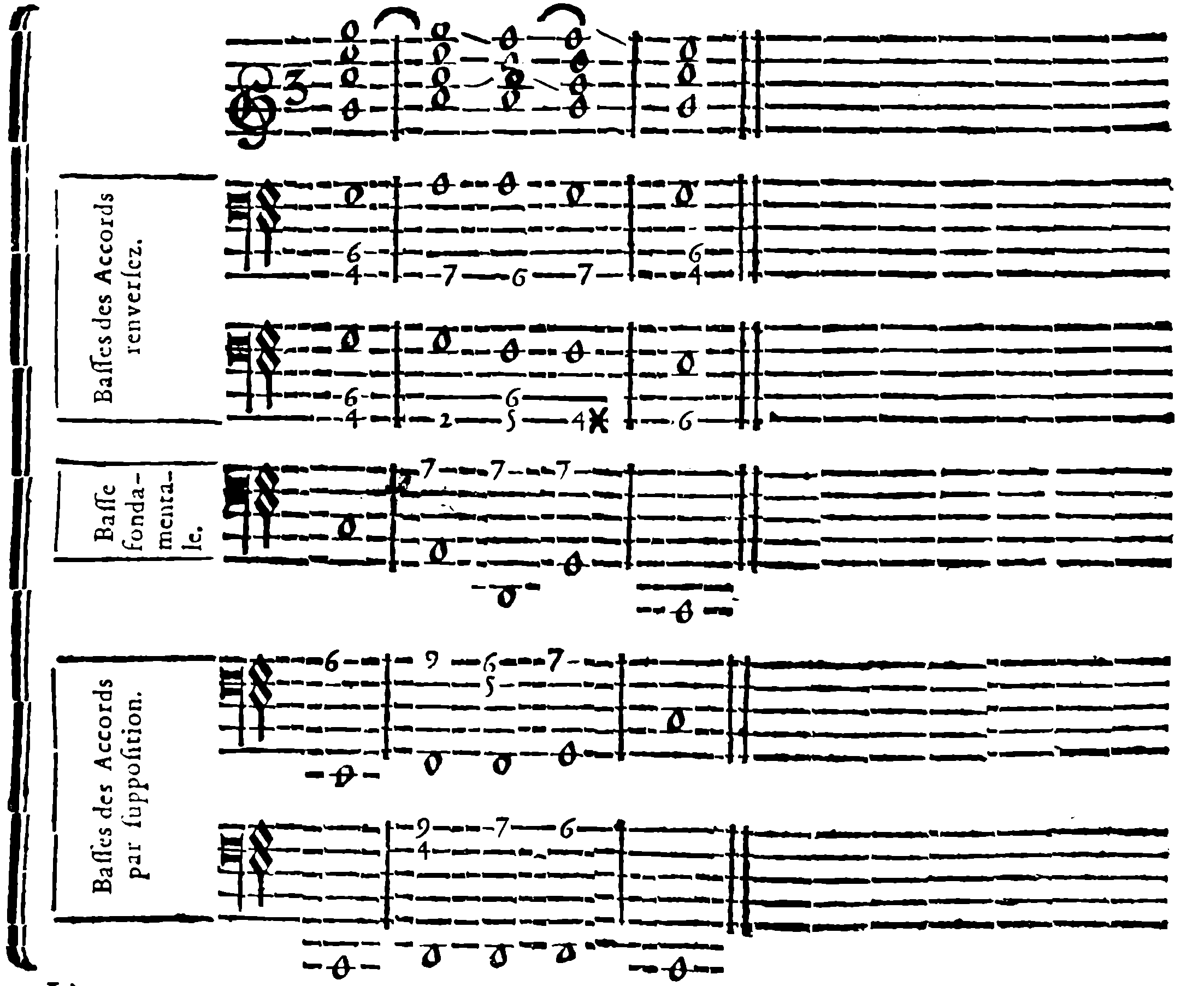
 ▶ Fig. 76
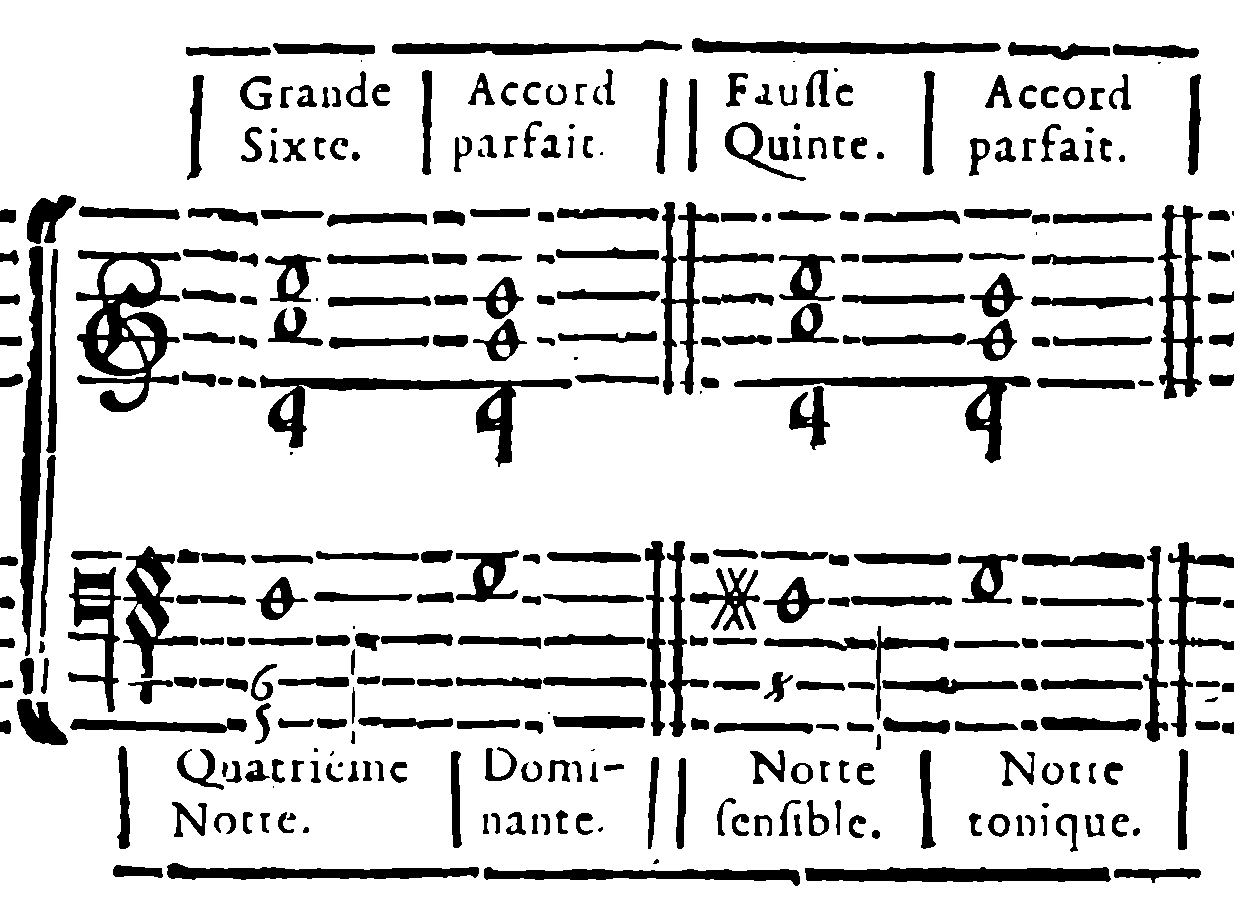
 ▶ Fig. 78
 ▶ Fig. 210
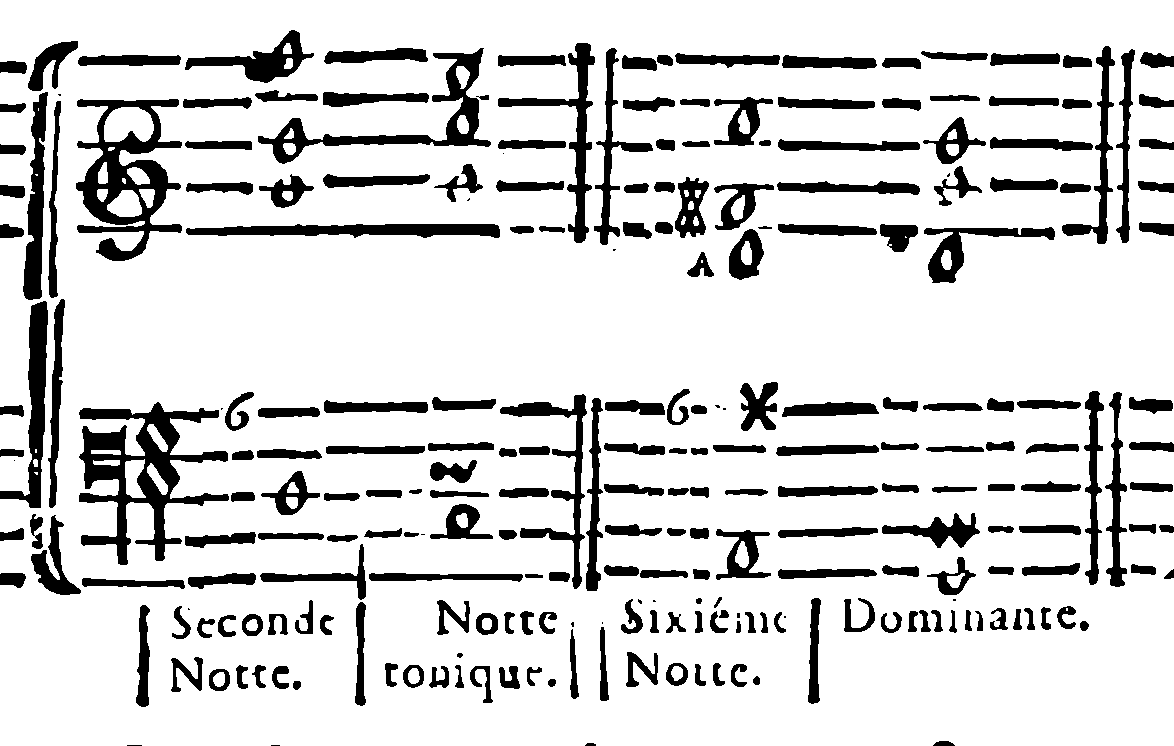 ▶ Fig. 211
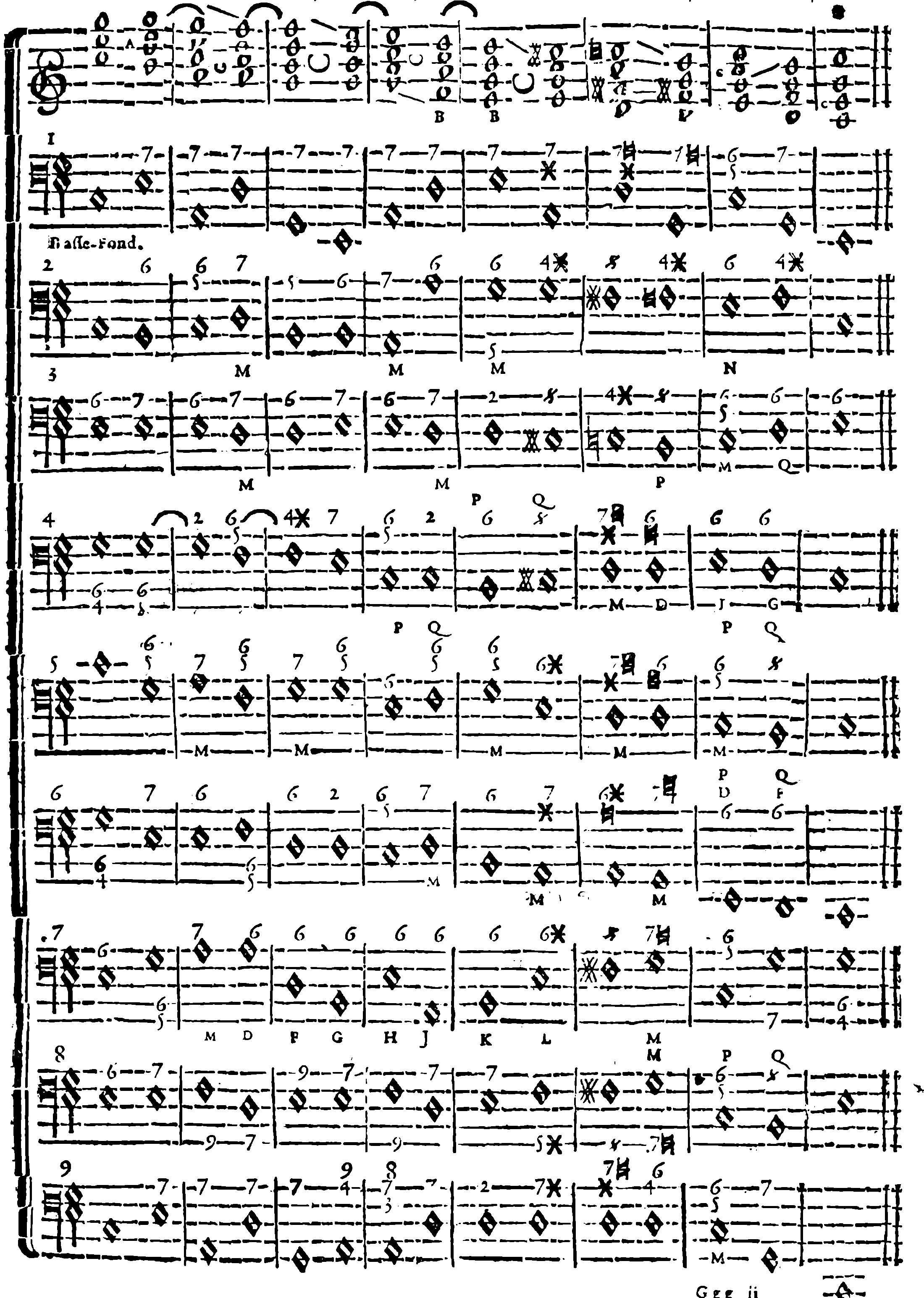 ▶ Fig. 440
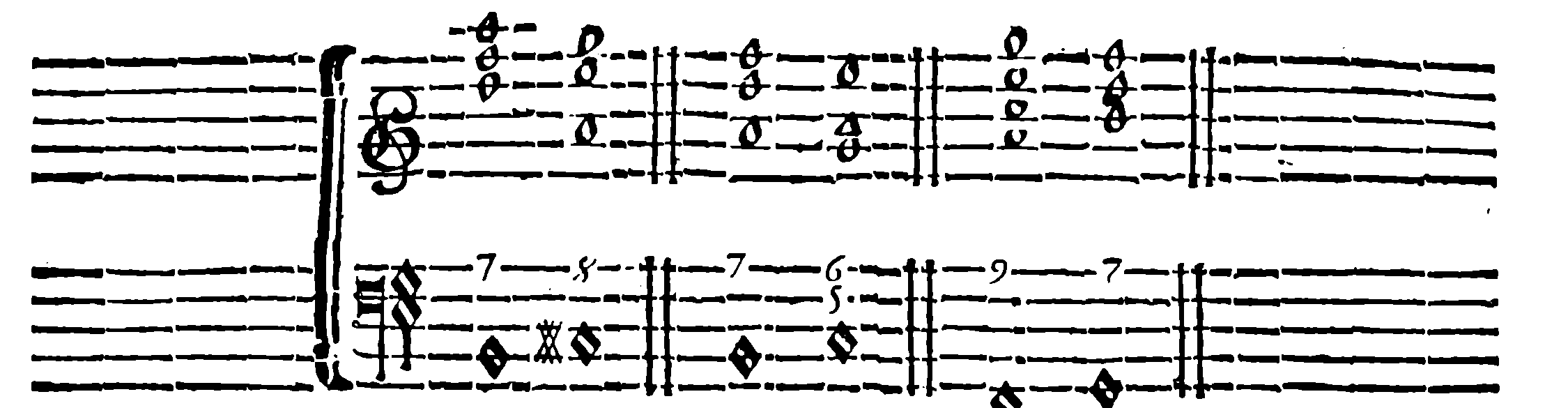 ▶ Fig. 441
 Practical Manual of HarmonyNikolai Rimsky-Korsakov, 1910
- Succession of Sixth Chords of the First, Fourth and Fifth Degrees with the Triads of the Same Degrees · 2 playable examples
- Succession of the Sixth Chord of the Fourth Degree with the Triad of the Fifth Degree · 1 playable example
- Succession of the Triad of the Fourth Degree with the Sixth Chord of the Fifth Degree · 1 playable example
- Succession of the Two Sixth Chords of the Fourth and Fifth Degrees · 2 playable examples
- The Sixth Chord of the Diminished-Fifth Chord of the Seventh Degree (*) · 4 playable examples
- The Sixth Chord of the Second Degree in the Major and Minor Modes · 2 playable examples
- The Minor Subdominant Chord and the Sixth Chord of the Second Degree in the Harmonic Major Mode · 2 playable examples
- THE SEVENTH CHORD OF THE SECOND DEGREE and Its First Inversion · 2 playable examples
- Enharmony of Augmented-Sixth Chords · 7 playable examples
- 4 (Sixth chords: I–IV and I–V) · 8 playable examples
- 5 (Triad of IV with the sixth chord of V; sixth chord of IV with the triad of V) · 8 playable examples
- 6 (Sixth chord, IV–V) · 8 playable examples
- 13 (Triad and sixth chord of the second degree) · 4 playable examples
- 14 (Common chord of the sixth degree) · 15 playable examples
- Triads
§ 2. Every triad has two inversions: the chord of the sixth (first inversion), figured 6, and the chord of the fourth and sixth (second inversion), figured 6/4.
▶ Fig. 11 nearby - Triads
…the same degree as the chord in root position. For example, in C major the chord of the sixth [E–G–C] is the chord of the sixth on the first degree, and the chord of the fourth and sixth [D–G–B] is the chord of the fourth and sixth on the fifth degree, and so…
▶ Fig. 16 nearby - Triads
The first inversion, or chord of the sixth, is made of a third and a sixth above the bass. For example, the chord of the sixth [E–G–C] consists of a third [E–G] and a sixth [E–C]; it can also be seen as a third and a fourth [E–G, G–C].
▶ Fig. 16 nearby - Succession of Sixth Chords of the First, Fourth and Fifth Degrees with the Triads of the Same Degrees
5) The melodic interval of a sixth in the bass is permitted when passing from the triad to the sixth chord, but not from the sixth chord to the triad. Melodic intervals of a seventh are forbidden.
▶ Fig. 73 nearby - Succession of the Two Sixth Chords of the Fourth and Fifth Degrees
§19. — 1) In the sixth chord of the fourth degree, double the root, and in the sixth chord of the fifth degree, double the fifth of the root.
▶ Fig. 78 nearby - Inversions of the dominant seventh chord
4) Third inversion: the chord of the second (four-two chord). It is placed after one of the chords of the first order and after the sixth chord of the second degree, and resolves to the sixth chord of the tonic:
▶ Fig. 132 nearby
68 more passages in Practical Manual of Harmony →
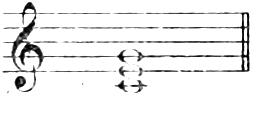 ▶ Triad in root position
Triads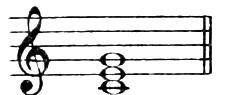 ▶ The C major triad: C–E–G
Triads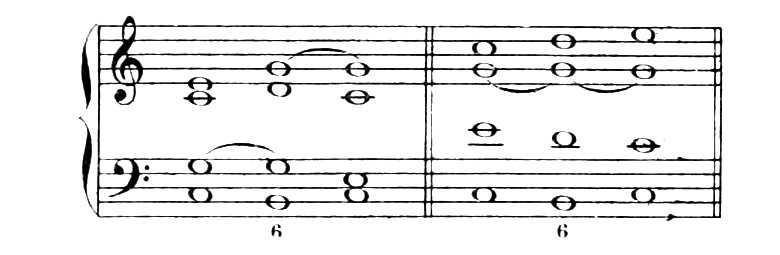 ▶ I–V6–I twice: the common note stays in place (tied) and the other upper parts move by step or third
Succession of Sixth Chords of the First, Fourth and Fifth Degrees with the Triads of the Same Degrees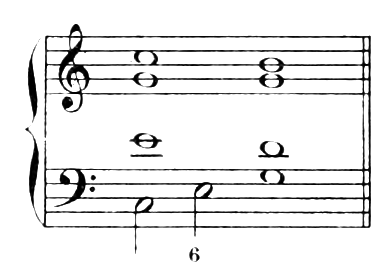 ▶ Doubled third in the sixth chord: the three upper parts stay in place while the bass rises by thirds, C–E–G
Succession of Sixth Chords of the First, Fourth and Fifth Degrees with the Triads of the Same Degrees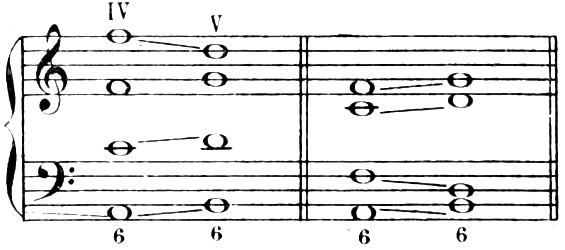 ▶ Two pairs of chords illustrating rules 1-2: the sixth chord of IV to the sixth chord of V, two upper parts moving in parallel and one in contrary motion to the bass
Succession of the Two Sixth Chords of the Fourth and Fifth Degrees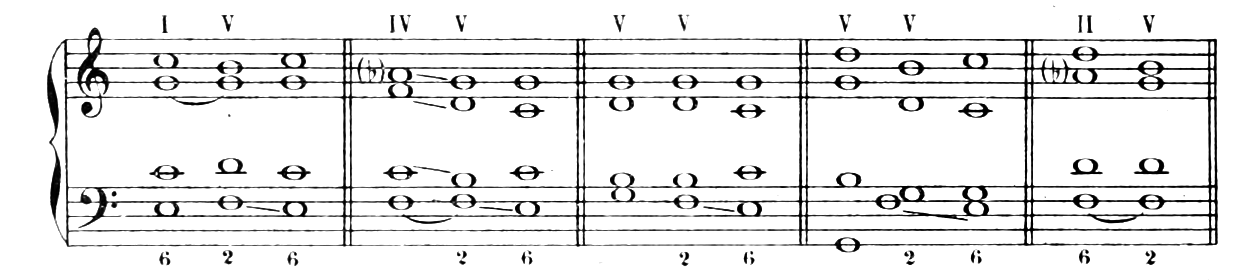 ▶ Third inversion (four-two chord) of the dominant seventh in C major, after I, IV, V and II6, resolving to the tonic sixth chord
Inversions of the dominant seventh chord
 Guide to the Practical Study of HarmonyPyotr Ilyich Tchaikovsky, 1900
- Chapter VIII. The Inversions of the Triad
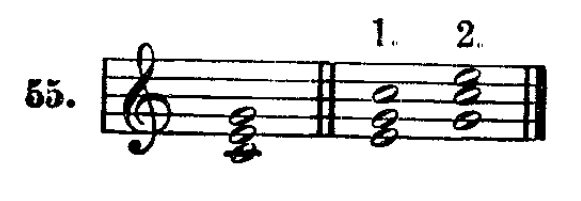
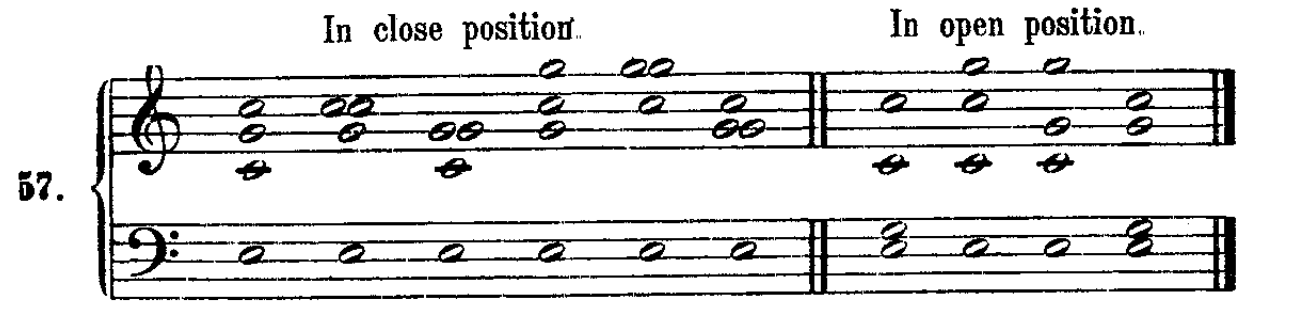
The first inversion is called the chord of the third and sixth, because the upper voices are distant respectively a third and a sixth from the Bass. This chord is more briefly called the chord of the sixth.
▶ Fig. 58 nearby - Chapter VIII. The Inversions of the Triad
The second inversion is called the chord of the sixth and fourth.
▶ Fig. 58 nearby - Chapter VIII. The Inversions of the Triad
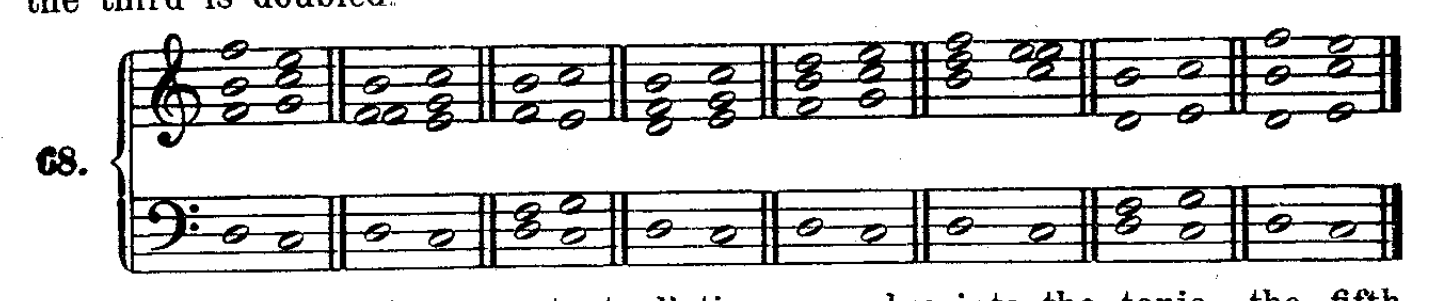
In the chord of the sixth the third appears doubled; in the chord of the six-four—the fifth. A doubling of the third, however, being unnatural and unsatisfactory to the musical ear, it is better to double the fundamental tone or the fifth in the chord of the…
▶ Fig. 60 nearby - Chapter IX. The Inversions of the Diminished and Augmented Triads
…even more in use than its fundamental form. The reason for this is that the chord of the sixth of the diminished triad is in reality a consonant chord, its upper voices forming respectively a third and a sixth with the Bass. The fundamental form of this triad…
▶ Fig. 71 nearby - Chapter XXVII. Chords of the augmented Sixth
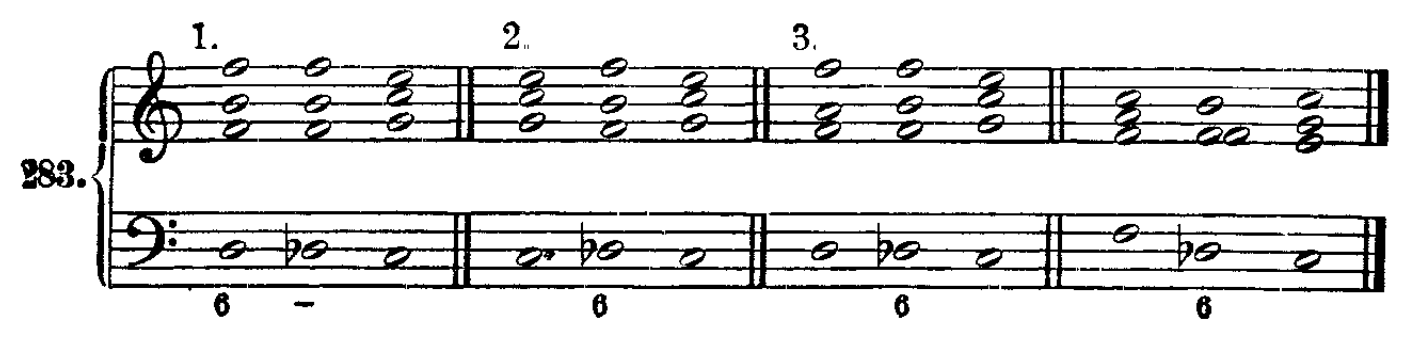
b) The augmented chord of the fourth and third (origi-X nally the second inversion of the Dominant-seventh chord). (S35 c) The augmented chord of the sixth and fifth (originally; the first inversion of the diminished seventh chord). § 99. a) The augmented…
▶ Fig. 297 nearby - Chapter XXIX. Strict Part-writing
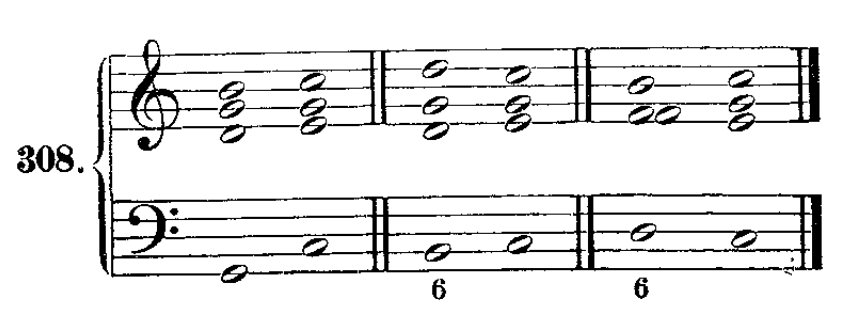
…other voices; consequently it admits only major and minor triads with their first inversions, and the chord of the sixth of the diminished triad. The fourth being regarded as a dissonance, chords of the sixth and fourth are excluded. The same is true of all…
▶ Fig. 323 nearby
44 more passages in Guide to the Practical Study of Harmony →
 ▶ Fig. 58
 ▶ Fig. 60
 ▶ Fig. 71
 ▶ Fig. 297
 ▶ Fig. 323
 Supplement to the Theory of ModulationMax Reger, 1904
- From C-major
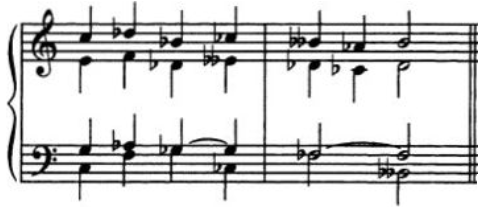
Tonic C-major; chord of the Neapolitan sixth (f a♭ d♭) in C-major; use this chord of the sixth (f a♭ d♭), which is at the same time, the 1st inversion (chord of the sixth) of the dominant (D♭-major) of G♭-major; use this G♭-major, which is at the same time the…
▶ Fig. 43 nearby - From C-major
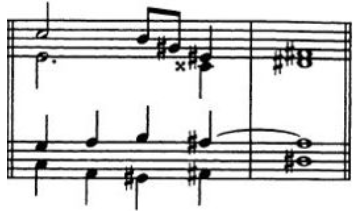
Tonic C-major; relative (a-minor) to C-major; use this a-minor, which is also tonic in a-minor; dominant (E-major) of a-minor, (as chord of the sixth), which chord of the sixth (g♯ b e) is used, as it is at the same time the chord of the Neapolitan sixth in…
▶ Fig. 57 nearby - From C-major
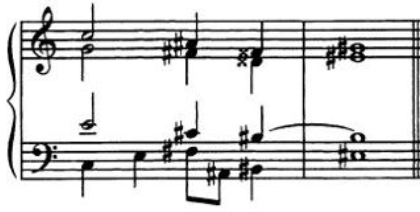
Tonic C-major; take the 1st inversion (chord of the sixth) of this; use this chord of the sixth (e g c), which is also the chord of the Neapolitan sixth in B-major; dominant (F♯-major) of B-major; take this F♯-major in its 1st inversion, (chord of the sixth a♯…
▶ Fig. 61 nearby - From C-major
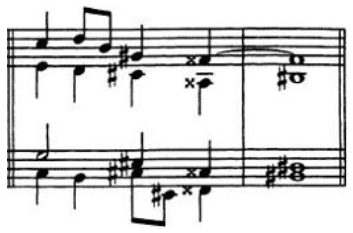
Tonic C-major; dominant (G-major) of C-major; this G-major arranged as chord of the sixth (b d g) is used, which is at the same time the chord of the Neapolitan sixth in F♯-major; dominant (C♯-major) of F♯-major, which C♯-major is, arranged in the 1st…
▶ Fig. 63 nearby - From C-major
Tonic C-major; chord of the Neapolitan sixth (f a♭ d♭) in C-major; use this chord of the sixth (f a♭ d♭), which is at the same time the Dorian sixth (D♭-major as chord of the sixth) in a♭-minor; dominant (E♭-major) and tonic of a♭-minor.
▶ Fig. 78 nearby - From a♯-minor
Tonic a♯-minor; chord of the Neapolitan sixth (d♯ f♯ b) in a♯-minor; use this chord of the sixth (d♯ f♯ b), which is at the same time the 1st inversion of the dominant (B-major) of E-major; tonic E-major; use this E-major, which is also dominant in a-minor;…
▶ Fig. 205 nearby
63 more passages in Supplement to the Theory of Modulation →
 ▶ Ex-21
 ▶ Ex-28
 ▶ Ex-30
 ▶ Ex-31
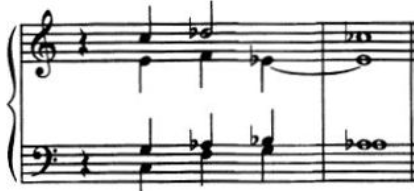 ▶ Ex-38
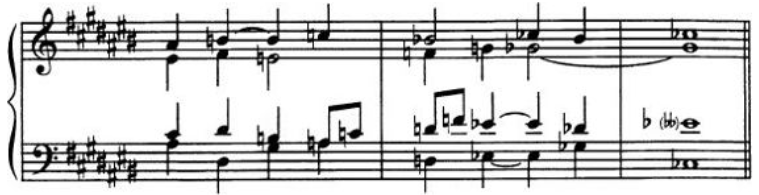 ▶ Ex-100
 Theory of HarmonyArnold Schoenberg, 1922
Start: Inversions of seventh chords →- a) THE SIXTH CHORD · 1 playable example
- Connecting Triads and Sixth Chords · 11 playable examples
- Inversions of triads
…one began with the intention of leading the bass more melodically and used a sixth chord for that purpose, this would also have the unexpected advantage that the sixth chord does not overpower an earlier or later repetition of the same triad, perhaps makes…
▶ Fig. 22 nearby - Inversions of triads
…schematic arrangement the third thereby becomes the lowest note, producing first inversion. This ought properly to be called a third-sixth chord, but since it is the first in the series of sixth chords, it is called simply a sixth chord. If the lowest note of…
▶ Fig. 22 nearby - a) THE SIXTH CHORD
…to the formation of such states of sonority. If we now compare the sixth chord and the six-four chord with the triad, the decisive question in this comparison—since the notes are the same—is the placement of the bass. Any possible difference can depend on this…
▶ Fig. 24 nearby - a) THE SIXTH CHORD
…tones resembles the overtones of the bass note more closely than in the sixth chord. The inherent sound of the six-four chord’s bass note finds less resistance to its will in the chord tones; or, as one might also view it, its chord tones are more inclined to…
▶ Fig. 24 nearby - Connecting Triads and Sixth Chords
…triad with an inversion of the same triad, or the reverse—for example I–I in first inversion, II in first inversion–II, IV–IV in second inversion, or V in first inversion–V in second inversion—is called an exchange. Two or more voices, one of which in our case…
▶ Fig. 37 nearby - Inversions of seventh chords
…third is again doubled—for example when the six-five chord resolves into the sixth chord (40f, no. 2)—or the third of the sixth chord must be doubled to prepare the diminished fifth (40f, no. 5). Preparation of the four-three chord through the sixth chord on…
▶ Fig. 67 nearby
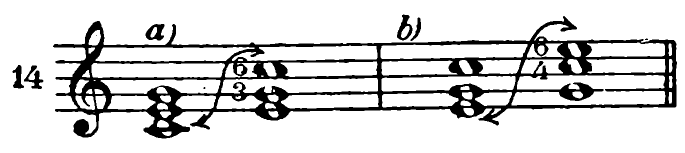 ▶ Example 14a
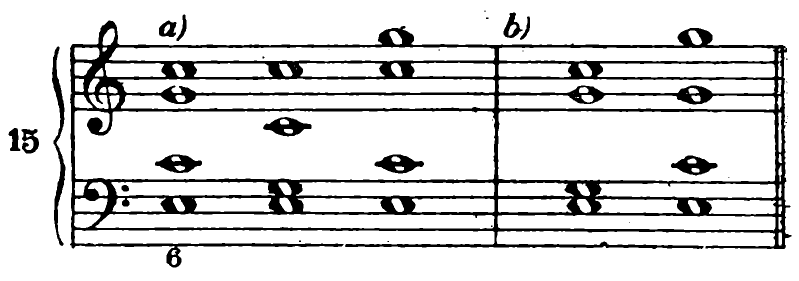 ▶ Example 15a — doubled root
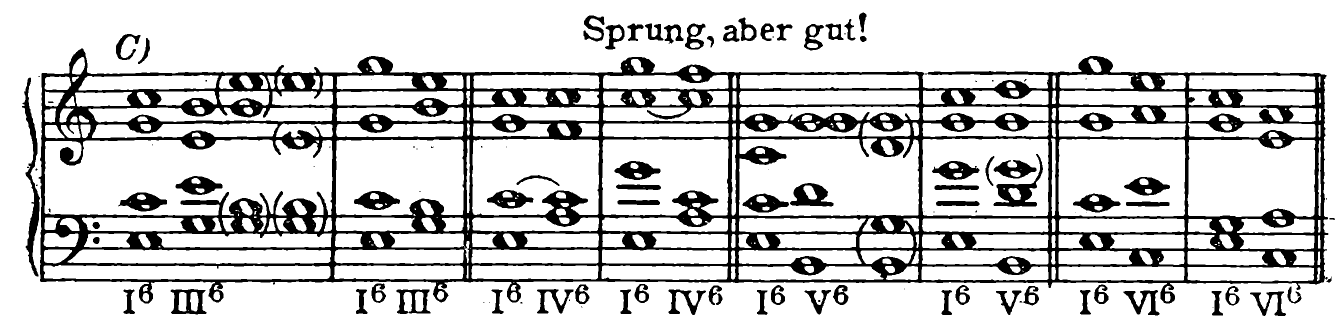 ▶ Example 23 C — primary readings
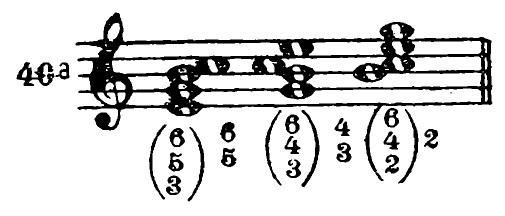 ▶ Example 40a
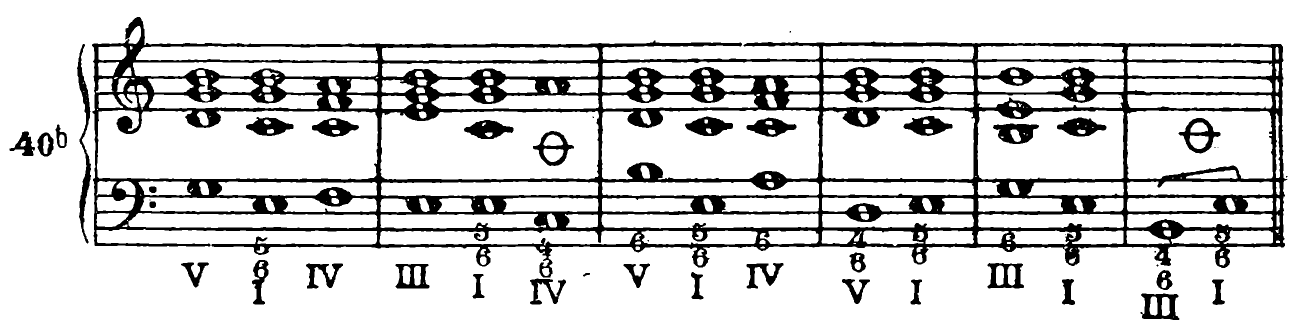 ▶ Example 40b — first connection
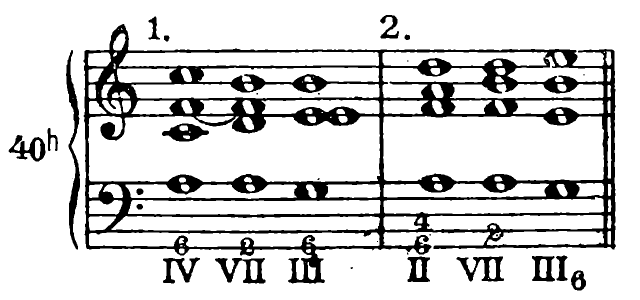 ▶ Example 40h
 Principles of OrchestrationNikolai Rimsky-Korsakov, 1922
- B. Men’s chorus and women’s chorus
…bass. It will be noticed that this rule may lead to the employment of chords of the sixth and empty consecutive fourth's and fifth's which should be avoided. In example No. 311 (Sadko 270), this is remedied by the high position of the bass part; later an empty…
 OrchestrationCecil Forsyth, 1914
- No. 49. The Cello
All major and minor triads and their first and second inversions, provided the note
 Treatise on InstrumentationHector Berlioz, 1905
- The Double-Bass
…finest inspirations, becomes all the more terrible as the composer uses the third inversion of the diminished seventh chord (F-G#-B-D). Furthermore, to give his idea all the weight and vehemence possible, he doubles the basses not only with the violoncellos…
- The Double-Bass
(F#-A-C-Eb), which thereby is transformed into its first inversion on a weak beat. The same A, written as a major tonic or dominant, and played mezzoforte similarly to the passage in question, would no longer have anything strange about it.
- The Pianoforte
Such scales in thirds can also be executed by one hand alone, but they are difficult in a fast tempo. Moreover, in keys with few sharps or flats one may write for both hands consecutive sixth-chords consisting of three notes:
- Voices
…certain chord successions would appear defective. Gluck, in whose works many sixth chords are to be found, used them also in his priestess chorases in “Iphigénie en Tauride”; these are written for two soprano parts only. In these harmonic successions the…
More in Chords
Triads · The six-four chord · Seventh chords · The diminished seventh chord · Ninth chords · The Neapolitan sixth · Augmented sixth chords · Secondary dominants · Borrowed chords (mixture)