 Playable Books
Concept index · Chords
Seventh chords
Taught in 11 books. Each one opens at the passage; ▶ plays the example beside it. Also called seventh chord, dominant seventh, chord of the seventh.
This index is Playable Books’ own: a first pass that finds the term’s words in each book, corrected by hand. The authors did not tag these passages, and their terms can differ (Fux’s “ligature” is a suspension). The quoted text is the book’s.
 Exercises in Elementary CounterpointPercy Goetschius, 1910
- Chapter XVI. Three-Part Harmony
163. This list is not exhaustive. The given tone may also appear as root, third, or fifth in several other chords of the seventh (as root, for instance, in the Dom.-7th chord of F major and minor, etc.).
▶ Fig. 277 nearby - Chapter XVI. Three-Part Harmony
The other chords of the Seventh seldom occur as essential bodies, but often as descending passing-notes. Thus:
▶ Fig. 286 nearby
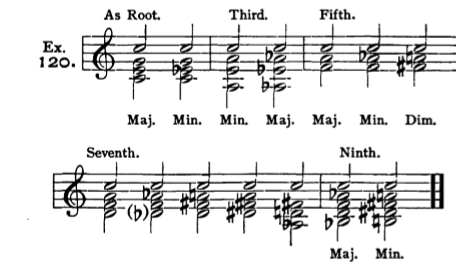 ▶ Ex.120
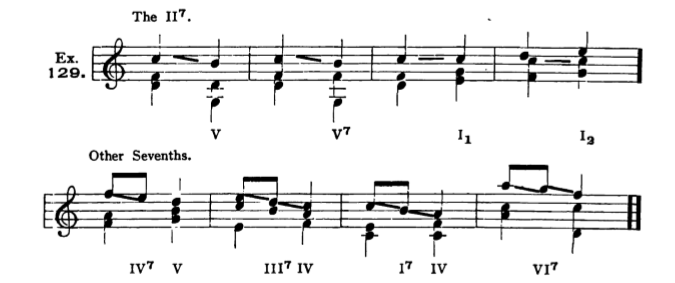 ▶ Ex.129
 Counterpoint AppliedPercy Goetschius, 1902
- Chapter II
-ne diminisnea 5th; { in V?_ the augmented 4th ; / the diminisned 7th ; } in V° Incomplete (Dim. ›th chord) - the augmented 2nd; / and those minor 7ths and major 2nds which represent good chords of the seventh.
▶ Fig. 65 nearby - Chapter IV
…the original motive, which represents a "triad" form, is modified to a " chord of the seventh."
▶ Fig. 159 nearby - Chapter IV
At *3) the triad-form of the motive is changed, both by enlargement and contraction, to the form of a "chord of the sixth." At *4) it is changed to a chord of the seventh.
▶ Fig. 159 nearby
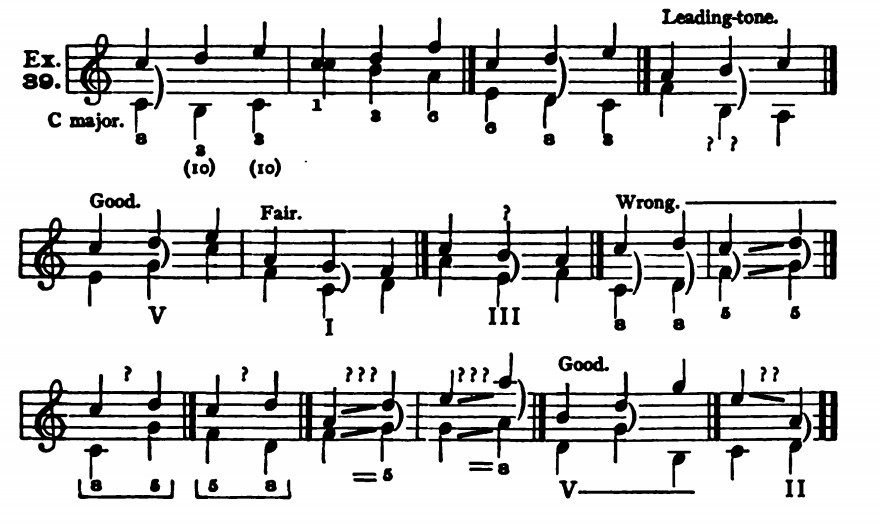 ▶ Ex39
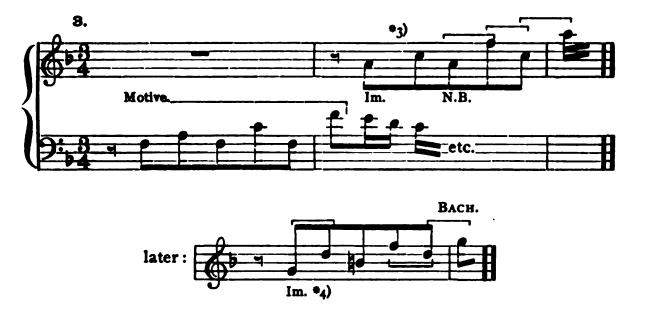 ▶ Ex70-A3
 Treatise on HarmonyJean-Philippe Rameau, 1722
Start: Chapter six → Start: Chapter eleven →- Chapter eight
3. If we take the seventh chord of Article III and transpose its lowest, fundamental sound a semitone higher, we form the chord in question. Observe that this transposition changes only a major third into a minor one. For example, from C, E, G, B♭, which…
- CHAPTER NINE. On Avoiding Cadences while Imitating Them
…which amount to the same thing, the first sound may and indeed should bear a seventh chord. If no diminished fifth or tritone occurs between this chord's third and seventh, the following sound will certainly not be tonic. It must therefore bear another seventh…
▶ Fig. 51 nearby - Chapter twenty-one
…we were not told that diminished-fifth and tritone chords derive from that seventh chord, nor that, since the seventh chord exists to precede the tonic’s perfect chord, all its derivatives must likewise precede that perfect chord or its derivatives. Experience…
- Chapter nine
When we said the dominant bears a seventh chord only before the tonic, this also includes notes of the tonic’s perfect chord: its mediant and the dominant itself, when these carry their natural derivatives of that perfect chord. The dominant may carry a…
- Chapter nine
The dominant may carry a perfect chord as well as a seventh chord, and the perfect chord remains present inside the seventh chord. A seventh chord must therefore be preceded in the same way as a perfect chord. Thus every seventh-bearing note must have its own…
- Chapter five
Take the perfect or seventh chord of any note, adding the bass's octave to the seventh chord, then play in the bass one of the sounds belonging to the chord held above. The same chords shown in the preceding examples will appear. With a perfect chord, putting…
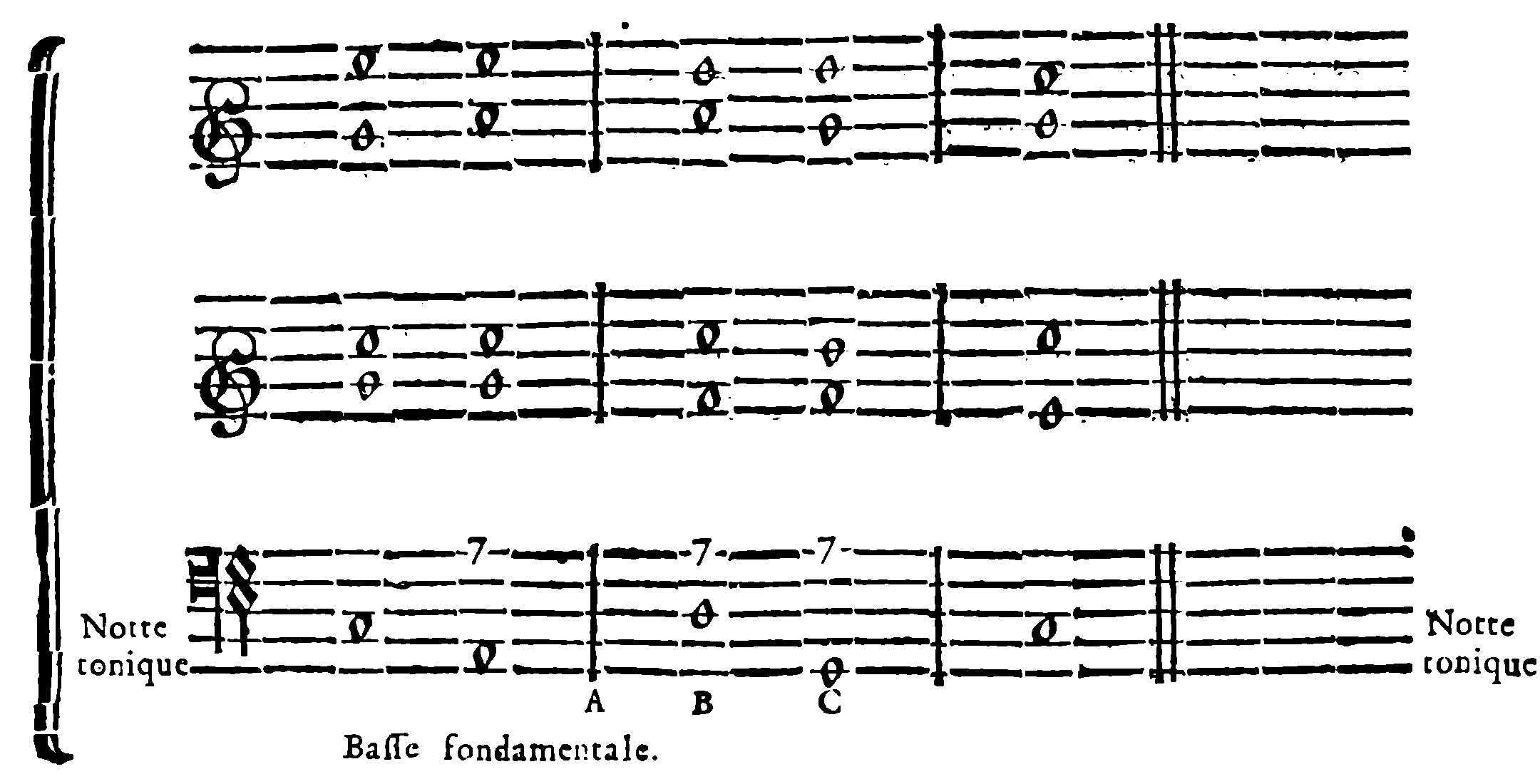 ▶ Fig. 51
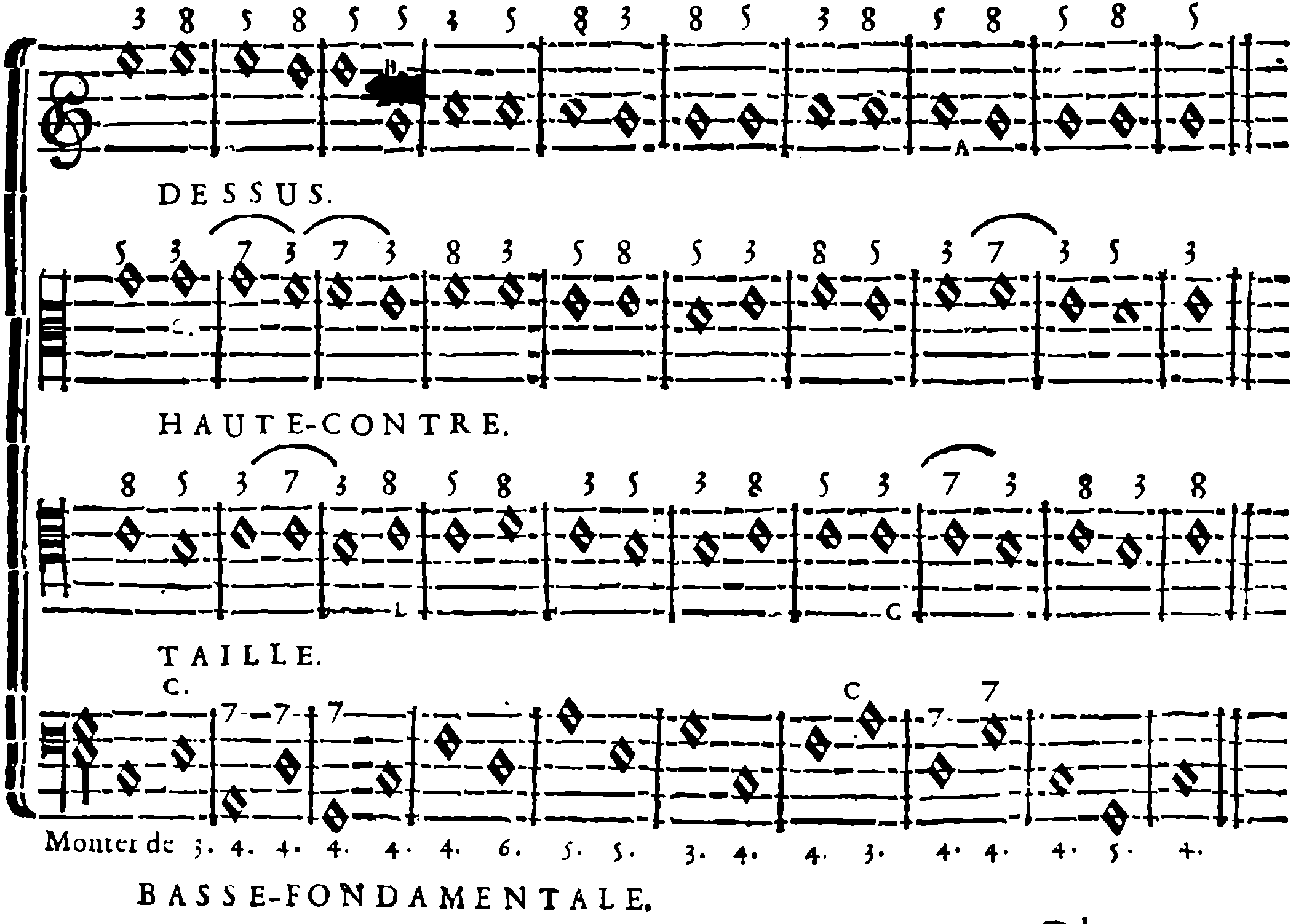 ▶ Fig. 200
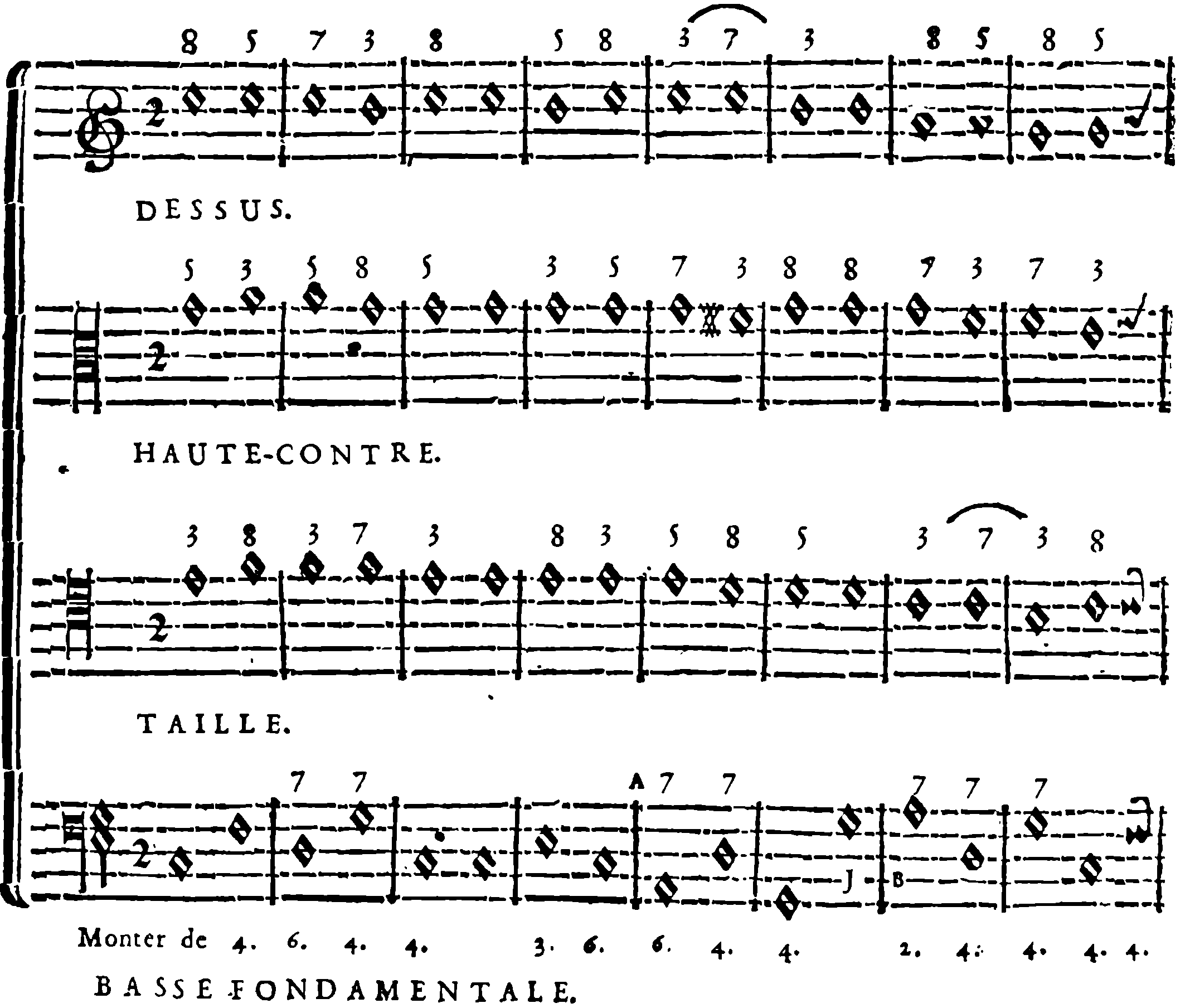 ▶ Fig. 202
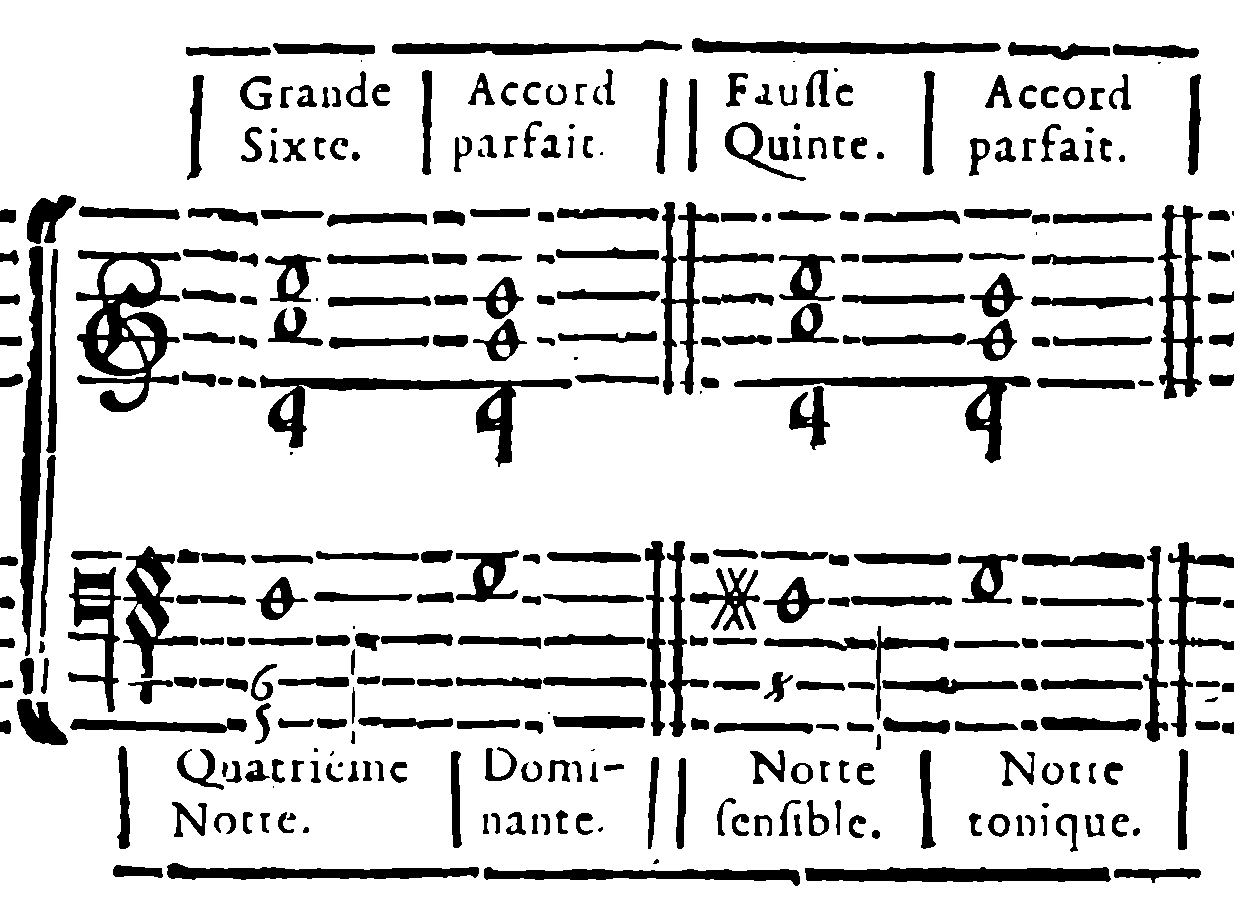 ▶ Fig. 210
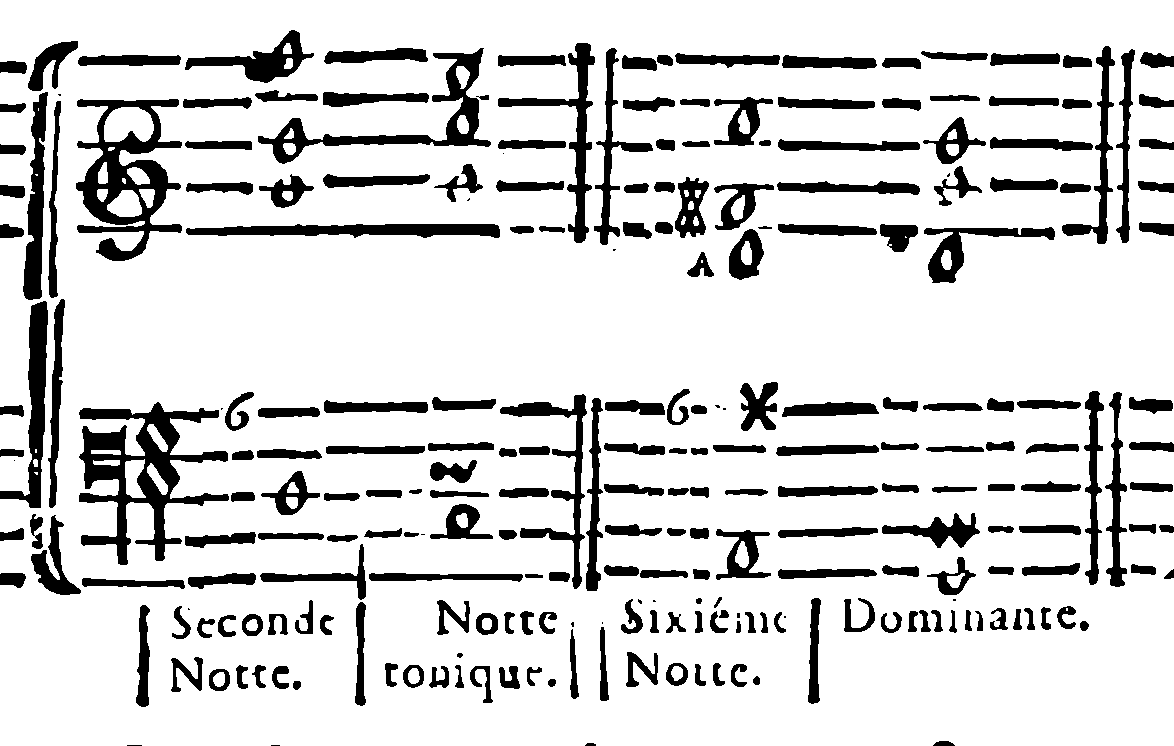 ▶ Fig. 211
 Practical Manual of HarmonyNikolai Rimsky-Korsakov, 1910
Start: Root position →- Seventh Chords · 7 playable examples
- Seventh Chords · 7 playable examples
- The Sixth Chord of the Diminished-Fifth Chord of the Seventh Degree (*) · 4 playable examples
- The dominant seventh chord
- Inversions of the dominant seventh chord · 6 playable examples
- The leading-note seventh chord
- THE SEVENTH CHORD OF THE SECOND DEGREE and Its First Inversion · 2 playable examples
- USE OF SEVENTH CHORDS in the Realization of Chorales
- ALL THE SEVENTH CHORDS in their relations within one key
- Harmonic sequences with seventh chords · 4 playable examples
- The Artificial Dominant Seventh Chord and the Artificial Diminished Seventh Chord · 5 playable examples
- The Dominant Seventh Chord with Augmented Fifth · 2 playable examples
- Enharmony of the Diminished Seventh Chord · 3 playable examples
- Polytonic Succession of Dominant Seventh Chords in the Relation of an Upper or Lower Third · 6 playable examples
- (Dominant seventh chord in root position.) · 6 playable examples
- (Inversions of the dominant seventh chord) · 8 playable examples
- (Leading-tone seventh chord) · 3 playable examples
- (Seventh chord and six-five chord on the second degree) · 3 playable examples
- Seventh Chords
Leaving aside the seventh chords that contain an augmented fifth — those on the fourth and sixth degrees of the harmonic major mode and on the first and third degrees of the harmonic minor mode — there are nine different seventh chords in the two major modes…
▶ Fig. 41 nearby - Seventh Chords
The seventh chords on the fifth degree of the natural major mode and of the harmonic minor mode are called dominant seventh chords, or seventh chords of the first order.
▶ Fig. 42 nearby - Seventh Chords
Apart from the first-order triads of the major and minor modes and the dominant sevenths, all other triads and seventh chords are called chords of the second order.
▶ Fig. 43 nearby - Seventh Chords
Among the second-order seventh chords, those on the leading notes of the natural major mode and the harmonic minor mode are called leading-note seventh chords.
▶ Fig. 43 nearby - Root position
4) Because of the rule that the leading note must rise to the tonic, the complete dominant seventh chord resolves to an incomplete tonic chord, and the incomplete dominant seventh chord resolves to a complete tonic chord:
▶ Fig. 124 nearby - Minor and Diminished
3) We advise the student to use the leading-note seventh chord exclusively in root position; moreover, the use of the diminished leading-note seventh chord of the major mode and of the harmonic minor mode is preferable to the minor leading-note seventh chord…
▶ Fig. 138 nearby
80 more passages in Practical Manual of Harmony →
 ▶ D) Harmonic minor mode: seventh chords on each degree of A harmonic minor; those on I and III are bracketed
Seventh Chords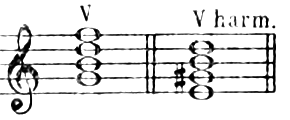 ▶ Dominant sevenths: G–B–D–F in C major and E–G♯–B–D in A minor
Seventh Chords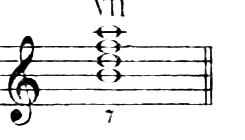 ▶ Leading-note seventh of C major: B–D–F–A
Seventh Chords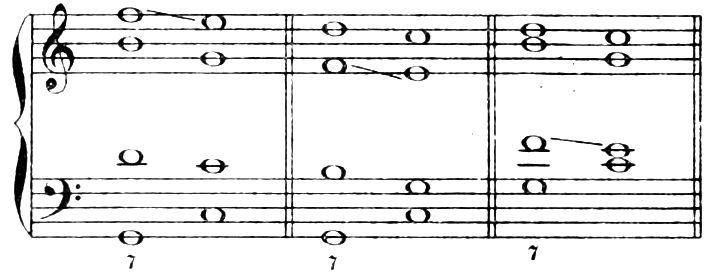 ▶ The dominant seventh (G–B–D–F) resolving to the tonic triad in C major, with the seventh in the soprano, the alto and the tenor in turn
Root position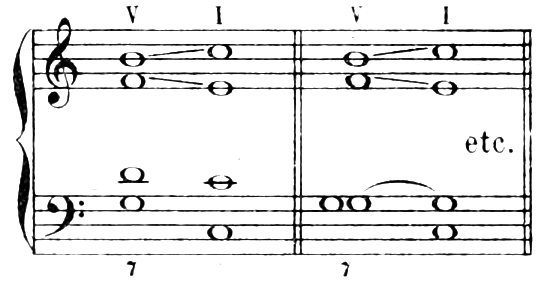 ▶ V7 – I in C major: the complete seventh chord resolving to an incomplete tonic chord, then the incomplete seventh chord resolving to a complete tonic chord, etc.
Root position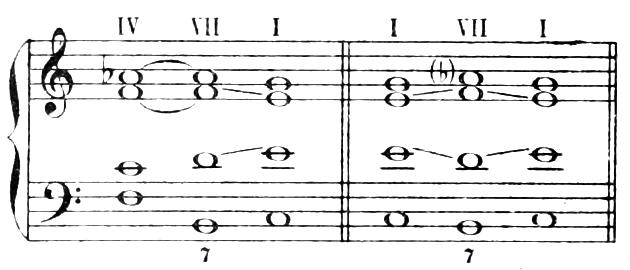 ▶ Leading-note seventh chord in C major: IV–VII7–I (prepared by IV, two common notes) and I–VII7–I (prepared by I)
Minor and Diminished
 Guide to the Practical Study of HarmonyPyotr Ilyich Tchaikovsky, 1900
Start: Chapter X. The Dominant Chord →- Chapter X. The Dominant Chord
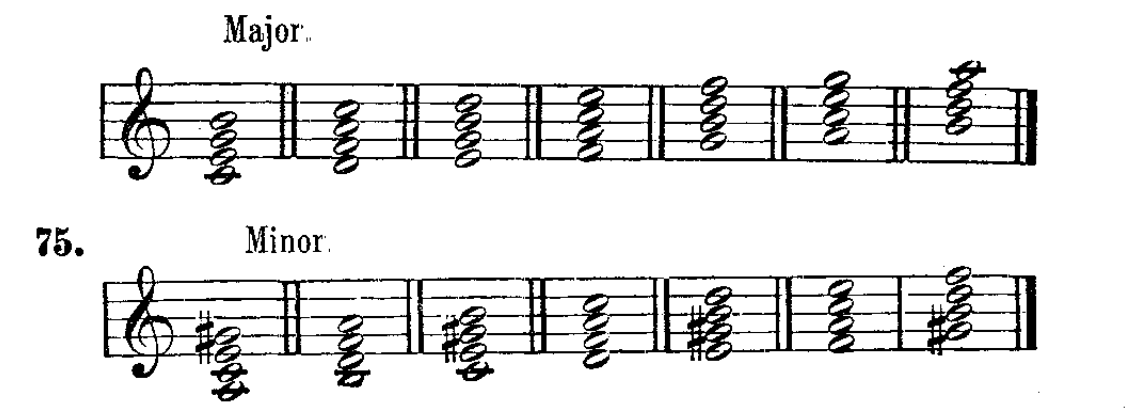
Of all these chords of the seventh, the most important and frequently used is that on the 5-th degree. It is called the chord of the dominant-seventh, or briefly, dominant chord, it resolves into the tonic triad.
▶ Fig. 78 nearby - Chapter XIII. Chords of the minor and diminished Seventh
The tonic triad may be used as preparation for this seventh-chord, if it appears in the same position in preparation and resolution. In the same way also the Dominant triad, as it has two tones in common with this seventh chord.
▶ Fig. 106 nearby - Chapter XIV. The connection of dissonant Harmonies resolving into the tonic Triad
As regards the chords of the seventh on the 7-th degree, they can be connected with the Dominant triad only in case the latter stands between the second and third inversions of the chord of the seventh, and two voices remain stationary, while the Bass…
▶ Fig. 121 nearby - Chapter XV. Chords of sequence
…one step with each repetition, we obtain a Sequence made up of a series of chords of the seventh, each one of which—like the initial dominant chord—finds its solution in a triad a fourth higher or a fifth lower. Such chords of the seventh, occurring chiefly in…
▶ Fig. 123 nearby - Chapter XV. Chords of sequence
c) The two forms of the chord of the seventh on the 7-th degree must be clearly distinguished. As minor seventh chord it resolves into the tonic triad; as chord of sequence, however, it progresses into the triad on the 3-rd degree.
▶ Fig. 136 nearby - Chapter XXI. The enharmonic properties of the chord of the diminished seventh
So that every diminished seventh chord is the equivalent of three other diminished seventh chords. Twelve keys, in all, are known to us; consequently we recognize but three diminished seventh chords distinct in sound.
▶ Fig. 210 nearby
69 more passages in Guide to the Practical Study of Harmony →
 ▶ Fig. 78
Chapter X. The Dominant Chord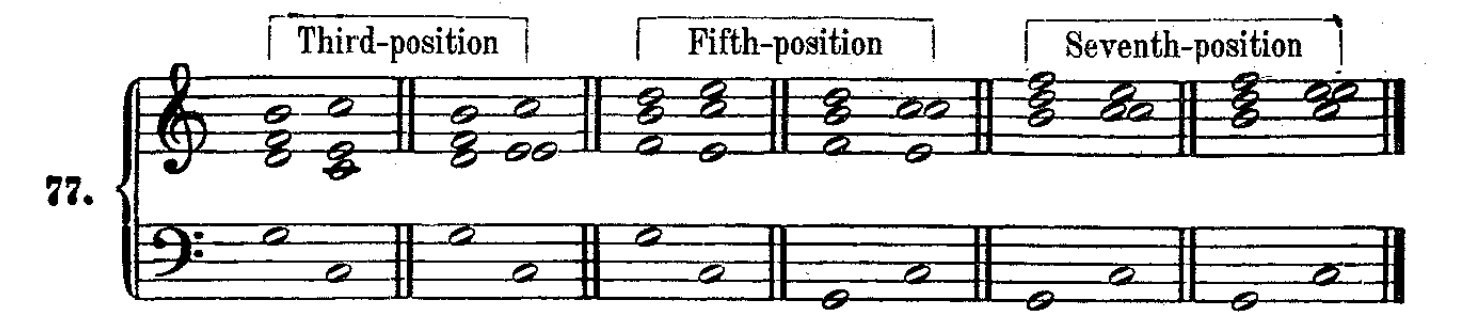 ▶ Fig. 80
Chapter X. The Dominant Chord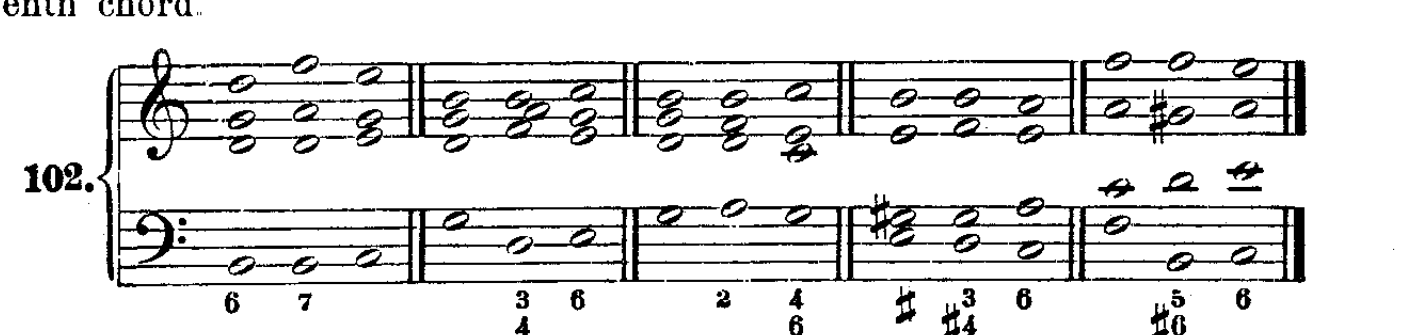 ▶ Fig. 106
Chapter XIII. Chords of the minor and diminished Seventh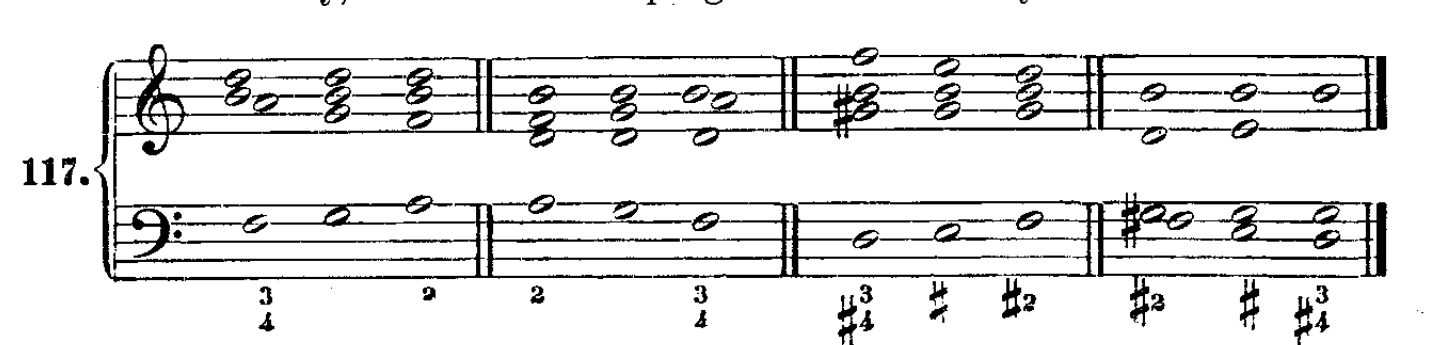 ▶ Fig. 121
Chapter XIV. The connection of dissonant Harmonies resolving into the tonic Triad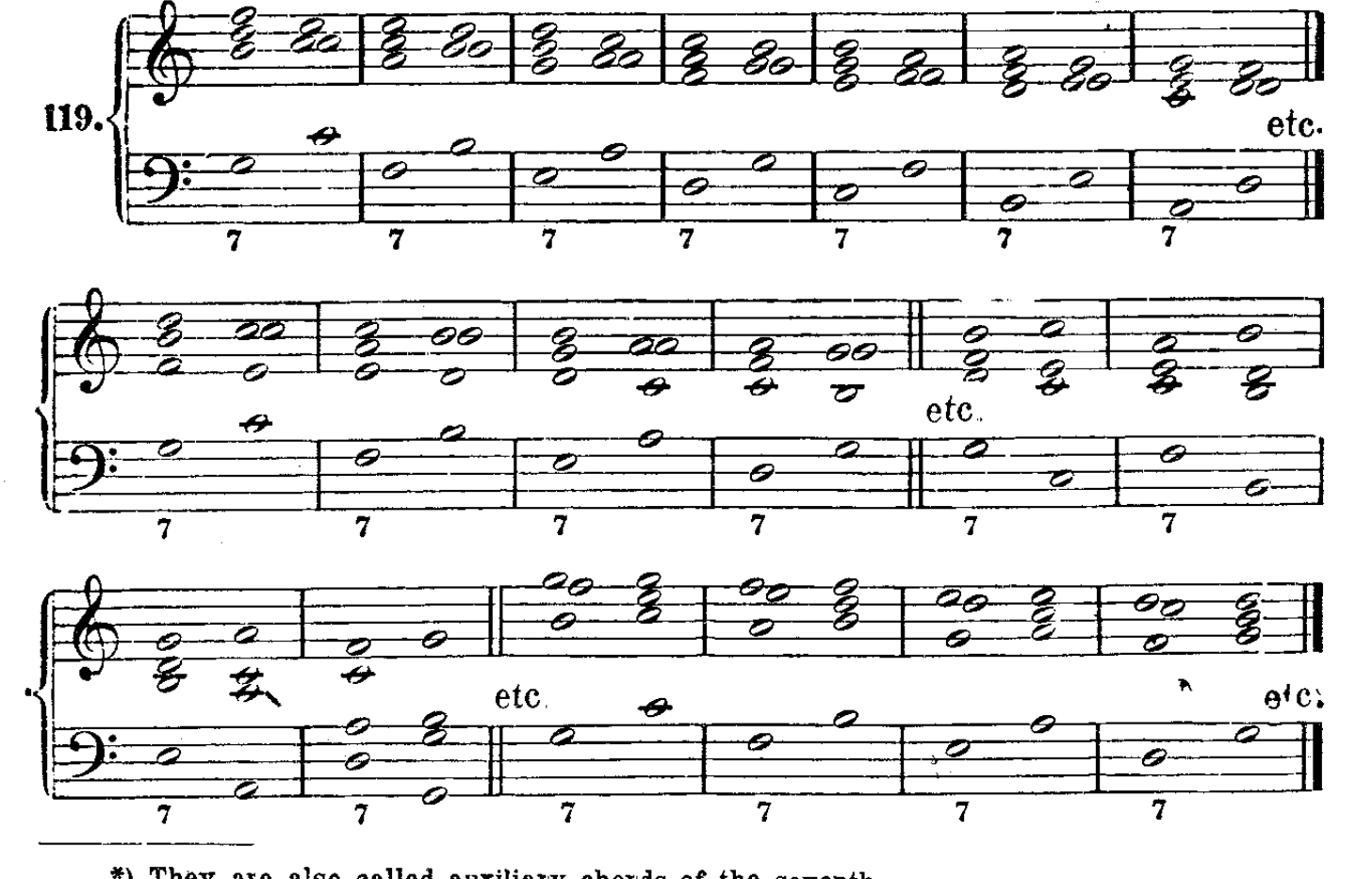 ▶ Fig. 123
Chapter XV. Chords of sequence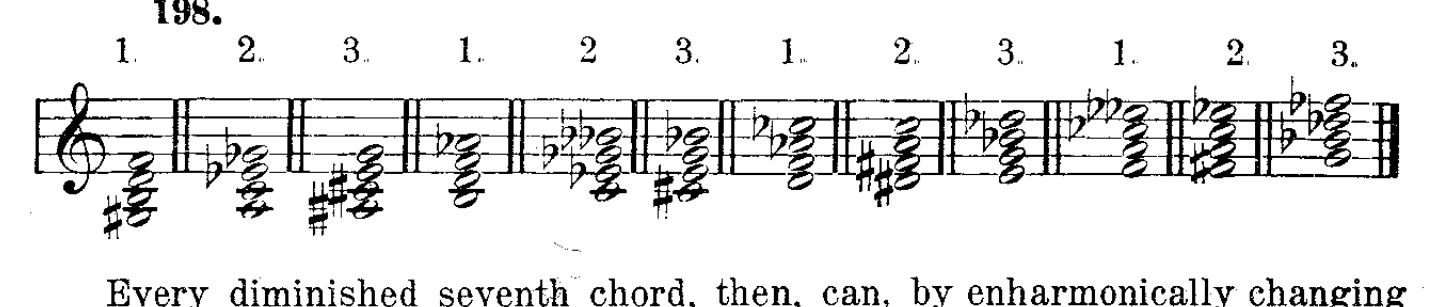 ▶ Fig. 210
Chapter XXI. The enharmonic properties of the chord of the diminished seventh
 Supplement to the Theory of ModulationMax Reger, 1904
- From C-major
Tonic C-major; chord of the Neapolitan sixth (f a♭ d♭) in C-major, which chord of the sixth (f a♭ d♭) is used, as it is at the same time the sub-dominant of A♭-major; dominant (E♭-major) of A♭-major; tonic of A♭-major with minor seventh, which A♭-chord of the…
▶ Fig. 80 nearby - From a-minor
Tonic a-minor; dominant E-major (1st inversion); use this chord of the sixth (g♯ b e), which is at the same time the chord of the Neapolitan sixth in d♯-minor; dominant (A♯-major) of d♯-minor; use this triad (a♯ c𝄪 e♯), which is also the chord of the Dorian…
▶ Fig. 111 nearby - From a-minor
NB. The diminished chord of the seventh (in minor on the seventh degree) always takes the place of the dominant!
▶ Fig. 111 nearby - From a-minor
Tonic a-minor; chord of the Neapolitan sixth (d f b♭) in a-minor; use this chord of the sixth (d f b♭), which is at the same time the chord of the Dorian sixth in f-minor; dominant of f-minor (replaced by the diminished chord of the seventh on the 7th degree…
▶ Fig. 118 nearby
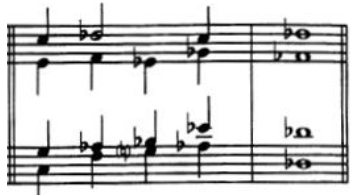 ▶ Ex-39
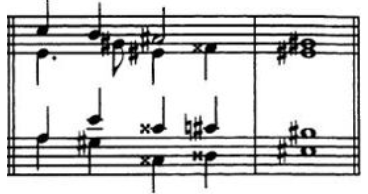 ▶ Ex-54
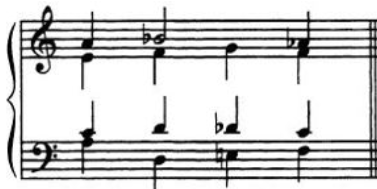 ▶ Ex-58
 Theory of HarmonyArnold Schoenberg, 1922
Start: Seventh chords → Start: Inversions of seventh chords →- Connecting seventh chords with one another · 3 playable examples
- Seventh chords and their inversions in minor · 5 playable examples
- On the Diminished Seventh Chord · 25 playable examples
- Diminished Seventh Chord Guidelines
- 3. Combining Triads and Seventh Chords · 32 playable examples
- Seventh chords
The pupil should practise preparing and resolving seventh chords on every degree, first in short passages consisting of the three chords involved, in various keys. He should then again invent passages of eight to twelve chords, each setting, alongside what has…
▶ Fig. 51 nearby - Endings and cadences
…strongest form, which is understandable. It is, however, often brought as a seventh chord, but again only in root position. Degree II, on the other hand, can be set in root position as well as in inversions, and as a seventh chord, likewise with the suitable…
▶ Fig. 118 nearby - Deceptive cadences
In Example 94, deceptive cadences of the dominant seventh chord were used at ×. At ⊗ and † the dominant seventh chord was introduced without preparation. I announced earlier that we would later treat the seventh chords freely as well.*) For the time being it…
▶ Fig. 132 nearby - Guidelines
…now impose on ourselves some restrictions in the use of certain diatonic secondary seventh chords. In the course of what follows the student will increasingly recognize that every chord, in keeping with its various tendencies, can have manifold functions; that…
- Augmented Sixth and Vagrant Chords
Example 205a shows how a diminished seventh chord can be transformed into four different dominant seventh chords: each time, a different tone falls a semitone and becomes the root—our imagined fundamental! If one tone remains as the root while the other three…
▶ Fig. 357 nearby - 4. More Chord Possibilities
…in Richard Strauss, is the use of different bass tones with a diminished seventh chord. This rests on the fact that a diminished seventh chord can be understood in four ways as a ninth chord. If one imagines a sufficient pause, or an event permitting…
▶ Fig. 562 nearby
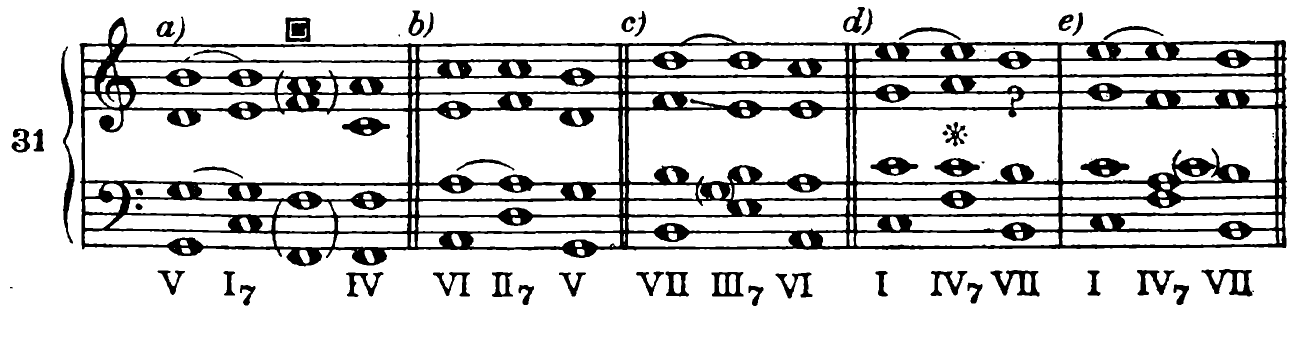 ▶ Example 31a–e — primary readings
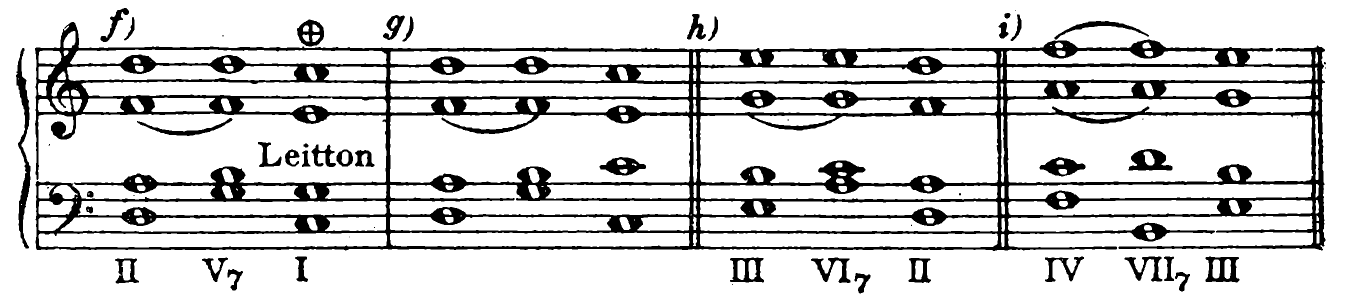 ▶ Example 31f–i
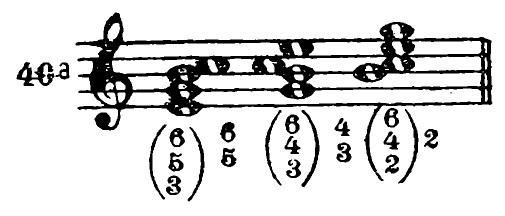 ▶ Example 40a
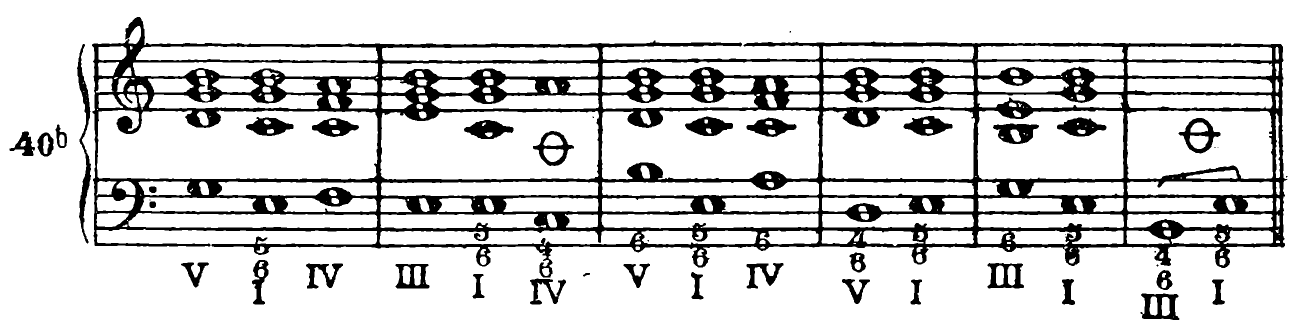 ▶ Example 40b — first connection
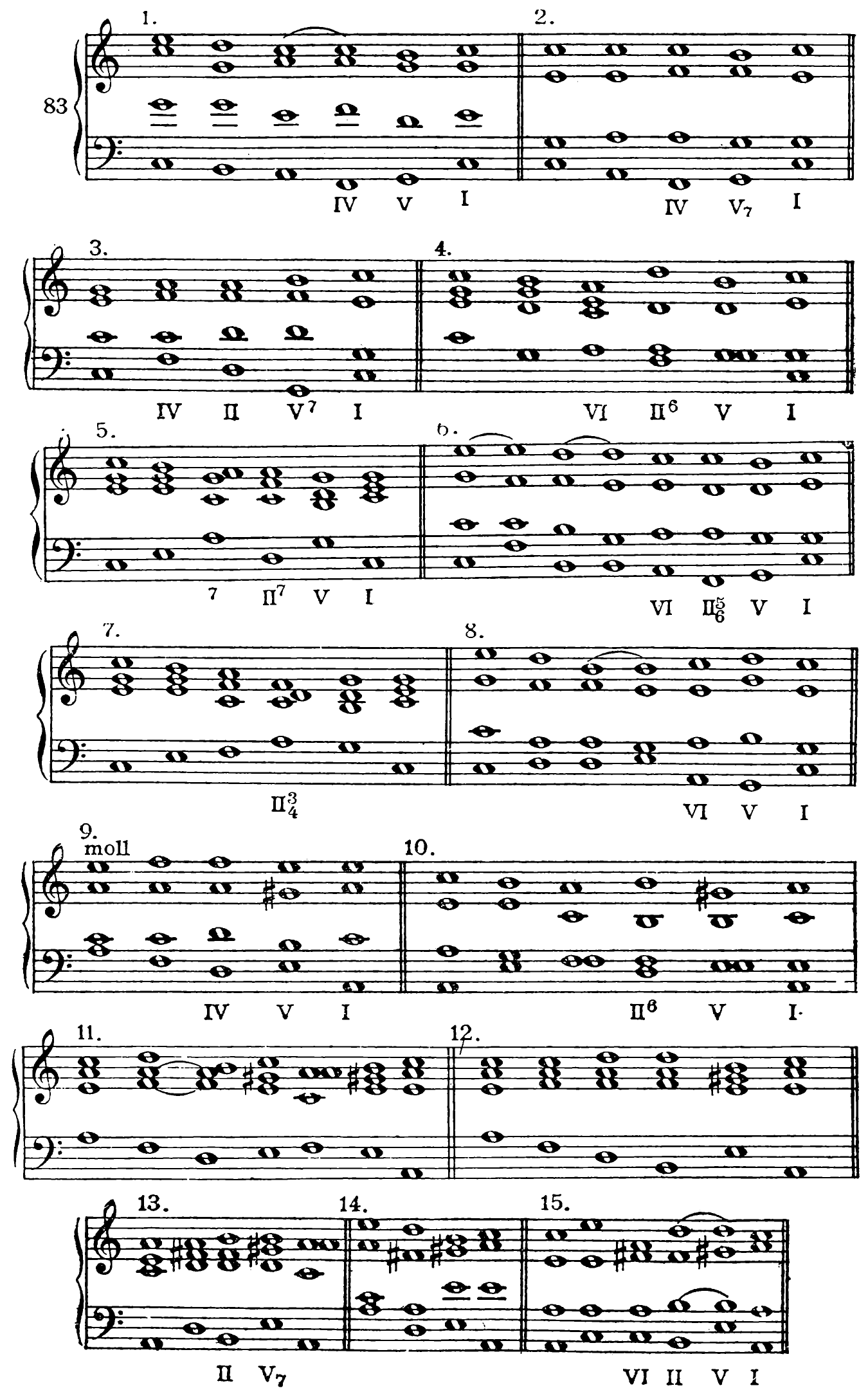 ▶ Example 83, cadence 1
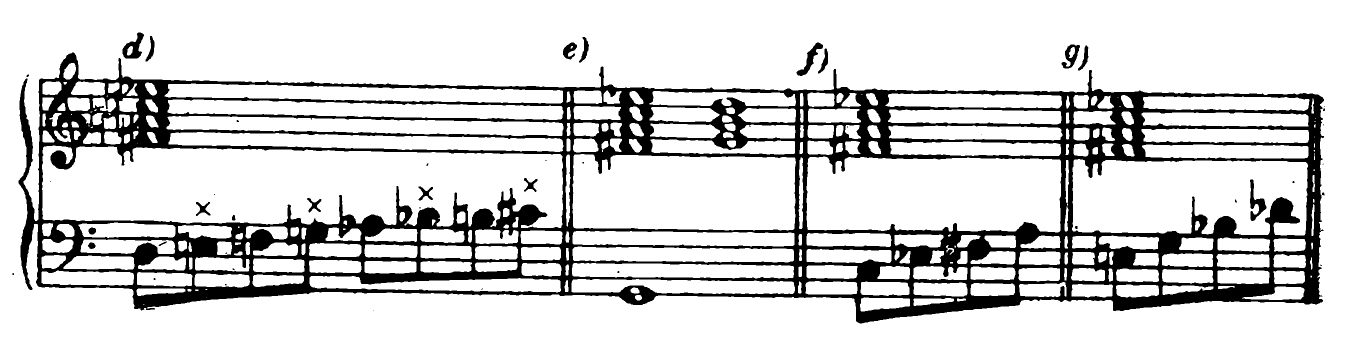 ▶ Example 304d
 Principles of OrchestrationNikolai Rimsky-Korsakov, 1922
- Harp
…middle strings are only permissible as embellishments. Glissando passages in chords of the seventh and ninth, enharmonically obtained, are much more common, and as the above reservations do not apply, every dynamic shade of tone is possible. Chords in…
- Number of harmonic parts—Duplication
This applies also to other chords of the seventh and diminished seventh:
▶ Fig. 39 nearby
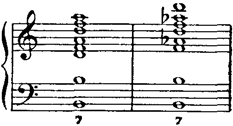 ▶ Fig. 39
 OrchestrationCecil Forsyth, 1914
- Stringed instruments
Chords of the Tonic and of the Dominant Seventh.
- Stringed instruments
…and second bars give respectively three-part and four-part chords of the dominant seventh, then, after the double bar, the third and fourth bars give respectively three-part and four-.. part chords of the Tonic. Almost all the tonic chords are available in…
- No. 49. The Cello
Dominant Sevenths.
- No. 49. The Cello
All the other four-part dominant sevenths are impracticable in the orchestra, tor a simple reason. The bass-note and fifth have to be BALE stopped by the Ist finger on the two bottom strings. The natural method of playing a four-part string chord is then to…
- No. 52. The Harp
…the parts of minor ninth chords usually known as "diminished sevenths, " but dominant sevenths and the upper portions of major ninths and elevenths are also available. In the following list the notes which are taken as enharmonic-unisons are printed as minims.…
- No. 52. The Harp
It need scarcely be said that all these chords are used "enharmonically " in the ordinary sense of the word. The dominant sevenths are used as augmented sixths: the sharp and flat nomenclatures are used at discretion to represent each other in sound.
 Treatise on InstrumentationHector Berlioz, 1905
- Introduction
…there, was considered “music”. When later Monteverde dared to introduce the dominant seventh chord without preparation, he was violently blamed and abused for this innovation. In spite of all this, the chord was soon generally accepted; and so-called learned…
- The Violin
Sequences of diminished seventh chords are also easy because the fingering remains the same while
- The Double-Bass
…the more terrible as the composer uses the third inversion of the diminished seventh chord (F-G#-B-D). Furthermore, to give his idea all the weight and vehemence possible, he doubles the basses not only with the violoncellos but also the violas and the whole…
- The Double-Bass
…its threatening and infernal effect only from the echo of the diminished seventh chord
- The Harp
…example for the above mentioned method of glissando (on the diminished seventh chords) is to be found in Liszt’s Dante-Symphony; here it symbolizes the spirits of the unfortunate Francesca da Rimini and her lover as they rise from the inferno. (Example 53.)
- The Guitar
Dominant seventh chords should not be written in the usual position of three thirds one above the other,
 ArrivalMayank Sanganeria, 2026
- Chapter 5 — Outlines
3-to-♭9 (G7 to Cmaj7). B D F A♭ is 3, 5, 7, ♭9 of G7. Those four notes form a diminished seventh chord, so the line implies G7♭9 without the rhythm section changing anything. A♭ falls a half step to G, the 5th of C. Landing on the 5th is the exception to the…
▶ Fig. 13 nearby
 ▶ Ex. 5.1
More in Chords
Triads · Inversions and the chord of the sixth · The six-four chord · The diminished seventh chord · Ninth chords · The Neapolitan sixth · Augmented sixth chords · Secondary dominants · Borrowed chords (mixture)