 Playable Books
Concept index · Chords
The six-four chord
Taught in 6 books. Each one opens at the passage; ▶ plays the example beside it. Also called six-four chord, cadential six-four, second inversion, 64 chord.
This index is Playable Books’ own: a first pass that finds the term’s words in each book, corrected by hand. The authors did not tag these passages, and their terms can differ (Fux’s “ligature” is a suspension). The quoted text is the book’s.
 Exercises in Elementary CounterpointPercy Goetschius, 1910
- Chapter XVI. Three-Part Harmony
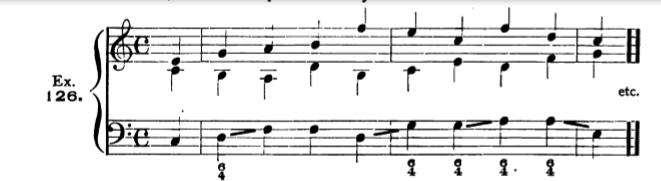
The second inversion of any triad-form (the 6/4 chord) is rare and hazardous. It would be wise for the student to avoid all 6/4 chords, excepting the second inversion of the I, and of the IV. These are good.
▶ Fig. 283 nearby - Chapter XVI. Three-Part Harmony
excepting, as usual, during chord-repetition. Six-four chords should not occur in direct succession. For illustration, this lower part is faulty:
▶ Fig. 283 nearby - Chapter XXII. Four-Part Harmony
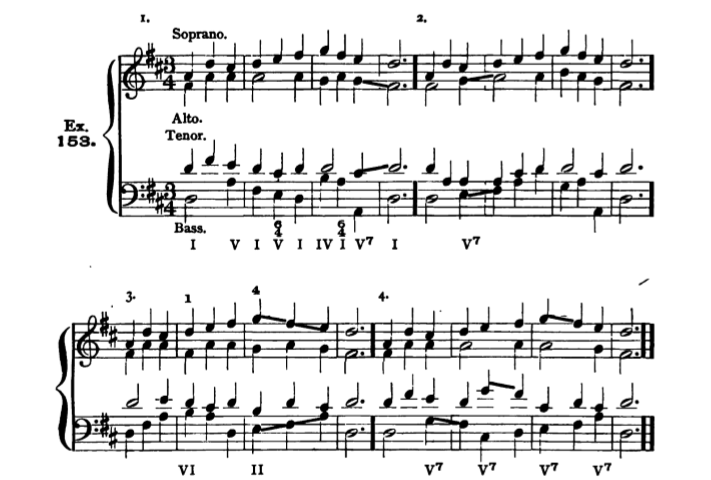
In the six-four chord-form, the bass tone (the chord-5th) is generally doubled.
▶ Fig. 375 nearby
 ▶ Ex.126
 ▶ Ex.153-1
 Practical Manual of HarmonyNikolai Rimsky-Korsakov, 1910
Start: Cadence Formula of the Second Kind (with the Six-Four Chord of the First Degree) →- Passing Six-Four Chords · 1 playable example
- Triads
§ 2. Every triad has two inversions: the chord of the sixth (first inversion), figured 6, and the chord of the fourth and sixth (second inversion), figured 6/4.
▶ Fig. 11 nearby - Triads
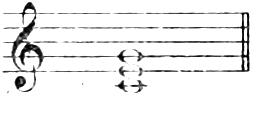
A chord of the fourth and sixth is one whose bass is the fifth of the root.
▶ Fig. 15 nearby - Triads
…of the sixth [E–G–C] is the chord of the sixth on the first degree, and the chord of the fourth and sixth [D–G–B] is the chord of the fourth and sixth on the fifth degree, and so on.
▶ Fig. 16 nearby - Triads
The second inversion, or chord of the fourth and sixth, is made of a fourth and a sixth above the bass. For example, the chord of the fourth and sixth [G–C–E] consists of a fourth [G–C] and a sixth [G–E]; it can also be seen as a fourth and a third [G–C, C–E].
▶ Fig. 16 nearby - Cadence Formula of the Second Kind (with the Six-Four Chord of the First Degree)
§ 22. — 1) By the cadence formula of the second kind is meant the succession of the chord of the fourth degree, the six-four chord of the first degree, and the triads of the fifth and first degrees.
▶ Fig. 85 nearby - Cadence Formula of the Second Kind (with the Six-Four Chord of the First Degree)
2) The cadential six-four chord is connected harmonically with the triad that precedes it; thus the fourth of the six-four chord is a common note.
▶ Fig. 85 nearby
21 more passages in Practical Manual of Harmony →
 ▶ Triad in root position
Triads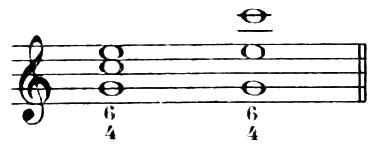 ▶ Two chords of the fourth and sixth: G–C–E and G–E–C
Triads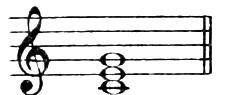 ▶ The C major triad: C–E–G
Triads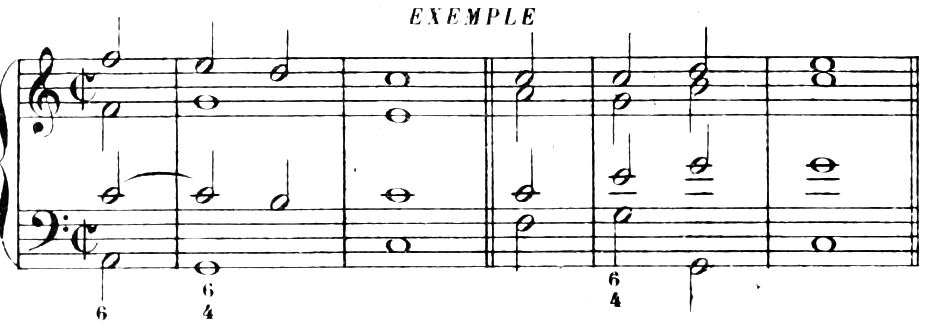 ▶ Example: two cadences in C major, cut time — IV6 or IV, the six-four chord on the strong beat, V, I
Cadence Formula of the Second Kind (with the Six-Four Chord of the First Degree)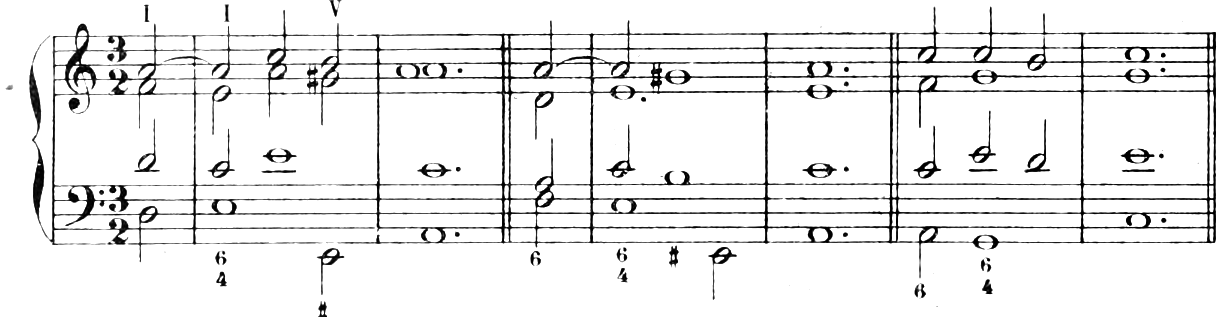 ▶ Example (continued), 3/2: two cadences in A minor and one in C major, the six-four chord on the first or the weak second beat
Cadence Formula of the Second Kind (with the Six-Four Chord of the First Degree)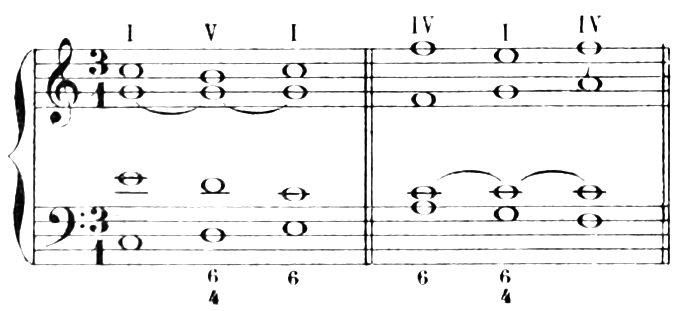 ▶ Passing six-four chords: I–V6/4–I6 and IV6–I6/4–IV
Passing Six-Four Chords
 Guide to the Practical Study of HarmonyPyotr Ilyich Tchaikovsky, 1900
- Chapter VIII. The Inversions of the Triad
The second inversion is called the chord of the sixth and fourth.
▶ Fig. 58 nearby - Chapter VIII. The Inversions of the Triad
Chord of the third and Chord of the sixth and sixth (sixth) fourth (six-four) Ca.
▶ Fig. 59 nearby - Chapter VIII. The Inversions of the Triad
In the chord of the sixth the third appears doubled; in the chord of the six-four—the fifth. A doubling of the third, however, being unnatural and unsatisfactory to the musical ear, it is better to double the fundamental tone or the fifth in the chord of the…
▶ Fig. 60 nearby - Chapter VIII. The Inversions of the Triad
…not at all unpleasant; so that the close position of the upper voices of the six-four chord may be retained. The fundamental is doubled only in cases where we wish to avoid concealed octaves, which sound especially bad in the six-four chord.
▶ Fig. 65 nearby - Chapter XVII. The Harmonization of a given melody
3) When the Bass progresses stepwise into and from the chord of the sixth and fourth. The fourth is then the link between the six-four chord and the chords on either side of it. Such a case occurs for example, if the chord stands between the fundamental form…
▶ Fig. 153 nearby - Chapter XXVII. Chords of the augmented Sixth
…of the fourth and third with doubly augmented fourth. It is derived from the second inversion of the chord of the seventh on the 2-nd degree preceding the tonic six-four chord (vide; the cadence of the first class) — in consequence of chromatic passing notes…
▶ Fig. 304 nearby
25 more passages in Guide to the Practical Study of Harmony →
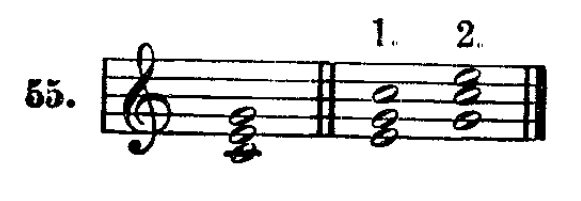 ▶ Fig. 58
Chapter VIII. The Inversions of the Triad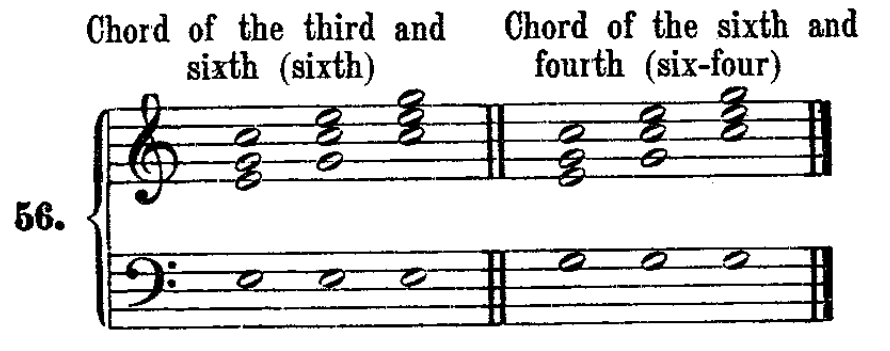 ▶ Fig. 59
Chapter VIII. The Inversions of the Triad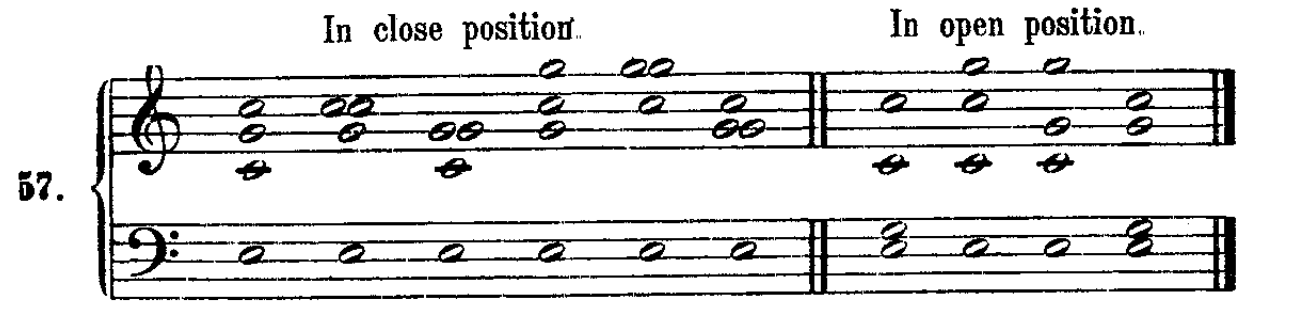 ▶ Fig. 60
Chapter VIII. The Inversions of the Triad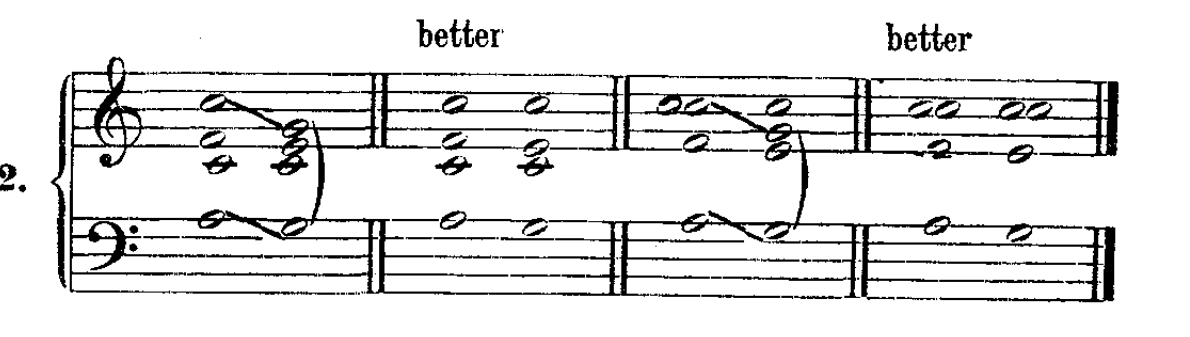 ▶ Fig. 65
Chapter VIII. The Inversions of the Triad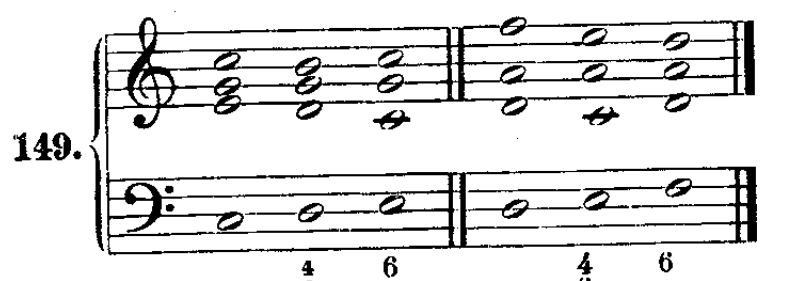 ▶ Fig. 153
Chapter XVII. The Harmonization of a given melody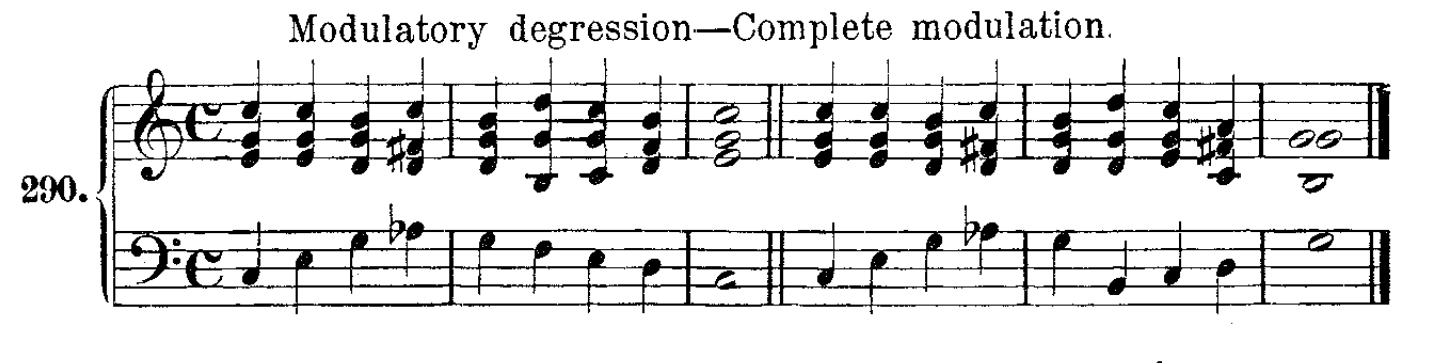 ▶ Fig. 304
Chapter XXVII. Chords of the augmented Sixth
 Supplement to the Theory of ModulationMax Reger, 1904
- From C-major · Footnote
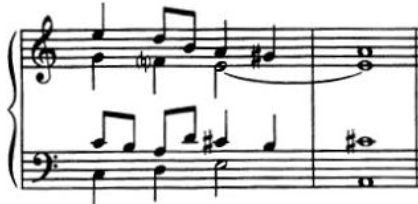
“=” this mark under the Roman cipher means: 2nd inversion (chord of the six-four).
▶ Fig. 5 nearby
 ▶ Ex-3
 Theory of HarmonyArnold Schoenberg, 1922
Start: The Six-Four Chord in the Cadence →- b) The Six-Four Chord · 6 playable examples
- a) THE SIXTH CHORD
In the six-four chord, then, the arrangement of the chord tones resembles the overtones of the bass note more closely than in the sixth chord. The inherent sound of the six-four chord’s bass note finds less resistance to its will in the chord tones; or, as one…
▶ Fig. 24 nearby - b) The Six-Four Chord
The following explanation seems simpler to me. A bass note that is not also the root seems to strive to assert its overtones—in other words, to become the root itself. As shown earlier, on page 69, the bass of the six-four chord receives ample support for this…
▶ Fig. 44 nearby - b) The Six-Four Chord
Preparation of the six-four chord differs from preparation of a dissonance in that either of two notes may be considered. One can prepare either the fifth, that is, the bass note, or the root: one of these two notes should have belonged to the preceding chord…
▶ Fig. 44 nearby - Seventh chords
The D of the six-four chord on V could be preceded only by D, E, or C in the bass. An E bass could mean degree III, the sixth chord on I, or the six-four chord on VI. E with a six-four is ruled out from the outset, since otherwise two six-four chords would…
▶ Fig. 58 nearby - The Six-Four Chord in the Cadence
Here are cited some forms of using the six-four chord which also show that the one derivation, according to which the six-four chord arises through passing motion and suspension, does not by itself suffice as an explanation (98b, c and d). In 98b one cannot…
▶ Fig. 137 nearby - Meter and Harmony
…often no more than a method of counting, it then sometimes happens that the six-four chord stands on the light beat as well. So this is not a universally valid law. But insofar as the six-four chord is used at all in modern music, it is almost universally…
▶ Fig. 245 nearby
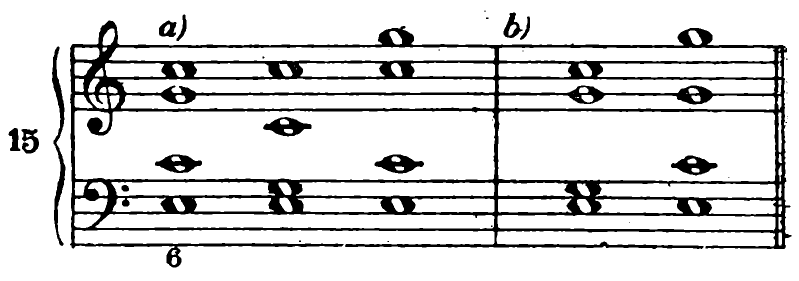 ▶ Example 15a — doubled root
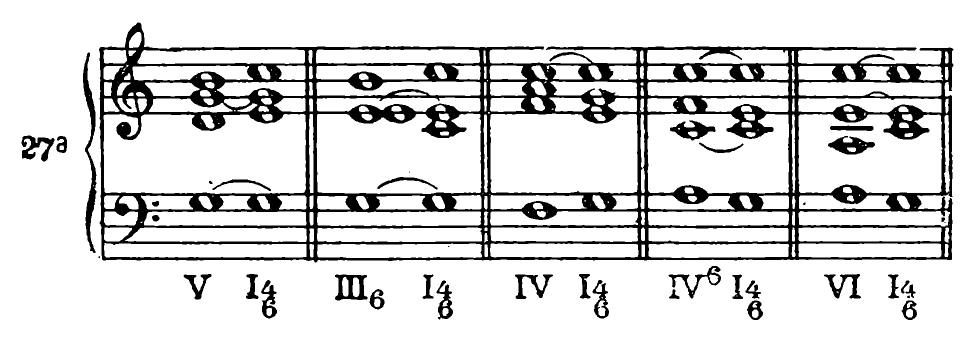 ▶ Example 27a
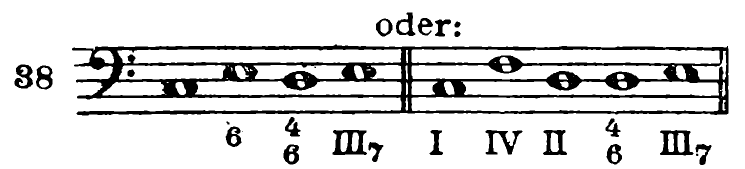 ▶ Example 38 — first opening
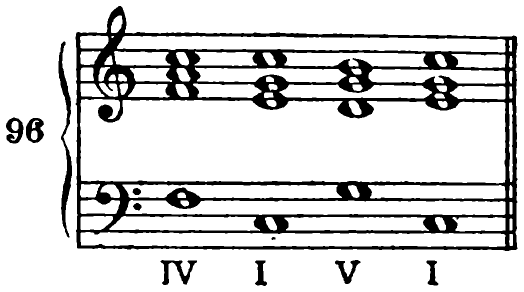 ▶ Example 96
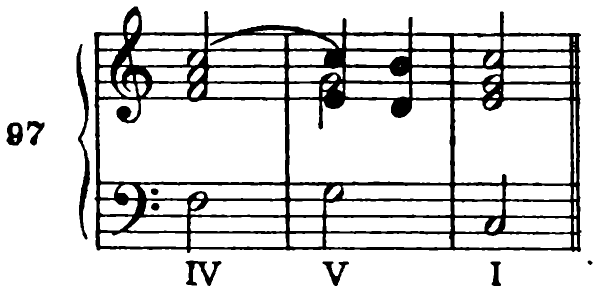 ▶ Example 97
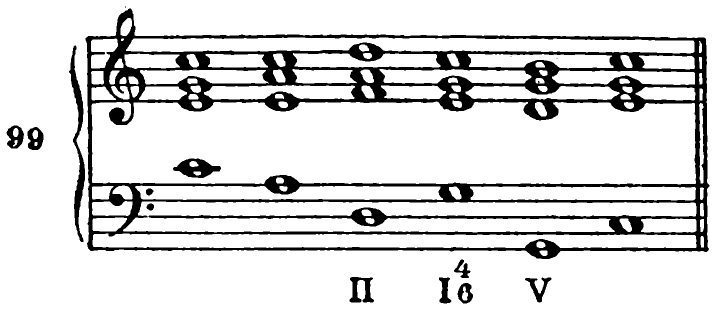 ▶ Example 99
 OrchestrationCecil Forsyth, 1914
- No. 49. The Cello
All major and minor triads and their first and second inversions, provided the note
- No. 51. The Double-Bass.'
…carefully the chords are restricted. There are no "diminished-sevenths" and "Six-four-two's" as in the Berlioz example. This is in the interests of lightness and clarity. Furthermore, he should notice in performance how intensely soft and almost woolly is the…
More in Chords
Triads · Inversions and the chord of the sixth · Seventh chords · The diminished seventh chord · Ninth chords · The Neapolitan sixth · Augmented sixth chords · Secondary dominants · Borrowed chords (mixture)